REVIEW · RAVENNA
Art tour of Ravenna and its mosaics (private tour)
Book on Viator →Operated by Riccardo Bacchi · Bookable on Viator
Mosaics in Ravenna feel like time travel. This private art tour is a smart way to see the city’s UNESCO sites with Riccardo Bacchi, and to understand how the Emilia Romagna art world connects across centuries. I love that you get a focused route that would be hard to assemble alone, and I also love the unforced Q-and-A with a guide who stays tuned to what you’re curious about. The only real drawback: you’re looking at lots of visually packed interiors in 5 to 6 hours, so plan to move at a steady pace and don’t expect endless wandering.
You start at a very easy point—Ravenna train station—so you don’t waste the first part of the day figuring out transit. The tour is in English, uses a mobile ticket, and you keep the rhythm with a private group setup, not a big cattle-herd flow. It’s a strong fit if you like art history that connects details (materials, styles, symbols) to the bigger story.
In This Review
- Key Points You’ll Care About
- Ravenna Mosaics: Why This City Still Feels Like a World of Its Own
- Meeting at Ravenna FS 48121 and How the Day Flows
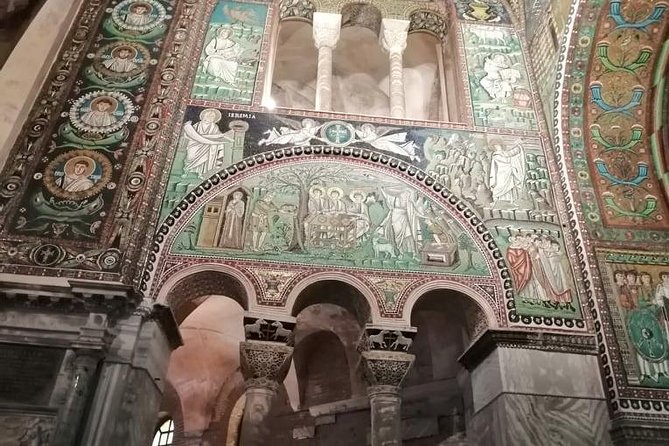
- Basilica di San Vitale: The UNESCO Star with a Byzantine Feel
- What can slow you down here
- Battistero degli Ortodossi (Neoniano): When Late Roman Meets Persian and Greek
- Basilica di San Francesco: The Underground Crypt Surprise
- Why this stop is worth it
- Basilica di Sant’Apollinare Nuovo: Early Christian Mosaics with Structure
- A quick practical tip
- Archiepiscopal Museum: The Ivory-Carved Wooden Armor Ark
- Mausoleo di Galla Placidia: Alabaster Light and Mediterranean Storytelling
- What to do near the end of the tour
- Price and Value: $325.11 for a Focused UNESCO Art Lesson
- Who This Private Mosaics Tour Fits Best
- Should You Book This Ravenna Mosaics Private Tour?
- FAQ
- How long is the private art tour of Ravenna and its mosaics?
- What is the meeting point?
- Is the tour in English?
- Are museum and church tickets included?
- Do I need private transportation?
- Can I cancel for a full refund?
Key Points You’ll Care About
- Private guide time: you can ask questions without feeling rushed.
- UNESCO sites, tightly linked: each stop builds on the last.
- Easy start point: meet at Ravenna FS for a low-stress morning.
- Mosaic technique explained: you’ll notice materials and patterns faster.
- Balanced pacing: short visits that still leave room to look carefully.
- Tickets included: a single UNESCO heritage ticket is part of the deal.
Ravenna Mosaics: Why This City Still Feels Like a World of Its Own
Ravenna’s reputation isn’t just about “pretty mosaics.” It’s about how those mosaics act like visual proof of cultural contact—Roman roots, Byzantine influence, and influences that feel far beyond Italy. When you’re standing inside the churches and mausoleums, you stop thinking of mosaics as decoration and start seeing them as messaging: what communities wanted to show, what they wanted to remember, and how power and faith were communicated through images.
On this tour, you don’t just get handed a list of sites. You get a guided way to read what you’re seeing. That matters because Ravenna’s best work is mostly indoors, and the details can be tricky if you’re guessing where to look. Having a guide helps you spot what’s important—composition, iconography, and the way the light changes how the art feels.
And because the route is designed around the UNESCO core, you get a sequence rather than random stops. That sequencing is the difference between seeing walls of gold and actually understanding what each building is doing.
Meeting at Ravenna FS 48121 and How the Day Flows
The tour begins at Ravenna train station (meeting point: Ravenna FS48121). If you’re arriving by train, this is about as painless as it gets. The start time is 9:30 am, and the visit runs about 5 to 6 hours.
A private tour also changes how the day feels. You’re not stuck translating your own questions while you wait for the crowd to move. Instead, you can ask unselfconsciously—then adjust how long you look at specific mosaics or details. In my view, that’s what turns a “sightseeing afternoon” into something closer to an art lesson with context.
One practical note: private transportation isn’t included. That means you’ll likely be walking between stops or using public transit you arrange yourself. It’s not a dealbreaker, but it’s good to plan comfortable shoes and a calm pace.
Basilica di San Vitale: The UNESCO Star with a Byzantine Feel
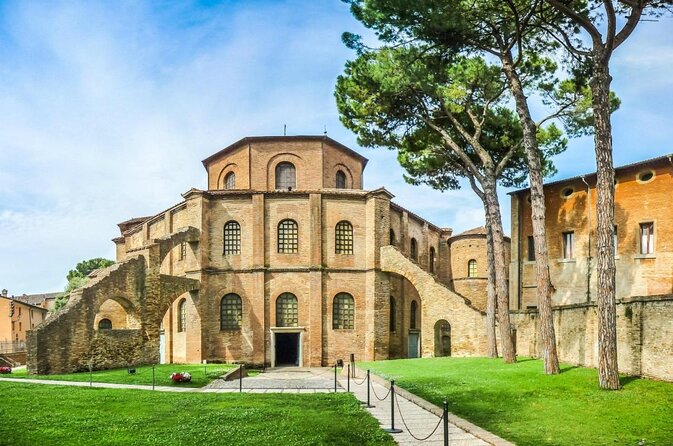
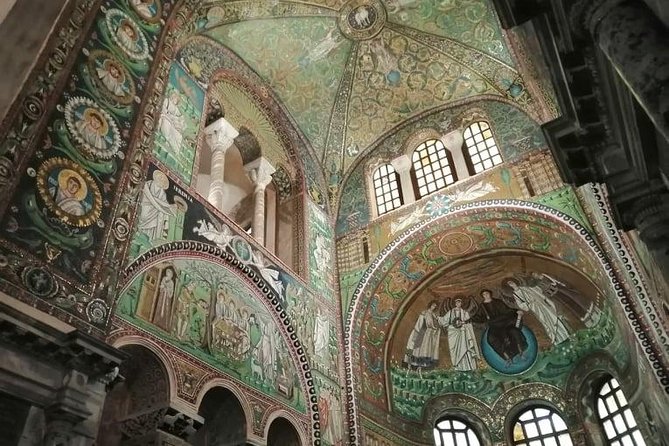
Your first major stop is Basilica di San Vitale (35 minutes, admission ticket included). If you’ve seen photos, you already know the building is famous. What you might not expect is how the mosaics feel like a complete world rather than isolated scenes. San Vitale is often treated like a “main event,” and that’s fair—but it’s also a gateway. It sets a tone for how Ravenna’s early medieval art thinks.
Inside, the mosaics come at you as if you’re reading a story written in tiny colored pieces. The guide’s explanations help you connect technique to meaning—how the images are structured, how figures and backgrounds create an overall message, and how Byzantine-era visual style took root here. The feeling is almost like stepping into early medieval time, where art wasn’t “optional decoration,” it was communication.
If you’re the type who enjoys learning to see—materials, surfaces, and why a particular arrangement matters—this stop will probably hook you fast.
What can slow you down here
This is a lot to take in visually right at the start. If you’re sensitive to crowded interiors or you get tired in long indoor spaces, go in with a simple strategy: look for one or two key mosaic areas first, then expand.
Battistero degli Ortodossi (Neoniano): When Late Roman Meets Persian and Greek
Next is the Baptistery known as Battistero Neoniano / Battistero degli Ortodossi (30 minutes, admission ticket included). This is where the cultural mixing becomes part of the story in a very physical way.
The big idea: this site is famous for its mixture of marbles, mosaics, and sculptures, and the artistic influences span late Roman, Roman, Persian, Greek, and barbarian traditions. Even if you’re not using those labels as a checklist, you’ll feel the building’s identity: it doesn’t look like a single culture speaking in one voice. It looks like a conversation.
A good guide matters here because these details can blur together if you just wander. With context, you learn how to pay attention to what’s combined and why. That’s also the advantage of doing it second in the day—you’re already primed to look at mosaics and understand them as part of a larger artistic system.
Basilica di San Francesco: The Underground Crypt Surprise
Then you get a welcome curveball: Basilica di San Francesco (25 minutes, admission ticket free). After the concentrated mosaic focus so far, you go from shiny image worlds to a different kind of atmosphere—an underground crypt with a story tied to the ground itself.
The crypt is described as welcoming after the earlier full immersion into mosaic tiles, and it uses a mix of precious stones covered with glass paste and bright colors, set within millenary red clay bricks. That combination gives you a different texture of visual impact—less about open “display,” more about something enclosed and atmospheric.
The crypt also has practical drama: it can face flooding because the soil has subsided. Hearing that makes you see the site as living infrastructure, not just a preserved artifact. The tour even draws a comparison to the Basilica Cistern of Istanbul, which is useful if you’ve been there—because it frames the experience as one shared challenge across historic underground spaces.
Why this stop is worth it
This is where you remember Ravenna isn’t only about art on walls. It’s art in space, shaped by building materials and the ground under it.
Basilica di Sant’Apollinare Nuovo: Early Christian Mosaics with Structure
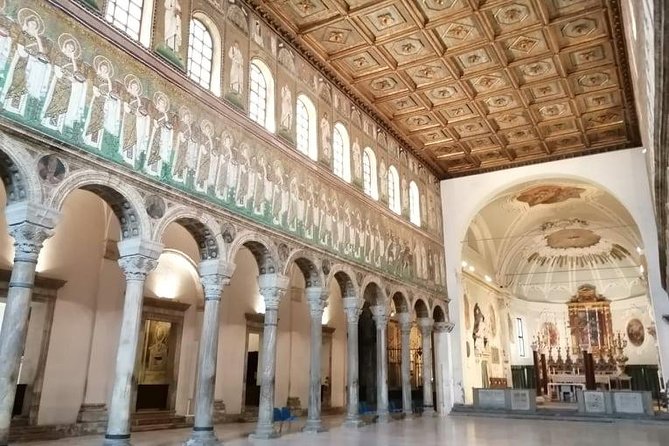
Basilica di Sant’Apollinare Nuovo is next (35 minutes, admission ticket included). Like the earlier stops, it’s a UNESCO heritage site and a major early Christian temple filled with mosaics and art masterpieces.
What I like about this stop on a guided route is that it’s not just another mosaic room. It helps you compare. By now, you’ve seen Byzantium-forward styles and a more mixed artistic setting in the previous buildings. Sant’Apollinare Nuovo lets you observe how early Christian visual storytelling builds its own visual logic—how scenes are arranged and how the mosaic surfaces work to create unity inside the architecture.
If you enjoy pattern recognition—how scenes repeat themes, how composition guides your eyes, how the building’s layout supports the art—this one will reward you for paying attention.
A quick practical tip
Take breaks with your eyes. Shift from mosaics to the surrounding architecture, then back again. That rhythm helps you avoid ending the day with visual overload.
Archiepiscopal Museum: The Ivory-Carved Wooden Armor Ark
You’ll then visit the Archiepiscopal Museum (30 minutes, admission ticket included). This stop widens the lens beyond mosaics into objects—exactly what makes museum time feel useful, not optional.
The museum collection includes Roman, Byzantine, barbarian, and early medieval manufactures. That’s a broad sweep, but the tour highlights one standout: an “ark” consisting of a wooden armor completely covered with finely carved ivory. It’s described as one of the most precious artistic testimonies of the ancient world.
This is the kind of object that can change how you think about the entire day. Mosaics are one kind of art. But when you see the care given to carved ivory and the idea of armor as a display of craftsmanship, you start connecting artistic skill to status, belief, and power.
Also, the mix of cultural labels—Roman, Byzantine, barbarian—doesn’t stay abstract. The museum turns that into something you can look at closely, which helps you understand why Ravenna matters as a crossroads.
Mausoleo di Galla Placidia: Alabaster Light and Mediterranean Storytelling
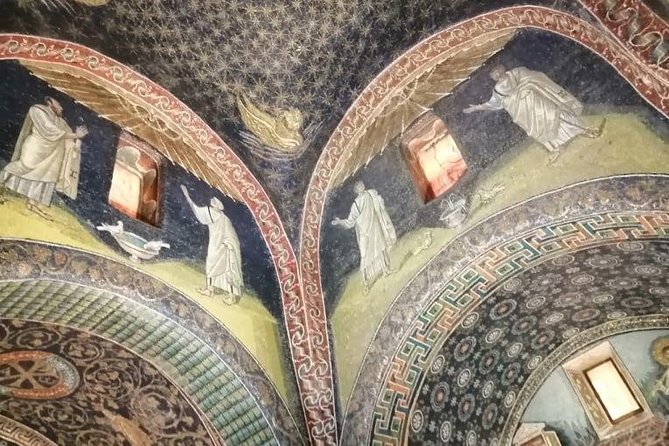
Your final UNESCO site is Mausoleo di Galla Placidia (30 minutes, admission ticket included). This is the tomb of Galla Placidia, sister of the Byzantine Emperor Onorio. That family tie adds weight, but the real emotional impact comes from how the building uses light.
The tour notes that light filters through alabaster glasses, creating a golden atmosphere inside the domes and inner walls. When you’re there, the atmosphere can feel like part of the artwork. You’re not just viewing mosaics—you’re experiencing how lighting changes the color and mood of what’s pictured.
The iconography is also described as linked to Hellenistic, Greek, and Persian influences. That matters because it reinforces the tour’s larger theme: the Mediterranean Sea as an interconnected basin where wealthy civilizations interacted over thousands of years. It’s a reminder that Ravenna’s art wasn’t created in a vacuum; it grew from movement, trade, and political reach.
What to do near the end of the tour
Go slowly here. Save your mental energy for the last stop—because this is the place where a little quiet attention pays off the most.
Price and Value: $325.11 for a Focused UNESCO Art Lesson
The price is $325.11 per person, and the tour runs about 5 to 6 hours. At first glance, that’s not “cheap.” But here’s what you’re really paying for: a private, English-speaking guide plus a route that hits multiple UNESCO sites with tickets included.
A single UNESCO heritage ticket is part of the package. Several admissions are included at key stops, and the Basilica di San Francesco crypt stop is free. On top of that, you’re getting context—history of art around Emilia Romagna—and help finding the kinds of Ravenna art and mosaic details that can be tricky to locate on your own.
Group discounts are mentioned too, which can make the price feel more reasonable if you’re coming with someone. The one cost you should plan for separately is private transportation, since it’s not included.
To me, this price makes the most sense if you already know you enjoy art history and you want guidance that changes how you look. If you just want a casual stroll and don’t care about interpretation, you might not feel the value as strongly.
Who This Private Mosaics Tour Fits Best
This tour is especially well-suited for:
- You if you like art history with clear context, not just names on signs.
- You if you want to ask questions and get direct answers in English.
- You if you prefer a route that covers Ravenna’s main UNESCO core without scrambling for logistics.
It’s also a good fit if you’re traveling with someone who doesn’t necessarily want to “geek out,” because the route is structured and the guide can keep things clear while still being detailed. The day ends up feeling like a coherent story rather than a list of buildings.
Should You Book This Ravenna Mosaics Private Tour?
Book it if you want your Ravenna experience to feel guided, connected, and worth your time. The combination of Riccardo Bacchi’s prepared commentary and the private setup is a big part of why this tour has a perfect 5/5 rating average and a 100% recommendation rate in the available feedback.
Skip it or reconsider if you’re easily overwhelmed by lots of indoor art in one day, or if you prefer self-guided wandering with no structure. This tour is built for seeing a lot and understanding it while you go.
FAQ
How long is the private art tour of Ravenna and its mosaics?
It lasts about 5 to 6 hours.
What is the meeting point?
The meeting point is at Ravenna train station, listed as Ravenna FS48121 Ravenna, Province of Ravenna, Italy.
Is the tour in English?
Yes, the tour is offered in English.
Are museum and church tickets included?
A single UNESCO heritage ticket is included. Admission tickets are included for some stops, and Basilica di San Francesco is listed as free.
Do I need private transportation?
Private transportation is not included.
Can I cancel for a full refund?
Yes. You can cancel up to 24 hours in advance for a full refund.