REVIEW · PONTE VECCHIO
Florence: Walking Tour with Accademia Gallery
Book on GetYourGuide →Operated by CAF Tour & Travel · Bookable on GetYourGuide
Seeing Michelangelo’s David is the easy part. This tour is interesting because it strings together Florence’s biggest art hits with the places that explain why they mattered—so you don’t just look, you understand. I like the fact that you get a professional guide for the whole walk, and I also like that you’re set up for a smooth museum visit with reserved entry and earphones inside. One possible drawback: it’s a lot of walking and photo stops over 2.5 to 3.5 hours, so comfy shoes matter.
What really makes it work is the way the stops connect. You start at the Accademia Gallery for the main event, then keep moving through Medici Florence, the Duomo complex, and the old streets toward the river. Even if you only care about David, the route still feels efficient because it hits major landmarks in a logical order.
My main consideration is crowd control. Even with reserved entry, the streets and monuments can be busy, and some areas involve steps or standing time around viewpoints and churches—so plan for that.
In This Review
- Key Highlights Worth Planning For
- Why This Florence Route Works (And Where It Saves You Time)
- Meet the Tour: Where to Start and What the First Minutes Feel Like
- Accademia Gallery: David, I Prigioni, and the Art You Can Actually Read
- Continuing the Art Story: Photo Stops and Guided Views at the Medici Sites
- Duomo Complex: Porta del Paradiso, the Dome, and the View Stops That Matter
- Cathedral of Santa Maria del Fiore and Orsanmichele: Big Names, Clear Explanations
- Mercato del Porcellino: The Straw Market Area and a Famous Little Bronze
- Piazza della Signoria, Palazzo Vecchio, and the Open-Air Michelangelo World
- Ponte Vecchio Finish: Jewelry Streets and River Views
- How Long Is Too Long? Timing and Pace That Make Sense for Most People
- Price and Value: What $99 Buys You in Real Florence Time
- Lunch Option: A Practical Add-On If You Want One Less Decision
- Who This Tour Fits Best (And Who Might Prefer Something Else)
- Practical Tips to Make the Most of It
- Should You Book This Florence Walking Tour?
- FAQ
- What’s included in the Accademia Gallery visit?
- Where do I meet the guide?
- How long is the tour?
- Is a lunch included?
- What languages are available?
- Is the tour wheelchair accessible?
Key Highlights Worth Planning For
- Original David inside Accademia with a guided focus on what you’re actually seeing
- Full walking route of Florence icons, from Medici sites to the Duomo complex and river views
- Reserved museum entry and earphones, so you spend less time stuck and more time learning
- Photo stops at every big moment, which helps if you want pictures without rushing
- Professional guide energy, including a standout guide named Martha from one past tour
Why This Florence Route Works (And Where It Saves You Time)
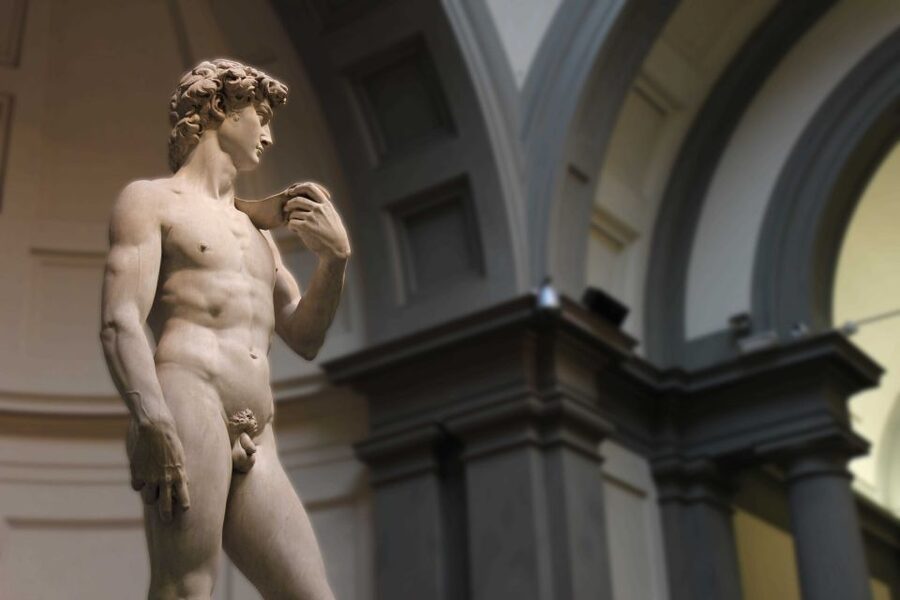
Florence can feel like a choose-your-own-adventure of museums and monuments. This tour’s strength is that it’s built like one story: art leads to power, power leads to architecture, and architecture leads to street-level Florence.
You’re paying for two things that add up fast in real life: guidance and time. The guide is with you from the first stop at the Accademia Gallery all the way through the walk, and the tour includes reserved entry plus help delivering tickets at the meeting point. That means fewer delays and less time figuring out ticket lines when the day is already busy.
At $99 per person for 2.5–3.5 hours, it’s not the cheapest way to move around the center. But the value is that you’re not piecing this together yourself: the route covers multiple major sights, and the museum portion is handled with guaranteed entry time.
Meet the Tour: Where to Start and What the First Minutes Feel Like
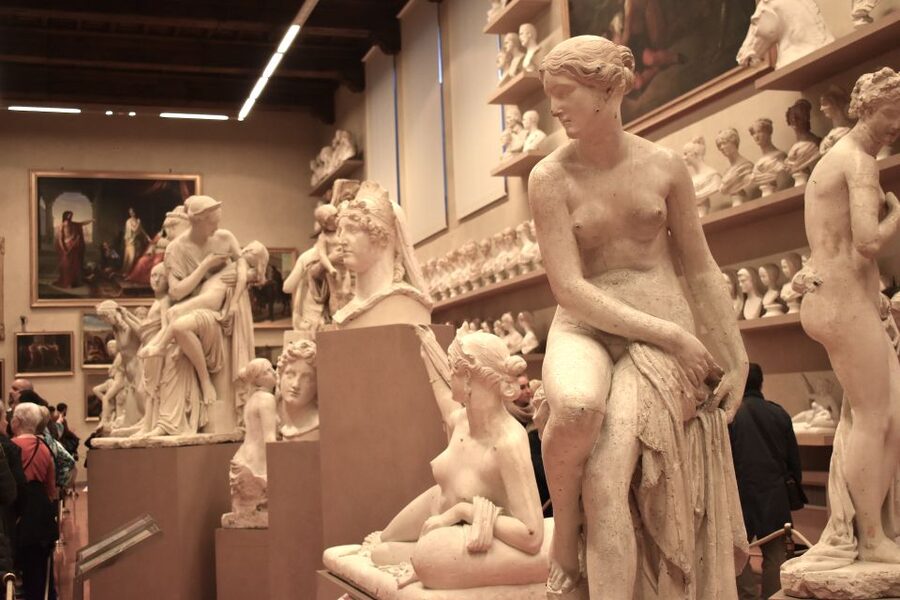
You’ll meet in one of two spots (the day’s start point depends on the provider’s setup). The main meeting point is at the corner of Via Ricasoli and Piazza San Marco, in front of the loggiato of Accademia delle Belle Arti. There’s also an alternate start listed for a 09.45am tour at Via Martelli, 50r, in front of Café Firenze.
Either way, an assistant in blue clothing with the Caf Tour & Gray Line Florence logos helps you get organized at the start. If you like knowing you’re in the right place, this helps. It also matters because the Accademia visit depends on your entry time.
The tour is in English, and it’s set up as a small group seasonally (April to October is monolingual). Outside that window, Spanish can be confirmed from November 1, 2024 to March 31, 2025 with a minimum of four participants. Either way, you’ll get live guidance through the main walking portion.
Accademia Gallery: David, I Prigioni, and the Art You Can Actually Read
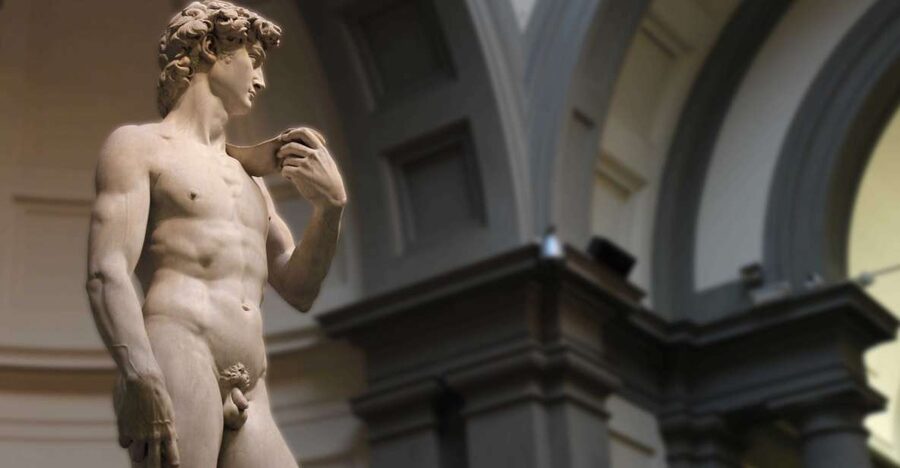
The Accademia Gallery is the reason most people book. The tour treats it like the centerpiece it is, with guided time that’s meant to turn David from a famous photo into a sculpture you can understand.
Here’s what you’ll experience in practical terms:
- You’ll have a photo stop and then a guided visit inside the museum.
- You’re given a guaranteed museum entry time, plus ticket handling that helps you avoid the ticket office headache.
- You wear earphones inside the museum, which is a big deal if the room is crowded or if you’re positioned a little away from the guide.
Michelangelo’s David is the headline, but the guide also points you toward other famous works in the collection, including I Prigioni and the Palestrina Pietà. The guide focus is important: David isn’t only about athletic anatomy or dramatic pose. It’s also about symbolism—youthful strength and courage that became tied to the power of the Florentine Republic.
A quick tip that helps: when you’re in front of David, don’t rush to the most obvious angles. Take a minute, listen to what the guide draws your attention to, then look again. The second look is usually where it clicks.
Continuing the Art Story: Photo Stops and Guided Views at the Medici Sites
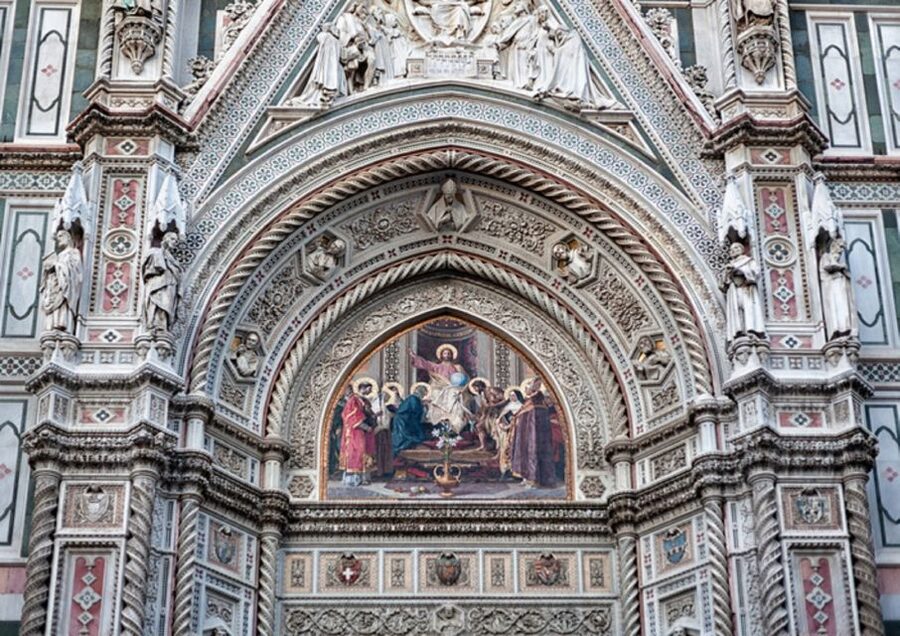
After Accademia, the tour keeps moving through Florence like it’s building a map in your head.
Next up is the Palazzo Medici Riccardi area. You’ll get a photo stop, a guided look, and time to see the Medici presence in the district. Even from street level, this is one of those stops where the guide helps you understand what you’re seeing—why certain buildings mattered, and how the Medici shaped the city’s image.
Then you head toward the Basilica of San Lorenzo and the Medici Chapels. The tour includes photo stops, guided visits, and sightseeing time here as well. The main value is that you’re not only seeing church interiors as decoration. You’re seeing them as part of a political and artistic system.
If churches are your thing, this portion is a highlight. If you’re more into art than architecture, it still works because the guide typically links what you see to the larger Florence story: who commissioned, who ruled, and what messages art carried.
Duomo Complex: Porta del Paradiso, the Dome, and the View Stops That Matter
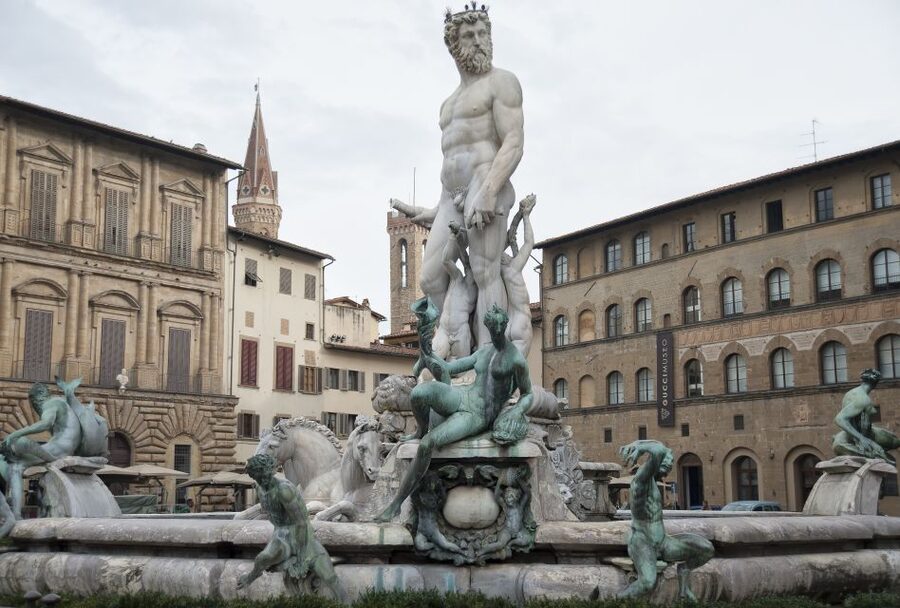
The tour then moves into the Duomo Complex, which is where Florence’s visual identity becomes almost overwhelming—in the best way. You’ll have photo stops and guided sightseeing around:
- the Baptistery’s Porta del Paradiso
- the Brunelleschi Dome
- the Giotto bell tower
This is a good segment for two reasons. First, the guide helps you understand why these structures are famous beyond their looks. Second, the photo-stop rhythm prevents you from losing the plot while you’re trying to frame perfect shots in a busy area.
One consideration: you’ll likely spend time standing and walking around viewpoints. If you’re sensitive to crowds or want constant sit-down breaks, this part may feel less restful than the museum segment.
Cathedral of Santa Maria del Fiore and Orsanmichele: Big Names, Clear Explanations
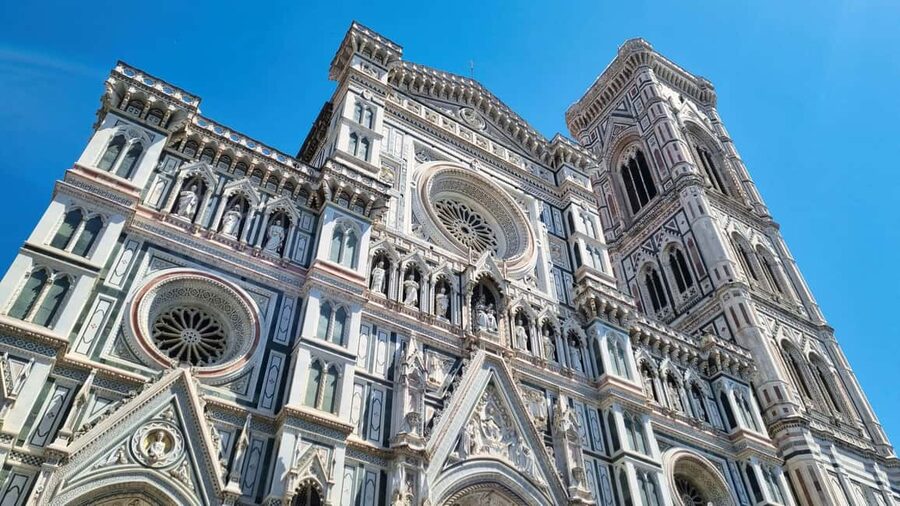
From the Duomo complex area, you’ll also have a stop at the Cathedral of Santa Maria del Fiore. It’s listed as a guided visit with photo stop time and sightseeing and walking along the way. This keeps your route coherent: you’re not jumping around Florence randomly—you’re moving through the same architectural zone in an order that makes sense.
After that, you’ll reach Orsanmichele, again with photo stop and guided explanation. The stop includes exterior viewing and a bit of street-level time, which is helpful because Orsanmichele fits the “Florence as a living city” feeling. Not everything is museum-shaped; some of the city’s art story lives on building facades.
Mercato del Porcellino: The Straw Market Area and a Famous Little Bronze
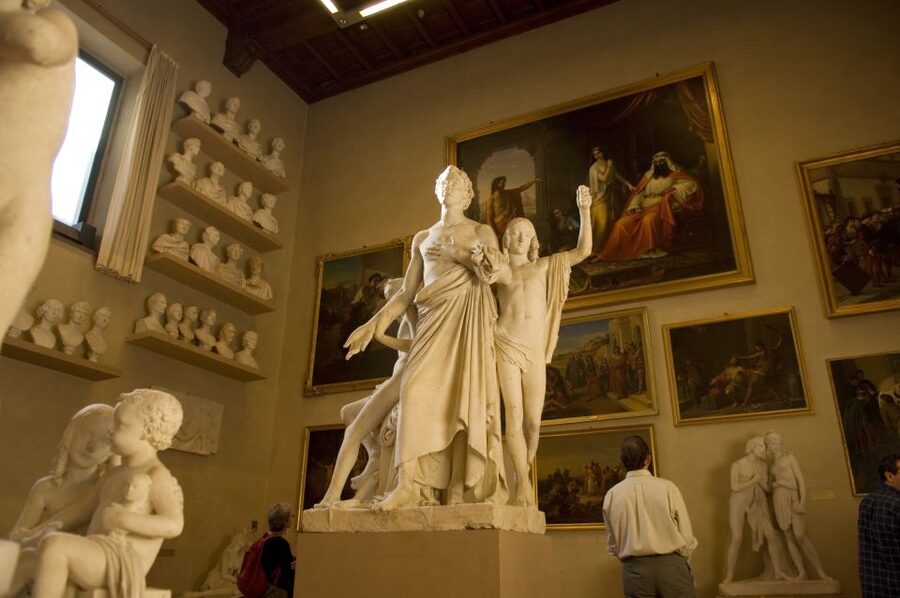
Then comes a more human, street-food-and-shopping kind of moment: the area around Mercato del Porcellino, with the famous porcellino sculpture.
The tour calls this out with a photo stop and guided visit time. This is one of those Florence spots where the guide can turn a quick glance into something you’ll remember. You also get a chance to wander at normal walking pace for a change, instead of only moving from one monumental complex to another.
If you’re the type who enjoys browsing rather than buying, this is a good place to slow down without derailing the tour.
Piazza della Signoria, Palazzo Vecchio, and the Open-Air Michelangelo World
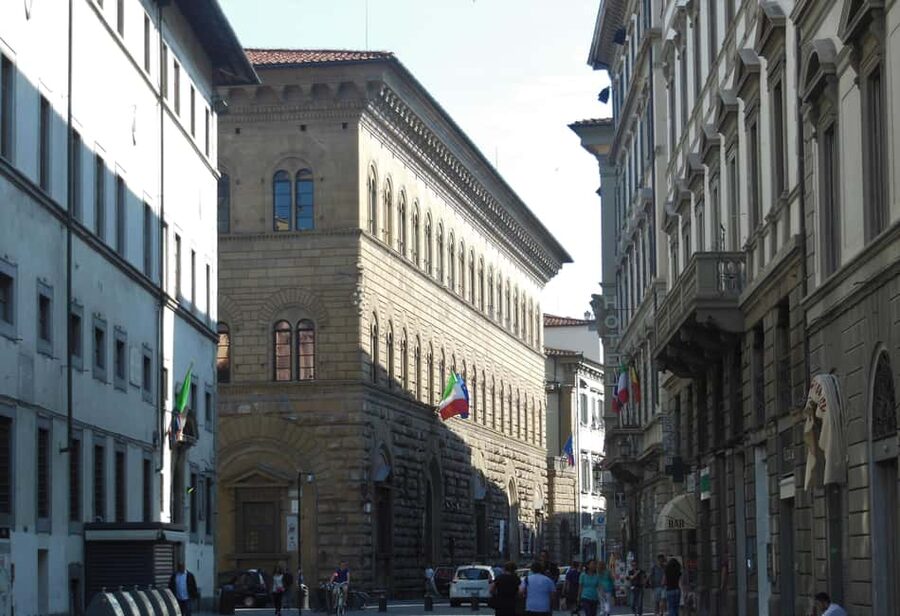
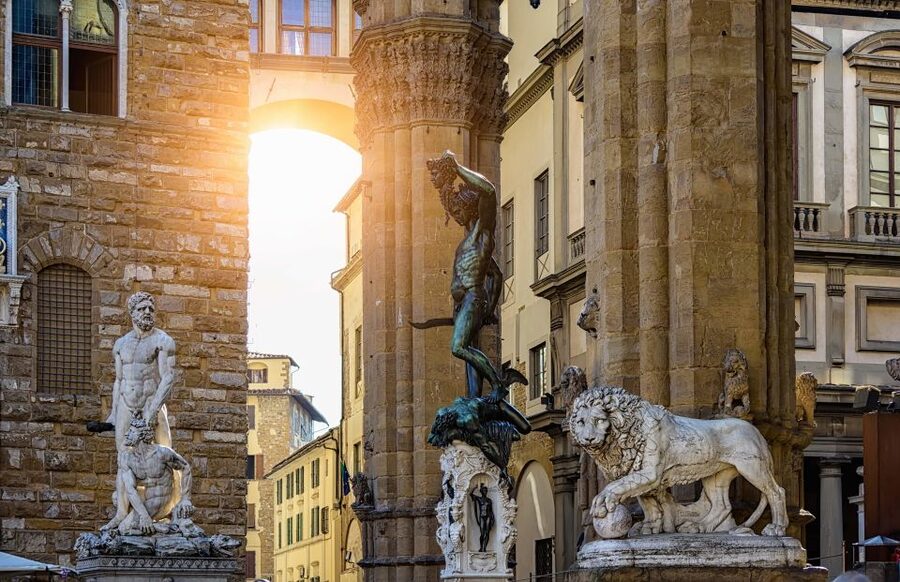
By the time you reach Piazza della Signoria, you’re stepping into what feels like an outdoor sculpture room. The tour includes photo stop and guided sightseeing here, plus time for you to take in the larger square.
This part is especially valuable because it connects back to Michelangelo. The tour highlights the Fountain of Neptune, replicas of Michelangelo’s David, and ancient Roman statues—all with the majestic Palazzo Vecchio and Arnolfo’s tower in the backdrop.
If you’ve only seen David inside, the idea of replicas in the open-air setting is a fun twist. It shows how Florence carried Michelangelo’s image beyond the museum into public space. It also makes the whole day feel less like a museum checklist and more like a guided walk through ideas.
Ponte Vecchio Finish: Jewelry Streets and River Views
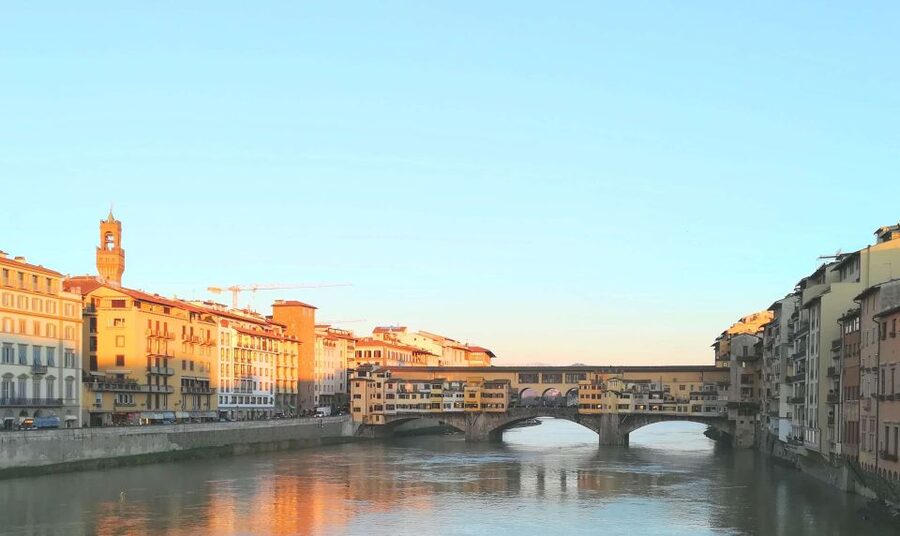
The walk ends at the Piazza della Signoria, but the tour route explicitly includes Ponte Vecchio with photo stop and guided visit time. Ponte Vecchio is famous for jewelers, and it’s one of those places where you can feel the old-city energy right on the river.
Expect a mix of standing and slow movement. This final segment is more about atmosphere than heavy facts, but the guide still helps it land in the larger story of Florence’s design and power.
How Long Is Too Long? Timing and Pace That Make Sense for Most People
The tour runs about 2.5 to 3.5 hours, which is a strong length for a first-or-second day in Florence. It’s long enough to cover multiple major sights, but short enough that you’re not locked into a whole afternoon.
The pace can feel brisk because you have photo stops and guided visits at many points. If you like to linger at everything, you’ll need to balance that with the group rhythm. That’s why comfy shoes are non-negotiable.
The good news: because the Accademia portion is organized with guaranteed entry and earphones, you don’t waste time fighting logistics at the hardest stop.
Price and Value: What $99 Buys You in Real Florence Time
Let’s talk value, not just number.
At $99 per person, you’re getting:
- entrance ticket and reservation fee
- guaranteed museum entry time
- a professional guide for both the Accademia visit and the walking portion
- earphones inside the museum
- ticket-office stress reduction, since entry is handled with assistance at the meeting point
If you were to book a museum ticket yourself and then independently walk a route that includes the Duomo area, Medici sites, Orsanmichele, Piazza della Signoria, and Ponte Vecchio, you’d still spend time coordinating. You’d also miss the guided links that turn the sights into one coherent narrative.
So this price feels more reasonable when you consider that the guide is doing the hard work of selection and interpretation. You’re not just paying to stand in lines and point at buildings.
Lunch Option: A Practical Add-On If You Want One Less Decision
An optional lunch is available in a typical restaurant located in the old city. Drinks are paid on the spot.
One note to keep in mind: the data provided says there’s a special condition for younger children with the lunch option (with lunch cost mentioned for ages 0–6 to be paid on the spot). If you’re traveling with kids, it’s worth checking the age details before you select the lunch add-on.
If you want a low-effort day—see art, walk monuments, then sit down—lunch can be a good choice. If you’d rather wander on your own for food, skip the lunch option and plan your own meal around the route.
Who This Tour Fits Best (And Who Might Prefer Something Else)
This tour is a strong match if you:
- want Michelangelo’s David in a guided museum setting
- like walking through Florence with context, not just checking boxes
- prefer a structured route that connects multiple iconic areas
- value a guide who explains what to pay attention to
It’s also listed as wheelchair accessible, which matters for planning. Still, remember that even in accessible routes, historic city areas can involve uneven surfaces and standing time.
If your style is more slow and café-heavy, you might find the schedule a bit packed. In that case, consider pairing a shorter self-guided walk with another museum visit later.
Practical Tips to Make the Most of It
A few things that will help you enjoy the day rather than endure it:
- Wear comfortable shoes and dress for churches (appropriate clothing for places of worship).
- Plan to stand around photo stops and viewpoints.
- Bring a small day bag and keep water handy, especially in warmer months (April to October is the small-group monolingual season).
- In the Accademia, listen first, then look. The sculpture experience tends to improve with a second round.
Should You Book This Florence Walking Tour?
Book it if you want the best of Florence tied together by a guide who makes Michelangelo and the city make sense. I especially like that the tour handles the museum entry smoothly and then keeps you moving through the city’s major zones without leaving you to self-navigate the hard parts.
Skip it if you hate walking, want long independent breaks, or already have a guide you trust for Michelangelo and only care about the museum. In that case, a museum-focused visit alone might be better.
FAQ
What’s included in the Accademia Gallery visit?
The tour includes the entrance ticket and reservation fee, guaranteed museum entry time, and earphones inside the museum. Your ticket is delivered at the meeting point by an assistant in front of the museum to help you avoid long queues.
Where do I meet the guide?
The main meeting point is at the corner of Via Ricasoli and Piazza San Marco, in front of the loggiato of Accademia delle Belle Arti. There’s also an alternate meeting point for the 09.45am start at Via Martelli, 50r, in front of Café Firenze, with an assistant in blue clothing.
How long is the tour?
The duration is listed as 2.5 to 3.5 hours, depending on the starting time.
Is a lunch included?
Lunch is included only if you select the lunch option. It’s served in a typical restaurant in the old city, and drinks are paid on the spot.
What languages are available?
The tour is listed as English. Spanish can be confirmed from November 1, 2024 until March 31, 2025 with a minimum of four participants.
Is the tour wheelchair accessible?
Yes, the tour is listed as wheelchair accessible.