REVIEW · CADIZ
Jerez de la Frontera History and Art Walking Tour
Book on Viator →Operated by Andalusia Tour Travel · Bookable on Viator
Jerez has layers, and this walk connects them fast. You’ll start in the big public squares, then trace the city’s mix of Almohad, Gothic, Baroque, and Neoclassical influences with an art historian guide. It’s a smart way to get your bearings in Jerez de la Frontera without feeling rushed or lost.
What I love most is the way the guide explains what you’re seeing, not just what you’re looking at. I also like that the route is compact and focused, so you get history and art cues in quick, walkable chunks. That makes it ideal if you’re short on time but still want the story behind the buildings.
One consideration: several major sights are viewed from the outside or around the area, and interior visits aren’t always included. If you want a lot of indoor time at churches or cathedrals, you may need to plan a separate stop (or check what’s included for your departure).
In This Review
- Key things I’d plan around
- Why Jerez’s Old Town Makes Sense on Foot
- The Art-Historian Approach: What You Learn (and How)
- Plaza del Arenal: Starting Where the City Breathes
- Alameda Vieja: A Green Pause Near the Alcázar
- Iglesia de San Miguel: Gothic by Way of a Tower
- Alcázar de Jerez: Almohad Fortifications at the Edge
- Catedral de Jerez: A 17th-Century Style Mix
- Palacio del Marqués de Bertemati: Islamic-Walls Layouts and Courtyard Power
- How Long It Really Takes (and What That Means for Your Day)
- Price and Value: Is $26.43 a Good Deal?
- Practical Tips to Get More Out of Every Stop
- Language, Group Size, and the Pace You Should Expect
- Who Should Book This Jerez History and Art Walk
- Should You Book It?
- FAQ
- FAQ
- How long is the Jerez de la Frontera History and Art Walking Tour?
- Where does the tour start and end?
- Is the tour offered in English?
- What’s included in the price?
- Are monument entrance tickets included?
- Do I need hotel pickup?
- How big is the group?
- Can children join?
- What is the cancellation window?
- Is the meeting point near public transportation?
Key things I’d plan around
- Art historian guide, so you’re not stuck with basic facts
- Small group cap (max 30), which usually means better pacing on narrow streets
- Six Old Town stops in about two hours, centered on squares and architectural “clues”
- Several sights are exterior-only, with some admission tickets not included
- Strong English availability, with the occasional two-language setup
Why Jerez’s Old Town Makes Sense on Foot
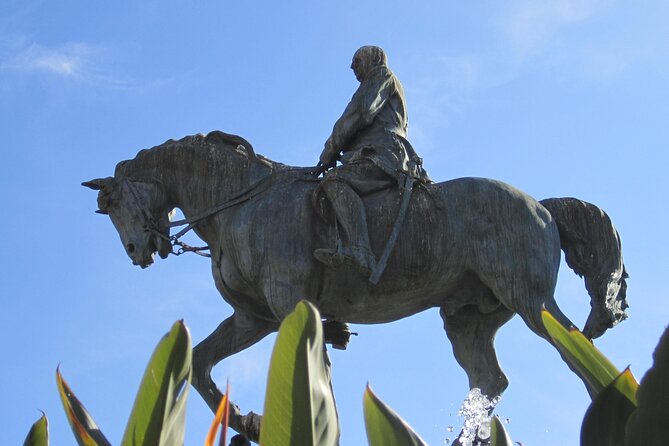
Jerez de la Frontera is one of those cities where the best highlights don’t live in a single museum. They’re scattered in squares, church towers, and the edges of old fortifications. This tour leans into that reality. You’re walking through the parts of the city that help you understand how Jerez formed.
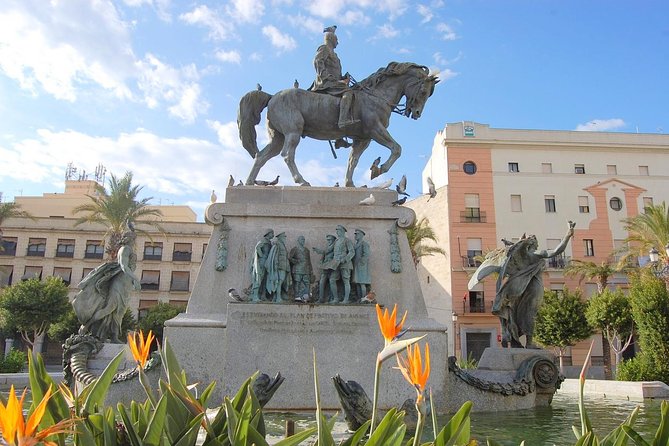
Also, the start point matters. You begin at Plaza del Arenal, a natural place to gather and re-orient. From there, you move through the Old Town in a way that feels like you’re learning the city’s geography as much as its art. And at about 2 hours, it’s paced for learning without turning into a full-day endurance event.
This is also a good choice if you’re arriving in Jerez for the first time. The tour is designed as a cultural introduction, so it doesn’t assume you already know the big story. You’ll leave with a map in your head: where the Islamic walls influenced the layout, where medieval power showed up in fortifications, and where later styles layered on.
The Art-Historian Approach: What You Learn (and How)
The included guide isn’t just a local storyteller. It’s a professional art historian guide, which changes the tone. You’re not only hearing dates. You’re getting explanations for why a building looks the way it does, and how different eras left fingerprints behind.
In the feedback tied to this experience, guides often get praised for clarity and a sense of humor, with strong communication in English. Names that have shown up include Rose, Lucia, Luisa, Marta, and Maria. Even if your guide isn’t one of them, the style you’re looking for is consistent: specific architectural details, connected to the city’s cultural mix.
You’ll get the most value if you treat this like a visual lesson. Slow down at corners. Look up at towers. Pay attention to changes in building style. The guide will do the heavy lifting, but your eyes are part of the bargain.
Plaza del Arenal: Starting Where the City Breathes
Your tour begins at Plaza del Arenal (Pl. del Arenal, 11403 Jerez de la Frontera). It’s a practical meeting point and, more importantly, it sets the tone. Plazas in Old Town Spain are where civic life happens, so starting here helps you understand what Jerez valued over time.
From the square, you’ll begin a historical walk through streets, squares, buildings, and monuments. Expect the guide to tie the architecture to the bigger cultural story, including how different waves of influence shaped Jerez’s identity. Since you start right at the action, you don’t waste time hunting down orientation landmarks.
This stop is also “low pressure.” It’s about 10 minutes, so you’re not committing to a long opening lecture. It’s the setup: what you’ll be watching for as you go.
Alameda Vieja: A Green Pause Near the Alcázar
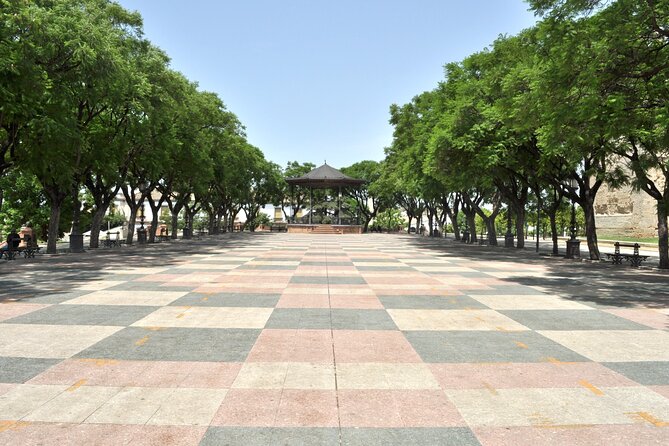
Next is Alameda Vieja, a green recreational area close to the Alcázar. Even though it’s a park space, it’s part of the history lesson. The origin connects to the surroundings of the Alcázar and the area is dedicated to Fortun de Torres, a hero of Jerez.
This is a nice break in the walking rhythm. You get a breather from dense streets, plus a chance to look toward the Alcázar area without feeling like you’re just moving from one monument to the next. In tours that overload you with stone details, this kind of pause helps the information stick.
It’s scheduled for around 15 minutes, and admission for this stop is free.
Iglesia de San Miguel: Gothic by Way of a Tower
Then you’ll move to Iglesia de San Miguel, described as the main Gothic church. The key detail here is the tower. It’s noted as the highest point in the city, and the church is recognized as an Asset of Cultural Interest, declared a National Historic-Artistic Monument in 1931.
This stop is short at about 5 minutes, and admission for the church is not included. That’s the trade-off: you’re learning what the church represents more than spending a long time inside. If you’re the type who loves churches for their interiors, plan extra time later.
Still, don’t skip this mentally. Gothic churches often tell you a lot about the era that built them: power, priorities, and the style changes happening at the time.
Alcázar de Jerez: Almohad Fortifications at the Edge
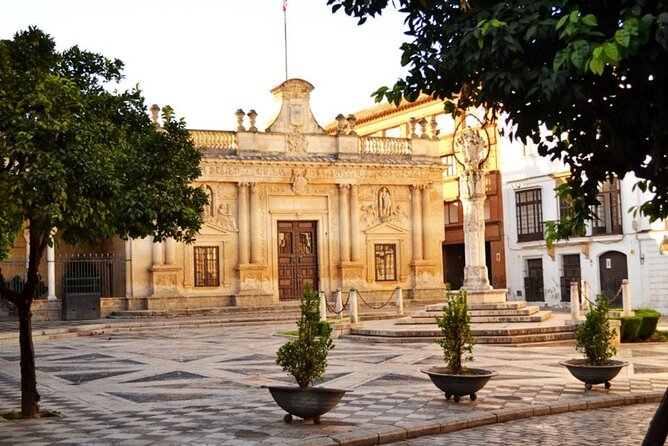
One of the biggest architecture wins in the walk is the Alcázar de Jerez de la Frontera. You won’t enter; the focus is on the surroundings. That said, the Alcázar is historically weighty: it’s a set of fortified buildings of Almohad origin, probably from the 12th century, and it’s described as the oldest Almohad building in the Iberian Peninsula.
This is where the cultural “melange” becomes concrete. Almohad architecture isn’t just a random styling choice; it’s part of how power and engineering worked in that period. Even from the outside, you’ll likely pick up structural cues your guide points out.
Scheduled time is about 10 minutes, and admissions aren’t included for this portion.
Catedral de Jerez: A 17th-Century Style Mix
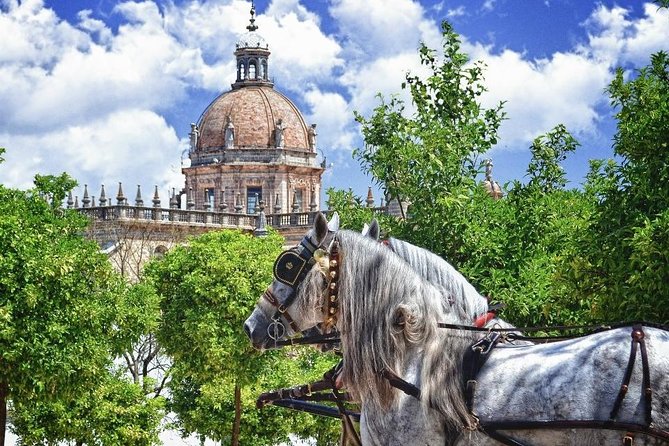
After the Alcázar atmosphere, you shift to the Catedral de Jerez de la Frontera. Like the Alcázar stop, the tour focuses on only the surroundings. The cathedral itself is a 17th-century construction that combines Gothic, Baroque, and Neoclassical styles.
This kind of mixed style is a useful clue. It tells you the city kept building and reforming instead of freezing at one moment in time. So even when you’re just looking from outside, you can understand the cathedral as a timeline in stone.
Time allocation is about 10 minutes and admissions aren’t included for this stop. If your goal is photos from the right angles or quick architectural comparison, this works well. If you want a long indoor visit, you’ll need to add time on your own.
Palacio del Marqués de Bertemati: Islamic-Walls Layouts and Courtyard Power
The last stop brings you to a quieter but still meaningful slice of Old Town: the Palacio del Marqués de Bertemati area, tied to Plaza del Arroyo. This square is described as one of the largest historical public spaces within Jerez’s Islamic walls.
Two important palace references appear in this area: the Bertemati palace and the Conde de Puertohermoso palace. For this stop, you’ll visit their surroundings, not interiors, and the time is about 10 minutes. Admission isn’t included.
This is the stop that often rewards people who like to connect urban planning to cultural history. You’re seeing how public space sat inside older wall lines, and how later eras placed prominent buildings into that framework.
How Long It Really Takes (and What That Means for Your Day)
The tour runs about 2 hours. With six stops, including short exterior viewing segments, it’s designed for flow rather than deep entry ticket time.
That makes it easy to plug into your schedule:
- If you want an Old Town orientation early in your trip, this is a great pick.
- If you’re already walking the city, this can sharpen what you notice without needing extra research later.
The small group limit (up to 30 travelers) matters too. A group that size can still be noisy, but it’s not so huge that you’re invisible. Your guide should be able to pause for questions and point out details without constantly herding people.
Price and Value: Is $26.43 a Good Deal?
At $26.43 per person for roughly two hours, this tour is priced like an entry-level “get oriented” experience. The value isn’t in a bunch of included ticketed interiors. The value is in what you’re buying: a professional art historian guide plus structured context as you walk.
Here’s the practical math:
- Included: art historian guide and local taxes
- Not included: several admissions, plus no hotel pickup or drop-off
So you’re paying for guided interpretation. If you’re the type who enjoys learning while walking and you like architecture explanations, the price makes sense. If you want mostly indoor access, you might feel like you’re paying for an exterior-focused tour.
On the other hand, the tour is short and easy to fit in. For many visitors, that’s worth a lot. A two-hour history-and-art orientation can save you time later, because you’ll know what to seek out when you have free hours.
Practical Tips to Get More Out of Every Stop
I’d treat this tour like a guided photo-quest and a listening assignment at the same time. Here are a few ways to improve your experience without spending extra money:
- Wear shoes you can walk in comfortably for 2 hours. This is Old Town ground, not museum flooring.
- Keep your eyes up. Church towers and style shifts are part of the lesson.
- If you care about interiors, save that for follow-up visits. Some stops are exterior-only, and several admission tickets aren’t included.
- If you’re traveling with kids, check the group rule: children must be accompanied by 2 adults minimum, and the child rate applies when sharing with 2 paying adults.
Also, keep in mind that the tour can involve monument entrance timing. The operator notes delays at entrances aren’t their responsibility, so bring a calm mindset and don’t schedule something critical immediately afterward.
Language, Group Size, and the Pace You Should Expect
This tour is offered in English. It also notes that on some occasions the visit could be conducted in two languages. That can affect pacing slightly, especially if the group needs time to switch back and forth. If you’re comfortable with English, you’re in the right place.
Because the group cap is 30, you’re unlikely to feel completely lost in the crowd. Still, this is a guided walk, so you’ll need to stay with the group. Separating from the group during the guided tour comes with consequences for claims, so it’s worth staying close to your guide.
Who Should Book This Jerez History and Art Walk
This is a strong match if you:
- Want a first-time orientation with an art-historian lens
- Like walking tours that explain architecture and cultural layers
- Prefer a short activity that you can repeat later with your own “freestyle” wandering
It’s also a good fit if you’re traveling in a group and want a structured plan without paying for private guide prices.
If you’re mainly seeking interior access to major monuments, you might still enjoy the walk, but you should plan to add separate time for ticketed visits.
Should You Book It?
Yes, I’d book this tour if you want Jerez de la Frontera to make sense quickly. For a little over $26, you get a focused Old Town route, expert-style interpretation, and a clear connection between different historical eras—Almohad fortification influence, the Gothic signal of San Miguel, and later style mixing in the cathedral area.
Skip it only if your top goal is lots of indoor sightseeing with included admission. Otherwise, this is a smart way to get your bearings, learn what to look for, and walk away with questions you’ll actually want to explore later.
FAQ
FAQ
How long is the Jerez de la Frontera History and Art Walking Tour?
It runs for about 2 hours.
Where does the tour start and end?
The tour starts at Plaza del Arenal in Jerez de la Frontera and ends back at the meeting point.
Is the tour offered in English?
Yes, it is offered in English.
What’s included in the price?
A professional art historian guide and local taxes are included.
Are monument entrance tickets included?
Some stops are free, but several sights are marked as admission not included, and you’ll visit mainly surroundings for places like the Alcázar, cathedral, and palace areas.
Do I need hotel pickup?
No. Hotel pickup and drop-off are not included.
How big is the group?
The maximum group size is 30 travelers.
Can children join?
Children must be accompanied by at least 2 adults, and the child rate applies only when sharing with 2 paying adults.
What is the cancellation window?
Free cancellation is available up to 24 hours before the experience start time for a full refund.
Is the meeting point near public transportation?
Yes, it’s near public transportation.