REVIEW · MAPUTO
Maputo Art Walking Tour
Book on Viator →Operated by Maputo Tour Guides · Bookable on Viator
Maputo has monuments with stories that stick. I love the mix here: Portuguese-influenced architecture side by side with Mozambican art and craft. I also love the pacing—3 hours that feel focused instead of rushed. One possible drawback is that this is a true walking tour, so heat or rain can make the day less comfortable.
The tour price is easy to swallow at $35 per person for about 3 hours, and bottled water plus fees are included. With a small cap (up to 20 people), you’ll get more real conversation than you do on big bus tours. The operator is Maputo Tour Guides, and guides like Walter and Edilson are known for being thorough and for answering questions clearly.
In This Review
- Key things to know before you go
- Why Maputo’s art and architecture are a perfect walking tour theme
- Price and timing: good value for a focused 3-hour route
- Museu de História Natural de Maputo: neo-Manueline architecture and a surprisingly intense collection
- Núcleo de Arte: where artists work right in front of you
- Vila Algarve: the “Português suave” façade with a dark basement story
- Palácio de Casamentos: “Greek ateneu” structure, Mozambican art, and public ceremony
- Polana Serena Hotel history, the lemon-squeezer church, and FEIMA crafts at the end
- Polana Serena Hotel: whose stories the ground remembers
- Saint Anthony Catholic Church: the lemon squeezer
- FEIMA: a practical souvenir finish with food options
- What I’d watch for (and how to get the most out of it)
- Who should book this Maputo Art & Architecture walk
- Should you book this Maputo Art & Architecture walking tour?
- FAQ
- How long is the Maputo Art & Architecture walking tour?
- Where does the tour start and end?
- What is included in the price?
- What is not included?
- Does the tour run in bad weather?
- What is the cancellation timeline?
Key things to know before you go
- A tight 3-hour route built around architecture and art, not just sightseeing photos
- Small group size (max 20) helps you ask questions without waiting your turn
- Studios and craft culture show up at Núcleo de Arte and FEIMA, not only museum glass cases
- Major architectural styles in one loop: neo-Manueline, Portuguese suave, and Greek-colony-era design
- A mix of light and heavy themes, including colonial-era violence at Vila Algarve
- End at FEIMA so you can swap your photos for practical souvenirs and local snacks
Why Maputo’s art and architecture are a perfect walking tour theme
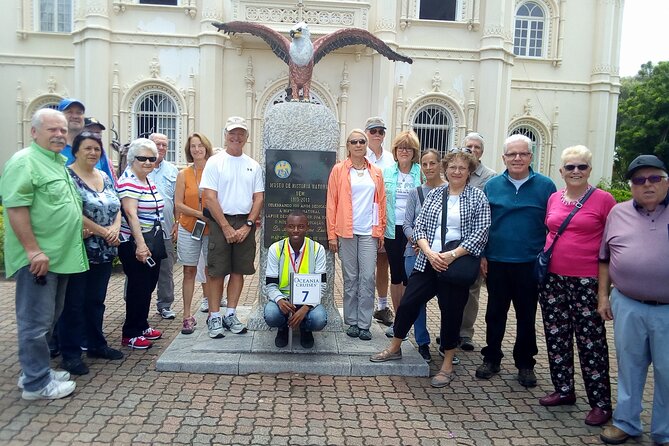
Maputo doesn’t do “one style only.” You’ll see building choices that came from Portuguese rule and European architecture trends, then you’ll see Mozambican creativity taking the wheel—painting, sculpture, ceramics, stained glass, tiles, crafts, and public art.
This tour’s best trick is that it teaches you how to look. Instead of telling you what to like, it points out details that explain why a building or artwork exists. That makes the city feel more legible fast: you start noticing design decisions, not just landmarks.
You also get variety in how art shows up. Part of the time it’s formal (museums, churches, carved pillars), and part of the time it’s hands-on (artists at work, plus FEIMA where you can browse capulanas and small everyday souvenirs).
You can also read our reviews of more walking tours in Maputo

Price and timing: good value for a focused 3-hour route
At $35 per person for around 3 hours, this is strong value if your goal is to get your bearings in Maputo’s art and architecture quickly. You’re not paying extra for add-ons like entry fees—the tour includes all fees and taxes and includes bottled water.
You’ll start at 9:00 am at Museu de História Natural de Maputo (near Praça Travessia do Zambeze), and the tour ends at FEIMA at Parque dos Continuadores FEIMA on Avenida Armando Tivane. Ending at a market is smart: you finish while you still feel curious, and you can shop while it’s fresh, not after you’ve gone home.
Two practical notes:
- This runs in a morning slot, which can help with comfort (less heat later).
- The experience requires good weather, so if weather turns, you’ll be offered a different date or a full refund.
Museu de História Natural de Maputo: neo-Manueline architecture and a surprisingly intense collection
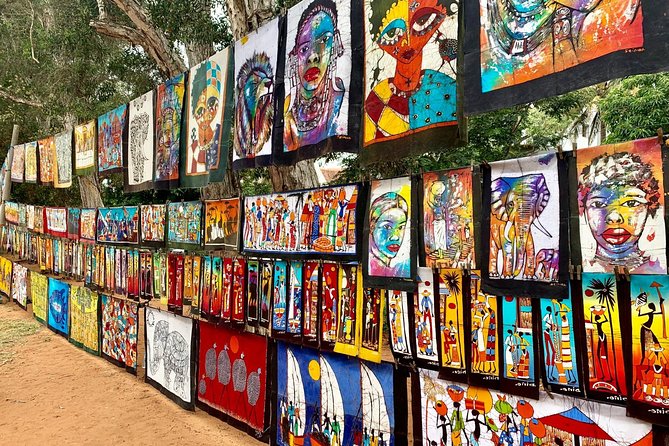
Your first stop is Museu de História Natural de Maputo, a building from 1931–1933 in neo-Manueline style (a Portuguese gothic flavor). The municipal engineer António Ribeiro de Mendonça designed it, and the original idea was even to build a school.
Inside, the museum is a crash course in period museum design—especially in the big room downstairs, where the displays can feel like they’re from another era. One of the most talked-about exhibits is a set of elephant fetuses aged about 1 month to 20 months. The taxidermist Peão Lopes is credited with the work, and alongside that you’ll see realistic wildlife scenes, like a lioness tearing a zebra carcass.
Here’s the practical consideration: some parts can feel dusty and not state-of-the-art. Also, if you’re sensitive to biological or graphic museum themes, this is the stop to take your time with, or skip fully if it’s not your thing.
Still, it’s a good start because the museum building itself gives you the “Portuguese” visual language early, and that makes the later architecture details easier to spot.
Núcleo de Arte: where artists work right in front of you
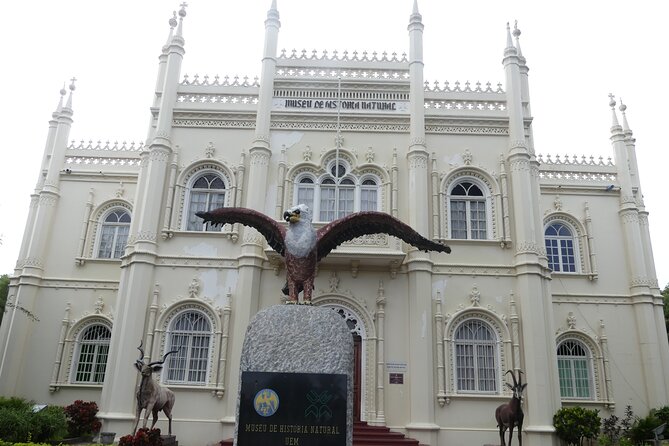
Next comes Núcleo de Arte, an artists association and school for Mozambican artists. This is where the tour shifts from “looking at art” to “watching art get made.”
You’ll find a gallery area and working ateliers, and the key detail is simple: the artists are generally happy to let you see them painting and sculpting. That means you’re not stuck behind a barrier of glass and labels. You get to observe process—how forms start, how materials change, and how each artist’s pace looks up close.
One name you’ll hear here is Eugenio Mucavele, described as calm and concentrated, and also one of the most experienced artists the guides regularly meet on these tours. If you’re the type who loves learning how technique develops, this is your best stop.
The only real downside: the time here is brief (about 15 minutes). So go in ready to look quickly, ask a question, and then keep moving.
Vila Algarve: the “Português suave” façade with a dark basement story
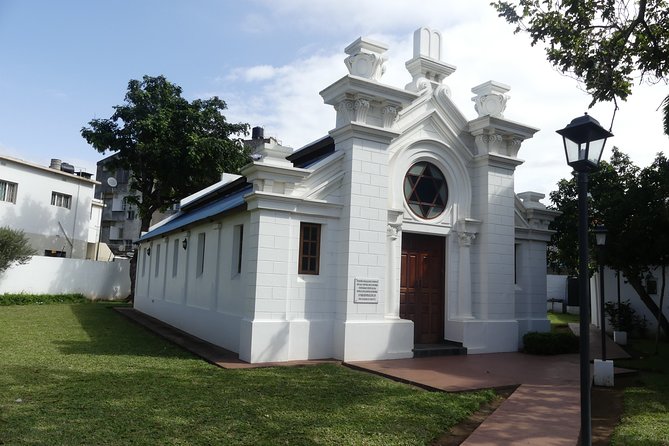
Vila Algarve is a building from 1934, designed in a “português suave” style by architect Augusto da Silva Pinto and engineer Alfredo F. Soares. It was built for Joé dos Santos Rutino, a photographer and stationary shop owner, who also held the lottery concession.
Then comes the part you’ll actually remember when you’re back home: the azulejos (hand-painted tiles). These were produced by the Aleluia company, so you’re looking at a recognizable tile-maker tradition rather than generic decorative work.
But Vila Algarve is also where the tour’s tone gets heavier. In 1952, the Portuguese secret police PIDE took over the building. In the basement, there was an interrogation chamber called Kula, a word in Shangaan that means where one is eaten up. The main torturer named here is Francisco Langa, also known as Chico Feio. After independence in 1975, he suffered a violent death.
Be ready for this stop to feel intense, even if you came hoping for architecture beauty only. I’d treat it as a reminder that buildings can carry trauma, not just design features.
Palácio de Casamentos: “Greek ateneu” structure, Mozambican art, and public ceremony
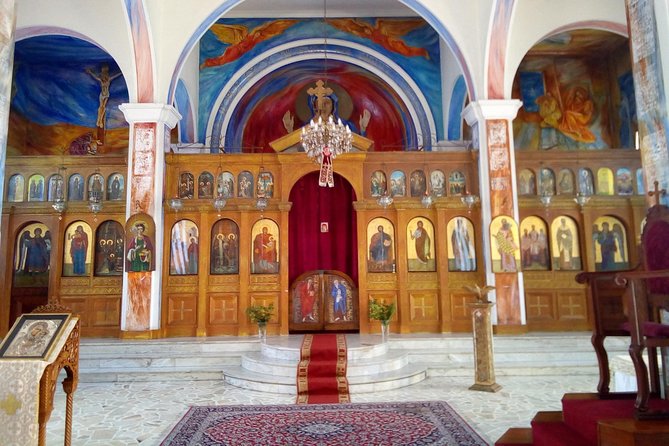
The Palácio de Casamentos (Wedding Palace) was built between 1931 and 1934, designed by Agapus Nicolau and Nicolas Kassimatis as an “ateneu Grego,” basically a community center for the Greek colony. It was open to all, and dance matinees were among the favorite events.
Inside, you can learn how civil marriages are performed with style and singing. That matters because it shows how architecture isn’t only about aesthetics—it can shape social rituals.
Art shows up too. The tour highlights a large painting by Malangatana from 1979/80, called The Long Passage Towards Marriage. You’ll also see a carved pillar by Alberto Chissano. In the basement there are two painted concrete reliefs.
This is one of those stops where you’ll want your guide’s narration. The building’s details can look straightforward at first glance, but with context, you start seeing the intention: who used the space, what kind of community energy it was built for, and how Mozambican artists got woven into a colonial-era shell.
Polana Serena Hotel history, the lemon-squeezer church, and FEIMA crafts at the end
After the palace, the route loops through three more highlights that give you a “Maputo whole picture” feeling.
Polana Serena Hotel: whose stories the ground remembers
The Polana Serena Hotel project was commissioned by the Delagoa Bay Lands Syndicate, with Leo Cohen as the local representative. The building was completed in 1922. Sources here say Sir Herbert Baker may have designed it, but the responsible architect was Walter Reid, and the contractor was Hugh Le May.
The name Polana comes from an African chief whose lands were sold without compensation, and whose descendants were evicted from the area in 1946. The tour also notes that a tramway used to run up to the hotel. That single detail turns the place from a photo spot into a pointer about how Maputo moved people around at the time.
Saint Anthony Catholic Church: the lemon squeezer
Next is the Saint Anthony Catholic Church, commonly called the lemon squeezer or the inverted flower because of its shape. It was built in 1962 by Nuno Craveiro Lopes, son of Portugal’s former president.
There’s also a miniature replica in the garden on the corner. Stained glass was produced by Sociedad Mauméjean Hermanos in Madrid. If you like architecture that looks like a sculpted object, this one’s memorable fast.
FEIMA: a practical souvenir finish with food options
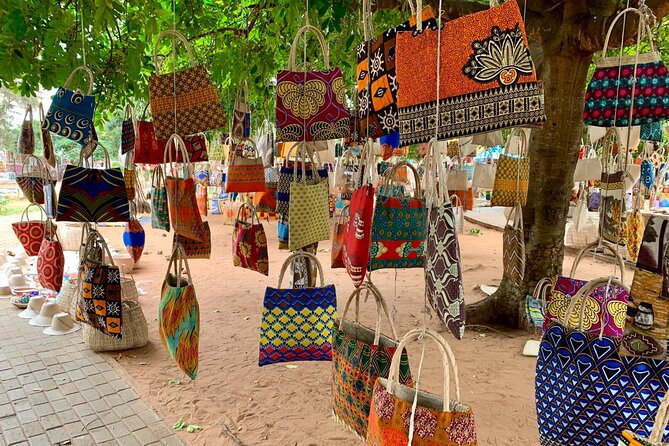
The tour ends at FEIMA (Feira de Artesanato, Flores e Gastronomia), a handicraft market with restaurants. This is your chance to buy gifts while the tour context is still fresh.
You can pick up items ranging from fridge magnets to capulanas, and because FEIMA also has places to eat, you can stretch your time there without feeling like you’ll get “trapped” in a market with no break.
What I’d watch for (and how to get the most out of it)
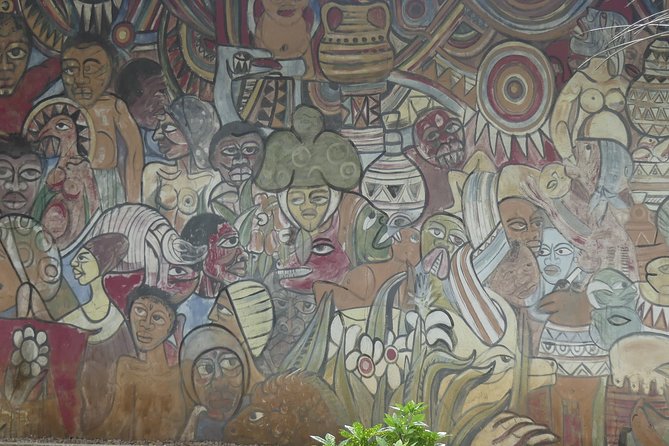
This tour hits a rare balance: architecture facts plus art access. If you love asking questions, you’ll probably enjoy it even more, especially with guides known for being thorough. Names you may hear include Walter and Edilson, and the tour format gives you moments to ask about what you’re seeing as you go.
That said, here are the main things to plan around:
- Outdoor walking pace matters. Wear comfortable shoes. You’ll cover multiple stops in a short time.
- Expect emotional weight at Vila Algarve. It’s not only about style and tiles; it includes the story of PIDE and the basement interrogation chamber.
- Some museum displays may feel dated. At Museu de História Natural, parts may not feel modern, and the animal-related exhibits are intense.
- Plan for a weather-dependent outing. Good weather is required, and the operator offers a different date or full refund if weather cancels it.
One more practical note: the overall track record is strong (rated 4.8/5 with 17 reviews and 94% recommending it). Still, one past booking issue was reported as a no-show situation. If you want to reduce your risk of any confusion, I’d confirm the meeting point the day before and keep your phone handy on the morning of your tour.
Who should book this Maputo Art & Architecture walk
I’d book this if you fit any of these:
- You want architecture + art in one morning, without hopping around on your own.
- You care about Mozambican creativity and want to see artists working at Núcleo de Arte, not just finished products.
- You like guided context, especially for buildings tied to social life (like the Palácio de Casamentos) and for design details (tiles, church shape, carved elements).
- You’re on a short Maputo visit and want a route that’s timed right for starting at 9:00 am and finishing near FEIMA for shopping and lunch.
I wouldn’t prioritize it if:
- You strongly prefer only upbeat, light themes. Vila Algarve’s story gets dark.
- You struggle with walking or long standing around exterior façades and churches.
Should you book this Maputo Art & Architecture walking tour?
Yes, if your idea of a great Maputo morning is a guided “how to look” tour—Portuguese architectural styles meeting Mozambican art and crafts. The $35 price feels fair for what you get: multiple major sites in about 3 hours, water included, and a natural ending at FEIMA so you can turn curiosity into souvenirs.
If you do book, go prepared with comfortable shoes, a weather plan, and a mindset that this city’s art includes both beauty and difficult chapters. That mix is exactly why the tour is worth your time.
FAQ
How long is the Maputo Art & Architecture walking tour?
It lasts about 3 hours.
Where does the tour start and end?
It starts at Museu de História Natural de Maputo (near Praça Travessia do Zambeze) and ends at FEIMA at Parque dos Continuadores FEIMA on Avenida Armando Tivane.
What is included in the price?
The tour includes bottled water and all fees and taxes.
What is not included?
Alcoholic beverages are not included.
Does the tour run in bad weather?
The experience requires good weather. If it’s canceled due to poor weather, you’ll be offered a different date or a full refund.
What is the cancellation timeline?
You can cancel for a full refund up to 24 hours before the experience starts. If you cancel less than 24 hours before, the amount you paid won’t be refunded.