REVIEW · ASAKUSA
Official Street Go-Kart Tour in Asakusa
Book on Viator →Operated by Street Kart · Bookable on Viator
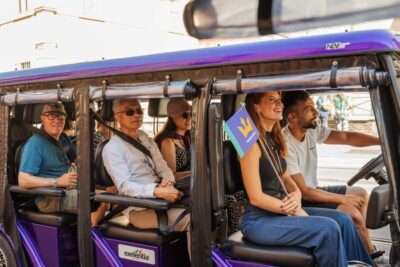
Tokyo looks different at kart speed. In Asakusa, you ride a go-kart dressed as an anime or game character, guided through the area so you spend less time figuring things out and more time seeing landmarks like Sensoji and Tokyo Skytree.
Asakusa is the setting, and go-karts are the trick.
I especially like the all-in feel: costume rental, kart rental, fuel surcharge, and kart insurance are part of the package, so you can focus on driving instead of budgeting add-ons. I also like the human factor—guides handle the induction, keep the group together, and help with photos and poses (Yu seems to be the name people keep praising).
guide-led and costume + kart rental are the winning combo.
One consideration: you need the right driving documents before you go. Expect to bring a physical International Driving Permit (1949 Geneva Convention format) plus your passport, and wear flat closed footwear with enough physical comfort for an hour to 90 minutes.
In This Review
- Key things to know before you go
- Why Asakusa by go-kart beats the usual Tokyo day
- Your ride starts at the Nishiasakusa meeting point
- Price and what you actually get for $64.34
- The driving reality: licenses, gear, and the safety induction
- Costumes first: picking your character and stepping into the moment
- Asakusa’s Sensoji stop: old Tokyo on foot, then on wheels
- Tokyo Skytree timing: dusk is the strategy
- Photos and videos: the helpful part you might not plan for
- Small groups and guide attention in real Tokyo streets
- Weather and how it affects your plans
- Who this tour is for (and who should pass)
- Final call: should you book the Asakusa Official Street Go-Kart Tour?
- FAQ
- How long is the Official Street Go-Kart Tour in Asakusa?
- What is the meeting point for the tour?
- What’s included in the ticket price?
- What do I need to drive in Japan?
- What is the minimum age?
- What should I wear during the tour?
- Is this tour affected by weather?
Key things to know before you go
- Multiple departure times let you target the light you want, especially that Skytree dusk glow.
- Costume choice is part of the fun before you roll out into the streets.
- Small groups (up to 5 travelers) help you stay together and avoid the stress of Tokyo navigation.
- Skytree light-ups run Fri/Sat (8:00 p.m. to 12:00 a.m.) with colors that change by month and hour.
- Photos are built in, with staff taking lots of pictures so you don’t have to manage your phone while driving.
- If you’re in a large party, groups split if there are more than 6 drivers.
Why Asakusa by go-kart beats the usual Tokyo day
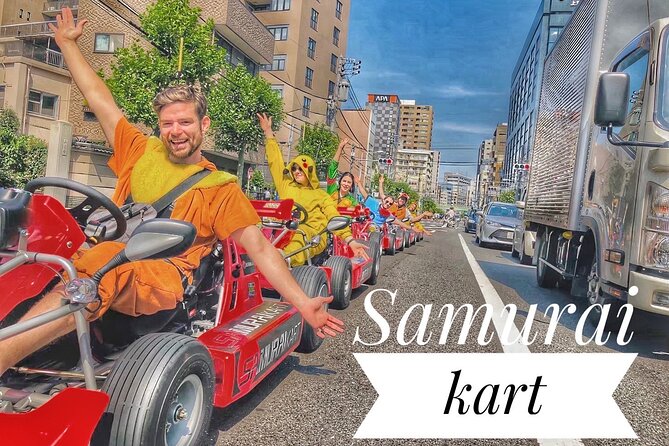
Asakusa is one of those neighborhoods where you can still feel older Tokyo in the streets around Sensoji. Walking there is great, but it turns into a slow shuffle when crowds build. This tour gives you a different pace: you’re in motion, still with landmarks on your route, and you’re not stuck scanning maps while everyone else is stepping around you.
The go-kart twist also changes the mood. You’re not just sightseeing; you’re playing a role. Choosing a costume that matches your favorite game, comic, or anime character turns the whole morning or evening into something more like a memory you’ll talk about at dinner—not a checklist you’ll forget.
Most importantly, you’re not doing it alone. This is a guided, lead-guide format with a small group, so the experience is built around movement without the usual Tokyo “where do we go next?” fatigue.
Your ride starts at the Nishiasakusa meeting point
The meeting point is in Nishiasakusa, at 3-chōme-25-31 Nishiasakusa, Taito City, Tokyo 111-0035. The activity ends back at the same place, so you’re not scrambling at the end to re-orient.
It’s also close to public transportation. That matters because you’ll likely pair this with the rest of your Tokyo day using trains and buses. In practice, that means you can keep your sightseeing flow: do Asakusa and Skytree without having to build a whole day around one far-flung departure.
Also, arrive early. There’s at least one review that highlights what happens when someone gets there a few minutes late at departure time—the tour may have already left and support wasn’t able to fix it. That’s the kind of stress you can avoid with a small buffer.
Price and what you actually get for $64.34
This costs $64.34 per person and typically runs 1 hour to 1 hour 30 minutes. That’s a short window, but the value comes from what’s included.
You’re not paying separately for the driving lead, the costume rental, the kart rental, or the fuel surcharge. Kart insurance is included too. When you total up what it would cost to cobble all that together yourself—plus the time saved by having a guide—this pricing starts to make sense as an experience, not just equipment.
It’s also booked fairly far in advance on average (about 34 days), which is another sign you’ll want to plan instead of hoping a slot appears later.
The driving reality: licenses, gear, and the safety induction
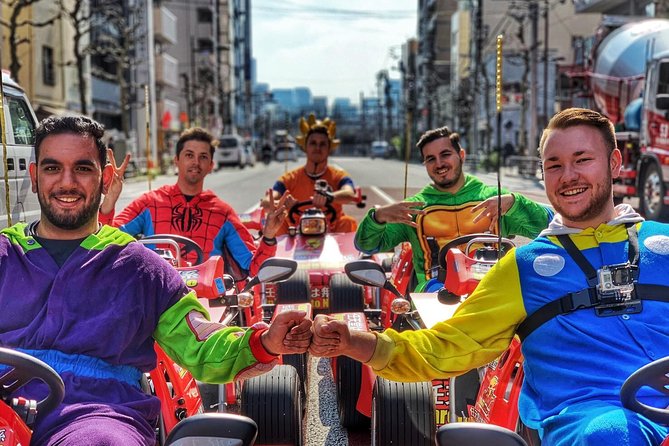
To drive in Japan on this tour, you must have an International Driving Permit issued in the 1949 Geneva Convention format, from a government-authorized association. You also need to carry a physical permit and a physical passport.
There are exceptions for some countries (Switzerland, Germany, France, Taiwan, Belgium, and Monaco). Even then, you may need a Japanese translation of your license via the Japan Automobile Federation (JAF). If your country’s license isn’t covered by the 1949 Geneva Convention (examples given include China, Indonesia, Mexico, Qatar, Saudi Arabia), you’re not permitted to drive.
Why am I flagging this so hard? Because this tour lives or dies by that paperwork. You can be excited, on time, and physically ready, but if you don’t have the correct permit format in-hand, you’re stuck. Plan this like you plan a museum ticket: do it early, double-check the permit type, and don’t rely on digital copies.
On the day itself, you should expect a driving instruction and safety induction at the start. Reviews praise how guides explain things carefully, including how it feels driving in busy Tokyo streets. One common theme is that many people start out nervous, then realize the karts are manageable once instruction is done.
Gear expectations are simple:
- Wear flat closed footwear
- Avoid no long flowy skirts or dresses
- Bring yourself to a moderate fitness level for the ride duration
You’ll also be asked to notify the team if you have hearing or mobility impairment, so they can plan accordingly.
Costumes first: picking your character and stepping into the moment
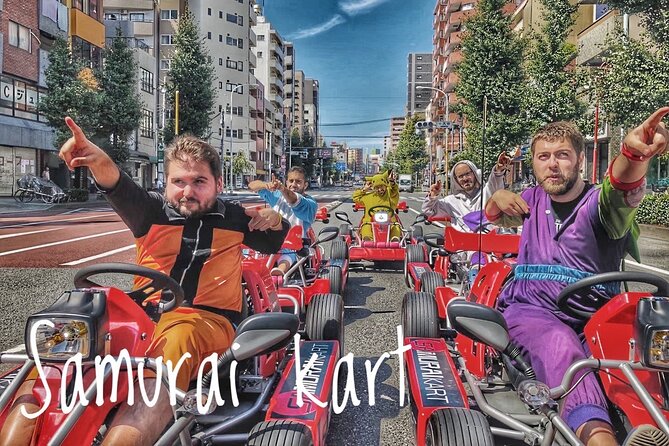
A big part of the fun here is that you’re not wearing the costume as a photo prop only at the end. You get the costume rental as part of the tour, and you choose from the available options before riding. People talk about the character aspect as a highlight, not as a gimmick.
A couple of reviews also mention the costume experience more critically—some wanted the costume quality or professionalism to be higher. That doesn’t mean you should avoid it, but it does mean you should treat costumes as part of a fun activity package, not a cosplay-grade wardrobe.
Still, the overall payoff is clear in the reviews: once you’re suited up, the streets stop feeling like traffic and start feeling like a movie set.
Asakusa’s Sensoji stop: old Tokyo on foot, then on wheels
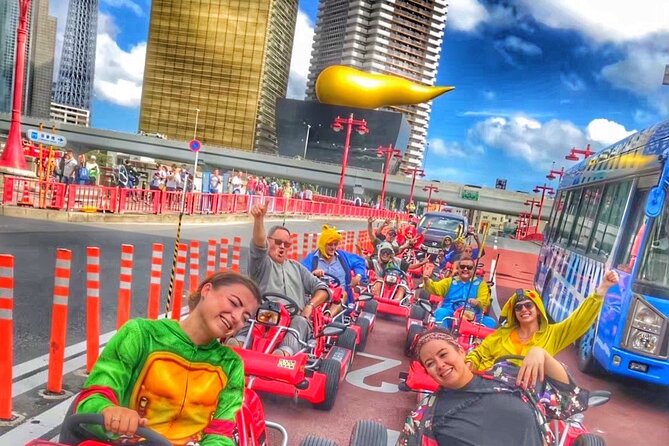
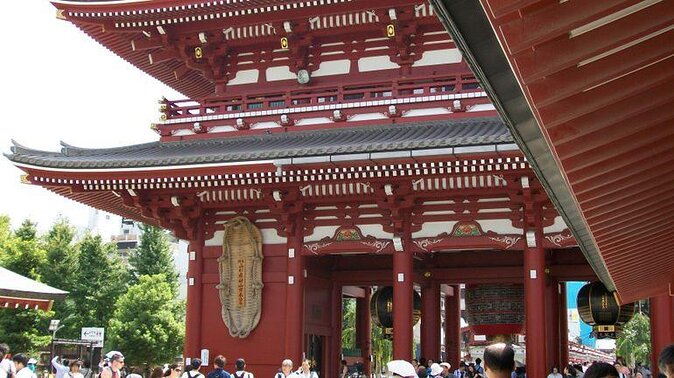
Your first major sightseeing focus is Sensoji, Asakusa’s best-known Buddhist temple. This is where the atmosphere of past decades still lingers, and it’s exactly the kind of place that feels different when you approach it from a go-kart route instead of a slow walk.
The value of this stop is that it anchors the experience. Go-karting alone can feel like thrill rides; Sensoji gives the ride meaning. You’re driving through Tokyo, but you’re also seeing why people come to Asakusa in the first place.
A practical thought: if you want photos with Sensoji vibes, aim to use those moments when the group is stationary. While you’re on the move, staff handle a lot of the picture-taking, so you can keep your attention on driving.
Tokyo Skytree timing: dusk is the strategy
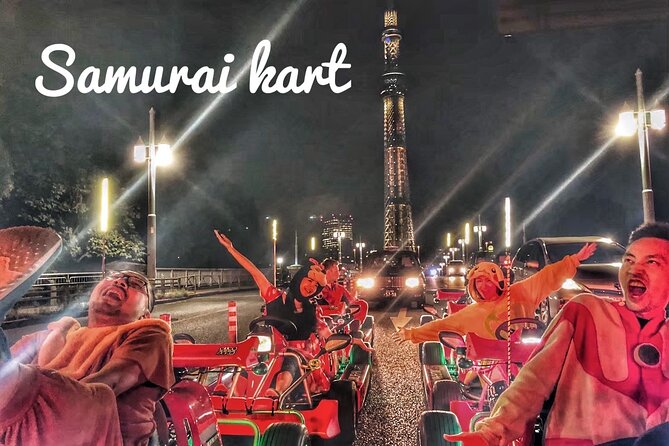
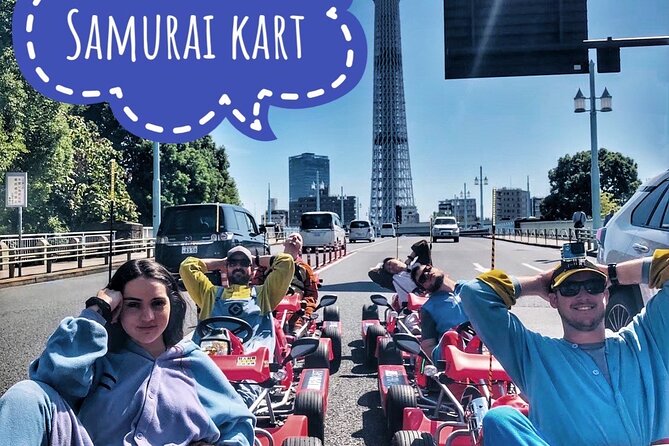
The second standout is Tokyo Skytree, the tallest structure in Japan and the second tallest in the world at the time it was completed. You’ll get the landmark sighting as part of the ride, and timing can change how impressive it feels.
Here’s the specific light-up detail that matters for planning: Friday and Saturday have Skytree light-ups from 8:00 p.m. to 12:00 a.m. The lights use 12 different colors depending on the month, and the color design also changes every hour. For holidays and special events, the light themes shift too.
Most reviews point to late afternoon into evening as the best window. That makes sense. You get that in-between period where the city starts cooling down, daylight still lingers for context, and Skytree lighting (on the right nights) can really pop once evening hits.
If you have flexibility, pick a departure that lands you near Skytree later rather than earlier. If you’re traveling with kids or someone who hates late nights, you can still have a great time without the midnight end of the light-up schedule—but you’ll miss the most dramatic Skytree color play.
Photos and videos: the helpful part you might not plan for
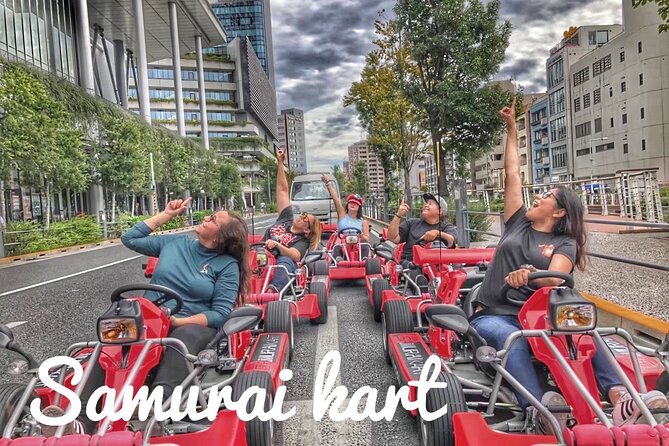
This tour includes a lot of photo help. Multiple reviews mention staff taking lots of pictures and even videos, often with so many shots that it feels like you’re being documented from every angle.
One review notes the staff took over 50 photos of a group alone. Another mentions the idea that you can just drive without constantly pulling out your phone. This is one of those underappreciated values of a guided street activity: your attention stays where it should—on safely navigating and enjoying the ride.
There are also hints that the photo/pose moments can become frequent. That’s not necessarily a downside, but it’s worth knowing. If you’re the type who likes quick check-in photos, you may find some of the stopping-and-posing a bit much.
Small groups and guide attention in real Tokyo streets
A key part of why this tour works is the maximum of 5 travelers. That’s not just about comfort; it’s about control. Tokyo streets can be confusing even for people who navigate well. With a small group and a lead guide, you’re less likely to get separated.
There’s also a rule for bigger groups: if a group is more than 6 drivers, it splits into 2 smaller groups, each with a guide. That’s another sign the operator thinks about keeping riding manageable rather than stuffing everyone into one chaotic chain.
In reviews, guides come up again and again for being enthusiastic and focused on safety. Yu and Taku are two names that show up with praise, including for taking photos, keeping everyone safe, and making the experience feel fun instead of intimidating.
Weather and how it affects your plans
This experience requires good weather. If it gets canceled due to poor weather, you’ll be offered another date or a full refund. So keep an eye on forecasts—especially in seasons when rain can show up without much warning.
If your schedule is tight, you might choose one departure time later in your plan so you can respond to the weather. But because evening matters for Skytree lights on select days, you’ll also want to balance weather risk against the lighting payoff.
Who this tour is for (and who should pass)
This is a fantastic choice if you want a Tokyo highlight that feels different from temples, museums, and train transfers. It’s especially good for:
- People who get bored by only walking
- Couples or small groups who want an activity with a built-in plan
- Visitors who love anime, games, or comic character culture
- Anyone who wants guide support to reduce stress in a busy city
You might not love it if:
- You’re strongly uncomfortable with driving requirements (IDP rules are strict)
- You hate frequent photo stops
- You expect a long, nonstop thrill ride (it’s about 1 hour to 1.5 hours)
- You can’t wear flat closed footwear or don’t feel good about the moderate physical requirement
It’s also a solid pick if you’re worried about driving in Tokyo. The guides explain carefully, and the induction helps many first-timers relax.
Final call: should you book the Asakusa Official Street Go-Kart Tour?
Book it if you want a guided Tokyo experience that mixes a landmark-heavy route with a “you’re actually doing something” thrill. The value isn’t just the kart—it’s the way everything is bundled: costume + kart + fuel + insurance + guide. At $64.34, you’re paying for convenience and safety structure as much as speed.
Skip or rethink it if you’re not ready to handle the driving paperwork properly. Make sure your International Driving Permit is the right format and that you have your passport in physical form. Also, if you’re hoping for a super-long ride, set expectations: this is a focused, guided session, not an all-day street takeover.
If you can time it for late afternoon into evening, you’ll likely enjoy the experience more, and on Friday and Saturday nights you can aim for Skytree light-ups from 8:00 p.m. to 12:00 a.m. The lighting details are too good to ignore.
FAQ
How long is the Official Street Go-Kart Tour in Asakusa?
It lasts about 1 hour to 1 hour 30 minutes, depending on the departure time and on-the-ground flow.
What is the meeting point for the tour?
The tour meets at 3-chōme-25-31 Nishiasakusa, Taito City, Tokyo 111-0035, Japan. It also ends back at the same meeting point.
What’s included in the ticket price?
Included are a lead guide in a kart, fuel surcharge, costume rental, kart rental, kart insurance, and all taxes/fees/handling charges.
What do I need to drive in Japan?
You need a physical International Driving Permit issued in the 1949 Geneva Convention format and your physical passport. Some license countries listed as exceptions may require a Japanese translation via JAF, and some other countries are not permitted to drive.
What is the minimum age?
The minimum age is 18 years.
What should I wear during the tour?
Wear flat closed footwear. Avoid no long flowy skirts or dresses.
Is this tour affected by weather?
Yes. The experience requires good weather, and if it’s canceled due to poor weather, you’ll be offered a different date or a full refund.