Bologna has a way of surprising you. On this historical art and architecture walk, Riccardo Bacchi ties city landmarks to the stories behind them, so the buildings start talking. You’ll spend 3–4 hours moving through medieval street layers, civic power, and Renaissance artistry, with enough food-and-silk context to make it all feel connected.
I especially love the way Riccardo points out details you’d miss on your own. From speaking corners at Piazza Maggiore to anatomical themes at the old university, he focuses on what the city was trying to say—politically, artistically, and even commercially. One possible drawback: the pace can feel full-throttle. It is a lot of stopping and starting, so wear comfortable shoes and expect a brisk walk between clusters of sites.
In This Review
- Key reasons this Bologna walk works
- Piazza Maggiore: speaking corners, Neptune’s fountain, and the city’s civic face
- Palazzo d’Accursio: frescoed rooms, Bramante’s horse stairs, and an earthquake story
- Basilica di San Petronio: the world’s biggest sundial and master paintings
- Archiginnasio di Bologna: the university that shaped Europe, plus anatomy and rare rooms
- Quadrilatero: guild signs, old shop logic, and where food heritage hides
- Santo Stefano complex: Roman roots, Dante’s cloister, and animal-faced capitals
- Santa Maria della Vita: Niccolò Dell’Arca’s terracotta emotion in 1470
- Asinelli and Garisenda from street level, then Finestrella’s UNESCO canals
- A 13th-century house with original wooden pillars and Palazzo Comunale ceilings
- Tastings and the food-history link you should actually look for
- Price and value for $175.36: what you’re really paying for
- Who should book this Bologna art-and-architecture walk
- Should you book this tour?
- FAQ
- Is the tour in English?
- How long is the Bologna historical art walking tour?
- Where does the tour start and where does it end?
- What’s the group size limit?
- Does the tour include admission tickets?
- Are there tastings during the experience?
- Do I get a mobile ticket?
- Is it easy to reach with public transport?
- Can most people participate?
- What if I need to cancel?
Key reasons this Bologna walk works
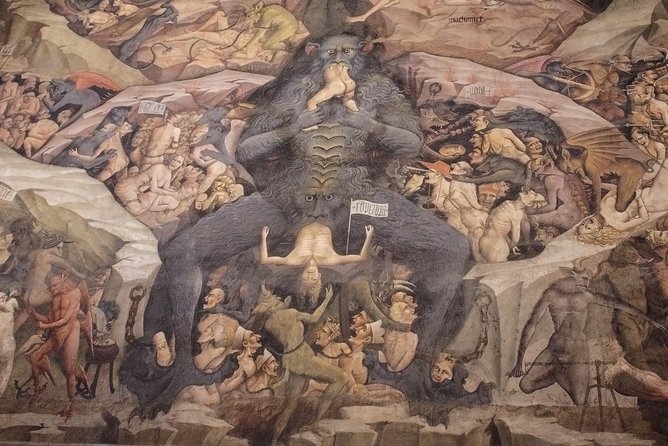
- Riccardo Bacchi’s story method: art, architecture, and local history explained as one flowing narrative.
- Major interiors plus free stops: several ticketed highlights are included, while other parts stay open-air and flexible.
- Your eyes get trained fast: speaking corners, fresco themes, guild clues, and symbolic architecture.
- Food culture shows up naturally: market streets and local heritage are folded into the history, not treated like an afterthought.
- A small group keeps it personal: the tour caps at 25, which helps with attention and pacing.
Piazza Maggiore: speaking corners, Neptune’s fountain, and the city’s civic face
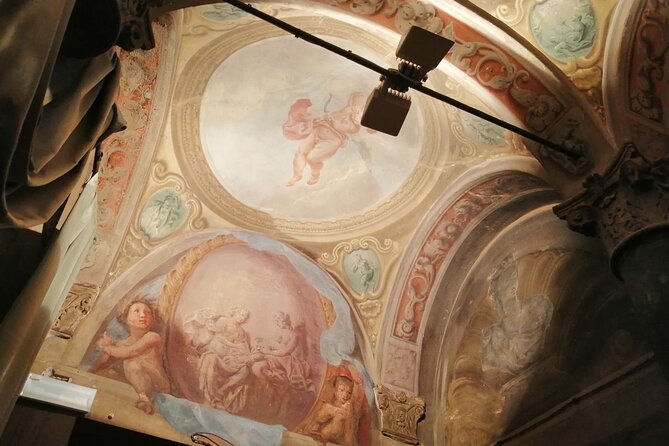
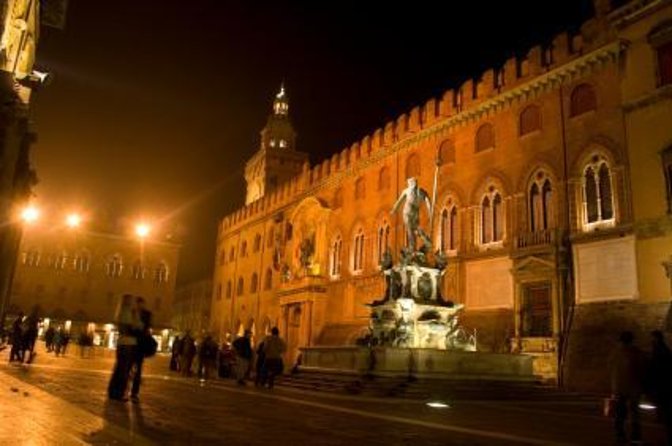
Your tour starts where Bologna likes to make statements: Piazza Maggiore. This square isn’t just pretty. It’s a history lesson written in stone, with medieval buildings that framed civic life and power for centuries. Riccardo steers your eyes toward the famous corners and explains why they’re called speaking corners—Bologna used visual cues on public architecture like a kind of street-level communication.
You also get time around the Neptune Fountain, a Renaissance centerpiece that signals how seriously the city took beauty as a form of authority. Look closely and you’ll start noticing the mix of eras that Bologna is famous for: medieval blocks next to Renaissance flourishes, all layered into one public stage.
Practical note: Piazza Maggiore is busy at street level. Plan to keep moving with the group, and don’t expect a long sit-down moment here. The best experience comes from staying engaged when the guide points and tells.
You can also read our reviews of more tours and experiences in Bologna.
Palazzo d’Accursio: frescoed rooms, Bramante’s horse stairs, and an earthquake story
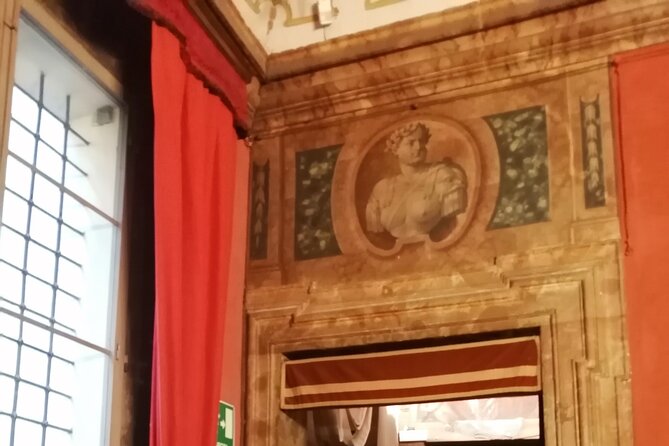
Next up is Palazzo d’Accursio, the kind of place you might walk past and assume is only for officials. Inside, the tone changes fast. You’ll focus on noble rooms on the first and second floors, and Riccardo brings attention to frescoes and a private chapel connected to the bishop.
One highlight is the big stairs for horses attributed to Bramante. It’s a perfect example of what makes this tour work: you’re not just learning names and dates. You’re learning how a building functioned—how people moved, how power operated, how ceremonies were staged.
Then there’s the “earthquake’s virgin” by Francesco Francia. Even if you don’t know the artwork beforehand, Riccardo helps you see why a city would preserve and celebrate a protective image after disaster. It’s one of those moments where art becomes civic memory, not just decoration.
If you’re short on time in Bologna: this stop is a strong payoff because it explains why Bologna’s elite spaces feel theatrical even when you’re just standing in a hallway.
Basilica di San Petronio: the world’s biggest sundial and master paintings
Basilica di San Petronio is where the tour shifts from civic theater to something closer to a time machine. Riccardo centers the conversation on the big sundial, described as the biggest sundial in the world. The point isn’t only the scale—it’s how the church connects faith, science, and daily life in one architectural feature.
You’ll also spend time with medieval frescoes, including the Cappella Bolognini, plus the four ancient crosses. Riccardo’s approach helps you understand these details as part of a visual program: symbols aren’t random. They’re meant to guide meaning.
And then come the major paintings credited to Parmigianino and Lorenzo Costa. This is where the tour becomes especially satisfying for art lovers: you see Bologna’s artistic network at work across time.
Trade-off: churches can be dim, and explanations take place while you’re standing. Bring patience for a bit of slow looking, then follow Riccardo’s pointers. It’s the best way to get the most from limited time inside.
Archiginnasio di Bologna: the university that shaped Europe, plus anatomy and rare rooms
One of the strongest stops is Archiginnasio di Bologna. Riccardo frames it as the headquarters of the oldest university in Europe, and you can feel why that matters. Bologna didn’t just study art and law. It supported systems of learning that influenced how people thought, practiced medicine, and preserved knowledge.
Inside, you’ll see a renaissance palace filled with a huge collection of coats of arms. That visual wall of identities tells you the university wasn’t abstract. It was a power structure with patrons, cities, families, and influence.
Riccardo also points out witnesses of secret powerful medicine—a theme that leads directly into the wooden anatomical theatre. Even if anatomy isn’t your usual museum topic, it lands because it’s presented as part of Bologna’s intellectual culture: observation, teaching, and the human body as a subject of study.
The stop continues in rooms with rare cultural weight, including the Stabat Mater room with precious books such as Leonardo Da Vinci’s Flights of the birds, plus a long hall for books and ancient codes. These details make the university feel like a living archive, not a dead building.
Why this feels worth the price: the architecture stop isn’t separate from the art stop. The guide connects them—learning and making art are treated as the same Bologna system.
Quadrilatero: guild signs, old shop logic, and where food heritage hides
After the big institutions, you move into a different kind of history: the Quadrilatero. Riccardo brings you into its maze-like medieval market streets, where the value is in how the area was built to trade—stall after stall, old food shops, and clues from ancient coats of arms tied to the guilds.
This part feels less like a museum and more like how local life used to work. The streets teach you how commerce shaped the city’s identity. You also get that food connection that the tour title promises, even when you’re not seated at a table.
If you’re craving a snack, this is the zone where it’s easiest to keep your energy up while staying in the historical thread. Just note that you’ll likely move on before you finish browsing everything.
Santo Stefano complex: Roman roots, Dante’s cloister, and animal-faced capitals
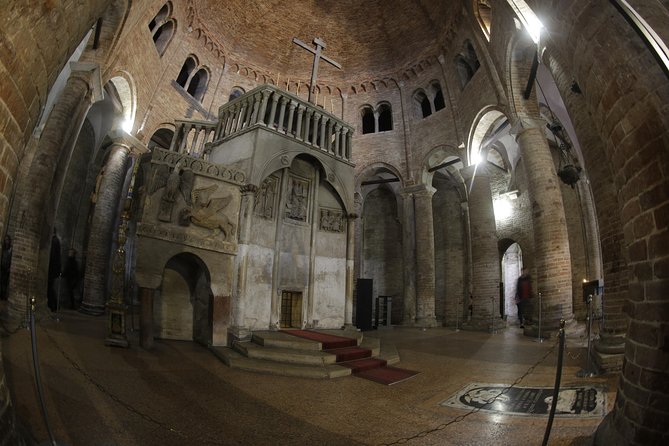
Bologna’s history gets bigger at Santuario di Santo Stefano, a complex of churches that functions like a condensed timeline. Riccardo explains how the site traces back to a Roman temple on a natural spring, then grows into layers of later religious and civic use.
One of the most interesting descriptions is Dante Alighieri’s cloister, surrounded by the cells of monks. Even if you only know Dante from school, the physical layout changes how you imagine his world. It’s not just literature in a book—it’s the setting of a lived spiritual culture.
Don’t skip the small visual moments. Riccardo points out capitals headed by animal faces, and this is where the building decoration shifts from decorative to storytelling. Medieval design loved symbols, and Bologna’s stonework shows off that habit everywhere you look.
Good to know: this stop is free entry, which keeps the flow smooth. You’ll still spend real time noticing details, not just walking through.
Santa Maria della Vita: Niccolò Dell’Arca’s terracotta emotion in 1470
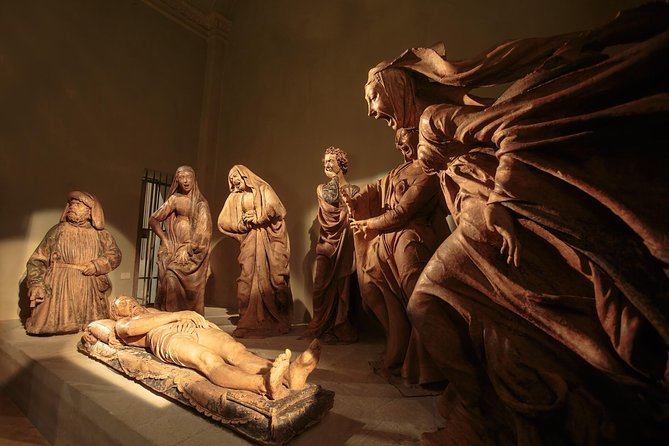
Next comes Chiesa di Santa Maria della Vita, and this is a stop art people often remember. The centerpiece is a terracotta masterpiece sculptured in 1470 by Niccolò Dell’Arca. Riccardo emphasizes how it’s both classical in its craft and bold in its expression—an interpretation of movement and emotion that feels startlingly direct.
The reason this works on the tour is that Riccardo doesn’t treat it like a checklist moment. He points you toward what the sculpture is communicating, then connects it back to the broader Bologna attitude: art as a way to make people feel and think, not just admire skill.
If you care about sculpture: this is one of the most satisfying interiors on the walk.
Asinelli and Garisenda from street level, then Finestrella’s UNESCO canals
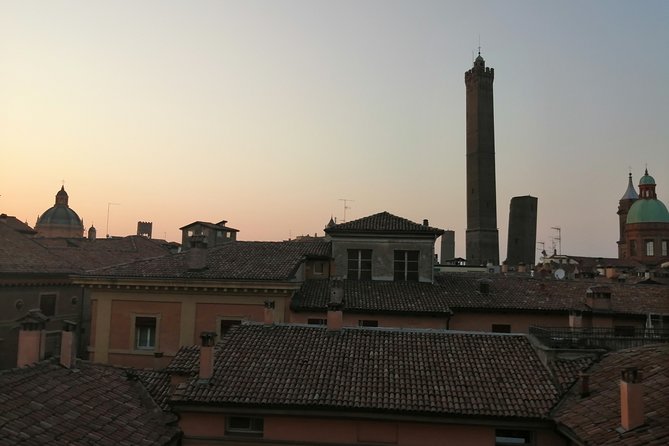
After the church interiors, you get a city-symbol moment: a great view from street level of the Asinelli Tower and the leaning Garisenda Tower. Riccardo uses the perspective to talk about Bologna’s skyline character—why these towers became part of the city’s identity.
Then the tour shifts to something unusual and very practical in history: Finestrella. This is described as a rare example of medieval canals designed to supply silk and hemp textile manufacture, and it’s noted as UNESCO heritage. The tour helps you see industry as part of the art world. Textile production mattered to artists, patrons, and the city’s wealth—so the canal system becomes part of the cultural story.
If you’re the type of traveler who likes “how did they do it?” this stop hits that curiosity. Bologna’s art didn’t float down from the sky. It grew out of work, trade, and infrastructure.
A 13th-century house with original wooden pillars and Palazzo Comunale ceilings
The last stretch leans into architectural leftovers you can’t always find without a local guide. You’ll see an incredible surviving example of a 13th-century house that maintains its original wooden pillars. Riccardo uses it as a reminder that Bologna’s preservation isn’t only about paintings. It’s also about structure—how buildings were made to last, and how the city kept parts of its early self.
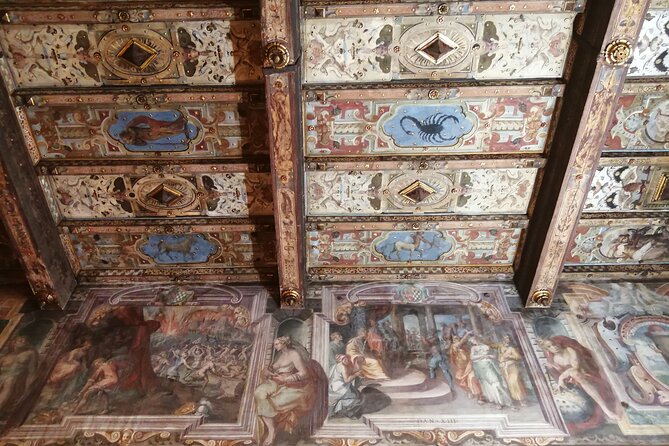
Finally, you reach Palazzo Comunale, where the tone shifts toward display. You’ll see Renaissance and Baroque ceilings, frescoes, sculptures, and Bramante staircases for horsemen. By now, those stairs make sense because you already learned the practical logic behind how people moved through power spaces.
At this point, the tour feels like a loop closing: civic buildings, art interiors, university learning, market trade, and industry infrastructure all connect back to the same Bologna theme—art and society were never separate.
Tastings and the food-history link you should actually look for
The experience title promises tastings, and at least one version of this walk has included items described as a rice cake made from a medieval recipe plus local wine. I like this approach because tastings work best when they’re attached to the history being explained.
Here’s how to make it count for you: when Riccardo talks about guilds, trade, silk, and market streets, pay attention. The food connection isn’t random. It’s a way to make Bologna’s economy and daily life tangible.
If you have dietary restrictions, plan to ask ahead of time or on the day. The tour info confirms tastings exist, but it doesn’t spell out every option.
Price and value for $175.36: what you’re really paying for
At about $175.36 per person for 3–4 hours, this is not a bargain-basement walking tour. The value comes from three things.
First, several major interior stops include admission: Basilica di San Petronio, Archiginnasio di Bologna, and Chiesa di Santa Maria della Vita. That reduces friction. You’re paying for access and time inside the places that are harder to understand without guidance.
Second, Riccardo’s style matters. Based on the consistent feedback about his storytelling and depth, the tour isn’t built to hand you photos and short facts. It’s built to turn Bologna’s art and architecture into a coherent narrative—exactly what you want when you’re seeing a lot of churches and palaces close together.
Third, the group size cap of 25 keeps things from turning into a stampede. When explanations matter, smaller groups help.
Who gets the best return from this price: travelers who want an art-and-history framework in a few hours—especially if it’s your first day in Bologna. If you’re more interested in food tasting as the main event, you might still enjoy it, but you’ll get more value by being in the mood for architecture and symbolism.
Who should book this Bologna art-and-architecture walk
Book it if you:
- care about how art and architecture reflect civic power, learning, and religion
- like tours where you leave with practical sight-reading skills
- want a Bologna overview that helps you plan the rest of your days
Consider another option if you:
- prefer slow, unstructured wandering over a structured route
- want mostly outdoor sights with minimal indoor time
- struggle with walking and quick transitions between stops
Should you book this tour?
Yes—if you want Bologna to make sense fast. The highlights are the kind that reward attention: the speaking corners at Piazza Maggiore, the giant sundial at San Petronio, the anatomical theatre and rare book rooms at Archiginnasio, and the terracotta emotional power at Santa Maria della Vita. Add in UNESCO-linked canal history at Finestrella and you get a city picture that feels complete.
If you’re on the fence, here’s my simple rule: if you’d enjoy learning why buildings were designed the way they were, book it. If you just want a quick photo tour, you’ll feel rushed.
FAQ
Is the tour in English?
Yes. The experience is offered in English.
How long is the Bologna historical art walking tour?
It runs about 3 to 4 hours.
Where does the tour start and where does it end?
It starts at Bar Vittorio Emanuele, Piazza Maggiore, 1, 40124 Bologna, Italy and ends back at the meeting point.
What’s the group size limit?
The maximum group size is 25 travelers.
Does the tour include admission tickets?
Some key sites have admission included, including Basilica di San Petronio, Archiginnasio di Bologna, and Chiesa di Santa Maria della Vita. Other stops are listed as free.
Are there tastings during the experience?
Yes. The tour is described as including tastings as part of the experience.
Do I get a mobile ticket?
Yes. The tour includes a mobile ticket.
Is it easy to reach with public transport?
Yes. The meeting point is listed as near public transportation.
Can most people participate?
Most travelers can participate.
What if I need to cancel?
You can cancel for a full refund if you cancel at least 24 hours in advance of the start time. Cancellations within 24 hours are not refunded.