REVIEW · FLORENCE
Florence: Street Art Tour
Book on GetYourGuide →Operated by Florence Tours by Made of Tuscany · Bookable on GetYourGuide
Florence has street art, not just museums. I love how this tour teaches you to decode illegible graffiti and read the jokes, tags, and street-level symbolism that you’d otherwise miss. I also love the mix of major landmarks—think Piazza della Signoria and Ponte Vecchio—with off-the-beaten-path walls and a real studio visit at CLET Studio.
The main thing to consider is pacing and expectations: you’ll do a fair amount of walking, and if you want nonstop jaw-dropping murals the whole time, this may feel uneven—one part of the experience can lean more “studio/story” than “wall full of masterpieces.”
In This Review
- Key things you’ll notice on this Florence street art tour
- Why street art belongs in Florence (even if you came for Renaissance)
- Finding the starting point at Piazza del Duomo (and why it’s a good warm-up)
- Santa Maria Novella stop: spotting art before you even know what you’re looking at
- Via Palazzuolo: where the walk turns into a street-art reading session
- Ponte Vecchio: famous bridge, different focus, and a useful contrast
- Piazza Pitti and the shift toward contemporary canvases
- Inside CLET Studio: why studio time is the real value
- Piazza della Signoria: reading politics and personality in public space
- Walking time, pace, and what it means for your day
- Price and value: is $198.25 per person worth it?
- Who should book this Florence street art tour (and who might skip)
- Quick FAQ before you go
- FAQ
- How long is the Florence Street Art Tour?
- Where does the tour start?
- Where does the tour end?
- What’s included with the tour ticket?
- What languages are available?
- Is this tour wheelchair accessible?
- Is the group private?
- What key places are visited?
- Can I cancel for a refund?
- Is pay later an option?
- Should you book this tour?
Key things you’ll notice on this Florence street art tour
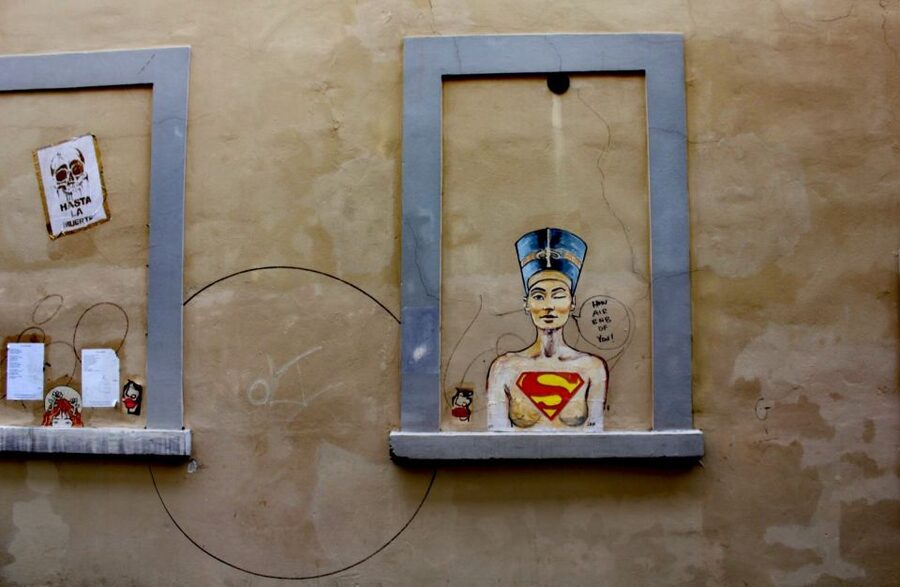
- A guide who explains the scribbles: you’re not left guessing at meaningless-looking tags
- Major squares, street-art eyes: you’ll connect famous spaces to modern visual storytelling
- CLET Studio access: you get into a street-art workshop/studio environment, not just photo stops
- Past-to-present Renaissance links: the tour frames modern artists as today’s Leonardo and Botticelli
- Cheeky graffiti and portrait-like murals: humor and craft show up side by side
- Time in quieter pockets: you’ll spend part of the tour away from the busiest tourist routes
Why street art belongs in Florence (even if you came for Renaissance)
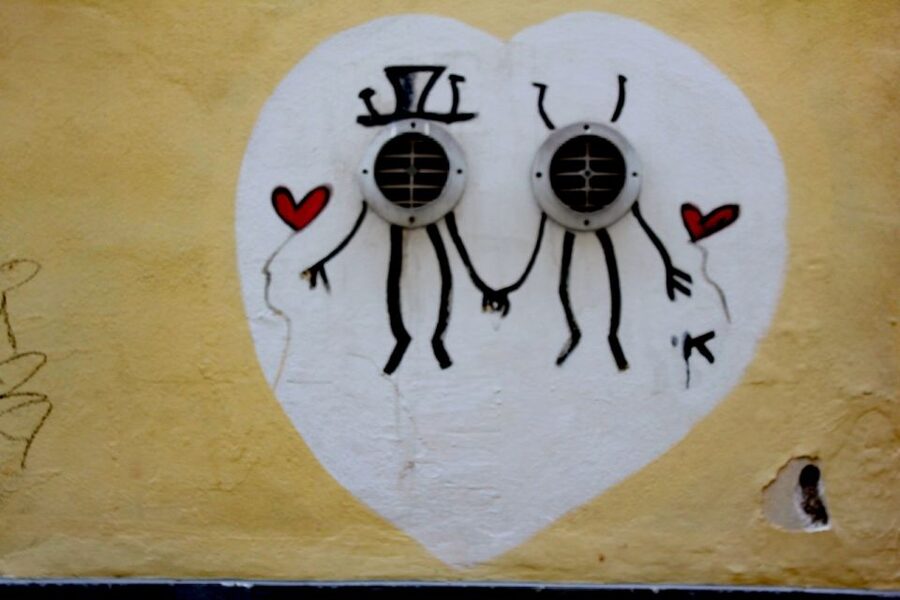
Most people arrive in Florence ready for marble, frescoes, and the big museum hits. This tour nudges you to see something different: the city’s modern voice is written on plaster and brick. Not every wall will be a masterpiece in the museum sense, but you start noticing patterns—how artists borrow Renaissance ideas, how politics and neighborhood stories show up as images and slogans, and how street art can be both personal expression and public conversation.
I like that the tour doesn’t treat street art like random decoration. It positions it as a continuation of Florence’s art obsession—just using today’s tools, attitudes, and audiences. You’ll hear how the guide links the past and present, even tossing out the idea of modern-day versions of Leonardo, Botticelli, and Michelangelo. It’s a playful framing, but it makes the walk make sense: you’re not just viewing; you’re reading.
You also get a practical skill. A local guide helps you decipher graffiti that would look like illegible scrawls at first glance. That changes your whole experience. Instead of walking past walls like background noise, you start asking why a tag is shaped a certain way, why a character’s expression matters, or how a mural is responding to the city around it.
You can also read our reviews of more tours and experiences in Florence.

Finding the starting point at Piazza del Duomo (and why it’s a good warm-up)
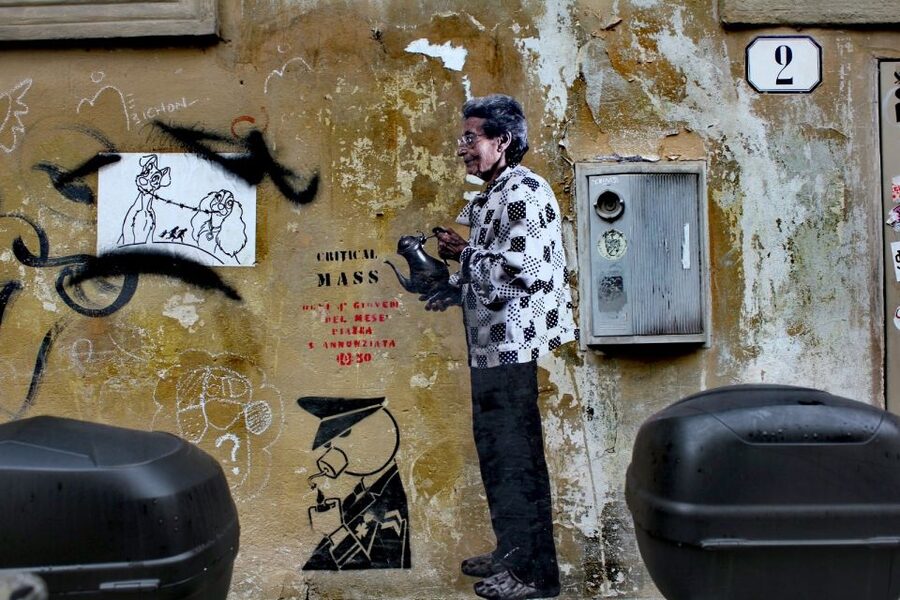
You meet at Piazza del Duomo, 107, right in front of the central door of the Florence Cathedral. This matters more than it sounds. Starting here gives you instant context: you’re beginning at Florence’s cultural center, then slowly walking outward to see how the city’s modern art lives in the same urban fabric as its historic monuments.
Before you move too far, your guide sets expectations. You’ll learn how the tour will work—where you should look, what kinds of images and tags to focus on, and how the guide plans to translate the visual language for you. If your Italian is limited, don’t worry. The tour includes a live guide who can explain in multiple languages, and the whole point is helping you understand what you’re seeing even when the writing looks messy.
Practical note: wear shoes that can handle city sidewalks. Even though it’s only about three hours, Florence walking is its own sport. You’ll be shifting attention constantly—up at facades, down at tags, and sideways at how walls sit along the street.
Santa Maria Novella stop: spotting art before you even know what you’re looking at
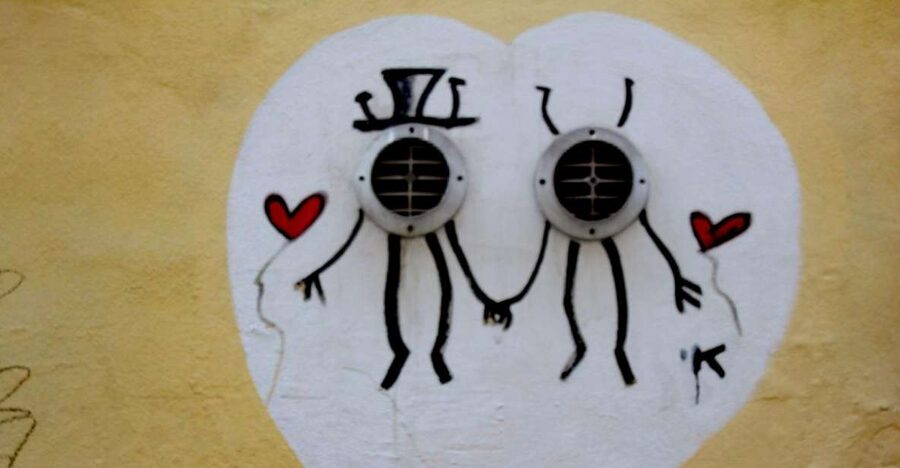
The tour heads to Santa Maria Novella and spends a short guided chunk there. In a short window, the goal isn’t to hit every detail. It’s to train your eyes. Santa Maria Novella is busy and familiar for tourists, but it still has plenty of surfaces where street art can “hide” in plain sight—on side walls, near corners, and in spots people rush through.
This is where the guide’s ability to decode matters most. Early on, you’ll learn to separate what’s just messy scribbling from what’s intentional: lettering, symbols, character styles, and recurring references. Once you can do that, the rest of the tour moves faster in your head. You won’t need long explanations to understand what a mural is trying to communicate.
Even if you don’t catch every reference, you’ll likely start recognizing the pattern of the tour itself: Florence’s big sites aren’t just postcard backdrops. They’re also canvases in the city’s ongoing visual dialogue.
Via Palazzuolo: where the walk turns into a street-art reading session
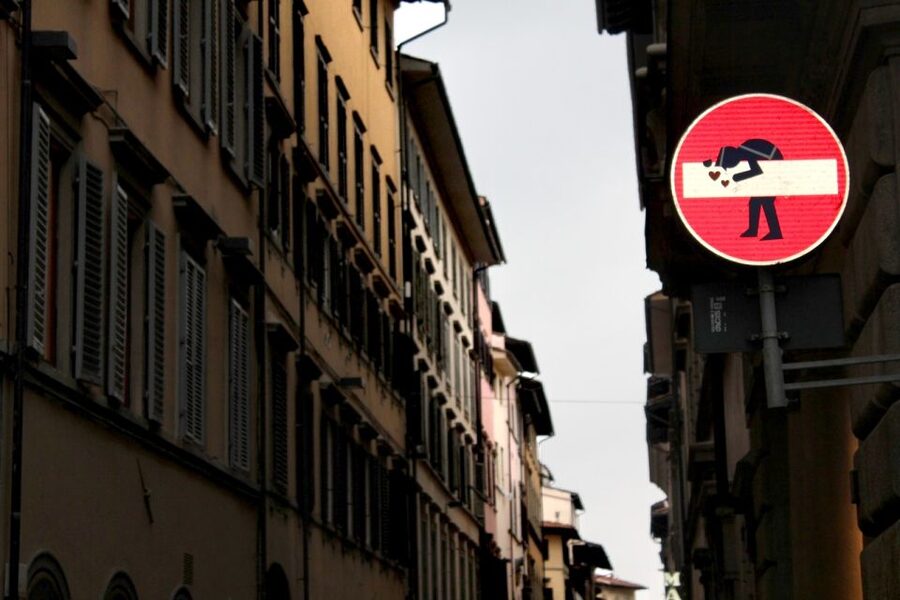
Via Palazzuolo is one of the longer walking segments on the route. That’s good, because street art rewards slow attention. On this stretch, you’re likely to see more of the city’s newer, contemporary side—murals and tags that feel closer to present-day street culture than to classic museum frames.
The time here lets you do something you can’t easily do alone: you learn how to connect one wall to the next. A good guide doesn’t just point and say “look.” They explain how artists think, what they’re responding to, and how styles travel across neighborhoods. If you’ve ever felt like you’re “looking at random graffiti,” this part is where you start realizing there’s an actual system—community references, artist identities, and visual themes that repeat.
Keep your eyes open for cheeky tags and character-driven pieces. Street art in Florence often balances humor with craft. That combination can be surprising after years of seeing the city only through a formal lens.
Ponte Vecchio: famous bridge, different focus, and a useful contrast
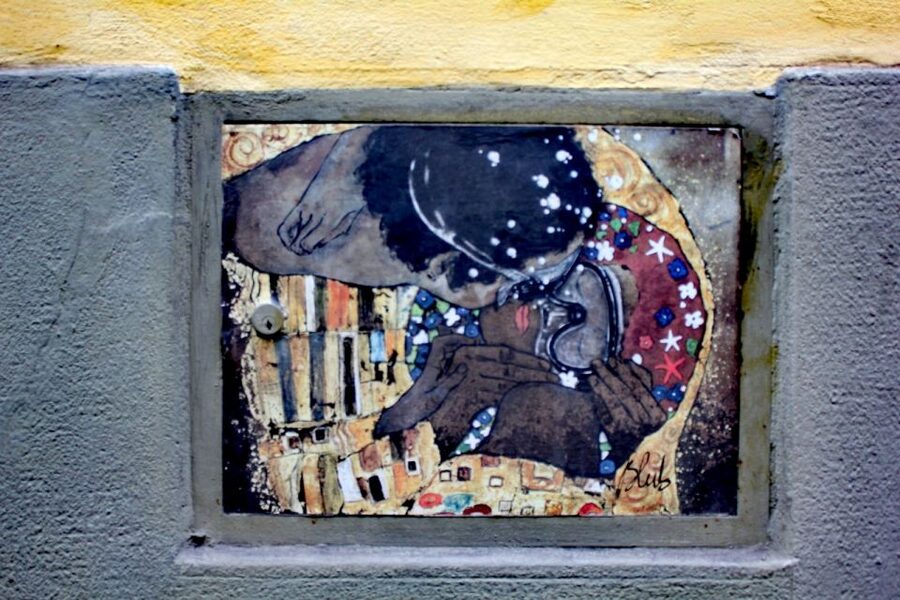
Ponte Vecchio is one of those places where the tourists naturally slow down. The tour still gives you a guided visit here, but with a twist: you’re not just admiring the bridge’s iconic look. You’re using it as a contrast point.
Street art near famous landmarks often has a different job than street art in quiet alleys. It can serve as a commentary to passersby who might normally only notice architecture. It can also show you how modern artists claim space in a city that’s already saturated with history.
This is also a handy stop for photos—but it’s more important for learning than for pictures. You’ll likely notice how the guide makes you compare old-world prestige with street-level immediacy. The whole effect is slightly playful, but it’s an effective teaching method: you understand street art better when you stop treating it like it exists separately from the city’s heritage.


Piazza Pitti and the shift toward contemporary canvases
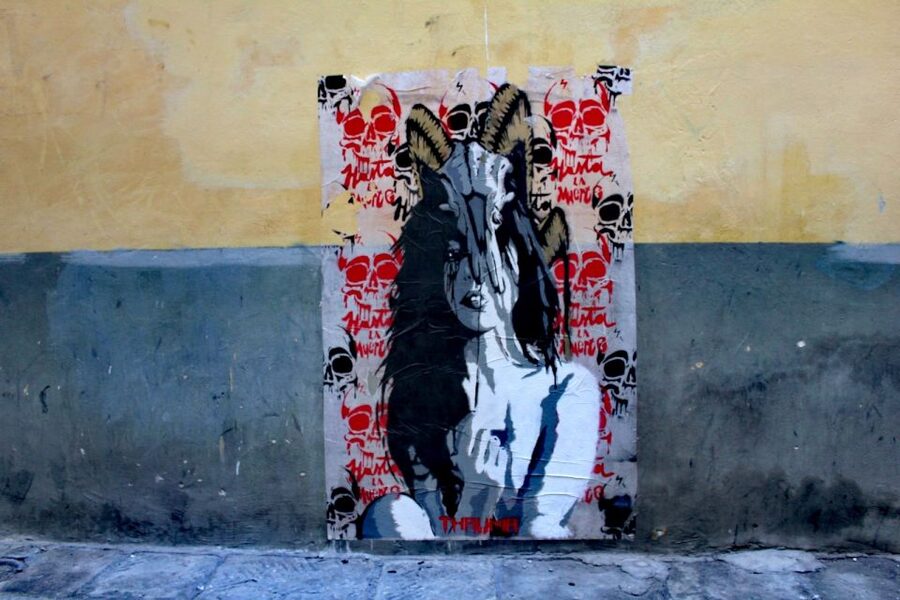
Piazza Pitti is another classic Florence landmark, and the tour uses it to steer you toward the idea that modern art belongs in the same frame as Renaissance sights. You get a guided visit and some walking time here, which helps you keep the rhythm: landmark, explanation, then back to the street-level details.
What I like about this stop is the mental reset. When you step into the space around Piazza Pitti, you’re reminded how quickly Florence can switch moods—grand, formal, historic—then suddenly a wall says something current in a bold, cheeky way. It’s the kind of contrast that makes the tour memorable, because it changes how you feel about the city’s surfaces. A wall isn’t just a wall. It’s part of how Florence talks to itself.
If you enjoy finding meaning in everyday visuals—posters, stickers, lettering, murals—this section is a good match.
Inside CLET Studio: why studio time is the real value
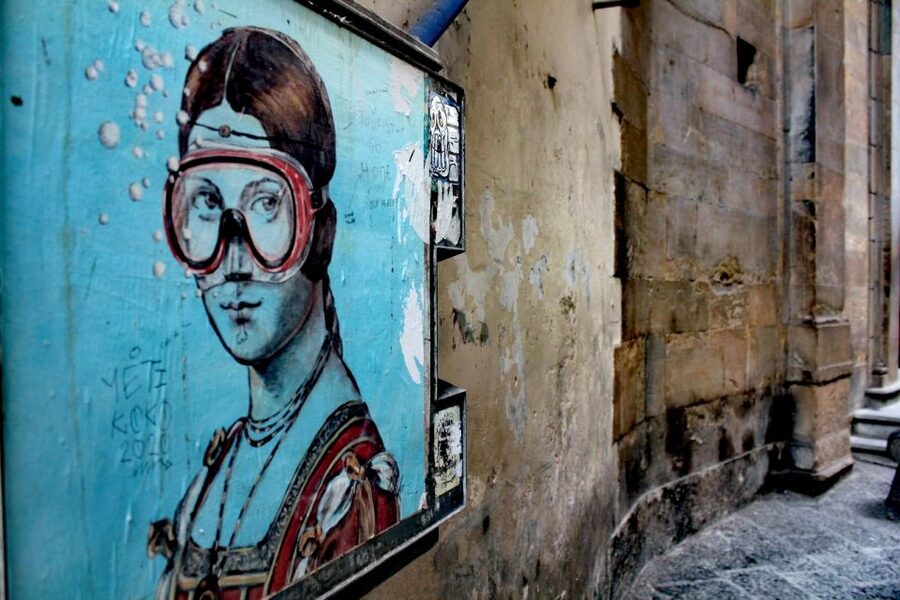
CLET Studio is a major highlight. The tour includes entrance to street art workshops, and this is where that inclusion starts to make sense. Seeing street art from the outside is one thing. Seeing how a street-art practice connects to production, process, and identity is another.
This stop also ties directly into the tour’s “modern-day masters” theme. You’ll hear about street artists such as Clet (and you might also learn names like Blub, depending on how your guide frames artist histories and style influences). The studio visit gives you a human layer: street art isn’t only what appears on walls. It’s also the people behind it, the culture around it, and the way artists shape their own visual language.
I love studio stops because they answer the unspoken question: how does something become street art? Even if you aren’t buying anything, just seeing art as a crafted product gives you more respect for what you’ve been spotting outside. And if you like browsing, you may also encounter artist-run shop-style spaces along the route where you can view and purchase street art-related items.
The tradeoff: studio time can be a different vibe than pure outdoors mural hunting. If you’re chasing big walls only, this may feel like a slowdown. But if you care about context, it’s one of the stops that makes the tour worth the money.
Piazza della Signoria: reading politics and personality in public space
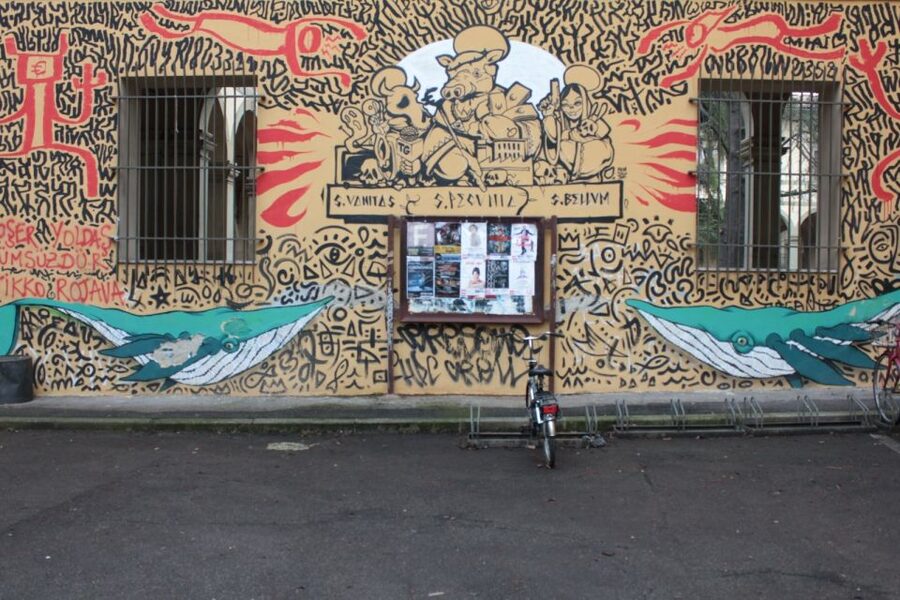
You finish with a guided visit at Piazza della Signoria. This is a heavyweight square in every sense—architecture, symbolism, and the constant sense that Florence’s identity is on display. That makes it a great place to connect street art to society.
The tour framing here is smart. It’s not just “look at art.” It’s “why does this kind of art show up here, and what is it saying?” Street art often carries political and historical messages, sometimes serious and sometimes cheeky. In Piazza della Signoria, you’re positioned to think about power and public storytelling. A mural or graffiti tag doesn’t float in isolation; it becomes another way the city communicates with itself.
You’ll likely notice the guide pointing out how the walls tell stories—about society, about history, about politics. This kind of explanation helps you see beyond aesthetic choices. It gives you a reason for why certain images appear where they do.
Walking time, pace, and what it means for your day
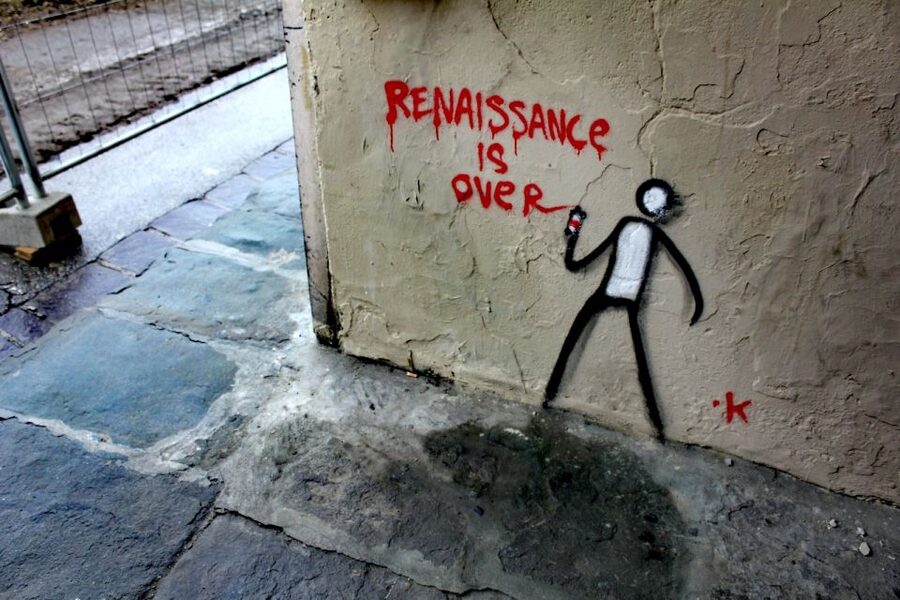
This is a three-hour walking tour. That’s not an all-day commitment, but it is continuous enough that you’ll want to plan your schedule around it. You’ll be doing repeated short stops, guided segments, and transitions between areas—plus the studio visit takes up time too.
So here’s the practical take: treat this as a focused activity, not a “light stroll while I browse.” Bring water, wear comfortable shoes, and be ready to look up. You’ll spend more mental energy than you might expect because the tour trains you to read walls like text.
Also plan your end-of-tour logistics. The tour ends back at Piazza del Duomo. If your car or accommodations are not close, you may have extra walking after. It’s not a dealbreaker—just something to keep in mind so you don’t end your day frustrated.
Price and value: is $198.25 per person worth it?
At $198.25 per person for about three hours, this isn’t a budget “wander and see” activity. The value comes from a few specific ingredients that plain self-guided exploring doesn’t usually deliver.
First, you’re paying for a guide who can decipher what you’re seeing. That skill turns confusion into understanding fast. Second, you’re paying for access—entrance to street art workshops at CLET Studio. Third, you’re getting a structured route that blends big-sight squares with quieter, off-the-beaten-path walls, so you’re not just chasing random street art photos.
Where the price may feel harder is if your expectations are narrow. If you’re only interested in a nonstop sequence of world-class murals, the tour might feel mixed. Street art varies by street and by moment, and a guided approach can spend time on explanation, transitions, and studio context rather than only chasing the “best photo” wall at every turn.
So I’d frame the cost like this: you’re buying interpretation plus studio access. If that matches what you want, it’s a good deal. If you want only visual fireworks, you might be happier doing a looser itinerary on your own (or pairing this with a museum day so you get both sides of Florence).
Who should book this Florence street art tour (and who might skip)
You’ll probably love this if you:
- enjoy contemporary art and want a guided way to understand it
- like city walking tours that connect sights to stories
- want to learn about street artists and how modern art interacts with Florence’s heritage
- appreciate guided explanation more than “just show me the murals”
You might hesitate if you:
- want a purely outdoor, nonstop mural hunt
- don’t want to do much walking during your Florence day
- expect the tour to function like a museum-style collection with consistently top-tier works at every stop
One more note from the vibe of the experience: a guide can make a big difference. You may even end up with someone like Alex, who shares plenty of city love and details while you walk.
Quick FAQ before you go
FAQ
How long is the Florence Street Art Tour?
The tour lasts 3 hours.
Where does the tour start?
It starts at Piazza del Duomo, 107, in front of the central door of the Florence Cathedral.
Where does the tour end?
It ends back at the meeting point at Piazza del Duomo, 107.
What’s included with the tour ticket?
You get an expert street art tour guide and entrance to street art workshops.
What languages are available?
The tour guide is available in Italian, English, French, German, and Spanish.
Is this tour wheelchair accessible?
Yes, it’s listed as wheelchair accessible.
Is the group private?
Yes, this activity is listed as a private group.
What key places are visited?
You’ll visit stops including Santa Maria Novella, Via Palazzuolo, Ponte Vecchio, Piazza Pitti, CLET Studio, and Piazza della Signoria.
Can I cancel for a refund?
Yes. Free cancellation is available up to 24 hours in advance for a full refund.
Is pay later an option?
Yes. Reserve now and pay later is available, so you can book and pay nothing today.
Should you book this tour?
If you want Florence through a modern lens—and you enjoy being taught how to read street art—this is a smart choice. The combination of guided decoding, a stop that connects street art to major squares, and studio time at CLET Studio is the core value behind the price.
If your main goal is only to see the most impressive murals with minimal context, you might feel like you’re moving through more explanation and walking than you expected. In that case, you could still enjoy it, but I’d go in with flexible expectations: you’re buying understanding as much as visuals.