REVIEW · FLORENCE
Florence: Accademia Gallery & David Small‑Group Guided Tour
Book on GetYourGuide →Operated by TUI Musement · Bookable on GetYourGuide
A single sculpture can change your whole mood. That’s the idea with this Accademia Gallery and Michelangelo’s David small-group tour, built to help you see the essentials without getting stuck in the slow parts. You get an expert guide, skip-the-line entry, and a tight one-hour route that still leaves you with enough time to actually look.
I especially like the focus on the big names that many people rush past: David plus Michelangelo’s Prisoners and San Matteo, all explained clearly. I also like the small-group size (up to 15), because it keeps the tour from turning into a human conveyor belt, and you can hear your guide better.
One consideration: at 1 hour, it’s not meant for people who want to linger room by room. If you’re the type who reads every label twice, you may feel a little time-pressured—though the guide does a good job of prioritizing what matters most.
In This Review
- Key Points You’ll Care About
- Why This 1-Hour Accademia Plan Works
- Meeting at Via degli Alfani: Find It Fast, Start Calm
- First Stop: The Accademia Gallery and the Art You Actually Want
- Michelangelo’s David as the anchor
- The Prisoners: not just “extra statues”
- San Matteo: balance beyond the famous face
- Giotto’s Gold-Background Paintings: A Change of Mood
- Museum of Musical Instruments: A Clever Bonus Stop
- The David Photo Stop: How to Use It Without Stress
- Small Group Up to 15 People: More Attention, Less Waiting
- The Guide’s Role: Context That Makes the Art Click
- Included Extras That Actually Matter
- Price and Value: Is $58 Worth It?
- Who Should Book This Tour (and Who Might Prefer Another Plan)
- Should You Book This Accademia Gallery & David Small-Group Tour?
- FAQ
- How long is the Florence Accademia Gallery and David tour?
- Where do I meet the guide?
- Is skip-the-line entry included?
- What can I see during the visit?
- How big is the group?
- Are headsets provided?
- Is the tour available in English?
- Does the tour include temporary exhibitions?
- Is hotel pickup included?
- Is the tour suitable for wheelchair users?
Key Points You’ll Care About
- Skip-the-line entry to the Accademia Gallery keeps your time for looking, not waiting
- Michelangelo trio focus: David, the Prisoners, and San Matteo are built into the route
- Giotto gold-background paintings add variety beyond sculpture
- Museum of Musical Instruments is included, so you’re not stuck in just one art form
- Small group up to 15 means more personal attention and a calmer pace
- Guides with real Renaissance context (Francesca is named in the tour info, and Martina is praised in reviews)
Why This 1-Hour Accademia Plan Works
Florence has a way of making even confident plans feel chaotic. The Accademia can be packed, and the worst-case scenario is you lose your energy to lines before you even get to the art. This tour is designed to reduce that friction fast.
The whole experience is built around a simple promise: you’ll get into the Accademia Gallery using skip-the-line tickets, then move through the rooms efficiently with a guide who tells you what you’re looking at and why it was made. One hour doesn’t sound like much, but it’s enough time to see the masterpieces and understand their basics—especially if you go in knowing this is a “best-of” visit.
You can also read our reviews of more guided tours in Florence
Meeting at Via degli Alfani: Find It Fast, Start Calm
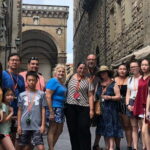
Your meeting point is Via degli Alfani, 115. You’ll meet a TUI local guide about 10 minutes before departure, and the guide will be holding a TUI sign or flag. That little detail matters in Florence, where streets look similar and you don’t want to waste time hunting for someone in the crowd.
One review notes that it was easy to find once you got into the area, which matches what I’d recommend: once you arrive on foot, pause for a minute, confirm the street number, then look for the sign/flag instead of wandering and guessing. You’ll stay in good rhythm, and you’ll avoid the “we’re late, hurry” energy that can make museums feel stressful.
First Stop: The Accademia Gallery and the Art You Actually Want
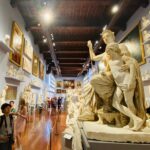
The tour’s first major block is a guided visit inside the Accademia Gallery. The route is short, but it’s not random. It centers on the works most people come to see, while still giving you enough context to understand what’s in front of you.
Here’s what the highlights specifically call out:
Michelangelo’s David as the anchor
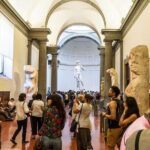
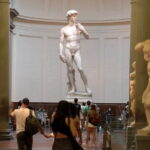
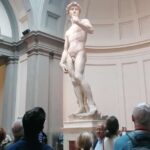
David is the headline, no question. What makes this stop worth a guided visit is not just spotting the sculpture—it’s understanding what you’re seeing: the choices Michelangelo made in posture, anatomy, and expression. A guide can also help you notice the details that tend to disappear when you’re trying to fight crowds for a good viewing spot.
The Prisoners: not just “extra statues”
The highlights also include Michelangelo’s Prisoners. This is one of those sets of works that rewards you for slowing down, even briefly. They’re fascinating because they show a different side of Michelangelo’s thinking—how he approached form, struggle, and the relationship between unfinished sculpture and finished impact.
If you’re the type who thinks you already “know” David, the Prisoners are the reality check. They remind you that Michelangelo wasn’t only a monument-maker—he was also exploring movement and motion through stone.
You can also read our reviews of more museum experiences in Florence



San Matteo: balance beyond the famous face
The tour also points out San Matteo, which rounds out the Michelangelo experience. It gives you a sense that the Accademia isn’t just one blockbuster sculpture. It’s a place where you can connect major names to broader artistic ideas happening in the Renaissance.
If your goal is to leave with a coherent picture of what you saw, San Matteo helps you build that bridge.
Giotto’s Gold-Background Paintings: A Change of Mood
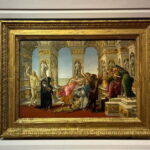
After you’ve spent time with stone and human form, the tour shifts to gold-background Giotto paintings. This kind of contrast is more useful than it sounds. When you see only one art form for too long, your brain starts to blur details and you stop taking in the differences.
Giotto’s gold-ground style is a reminder that Renaissance art wasn’t just about anatomy and realism. It was also about symbolism, sacred settings, and how artists used visual language to guide meaning. In a guided format, you’ll get the quick explanations that help you look differently—less like you’re scanning for “wow” and more like you’re reading what the artist is communicating.
Museum of Musical Instruments: A Clever Bonus Stop
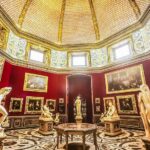
One of the more interesting inclusions is the Museum of Musical Instruments. On paper, it can sound like a left-field add-on. In practice, it’s a refreshing break from purely visual art and a chance to think about culture in a broader way.
This is also one of those stops that can be hard to fit into a standard museum day if you’re moving on your own. Having it included in a short one-hour tour means you don’t have to guess what to sacrifice. You see something you might not plan, and it makes your visit feel more complete.
The David Photo Stop: How to Use It Without Stress
The itinerary includes a photo stop at Michelangelo’s David. That’s a practical detail, because most people try to get a picture while also trying to see the sculpture well. In crowded rooms, that usually turns into frustration.
A guided photo stop helps you avoid that trap. You know when you’ll have a moment to step in and capture the image, and you’re less likely to miss key viewpoints while juggling a phone and a crowd.
Tip: treat the photo moment like a quick check-in. Take the shot, then spend your best attention on looking. The whole point of seeing David in person is the presence—so get the photo, then shift back into observation.
Small Group Up to 15 People: More Attention, Less Waiting
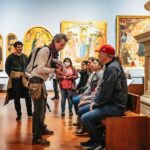
The tour is limited to a small group of up to 15 people, which is a big deal in Florence. Big tour groups can be loud, slow, and awkward. Small groups make the experience feel more like you’re walking with a smart friend than following a script.
The info also mentions headsets for groups of more than 5 people. That’s a quiet quality-of-life feature. Headsets reduce the need to keep leaning forward or shouting, so you can actually hear the guide and stay focused on details instead of volume.
This is also where the reviews line up with what you’d want from a guided experience. Martina, named in the feedback, is described as friendly and funny, and the guide explains what you need to see in a way that makes the gallery easier to navigate.
And remember: when the group stays small, the guide can keep the pacing under control. That’s how a one-hour experience stays informative instead of feeling like you got dragged past art you barely absorbed.
The Guide’s Role: Context That Makes the Art Click
The tour info highlights a guide named Francesca, who explains that her job is to provide context for what you see. In plain terms, she’s helping you connect the art to the people and ideas behind it—especially ties to the Medici family and the wider Renaissance world.
This kind of framing matters because museums can be overwhelming. With more than two million visitors per year at Florence’s major art sites (and a lot of works competing for your attention), it’s easy to leave with only a mental scrapbook of names. A good guide helps you build meaning fast: what the work is, what makes it important, and what to notice while you’re standing right there.
The tour also notes that the guide has standout knowledge tied to the Uffizi and its treasures. Even if you’re not visiting that museum on this exact tour, that kind of depth usually shows in the explanations—less random trivia, more connections that make Renaissance art feel like one conversation instead of separate islands.
Included Extras That Actually Matter
This tour includes a few practical items that improve the visit:
- 1-hour small group tour
- A local expert guide
- Skip-the-line tickets to the Accademia Gallery
- Headsets if the group is larger than 5
- Access to temporary exhibitions
Temporary exhibitions can change what’s worth your attention on a given day. The benefit here is simple: you’re not only seeing the permanent anchors. You get a chance to catch what’s current without paying extra or trying to plan around changing schedules.
Price and Value: Is $58 Worth It?
At $58 per person for a one-hour guided tour, the value comes down to what you’re buying: time saved, direction provided, and clarity delivered.
If you were visiting alone, you’d still pay for entry, and you’d still face the reality of crowds and the challenge of deciding where to focus first. The skip-the-line ticket is a direct time saver, and time in Florence is more valuable than it feels. This tour also bundles guide time and headset support (when needed), plus access to temporary exhibitions.
So the way I’d judge the price: it’s worth it if you want the “best-of” experience with less friction. It may feel pricey if you love museums at your own pace and you don’t need help choosing what to see. But if you’re a first-timer or you’re tight on time, this pricing is fairly aligned with the kind of guided experience you’re getting—fast entry, expert explanations, and the big Michelangelo payoff.
Who Should Book This Tour (and Who Might Prefer Another Plan)
This fits well if you’re:
- Short on time and want a high-impact Accademia visit
- Interested in Michelangelo but want more than name-dropping
- Traveling with someone who gets cranky when museums feel confusing
- The type who benefits from a guide’s quick context (Medici, Renaissance ideas, symbolism)
You might skip it or pair it with something longer if you:
- Want hours to wander at a slow pace
- Prefer to read everything without any schedule pressure
- Need wheelchair access (the tour isn’t suitable for wheelchair users)
Also, if your dream day in Florence is highly flexible, pay attention to the short duration. You’ll get a strong hit of the key works, but you won’t replace a full, room-by-room museum day.
Should You Book This Accademia Gallery & David Small-Group Tour?
I’d book it if you want a smart, efficient route where the guide helps you see better, not just faster. The combination of skip-the-line entry, a small group, and a tight focus on David plus the Prisoners and San Matteo is exactly the kind of structure that turns a crowded museum into an enjoyable experience.
Don’t book it if you’re chasing a long, slow, deep reading of every room. This is a one-hour “get the essentials with context” plan. If that’s your goal, the value is strong.
If you’re on the fence, ask yourself one question: do you want your Florence art time to feel smoother and more guided? If the answer is yes, this tour is a solid choice.
FAQ
How long is the Florence Accademia Gallery and David tour?
It lasts 1 hour.
Where do I meet the guide?
Meet at Via degli Alfani, 115. Arrive about 10 minutes before departure, and look for the TUI sign or flag.
Is skip-the-line entry included?
Yes. The tour includes skip-the-line tickets to the Accademia Gallery.
What can I see during the visit?
You’ll see Michelangelo’s David, plus the Prisoners and San Matteo. The tour also includes gold-background Giotto paintings and access to the Museum of Musical Instruments.
How big is the group?
The group is small, with up to 15 people.
Are headsets provided?
Headsets are included for groups of more than 5 people.
Is the tour available in English?
Yes, the live tour guide is in English.
Does the tour include temporary exhibitions?
Yes, you’ll have access to temporary exhibitions.
Is hotel pickup included?
No, hotel pick-up and drop-off are not included.
Is the tour suitable for wheelchair users?
No, it is not suitable for wheelchair users.