REVIEW · FLORENCE
Florence: Fast Track Tickets for the Accademia Gallery
Book on Viator →Operated by Star Florence · Bookable on Viator
Skip the wait and see more art. The Fast Track ticket gets you straight into the Accademia Gallery’s big-name rooms, with Michelangelo’s David in the Tribune and a smart route through other must-sees like the Prisoners. Two things I really like are how direct the entry is and how much sculpture focus you get for the price. One thing to consider: this is admission with reservations, not a guided tour, so you’ll want to be ready to explore on your own.
This works especially well in busy Florence days when you’d rather be looking at marble than watching other people shuffle forward. I also appreciate the extra stop you can make inside the same complex at the Gipsoteca Bartolini, where plaster replicas help you understand how artists worked. If you’re hoping for a staff-led commentary for every room, you’ll need to plan for that yourself since the ticket doesn’t include a guide.
In This Review
- Key Highlights at a Glance
- Price and Value for Accademia Fast Track Tickets
- Getting In Quickly: Where You Redeem the Ticket
- Galleria dell’Accademia: A Smart Flow Through Sculpture and Paintings
- Hall of the Colossus: Giambologna and Early Florence Details
- Main Hall of the Prisoners: Michelangelo’s Slaves in Context
- Tribune: Michelangelo’s David and Allori’s Coronation
- Gipsoteca Bartolini: Plaster Models That Make Art Process Click
- What’s Included (and What You Must Plan Yourself)
- How the Skip-the-Line Works in Real Life
- Who This Ticket Fits Best
- A Practical Way to Plan Your Day Around Accademia
- Should You Book This Fast Track Accademia Ticket?
- FAQ
- Where do I redeem my Accademia Gallery ticket?
- How much does this experience cost?
- How long is the experience?
- Is skip-the-line access included?
- What’s included with the ticket?
- What is not included?
- When will I receive confirmation?
- What is the cancellation policy?
Key Highlights at a Glance
- Guaranteed skip-the-line access (barring delays or strikes by museum management)
- Michelangelo’s David in the Tribune Left Wing
- Main Hall of the Prisoners with unfinished Slaves
- Hall of the Colossus plus works by Giambologna and Domenico Ghirlandaio
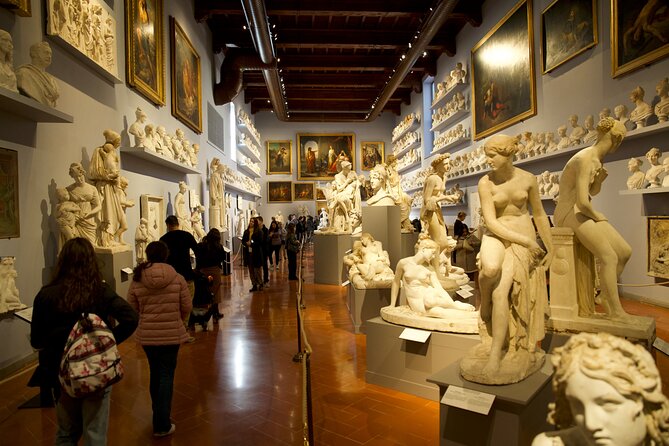
- Gipsoteca Bartolini plaster models (including a Reclining Venus) on the first floor
Price and Value for Accademia Fast Track Tickets
At $43.53 per person for roughly 1 day, this ticket isn’t trying to be a bargain. It’s paying for time—your time. In Florence, the difference between spending your morning in a line vs. spending it under museum ceilings can be huge. That’s why the skip-the-line promise matters here.
You also get more than just a single-room experience. The ticket is tied to admission and reservations for the Accademia Gallery, and the route you follow inside can take you from landmark sculpture areas to additional displays like the Gipsoteca Bartolini. In other words: you’re paying for faster entry, but you’re also getting a museum visit that’s built to keep you moving through the highlights.
Is it worth it? If David is your anchor stop, and you don’t want your day shaped by queue management, yes. If you’re traveling at a super-quiet time and you enjoy slow museum starts, you might decide to save money. But when lines stretch, fast track usually feels like the smartest upgrade you can buy.
A few more Florence tours and experiences worth a look

Getting In Quickly: Where You Redeem the Ticket
Your ticket redemption point is Via Ricasoli, 57, 50122 Firenze FI, Italy. That matters because “meeting up” isn’t the same thing as “getting inside.” The quicker you’re set at the right place, the quicker you can be scanning your way through the gallery halls.
You’ll receive confirmation at the time of booking, which is exactly what you want for a smooth start. On busy days, smooth starts are half the battle.
One more practical note: this experience specifies that skip-the-line access is guaranteed, even during peak season, with the only exceptions being delays or strikes by museum management. In plain terms, the system is designed for speed—but museums can still run into real-world interruptions.
Galleria dell’Accademia: A Smart Flow Through Sculpture and Paintings
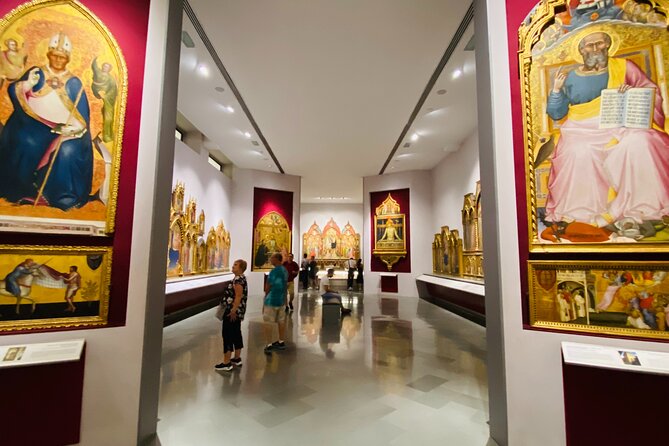
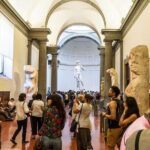
The heart of this experience is your visit to the Galleria dell’Accademia, and the way the highlights are grouped helps you understand the gallery instead of just checking boxes. The itinerary moves through major sculpture-focused rooms first, then lands you in the Tribune for David, and finally adds the Gipsoteca Bartolini on the first floor.
Because this is admission-only (not a guided tour), your advantage is pacing. You can spend extra minutes where your eyes naturally stick: faces, hands, the unfinished torsos, or the plaster models that explain process.
The downside of going self-directed: you’ll get the art, but you won’t automatically get the narration. If you like quick context while you walk, you might want to download an audio guide or read a short overview before you arrive.
Hall of the Colossus: Giambologna and Early Florence Details
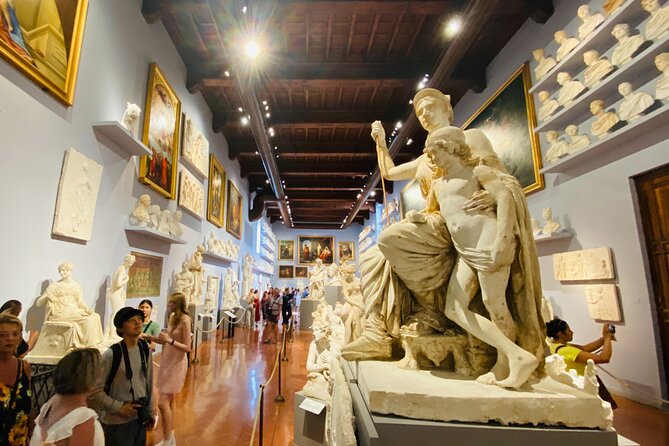
The visit starts at the Hall of the Colossus, a big room that sets the tone for the kind of art you’ll see here. This stop is a mix of famous sculpture and painting/works that give you visual variety before you hit the most dramatic marble rooms.
From here, you’ll see highlights including Giambologna’s Rape of the Sabines. Seeing it in person changes the feel of the piece. You notice how the figures twist and how the composition is built to pull your eye in a full circle of movement.
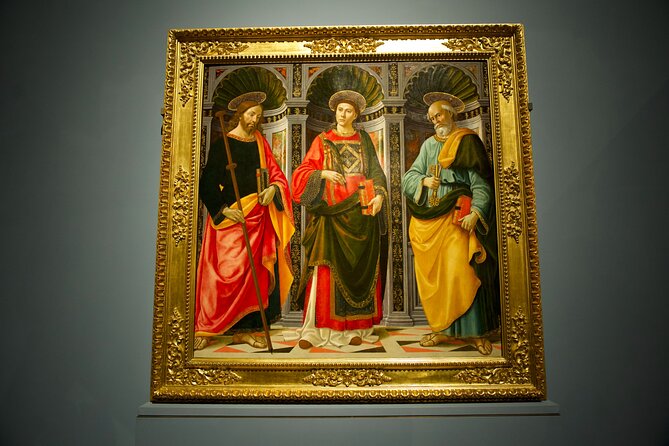
You’ll also encounter Cassone Adimari and Domenico Ghirlandaio’s St. Stephen between St. James and St. Peter. These works add a different kind of energy. If you’re only thinking about David, this is where the Accademia reminds you it’s not one statue—it’s an entire collection that shaped artists’ worlds.
Practical tip: in a self-guided visit, don’t rush this hall just to reach David. Spend a bit of time here and your later sculpture rooms will feel more connected, not like a jump from one isolated landmark to the next.
Main Hall of the Prisoners: Michelangelo’s Slaves in Context
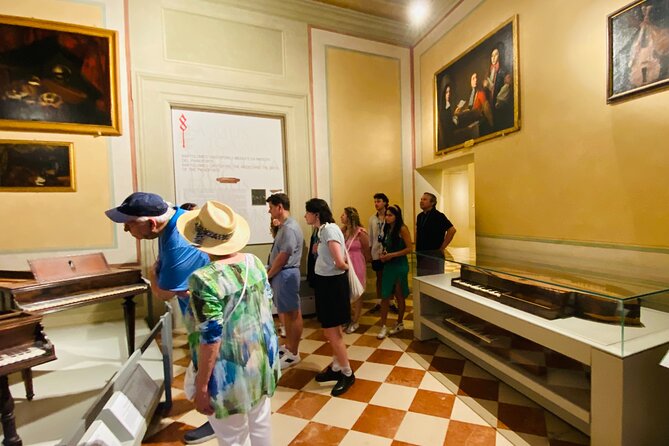
Next comes the main Hall of the Prisoners, where the focus shifts hard into Michelangelo territory. This is where you’ll learn more about the unfinished statues known as the Slaves.
If you’ve only ever seen photos of Slaves, seeing them in a room designed for these works changes your understanding. Unfinished marble isn’t a failure—it’s an invitation. You can sense the process: how form is tested, shaped, then left in mid-thought. It’s a different way of “reading” art compared with finished paintings.
This hall also connects Michelangelo to the broader artistic ecosystem inside the Accademia’s orbit. The experience highlights the friendship and mutual influence with artists such as Fra’ Bartolomeo, Pontormo, and Granacci. Even without a guide talking through it step by step, you’ll likely start noticing how styles and ideas travel between artists.
If you tend to get tired standing in front of art for too long, plan for it here. This room encourages slow looking. Give yourself breaks between halls if you need them—your eyes will work better when you return.
You can also read our reviews of more museum experiences in Florence
Tribune: Michelangelo’s David and Allori’s Coronation
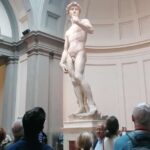
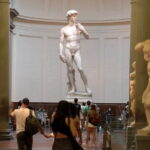
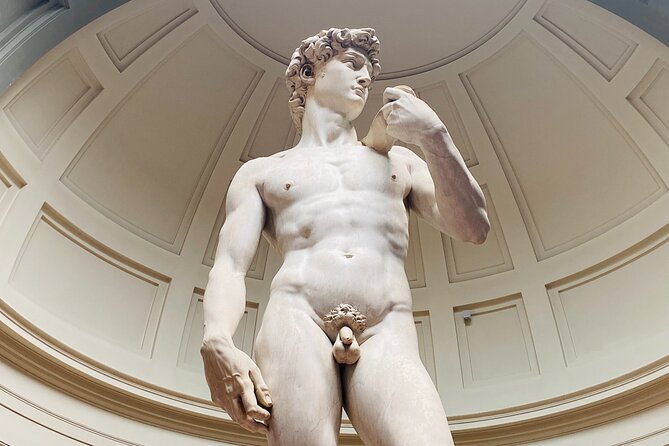
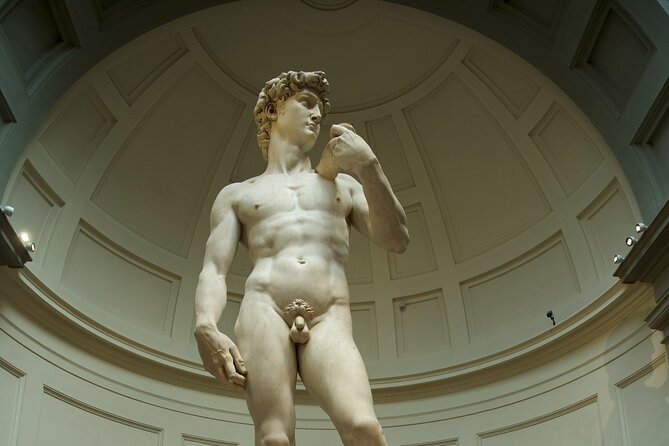
The Tribune is where Michelangelo’s David comes into view, specifically in the Tribune Left Wing area. This is the payoff everyone plans their trip around, but the key is how you move through it.
The itinerary also includes Allori’s Coronation of the Virgin Mary in the Tribune Left Wing. Having a painting alongside the statue experience matters more than you might think. It makes the Tribune feel like a complete art moment—sculpture dominating your attention, but a painted counterpart pulling your gaze to other ways of telling stories.
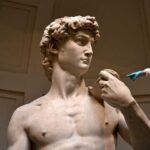
In a fast-track setup, it’s easy to sprint through the galleries like a checklist. I’d resist that. Spend enough time in the Tribune that you don’t just spot David—you actually look at the details that make the statue so human. Then you can let the nearby painting give your eyes a different kind of focus.
Gipsoteca Bartolini: Plaster Models That Make Art Process Click
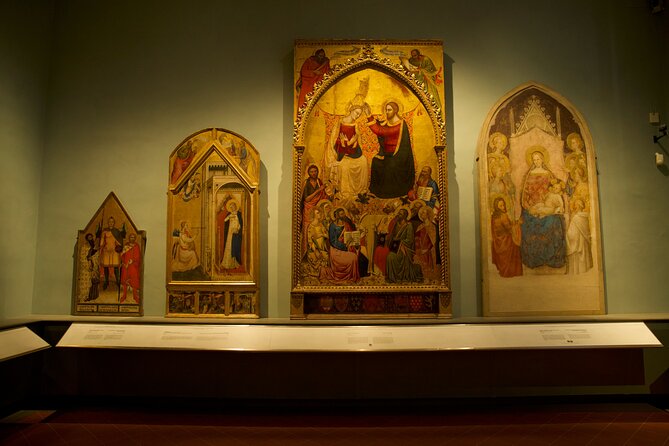
Don’t skip the Gipsoteca Bartolini stop. It’s part of the documentation center on the first floor, and it’s one of those experiences that makes the whole museum smarter.
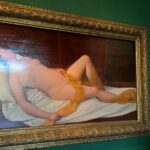
You’ll see plaster replicas tied to artists such as Arnolfo, Brunelleschi, and Lorenzo Monaco, plus a Reclining Venus replica. These models help explain how artists and architects studied forms before committing to final work. Even if you’re not a sculpture expert, plaster replicas are unusually useful because they show shape and proportion without the same final-surface distractions.
This is also where the self-guided nature works in your favor. You can linger on the replicas that connect to what you just saw in stone—then return to your mental map of the museum with a clearer idea of how things are made.
A practical downside: if you’re short on time, first-floor stops can feel optional. But in my opinion, this is one of the best “value add” parts of the ticket because it gives you learning without taking over your whole day.
What’s Included (and What You Must Plan Yourself)
This experience includes tickets and reservations to the Accademia Gallery. That’s the core product. The itinerary is built around what you can see once you’re inside.
What’s not included:
- A guided tour of the Accademia Gallery
- Transportation to or from attractions
- Hotel pick-up and drop-off
- Food and drinks
So you’ll want to plan your own day around the ticket. If you’re walking from a nearby hotel, give yourself buffer time to find the redemption area on Via Ricasoli. And if hunger hits, you’ll need to handle snacks or meals separately—this ticket won’t bundle that in.
How the Skip-the-Line Works in Real Life
The big promise here is skip-the-line access, even during peak season (except delays or strikes by museum management). That matters because museum lines can swallow an hour faster than you expect.
In the best moments, the experience feels frictionless: you get in, you move through, and you’re looking at the art rather than waiting for your turn. One thing I’ve found useful from similar fast-track experiences is to keep your expectations realistic. If there’s a museum-side disruption, you may need to follow instructions from an on-site representative to keep things moving.
One review detail that’s worth taking seriously: if there’s a possible disruption (like a strike concern), you might get a call and be directed to meet a representative at a meeting point so you can pass through the lines smoothly. The experience description also notes exceptions for strikes/delays, so it’s smart to stay flexible.
Who This Ticket Fits Best
This fast track ticket is a great match if:
- David is your main goal and you’re trying to protect your schedule
- you want a museum visit without dragging your day behind a long queue
- you like sculpture-focused routes and want to spend time on Slaves and related works
- you’re comfortable exploring without a guide (or you’re willing to use your own context tools)
It may be less ideal if:
- you want a full guided narration through every hall
- you need transportation and other bundled services handled for you
- you want a very structured, someone-will-hold-your-hand kind of experience
A Practical Way to Plan Your Day Around Accademia
Since this is approximately 1 day, keep the rest of your schedule realistic. Don’t stack it so tightly that you’ll feel rushed at the Tribune. Also, remember that the experience covers multiple indoor stops that are spaced by halls and a first-floor documentation center.
A good strategy is to decide in advance what you’ll prioritize, then let the rest unfold:
- First priority: Tribune for David
- Second priority: Hall of the Prisoners for the Slaves
- Add-on that’s worth it: Gipsoteca Bartolini plaster replicas
If you do it this way, you’ll feel satisfied even if you lose time to crowding inside.
Should You Book This Fast Track Accademia Ticket?
If you want an efficient Accademia visit built around the real highlights—David, the Prisoners area, and the supporting art—you should book it. The price is basically a “pay to save time” trade, and the skip-the-line promise is the kind of value that pays off most when Florence is busy.
Skip it only if you’re traveling in a super-quiet window, you’re okay with standing in line, and you don’t mind spending extra hours to save the ticket upgrade. Otherwise, this is one of those straightforward upgrades that turns the museum from a schedule problem into an art day.
FAQ
Where do I redeem my Accademia Gallery ticket?
Your ticket redemption point is Via Ricasoli, 57, 50122 Firenze FI, Italy.
How much does this experience cost?
The price is $43.53 per person.
How long is the experience?
It’s listed as 1 day (approx.).
Is skip-the-line access included?
Yes. Skip-the-line access is guaranteed, except for delays or strikes by the museum management.
What’s included with the ticket?
You get admission tickets and reservations to the Accademia Gallery.
What is not included?
This experience does not include a guided tour, transportation, hotel pick-up/drop-off, or food and drinks.
When will I receive confirmation?
Confirmation is received at the time of booking.
What is the cancellation policy?
You can cancel for free up to 24 hours in advance for a full refund. Cut-off times are based on the experience’s local time.