REVIEW · ROME
Borghese Gallery Guided Tour with Skip-the-Line Entry
Book on Viator →Operated by Doooing Experience · Bookable on Viator
One of Rome’s best art hours is timed just right. This Borghese Gallery guided tour pairs skip-the-line entry with a small group so you can focus on the masterpieces, not the crowd chaos. I love the pacing and the fact that you get to hear it clearly with headsets if needed. I also like that the guide points out details you’d miss in a quick self-tour. The one thing to watch is the time limit: you’ll see a lot, but you still can’t linger forever in front of your favorite statue.
You’ll start at Piazzale Scipione Borghese, then work your way through some of the most famous rooms and works in the collection. Expect a semi-private group of up to 15 with guided stops that hit major Bernini pieces and one standout Canova sculpture. If some rooms are affected by refurbishment or Jubilee restoration, the experience may adjust.
At about 2 hours, this is a high-value add-on for a Rome trip, especially since entry is strictly regulated. It’s also smart to book early; this one is commonly reserved about 9 days in advance, and for good reason.
4-6 key things you should know before you go
- Skip-the-line helps you start faster, which matters because this museum is ticket-regulated.
- Small group (max 15) keeps the tour from turning into a loud marching band.
- Headsets are available, so the commentary stays easy to follow.
- You get a guided route through the highlights, including Bernini’s David, Truth Unveiled, and Apollo and Daphne.
- Major works get real context, from myths (Ovid) to political symbolism (Napoleonic-era Venus).
- Some rooms may close due to refurbishment, so your exact walk-through can vary a bit.
In This Review
- Why the Borghese Gallery tour feels different than a quick museum visit
- Skip-the-line entry: saving time in a ticket-limited museum
- Small-group size (up to 15) and headsets: better listening, better looking
- Your 2-hour route through the Borghese Gallery highlights
- Stop 1: Apollo and Daphne (Bernini)
- Stop 2: Pauline Bonaparte as Venus Victrix (Canova)
- Stop 3: Two Busts of Cardinal Scipione Borghese (Bernini)
- Stop 4: Truth Unveiled by Time (Bernini)
- Stop 5: David (Bernini)
- What you’ll learn that you won’t get from wandering alone
- Price and value: what $91.95 buys you in real time
- Logistics you should plan for before you go
- Who should book this Borghese Gallery skip-the-line tour
- Should you book this tour?
- FAQ
- How long is the Borghese Gallery guided tour?
- Is skip-the-line entry included?
- What’s included in the ticket price?
- Where does the tour start?
- What if I arrive late?
- Can I cancel for a full refund?
Why the Borghese Gallery tour feels different than a quick museum visit
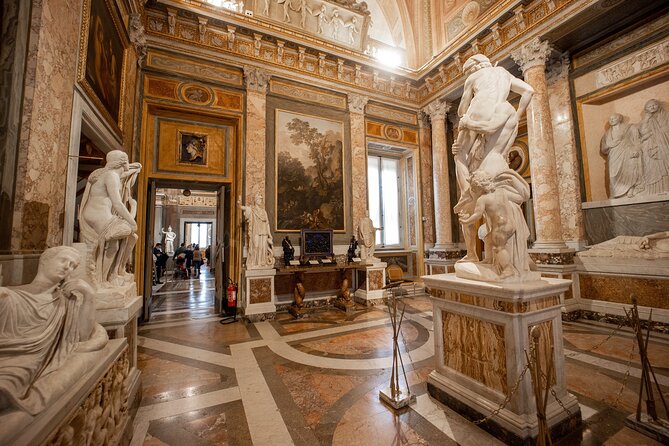
The Borghese Gallery is one of those places where art stops being something behind glass and becomes something you can almost walk around emotionally. The building is compact, but the collection packs a punch—especially if your Rome highlights include Bernini and Caravaggio (and you’ll see why people obsess over Borghese).
This tour works well because it doesn’t ask you to figure everything out on your own. You get a guide, you get a route, and you get a realistic time box. That’s the winning formula for a museum like this, where the “I’ll just look for a minute” plan can disappear fast once you’re stuck in lines or confused about what’s actually central.
I also like that the tour aims at the big moments across the collection. It’s not about seeing every single room. It’s about making sure you don’t miss the famous works that people travel to Rome specifically for—then giving you just enough story to make the statues click.
A quick note on “strict entry”: entry is regulated and capacity is limited. That means your time inside is precious. The skip-the-line part matters because it’s not just convenience—it’s how you protect your focus once you’re finally inside.
Skip-the-line entry: saving time in a ticket-limited museum
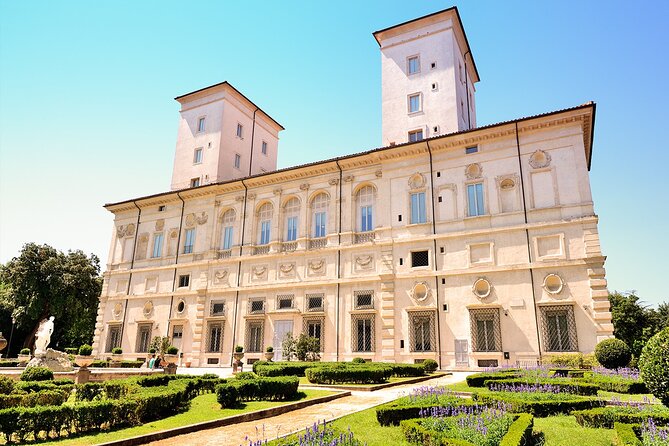
Skip-the-line doesn’t mean there are no lines. It means you’re not stuck at the worst moments. The Borghese Gallery runs on timed entry rules, and you’ll be grouped with your guide for entry. That changes how you plan your arrival.
Here’s what that means for you on the ground:
- You should arrive early at Piazzale Scipione Borghese, 5.
- If you’re late, you’re not just risking a delay. The late arrival policy is strict: late arrivals are not accommodated or refunded.
- Bring your mobile ticket and expect a smooth but time-driven process once you meet the group.
This is one of the practical reasons the tour gets such strong ratings. People feel the difference when they step inside without the scramble. Then they can spend the full 2 hours actually watching the sculpture details and listening to the stories, instead of burning minutes at the start.
One more planning tip: this experience is often booked ahead (on average about 9 days). If you’re traveling in a peak period, don’t wait for last-minute optimism.
You can also read our reviews of more guided tours in Rome


Small-group size (up to 15) and headsets: better listening, better looking
Max 15 travelers is a big deal here. In a museum with strict entry and a lot of ground to cover, small groups keep the guide from talking over everyone and keep the pace from feeling like a commute. You also get a better chance to hear the commentary when the group stops near the artworks.
Headsets are listed as available if needed. Even when you’re physically close, marble rooms can make sound bounce in a way that turns normal conversation into guessing games. Headsets solve that. The result: you’re more likely to catch the “why this matters” details, like what the artist was trying to express or what the subject was borrowed from.
I’ll also add a balanced caution: like any guided route, you’ll be on a schedule. There’s at least one mention of timing running a bit longer than expected. So if you’re the type who gets antsy standing in one spot, consider bringing patience—or use the self-explore time after the tour to sit down and slow your pace.
Your 2-hour route through the Borghese Gallery highlights
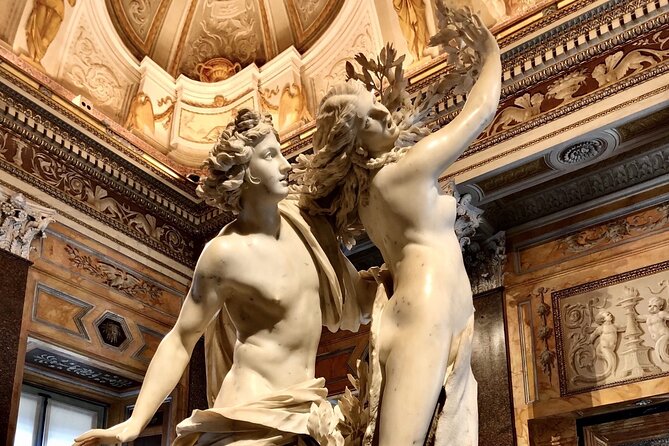
The tour centers on a selection of standout works and the rooms where they live. Even though the gallery contains 20 rooms, your guided portion focuses on key masterpieces, with enough time at each stop to understand what you’re seeing and then move on.
Below is what the experience includes as highlighted stops, with what makes each one worth your attention—and what to watch for during the visit.
Stop 1: Apollo and Daphne (Bernini)
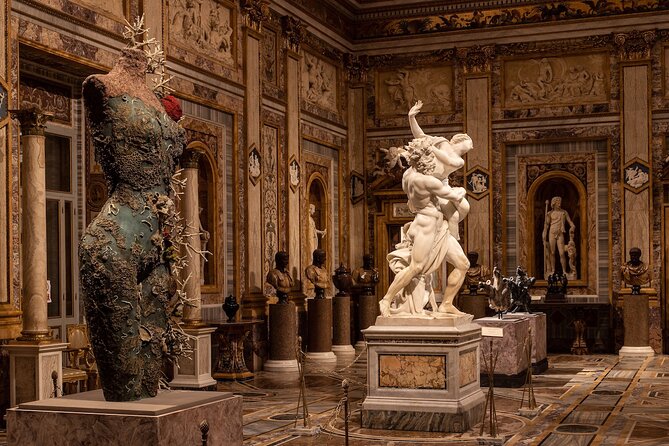
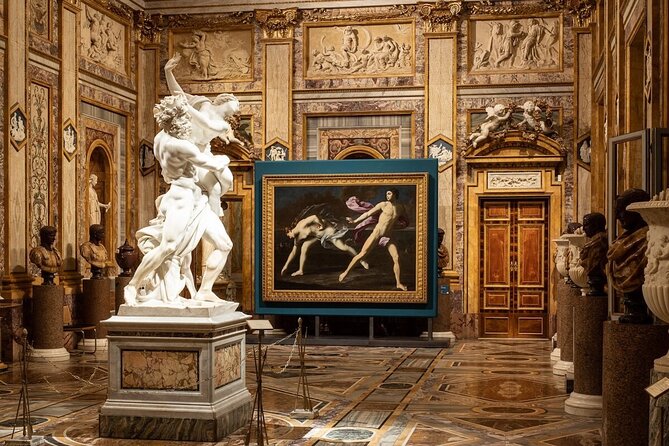
You’ll spend about 20 minutes at Apollo and Daphne, a marble sculpture by Gian Lorenzo Bernini (completed around 1622–1625). It’s natural size and Baroque in style, capturing the exact moment of transformation from the myth.
What makes this stop special is the story setup: the work is connected to the climax of Apollo’s pursuit of Daphne, as told through Ovid’s Metamorphoses. The myth knowledge isn’t required—but the guide context makes it feel less like “a statue” and more like a scene frozen mid-action.
Practical tip: stand in a position that lets you follow the movement. The Baroque style is all about motion and expression, and you’ll understand it fastest if you let your eyes trace the drama instead of just staring at the face.
Stop 2: Pauline Bonaparte as Venus Victrix (Canova)
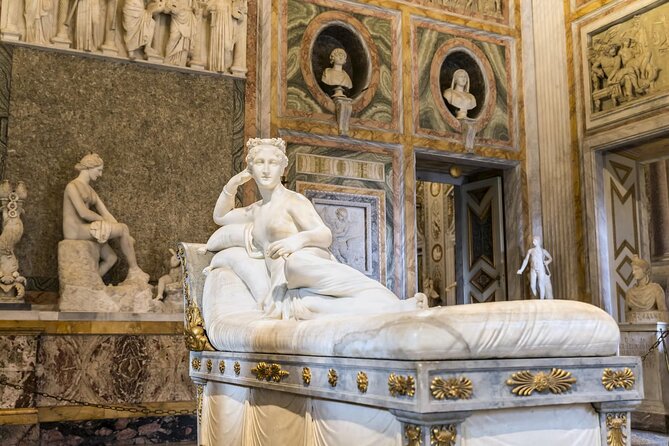
Next comes Pauline Bonaparte as Venus Victrix, a semi-nude, life-size neo-Classical portrait sculpture by Antonio Canova. Your time here is about 20 minutes.
This is one of those artworks where the symbolism matters. The piece was commissioned by Pauline’s husband, Camillo Borghese, and Canova executed it in Rome from 1805 to 1808 after Pauline married into the Borghese family. The work later moved from Camillo’s house in Turin to Genoa before arriving at the Gallery around 1838.
Why this stop is a smart one for your tour: it balances the Bernini intensity with a different visual language. You’re looking at neo-Classicism, but also at power, identity, and how art borrows from classical gods to say something very political.
Practical tip: if you like art history, keep an eye on the contrast between the subject matter and the styling. This isn’t just “beauty”; it’s an image with a message.
You can also read our reviews of more museum experiences in Rome

Stop 3: Two Busts of Cardinal Scipione Borghese (Bernini)
You’ll then get around 15 minutes with Two Busts of Cardinal Scipione Borghese, also by Bernini (created 1632).
Busts can sound like a quick stop compared to marble scenes of action. But this is where a good guide earns their keep: portrait sculpture is about surface, status, expression, and the feel of a person’s presence. The fact that Bernini made two versions is itself a clue that this figure mattered, and the tour’s framing helps you notice the differences instead of treating it like one quick glance.
Practical tip: don’t rush the face. With portraits, the smallest details are often the point.
Stop 4: Truth Unveiled by Time (Bernini)
Another 15-minute stop is Truth Unveiled by Time, a marble sculpture by Bernini executed between 1646 and 1652.
This one has built-in drama. The concept was allegorical: a naked young figure of Truth is unveiled by a Time figure above. But here’s a twist worth listening for—a figure of Time was never executed at first. Bernini added the Time figure later (around 1665) to complete the idea.
That production detail makes the art feel more human. You’re not just looking at a finished “statement.” You’re looking at an artistic solution to an artistic problem.
Practical tip: if you’re wondering why the composition feels the way it does, this is your stop. It’s the kind of work where the guide’s explanation can instantly change how you interpret the pose and gesture.
Stop 5: David (Bernini)
Finally, you’ll spend about 20 minutes at David, a life-size marble sculpture by Bernini. The commission came from Cardinal Scipione Borghese, and the masterpiece was completed in roughly seven months (from 1623 to 1624).
This is the biblical moment right before action: David is about to throw the stone that will bring down Goliath, enabling David to behead him. The tour framing helps you connect the work to the broader theme of strength and decision—then, on top of that, you get the Bernini craftsmanship details that make the scene feel alive.
Practical tip: try stepping back for a moment. David’s impact is about proportion and presence. Up close, you’ll focus on expression and form. From a bit farther, you’ll see the sculpture as a whole.
What you’ll learn that you won’t get from wandering alone
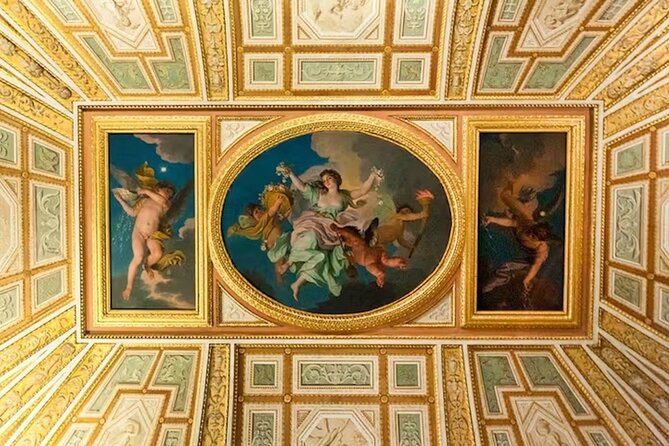
A guided Borghese tour is really about translating what you see into what it means. The best part of this experience is that the commentary is tied directly to the artworks’ stories—myth, family connections, commissions, and artistic choices.
For example:
- Bernini’s works here aren’t just dramatic. They’re tied to Ovid’s Metamorphoses and to Baroque storytelling.
- Canova’s Venus isn’t just neo-Classical beauty. It’s linked to Pauline Bonaparte, Canova’s commission timeline, and how art moves through elite families.
- The “Truth” piece includes a production twist: the later addition of Time gives the allegory a behind-the-scenes arc.
The reviews you’d hope for are exactly the reviews that mention a guide who can explain without drowning you in jargon. Several guides named in feedback include Martina, Francesca, Lorenzo, Serena, and Stephanie. Different personalities, same goal: make the sculpture feel specific, not generic.
Price and value: what $91.95 buys you in real time
At $91.95 per person, this isn’t a budget-only ticket. But you’re paying for three things that are hard to replicate on your own:
- Skip-the-line entry that protects your timed window.
- Entrance fees included, so you’re not piecing together separate buys.
- A guide + headset support, which is what turns a list of masterpieces into an understandable story.
Two hours sounds short until you remember how quickly Borghese can become overwhelming. The collection is concentrated and full of major works. With a guide, your time becomes efficient: you see the right pieces, in the right order, and you’re less likely to waste time trying to decide what matters.
Also, you get a semi-private group with a cap of 15 people. That means you’re less likely to feel like you’re part of a giant herd. For many people, that alone justifies the price.
If your goal is to take your time and stare without commentary, you might prefer to do part of the visit on your own. But if you want your art time to feel complete—and you like a guided “look at this, then notice that” approach—this is good value.
Logistics you should plan for before you go
Here’s the practical side, the stuff that saves stress.
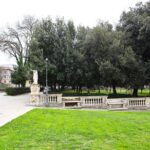
Meeting point: Start at Piazzale Scipione Borghese, 5, 00197 Rome. The tour ends back at the same meeting point.
Language: The tour is offered in English.
Timing: The tour runs about 2 hours and is built around a scheduled entry. Plan to arrive early—late arrivals are not accommodated or refunded.
Refurbishment and access changes: Some rooms might be closed due to refurbishment. Also, because of Jubilee-related restoration, access routes could change. Check for updates/messages before you arrive.
Weather note: The provider lists good weather as a requirement. That doesn’t mean Borghese is outside—but it does signal that the tour operator may adjust plans if conditions interfere with the broader visit timing.
Who should book this Borghese Gallery skip-the-line tour
This tour is ideal if you:
- Want to see the major Bernini and Canova highlights without spending your time researching on the sidewalk.
- Prefer a guided explanation over an audio app.
- Like small groups and clear sound (headsets if needed).
- Are visiting during a busy window and want to avoid the “when do we finally get in?” stress.
It might be less ideal if you:
- Hate being on a schedule and want long, independent viewing.
- Need lots of mobility support for standing still at stops (the tour has timed segments).
A smart hybrid plan: do the guided portion, then use your remaining time after to return to one or two works that grabbed you. That way, you get the meaning from the guide and the full emotional slow-down on your own.
Should you book this tour?
If your Rome trip includes “I want the big masterpieces and I want context,” I’d book it. The biggest reasons are practical: skip-the-line entry, small-group size, and guided stops that are tailored to the gallery’s true standouts.
You should hesitate only if you strongly dislike schedules. At around 2 hours, you’re seeing a lot of works, and you’ll move on even if you’re not done staring. Also, because some rooms can close, your exact mix of spaces can shift slightly.
My call: for most first-timers, this is one of the best ways to turn Borghese from a beautiful building into a memorable, understandable art experience.
FAQ
How long is the Borghese Gallery guided tour?
It’s about 2 hours (approx.).
Is skip-the-line entry included?
Yes. The tour includes skip-the-line entry and a guided visit.
What’s included in the ticket price?
The price includes the guided tour with skip-the-line entry, entrance fees, and headsets if needed.
Where does the tour start?
The meeting point is Piazzale Scipione Borghese, 5, 00197 Rome, Italy, and the tour ends back at the meeting point.
What if I arrive late?
You need to arrive at least 15 minutes before the scheduled departure time. Late arrivals are not accommodated or refunded.
Can I cancel for a full refund?
Yes. You can cancel for a full refund if you cancel at least 24 hours in advance. If you cancel less than 24 hours before, the amount paid is not refunded.