REVIEW · ROME
Borghese Gallery Small Group Guided Tour or Ticket Skip the Line
Book on Viator →Operated by EcoArt Travel · Bookable on Viator
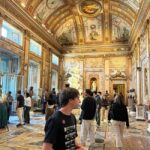
Bernini and Caravaggio in one timed visit. This skip-the-line Borghese Gallery experience is built for the museum’s strict entry rules, so you’re not stuck hoping for space at the door. You get a focused look at both the sculpture rooms and the painting galleries, then you’re released to enjoy the Villa Borghese Gardens on your own.
Two things I genuinely love: the pace stays sharp, and the art gets explained in a way that helps it click. You start on the ground floor with Baroque sculpture energy and then move upstairs for major painting highlights like Caravaggio’s David with the Head of Goliath and Raphael’s Lady with a Unicorn.
One possible drawback: because it’s timed and designed to cover the highlights in about two hours, you’ll need to keep moving instead of lingering in every room.
In This Review
- Key highlights at a glance
- Why Villa Borghese works best with timed entry
- Meeting point, group size, and what the 2 hours feel like
- Stop 1: ground-floor Bernini sculpture and the drama of marble
- Stop 2: upstairs painting highlights from Caravaggio to Raphael
- Garden release: Borghese Gardens, the Temple of Aesculapius, and rowboat time
- The viewpoint plan: Pincian Hill Terrace and a shaded path to Casina Valadier
- Value for $42.34: what you’re really paying for
- Who this works best for (and who might want a different style)
- Should you book this Borghese small-group tour?
- FAQ
- How long is the Borghese Gallery small-group guided tour?
- Is skip-the-line entrance included?
- Is the tour offered in English?
- What is the group size?
- Where is the meeting point?
- Do I get time in the Borghese Gardens after the gallery?
- Can I cancel for a full refund?
Key highlights at a glance
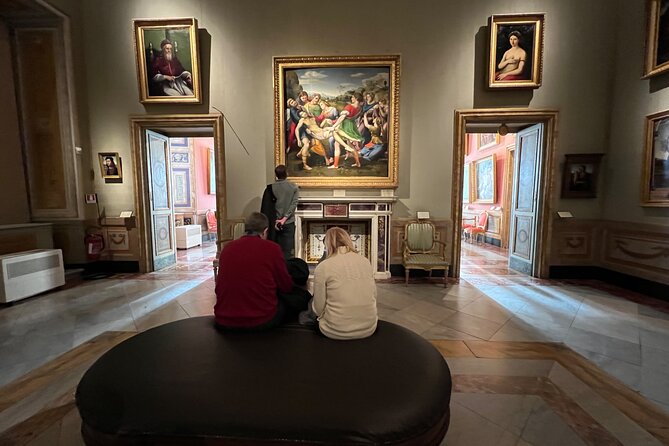
- Timed tickets that keep your plan on track even when Rome is crowded
- Small-group size (max 15) for a calmer visit than typical tours
- English-speaking guide + headsets so you can hear the stories without craning
- Two-level museum flow: Baroque sculpture downstairs, master paintings upstairs
- Garden time after the gallery including the Temple of Aesculapius and viewpoints toward Pincian Hill
Why Villa Borghese works best with timed entry
Villa Borghese is famous for a simple reason: it packs world-class art into a place with limited capacity. That’s great when you’re inside, but it can be stressful when you’re outside. Timed tickets solve the main problem—getting in when the museum is busiest.
This experience is priced at $42.34 per person and runs about 2 hours. For many people, that cost is less about a bargain and more about buying confidence. You’re paying so you can arrive with a schedule that works, rather than gambling on last-minute availability. The tour is also commonly booked about 30 days in advance, which is a clue that access gets tight.
And the structure matters. You’re not just handed a ticket and left to figure out the museum’s rhythm. A guide helps you see what to look for first, and that changes everything when you’re walking through a collection this big.
A few more Rome tours and experiences worth a look


Meeting point, group size, and what the 2 hours feel like
You meet at Piazzale del Museo Borghese, 00197 Roma RM. The location is also noted as near public transportation, which helps if you’re bouncing between sights during the day.
The group stays small, with a maximum of 15 travelers. That’s not just a comfort perk. A smaller group means less shoving at corners and more time for the guide to point out details without racing.
The visit uses headsets. Even in a crowded museum, that can save you from the usual problem: standing too far back to understand the explanation. You’ll keep your eyes on the artwork instead of on the backs of other people’s heads.
Two hours is not a lot of time for a museum like this, so you’re going to feel the timing. The good part is that you’ll see a lot of the collection’s biggest hits without getting lost. The trade-off is that you won’t be able to slow down for every single room.
Stop 1: ground-floor Bernini sculpture and the drama of marble
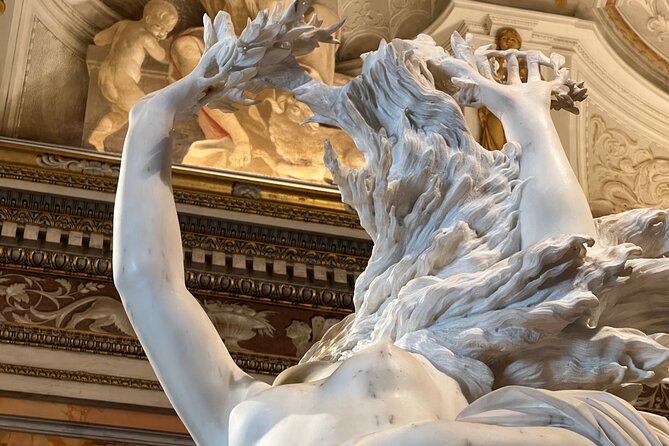
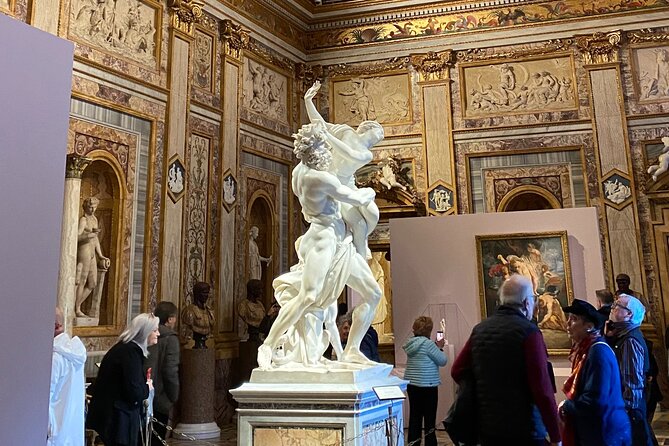
You begin on the ground floor with Baroque sculpture, which is exactly how Borghese should start. Baroque art isn’t polite. It moves. It swirls. It grabs your attention from across the room.
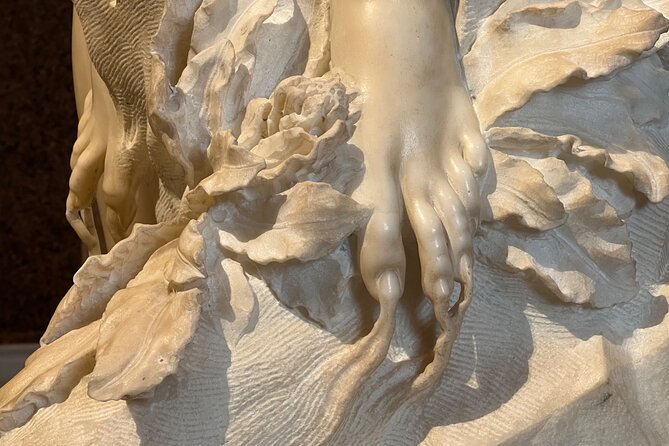
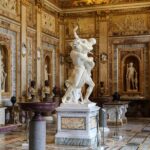
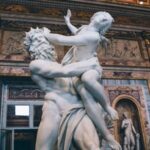
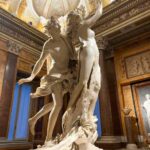
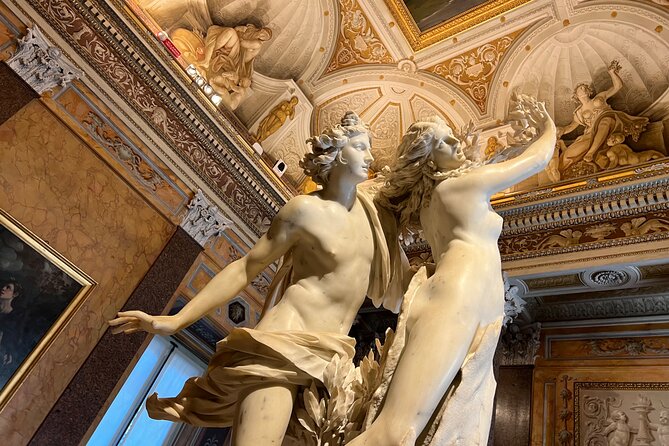
This portion highlights Bernini’s major works such as Apollo and Daphne, David, and The Rape of Proserpina. These pieces aren’t just impressive because they’re famous. They’re impressive because they look alive—faces, folds of cloth, and that sense of motion frozen in time.
A good guide makes that easier to understand. When someone explains how the sculpture was meant to be experienced—emotion, movement, and myth—you start noticing things you’d otherwise miss. It’s the difference between seeing a beautiful statue and understanding why it’s so effective.
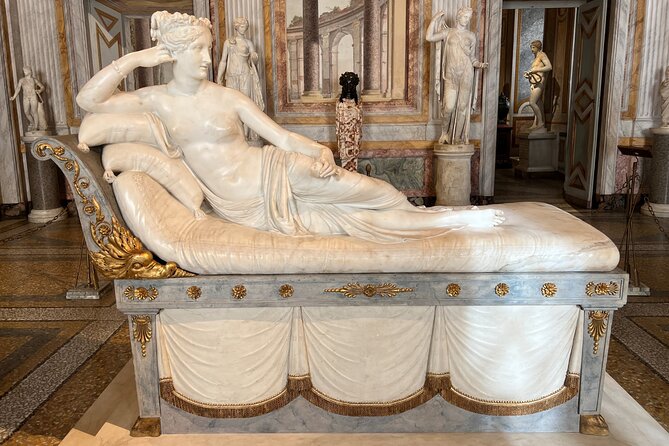
You also get Canova’s Pauline Bonaparte in this early stretch. Seeing Canova after Bernini helps you spot how styles shift while still staying in the world of high drama and strong presence.
Practical note: ground-floor routes can feel tight, so wear shoes you’re comfortable walking in. Also, try not to check your phone every time the crowd pauses. You’ll lose a bit of momentum, and the museum timing doesn’t wait.
Stop 2: upstairs painting highlights from Caravaggio to Raphael
After the sculptures, you move upstairs to the painting galleries. This is where the Borghese collection turns sharply visual—less marble drama, more human realism and idealized faces.
You’ll focus on heavyweight names and their best-known works, including:
- Caravaggio’s David with the Head of Goliath and St. Jerome
- Raphael’s Lady with a Unicorn
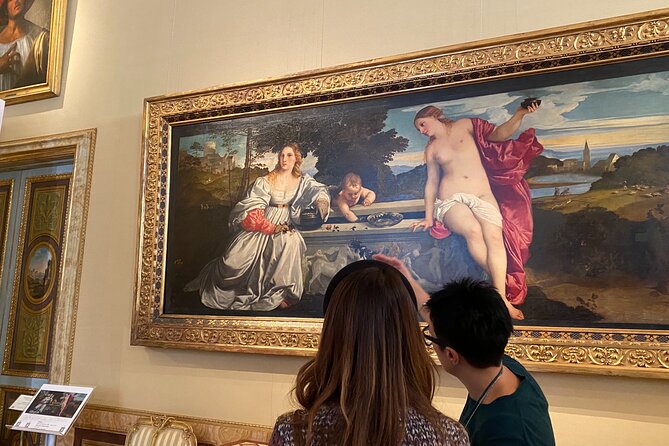
- Titian’s Sacred and Profane Love
- Correggio’s Danaë
Caravaggio is often the star here, because his realism can feel startling in person. The guide helps you connect the subject to the mood of the painting and the broader ideas of the period, so the work feels less random and more intentional.
Raphael’s delicate style gives you a different kind of attention—small gestures, careful composition, and that sense of grace. Titian and Correggio add their own flavors, including mythological themes and sensual lighting that makes you want to stand still for a moment longer.
This second hour can be the make-or-break section for people who usually get museum fatigue. What keeps it from becoming “just rooms and frames” is the way the guide’s storytelling ties the artworks together. You come out feeling like you followed a path, not just a checklist.
Garden release: Borghese Gardens, the Temple of Aesculapius, and rowboat time
When the museum portion ends, you get free time to explore the Borghese Gardens on your own. That’s a big deal because it turns a concentrated art stop into a full half-day feeling.
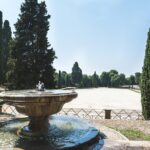
A suggested stroll starts by moving along Viale dei Pupazzi toward the Temple of Aesculapius. The temple sits beside a lake, and the route is lined with statues and umbrella pines. This is the kind of calm break that makes the museum feel more rewarding—like you’ve earned a breather.
You can also rent a rowboat for a short paddle. That small activity is worth it if you want to slow your brain down after art overload. Even if you don’t rent one, the lake views are a nice photo stop.
If you’re trying to time your day, this garden stretch is also where you can fit in a few minutes of breathing room before heading back into the city.
You can also read our reviews of more guided tours in Rome

The viewpoint plan: Pincian Hill Terrace and a shaded path to Casina Valadier
After the temple area, follow signs toward Pincian Hill Terrace (Terrazza del Pincio). This is one of Rome’s classic lookouts, and it’s ideal for photos over Piazza del Popolo and the broader city skyline. It’s also a great place to pause if you want one quiet moment after the crowds.
From there, you head back down a shaded path toward Casina Valadier, a historic café-bar with panoramic terraces. This is where you can re-fuel with something simple—coffee, an aperitivo, or a light lunch. If you time it well, it can turn your Borghese day into a smooth loop: art, gardens, then a scenic drink with a view.
Value for $42.34: what you’re really paying for
Let’s be honest: Borghese Gallery tickets can be hard to get, and access is limited. You may hear that the regular tickets can sell out fast because the museum restricts how many people can enter. For many visitors, that’s the whole reason to book a guided or timed option like this.
Here’s what you’re buying with this package:
- Skip-the-line timed admission, which is the big practical win
- A small-group setup (max 15) that keeps the experience manageable
- English-speaking guidance if you choose the guided option
- Headsets, which help you actually hear the explanation while staying in place
If you love art and you want the key works to make sense faster, the guided option usually feels like money well spent. If you already have a strong background and prefer self-guided wandering, the timed ticket part still matters because it reduces friction.
Also, rain days and travel days happen. Several guides in the many standout comments are described as making the experience engaging even when the weather isn’t cooperating. If you’re building a plan around a limited schedule, this tour gives you structure without forcing a rigid itinerary all afternoon.
Who this works best for (and who might want a different style)
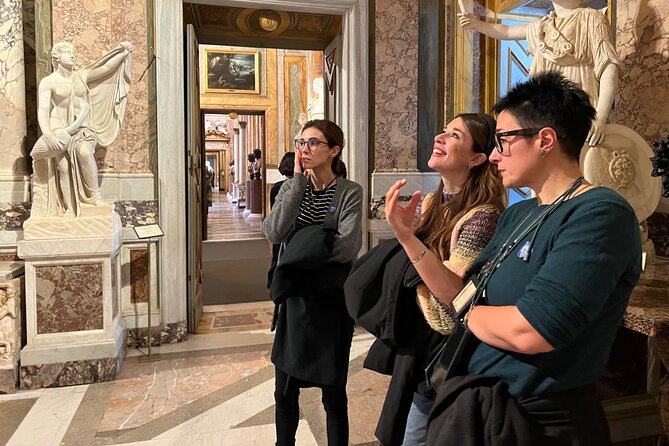
This experience is a strong fit if you:
- Want a first-time “greatest hits” Borghese visit
- Prefer a small group over large crowds
- Like hearing about major artists while you’re standing in front of the work
- Travel with teens or mixed-age groups that need an active pace
It can also be a good choice for a rainy afternoon, since the museum portion gets you out of the weather fast. The gardens afterward help balance that indoor time with something outdoors.
If you’re the type who enjoys taking 20 minutes per room and disappearing into one painting, you may feel the time pressure. In that case, you might prefer a self-led visit with fewer structured stops. But if you want to cover the key masterpieces and still get a scenic Rome break afterward, this format is hard to beat.
Should you book this Borghese small-group tour?
Book it if you want to protect your day and your energy. Timed entry is the heart of this experience, and the small-group approach keeps the visit focused instead of chaotic. I’d also recommend it if you care about understanding what you’re seeing, because the guide makes the works feel connected rather than scattered.
Don’t book it if you’re planning to spend most of your time staring at just one or two pieces. The tour is designed for motion and highlights, not slow wandering. Still, even if you’re a slow museum person, the added garden time gives you a place to cool down after the main show.
One more smart tip: plan for early booking. With the museum’s tight access and the fact that slots get snapped up, waiting until the last minute is a gamble you can avoid.
If your Rome trip is limited and you want Bernini plus Caravaggio without the stress, this is a very practical way to get it done.
FAQ
How long is the Borghese Gallery small-group guided tour?
It runs about 2 hours.
Is skip-the-line entrance included?
Yes. Skip-the-line entrance tickets to the Galleria Borghese are included.
Is the tour offered in English?
Yes, the experience is offered in English.
What is the group size?
The tour has a maximum of 15 travelers.
Where is the meeting point?
The tour starts at Piazzale del Museo Borghese, 00197 Roma RM, Italy.
Do I get time in the Borghese Gardens after the gallery?
Yes. After the museum part, you have free time for self-led exploration of the Borghese Gardens, including areas around the lake and viewpoints.
Can I cancel for a full refund?
Free cancellation is available up to 24 hours in advance for a full refund. If you cancel less than 24 hours before, the amount paid is not refunded.