REVIEW · SIEM REAP
Cambodian Art Tour in Siem Reap Including Apsara Show with Optional Angkor Tour
Book on Viator →Operated by Siem Reap Angkor Travel and Tour · Bookable on Viator
Cambodia has a way of turning crafts into stories, and this Siem Reap Cambodian art tour is a smart, art-forward day. I love the hands-on feel of the workshop stops (silk painting, lacquer, wood carving, and silver work) and the payoff of a Khmer Apsara dinner show with a real 4-course meal. One possible drawback to plan for: the route is time-dependent, so if a place like the silk farm is closed or timing runs long, you may see parts of the craft sequence shift.
What makes this tour especially appealing is that it’s private and built for your pace, with hotel pickup and an English-speaking guide who can steer you toward what matters most. Start at 9am for the optional Angkor temples morning, or start at 2.30pm for a later art-focused day that still ends with dinner and Apsara performances around 9.30pm.
In This Review
- Key highlights
- Siem Reap pickup and the two start times that shape your day
- Optional Angkor morning: what you get and how the pass works
- Artisans d’ Angkor workshops: where the craft becomes readable
- Silk farm visit: the best way to understand Cambodian silk
- Contemporary gallery with Khmer lacquer: traditional meets modern design
- Khmer dinner in a garden pavilion and the Apsara show
- Price and value: why $56.42 can work for you
- How to make the schedule work (and avoid common timing headaches)
- Who this tour is best for
- Should you book this Cambodian Art Tour with Apsara?
- FAQ
- What does hotel pickup and drop-off mean on this tour?
- What time does the tour start?
- How long is the Cambodian art tour in Siem Reap?
- Does the tour include the Angkor temples visit?
- Is the Angkor pass included?
- What’s included in the dinner?
- Is the Apsara show included?
- Is the tour private?
- Can I request a vegetarian meal?
Key highlights
- Artisans d’ Angkor workshops with live demos of Khmer crafts and tips for spotting quality
- Silk farm visit to see how silk starts, from mulberry plants to weaving
- Art + modern design at a contemporary gallery tied to Khmer lacquer work
- 4-course Khmer-style dinner at a 5-star location served in an intimate garden pavilion
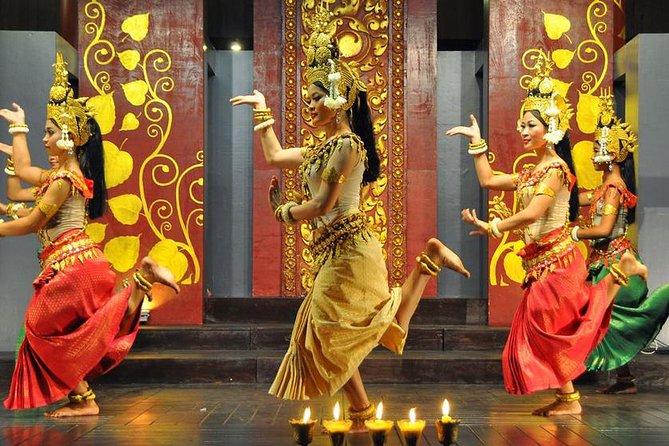
- Apsara dance show with context on Angkorian-era dance traditions
- Private guide attention plus air-conditioned transport and hotel pickup/drop-off
Siem Reap pickup and the two start times that shape your day
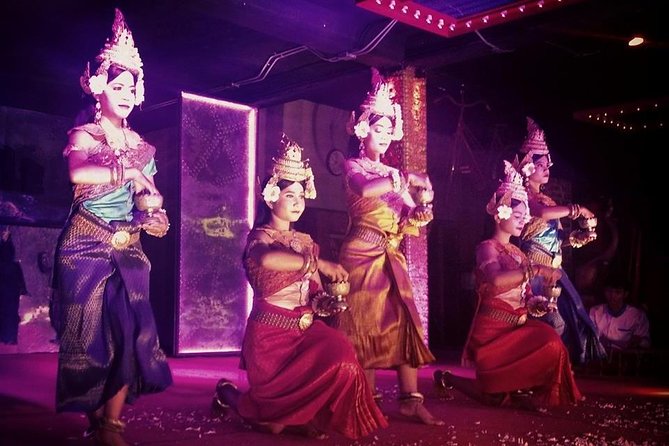
This experience runs about 8 hours, but the exact rhythm depends on which start you choose. If you begin at 9am, your day includes an optional morning Angkor visit. If you start at 2.30pm, you skip the Angkor morning and focus the time entirely on crafts, dinner, and Apsara.
That matters because the tour is not just a checklist. It’s a flow: temples (if selected) set a big visual context for Khmer culture, and then the afternoon explains how that cultural design shows up in everyday craft techniques—especially lacquer, silk, and metalwork.
You’ll also get hotel pickup and drop-off, which is a practical win in Siem Reap. The drive time is handled for you by air-conditioned car, and you’re not left trying to coordinate multiple stops on your own. The tour is private, too—your group only—so your guide can adjust pacing rather than forcing a one-size-fits-all scramble.
Optional Angkor morning: what you get and how the pass works
If you choose the Angkor option, your guide will take you to UNESCO-listed temples in the morning. You’ll have a chance to see major highlights such as Angkor Wat, Angkor Thom, or Ta Prohm. Your guide provides the context, but the temple pass is not included.
Here’s the key logistics detail: the Angkor Wat option lists a $37/person/day pass. If you’re budgeting, treat that as the cost of getting into the Angkor temple grounds on top of the tour price.
Timing is the real consideration. Angkor sites are easy to overdo if you’re rushing, and this tour’s afternoon craft sequence is scheduled to keep moving. So if you’re selecting Angkor, I’d recommend committing to the morning plan early. In other words: don’t bank on adding extra temple time beyond what your guide schedules.
Artisans d’ Angkor workshops: where the craft becomes readable
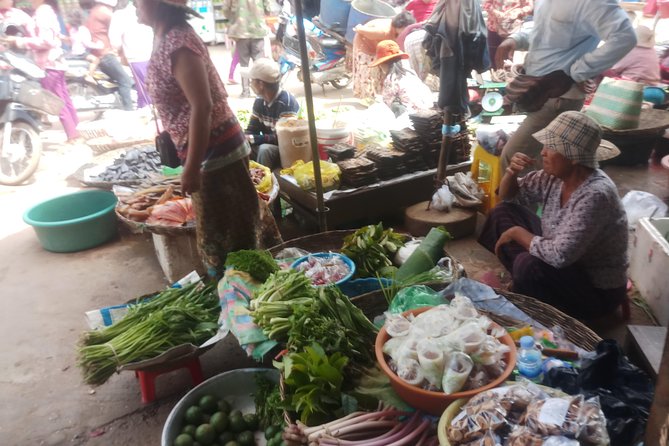
The heart of the afternoon is a visit to the Artisans d’ Angkor workshops. This is where the tour stops feeling like sightseeing and starts explaining process. You walk around artisan shops and workshops while demonstrations show how Khmer crafts are made—think lacquer painting, stone carving, and silver jewelry making, plus other traditional techniques.
What I like here is that your guide doesn’t just point and name. You get pointers on what to look for, including how to judge quality. That turns shopping into something more useful: instead of guessing whether a souvenir is mass-produced or skill-driven, you can ask questions about method, finish, and detail.
There’s also a practical shopping angle. At each stop, there are opportunities to purchase original artwork, handicrafts, and souvenirs, but there’s no obligation. If you’ve ever felt rushed at craft markets, this style of workshop visit is a better pace. It gives you time to understand what you’re looking at.
One more note based on real-world schedule experience: craft stops can be sensitive to timing and opening hours. I’ve seen situations where a later element (like the silk farm) didn’t happen as expected due to closure, and the guide had to reshuffle time. That’s not a reason to avoid the tour—it’s just a reason to appreciate the value of a guide who adjusts quickly and keeps the day coherent.
Silk farm visit: the best way to understand Cambodian silk
After the workshops, the tour moves to a local silk farm where you learn how silk production works. You’ll stroll through the mulberry plantation and hear about silkworm farming. Watch the process, including traditional techniques like cocoon unwinding, and you may see how ikat dying and silk weaving fit into the final fabric.
This stop is special because it explains the raw-material side of what you saw in the craft workshops. The workshops show the finished art—silk work as a decorative object. The silk farm shows the labor and the chain of steps behind it.
Also, silk is a topic that can get confusing fast if you only see a showroom. The silk farm gives you the missing basics. Suddenly, when you look at fabric samples later, you know the names of the steps and you can ask better questions about texture and method.
If you’re worried about the silk farm in particular, here’s the most helpful way to think about it: it’s far from town and timing matters. If the day runs behind, it could affect what happens when. This tour’s best version is the one where the schedule is held tightly and the guide manages transitions efficiently.
Contemporary gallery with Khmer lacquer: traditional meets modern design
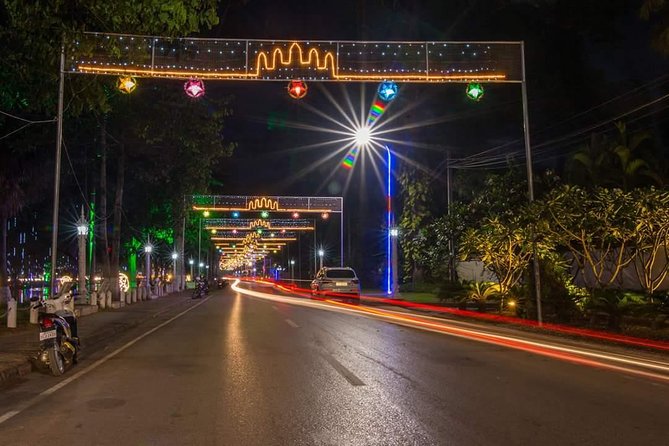
Next comes a visit to a contemporary art gallery where you’re introduced to a Cambodian artist known for modern designs and lacquering techniques. This is a great pivot because it stops the art tour from becoming only traditional craft viewing.
Instead of treating Khmer arts as something frozen in time, the gallery spot shows how contemporary artists work with lacquer methods and design vocabulary. You’ll tour the atelier and take a peek at the artist’s private collection, plus learn more about how traditional techniques connect to modern Khmer art.
If you like creative work that isn’t just preservation, this part helps you see how craft skills can stay alive by changing with the present. It also adds variety to the day: by the time you reach the dinner show, you’ll feel like the tour covered more than one “style of Cambodia.”
Khmer dinner in a garden pavilion and the Apsara show
The evening is a strong closer: a delicious 4-course dinner of typical Khmer cuisine served in an intimate garden pavilion at a 5-star location. There are beverages available for purchase, but the dinner price doesn’t include drinks or extra side orders.
The Apsara show happens between courses. You’ll see performances of traditional Apsara dance, and you’ll also learn about the dance tradition, which dates back to Angkorian times. This is one of those experiences where context makes the dance more enjoyable. When you understand that it’s not random movement—there’s a system and a tradition—you watch with better attention.
One review detail worth noting: in at least one run of the experience, the guide also helped guests settle in and provided a program listing the types of dances they’d see. If that’s offered on your day, take a minute to use it. It makes the show easier to follow while you’re in the moment.
Food quality can be subjective. I’ve seen comments that the dinner was good, while another person felt it wasn’t as strong as other places they’d tried in Siem Reap. The practical takeaway: go for the full experience of setting, courses, and the show, not just as a standalone restaurant meal.
Price and value: why $56.42 can work for you
The listed price is $56.42 per person, and the tour includes several items that would cost you separately if you booked them one by one. You get hotel pickup and drop-off, a private air-conditioned car, an English-speaking driver/guide, and a Khmer 4-course dinner at a 5-star location.
That combination is the main value story. Art workshops and demonstrations often require guided support so you understand what you’re looking at. Dinner at a higher-end setting plus Apsara performances is also not usually a budget add-on by itself.
What’s not included:
- Beverages during dinner and extra side orders
- If you select the Angkor option: the $37/person/day Angkor pass
So the real cost depends on your choice. If you do Angkor, your total day budget rises with that pass. If you skip Angkor, you’re leaning into arts, silk, and the evening show, which can keep the value closer to the headline price.
Also, booking timing can matter for this kind of day. On average, it’s booked about 38 days in advance, so if you’re traveling in a busier period, it’s smart to lock in sooner rather than later.
How to make the schedule work (and avoid common timing headaches)
This tour is designed to run from one anchor point to the next: pickup, optional temples (morning), then workshops, then silk farm, then gallery, then dinner and Apsara, and finally drop-off around 9.30pm.
Because timing is part of the structure, here are the practical moves that help you get the best version:
- If you choose the 9am Angkor start, treat it as the morning commitment and don’t plan to add extra stops on your own.
- Ask your guide early how they’re sequencing the craft stops, especially the silk farm, since it’s listed as farther from town.
- Bring your expectations for the evening show in line with the format: dinner plus Apsara between courses. That means you’ll enjoy the performance as part of the meal, not as a standalone, high-theater-only event.
A private tour is also your buffer. The guide can shift priorities if something runs late, and they can adjust what you spend more time on. One of the strongest points people describe is guide flexibility—an ability to steer the art portion toward what you may have already seen elsewhere or what you want most that day.
Who this tour is best for
I think this works especially well if you:
- Want a structured arts-and-crafts day rather than only temple photos
- Like a mix of traditional craft techniques and modern Khmer design
- Plan to watch Apsara dance but also want the background on what you’re seeing
- Value hotel pickup and a driver/guide who handles the logistics between stops
It may be less ideal if you only want temples, because the Angkor element is optional and the schedule is built around the craft sequence. It’s also not a pick if you hate shopping opportunities—this tour includes moments where you can buy items, even though you’re not pressured to.
If you’re traveling with a group that cares about art, craft, and culture stories, this private format helps everyone feel like they’re getting something meaningful.
Should you book this Cambodian Art Tour with Apsara?
If you’re choosing between a pure Angkor day and a pure show-and-dinner night, this tour is a solid middle path. The value comes from combining craft education (workshops + silk farm + gallery) with a structured evening that includes both dinner and Apsara.
I’d book it if you want to understand Khmer arts through process—lacquer, silk production, and quality cues—then close the day with Apsara dance in a memorable setting. I’d be a little cautious only if you’re very timing-sensitive or if you’re relying on every single craft stop with no flexibility; in scheduling-sensitive situations, a stop like the silk farm can be affected.
If you do book, set a clear expectation with your guide on day-of timing, especially around the silk farm and the Angkor pass if you selected it. That’s how you get the smooth, satisfying version of the experience.
FAQ
What does hotel pickup and drop-off mean on this tour?
You’re picked up from your hotel and later dropped back at your hotel after the tour ends around 9.30pm.
What time does the tour start?
Depending on the option you select, pickup is either at 9am or at 2.30pm.
How long is the Cambodian art tour in Siem Reap?
The experience runs for about 8 hours (approx.).
Does the tour include the Angkor temples visit?
There’s an optional Angkor part. If you choose it, you can visit major sites such as Angkor Wat, Angkor Thom, or Ta Prohm with your private guide.
Is the Angkor pass included?
If you select the Angkor option, the pass is $37/person/day and is not included in the tour price.
What’s included in the dinner?
You get a 4-course Khmer-style dinner set menu at a 5-star location. Beverages during dinner are not included.
Is the Apsara show included?
Yes, the tour includes a traditional Apsara dance and dinner show as part of the evening.
Is the tour private?
Yes. It’s a private tour/activity, so only your group participates.
Can I request a vegetarian meal?
Yes, a vegetarian option is available if you advise at the time of booking.