REVIEW · LOS ANGELES
Downtown LA Arts Tour with MOCA, The Broad, and Infinity Room
Book on Viator →Operated by igniTours · Bookable on Viator
DTLA art in two neat hours. This Downtown Los Angeles tour saves your planning time with pre-arranged museum entry to MOCA and The Broad, including Yayoi Kusama’s Infinity Room, while a guide connects the dots between contemporary art and the city’s architecture. One watch-out: you’ll cover ground on foot, and several major performing-arts stops are more about outside views and quick inside peeks than full sit-down tours.
I like that you’re not stuck choosing between big-name museums. You get the contemporary-art brain (MOCA), the mega-Instagram art moment (Infinity Room), and a guided walk past major cultural institutions that shaped how DTLA grew into a global arts hub. Guides get strong praise, including art-history trained Angelica, and also Chris and Sam, who are described as passionate and friendly.
Your practical upside: tickets are handled for you, and it’s an English-speaking group format with a small cap of 12 travelers. If you want a long linger inside The Broad after the tour ends, plan around closing time at the museum.
In This Review
- Key things to know before you go
- Why this DTLA art tour feels efficient (and worth $44)
- Starting at Grand Ave: Art Deco DTLA and the performing-arts orbit
- Music Center to Dorothy Chandler Pavilion: architecture first, then stage culture
- Disney Concert Hall and Colburn School: Frank Gehry angles and the next generation
- MOCA highlight tour: how contemporary art becomes readable
- Angels Flight and California Plaza: a fun pause between art stops
- The Broad and Infinity Room: the main event, plus extra time after
- Group size, pacing, and shoe advice (learned the hard way by your future self)
- Who this tour suits best (and who should look elsewhere)
- Should you book this Downtown LA Arts Tour?
- FAQ
- How long is the tour?
- Is the tour in English?
- What is included in the ticket price?
- Where does the tour start and end?
- Is parking included?
- What happens if weather is poor?
Key things to know before you go
Pre-arranged entry to MOCA and The Broad
Infinity Room is included, and you can keep going after your guided portion
Small group size (max 12) keeps the pace comfortable
Short stops at major DTLA performance venues focus on architectural context
You will walk and climb stairs at points, so wear proper shoes
English-speaking guide with on-the-spot interpretation of modern art
Why this DTLA art tour feels efficient (and worth $44)
At $44 per person for about 2 hours, this tour isn’t trying to do everything. It’s designed to do the “highest impact” cultural circuit efficiently: you start at Grand Ave, you walk through the performing-arts district, you hit MOCA for contemporary art context, and you finish at The Broad for the full Infinity Room experience plus time to wander afterward.
The value is mostly about friction. Museum days in LA can be a maze of timing, ticket lines, and figuring out how far apart venues are. Here, museum access is built in. That means you spend your energy looking, not gaming schedules.
My other big reason I’d recommend it: the guide’s job is interpretation. Contemporary art can feel like it’s asking you to already know the rules. A good guide helps you notice what matters: material, scale, intent, and how the artist is speaking to modern life. In this case, you also get a running thread of DTLA history and cultural change, tied to the buildings you pass.
One more practical note: it’s outdoors as well as indoors. If you’re visiting on a day when weather is good, it’s a strong use of limited time. If weather turns, the experience may be rescheduled or refunded, so build in flexibility.
You can also read our reviews of more tours and experiences in Los Angeles.
Starting at Grand Ave: Art Deco DTLA and the performing-arts orbit
You meet at 135 N Grand Ave and the route quickly situates you in DTLA’s cultural center. The tour begins near the core cluster of theaters and institutions, so you’re not starting from a random parking lot in the suburbs. You’re starting where the city’s arts story is written in stone, steel, and show lights.
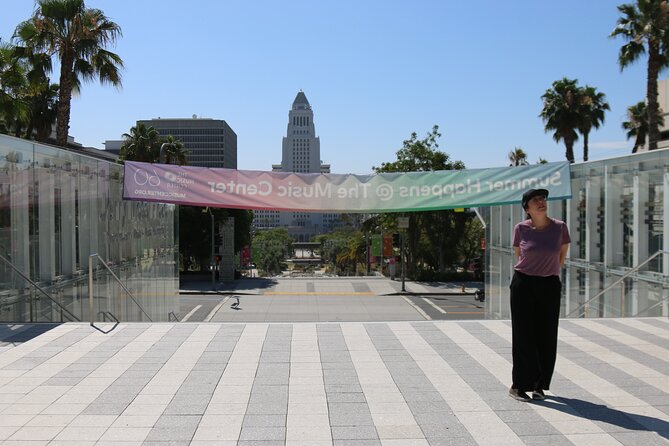
Early on, you’ll also get a look at an iconic Art Deco skyscraper and other landmarks that feel like the “administrative” side of the city—places that helped DTLA function before it became a modern art magnet. This isn’t random sightseeing. It’s a useful framing. When you later walk into MOCA and The Broad, you understand the contrast: the city’s older identity versus the newer cultural energy.
Then the walk moves through public spaces with lawns, fountains, and outdoor event areas. This is the part that keeps the tour from feeling like a museum sprint. You get brief pauses to reset your eyes and your legs before the big art moments.
If you’re the type who gets restless with lots of standing, you’ll still be fine. Stops are timed and the group is small, but expect that you’ll be on foot for the connections between sites.
Music Center to Dorothy Chandler Pavilion: architecture first, then stage culture
The next phase focuses on the performing-arts complex. You’ll spend time at The Music Center and Dorothy Chandler Pavilion, with admission ticket access included for these stops.
This is where I’d pay attention to the buildings like they’re characters. The Music Center is one of the largest performing arts hubs in the US, and the tour uses that scale to explain how LA shaped itself as a place for live drama, symphonies, and Broadway-style spectacle. You’re learning why these venues became magnets for productions and why the architecture matters when people pack in for big performances.
At Dorothy Chandler Pavilion, you’ll hear about its historic role and its elegant design. The key takeaway is the way mid-century architecture signaled confidence in arts institutions during LA’s growth periods. Even if you’re not seeing a show that day, it helps you understand what the building was made to do: host performances that feel important.
One practical consideration: you may not get a full, inside-only tour of every venue. The emphasis here tends to be on guided context and outside viewing, with only limited interior access depending on what’s happening. If you’re hoping for a behind-the-scenes or fully narrated interior walkthrough, this tour is more of a curated street-level arts orientation than a ticketed backstage experience.
Disney Concert Hall and Colburn School: Frank Gehry angles and the next generation
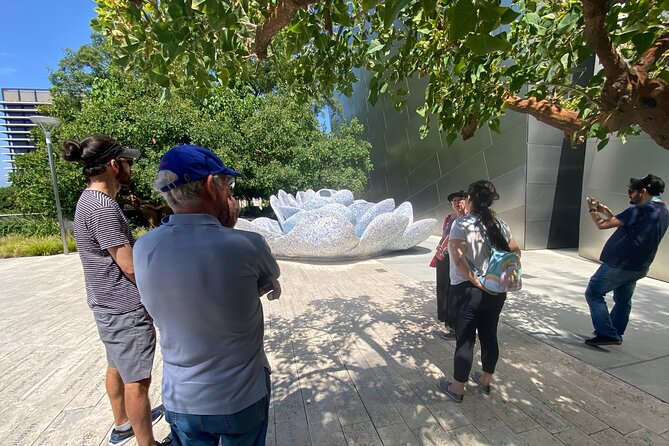
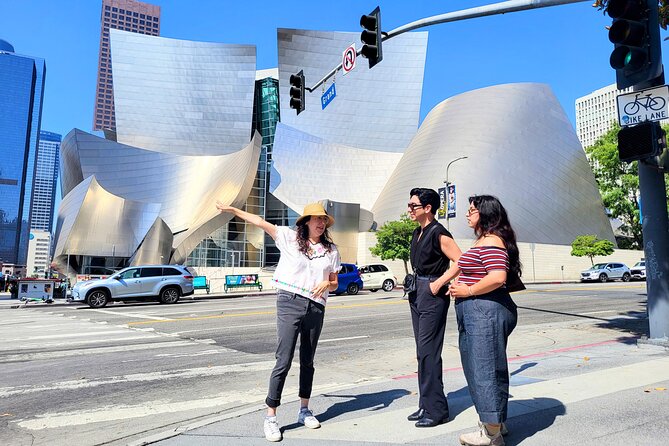
Next up: Walt Disney Concert Hall, designed by Frank Gehry. You’ll explore the exterior, and the guide connects the architecture to what it’s built for—specifically the hall’s reputation for strong acoustics and its home role with the Los Angeles Philharmonic.
This stop is a reminder that architecture isn’t just decoration. Gehry’s sculptural look changes how you move your eyes. You tend to spot details you’d miss if you walked past it on a normal day. It’s also a nice breather—shorter stop, big visual payoff.
Then you head to Colburn School, often described as the Juilliard of the West. This is the “future pipeline” angle: the tour explains the school’s focus on rigorous training in music, dance, and theater, and why places like this matter for a city’s cultural ecosystem. You’re not just learning what LA used to be. You’re learning how it keeps producing talent.
If you love architecture and want more than basic museum time, this stretch is a win. It gives you a break from galleries while still staying arts-focused.
MOCA highlight tour: how contemporary art becomes readable
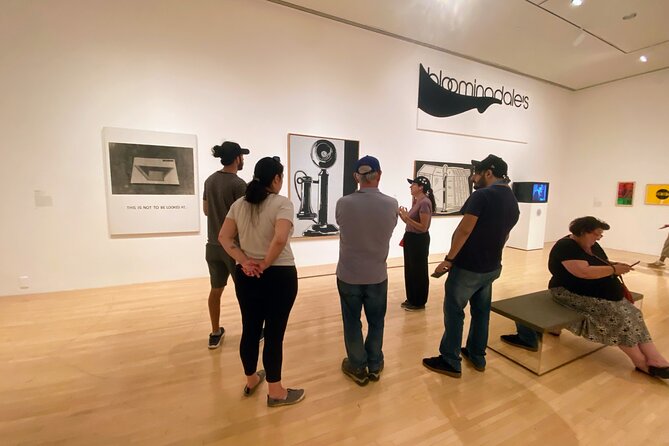
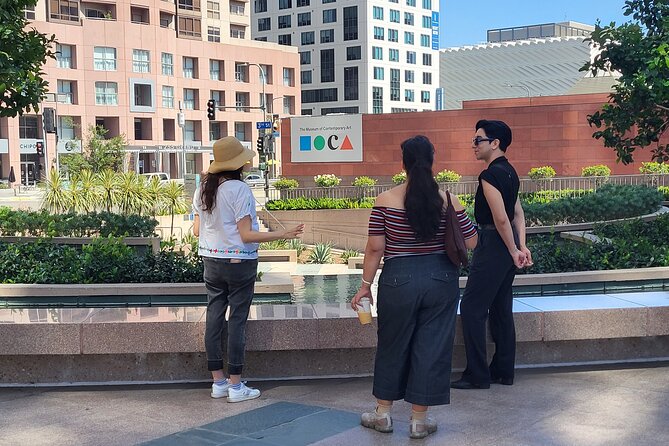
The heart of the museum side of the tour starts with The Museum of Contemporary Art (MOCA). You get a highlights tour (about 30 minutes) and admission is included.
Contemporary art can be a lot in one museum visit—especially if you don’t know where to start. A highlights route solves that. You’re guided toward works that help you understand the museum’s direction and the kinds of questions contemporary artists are asking right now.
I’d go into MOCA expecting explanation more than trivia. The guide’s role is to clarify complex ideas so the art feels less like a puzzle with missing instructions. You’re also learning how contemporary art fits into LA’s broader cultural evolution, not just inside the museum walls.
A practical tip: if you’re sensitive to modern-gallery crowds, you may prefer visiting MOCA with this structure rather than trying to map the museum yourself. It’s faster. It’s less exhausting. And you’ll know what to look for when you return on your own.
Angels Flight and California Plaza: a fun pause between art stops
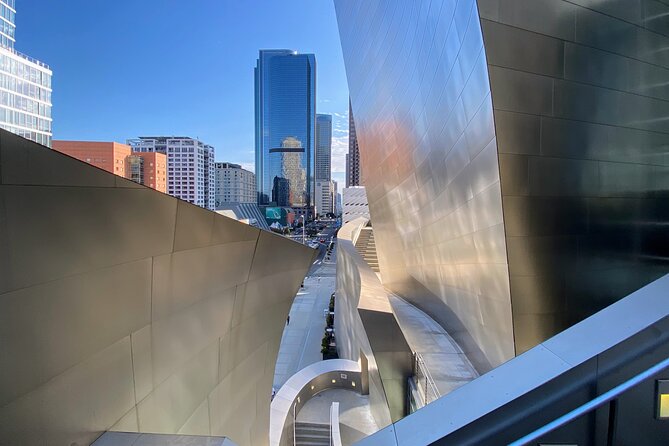
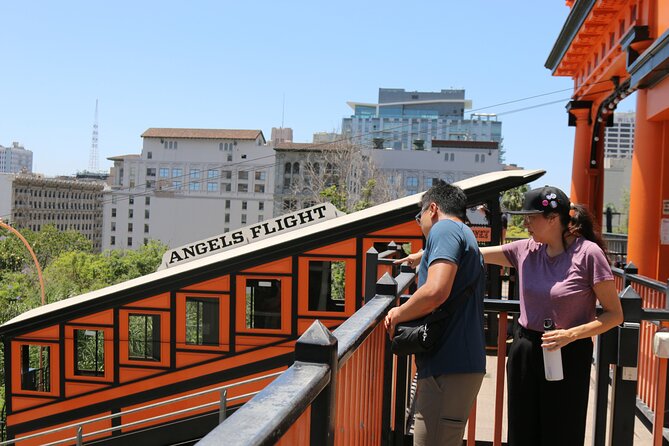
Before The Broad, the route includes California Plaza and a ride on Angels Flight, the historic funicular railway between Hill and Olive Street.
This part is surprisingly smart. It’s not another museum stop. It’s a brief, scenic reset that breaks up the intensity of gallery thinking. Angels Flight is also one of those LA details you’d miss unless someone literally brought you there, because it’s compact and not always on casual visitor radar.
At California Plaza, you get open space plus modern downtown architecture, along with a sense of how the public uses art-adjacent public spaces. The guide ties this into the idea that culture isn’t only inside museums or theaters. It also happens in where people gather, wait, celebrate, and pass through daily.
Wear comfortable shoes here. You’re not walking miles, but the combination of sidewalks, short climbs, and stairs adds up over a 2-hour loop.
The Broad and Infinity Room: the main event, plus extra time after
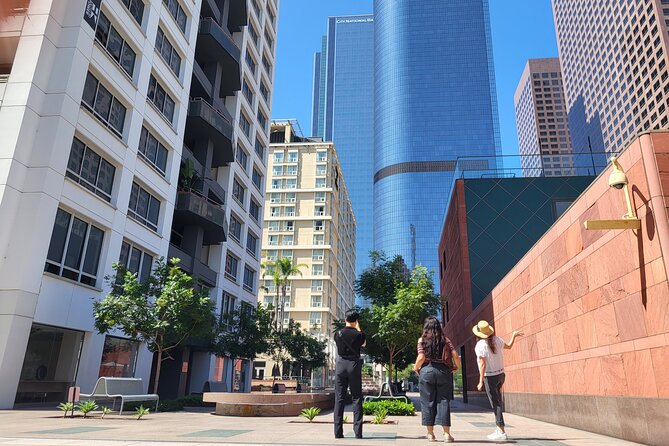
Now for the reason many people book: The Broad. You receive exclusive entry, and your ticket includes Infinity Room by Japanese artist Yayoi Kusama.
Infinity Room is iconic for a reason. The guide helps you understand what you’re seeing—how Kusama uses repetition, mirrors, and space to make your perception feel unstable in a good way. The goal isn’t just to look at it like a photo wall. It’s to notice the experience: how you move, how the room changes based on your angle, and why the visual language hits so hard.
One of the best parts of this tour is what happens after the guided portion. After your guided entry and Infinity Room experience, you’re welcome to spend as much time as you like at The Broad. That matters because The Broad is dense. If you only get a quick look, you might miss what actually catches your eye.
So here’s how I’d use that extra time if you book:
- Spend your first pass on the works that match what you liked during the guide’s explanation.
- Then wander without a plan. The Broad rewards casual drifting.
Timing note: if you’re trying to do a long stay after the tour, make sure you’re not scheduling yourself too close to closing. It’s an easy mistake—book the later tour and suddenly your second museum loop is cut short.
Group size, pacing, and shoe advice (learned the hard way by your future self)
This tour runs with a small maximum group size of 12 travelers. That’s a sweet spot. You don’t feel like you’re trapped in a big bus herd, and the guide can slow down when someone asks a good question.
Pacing is also the reason people give this tour near-perfect marks. Stops are short enough to keep energy high, but they aren’t so short that you miss the point. You do a walk segment, you get context, you move on.
My practical advice:
- Wear walking shoes. You’ll be on foot for the connections between sites, and there are stairs in the area around major venues.
- Bring water if it’s warm. The tour is short, but LA sun can still surprise you.
- Take your photos, but don’t turn it into a checklist. The art works best when you look first and shoot second.
Who this tour suits best (and who should look elsewhere)
This is ideal if you:
- Want a guided orientation to DTLA’s art and architecture without planning every stop
- Like contemporary art but want help making sense of it
- Have a limited time window and want MOCA plus The Broad as a package
- Enjoy a mix of museums and city landmarks, not only indoor viewing
It may be less ideal if you:
- Want a deep, hour-by-hour museum immersion at MOCA or The Broad only
- Expect long interior tours of every theater building you pass
- Dislike walking and stairs, since the route is city-paced
Should you book this Downtown LA Arts Tour?
Yes, if your goal is to get oriented fast and see the big contemporary art anchors in DTLA with real context. The biggest reason to book is the combination of included museum entry plus a guide who explains what you’re looking at, especially for MOCA and The Broad.
I’d feel great about it for first-time visitors and also for repeat visitors who want a tighter, curated route. If you’re a hardcore contemporary-art power user and want to spend hours inside galleries on your own, you might prefer standalone museum tickets. But for most people, this tour is a smart LA day: a lot of art, a lot of architecture, and not too much guesswork.
FAQ
How long is the tour?
The tour runs for about 2 hours.
Is the tour in English?
Yes, the tour includes an English-speaking guide.
What is included in the ticket price?
Your ticket includes MOCA entry and The Broad entry, including Infinity Room, plus the services of an English-speaking tour guide.
Where does the tour start and end?
The tour starts at 135 N Grand Ave, Los Angeles, CA 90012 and ends inside The Broad at 221 S Grand Ave, Los Angeles, CA 90012.
Is parking included?
No. Parking is not included.
What happens if weather is poor?
This experience requires good weather. If it’s canceled due to poor weather, you’ll be offered a different date or a full refund.