REVIEW · GRANADA
Granada: “Street Art & The Caves” Unique Guided Walking Tour
Book on GetYourGuide →Operated by Michael/BestToursGranada/STREETART · Bookable on GetYourGuide
Street art and cave houses in one walk. This small-group tour threads Realejo, Sacromonte, and Albayzín together, so the city feels like one living story rather than three separate postcards. Guided by Michael of BestToursGranada/STREETART, it mixes murals, viewpoint stops, and time inside one of the oldest cave homes in Sacromonte.
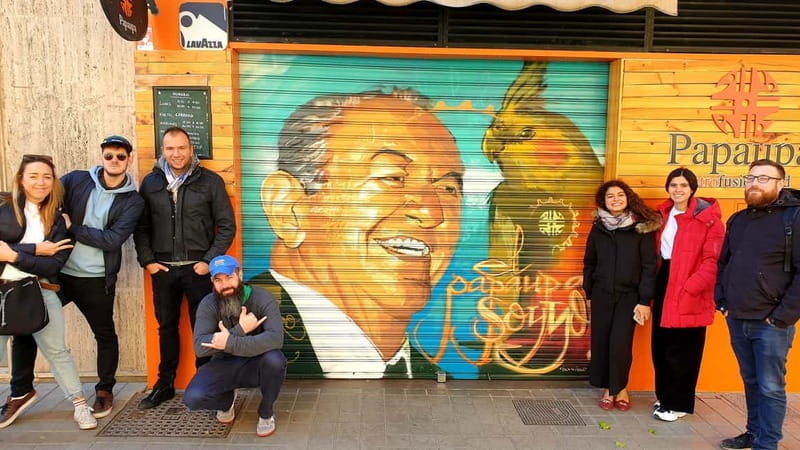
I especially love two things: the way the route spotlights the street art around the painted-house legend El Niño de las Pinturas, and the chance to step into a cave house carved into the mountain. The calmer pause at Carmen de los Mártires also stands out, because it balances the climbs with a proper garden break.
One consideration: this is a solid 8 km walk with real up-and-down sections, and it is not a smooth stroll. Plan for hills, comfy shoes, and a snack in your day pack since there isn’t a sit-down lunch stop built in.
In This Review
- Key highlights worth showing up for
- Starting at Granada Cathedral Steps: how the tour flows
- Realejo’s Street Art Trail and the El Niño de las Pinturas house
- Carmen de los Mártires: the garden stop that cools your legs
- Sacromonte Cave Houses and the flamenco mountain district
- Albayzín’s UNESCO lanes, shopping, and mirador views
- Walking 8 km in 3 hours: what to pack and how to pace
- Price and logistics: why $35 is fair for this mix
- Should you book this Street Art & The Caves walk?
- FAQ
- FAQ
- How long is the Granada Street Art & The Caves walking tour?
- How much walking is involved?
- Where does the tour start and end?
- Which neighborhoods and main areas will we visit?
- Is the tour available in English?
- What is included in the $35 price?
- Is there a cave house visit during the tour?
- What should I bring?
- Is the tour suitable for wheelchair users or limited mobility?
- Is the group size small?
Key highlights worth showing up for
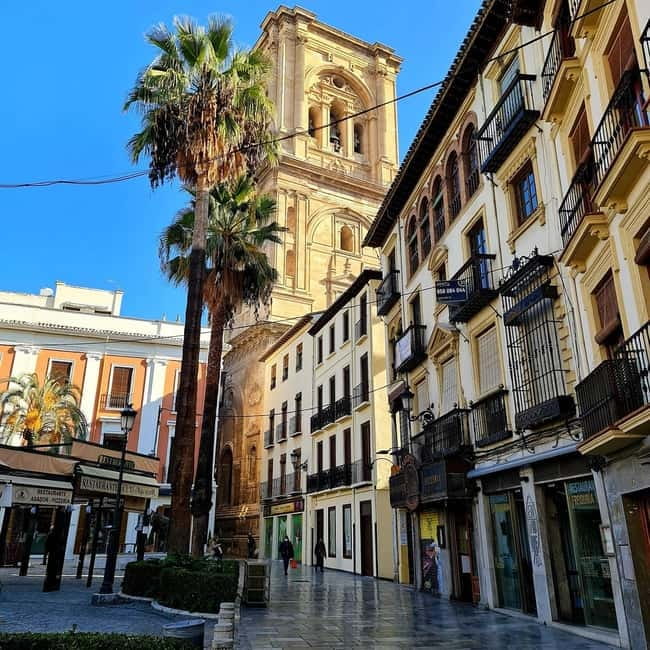
- Three oldest neighborhoods in one go: Realejo, Sacromonte, and Albayzín, stitched into one logical loop.
- Street art with names and context: murals connected to El Niño de las Pinturas and the stories behind them.
- A real cave house entrance: you don’t just look at Sacromonte from outside.
- Miradores with Alhambra-in-reach views: classic Granada viewpoints come up at the right moments.
- Carmen de los Mártires garden stop: flowers, birds, and a break from the steep parts.
- Michael’s practical local tips: food and shopping recommendations based on what you like.
Starting at Granada Cathedral Steps: how the tour flows
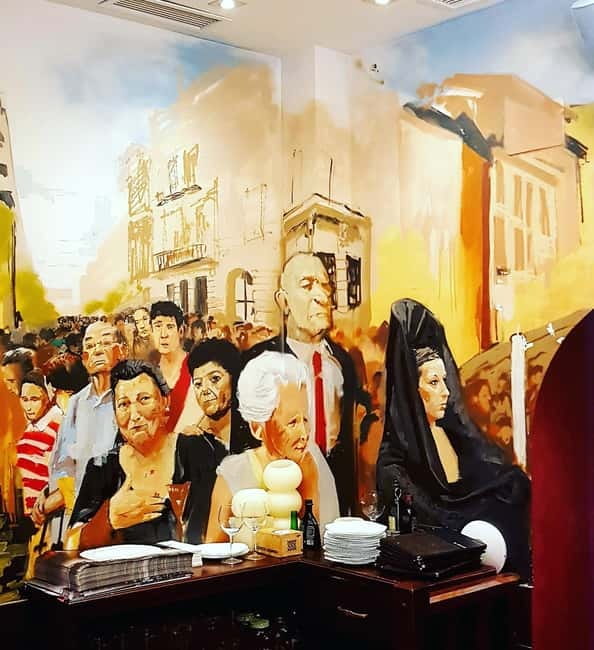
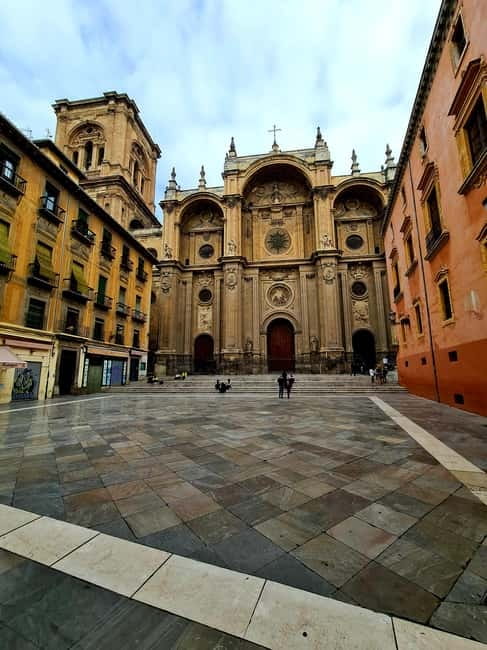
Your morning (or afternoon) kickoff is at the steps of Granada Cathedral, at Plaza de las Pasiegas. That matters more than you’d think. You start with good orientation in the city center, then you gradually work outward into three neighborhoods that look similar on a map but feel totally different on foot.
The tour is designed around short photo stops plus guided walking, so you get breaks without the day turning into a stop-and-go parade. And because the group is limited to 8 participants, Michael can adjust pacing if someone needs extra time at a viewpoint or wants clearer explanations of what you’re seeing.
Timing works well if you like to look closely. You’ll spend about 45 minutes in Realejo, around 25 minutes at Carmen de los Mártires, another 45 minutes in Sacromonte, and then roughly 45 minutes in Albayzín, with a final 15-minute Cathedral area stop before returning to the starting square.
Realejo’s Street Art Trail and the El Niño de las Pinturas house
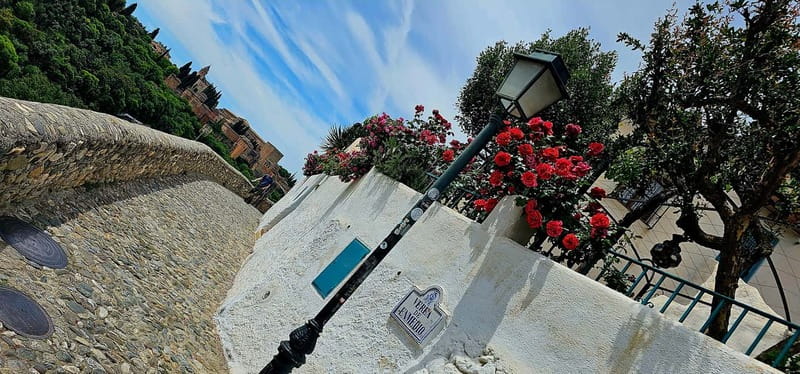
Realejo is the “you didn’t plan this, but now you’re glad you walked it” neighborhood. It’s also where the tour leans hard into street art, not as decoration, but as a map of who influenced Granada’s visual culture and how walls became storytelling space.
Expect murals and color around Realejo’s older streets, including the painted-house focal point tied to El Niño de las Pinturas. This is one of those places where names help you notice details you’d otherwise miss. Michael’s job here is to connect the art to real Granada—who the artists are, why those works ended up where they did, and how that street-art identity fits the neighborhood.
A practical tip from how this day is structured: use Realejo for photos, but also use it for people-watching. The area’s mix of street scenes and small storefronts means your camera won’t be the only thing getting interesting shots.
One more thing: the tour’s focus stays local. You’re not bouncing through a checklist of major monuments; you’re learning how Realejo looks when it’s lived in, not staged.
Carmen de los Mártires: the garden stop that cools your legs
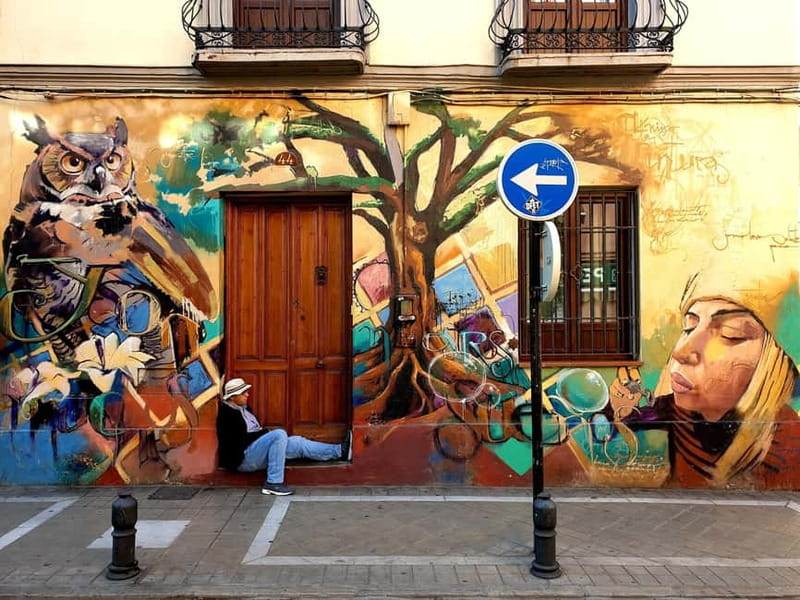
After the street-art energy, the route shifts to Carmen de los Mártires, a model of a typical Spanish house with a garden filled with flowers and birds. This stop is more than pretty scenery. It’s a pacing tool.
When you’re about to head into Sacromonte’s more rugged terrain later, a garden pause does two helpful things:
- it gives your feet a calmer moment, and
- it resets your eyes so the next dramatic views hit harder.
Plan to slow down here. Give yourself time to wander a little within the garden setting and take in the contrast: city walls and painted surfaces earlier, then greenery and bird song for a breather.
If you’re the kind of person who usually rushes through “gardens,” this one is worth resisting that habit. It’s timed so you’re not just tired yet—you’re ready to enjoy it.
Sacromonte Cave Houses and the flamenco mountain district

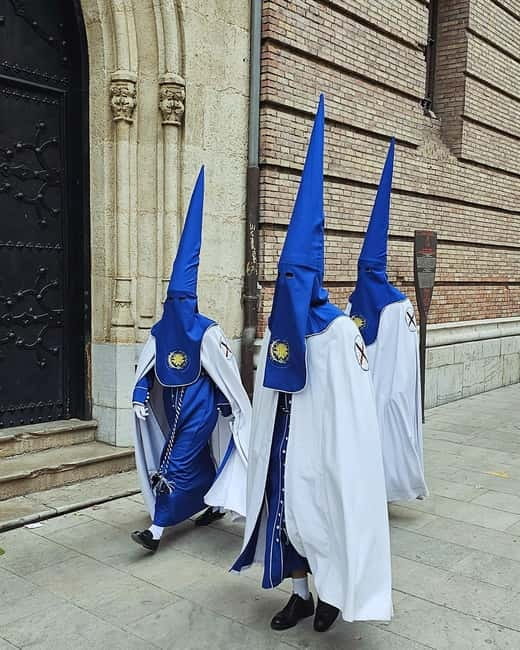
Then you climb into Sacromonte, the district where the cave houses live and where flamenco culture was born—at least in the way this tour frames it. You’ll hear how families (the tour references the Gitanos living here for centuries) made homes by carving them into the mountainside, shaping daily life around the terrain.
The big payoff is the cave house stop. You enter one of the oldest cave houses in the area, rather than looking at caves as an outside-only curiosity. That entrance ticket is included, so you’re not juggling logistics mid-walk. Inside, you get a sense of why this style of housing endured: it’s sheltered, it’s built into the rock, and it feels tied to place instead of imported.
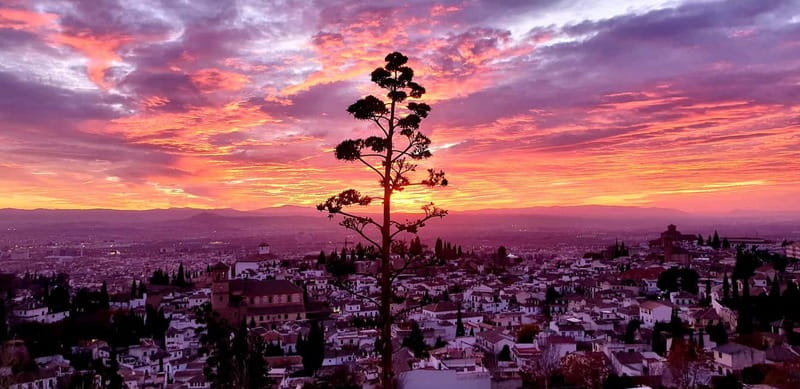
Sacromonte also brings the viewpoint factor. You get those “wow, Granada is right there” moments, especially when you’re framed by the city and the mountains at the same time. It’s the kind of scenery where you’ll understand why people keep coming back for photos—then quickly realize you’re seeing more than one kind of Granada at once.
Keep your expectations realistic here: cave areas can feel cooler and dimmer than street-level, and the terrain is part of the show. Think of it like stepping from street art into architecture into living history, all while your legs are doing their part.
Albayzín’s UNESCO lanes, shopping, and mirador views
Next comes Albayzín, described as Granada’s oldest district and part of the UNESCO World Heritage listing. On foot, it makes sense why it holds that status. The streets stay narrow, the corners keep surprising you, and the vibe feels residential rather than purely tourist.
This section is where the tour blends culture with practical fun. You’ll move through atmospheric squares and narrow lanes full of little shops and tapas bars, plus the kind of viewpoints (miradores) that give you the Alhambra within arm’s reach feeling. Even if you’ve seen the Alhambra from a distance before, these angles can completely change how it reads.
You’ll also get time for shopping here. That’s not an afterthought. The tour gives you a specific window to browse, so you can pick up small souvenirs without the day feeling like an errand run.
If you care about art beyond murals, pay attention to the way the guide connects visual culture to local crafts and where to spend your money. In past tours with Michael, guests have even mentioned an artist shop detour connected to El Niño de las Pinturas. That’s not something I’d treat as a guarantee, but it matches the overall approach: the day points you toward Granada made by real people.
And yes, this is also where you’ll want to slow down and look up. Albayzín rewards that behavior.
Walking 8 km in 3 hours: what to pack and how to pace
Let’s talk feet, because this tour is a walking tour in the real sense. The route is around 8 km and takes about 3 hours, including breaks for drinks and the restroom. There’s also some up-and-down, so you’ll feel the hills even if you’re reasonably fit.
Here’s what that means for you:
- Wear comfortable shoes with traction.
- Bring a reusable water bottle (and yes, refills are supported along the way).
- Consider carrying a small snack. One review noted there isn’t a lunch stop, so you’ll want something on hand to avoid getting shaky later.
Water is practical here. The tour includes unlimited water, and there are refilling opportunities mentioned. That’s a comfort upgrade when you’re walking the hills in Andalusian temperatures.
Also: this is a small-group day, limited to 8 people, and that helps with pacing. You’re not stuck rushing behind strangers while the guide moves on. With a group that size, questions don’t get swallowed by noise.
Not for everyone: it’s not suitable for people with mobility impairments, wheelchair users, or those with recent surgeries. The terrain is simply part of the route.
Price and logistics: why $35 is fair for this mix
At $35 per person for about 3 hours, the math works because the tour is not just sightseeing narration. It includes a professional guide plus unlimited water and a cave house entrance ticket. Those two extras alone can make a big difference versus pay-as-you-go walking days.
The small group size matters for value too. With up to 8 participants, Michael can:
- keep explanations clear in English,
- steer you toward the best photo angles,
- and offer recommendations tailored to what you like (food, shopping, and what to prioritize next).
It also helps that the tour doesn’t pretend Granada is one thing. You get a shift in atmosphere every segment—street art in Realejo, garden calm at Carmen de los Mártires, cave and mountain character in Sacromonte, then the UNESCO streets and miradores in Albayzín. For $35, that variety feels like a smart deal.
Should you book this Street Art & The Caves walk?
Book it if you want Granada that feels lived-in: murals with names and meaning, cave housing that’s actually inside, and neighborhood vibes you can’t get from a bus window. This is a strong choice for art lovers, culture curators, and people who like pairing photos with context.
Skip it (or choose something flatter) if you hate hills or if your mobility is limited. The walk includes real climbs and uneven terrain, and there’s no way to make that “mostly easy.”
If you’re trying to decide when to schedule it, I’d pick an earlier slot in your trip. Michael’s style is strongly about direction—what to eat, where to shop, and what’s worth your time next. After a tour like this, Granada stops feeling like a checklist and starts feeling like a place you can navigate with confidence.
FAQ
FAQ
How long is the Granada Street Art & The Caves walking tour?
It lasts about 3 hours.
How much walking is involved?
The walking distance is around 8 km, with breaks for drinks and toilet, and there is some up-and-down terrain.
Where does the tour start and end?
It starts and ends at Plaza de las Pasiegas, with the meeting point at the steps of the Cathedral, main entrance.
Which neighborhoods and main areas will we visit?
You’ll cover three districts: Realejo, Sacromonte, and Albayzín, plus stops including Carmen de los Mártires and a Granada Cathedral area stop.
Is the tour available in English?
Yes. The live tour guide speaks English.
What is included in the $35 price?
The price includes a professional guide, unlimited water, and a cave house entrance ticket.
Is there a cave house visit during the tour?
Yes. You visit one of the oldest cave houses in the Sacromonte area, and the entrance ticket is included.
What should I bring?
Bring comfortable shoes and a reusable water bottle.
Is the tour suitable for wheelchair users or limited mobility?
No. It is not suitable for people with mobility impairments, wheelchair users, or those with recent surgeries.
Is the group size small?
Yes. It’s a small group limited to 8 participants.