Art in Montreal starts with the right walk. This 2-hour gallery circuit swaps between contemporary collecting culture at Galerie LeRoyer and museum-worthy Inuit art at Images Boréales, with guide Nada keeping the whole thing friendly and focused.
I love how Nada takes her time, offers clear background, and adjusts to what you want to understand. I also like the smart pacing with 20-minute gallery stops that keep the day moving. The main drawback is simple: if you want to read every label and linger for ages, the timed visits may feel a bit fast.
In This Review
- Key things to know before you go
- A 2-hour Montreal gallery tour built for real looking
- Meeting on Rue Saint-Sulpice and finishing near Saint-Paul
- Galerie LeRoyer: contemporary art with a collectors’ mindset
- Images Boréales Inuit Art Gallery: why the craft is part of Canadian identity
- Galerie d’art Blanche: local artists on Montreal’s oldest street
- How Nada shapes the tour: questions, pacing, and clear English
- Price and value: is $48.64 a good deal?
- Who this tour is for (and who should skip it)
- Should you book this Montreal art gallery tour?
- FAQ
- How long is the guided gallery tour?
- Where does the tour start and end?
- What is the cost per person?
- Which gallery admissions are included?
- Is it a private tour or shared group?
- What should I do about tickets?
- What’s the cancellation and weather situation?
Key things to know before you go
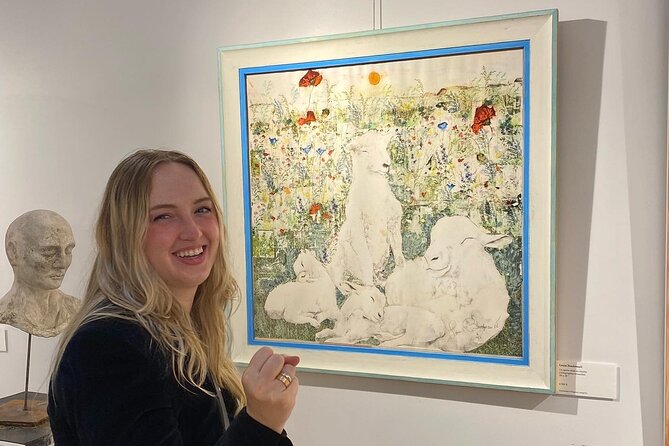
- Three galleries, three art worlds: contemporary, Inuit heritage, and local Montreal artists in one short outing
- Nada’s hands-on guidance: she explains what you’re seeing and what to ask, in clear English
- Ticket value mix: Galerie LeRoyer admission is included, while the other two stops are free
- Old Montreal walking energy: you get to move through historic streets instead of only sitting in one building
- Private tour feel: it’s only your group, not a crowd mixed in
A 2-hour Montreal gallery tour built for real looking
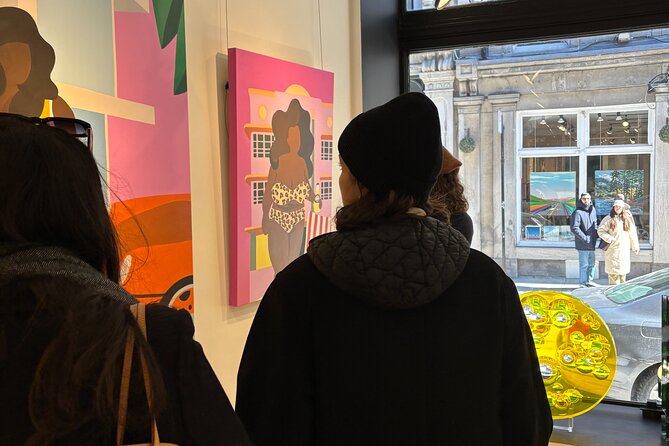
This tour is designed for people who want art, but not a half-day commitment. In about two hours, you’ll see a compact slice of Montreal’s art scene—enough to feel informed, but not so long that your brain goes into museum shutdown mode.
What makes it work is the range. You’re not just hopping between galleries that all look the same. You start with a more high-end contemporary selection, then you shift to Inuit art where the “why” behind the work matters as much as the “what.” Then you end with local artists on one of Montreal’s older, classic streets—good for anyone who likes the city side of travel as much as the art side.
Also, since it’s a private experience with your group only, you’re not stuck waiting your turn to ask basic questions. If you’re newer to art, this matters. If you’re experienced, it still helps because you can go deeper without feeling rushed.
Finally, plan on weather being a factor. The tour requires good weather, so if you’re traveling in seasons where conditions can shift quickly, keep that in mind.
You can also read our reviews of more guided tours in Montreal

Meeting on Rue Saint-Sulpice and finishing near Saint-Paul
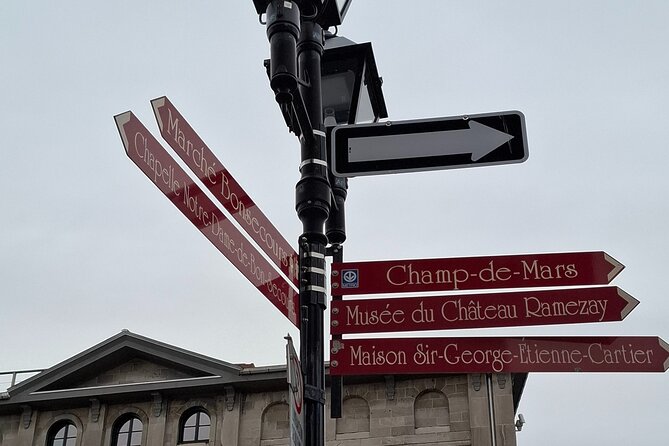
You’ll meet at 433 Rue Saint-Sulpice, Montréal, QC H2Y 1V5, and the tour ends at Images Boréales Inuit Art Gallery, 4 Rue Saint-Paul E, Montréal, QC H2Y 1G1. That’s a nice setup because you’re doing a walk through the central historic grid instead of bouncing across town.
You’ll have a mobile ticket, so you can keep things simple on your phone—no paper ticket hunt. It’s also near public transportation, which is useful in Montreal, where you can often swap between walking and transit without burning time.
One more practical note: the tour is marked as private, and most travelers can participate. Service animals are allowed, which is always good to see when you’re planning ahead.
If you want to be strategic: arrive a few minutes early, not because you need to rush, but because it gives you time to settle in before Nada starts connecting the dots between styles, artists, and the spaces you’re entering.
And because the tour is popular—booked about 40 days in advance on average—I’d treat it like a real plan item. If your schedule is fixed, don’t wait until the last minute.
Galerie LeRoyer: contemporary art with a collectors’ mindset
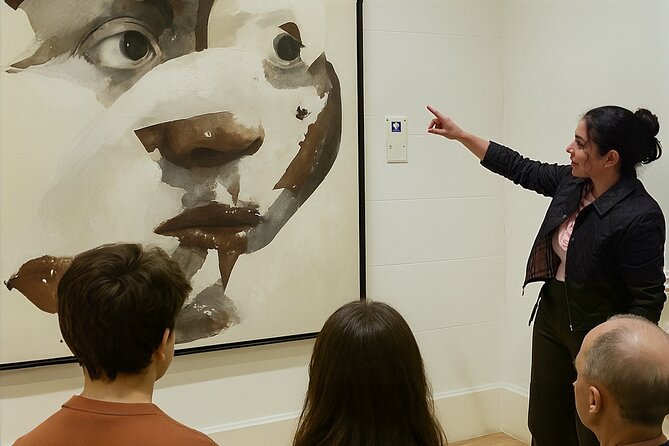
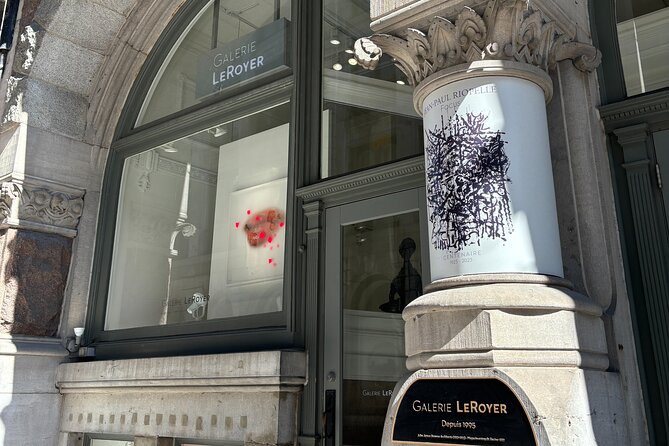
Your first stop is Galerie LeRoyer, where the focus leans toward a more polished, higher-end contemporary selection. This is the point in the tour where you’ll start thinking like an art buyer, even if you’re not buying anything that day.
The tour time here is about 20 minutes, and admission is included. In practical terms, that means you’re not paying extra on-site to enter—one less thing to manage while you’re trying to look closely.
What I like about starting at LeRoyer is the way it frames contemporary work. You’re not only learning what the art looks like—you’re also learning how to think about fit. The approach is about picking and choosing options that could work for your taste or collecting goals, and that mindset makes the conversation more useful than a generic gallery chat.
Drawbacks to consider: if you’re the type who hates sales energy or collecting talk, this might feel a little “buyer-oriented.” The upside is that Nada can guide you through it in a way that’s still about understanding, not pressure. If you lean toward learning how people evaluate contemporary pieces—materials, concept, artist direction—you’ll probably enjoy this stop a lot.
Images Boréales Inuit Art Gallery: why the craft is part of Canadian identity
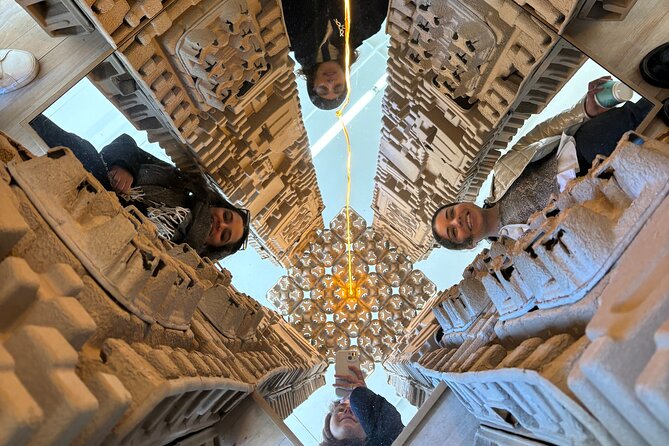
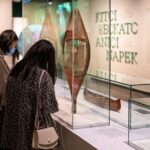
Next you head to Images Boréales Inuit Art Gallery, a stop built around Inuit art and its role in Canadian cultural heritage. This gallery is unique in what it emphasizes: the meaning and continuity behind traditional art making practices, not just the look of the final artwork.
This segment is also about 20 minutes, but unlike the first stop, admission is free. That’s a strong value element because it gives you a meaningful art experience without extra cost, and it keeps the tour feeling balanced rather than all ticketed-entry.
Where Inuit art tours can go wrong is when they treat the work like an exotic visual souvenir. Here, the emphasis is on understanding what makes the practice important to Canadian identity. That shift changes how you look. Instead of just asking, “Do I like it?” you start asking, “What traditions or values are shaping how this was made, and how does that carry forward?”
The biggest payoff is context. When you understand the cultural thread, the artworks tend to snap into focus—your eyes follow details differently, and your questions get more interesting.
If you’re sensitive to cultural representation, this stop is worth it because it’s centered on the practice and significance, not just aesthetics.
Galerie d’art Blanche: local artists on Montreal’s oldest street
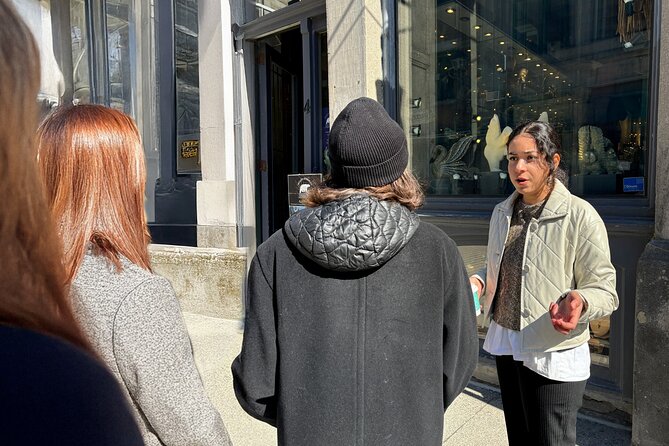
Your final stop is Galerie d’art Blanche, set on Montreal’s oldest street. That location matters. It’s not just a gallery room plopped into the city—it’s part of the street-level story where Montreal’s past and present overlap.
Like the other stops, the time here is around 20 minutes, and admission is free. The gallery is focused on local artists, and the tour is meant to help you understand the motivation behind opening their doors and showing work.
What I like most about this ending segment is the practical, personal angle. You don’t just learn to describe art. You get pushed to imagine what would feel meaningful to you—your own potential chef-d’œuvre—and that’s a great way to finish a tour without ending on abstract notes.
Possible drawback: since this is a local-artist-focused space and the time is short, you may not see every work in the gallery in depth. But that’s also why a guide helps here. Nada can point you toward pieces that connect to the bigger themes you’ve already been building across the tour.
If your goal is to get a quick taste of Montreal’s creative people and not only its famous institutions, this stop delivers.
You can also read our reviews of more museum experiences in Montreal
How Nada shapes the tour: questions, pacing, and clear English
A guided gallery tour lives and dies by the guide. In this case, the standout name is Nada—and what people consistently appreciate is that she takes her time and clearly enjoys art.
From what you can expect on the ground, Nada doesn’t just say what something is. She helps you understand why an artwork is being shown, how an artist fits into the gallery’s world, and what to look for if you want to keep thinking after you leave.
Another big plus is communication. The tour is described as being supervised with excellent English, which makes a real difference when you’re trying to understand subtleties quickly. In Montreal, language can be a travel friction point; having an English-first explanation lowers stress.
Nada also appears to have strong relationships in the galleries, which helps in a low-key way—like getting extra context on artists represented, not just reading generic info off the walls. And she’s willing to get flexible with your interests, so if you’re more into concept than technique (or the other way around), you should feel accommodated.
Tip for you: come with one or two themes you want. Examples: “I want to understand how Inuit art differs from contemporary abstract work,” or “I want to know what makes a piece feel worth collecting.” If you ask early, Nada can steer you through the rest with more purpose.
Price and value: is $48.64 a good deal?
At $48.64 per person for about two hours, this isn’t a throwaway activity. But it also isn’t priced like a full private museum day. The value comes from what you get packed into the time.
First, you’re getting a guide for the whole route—someone walking with you, explaining, and keeping you moving between three different art spaces. That alone usually costs more than a basic entry ticket elsewhere.
Second, the ticket mix makes the math feel fair. Galerie LeRoyer’s admission is included, while Images Boréales and Galerie d’art Blanche are free admissions on this tour. So you’re paying for guided context across all three places, not just paying to enter one building.
Third, the pacing is intentionally short. Each gallery gets about 20 minutes, which is ideal for travelers who want art context without turning your itinerary into a slow slog. You’ll still have time to ask questions and really look, but you won’t get stuck in one spot for an hour and a half.
If you’re cost-sensitive, this is worth considering if you like structured guidance. If you’d rather wander freely and only pay to enter one gallery, you could build your own route cheaper. But if you want someone to help you interpret what you’re seeing, this pricing can feel reasonable.
Who this tour is for (and who should skip it)
This tour is a strong match if:
- you want Montreal art and Canadian culture in one compact plan
- you like learning the why behind art, especially with Inuit heritage
- you want a friendly guide who works with questions instead of a lecture
- you’re a beginner art lover who wants a low-pressure path to understanding
It also works for seasoned art fans because the guide’s explanations and recommendations can help you connect the dots between styles and contexts. The route is short, but it’s not shallow.
You might skip it if:
- you hate walking for any reason, because it includes a walk-through city streets between stops
- you want long, quiet time with one gallery’s collection and nothing else
- you’re very label-driven and need lots of reading time at each piece
That drawback you should take seriously is the timed, 20-minute stop length. It’s great for most people. But if you don’t like time limits, you’ll feel them here.
Should you book this Montreal art gallery tour?
Book it if you want an easy way to understand Montreal through art, without spending your entire day in museums. The combination of Galerie LeRoyer, Images Boréales, and Galerie d’art Blanche gives you a smart spread: contemporary collecting thinking, Inuit cultural context, and local artists on historic streets.
Skip it only if you know you need more time per gallery than this tour allows. Otherwise, I think this is a solid value for the money—especially because one stop’s admission is included and the guide brings the kind of context that helps art make sense fast.
If your dates are fixed, don’t wait. With typical bookings well over a month out, you’ll have better odds locking in your preferred time slot.
FAQ
How long is the guided gallery tour?
It runs for about 2 hours.
Where does the tour start and end?
It starts at 433 Rue Saint-Sulpice, Montréal, QC H2Y 1V5, and ends at Images Boréales Inuit Art Gallery, 4 Rue Saint-Paul E, Montréal, QC H2Y 1G1.
What is the cost per person?
The price is $48.64 per person.
Which gallery admissions are included?
Galerie LeRoyer includes admission. Images Boréales Inuit Art Gallery and Galerie d’art Blanche are free on the tour.
Is it a private tour or shared group?
It’s private. Only your group participates.
What should I do about tickets?
You’ll use a mobile ticket.
What’s the cancellation and weather situation?
You can cancel for a full refund up to 24 hours before the experience starts. The tour requires good weather, and if it’s canceled due to poor weather, you’ll be offered a different date or a full refund.