REVIEW · MUNICH
Munich: Street Art Bike Tour
Book on GetYourGuide →Operated by Munich Walk Tours · Bookable on GetYourGuide
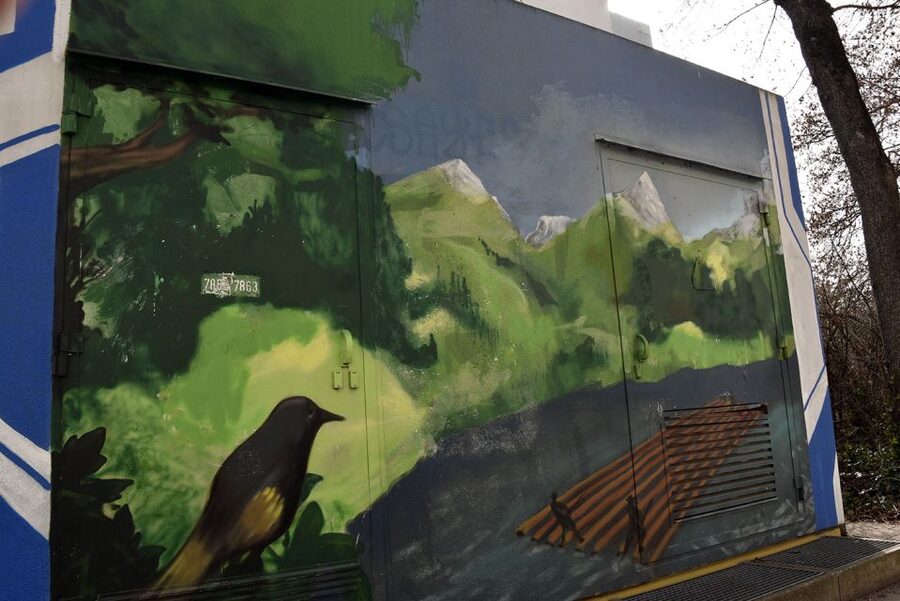
Munich hides graffiti behind clean shop windows. This street art bike tour shows you the wall-to-wall side of the city and how the movement started in Germany in the 1980s.
I especially like how the ride threads history into real places, not just facts on a page. You’ll also get to see art close up while you roll along the Isar river, which makes the colors feel bigger than in photos. One catch: it lasts 210 minutes and the tour is led in German, so you’ll want some patience if you’re not comfortable with the language.
You start in the center, but the route quickly turns away from the obvious sights. Expect to pedal through neighborhoods where street art feels part of everyday life, then hit a few standout murals and street corners that make Munich look a little less polished. If you’re short on time, or you need step-free access, this may not be your best fit since it’s not suitable for wheelchair users.
In This Review
- Key things to know before you go
- Marienplatz to the street art edges of Munich
- Riding the Isar river: art you can track as you move
- Giesing: leaving the tourist lanes for a working-class feel
- Graffiti history in Munich: pioneers, old masters, and new names
- Slaughterhouse district and the boat pause near a railway bridge
- How the guiding style makes the art readable
- Bike comfort, rules, and who this tour fits best
- Price and value: what $40 buys in real experience
- Getting the most out of the ride (and when to skip)
- Should you book the Munich Street Art Bike Tour?
- FAQ
- Where is the meeting point?
- How long is the tour?
- What’s included in the price?
- What language is the tour guide?
- Is this tour suitable for kids?
- Is the tour wheelchair accessible?
- Are alcohol or drugs allowed on the tour?
- Can I pay later and cancel if plans change?
Key things to know before you go
- Marienplatz starting point: meet at the Tourist Information Office with a yellow sign and red letters.
- 210-minute ride: you’ll be on a bike long enough to feel like a real outing, not a quick loop.
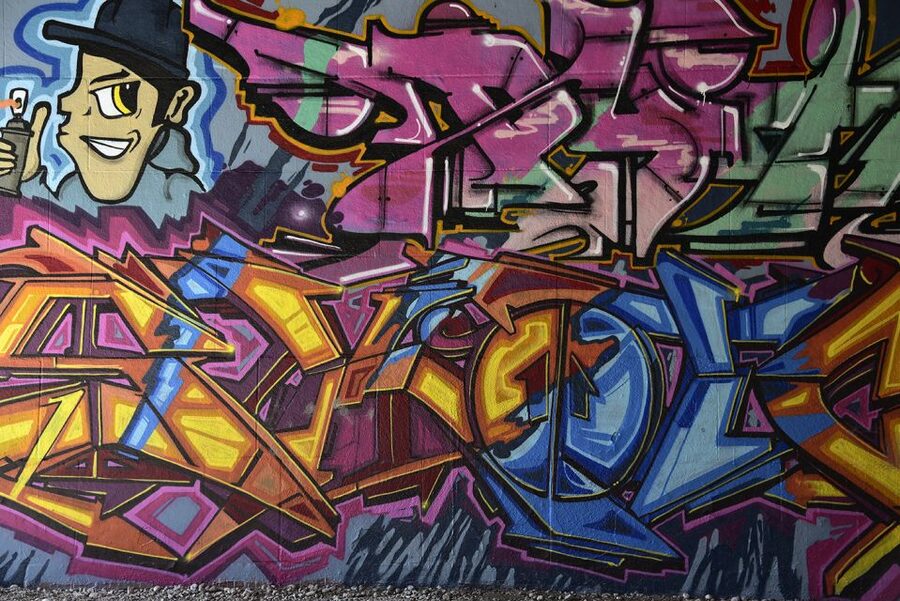
- Isar river murals: the art sits along a waterline you can follow by bike.
- Giesing detour: you’ll ride beyond the main tourist areas into a former working-class neighborhood.
- Boat break near a railway bridge: a planned pause that changes the pace for photos and rest.
- Ulrike-style guiding: one guide highlighted in recent bookings, Ulrike, brought a lot of context even for non-German speakers.
Marienplatz to the street art edges of Munich
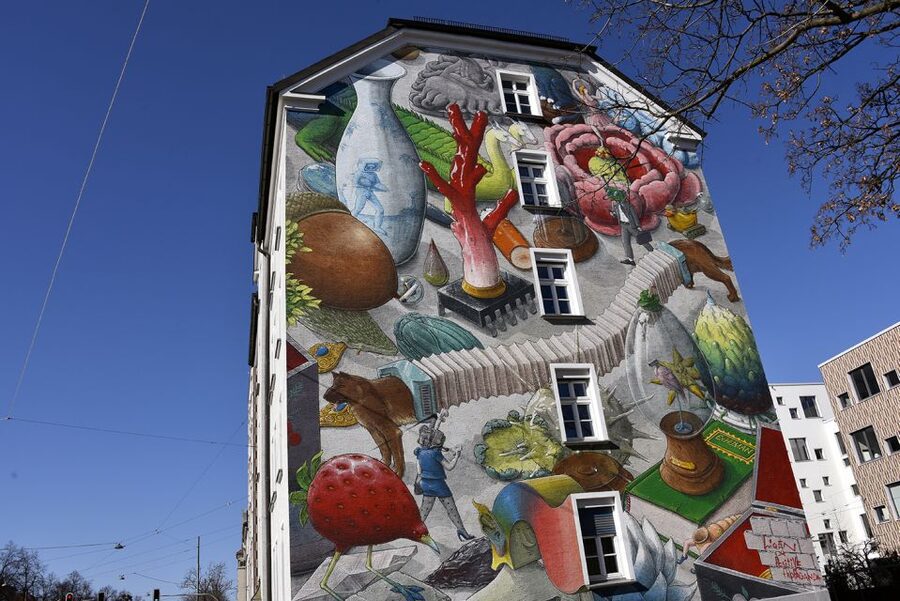
You meet right in the center at the Tourist Information Office at Marienplatz. Your guide holds a yellow street art tour sign with red letters, so it’s easy to spot even if you’re arriving with half a plan and a full backpack.
From there, the tour quickly shifts from postcard Munich to the kind of street art you have to look for. That’s the value here: your guide doesn’t treat graffiti like a museum exhibit. You get it as a living response to the city—labels, styles, and neighborhoods all speaking in their own language.
You can also read our reviews of more tours and experiences in Munich.

Riding the Isar river: art you can track as you move
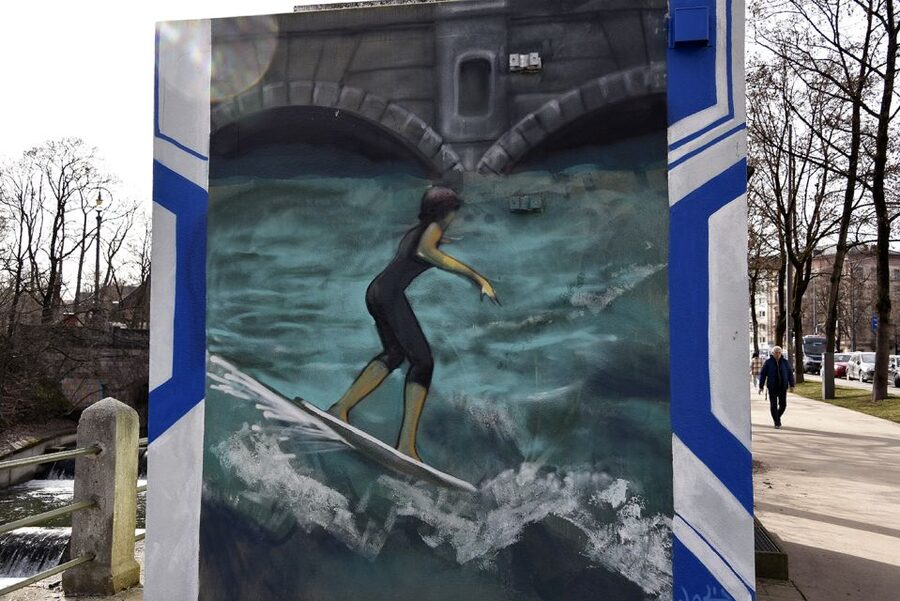
One of the strongest parts of this tour is the way it uses bike travel to turn the Isar river into a moving gallery. When you’re rolling alongside the water, murals and tags don’t feel like random decorations. They feel like markers, like people leaving messages along a path they know well.
You also get more natural photo angles than you would on foot, because you can position yourself quickly. That matters for street art, where the best details often sit slightly off the main line of sight—letters, textures, layers, and color fades that only show up when you’re close.
The big practical point: a 210-minute tour means you’ll want to keep your energy. You’ll have stops and a break later, but you’re still pedaling for most of the experience, not just waiting around for commentary.
Giesing: leaving the tourist lanes for a working-class feel
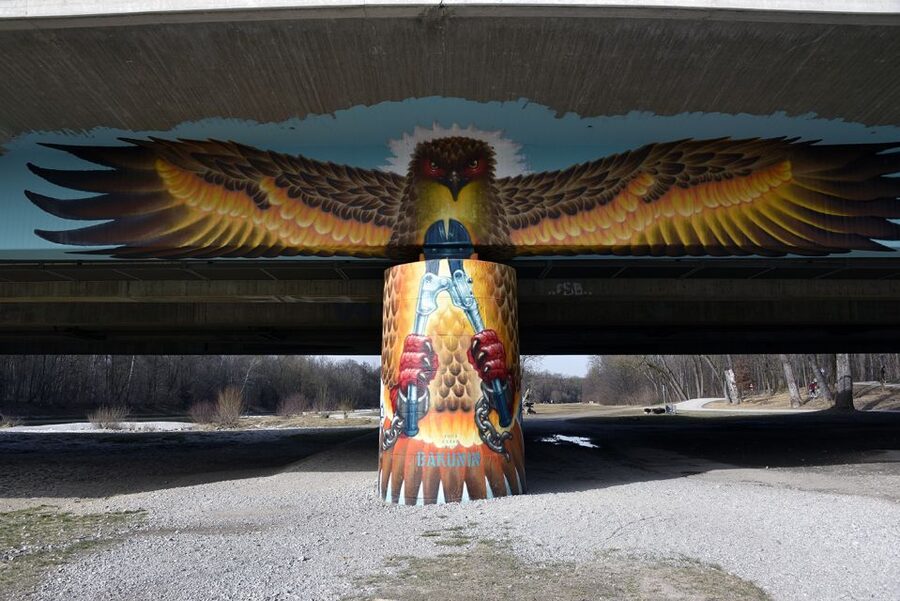
After the center, you’ll head to Giesing, described as a former working-class neighborhood. This is where the tour earns its name as an alternative Munich outing. The street art here feels less like a curated stop and more like something grown from the neighborhood’s daily rhythm.
This section is also useful for your understanding of the scene. Street art tends to make more sense when you see it in the context of how people lived and moved through an area. By getting you off the main tourist map, the guide lets the work land with the right weight.
A small drawback: because you’re going off the standard route, you should be mentally ready for a less polished look and more ordinary street corners. If you only want famous squares and clean viewpoints, this part may feel a bit too real.
Graffiti history in Munich: pioneers, old masters, and new names
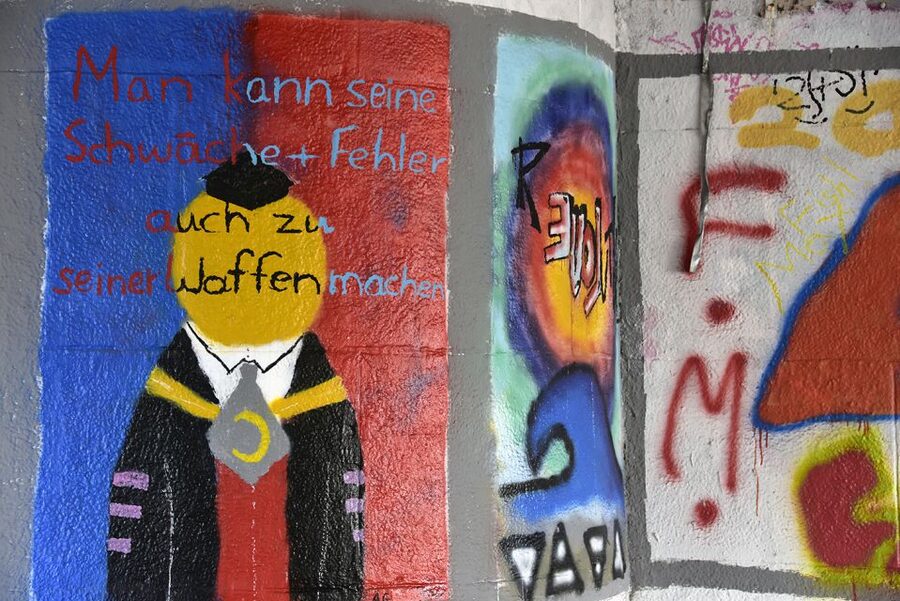
Munich’s graffiti story is surprisingly old. The tour leans into the fact that Munich was considered a mecca for graffiti artists in the 1980s, alongside New York. That framing matters because it helps you see modern street art as part of a longer timeline, not just today’s fashion.
As you pass older works—the kind your guide calls out as shaping the culture—you’ll also spot up-and-coming artists. The contrast is the point: you’re not only hunting for the oldest surviving murals. You’re learning how the language evolved, and how new styles keep rewriting the rules while still referencing the origins.
Here’s a useful way to think about it while you ride: graffiti isn’t just about color. It’s about who gets heard, where voices gather, and how artists claim space in public. Even if you don’t know the jargon, the tour gives you enough context to read what you’re seeing.
A fun practical tip: if your guide mentions specific pieces by name, lean in. One highlighted example from a recent booking was the Gemüse/Obst mural, plus an unusual Aldi advertisement on Weinbauernstraße made using photocatalytic paint. It’s the kind of detail that makes you understand street art (and commercial street style) as a technical and cultural experiment, not only a visual one.
Slaughterhouse district and the boat pause near a railway bridge
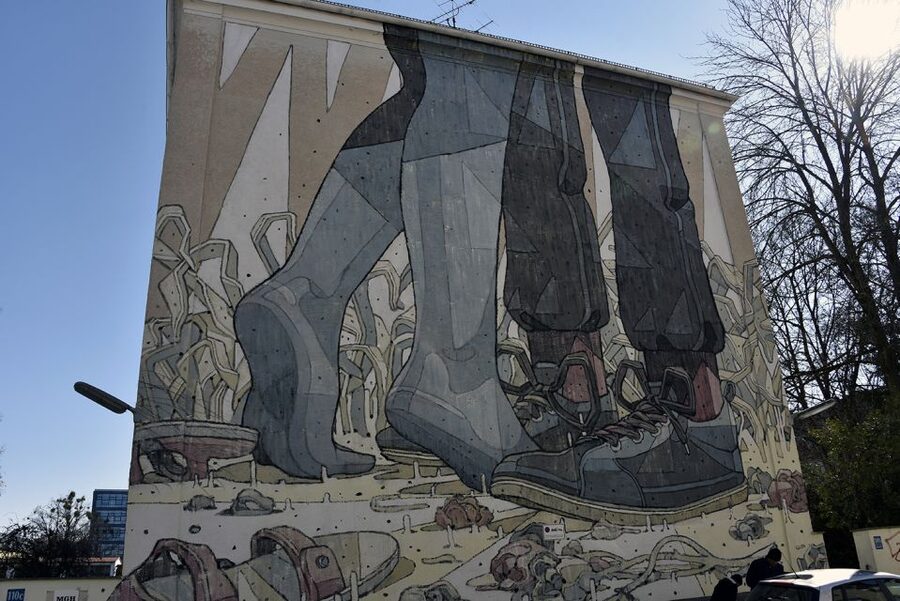
As the route moves toward the slaughterhouse district, the tour shifts from pure spotting and explaining into a change of pace. The area is part of what keeps Munich street art from feeling uniform; it helps you see the city as layered, industrial in places, residential in others, and always shifting.
Then comes a smart break: you get time on a boat at a railway bridge. Even if you’re not the “boat person,” this is valuable because it resets your body after the riding. It also gives you a different perspective, which helps street art feel connected to space rather than stuck to flat walls.
The boat stop is also a reminder that street art thrives in transit zones—rivers, rail lines, routes people already use. When you’re above or next to the water, the scale of color and lettering can look different. Letters that seemed cramped from street level may suddenly make more sense as a composition.
How the guiding style makes the art readable
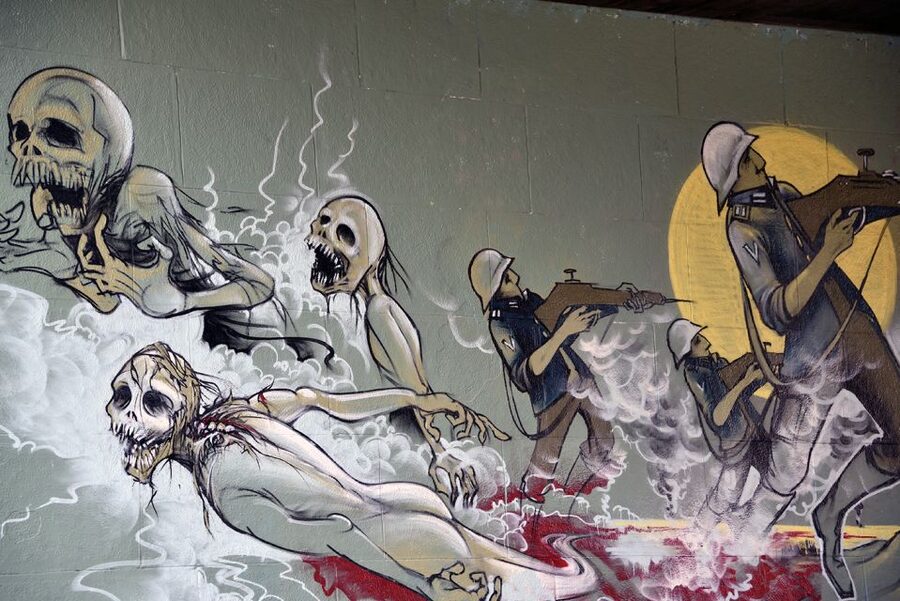
This tour isn’t just about pointing. A good guide helps you interpret. Recent bookings especially highlighted guide Ulrike for giving lots of explanation and effort, including for people who weren’t fluent in German. That’s the kind of guiding that changes your experience, because it turns “cool art” into “I know why it’s here.”
You should also expect a mix of older works and newer ones. The guide builds a story that connects the early movement—when graffiti started showing up in Germany—with what’s happening now. If you pay attention at the stops, you’ll start recognizing patterns: how letters become character, how tags become signatures, and how styles travel from one corner to another.
Bike comfort, rules, and who this tour fits best
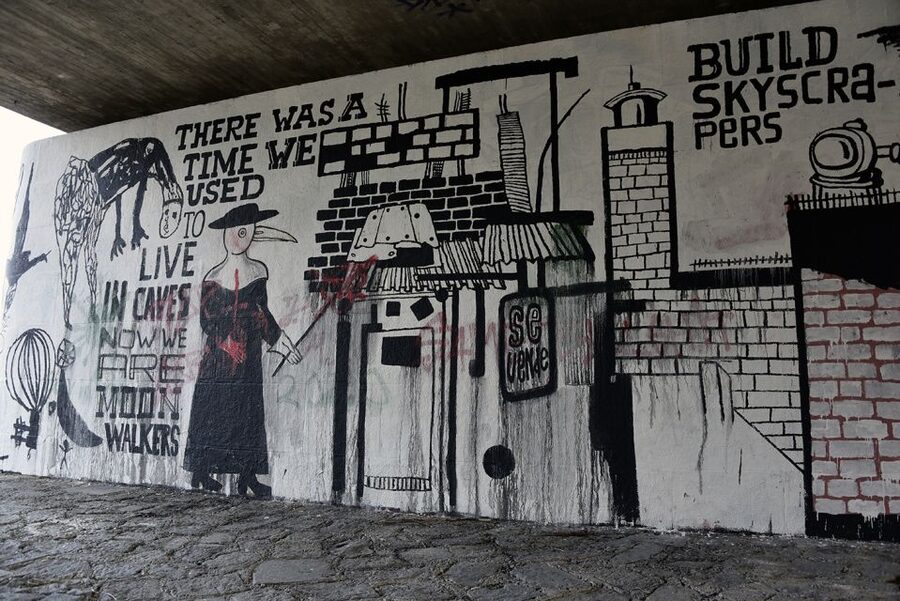
You get rental bikes included, which is a real value factor in Munich. You’re not hunting for a bike or dealing with extra rental logistics before you even start. The tour is also structured around moving through different areas efficiently, which makes it ideal if you want more than just a walking tour’s limited range.
The activity has clear limits. It’s not suitable for children under 10, and it’s not suitable for wheelchair users. Also, alcohol and drugs aren’t allowed, which keeps things respectful and focused on the art.
Who it suits best:
- You like street art and want more than surface-level picture stops.
- You’re comfortable riding a bike for a few hours in an urban setting.
- You want a history-led route that explains why Munich mattered in the 1980s.
If you’re looking for a quiet, low-movement stroll, this likely won’t match. It’s a ride-heavy experience by design.
Price and value: what $40 buys in real experience
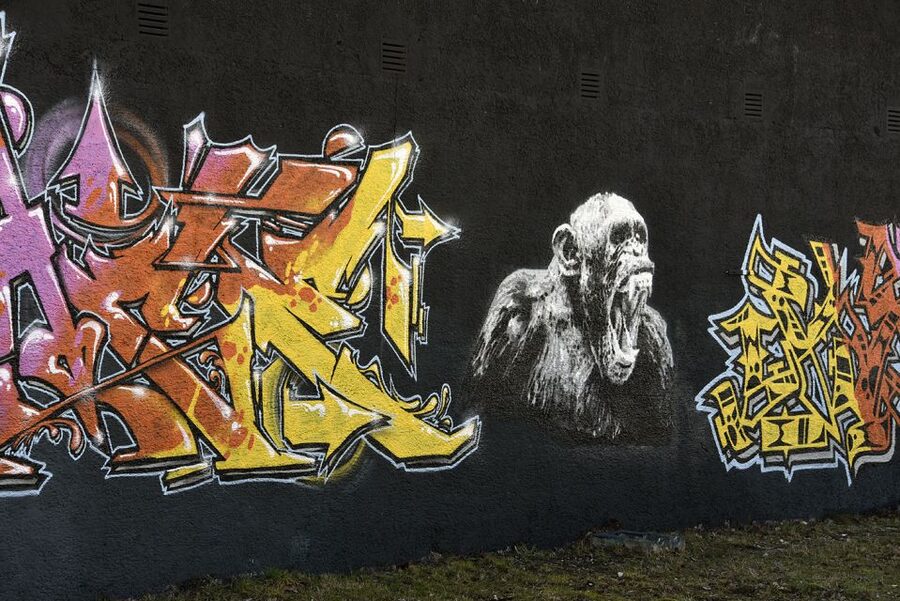
At $40 per person for 210 minutes, you’re paying for three big things: a guide, bike rental, and time in neighborhoods you likely wouldn’t wander into alone. In a city like Munich, spending a few hours with someone who knows the street art map can be worth more than any single paid museum ticket, because it changes how you see the whole city.
The value also comes from variety. You’ll cover the Isar river, hit Giesing, move toward the slaughterhouse district, and include a planned boat break. That mix is what keeps the tour from feeling like a loop of random walls.
The overall booking score is strong, averaging about 4.6 out of 5 from 66 ratings. That’s not a guarantee, but it does suggest people consistently leave with a good balance of art spotting and explanation.
Getting the most out of the ride (and when to skip)
This is the kind of tour that rewards curiosity. Go in expecting to learn facts about graffiti’s history in Germany and to see recognizable artists’ work alongside newer names. If you like asking small questions like why a style changed or why a spot became popular, your guide will likely be ready for it.
Timing-wise, you should also consider weather. One recent booking reported that rain turned a group tour into a private tour, which is a reminder that conditions can change the format. If you’re sensitive to wet weather or prefer guaranteed group size, keep that in mind when picking your day.
Should you skip it? I’d skip this if:
- You can’t do a bike-based outing for about three and a half hours.
- You need wheelchair access.
- You don’t want a tour led in German and you’re unwilling to go with the flow.
Should you book the Munich Street Art Bike Tour?
Book it if you want an honest street-art route that includes history, offbeat neighborhoods, and a real sense of place. The combination of bike travel, Isar river scenes, the trip into Giesing, and that boat break near a railway bridge is exactly the mix that makes this more than a “take pictures and go” outing.
Don’t book it if you’re after only major sights, or if your schedule won’t handle 210 minutes of riding and stops. And if you need wheelchair-friendly access, look for another option.
FAQ
Where is the meeting point?
Meet your guide in front of the Tourist Information Office at Marienplatz. Your guide will be holding a yellow street art tour sign with red letters.
How long is the tour?
The tour lasts 210 minutes.
What’s included in the price?
The tour includes a tour guide and rental bikes.
What language is the tour guide?
The live tour guide language is German.
Is this tour suitable for kids?
It’s not suitable for children under 10.
Is the tour wheelchair accessible?
No, it’s not suitable for wheelchair users.
Are alcohol or drugs allowed on the tour?
No. Alcohol and drugs are not allowed.
Can I pay later and cancel if plans change?
Yes. You can reserve now and pay later, and you can cancel up to 24 hours in advance for a full refund.