REVIEW · JOHANNESBURG
Colours of Johannesburg: A Graffiti & Street Art Tour
Book on GetYourGuide →Operated by City Skate Tours Pty Ltd · Bookable on GetYourGuide
Walking among walls tells a story. This Johannesburg street art tour turns graffiti and murals into a guided history lesson you can see and feel. You’ll move through Braamfontein, Newtown, and Maboneng with context, not just photos.
What I like most is the way the guide separates graffiti tags from street art murals, and then explains how the two ideas overlap. I also like the practical stop at a local graffiti supply store, because street culture is more than what’s painted on walls.
One thing to consider: this tour is English only, and it’s a fair amount of walking. Wear comfortable shoes and bring water so you can enjoy it without rushing.
In This Review
- Key takeaways before you go
- Start at Skinner Café and get your street-art bearings fast
- How graffiti and street art fit together (and why this tour teaches both)
- Braamfontein: murals, tags, and the story behind the change
- The “secret” stop: a local graffiti store you’ll want to visit again
- Newtown: art and culture that goes way beyond the street
- Maboneng: where tags and murals meet international art
- The guide matters: what Ayanda’s approach adds
- Timing and walking: plan for a real afternoon, not a quick snack tour
- Value check: why $43 makes sense for this specific kind of tour
- Who should book this Johannesburg street art tour
- Should you book Colours of Johannesburg? My practical recommendation
- FAQ
- Where is the meeting point for the tour?
- Is the tour offered in English only?
- How long is the tour?
- Does the price include transportation between neighborhoods?
- Is the graffiti store visit guaranteed?
- Do I need hotel pickup or drop-off?
Key takeaways before you go
- Graffiti vs street art, made clear: you’ll learn the relationship, not just definitions.
- Braamfontein’s street art impact: you get the “why here” behind murals from the early 2000s.
- A graffiti store stop, when open: you can see what artists use and buy local merch.
- Newtown for deeper culture: the area’s long-running arts energy shows up on walls.
- Maboneng’s mix of local tags and big pieces: you’ll spot recognizable writer styles in context.
- A possible graffiti artist join-in: only if they’re available, so treat it as a bonus, not a guarantee.
Start at Skinner Café and get your street-art bearings fast
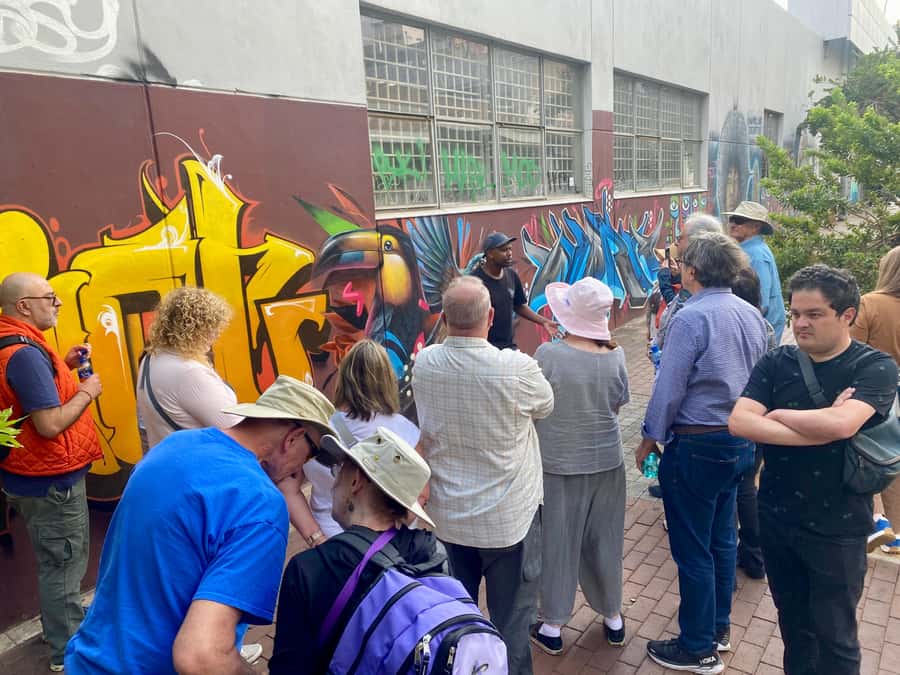
The tour kicks off at Skinner Café, inside the café on 70 Juta St. It’s easy to spot: large see-through windows and a small seating area outside on the corner. Meeting in a real café matters. It sets a relaxed tone and keeps things grounded before you step into the city’s street-art zones.
Before the walk really starts, you’ll do a short safety briefing at a local restaurant. That’s not the fun part, but it’s the part that makes the fun possible. Johannesburg street art is public, but you’re still moving through neighborhoods on foot, so having a quick plan helps you focus on what matters: the walls and the people behind them.
Price-wise, $43 for 210 minutes is actually sensible if you think of it as guided time plus transportation between neighborhoods. You’re not paying just for walking; you’re paying for translation of visual culture—learning what you’re looking at and why it landed where it did.
A few more Johannesburg tours and experiences worth a look
How graffiti and street art fit together (and why this tour teaches both)
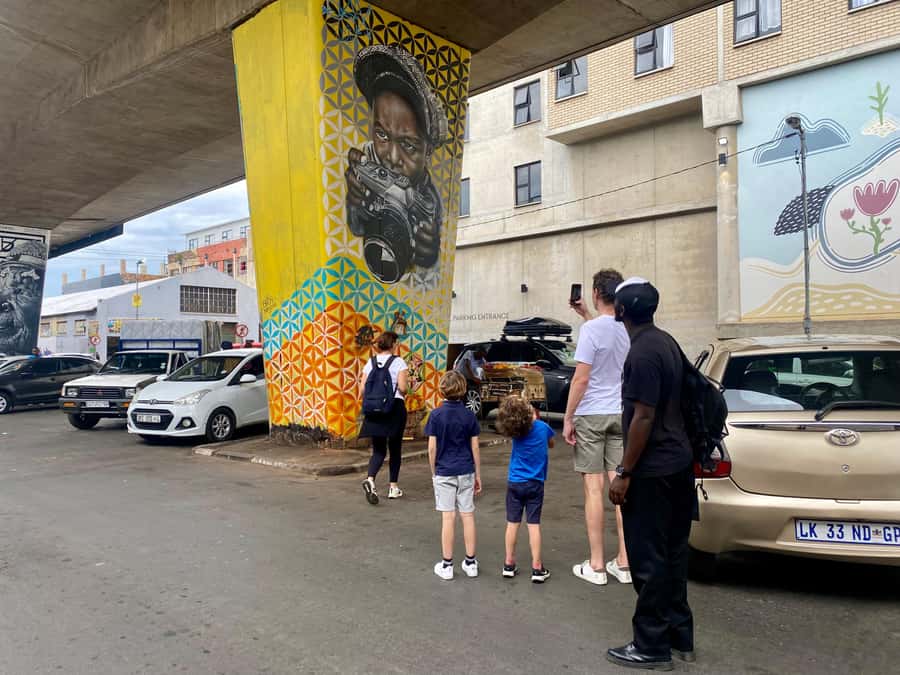
A lot of street-art tours stop at “cool art.” This one tries to answer a more useful question: what’s the difference between graffiti and street art, and how do they relate?
You’ll get a clear framework:
- Graffiti often shows up as tags and writer styles—identity, repetition, recognition.
- Street art often leans toward murals and larger compositions—public storytelling, visual commentary, sometimes collaboration.
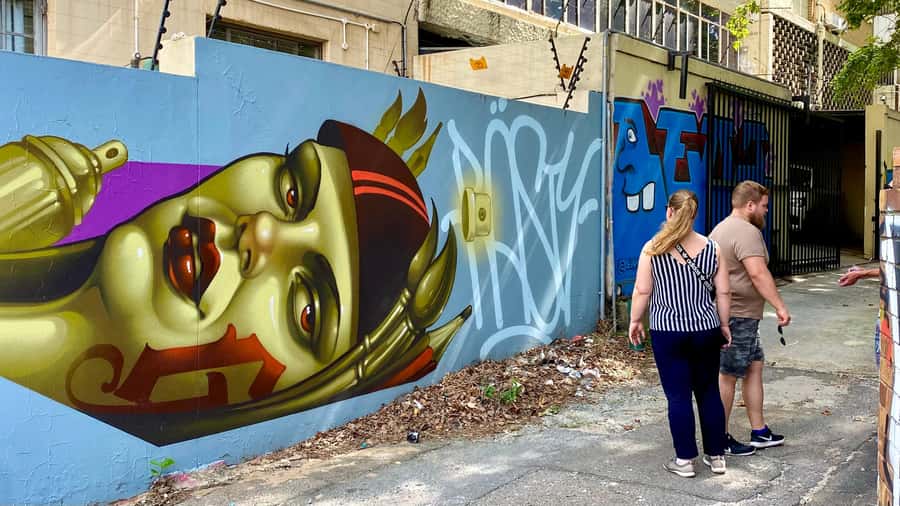
The key is the “relationship” part. In Johannesburg, those lines aren’t clean. Writers can create pieces that look like street art, and mural work can carry tag culture in the details. The guide’s job is to help you read those overlaps so you don’t just admire paint—you understand the street language.
This is where the tour delivers real value. If you’ve ever stared at a wall and felt like you were missing the point, this tour gives you a decoder ring. Once you can separate the styles, you start noticing the tiny choices: line weight in tags, color decisions, and how the wall becomes part of the message.
Braamfontein: murals, tags, and the story behind the change
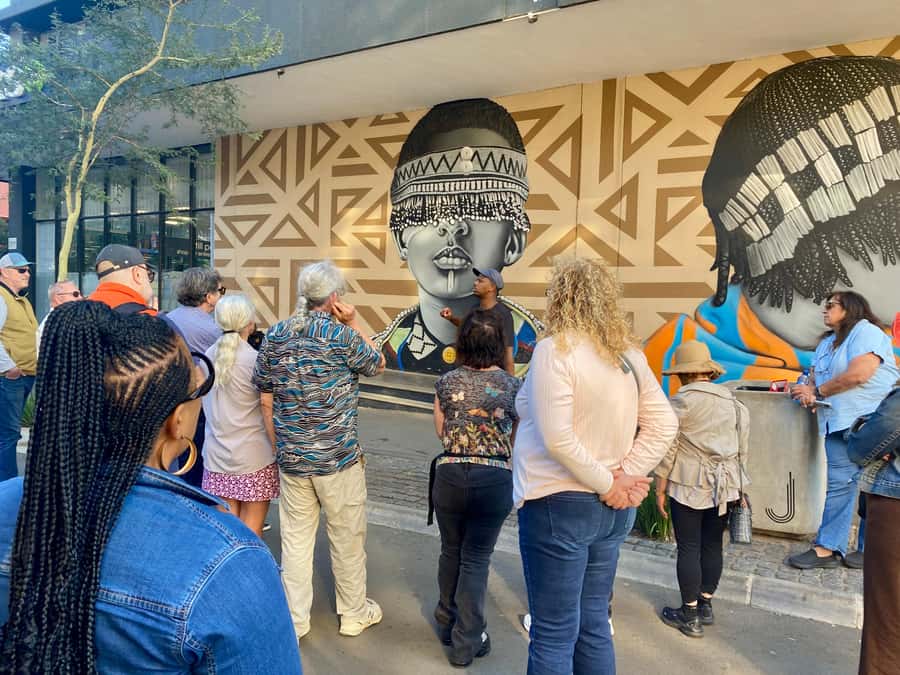
Your first major area is Braamfontein, starting with a guided walk through the Braamfontein Precinct. Expect a mix of large and small murals across lots of building surfaces. The guide points out more than the obvious art. You learn what to look for in the tag culture, and you also pick up the broader impact of street art on the development of the area.
The tour places Braamfontein’s transformation into a timeline, including the way murals and street culture gained traction around 2003. That time anchor matters. It turns random-looking street images into evidence of how an inner-city neighborhood can shift its identity through art and visibility.
A practical note: Braamfontein is visually dense. You’ll be tempted to speed up and take photos only. Slow down instead. This is the part of the tour where I’d focus hardest on the guide’s explanations, because it trains your eyes for the next stops.
The “secret” stop: a local graffiti store you’ll want to visit again
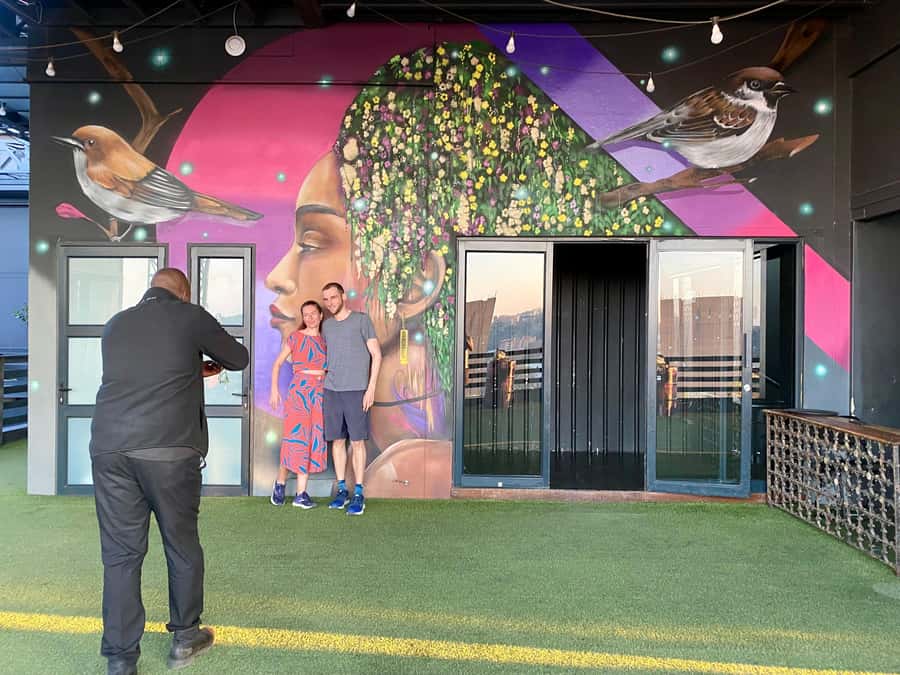
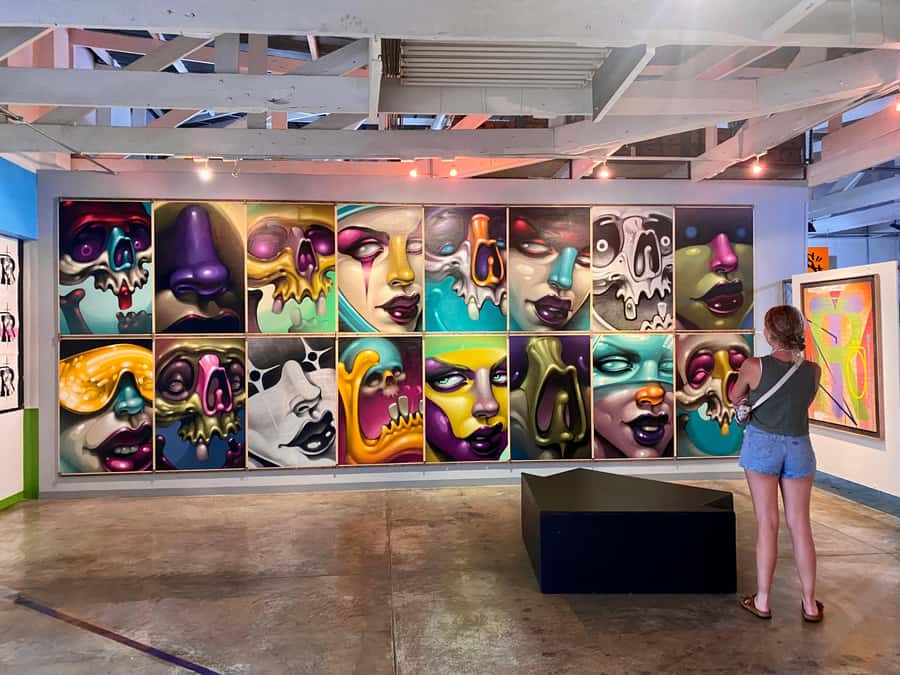
After Braamfontein, you’ll make a quick secret stop that includes shopping and a look inside a local graffiti supply world. This is short—about 15 minutes—but it changes how you understand the art.
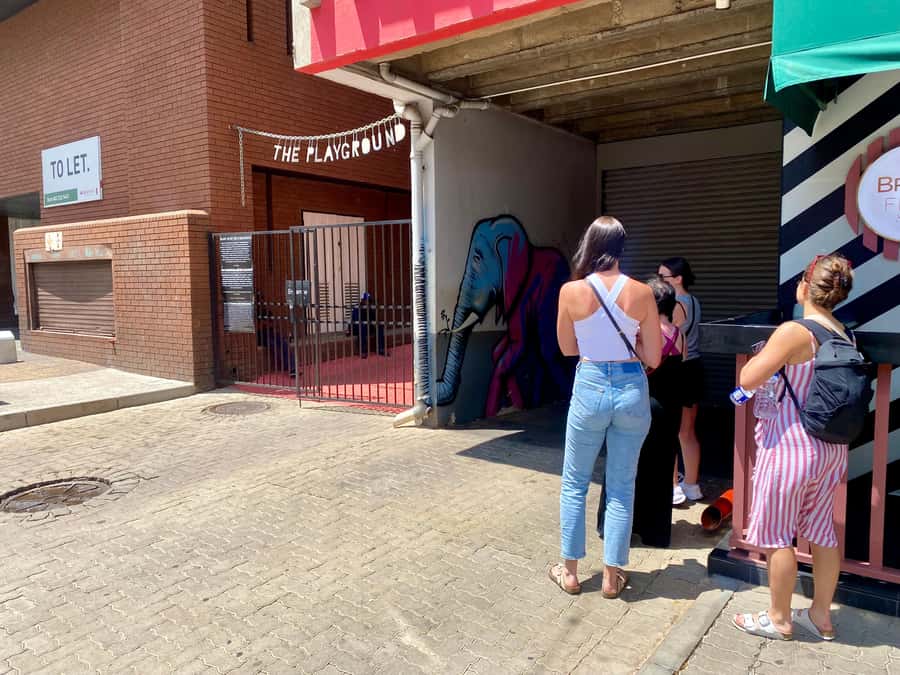
Then there’s the real highlight of this section: the local graffiti store visit when it’s open. The tour doesn’t promise it’ll always be accessible, since the store can be closed during the festive period (24 Dec–20 Jan). But when it is open, this is a rare chance to see graffiti as a craft with tools, not just an aesthetic.
What makes this stop genuinely useful:
- You can learn what artists use for supplies.
- You can engage with the culture beyond walls.
- You might find merchandise designed by local graffiti artists.
- If the exhibition room has works on the walls, you may be able to step into that extra space when it’s running.
This is also where you can ask questions without standing in front of a mural like a confused tourist. A store gives you context you can’t get from a photo.
Newtown: art and culture that goes way beyond the street
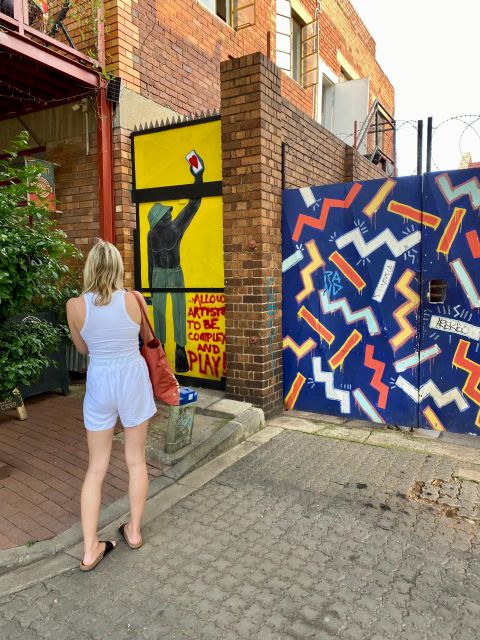
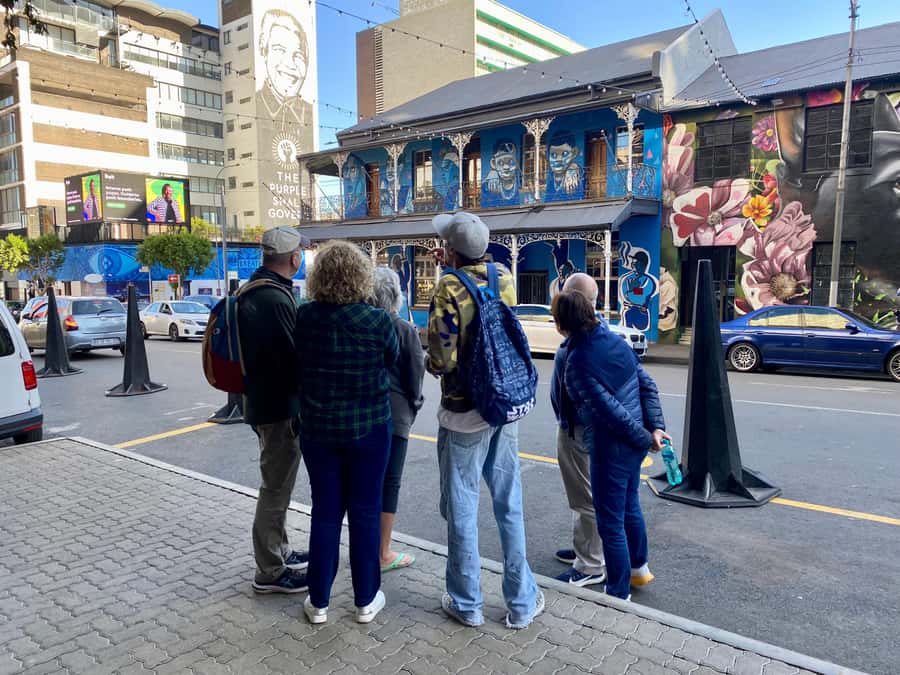
From Braamfontein, you head to Newtown, often described as the inner city’s arts-and-culture hub. The neighborhood’s cultural roots go back to 1886, and that long-running creative identity shows up in today’s street art.
You’ll spend about 45 minutes in Newtown with a mix of guided walk and sightseeing plus a photo stop. This is not the “only walls” part of the day. The goal is context—how Newtown has played a role in Johannesburg’s underground and creative movements over time.
In a practical sense, Newtown works as the tour’s bridge stop. After Braamfontein teaches you how to read tags and murals, Newtown helps you understand why this kind of visual culture fits the city’s broader artistic patterns. If you’re the type who likes meaning, this stop rewards you.
A small consideration: because it’s about context and culture, you’ll get more out of it if you listen. It’s tempting to treat it like a photo mission, but the guide’s explanations help the murals “click” into place.


Maboneng: where tags and murals meet international art
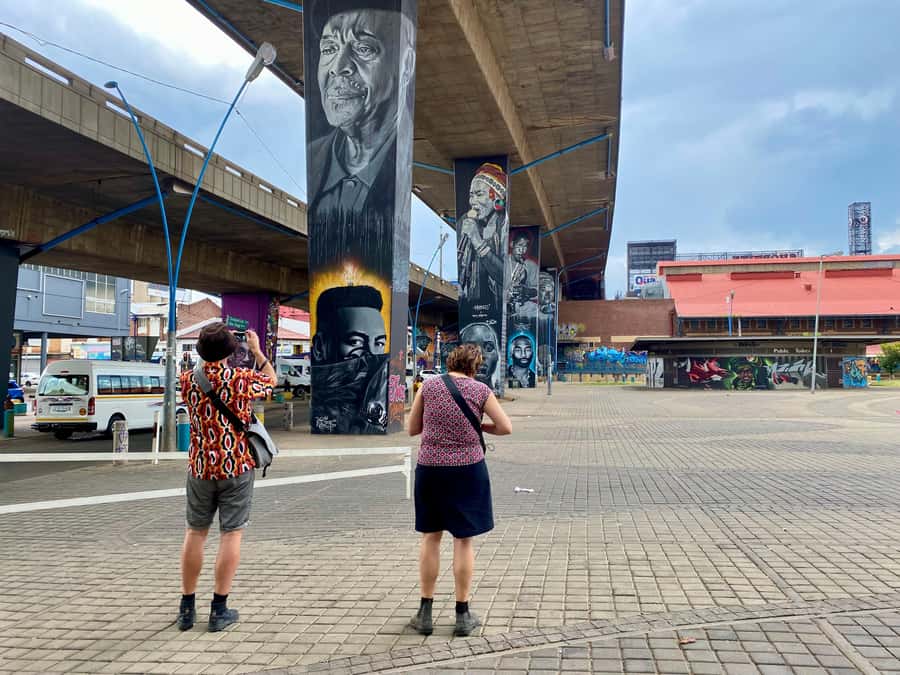
Your final neighborhood is Maboneng, a precinct known for public art across walls, with both international artists and local writer tags in the same visual neighborhood space.
You’ll spend around 45 minutes here too, with guided sightseeing and time to shop, plus an aerial view moment. The aerial view is smart. Even if you’re not into heights, it helps you understand how street art spreads across blocks and building faces, instead of treating each mural like an isolated “poster.”
What you’re really training yourself to do by the end:
- spot the different tag styles used by prolific writers
- notice how murals handle composition and color
- see how street culture makes neighborhoods feel claimed and connected
Maboneng ends the tour on a high-energy artistic note, without pretending every wall is the same. The guide will help you compare the feel of this precinct with Braamfontein and Newtown, so you finish with a sense of continuity—and difference.
The tour concludes at Home of the Bean, so you have a clear end point to regroup and refuel.
The guide matters: what Ayanda’s approach adds
Across the experience, the biggest quality factor is the guide’s ability to connect paint to people and history. Ayanda, the founder of City Skate Tours Pty Ltd, is specifically highlighted for mixing street-art expertise with a wider Johannesburg context.
In practice, that means you’re not just hearing names or locations. You’re learning how the city’s complicated story can be read in its visuals. When the guide answers your questions, you get to see the art through different lenses—style, identity, and place.
Another plus: the tour doesn’t act like street culture is a museum display behind glass. It talks about it like living culture, something shaped by local makers and the city’s everyday rhythms.
And there’s one extra possible treat: the tour sometimes invites a graffiti artist to join only if they’re available. That’s not guaranteed, but when it happens, you get a direct line into how artists see their own work.
Timing and walking: plan for a real afternoon, not a quick snack tour
The tour is 210 minutes total, which is about 3.5 hours. You’re moving between three precincts with included transport between neighborhoods, and you’ll have multiple walking segments:
- Braamfontein walk time plus sightseeing
- a brief stop for shopping
- Newtown with guided walk and photo time
- Maboneng with guided walk plus shopping and an aerial view moment
The takeaway for you is simple: build this into your day when you’re ready for sustained walking and attention. This is not the kind of activity you squeeze in between long drives.
Bring comfortable shoes and water. That’s not a throwaway tip. Street-art walking is stop-and-start, and you’ll want to stay comfortable so you can keep looking closely rather than rushing from wall to wall.
Value check: why $43 makes sense for this specific kind of tour
At $43 per person, you’re paying for more than “someone shows you murals.” You’re getting:
- guided explanations of graffiti vs street art
- city context tied to specific neighborhoods
- included transport between areas
- a chance to visit a local graffiti store when open
- time allocated for shopping so you can support artists and take home something real
If you tried to do this alone, you could absolutely find murals. But you’d miss the reading skills: what tags communicate, how writers build recognition, and how street art connects to Johannesburg’s changes over time.
That’s why the price feels fair. It’s a lesson you can reuse long after your photos are sorted.
Who should book this Johannesburg street art tour
This tour is a strong fit if you:
- want to understand street art instead of only collecting images
- enjoy guided city walking and neighborhoods-with-personality
- like art that has local voice, not just famous names
- want a street-level cultural activity in Johannesburg’s inner city
It’s also a good option for first-time visitors who want meaningful context fast. And if you’re here for a short trip, 3.5 hours is manageable.
If you hate walking, or if you’re not comfortable doing a tour in English only, then it might not be your best match.
Should you book Colours of Johannesburg? My practical recommendation
Book it if you care about context. The big win here is that you’ll leave knowing how to tell different styles apart, and you’ll understand why those walls matter in places like Braamfontein, Newtown, and Maboneng. The graffiti store stop (when open) makes it feel connected to the actual craft and local maker economy.
Skip it if you’re only looking for quick scenery, because the tour aims to teach and explain, not just move you along a photo route.
Either way, go in with a curious mindset. Street art rewards people who slow down, look twice, and ask questions. This tour gives you a guide who can answer them.
FAQ
Where is the meeting point for the tour?
Meet inside Skinner Café at 70 Juta St. It’s the green café on the corner with large see-through windows and a small seating area outside on Juta Street.
Is the tour offered in English only?
Yes. The tour is English only.
How long is the tour?
The tour lasts about 210 minutes (around 3.5 hours).
Does the price include transportation between neighborhoods?
Yes. All transport during the tour is included, covering movement between the neighborhood stops.
Is the graffiti store visit guaranteed?
It’s included when the local graffiti store is open. It is noted as closed during 24 Dec–20 Jan.
Do I need hotel pickup or drop-off?
No. Hotel pickup/drop-off is not included. You can contact the provider if you need that option.