REVIEW · FLORENCE
Florence City Tour, David & Uffizi Gallery Exclusive Guided Tour
Book on Viator →Operated by Babylon Tours Florence · Bookable on Viator
David and the Arno in one smooth day. In about 5.5 hours, you’ll see Michelangelo’s David at Galleria dell’Accademia, then continue into the Uffizi for a guided museum highlight run. You also get a solid city-walk through Florence’s historic center, so the art doesn’t feel like it sits in a vacuum.
I like that this tour is set up for a tighter feel, with a private option or small-group size capped at 8 people. You’ll also get an actual break for lunch, not just a rushed sandwich on the move. One trade-off: you admire the Duomo and Brunelleschi’s dome from the outside only, so if you want to go inside the cathedral complex, you’ll need a separate plan.
In This Review
- Key points to know before you go
- A fast, smart way to tackle Florence’s biggest art stops
- Entering Galleria dell’Accademia: Michelangelo’s David and more than one face of Renaissance art
- Piazza del Duomo: the dome stays outside, but the stories start immediately
- Battistero di San Giovanni and the bronze-door detail that makes the square click
- Via dei Calzaiuoli: shop street energy, with a purpose
- Piazza della Repubblica and Piazza della Signoria: civic Florence and sculpture you can actually interpret
- Palazzo Vecchio and Porcellino: civil power, then a quirky luck ritual
- Ponte Vecchio and the Arno: where the day naturally slows down
- Lunch break: timing that helps your museum visit feel human
- Inside the Uffizi: Medici collecting, major disasters, and the paintings you came for
- What you’ll focus on in the galleries
- The guides: why this tour tends to work (even for picky art days)
- What to watch for: pacing, dress, and the unavoidable reality of museum security
- Who this tour is best for (and who may want a different plan)
- Should you book this Florence David and Uffizi tour?
- FAQ
- Does the tour include tickets to the Accademia and Uffizi?
- Is this a private tour?
- How long is the tour and when does it start?
- Do you go inside the Duomo dome during this tour?
- Is there a lunch break?
- Are there bag or dress requirements?
- What happens if the Accademia or Uffizi closes?
- Can I get a full refund if I cancel?
Key points to know before you go
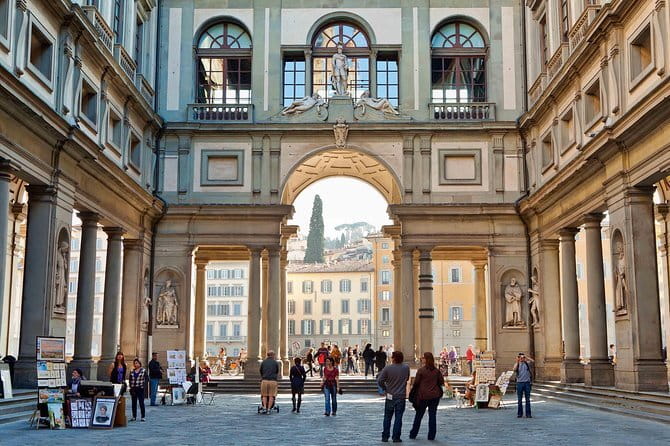
- Admission included for Accademia and Uffizi, so you avoid ticket juggling mid-trip.
- Tuned for first-timers and repeat visitors, using art + street-level Florence in one flow.
- Small-group feel (private or up to 8), which makes questions and pacing easier.
- Duomo views without the dome interior, built for seeing the big picture fast.
- Weather-proof in spirit, with the tour running rain or shine, though good weather is still a factor.
- Security and dress rules matter, especially for museum entry and bag checks.
A fast, smart way to tackle Florence’s biggest art stops
If you only have one day in Florence, this is the kind of plan that keeps your time from evaporating. Instead of splitting your day into two separate ticket missions, you do Galleria dell’Accademia first, then you shift over to the Uffizi after lunch. The result is a guided rhythm: big-name sculpture, then architecture and civic Florence, then back to masterpieces.
The value is practical, not theoretical. Your tour includes all entrance fees, meaning you’re not paying extra just to walk into the door. And because it’s guided, you’re not left staring at famous rooms trying to guess what matters most.
You can also read our reviews of more guided tours in Florence
Entering Galleria dell’Accademia: Michelangelo’s David and more than one face of Renaissance art
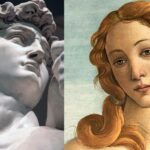
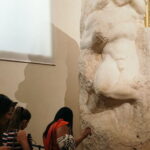
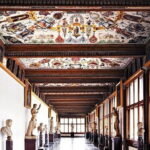
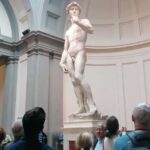
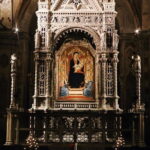
Your tour begins at the Galleria dell’Accademia, where the timing usually helps you get oriented before Florence’s street noise hits. The main moment is, of course, Michelangelo’s David. You’ll be guided through what makes this statue such a cultural magnet, and how Michelangelo’s 16th-century thinking shows up across what else is on view.
What I like about starting here is that David isn’t just a sculpture you recognize from postcards. Your guide ties it to the bigger artistic mindset of the period, so you understand why David became a symbol in the first place. And once you’ve seen that level of craft up close, everything else on the walking portion starts to click.
Also, keep your expectations realistic: museum crowds are real. Even with included entry, security checks and group pacing can still create waiting. The good news is that the tour structure helps you avoid the chaos of wandering alone with an overcrowded checklist.
Piazza del Duomo: the dome stays outside, but the stories start immediately
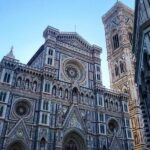
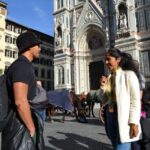
Next you move into Piazza del Duomo, the square that’s basically Florence’s stage set for religion, power, and art. You’ll spend a short but meaningful chunk of time oriented in the heart of it all, learning what you’re looking at and why it’s famous.
Then comes the moment for Brunelleschi’s dome. This tour doesn’t take you inside the cathedral or up into the dome. Instead, you get the history and significance while standing in the square and observing the architecture from the outside. If you want the interior experience too, you’ll likely need to add that on your own later in the trip.
Still, there’s a lot to enjoy from street level. This is the place where you can actually see how the buildings relate to one another, and how Florence grew its identity around monumental stone. It’s architecture you can understand faster when your guide points out the details and connections.
Battistero di San Giovanni and the bronze-door detail that makes the square click
From the cathedral area, you’ll see the Battistero di San Giovanni, one of the oldest religious buildings in Florence. It’s especially famous for its three sets of bronze doors—an important Renaissance art example you can’t fully appreciate from a distance alone.
Even though this stop is brief, it’s the kind of stop that changes how you read the rest of Florence. Once you notice how much meaning got built into metalwork and carving, you start looking at facades and civic monuments differently as you walk.
The square also contains other major landmarks nearby, including spaces tied to the cathedral’s original works. Even if you’re not touring every one of those museums today, having them in your view helps you understand how Florence organizes its art across institutions instead of crowding it all into one place.
Via dei Calzaiuoli: shop street energy, with a purpose
After the piazza, the tour moves you along Via dei Calzaiuoli, the long pedestrian corridor connecting the Duomo area toward Piazza della Signoria. It’s busy, yes, but it’s also one of the easiest ways to feel the texture of the city: elegant storefronts, restaurants, and that constant Florence shuffle.
This is a practical stop, not a museum stop. You’re learning where you are in the city and how to navigate from landmark to landmark. If you’re the type who likes to come back later and explore on your own, this route gives you the mental map you’ll use all trip.
You can also read our reviews of more city tours in Florence

Piazza della Repubblica and Piazza della Signoria: civic Florence and sculpture you can actually interpret
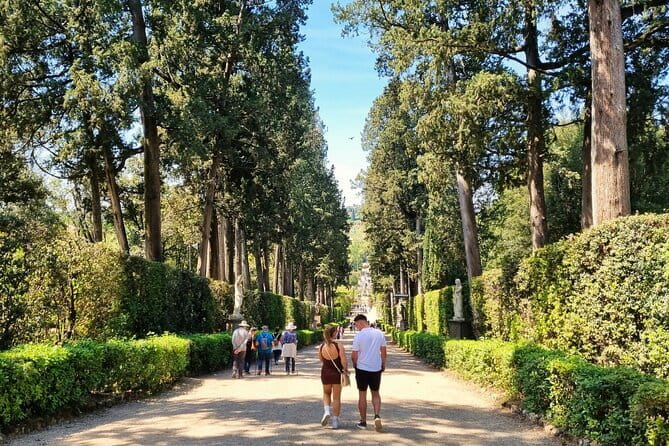
Next is Piazza della Repubblica, a public square that marks older Florence but was redesigned in the 19th century. That time jump matters because it helps you understand what you’re seeing: you’re not just looking at one era. You’re looking at layers, and Florence keeps updating its image.
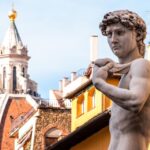
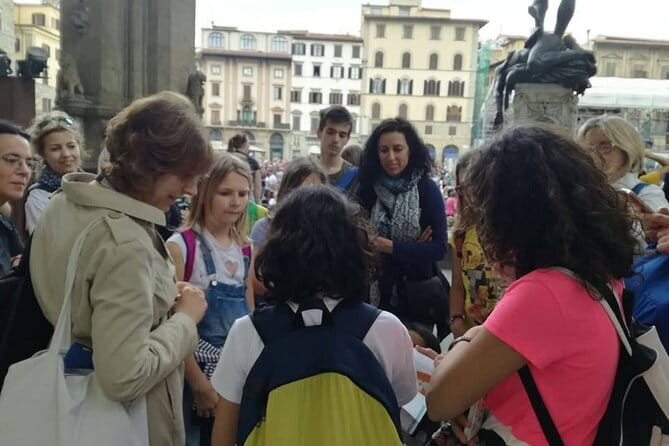
Then you arrive at Piazza della Signoria, the political heart of the city. This is where sculpture stops being background decoration and starts acting like a public story. You’ll be guided to original statues and major pieces, including the Neptune fountain by Ammannati and Perseus by Cellini from the 16th century. There’s also a replica of David, placed so people could remember where the original stood before it moved inside the Accademia.
That replica detail is useful. It bridges the museum world with what you see outside, letting you connect the famous statue you just saw indoors to the civic display tradition that shaped its meaning.
Palazzo Vecchio and Porcellino: civil power, then a quirky luck ritual
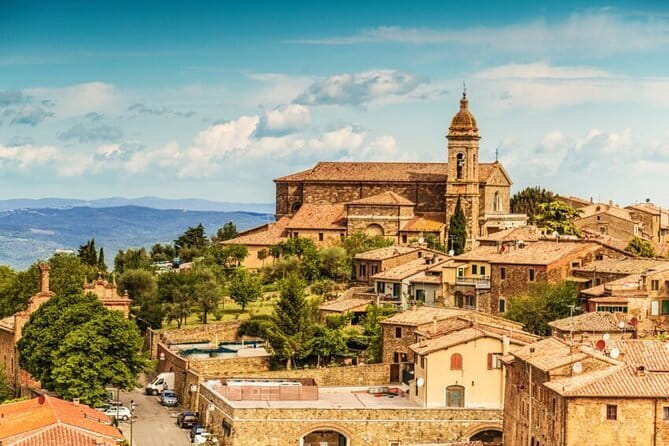
A big highlight in the walk is Palazzo Vecchio, Florence’s town hall and a symbol of civil power. Construction began in 1299, above ruins from the destroyed Uberti Ghibelline towers, and it’s attributed to Arnolfo di Cambio. Even with a short stop, this is one of those moments where the guide helps you realize you’re standing in a building that helped define who held authority in the city.
A few steps later, you’ll reach Fontana del Porcellino. Yes, you’ll touch the nose of the boar at the fountain, the classic good-luck move. It’s touristy in the best way: a simple ritual that turns a quick stop into a small memory you can laugh about later.
Ponte Vecchio and the Arno: where the day naturally slows down

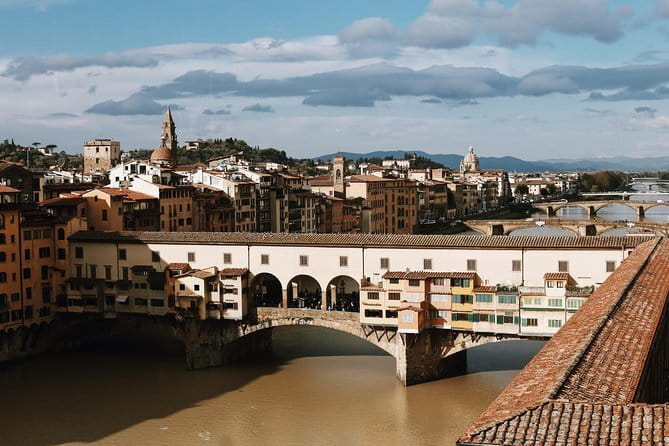
The walk ends at Ponte Vecchio, one of Florence’s signature bridges. This bridge is the only one that survived World War II, which is why it’s such a powerful symbol of continuity for the city.
After that, the day shifts from street landmarks to the quieter logic of museum rooms. You’re still in the Florence atmosphere, but now it’s about looking, comparing, and understanding. And because you end your walk near the water, you’re also set up for a nice visual reset before Uffizi time.
Lunch break: timing that helps your museum visit feel human
Your tour includes time for a lunch break, and that matters more than it sounds. Uffizi is intense if you go in under-fed or dehydrated, and the day includes walking, sun exposure, and security lines.
The pace is designed so you’re not just sprinting from one famous room to another. You get a break, then you come back ready to concentrate. If it’s hot (and Florence can be), this break is the difference between enjoying the art and feeling trapped inside it.
Inside the Uffizi: Medici collecting, major disasters, and the paintings you came for
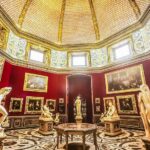
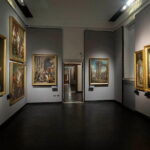
Now the tour moves into the Uffizi Gallery, Florence’s top-name museum. The building itself started as offices—the uffizi of Florentine magistrates—and over time it became the container for the Medici art collection. That background matters because it explains why the museum feels like it has both civic purpose and personal taste baked into it.
Your guide will also share the turbulent history behind the collection, including references to a mafia car bomb and serious flooding that threatened the artwork. Those are heavy details, but they’re part of the museum’s story: these masterpieces survived real-life damage, not just time.
The Uffizi has also been modernized through the early 21st century, so the experience feels like a world-class museum today, not just a preserved archive.
What you’ll focus on in the galleries
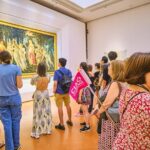
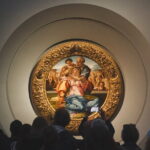
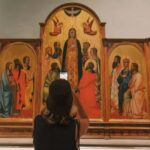
This guided segment runs long enough to cover the true “hits” without turning into a blur. You’ll see famous works and major Renaissance names, including Titian and Caravaggio, and you’ll get context for why certain artists mattered. You might even recognize Raphael’s Self Portrait as a key anchor for how the museum reads.
And then there are the crowd-famous paintings:
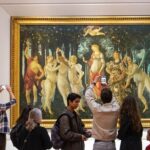
- Botticelli’s Primavera
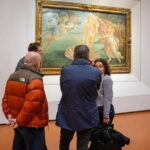
- The Birth of Venus
Even if you think you already know those images, a guide’s framing helps you see what’s going on beyond the recognizable subject. You stop treating the paintings as icons and start treating them as arguments—about religion, power, taste, and myth.
The guides: why this tour tends to work (even for picky art days)
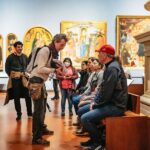
The tour lives and dies on the guide, and the pattern in the names is clear: guides like Giacomo Piccardi, Francesco, Annette, Eleonora, and Laura show up repeatedly in these kinds of bookings. What gets praised most is a mix of enthusiasm and the ability to explain art in a way that stays practical. Even people who aren’t natural museum fans tend to feel the day becomes easier: the art has a storyline now.
It also helps that the best guides know how to adjust. Some families mention kids enjoying the pacing and explanations, including teenagers who usually opt out of museum talk. That adaptability is a real value add when you’re traveling with mixed ages.
What to watch for: pacing, dress, and the unavoidable reality of museum security
This tour is built for people with moderate physical fitness. You’re walking through Florence’s center and moving between museums and piazzas. It’s not a marathon, but it’s also not a sit-down lecture the whole time.
A few practical notes that help:
- Dress rules can apply at some sites. Plan clothing that covers appropriately.
- No large bags or suitcases inside museums. You’ll be limited to handbags or small thin bag packs for security.
- Even with included access, lines can still form, since security and crowd control happen at major attractions.
Also, the tour is designed to run rain or shine, which is great because Florence weather loves plot twists. Still, good weather is important for the walking portion—if conditions are rough, the day might get adjusted.
Who this tour is best for (and who may want a different plan)
This works especially well if you:
- Want two flagship museums without spending your whole day buying tickets and figuring out timing.
- Prefer a route that connects art to the streets instead of bouncing around by yourself.
- Like structure. If you love having a plan, this gives you one.
- Travel with teens or mixed interests. The walking + art combo can keep more people engaged.
It may not be ideal if you:
- Want to climb into the Duomo dome or cathedral interior as part of this day. You only view it from outside here.
- Want a slow museum-only day. This is a walking-and-museum blend, and it moves.
Should you book this Florence David and Uffizi tour?
Yes, if you’re aiming for the best use of a limited schedule. The package is strong because it bundles guided museum time with included admission and wraps it in a guided walk that makes Florence’s landmarks feel connected.
My rule of thumb: book it if you want to leave Florence thinking I understood what I saw, not just I survived a museum checklist. If Duomo interior access is your top priority, consider adding that separately and treat this tour as your art-and-orientation backbone.
FAQ
Does the tour include tickets to the Accademia and Uffizi?
Yes. The tour includes admission fees for both the Galleria dell’Accademia and the Uffizi Gallery, so you do not need to purchase those entries separately.
Is this a private tour?
It’s offered as a private tour/activity. There’s also an option for a small group limited to 8 people.
How long is the tour and when does it start?
The duration is about 5 hours 30 minutes, and it starts at 9:00 am. The tour ends at Ponte Vecchio.
Do you go inside the Duomo dome during this tour?
No. During the Duomo segment, you learn about the cathedral and Brunelleschi’s dome but you observe it from the outside only.
Is there a lunch break?
Yes. The schedule includes a lunch break, and the total tour time is listed as including that break.
Are there bag or dress requirements?
Yes. Some sites have dress requirements, and inside the museums you cannot bring large bags or suitcases. Only handbags or small thin bag packs are allowed through security.
What happens if the Accademia or Uffizi closes?
Accademia or Uffizi may have occasional closures without warning. If a closure delays the start by more than 1 hour, the operator says they’ll provide an appropriate alternative, but refunds or discounts are not provided in those cases.
Can I get a full refund if I cancel?
Yes, if you cancel at least 24 hours before the experience start time. If you cancel less than 24 hours before, the amount you paid is not refunded.