REVIEW · FLORENCE
Private Golf Cart Tour of Florence
Book on Viator →Operated by ITERITALY Golf Cart Tours, Shore Excursions, Private Transfers · Bookable on Viator
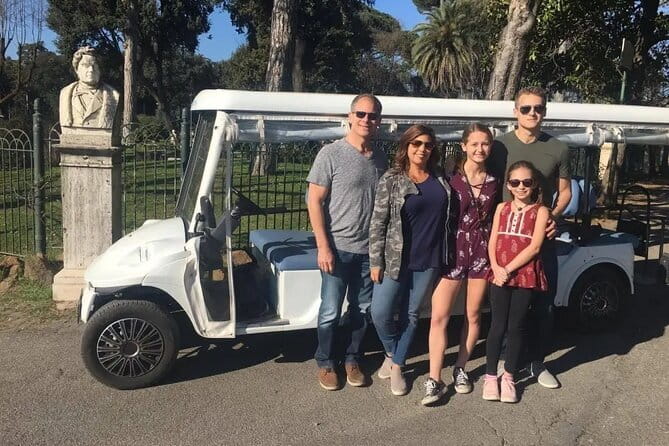
Florence can be a marathon on foot. This private golf cart tour makes the center of town feel manageable, with short stops and lots of viewpoints. You’ll glide past major landmarks, then get small bursts of time to look up close and take photos.
What I like most is the pickup-style convenience and the fact that you’re not stuck searching for bus lanes or fighting crowds on narrow streets. The second big win is the time-saver pace: about 2 hours and 15 minutes to cover an impressive circuit, with the best-photo spots timed right for photos and quick walks.
The one thing to keep in mind is that golf cart tours depend on operations working smoothly. A few past experiences flagged issues like late arrival, smaller carts than expected, and guides who were less engaged than they should be, so pick a time when you can stay flexible.
In This Review
- Key takeaways
- Why Florence from a golf cart feels like a win
- Price and what you’re really paying for
- Meeting point at Piazza di San Firenze, plus pickup from your hotel
- The opening stretch: Chiesa di San Filippo Neri to Piazza della Signoria
- Mercato Nuovo: Il Porcellino and a quick taste of local tradition
- Palaces without the pressure: Palazzo Davanzati and Palazzo Strozzi
- Piazza del Duomo and Santa Maria Novella: looking up, not down
- Churches and the city’s religious architecture, from Porta to Ognissanti
- Arno River views: Ponte Santa Trinità to Ponte Vecchio
- Piazzale Michelangelo and San Miniato al Monte: the skyline payoff
- The south-to-west loop: Palazzo Pitti and the Medici power line
- Santa Croce, Piazza della Repubblica, Orsanmichele, and Dante’s doorstep
- Pacing, photos, and how long you’ll be on the cart
- When this tour fits best (and when it might not)
- Should you book the Florence private golf cart tour?
- FAQ
- How long is the Florence private golf cart tour?
- Is pickup offered from hotels in Florence?
- Where does the tour start and where does it end?
- What language is the tour offered in?
- Is this a private tour?
- Can I get a refund if plans change?
Key takeaways
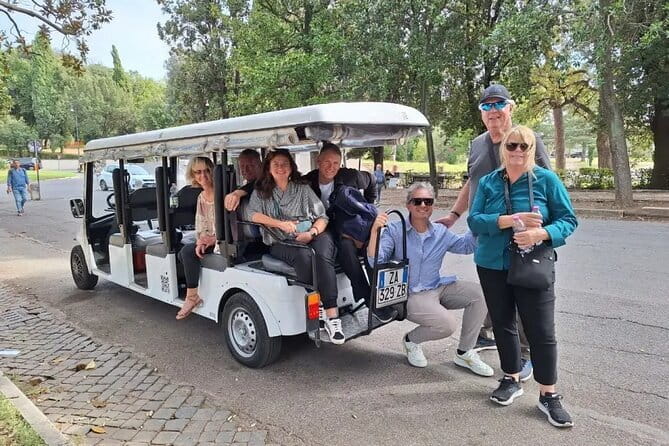
- Hotel pickup when you’re in the central area: the driver meets you at your hotel entrance, otherwise you’ll meet at a central point.
- Short, high-impact photo stops: many sights get 5–15 minutes, so you see a lot without turning it into a whole-day plan.
- Open-air ride with classic Florentine angles: you get better sightlines than walking when streets turn tight.
- Hill viewpoint time: Piazzale Michelangelo and San Miniato al Monte are built in for the skyline payoff.
- Exterior viewing is the core: much of the circuit focuses on seeing façades, squares, and bridges from the move and from quick get-out stops.
Why Florence from a golf cart feels like a win
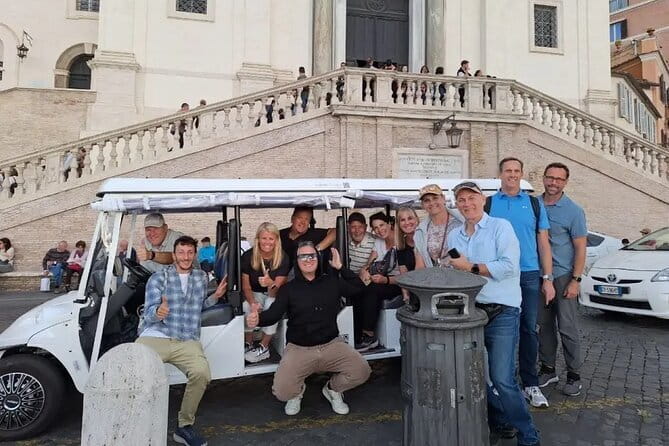
Florence is gorgeous, and also intense. The streets are old, the sidewalks can be crowded, and the best sights are scattered across neighborhoods that are easier to connect by car than on foot. A private golf cart changes the math. You still get real Florence street-level views, but you’re not constantly stopping, starting, and dodging slow-moving crowds.
This tour is designed for “see the big stuff” in a compact time window. You’ll spend a good portion of the experience traveling between highlights, and then you’ll get timed moments to step out, regroup, and take photos. That mix matters. On a walking day, the effort stacks up fast. Here, your legs stay fresher, which is huge if this is your first day or you’re coming off travel.
It’s also private, so you don’t have to wait for a larger group to shuffle along. One of the best parts of these formats is control: you can usually match the pace to your group’s needs rather than forcing everyone into a strict rhythm.
You can also read our reviews of more private tours in Florence
Price and what you’re really paying for
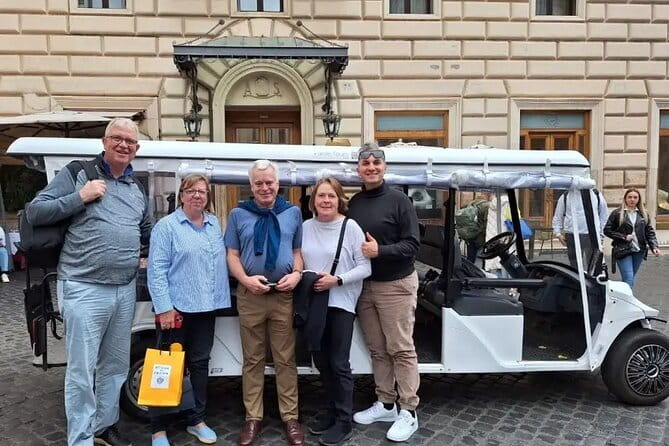
At $228.05 per person for about 2 hours 15 minutes, you’re paying for three things at once: a private guide, an open-air ride through the historic core, and the “logistics wrapper” that gets you from stop to stop without having to figure out routes, parking, or meet-up points with a crowd.
Is it cheap? No. But value in Florence often comes down to the cost of time and energy. If you’ve got limited mobility, you’re traveling with kids, you’re jet-lagged, or you simply want to build a first-day map of the city, this format can actually feel like a bargain compared with a full day of walking and re-walking the same areas later.
You also get real flexibility in the way guides can pace the stops. Multiple guides were praised for adjusting on the fly, including time for photos and small add-ons when possible (one guide was described as working in a quick wine-window stop). That kind of flexibility is part of what you’re paying for.
Meeting point at Piazza di San Firenze, plus pickup from your hotel
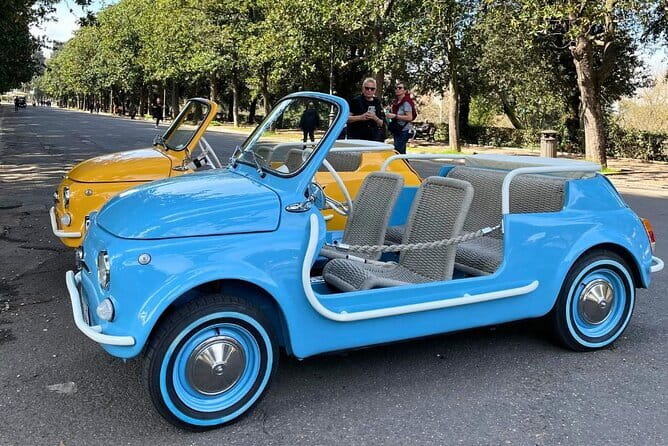
The tour starts at Piazza di San Firenze (Piazza di S. Firenze). That matters because it’s central, walkable, and easy to orient yourself around. Your guide driver will meet you at the main entrance of your central hotel in Florence.
If your hotel is outside the central area, you’ll need to meet at the designated meeting point or another central location in Florence. This is worth planning for. If you’re late to the meeting spot, you’re late to a tightly timed circuit. For peace of mind, aim to arrive early enough that your group isn’t stressed right when the tour begins.
The opening stretch: Chiesa di San Filippo Neri to Piazza della Signoria
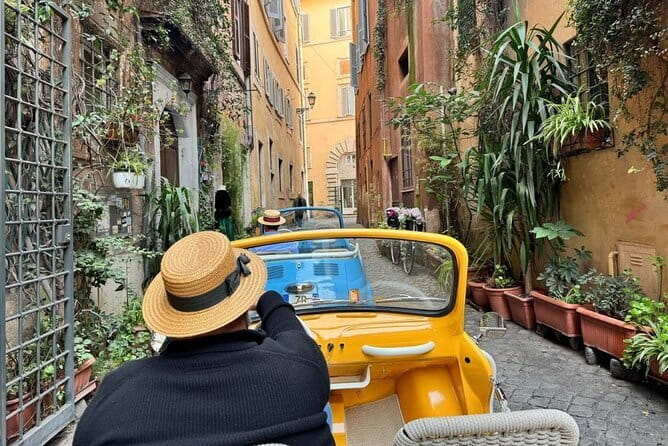
You start at Chiesa di San Filippo Neri, a striking 17th-century church with Baroque architecture that gives you a dramatic Florence “welcome” before you even hit the busiest streets. It’s a short stop, but that’s the point: you’re getting your bearings fast.
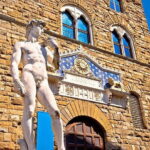
Next comes Piazza della Signoria, one of Florence’s most iconic squares. This is where you feel the Renaissance weight—major sculptures around you, and the Palazzo Vecchio nearby. Your time here is short, about 15 minutes, but it’s enough to absorb the scale and grab photos from angles that are hard to nail while walking through the press of people.
The practical advantage of this early sequence is orientation. After you’ve seen Signoria, a lot of the city starts to make sense: where power sat, why the squares mattered, and how the streets radiate outward.
Mercato Nuovo: Il Porcellino and a quick taste of local tradition
Your next stop is Mercato Nuovo, specifically the Loggia del Mercato Nuovo area. The star attraction is the bronze boar statue, Il Porcellino, tied to a local good-luck tradition. You’ll have a short window—around 10 minutes—which is ideal for doing two things: take in the folklore moment, and then browse stalls without turning it into a shopping marathon.
This is also a helpful reset point in the day’s flow. After church and square, you move into something more everyday: the market arcade feel, the noise level, and the sense that Florence isn’t just monuments—it’s people living around them.
Palaces without the pressure: Palazzo Davanzati and Palazzo Strozzi
The circuit includes exterior passes by Palazzo Davanzati and Palazzo Strozzi. These stops are brief, built for viewing rather than lengthy touring. That works well because palaces in Florence often require a separate time commitment if you want to go inside. From the golf cart, you still get the key payoff: the architecture, the façade rhythm, and the “how wealthy people built their world” lesson.
If you’re the type who likes to notice details, don’t rush. Even 5 minutes can help you connect shapes and styles you’ll see again later across the city. The tour timing is set so you don’t lose the thread by waiting too long to move on.
Piazza del Duomo and Santa Maria Novella: looking up, not down
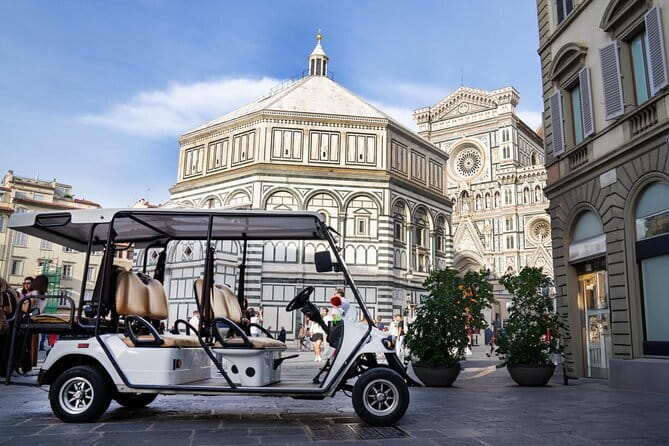
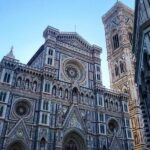
Then you hit Piazza del Duomo. You’ll see the cathedral complex from the outside: the Duomo, Giotto’s Bell Tower, and the Baptistery. This is a must-stop visual moment, and the tour gives you about 15 minutes here. You won’t be inside the monuments on this format, but that’s not a weakness. Exterior viewing is often the best way to keep the tour moving and avoid turning it into a ticket-planning puzzle.
After that, you’ll pass through Piazza Santa Maria Novella, with the Santa Maria Novella Basilica façade visible from the square area. You get another 15-minute look-and-photo stretch. Again, the value is time management. You’ll walk away with the building-line picture you need, and then you can decide later if you want to schedule an interior visit on a separate day.
Churches and the city’s religious architecture, from Porta to Ognissanti
You also get exterior glimpses of Chiesa di San Salvatore in Ognissanti and later Basilica di Santo Spirito. These are shorter passes, around 5–10 minutes, and they’re best treated as “spot the style” moments. Florence’s church façades can look similar at first glance, but step back and you’ll start seeing patterns: materials, proportions, sculpture placement, and how different eras speak to each other.
Along the way, you also pass Porta San Niccolò, a gateway in the older walls. This adds a nice layer to the tour. You’re not only seeing the polished center. You’re also getting a hint of the city’s defensive past and how the urban map expanded over time.
Arno River views: Ponte Santa Trinità to Ponte Vecchio
One of the best parts of this tour is the Arno sequence. You pass by Ponte Santa Trinità, then later come to Ponte Vecchio.
On Ponte Vecchio, you’ll get about 10 minutes. The value here is timing plus sightlines. Walking to this bridge can be slow and crowded; from the cart you get a smoother approach and a clearer idea of how the bridge sits over the river. You’ll also notice the shops along the bridge, which are a big part of why Ponte Vecchio is so visually recognizable.
If you care about photos, this is one of your priorities. Plan to move your camera around quickly: wide shots from farther back, then close-ups through the rail lines or angles that show the river and buildings at the same time.
Piazzale Michelangelo and San Miniato al Monte: the skyline payoff
Florence has plenty of viewpoints, but the tour builds in two heavyweight hitters.
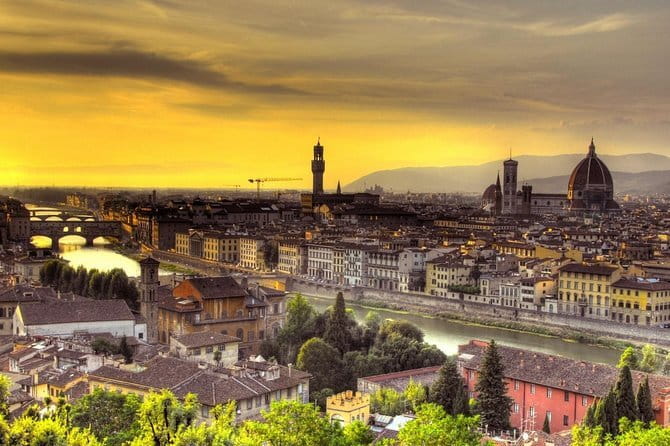
First, you’ll reach Piazzale Michelangelo for a panoramic view of the cityscape, including the Duomo and Ponte Vecchio. Then you’ll continue to Basilica San Miniato al Monte for an exterior view on the hill, with a Romanesque façade and commanding overlook.
This is where the tour often becomes the emotional highlight. One of the strongest praises from past guests was that this stop produced some of their best photos of the whole trip, especially because you’re getting distance and height at the same time. Plus, if your legs need a break after the denser downtown sections, this hill stop still gives you movement and views without exhausting walking.
The south-to-west loop: Palazzo Pitti and the Medici power line
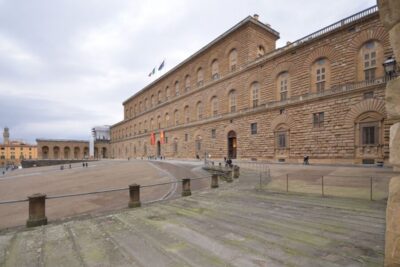
You also pass Palazzo Pitti, another Medici-era marker. Even without going inside, the exterior presence helps connect dots across Florence’s story: where power moved, how it expressed itself through architecture, and why certain neighborhoods feel more monumental than others.
Then you glide toward the final cluster of cultural sites: Santo Spirito, Santa Croce, and central squares near the end of the circuit. This flow makes sense. It starts with orientation, then hits major monuments, then lands you on the cultural anchor points.
Santa Croce, Piazza della Repubblica, Orsanmichele, and Dante’s doorstep
The final stretch includes Basilica of Santa Croce (exterior viewing), where you’ll see the façade and connect it with the idea of Florence as a city of art and thinkers. Your time is short, about 10 minutes, so you’ll want to focus on photos and a quick read of the façade details rather than trying to absorb everything at street speed.
After that, you pass Piazza della Repubblica, known historically as an area connected to an ancient Roman forum site. You’ll also see Chiesa Orsanmichele, an especially interesting building because it combines architectural styles and reflects the city’s habit of reusing spaces—originally a granary, later a church.
You’ll also pass by the Museo Casa di Dante, the museum dedicated to Dante Alighieri, then finish with a pass by the Museo Bargello, a former fortress and later a prison, now known for Renaissance sculptures.
Even though these are mostly exterior view passes, the final goal is good: you leave with a mental map of where Florence’s literary and artistic identity lives.
Pacing, photos, and how long you’ll be on the cart
The biggest practical point is how this tour divides time. Stops are typically 5–15 minutes, and the rest of the time is transportation within the historic core. That tradeoff is intentional. You’re not getting a slow museum day. You’re getting a fast, guided walk-through from the street level—without the physical strain.
If your group wants photos, the key is to treat each stop like a mini-session. Don’t try to do everything at one spot. At Piazza del Duomo and Ponte Vecchio especially, take one or two wide shots first, then zoom into details.
If you want extra help with picture spots and angles, guide quality matters. Several guides were praised for suggesting where to take photos and for adjusting to the group’s needs, which can make your shots look less like tourist snaps and more like actual Florence keepsakes.
When this tour fits best (and when it might not)
This is a great choice if you:
- Want a first-day overview that helps you plan the rest of your trip.
- Have mobility limits or simply want to reduce walking stress.
- Travel with kids or anyone who gets tired quickly.
- Prefer seeing a lot of façades, squares, and bridges without separate ticket planning for every stop.
It may be less ideal if you:
- Want a deep, time-consuming visit inside museums and churches during this single day.
- Have a strict schedule where a late start would ruin the day.
- Need an extremely detailed, stop-by-stop narration at all points, because the tour’s structure is short-stop by design.
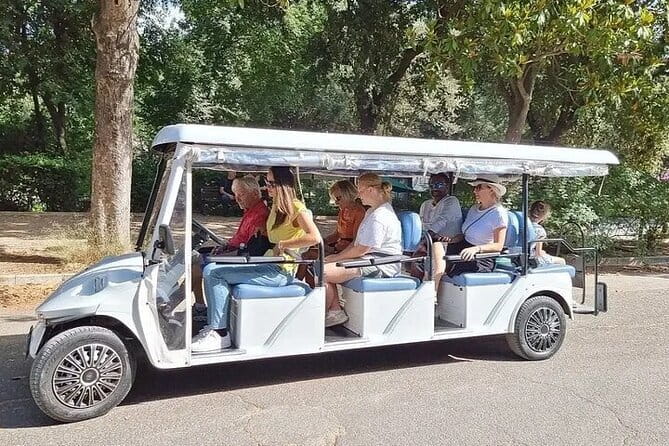
The clearest caution from past experiences is simple: check that the day’s timing starts cleanly. One negative experience described a late and inattentive start plus less engagement than expected. Another mentioned the cart size being smaller than pictured and the tour running nearly 2 hours late. Those are the outliers, but they’re also the things you should mentally prepare for if your day is tight.
Should you book the Florence private golf cart tour?
I’d book this tour if you want a smart, energy-saving way to connect the dots across Florence in one go. It’s built for orientation: Duomo area, market arcade folklore at Mercato Nuovo, Renaissance squares like Signoria, river landmarks like Ponte Vecchio, and the big skyline moment at Piazzale Michelangelo and San Miniato al Monte.
If you’re flexible with timing and you’re okay with mostly exterior viewing, it’s a strong value for the time it saves. If you expect museum-level depth at every stop, look for another plan that includes more interior time.
FAQ
How long is the Florence private golf cart tour?
It runs for about 2 hours 15 minutes.
Is pickup offered from hotels in Florence?
Yes. The driver guide waits for you at the main entrance of your central hotel in Florence. If your hotel is outside the central area, you’ll meet at a designated meeting point or another central location.
Where does the tour start and where does it end?
It starts at Piazza di San Firenze (Piazza di S. Firenze, 50122 Firenze FI, Italy). The activity ends back at the meeting point.
What language is the tour offered in?
The tour is offered in English.
Is this a private tour?
Yes. Only your group participates.
Can I get a refund if plans change?
You can cancel for a full refund if you cancel up to 24 hours in advance of the experience’s start time.