REVIEW · PARIS
From Louvre to Street Art – original museum guided tour (skip the line!)
Book on Viator →Operated by Street Art Tour Paris · Bookable on Viator
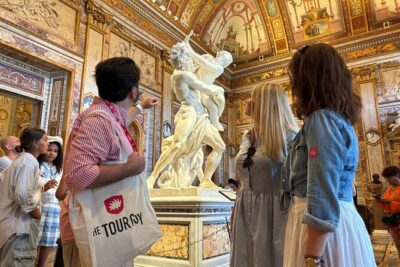
Street art meets the Louvre. This private, skip-the-line guided visit uses the museum’s biggest names and reads them through a modern street-art lens.
I like that it saves real time with the skip-the-line ticket, so you spend less of your day stuck in crowds and more of it looking closely. I also like that the guide connects classic painting to today’s culture in a way that feels accessible, not academic for academic’s sake.
My favorite part is the way the guide, Kasia, blends art history with street-art storytelling so it makes sense to people who don’t usually care about museums. You get to see how the famous works still “talk” across time, and she keeps the mood upbeat for mixed groups, including teenagers.
One consideration: if your group wants a traditional, strictly art-historical tour with zero modern references, this may feel like a detour from your ideal Louvre day. The whole point here is the street-art connection, so go in expecting that.
In This Review
- Quick Take: What Makes This Louvre-From-Street-Art Tour Work
- Street Art Lens on Louvre Classics
- Where You Meet: Cour Napoléon at the Louis XIV Replica
- Skip-the-Line Admission: Saving Time You Can Actually Use
- Kasia’s Tour Style: History Meets What You See Today
- Louvre Highlights You’ll See (and Why They’re Chosen)
- How Street-Art Interpretations Change What You Notice
- Timing Inside: A 2.5-Hour Louvre Day That Doesn’t Drag
- Who This Tour Suits Best (and Who Might Skip It)
- Price and Value: Is $297.03 per Person Worth It?
- Practical Tips for Getting the Most Out of It
- Should You Book This Louvre + Street Art Tour?
- FAQ
- What’s included in the tour ticket?
- How long is the tour?
- Is this a private tour?
- Where do we meet for the tour?
- Do I get a mobile ticket?
- When will I receive confirmation after booking?
- Can I change or get a refund if my plans change?
Quick Take: What Makes This Louvre-From-Street-Art Tour Work
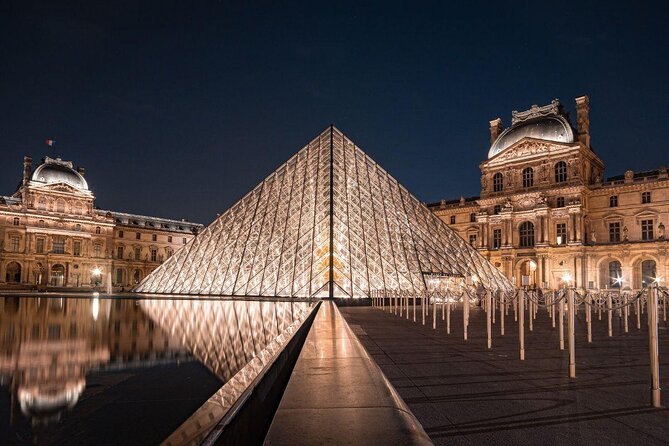
- Skip-the-line admission is included, so you gain time for the galleries instead of waiting outside.
- Kasia’s modern storytelling helps the Louvre feel current, not locked in a past museum mood.
- Big-name highlights like the Mona Lisa and La Grande Odalisque are part of the route, with other iconic paintings woven in.
- Private group only means the pace and focus can match your crew, whether it’s family or friends.
- Street-art interpretations from around the world give you a fresh way to look at familiar masterpieces.
- Mobile ticket makes entry simpler once you’re in Paris.
Street Art Lens on Louvre Classics
The Louvre can feel like two different museums at once. There’s the iconic “everybody’s been here” experience, and then there’s the real, physical experience of looking at brushwork, scale, and composition up close. This tour helps you do both.
What makes it different is the angle: instead of only treating the masterpieces as untouchable history, the tour frames them as inspiration—something street artists respond to, remix, and reinterpret. You’re still walking through the Louvre’s most famous scenes, but the guide gives you a modern cultural thread to follow. That thread makes the artworks easier to talk about in real time with your group, especially if you’ve got different tastes at the same table—classic art fans, skeptics, teens, and everyone in between.
And because the tour is private, you’re not forced into a one-size-fits-all routine. You can actually react—ask what something means, compare your gut reaction to what the guide points out, and then see how that same idea shows up again in street art.
You can also read our reviews of more guided tours in Paris



Where You Meet: Cour Napoléon at the Louis XIV Replica
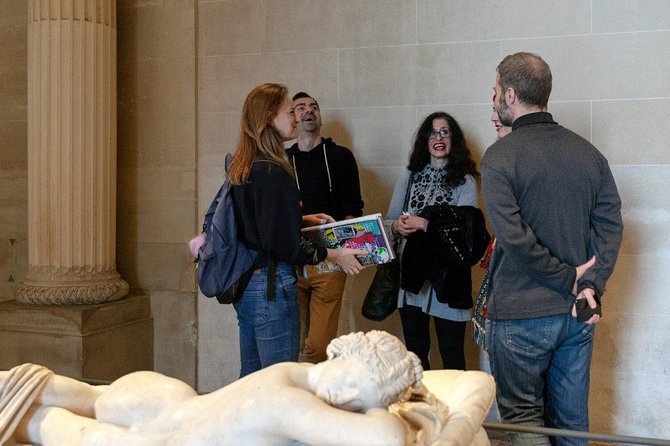
Getting started smoothly matters at the Louvre. The meeting point is specific: Louis XIV sous les traits de Marcus Curtius (copie) in Cour Napoléon and the Louvre Pyramid area, 75001 Paris. That’s useful because it narrows down the “where exactly do we stand?” problem right away.
You also get a couple of practical advantages from the setup:
- It’s near public transportation, so reaching the Louvre isn’t a logistical headache.
- The tour starts at a time that fits your day (so you can plan around your other Paris stops).
- It ends back at the meeting point, which makes it easier to transition to lunch or the next attraction without losing time.
When I’m planning a museum day, I’m always thinking about flow. This kind of meeting point and return-to-start format helps you keep your schedule sane.
Skip-the-Line Admission: Saving Time You Can Actually Use
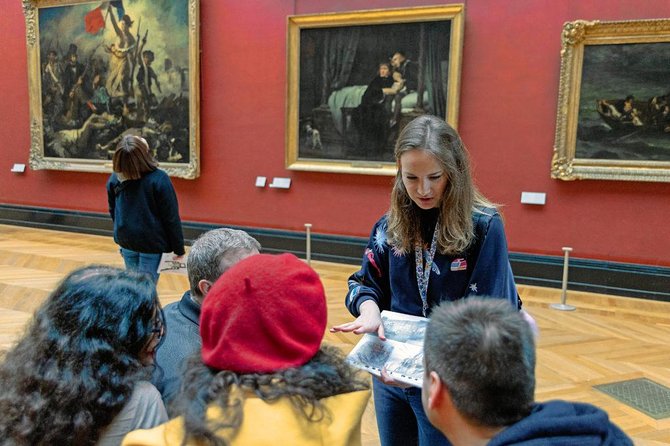
Time at the Louvre can evaporate fast. Even when you’re excited, long entry lines can drain energy before you’ve seen a single masterpiece.
Here’s the key practical win: skip-the-line ticket admission is included. That means the tour is designed around getting you inside efficiently, not turning your first hour into a patience test. For families and friend groups, this matters even more. Everyone’s tolerance is higher when you get moving.
It also changes how you experience the museum. If you walk in already frustrated, it’s harder to focus on details. When you arrive with momentum, you’re more likely to notice the things that actually make the Louvre feel worth it—composition, emotion, scale, and the little visual cues the guide helps you pick out.
Kasia’s Tour Style: History Meets What You See Today
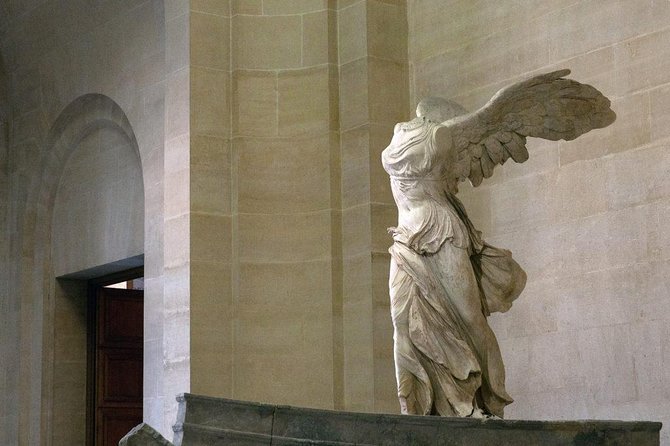
The success of this tour largely comes down to Kasia’s method. She doesn’t treat street art as a gimmick or a joke. She treats it as another language—one that modern artists use to reference older works, challenge them, or turn them into something new.
In other words, she gives you two things at once:
- A clear connection to the original masterpiece—what it is, why it’s famous, and what to look for.
- A modern interpretation—how street artists translate ideas from the painting into contemporary visual culture.
That “two-track” approach is why the tour plays so well with mixed groups. People who think museums are boring usually get pulled in because the guide makes the artworks relevant to current conversations about art, identity, and style. People who already love classic art get pulled in because the modern lens often highlights details you might otherwise overlook.
If your group has teenagers, this style is especially practical. Teen attention doesn’t need to be begged for—it needs to be guided. Kasia’s linking of historic art and today’s artists is built to keep that attention from wandering.
Louvre Highlights You’ll See (and Why They’re Chosen)
The route is built around the works people recognize—and then uses those works as anchors for the street-art conversation.
A few big-name stops are part of the experience:
- The Mona Lisa: You see it not just as an iconic photo-op, but as a painting with real visual choices that modern creators keep borrowing from and reacting to.
- La Grande Odalisque: This is a strong example for the tour’s theme, because it shows how older visual traditions get re-read through later cultural perspectives.
- Other iconic paintings: The tour is designed to keep you moving through major pieces while maintaining the “modern interpretation” thread, so the Louvre doesn’t become one long stop-and-start list.
Why these highlights matter: familiar works create a shared starting point. Even if someone has only seen a tiny image in a book or on their phone, the guide helps them translate that familiarity into direct looking. Once that happens, the street-art interpretation makes more sense. You’re not just hearing about art—you’re comparing art.
You can also read our reviews of more museum experiences in Paris


How Street-Art Interpretations Change What You Notice
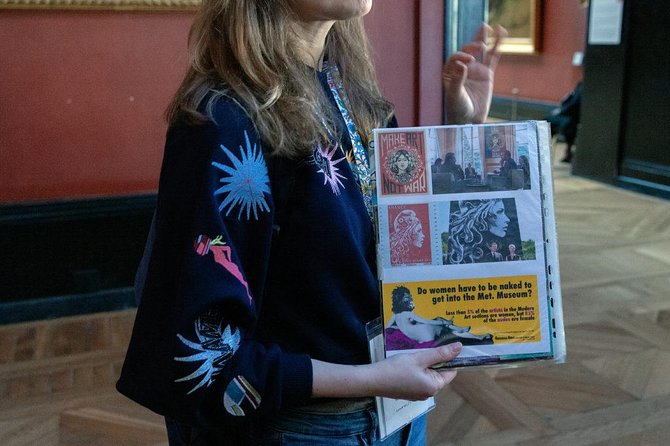
I like to think of this tour as a “brake and accelerator” combination. The Louvre is slow and detailed, but street art tends to be bold and immediate. When you bring both into the same visit, it changes your viewing rhythm.
You might start noticing things like:
- How symbols and faces get reworked to fit modern messages
- How composition and expression can be reused across time
- How an artist’s style can carry meaning even when the subject changes
The tour doesn’t ask you to choose sides—classic vs modern. It encourages you to see them as conversation partners. That’s a big deal because the Louvre can sometimes feel like a final answer: this is important, period. Here, it feels like a starting point.
And because you’re in a private group, you can actually talk about these comparisons. You can ask, disagree, and compare reactions without worrying about slowing down strangers behind you.
Timing Inside: A 2.5-Hour Louvre Day That Doesn’t Drag

The tour runs about 2 hours 30 minutes. That’s a solid window for the Louvre, but it also means the pacing has to be purposeful.
In practice, this length is a good compromise:
- Long enough to cover major masterpieces and still connect the modern street-art angle.
- Short enough that you’re not cooked by museum fatigue before you hit the big moments.
Since the tour includes entry time and guided navigation, the “duration” should feel more like an efficient visit than a rushed sprint. You get to see key works and get context without needing to spend the entire day in planning-mode.
Also, the tour begins when it fits your schedule, which lets you build the rest of your day around it. If you’re doing other Paris priorities—food, a neighborhood walk, a nighttime view—this tour won’t trap you all day.
Who This Tour Suits Best (and Who Might Skip It)
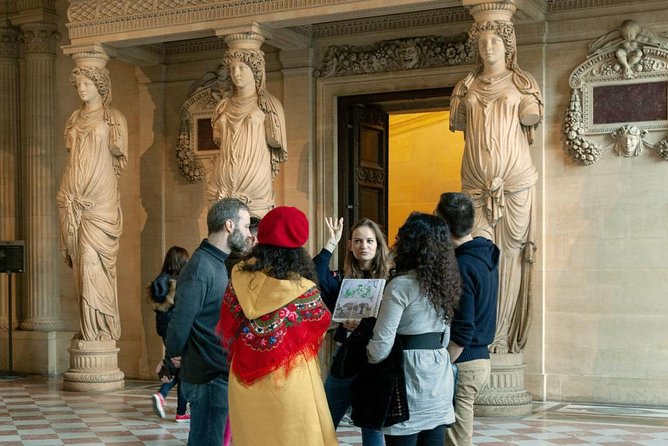
This is a smart fit for:
- Families with kids who need a story that connects to things they already see in the world.
- Friend groups where everyone’s taste isn’t the same—classic art lovers and street-art fans can both find something to chew on.
- Teenagers, especially if your group thinks museums are mostly rules and silence.
It’s less ideal if:
- You want a purely traditional Louvre experience with no modern art interpretation.
- You prefer a “chronology only” approach where every stop stays strictly in the historical lane.
That said, even if you’re unsure, the private format makes it easier for the guide to read your group’s energy and adjust focus.
Price and Value: Is $297.03 per Person Worth It?
At $297.03 per person, this isn’t a budget museum outing. But it also isn’t aiming to be. The value comes from three things you’d otherwise have to piece together yourself:
- Private tour format: You’re not sharing your guide with strangers in a large group, and your experience can feel more tailored.
- Skip-the-line ticket included: This is time savings you can feel immediately at the start.
- A specific concept: The street-art interpretation approach isn’t a standard add-on. It’s the entire point of the tour, and it changes how you understand the famous paintings.
So the “worth it” question isn’t only about cost. It’s about what you want your Louvre day to do. If you want a meaningful, not just scenic, museum visit—where the guide helps you connect the masterpieces to modern culture—this price can make sense fast.
For couples or families, it can also be easier to justify because you’re buying a smoother experience for multiple people at once.
Practical Tips for Getting the Most Out of It
Here’s how to set yourself up for a great experience with this tour style:
- Wear shoes that handle lots of walking. The Louvre is huge, and you’ll likely cover more ground than you expect.
- If your group is split on art taste, tell the guide early what people care about. Since it’s private, you can steer the conversation.
- Bring a phone or camera if you like—but don’t let it replace looking. The tour’s comparisons work best when you pause and actually see what the painting is doing.
- If you’re traveling with teenagers, treat this as a shared “art talk” session. It’s built to keep attention from slipping.
Should You Book This Louvre + Street Art Tour?
If you’re on the fence, here’s my decision checklist.
Book it if:
- You want skip-the-line value and less waiting.
- You have kids or teens, or a group that doesn’t all agree on art.
- You like the idea of seeing Mona Lisa–level masterpieces through a modern street-art conversation.
- You want a private experience with a guide who can translate art into something you can actually discuss.
Consider a different type of Louvre tour if:
- Your group only wants classical-only commentary.
- You’re expecting a strictly chronological museum lecture and would feel annoyed by the contemporary angle.
Bottom line: this is a Louvre tour designed to make the museum feel alive in 2026 terms, not trapped in a museum textbook. If that sounds like your kind of day, it’s a strong choice.
FAQ
What’s included in the tour ticket?
The tour includes a skip-the-line admission ticket to the Louvre Museum.
How long is the tour?
The duration is about 2 hours 30 minutes (approx.).
Is this a private tour?
Yes. It’s a private tour/activity, and only your group participates.
Where do we meet for the tour?
You meet at Louis XIV sous les traits de Marcus Curtius (copie), Cour Napoléon et Pyramide du Louvre, 75001 Paris, France.
Do I get a mobile ticket?
Yes, the experience uses a mobile ticket.
When will I receive confirmation after booking?
You should receive confirmation within 48 hours of booking, subject to availability.
Can I change or get a refund if my plans change?
No. The experience is non-refundable and cannot be changed for any reason.