REVIEW · PARIS
Paris: Street Art Walking Tour with a Street Artist Guide
Book on GetYourGuide →Operated by Memories France · Bookable on GetYourGuide
Street art in Paris has a secret second life. This 90-minute walk gives you the story behind the walls, while you hunt down specific pieces you’d miss on your own, including Twotma’s glued paper work. I also like how the guide connects classic Paris art names to today’s street artists, so the neighborhood feels like one continuous creative thread rather than random spray-paint.
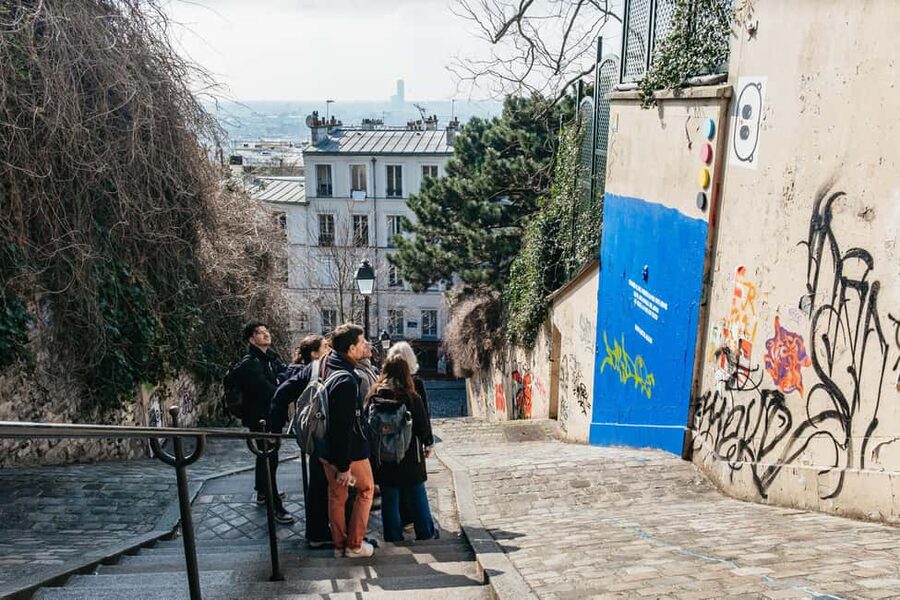
One thing to think about: if you choose Montmartre, you’ll be climbing hills on cobblestones for much of the tour. Wear shoes that can take a beating, because the route involves significant walking and real uphill/downhill sections.
You can also swap to La Butte aux Cailles, a smaller, quieter-feeling area with tiny houses and gardens, where wheat-pasted papers and stencil graffiti often steal the show. Either way, an English live guide (and a former street artist at that) keeps the tour focused on what matters: what you’re seeing and how it got there.
In This Review
- Key things you’ll notice fast
- Why this street art walk works: a former artist actually guides you
- Choosing Montmartre: Picasso, Van Gogh, Renoir, and the streets that shaped art
- The “spot this specific art” part: Twotma, Gregos, Swed Oner, and more
- La Butte aux Cailles: tiny houses, gardens, and the paper-and-stencil rhythm
- The French Touch: le pochoir, and why technique matters on the street
- A walk that covers street art history without turning it into a lecture
- What the 90 minutes feel like on the ground (and how to be comfortable)
- Price and value: is $47 for 90 minutes fair?
- Should you book this Paris street art walking tour?
- FAQ
- How long is the street art walking tour?
- Are there different tour options in Paris?
- What language is the tour guide?
- What should I bring?
- Is hotel pickup included?
- Can I get a refund if plans change?
Key things you’ll notice fast
- A former street artist guide who can explain the work from the inside, not just from pictures
- Two neighborhood options: Montmartre’s classic-art addresses or La Butte aux Cailles’ paper-and-stencil scene
- Concrete “spot-the-art” targets like Twotma, Gregos, Swed Oner, The End, and Space Invader
- Street art history in motion, from artists of the 1980s through today’s emerging names
- Technique-led viewing, including le pochoir (stencil work) and other wall-application styles
- 90 minutes on foot, so you’ll want comfortable shoes and a steady pace
Why this street art walk works: a former artist actually guides you
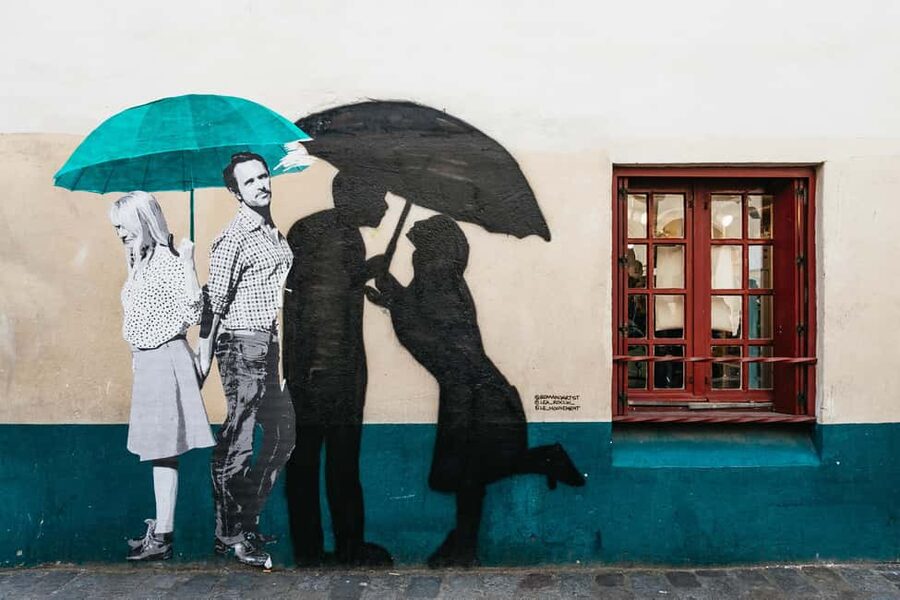
Most art tours tell you what to look at. This one also teaches you how to look. When your guide is a former street artist, the explanations tend to land differently: you get practical context about materials and methods, plus why certain styles took hold in Paris.
The tour is live in English and runs about 90 minutes, which is a sweet spot for street art. Long enough to feel like you’re building a mini-map of the scene, short enough that you won’t hate every minute of your feet (though you still need good shoes). There’s no hotel pickup, so you’ll meet the guide at the starting point for your chosen route and walk from there.
Based on the overall rating (4.5 across 39 reviews), one theme shows up clearly: people appreciate the guide’s time and pacing. In other words, you’re not rushed from one photo stop to the next—you’re guided.
You can also read our reviews of more walking tours in Paris

Choosing Montmartre: Picasso, Van Gogh, Renoir, and the streets that shaped art
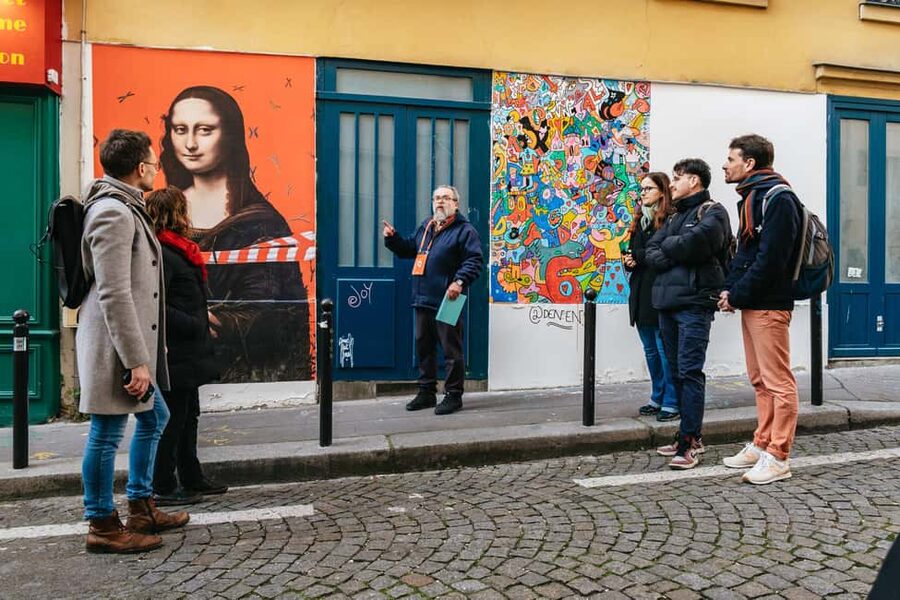
Montmartre is the choice if you want the Paris of famous painters plus the modern street-art layer on top. You’ll follow cobbled streets and pass picturesque houses and green pockets, while the guide links what you see on walls to where major artists once lived and worked.
A big part of the Montmartre experience is the way it ties addresses and art-making spaces to today’s creators. You’ll hear where artists like Picasso, Van Gogh, and Renoir had connections to the area, and you’ll also learn how modern-day Montmartre artists fit into that same neighborhood story. It’s a smart approach because it changes your relationship to the street art: you start treating it like a living continuation, not an interruption.
The main drawback is physical. Montmartre means hills. Even with only 90 minutes on the clock, you’ll feel the climb—so if you’re not confident on uneven ground, consider the La Butte aux Cailles option instead.
The “spot this specific art” part: Twotma, Gregos, Swed Oner, and more
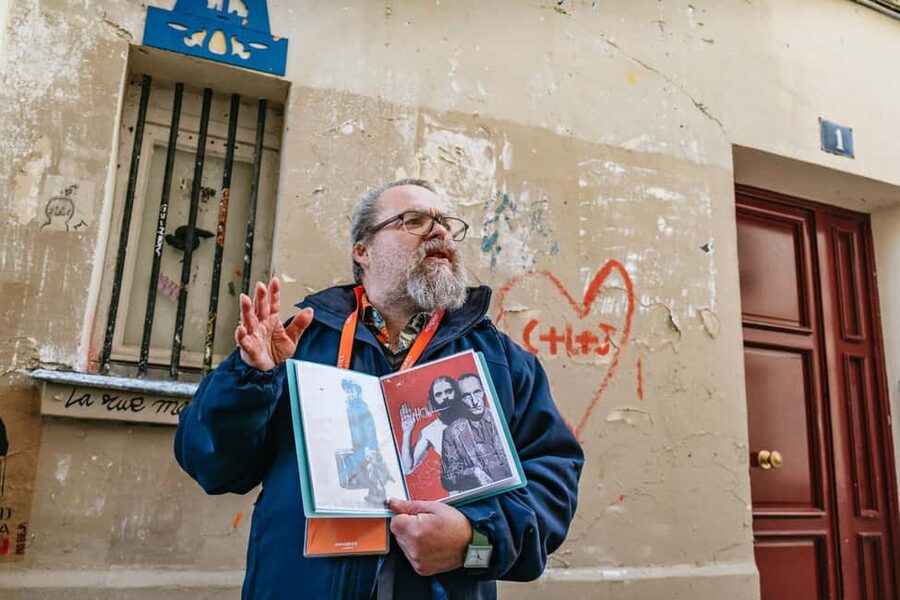
This tour has real targets, which is exactly how you should experience street art. It’s easy to wander, point, and photograph. It’s harder—and more satisfying—to learn what each artist does and why their techniques stand out.
On the Montmartre option, you’ll be looking for:
- Swed Oner frescoes (bigger, painted wall works that feel like they belong to the architecture)
- Gregos 3D faces (pieces that play with depth so the art looks like it’s pressing out from the wall)
- Twotma’s glued paper works (wheat-paste-and-paper vibes, but in Twotma’s distinctive collage approach)
- The End (another street-art name that shows how international artists leave their imprint in Paris)
- Space Invader (the famous pixel-style icon you can keep an eye out for)
- Plus a hidden work by a secretive artist (part of the fun is that not everything is obvious at first glance)
Here’s the practical benefit: once you know what visual cues to watch for—paper texture, stencil edges, 3D shading, mural scale—you start spotting art without needing a guide to point at every wall. That skill is portable. You’ll walk away seeing better across the whole city.
And the tour’s structure helps. It’s not just a list of names; the guide connects the street art to the neighborhood feel, so the pieces don’t feel randomly scattered. They feel placed on purpose.
La Butte aux Cailles: tiny houses, gardens, and the paper-and-stencil rhythm
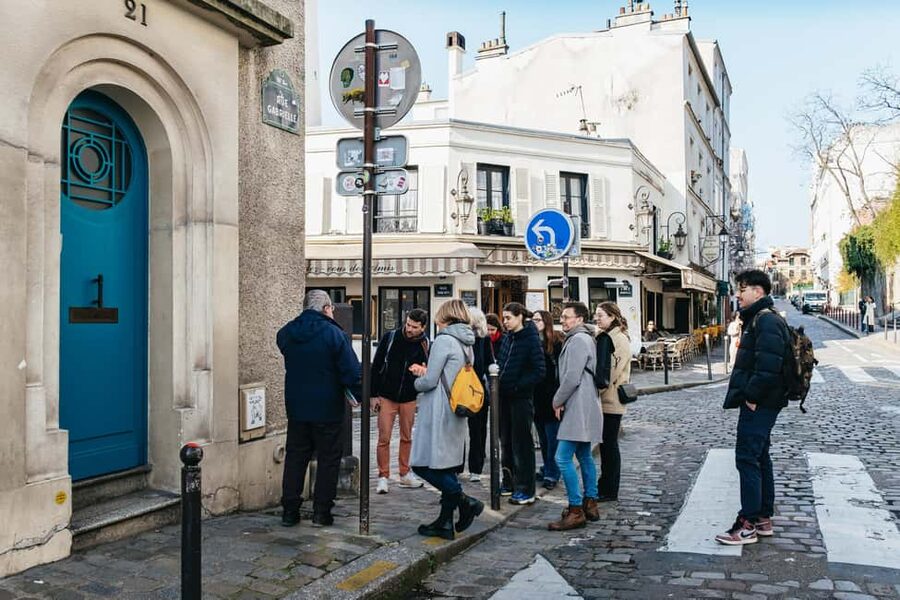
If Montmartre feels too steep or too classic-art focused for your taste, choose La Butte aux Cailles. This route leans into a more neighborhood-sized feel, with cobbled lanes, tiny houses, and small gardens you can actually notice as you walk.
You’re still hunting for street art, but the emphasis shifts. Instead of chasing the big postcard stops, you’ll be searching for murals, wheat-pasted papers, and stencil graffiti. That matters because street art isn’t one thing—it’s a toolbox of methods. When you learn to recognize those methods, you can read the city like a map.
La Butte aux Cailles also works well if you like the evolution of the scene over time. You’ll encounter works ranging from the 1980s through today’s emerging artists. That time span gives you context: you can see how Paris street art grew, how styles persisted, and how new artists adapted older techniques.
There’s also a “quiet-room” effect here. You’re still in Paris, but the focus feels less like a big sightseeing circuit and more like a walk through a creative corner where small-scale pieces make sense.
The French Touch: le pochoir, and why technique matters on the street
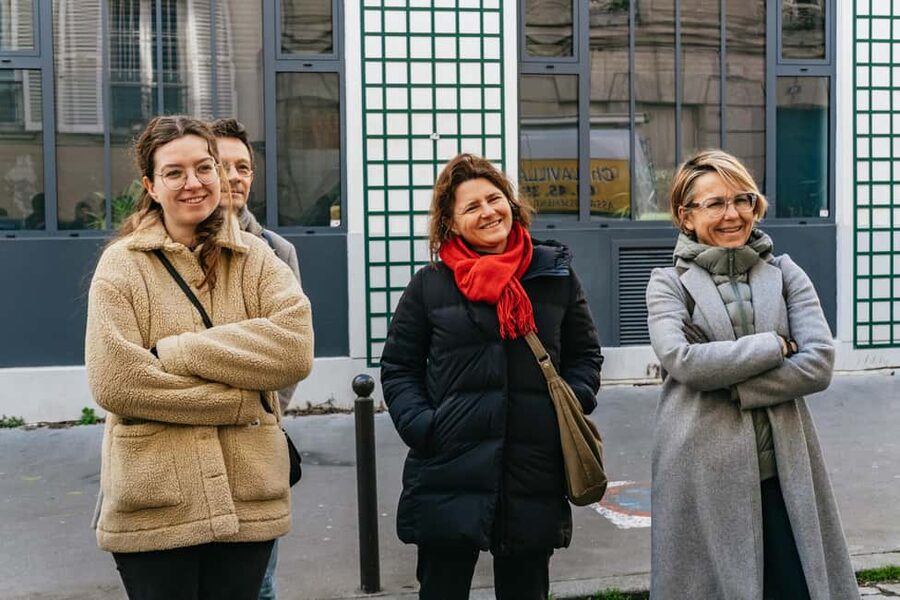
One of the strongest parts of this tour is how it treats street art technique as part of the story. In La Butte aux Cailles (and the tour’s wider street-art lens), you’ll hear about le pochoir—stencil work that became a signature of French street art.
Why you should care about technique: stencils and paper pieces don’t just look cool. They often explain how art moves through a city. Stencils are efficient, repeatable, and easy to layer. Wheat-pasted papers can be shaped into collage-like narratives. And when you understand that, your photos stop being random images and start being evidence.
You’ll also hear and see names associated with that Paris street-art “French Touch,” including:
- Jeff Aérosol
- Miss Tic
- Le Long
- Princess Ecchymose
That mix is helpful because it shows how the scene isn’t one style. It’s lettering, characters, paste-ups, and bold graphic work, all sharing the same city stage.
You can also read our reviews of more guided tours in Paris




A walk that covers street art history without turning it into a lecture
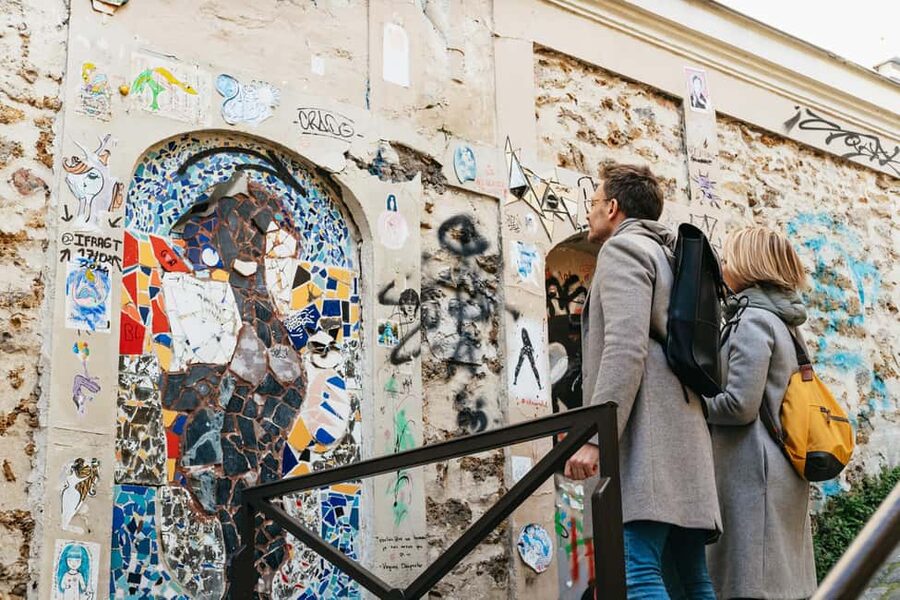
This tour doesn’t just point at walls. It builds a mini timeline of Paris street art—past and present—so you can place what you’re seeing in context. The guide’s former-street-artist background makes a difference here. Instead of only talking about art movements, you also get guidance about how street artists think and work in real urban conditions.
One review highlights that the guide, thetmotou, is a street artist himself and provides more information than you’d expect. That checks out with how this type of tour is designed: it rewards attention. You’re not just ticking off famous names; you’re learning the connections that make the neighborhood art feel meaningful.
Another theme from the reviews is pacing—people appreciated that the tour felt perfectly paced and guided by an expert. For you, that translates to a smoother experience: you get time to look closely, not just glance, and you don’t feel lost in the middle of an info flood.
What the 90 minutes feel like on the ground (and how to be comfortable)
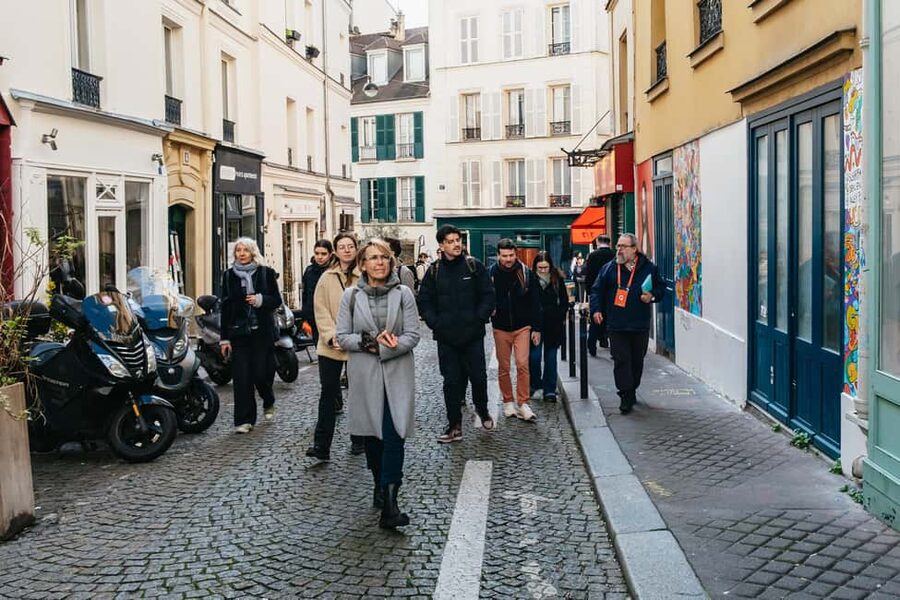
The tour is 90 minutes, but street art walks don’t move like a bus tour. You’ll stop often. You’ll look up. You’ll look at wall texture. You’ll probably do the quick back-step that happens when you realize the best detail is at eye level, not in your first photo angle.
If you choose Montmartre, plan for hills. If you choose La Butte aux Cailles, plan for cobbles and steady walking. In both cases, comfortable shoes aren’t optional—they’re the difference between enjoying the art and wishing for a bench.
Also remember: this is a walking tour with no hotel pickup. So you’ll want to give yourself a little buffer to reach the meeting point, which can vary depending on the option booked.
Price and value: is $47 for 90 minutes fair?
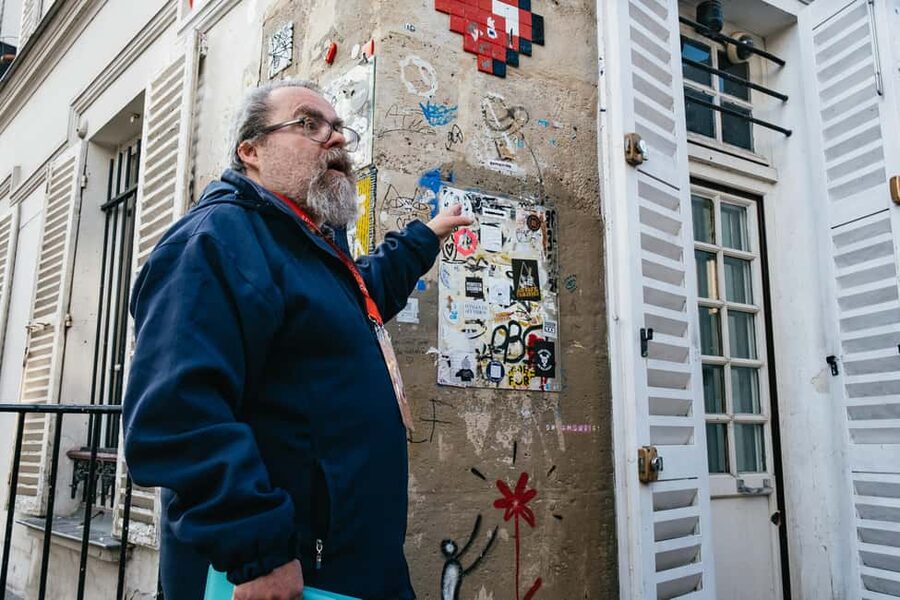
At about $47 per person for a 90-minute, English live walking tour, the price isn’t just paying for sightseeing. You’re paying for two things you can’t easily replace: a former street artist guide and a route built around specific works and neighborhood context.
If you tried to do this on your own, you could find street art—but you’d miss the connections: what to look for, why certain artists show up here, and how styles like le pochoir relate to what you’re seeing. You also lose the guided pacing and the focus on exact artists such as Twotma, Gregos, Swed Oner, and Space Invader.
So for the kind of experience you get—artist-informed explanations plus targeted stops—you’re paying for expertise and structure. That’s the value.
Should you book this Paris street art walking tour?
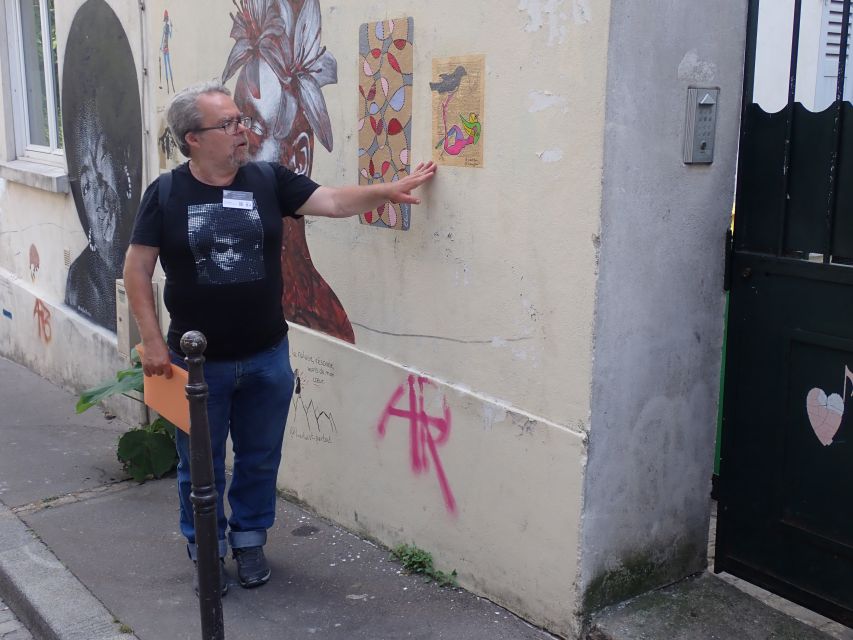
Book it if you want street art with context, not just photos. Choose Montmartre when you want the mix of famous painters’ addresses (Picasso, Van Gogh, Renoir) plus the contemporary wall works like Gregos’ 3D faces and Swed Oner frescoes. Choose La Butte aux Cailles if you’d rather focus on tiny-house streets, gardens, wheat-pasted papers, and stencil graffiti with a strong le pochoir thread.
Skip it (or switch options) if hills will drain you. Montmartre includes real up-and-down walking, and this tour is built for movement, not for lounging.
Finally, if you’re the type who enjoys learning how art is made and why it shows up where it does, this is a strong fit. With a guide like thetmotou and an expert-level pacing, you’ll come away seeing street art as part of Paris’s ongoing story.
FAQ
How long is the street art walking tour?
The tour lasts about 90 minutes.
Are there different tour options in Paris?
Yes. You can choose either the Montmartre route (including hilly walking) or the La Butte aux Cailles route.
What language is the tour guide?
The tour is offered with a live English guide.
What should I bring?
Bring comfortable shoes, since the tour involves significant walking.
Is hotel pickup included?
No. Hotel pickup and drop-off are not included.
Can I get a refund if plans change?
Yes. You can cancel up to 24 hours in advance for a full refund.