REVIEW · SARASOTA
Public Art Tour
Book on Viator →Operated by Discover Sarasota Tours · Bookable on Viator
Art that you can spot at street speed.
That’s the fun here: I like how Sarasota’s public pieces come at you one after another, with an art expert pointing out details you’d likely miss while driving. You’ll get a guided eye-training session plus short rides around key areas like St. Armands Circle and downtown, so the city feels both walkable and story-filled.
What I love is how quickly the tour builds context. I also really like that you’re not stuck on a single “big sight,” because you’ll see sculptures and murals across multiple neighborhoods in about 90 minutes.
One consideration: mid-afternoon sun can make the ride feel warm, especially if you catch the day’s heat, so timing matters.
In This Review
- Key things that make this public art tour worth your time
- A 90-minute format that turns Sarasota into an open-air art book
- The route starts at 1826 4th St and aims for maximum art per mile
- Burns Court neighborhood: Ringling’s vision and the sculptures you’ll start to recognize
- Ringling Boulevard roundabout: spotting Jorge Blanco’s Bravo in the middle of traffic
- Bayfront Park and Seward Johnson’s Unconditional Surrender: why scale changes everything
- Rosemary Design District murals: the fastest way to re-see Sarasota’s walls
- Getting around St. Armands Circle: trolley or van comfort makes the tour easier
- The guide and driver factor: Jerome Chesley and the calm, safe pace
- What to do with your camera and your attention span
- Price ($85.61) and value: what you’re paying for
- Who this tour is best for
- Should you book the Sarasota public art tour?
- FAQ
- Where does the tour start?
- How long is the public art tour?
- What does the tour cost?
- What language is the tour offered in?
- Do I need a printed ticket?
- Are children allowed?
- What kinds of public art will I see?
- Is the tour vehicle air-conditioned?
Key things that make this public art tour worth your time
- Expert narration that helps you read sculptures and murals instead of just taking photos
- Ringling-themed stops that connect artist vision to the streets of Sarasota
- Bayfront Park’s Unconditional Surrender near the waterfront, where scale hits you fast
- A city-ride format (air-conditioned van or trolley) that keeps you moving without rushing
- Rosemary Design District murals—fresh, wall-to-wall color that changes what you notice about Sarasota
A 90-minute format that turns Sarasota into an open-air art book
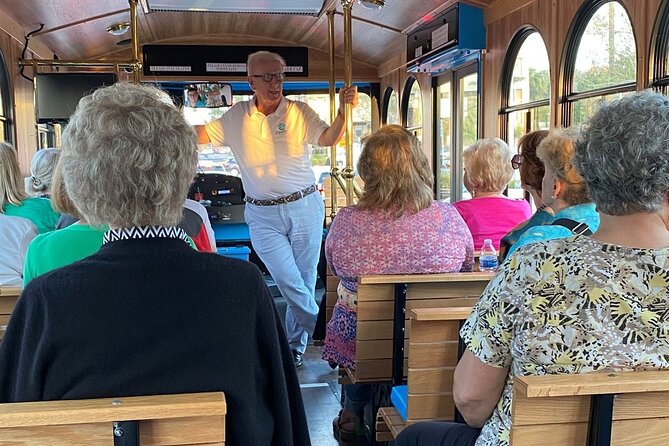
This is the kind of tour that feels made for a short afternoon. The schedule is tight, but it doesn’t feel like a sprint, because you’re mostly riding between stops and then spending focused moments looking up close. That rhythm matters in Sarasota: the city’s art lives in roundabouts, court areas, and public parks, not just inside museums.
You’ll spend your time on two kinds of public art. First are the sculptures—often bold, sometimes funny, sometimes surprisingly serious. Second are murals, especially around the Rosemary Design District, where you get a quick hit of recent color on buildings and walls.
The best payoff is how your eye changes. After a couple of stops, you start noticing signatures, materials, composition, and what artists seem to be commenting on. That’s not about being an art “expert.” It’s more like learning what to look for so the city doesn’t pass you by.
The route starts at 1826 4th St and aims for maximum art per mile
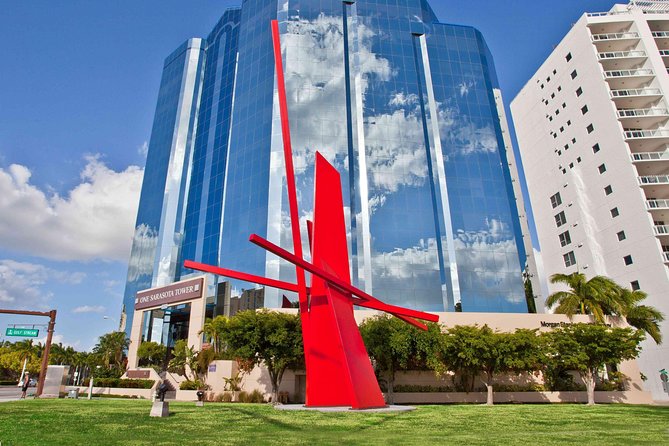
The tour begins at 1826 4th St, Sarasota, and ends back at the same meeting point. Starting and ending at one place is practical, especially if you’re pairing this with lunch nearby or a later activity in town.
Group size is capped at 30, which keeps the narration from turning into a lecture you can’t hear. You’re also told you’ll use a mobile ticket, and you’ll receive confirmation at booking time, which makes showing up simpler.
Age-wise, this one is 12+ only, with no children under 12 allowed (unless you’re on a separate family tour designed for kids). Service animals are allowed, and it’s described as near public transportation and something most people can participate in. If you’re thinking about mobility constraints, plan around curb-to-curb street viewing at the stops, since you’ll be looking at art outdoors rather than in a single indoor venue.
Burns Court neighborhood: Ringling’s vision and the sculptures you’ll start to recognize
Your first major stop centers on Ringling’s vision and sculptures in the Burns Court neighborhood. This is a strong opener because it gives you a foundation right away: Sarasota public art isn’t random decoration. It’s tied to specific people, ideas, and places.
Why this works: sculptures can look like “just objects” until someone explains the planning behind them—how they fit into their setting and what they’re trying to communicate. In Burns Court, you’ll get that early framing, so later pieces land better.
This stop also sets up a useful habit for the rest of the tour. Once you’ve learned what to listen for and what to notice, you’ll start spotting recurring themes: scale, symbolism, and how public art tries to shape how a neighborhood feels. Even if a sculpture isn’t your taste, the tour helps you understand what you’re looking at and why it’s placed there.
Ringling Boulevard roundabout: spotting Jorge Blanco’s Bravo in the middle of traffic
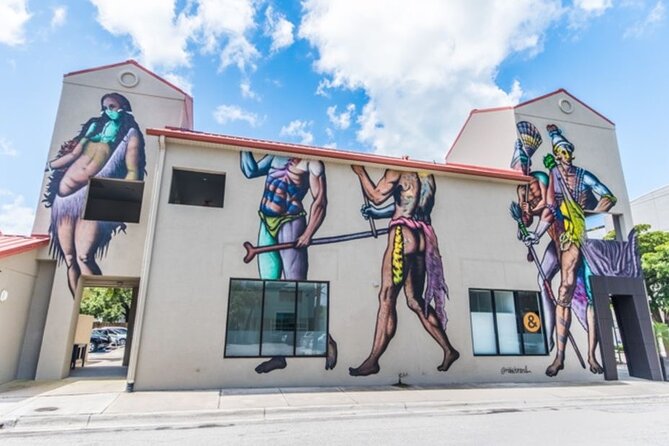
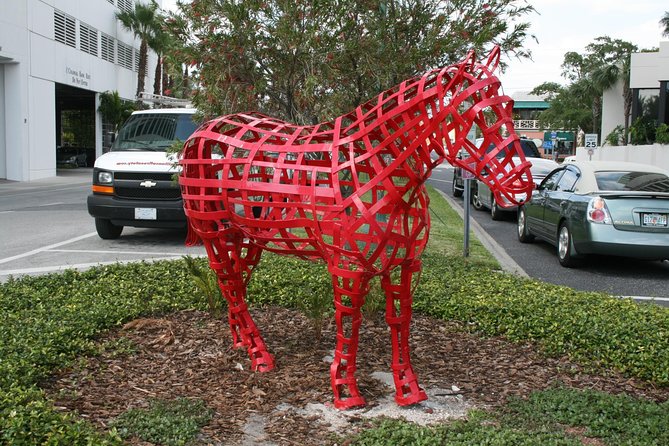
Next up is downtown Sarasota, where the tour has you look at Jorge Blanco’s Bravo on the roundabout at Ringling Boulevard and Orange Avenue. A roundabout is a tricky location for art because cars and pedestrians keep moving—but that’s exactly why it’s interesting.
Public art like this forces a different kind of looking. You’re not strolling slowly like you would in a park or gallery. Instead, you’re catching it in your peripheral vision, then learning how to focus for a few minutes. The guide’s narration turns a moment you’d normally rush past into a proper viewing stop.
Also, this location helps you understand how public art works at street level. The piece isn’t isolated; it shares space with shops, sidewalks, and everyday movement. That’s one of the reasons people come away saying they discovered sculptures and murals they’d driven by for years without noticing.
Bayfront Park and Seward Johnson’s Unconditional Surrender: why scale changes everything
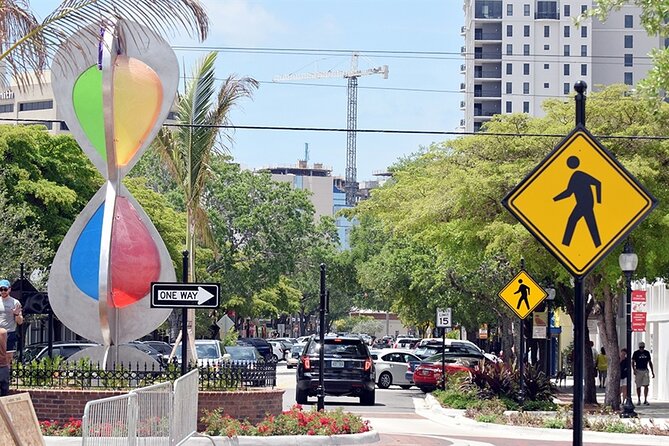
One of the tour’s anchors is a pass by Seward Johnson’s Unconditional Surrender in Bayfront Park. This is a larger-than-life recreation of the famous V-J Day photograph from Times Square, and just knowing that connection sets the scene before you even stare too long at the sculpture.
Why it hits: when something is scaled up, your brain has to adjust. You start measuring distance differently, and you feel the emotion more intensely than you would with a smaller memorial. Even if you’re not a “historical photo” person, the size and public placement push it beyond simple sightseeing.
This stop also gives you a nice contrast in tone. You move from Ringling-themed public art and a roundabout landmark to a waterfront monument tied to a specific moment in time. It’s a good reminder that Sarasota’s public art covers many moods, not just cheerful outdoor aesthetics.
Rosemary Design District murals: the fastest way to re-see Sarasota’s walls
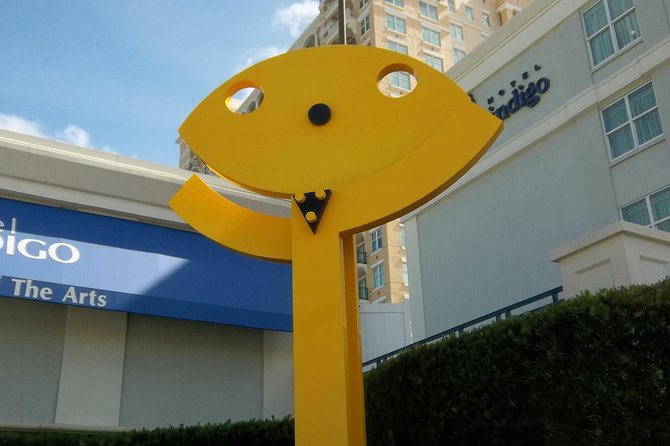
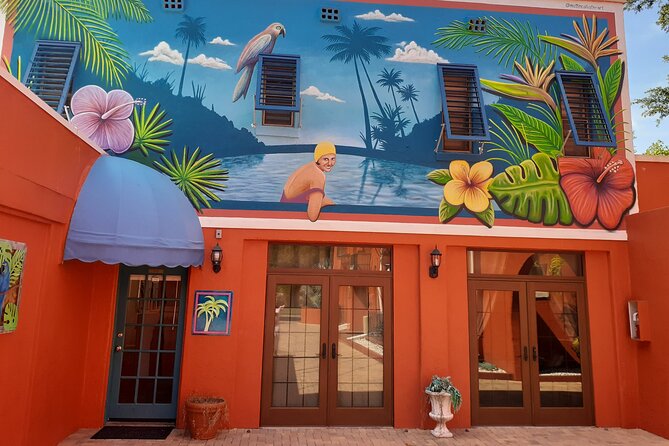
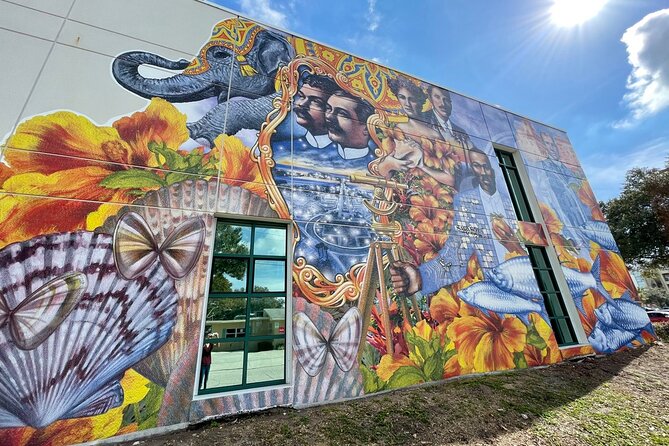
After sculpture-focused stops, the tour brings you into the Rosemary Design District to see recently installed murals along buildings and walls. Murals can be the quickest “wow” moment because they read like a collage of color, style, and local energy. But the real benefit is that they change how you walk through a neighborhood afterward.
Instead of treating murals like background decoration, you begin noticing composition and how artists use scale. You also learn to look for recurring themes in a district, because mural walls don’t exist in isolation; they’re part of a visual conversation between businesses, streets, and public space.
If you enjoy street art, you’ll probably want extra time here. One review notes that the tour didn’t feel like it ended too soon, but that they spent a while in a few spots because the art was worth lingering over. That’s the right instinct—don’t rush what you’re actually enjoying.
Getting around St. Armands Circle: trolley or van comfort makes the tour easier
Transport is part of the experience. You’ll ride in an air-conditioned van or trolley around areas including St. Armands Circle. That matters because the art is spread out enough that walking the whole route would eat your time. With the vehicle, you get movement without exhausting yourself before the best stops.
The ride format also improves how the guide can talk. When you’re in motion but still seated, you can concentrate on the narration and then get your viewing moment at each stop. It’s an efficient way to cover multiple neighborhoods in a short window.
Comfort note: the trolley has big windows, and sun can get intense mid-afternoon. If your schedule allows it, try to book the earlier side of your day rather than the hottest part of the afternoon. Sarasota heat can turn “fun looking” into “quick looking,” and you want the opposite.
The guide and driver factor: Jerome Chesley and the calm, safe pace
The tour’s quality is heavily tied to the people at the front. The guide I’d expect to hear from is Jerome Chesley (often mentioned as Jerry in conversation). Multiple comments highlight his enthusiasm and knowledge, and the tone described is not a gag-filled, joke-heavy approach. That matters more than people think. Good public art tours don’t force you to laugh at bad lines—they let the art do the talking.
The driver shows up, too. You may ride with Siggy/Ziggy, who’s described as safe and slow in a way that keeps the experience comfortable, even around roundabouts where the vehicle turns. If you’re sensitive to motion, that kind of careful driving can make a big difference in how much you actually enjoy the narration and viewing.
One more practical tip from the same overall experience: plan time for the tour business’s gift shop. If you enjoy public art, you’ll often find fun items that connect to the themes you just saw on the streets. It’s also a good buffer if you want a souvenir without rushing your afternoon.
What to do with your camera and your attention span
This tour is built for looking, not for speed-photo collecting. You’ll see a lot of public pieces, and the best photos usually come after the narration helps you decide what’s important. So here’s my practical rhythm for moments like these: listen first, then step back, then zoom in.
Because the stops include both sculptures and murals, your camera habits need to shift. Sculptures often reward lower angles and steady framing, while murals reward walking closer and capturing textures and edges. You’re also outside, so expect changing light if clouds move or if the sun hits suddenly through those trolley windows on the ride.
And if you’re the kind of person who takes a second look, this tour quietly supports that. One review mentions stopping longer at certain spots because the art deserved it. You might not have unlimited time, but you can still give yourself permission to linger when something catches your eye.
Price ($85.61) and value: what you’re paying for
At $85.61 per person for roughly 1 hour 30 minutes, you’re paying for three things: guided interpretation, transportation between scattered sites, and access to a curated route.
If you tried to DIY this, you could drive around and find public art, sure. But you’d lose the part that turns random sculptures into meaningful viewing—context about Ringling’s vision, artist intent, and why certain pieces are placed where they are. You’d also burn time navigating and deciding where to stop.
The group size cap helps keep it feel like a guided experience rather than a mass bus ride. And because the route covers both downtown landmarks and the Rosemary Design District murals, it’s a good “starter tour” if you’re new to Sarasota or if you’ve been visiting for years but never really slowed down to notice public art.
One more value point: this tour is booked about 43 days in advance on average, which often signals it stays popular. If your dates matter, don’t wait until the last week to lock it in.
Who this tour is best for
This is a good fit if you want art without the museum logistics. You’ll get context fast, and you’ll cover multiple neighborhoods without committing a whole day.
It also suits two different types of visitors:
- If you’re new to Sarasota, you’ll get a map of where the art energy lives: Ringling zones, downtown landmarks, Bayfront Park, and Rosemary’s mural walls.
- If you’ve lived nearby for years, you’ll still likely get that “I can’t believe I missed that” feeling, because public art gets easy to ignore at street speed.
If you dislike outdoor walking at curbs or prefer very quiet, slow experiences, you might find the pacing a bit “city tour.” But the short duration and vehicle rides help, and the viewing stops are framed with narration to keep the time useful.
Should you book the Sarasota public art tour?
Book this tour if you want a tight, high-impact way to understand Sarasota’s public art without spending hours planning stops. It’s especially worth it when you care about interpretation—when you want to know why a sculpture is there and what it connects to.
Skip it or think twice if you only want murals, or if heat and outdoor viewing at street level are deal-breakers for you. Also, the 12+ age rule means it’s not designed for younger kids.
If you can match your day to better weather and you’re ready to look with your brain turned on, this is one of those rare city activities that makes the streets feel different afterward.
FAQ
Where does the tour start?
The meeting point is 1826 4th St, Sarasota, FL 34236, USA, and the tour ends back at the same meeting point.
How long is the public art tour?
The duration is about 1 hour 30 minutes.
What does the tour cost?
The price is $85.61 per person.
What language is the tour offered in?
The tour is offered in English.
Do I need a printed ticket?
No. You’ll use a mobile ticket.
Are children allowed?
This tour requires age 12+. No children under 12 are allowed except on family tours designed for children.
What kinds of public art will I see?
You’ll focus on public sculptures and murals, including Ringling-related pieces, Jorge Blanco’s Bravo, Seward Johnson’s Unconditional Surrender in Bayfront Park, and murals in the Rosemary Design District.
Is the tour vehicle air-conditioned?
Yes. The tour includes riding in an air-conditioned van or trolley around areas like St. Armands Circle.