REVIEW · COLOSSEUM
Rome: Private Golf Cart Tour with Driver
Book on GetYourGuide →Operated by Kirba Tours · Bookable on GetYourGuide
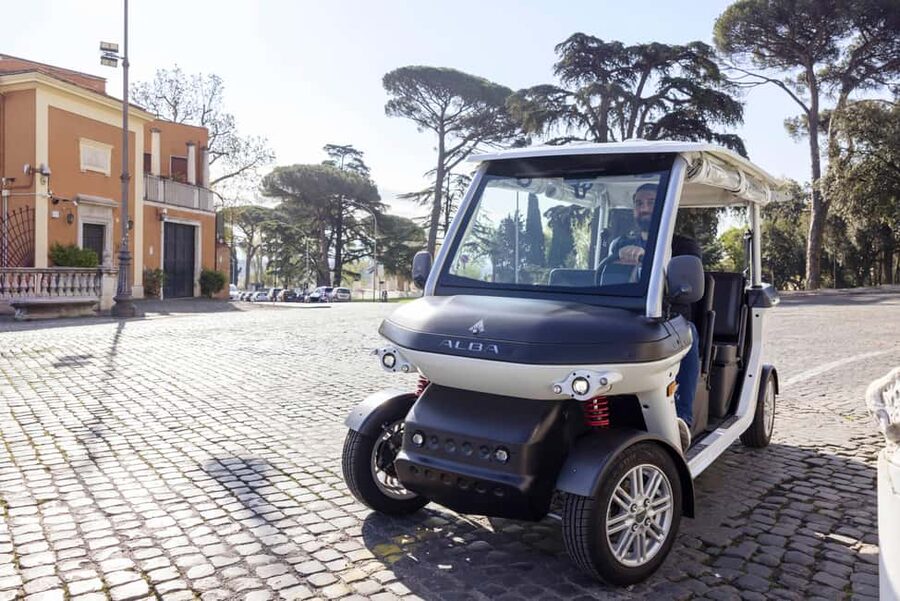
Rome moves fast; this cart slows it down. The silent, zero-emission electric ride makes it feel easier to absorb Rome’s scale, and a personal driver keeps you moving from place to place without the usual city-stress. You also get private attention and local context at each stop, so the monuments feel less like a checklist.
The main trade-off is time: you’ll usually do photo stops and quick looks rather than long, ticketed museum-style visits at every major site. If you want hours inside one attraction, plan to pair this tour with targeted entrance tickets.
In This Review
- Key highlights to look for
- Electric Golf Cart in Rome: The Real Benefit Is How It Changes Your Day
- Your Driver: What You’ll Notice About the Experience
- The 2.5- vs 3.5-Hour Choice: Pick Based on Your Rome Style
- Pickup to First Stops: Getting Oriented Without Losing the Morning
- Colosseum Photo Stop: Seeing the Scale Quickly
- Roman Forum: A Photo Stop That Helps You Connect the Dots
- Circus Maximus and the Bigger-Than-You-Think View
- Giardino degli Aranci: A Break From Monuments (With Views)
- Basilica of Santa Sabina: Quiet Church Time Without the Hustle
- Trastevere Photo Stop: A Neighborhood Feeling in Minutes
- Santa Cecilia and Acqua Paola: A More Local Rome Moment
- Janiculum Hill: The Most Relaxed Long Stop on the Route
- Piazza Navona: Walk Time, Not Just a Photo
- Pantheon: The Quick Stop That Still Feels Like a Key Moment
- Church of Sant’Ignazio di Loyola: Time to Notice, Not Rush
- Trevi Fountain: Famous, Manageable, and Timed for Photos
- Palazzo del Quirinale and the Finish Back in Rome
- Why the Price Can Be Good Value for Rome
- Accessibility and Kids: What You Should Plan For
- Who Should Book This Golf Cart Tour
- Should You Book This Rome Private Golf Cart Tour?
- FAQ
- How long is the Rome private golf cart tour?
- What does the tour price include?
- Are entrance tickets included for the Colosseum, Pantheon, or other attractions?
- Where does pickup happen?
- What languages do the drivers speak?
- Is the tour wheelchair accessible?
Key highlights to look for
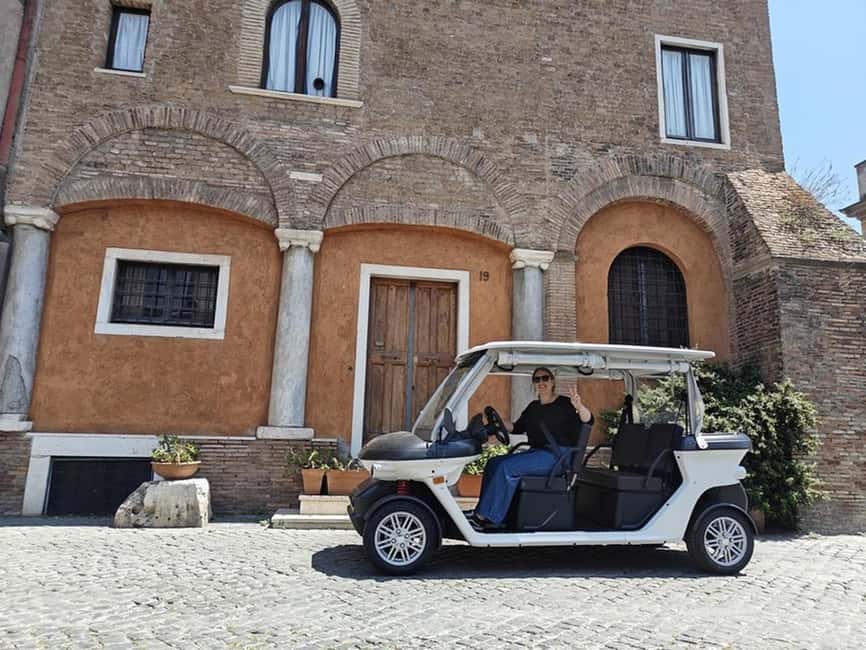
- Electric, low-stress driving through tight historic streets
- Photo stops plus short walks so you can actually take in the sites
- Driver-led local insights in English, Italian, or Spanish
- Two time options (2.5 or 3.5 hours) to match a tight schedule
- A route that hits both big names and scenic viewpoints
Electric Golf Cart in Rome: The Real Benefit Is How It Changes Your Day
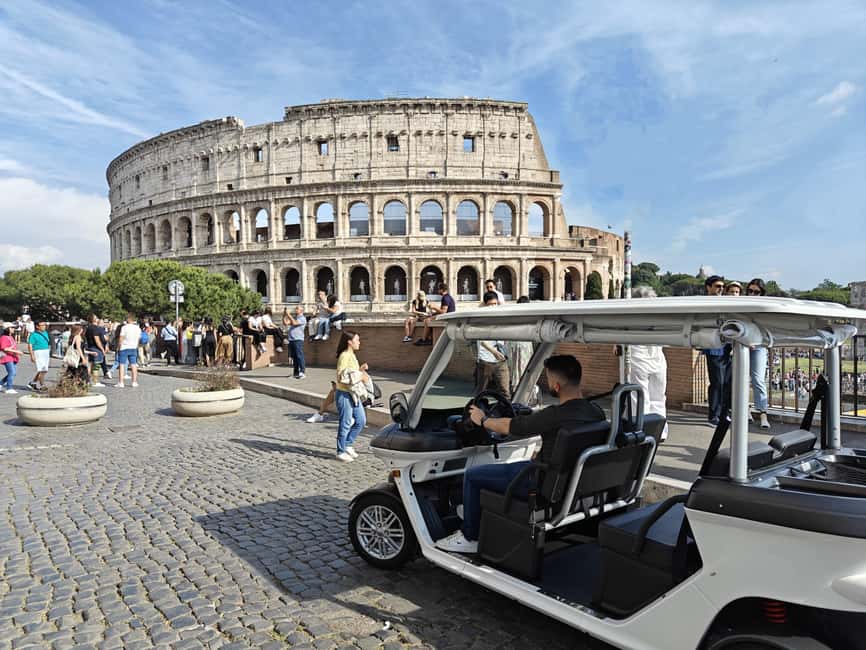
Rome is beautiful, but it can be exhausting. What I like about this kind of private golf cart tour is not just the convenience. It’s the way it changes your pace. Instead of burning energy on parking, traffic, and constant uphill starts and stops, you spend that time looking at the city.
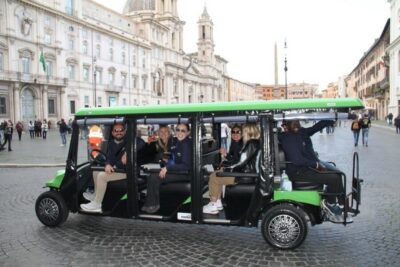
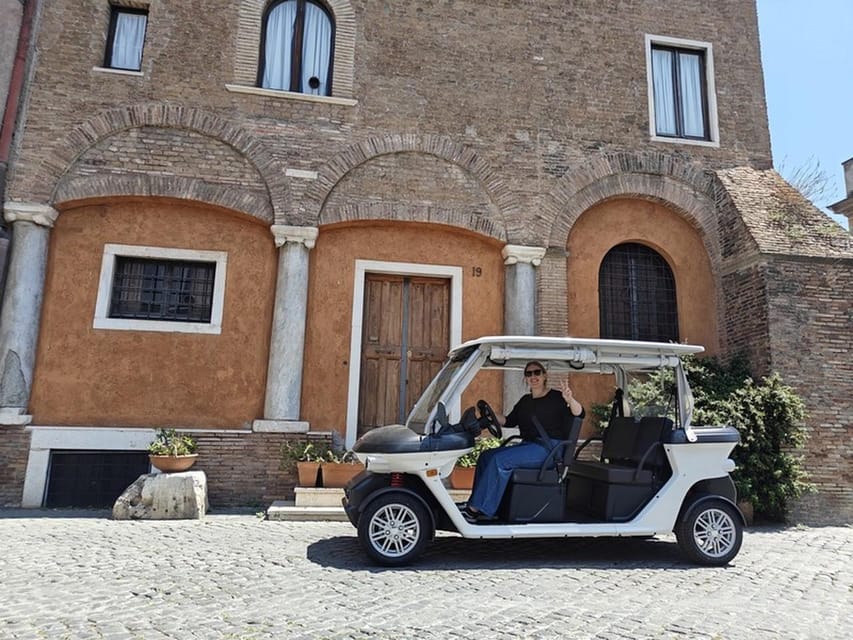
This is a silent, zero-emission ride, so you get a calmer experience than you would in a typical car. The route still passes through the historic core where streets feel crowded and tight, and the cart’s size helps you avoid a lot of friction. Even better, you’re not steering. Your driver handles navigation and timing.
Because it’s private, you’re not stuck behind a pack moving at one speed. That matters in Rome, where the difference between a good photo and a frustrating one is often just a few minutes of positioning.
Your Driver: What You’ll Notice About the Experience
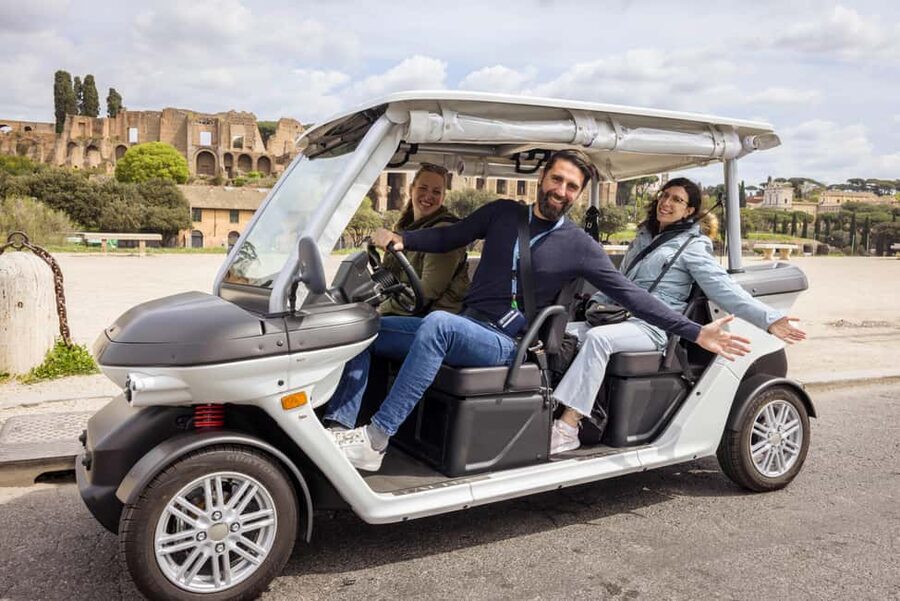
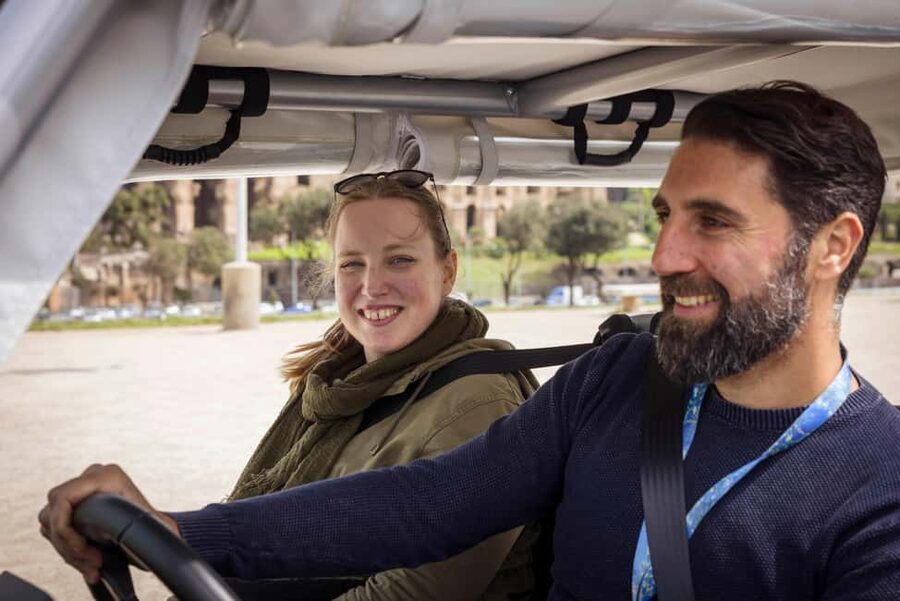
Your driver is also the guide, and the best part is the tone: you get explanations that feel paced for real people, not a monologue squeezed into traffic gaps. The tour uses English, Italian, and Spanish drivers, so you can actually ask questions and understand what you’re seeing.
In my book, the best sign of a good Rome guide is whether you leave with a sense of how neighborhoods connect. The drivers here focus on local insights and practical context as you move between major monuments and everyday streets. The route also includes short walks at select places, which gives you a chance to step away from the cart for a moment and experience the area on foot.
Also: the driver has a Kirba Tours sign or flag, so you can find them without guesswork.
The 2.5- vs 3.5-Hour Choice: Pick Based on Your Rome Style
You get two options: a full 3.5-hour tour with major landmarks, or a shorter 2.5-hour option that leans more toward panoramic terrace views.
Here’s how I’d choose:
- If you’re seeing Rome for the first time or you’re short on time, go 3.5 hours so you can tick off the core sights with proper context.
- If you already know the big monuments (or you’re arriving tired, or the day is heavy with tickets), choose 2.5 hours for the viewpoints and scenery-focused route.
One helpful thing is that the itinerary is customized to preferences. So if you care more about viewpoints, churches, or neighborhoods, you can steer the day a bit—within the natural flow of the route.
Pickup to First Stops: Getting Oriented Without Losing the Morning
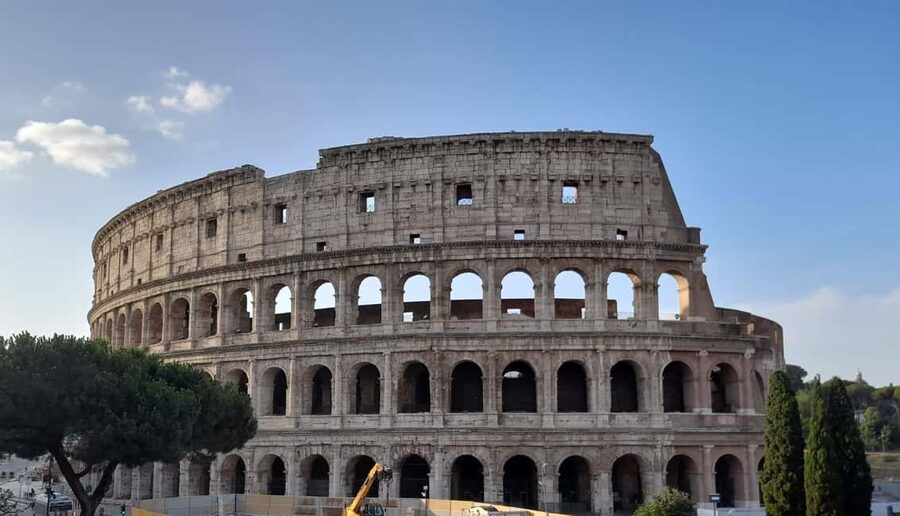
The tour starts with pickup in Rome, and it’s generally possible within the city center for hotel addresses in ZIP codes 00186 and 00187. If your hotel is outside that pickup range, the meeting point can be set at Piazza della Repubblica 10 (you just need to confirm).
From pickup, you get a short ride segment—about 10 minutes—before the big history moment. This is a smart way to start. You arrive at the Colosseum area with less wandering, and you’re not spending your first hour searching for where to stand.
The cart gets you that quick sense of direction in Rome. You’re not just showing up; you’re understanding where you are relative to the rest of the day.
Colosseum Photo Stop: Seeing the Scale Quickly
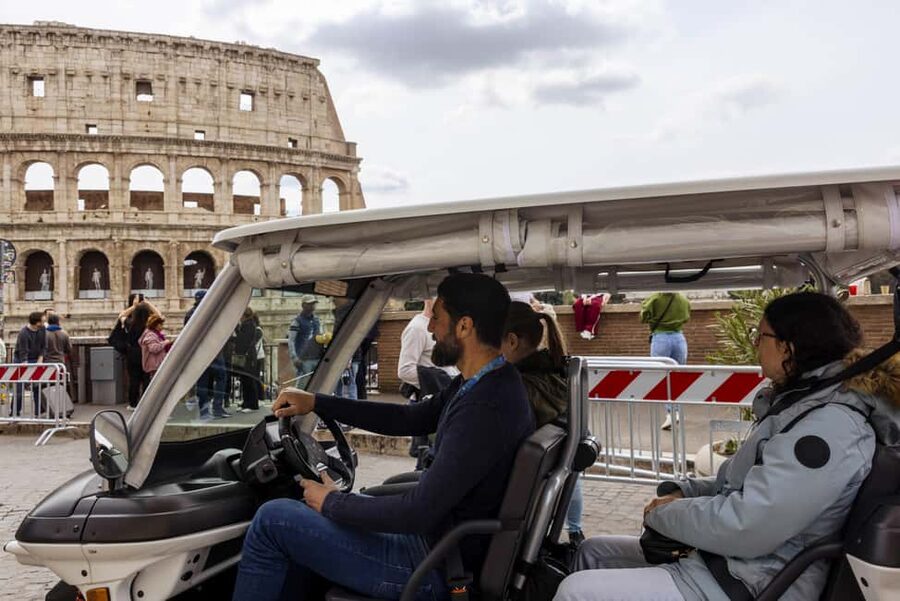
The first major stop is the Colosseum, with a 20-minute photo stop.
What makes this stop work is the structure: you’re not trapped behind barriers for ages, but you also aren’t rushed. You get time to walk a short distance, angle for photos, and register what you’re seeing. This is especially valuable if you’re doing Rome in a limited window, because you get the emotional hit of the Colosseum without turning the day into a long, exhausting line-and-entry plan.
A small consideration: photo stop time is still photo stop time. If you want to go inside or you’re sensitive to crowd stress, you may want to treat this as a visual orientation and save museum-level attention for a separate plan.
Roman Forum: A Photo Stop That Helps You Connect the Dots
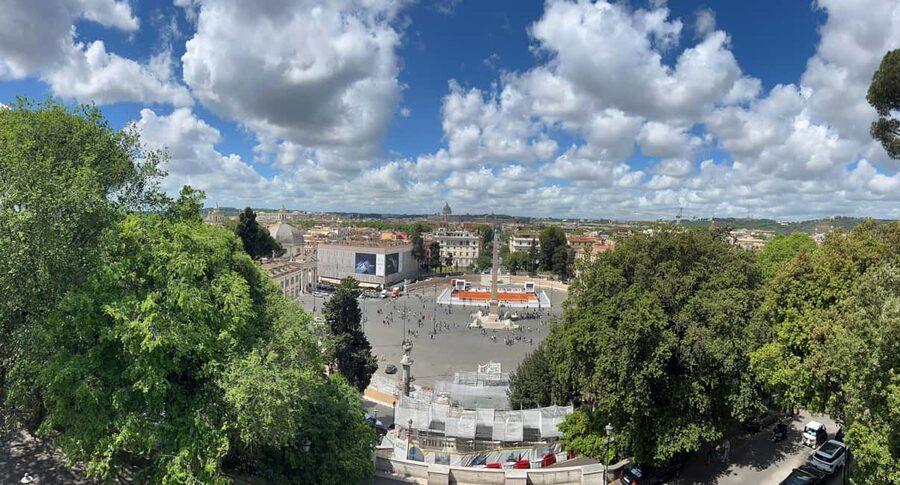
Next up is the Roman Forum, again with a 20-minute photo stop.
This is where the guide quality matters. The Forum looks like ruins until you understand the layout and the “why” behind it. With a driver explaining what you’re looking at, the stop turns from scattered stones into something legible: power, everyday life, and how Rome organized space.
You also benefit from not having to cross and navigate on foot while trying to keep your bearings. In Rome, that’s a real advantage.
Circus Maximus and the Bigger-Than-You-Think View
The route then goes to Circus Maximus for a 10-minute photo stop.
Why it’s worth the quick stop: Circus Maximus is huge, and it can look underwhelming if you don’t have a frame of reference. With a short photo stop, you still get the sense of scale, and the rest of your time stays efficient.
This is the kind of stop that works well in a cart tour: you get the important takeaway without needing an entire afternoon.
Giardino degli Aranci: A Break From Monuments (With Views)
One of the most enjoyable stops on the itinerary is Giardino degli Aranci (the Orange Garden). You get a photo stop and short walk with scenic views on the way, plus about 10 minutes in that area.
This is where the cart tour feels like more than a shortcut. You’re stepping into a viewpoint moment—time to look over the city, breathe a bit, and reset your attention. Rome can be relentless on a first day, so a garden-and-view stop helps you enjoy the day instead of just collecting stops.
Basilica of Santa Sabina: Quiet Church Time Without the Hustle
Then comes Basilica of Santa Sabina, with a photo stop around 10 minutes.
Churches in Rome are often either rushed or skipped entirely. Here, you get a respectful amount of time to glance, photograph, and appreciate the atmosphere, while still keeping the day moving. If you like seeing a mix—big classical landmarks plus older religious spaces—this fits your style.
A note for your expectations: this is not a deep devotional visit. It’s more like a structured stop to see and orient you, then move on.
Trastevere Photo Stop: A Neighborhood Feeling in Minutes
The tour includes a Trastevere photo stop.
Trastevere is one of those places where even short visits can change your impression of Rome. It feels different from the more monumental zones. With a cart route, you can capture that neighborhood atmosphere without spending hours trying to cross the city on foot.
Just remember: a photo stop gives you a snapshot, not a full neighborhood experience. If you want more Trastevere time, you can use the cart tour as your orientation and come back later for dinner.
Santa Cecilia and Acqua Paola: A More Local Rome Moment
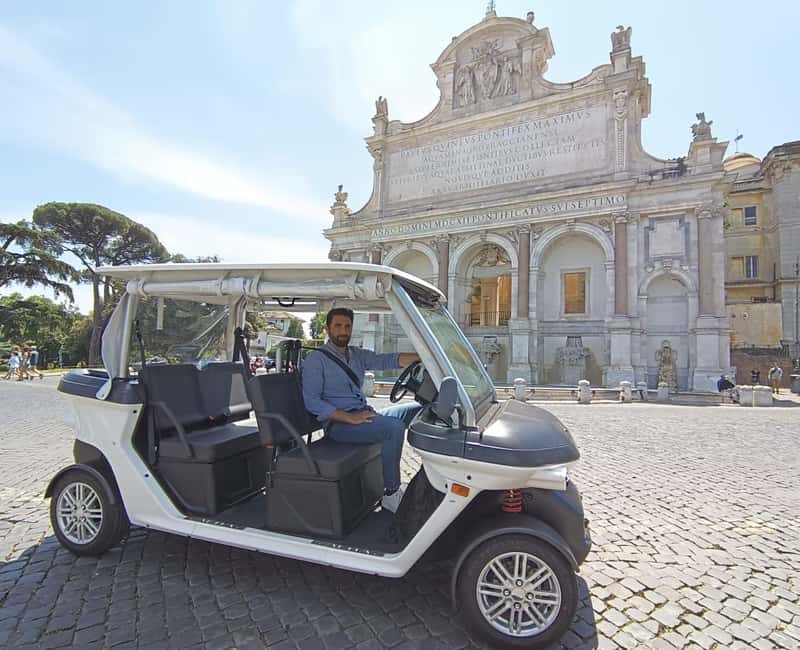
After Trastevere, you’ll pass Church of Santa Cecilia for a photo stop and then head toward Fontana dell’Acqua Paola for a photo stop.
These aren’t just “random stops.” They add variety to the day. Instead of only big ruins and famous fountains, you see how Rome includes churches, local landmarks, and water infrastructure in everyday sightlines.
It also helps that the tour keeps transfers short between points—often just 2 to 10 minutes of cart time. That rhythm reduces fatigue.
Janiculum Hill: The Most Relaxed Long Stop on the Route
One of the longer pauses is Janiculum Hill, with a 30-minute photo stop.
This is one of those places you’ll feel right away. Even without going deep into explanations, you get the sense that Rome’s views are part of the city’s identity. The longer stop length matters: it gives you time to find a good angle, take photos, and actually enjoy the view instead of watching the seconds.
If you picked the shorter tour, you may find that the time allocation emphasizes viewpoints like this kind of terraced perspective. It’s a smart way to get a “wow” without a ticketed attraction.
Piazza Navona: Walk Time, Not Just a Photo
Next is Piazza Navona, where you get both a photo stop and a short visit/walk for about 15 minutes.
Piazza Navona is busy by nature, but it’s also easy to understand. You get the layout quickly, you can stroll a bit, and you’re close enough to notice how the space works.
A cart tour is helpful here because it lets you arrive without adding the stress of parking and street navigation. You spend your energy on seeing the square, not on logistics.
Pantheon: The Quick Stop That Still Feels Like a Key Moment
Then it’s Pantheon, Rome, with a photo stop around 15 minutes.
The Pantheon hits people fast: the shape, the dome presence, the sense of scale. Even with a shorter stop, you get that immediate visual impact. In a day full of major monuments, this one plays a special role: it anchors the tour in a different kind of Roman greatness.
If the day is ticket-heavy, treat this as your look-from-the-street moment unless your plan includes entry.
Church of Sant’Ignazio di Loyola: Time to Notice, Not Rush
You’ll also stop at Church of Sant’Ignazio di Loyola for a photo stop about 20 minutes.
This is a nice mid-to-late day choice because churches can slow your brain down in a good way. Instead of only absorbing large exterior shapes, you start noticing detail and atmosphere. Even in a limited stop, it breaks the day from “big-name rush.”
Trevi Fountain: Famous, Manageable, and Timed for Photos
The cart brings you to Trevi Fountain for a photo stop.
Trevi is a magnet, so expectations help. You’ll get time to take photos and look around, but it still functions as a stop within a paced tour. That’s honestly the right approach for a first pass. The driver’s job is to time and position you so you spend your minutes seeing and photographing, not waiting in a parking-lottery situation.
If you want Trevi longer, use this as your arrival point and then return later with more time on your own.
Palazzo del Quirinale and the Finish Back in Rome
The route includes a Palazzo del Quirinale photo stop, and then you’re back to Rome.
This final segment is useful because it rounds out the sense that Rome isn’t just ancient ruins and famous fountains. You get a glimpse of Rome’s modern ceremonial presence too.
By the time you head back, the big win is that you’ve connected the dots across the city. You’re not wondering where everything fits. You have a mental map.
Why the Price Can Be Good Value for Rome
At $71 per person for 2.5 to 3.5 hours, the value depends on your party size and your priorities.
Here’s what you’re paying for:
- Private cart transport (so less walking and less logistics stress)
- A personal driver-guide who navigates and explains
- Stops that combine photos with short on-foot moments
For a family, a couple, or friends who want a first-day orientation, that cost can look reasonable fast because it replaces multiple taxis, long navigation effort, and the risk of wasting time getting from one site to another.
It also helps that entrance fees aren’t included. That sounds like a drawback, but it’s actually a common structure for Rome tours. You control what you want to pay for separately, based on your interest and energy level. If you’re trying to keep your day efficient, this format lets you.
Accessibility and Kids: What You Should Plan For
This tour is wheelchair accessible for up to a maximum of 3 people, with a key detail: the wheelchair must be foldable so it can be stored in the rear compartment of the golf cart during transfers. If you need this, mention it at booking.
If you’re traveling with a child under 12, you’ll want to provide their age and height. Regulations require a seat suitable for their size.
These details matter because they affect whether the tour runs smoothly for your group. Planning early is the easiest way to avoid last-minute surprises.
Who Should Book This Golf Cart Tour
I’d recommend it if:
- You’re doing Rome in a short window and want a first-day overview
- You prefer less walking but still want a real guide and clear stops
- You like mixing big landmarks with scenic viewpoints and churches
- You want a plan that can work around tight schedules
It might be less ideal if:
- You want long, in-depth museum time at one or two major sites
- You enjoy wandering without structure and don’t need help connecting areas
Should You Book This Rome Private Golf Cart Tour?
If your Rome time is limited, I think this is a smart way to get oriented fast. You’ll trade some depth at each stop for better flow across the city, and you’ll do it in a way that feels calmer than trying to run around on foot. The ride is electric and quiet, the stops include short walks and real photo time, and having a driver who speaks English, Italian, or Spanish makes a difference when you want to understand what you’re seeing.
If you’re okay with photo-stop pacing and you’re willing to handle entrance tickets separately when you want them, you’re likely to enjoy this.
And if your schedule is tight, you can also feel confident that the drivers work to keep the day on track; for example, there’s been at least one case where a guest needed timing for a packed day and got a helpful drop-off close to Saint Peter’s Basilica near the entrance.
FAQ
How long is the Rome private golf cart tour?
The tour runs for 2.5 to 3.5 hours depending on which option you choose. Check available starting times when you book.
What does the tour price include?
It includes a private golf cart tour, your personal driver (local guide), insider tips and local insights, a customized itinerary, and transportation between sites.
Are entrance tickets included for the Colosseum, Pantheon, or other attractions?
No. Entrance fees are not included unless specifically noted.
Where does pickup happen?
Pickup is generally possible within the city center for hotels with ZIP codes 00186 and 00187. If you’re outside that area, the meeting point can be set at Piazza della Repubblica 10.
What languages do the drivers speak?
Drivers are available in English, Italian, and Spanish.
Is the tour wheelchair accessible?
Yes. It’s wheelchair accessible for up to 3 people, as long as the wheelchair is foldable so it can be stored in the cart’s rear compartment during transfers.