REVIEW · AARHUS
Street Art and Rooftops of Aarhus, Denmark
Book on Viator →Operated by Aarhus City Guide · Bookable on Viator
Street art turns Aarhus into an outdoor museum. This 2-hour guided walk is a smart way to see the city through street art and rooftop angles, starting by the harbor and ending back where you began. Two big wins for me: the small group size keeps the pace friendly, and you get a look at a major viewpoint that opened in 2017. The main thing to consider is that it takes steady walking with a moderate fitness level, and not every minute is perfectly sheltered.
You’ll move from the sea side toward the Latin Quarter’s older, charming streets, then into an artsy hangout area where creatives gather (yes, you’ll hit a rooftop stop). After that, you’ll step into an old industrial site that’s been transformed into a modern art space, then circle the official center around City Hall before finishing at the harbor with city-spanning views. Guides like Marina are often singled out for turning murals into real stories, with plenty of time to ask questions as you go.
In This Review
- Key highlights you’ll feel right away
- Why Aarhus street art fits a walking tour so well
- Starting at Dokk 1: getting your bearings by the water
- The Latin Quarter walk: older streets, newer voices
- Rooftop hangout stop: creatives, coffee energy, and a city shift
- Old industrial site to modern art space: where reinvention shows
- City Hall monuments and the official center: art meets civic space
- The 2017 viewpoint: the stop to plan your eyes for
- Price and value: does $63.20 make sense?
- Who this tour suits best (and who might want a different plan)
- What to expect on the ground: timing, pace, and comfort
- Should you book this Aarhus street art and rooftops tour?
- FAQ
- How long is the Aarhus street art and rooftops tour?
- What time does the tour start?
- Where does the tour start?
- What’s the group size limit?
- Is the tour fully outdoors?
- Is the tour offered in English?
- Are food and drinks included?
- Do you need entry tickets for the stops?
- What fitness level do I need?
- Is free cancellation available?
Key highlights you’ll feel right away
- Small group (max 10) means less rushing and more back-and-forth with your guide
- Sea-to-center route connects Aarhus’s old areas to its modern art scene
- Rooftop moments include a rooftop café stop and a viewpoint opened in 2017
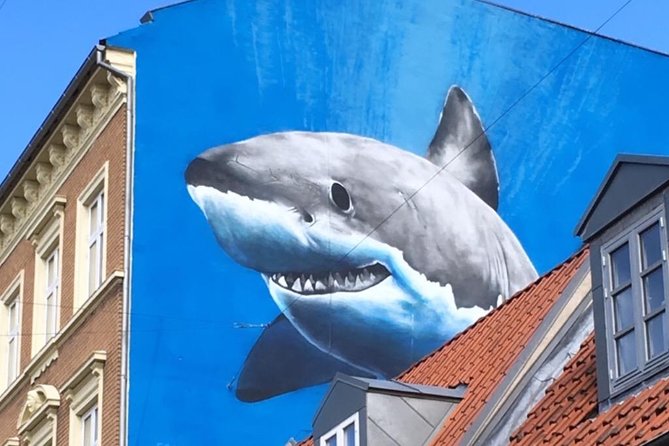
- A mix of art forms: sculptures, graffiti, murals, and installations with clear context
- Old industry reimagined at a modern art space that draws art lovers in town
Why Aarhus street art fits a walking tour so well
Aarhus is one of those cities where public art doesn’t sit in a separate world. It’s part of the streets, the buildings, and the routes locals actually use. That’s why this style of tour works: you’re not just looking at art on a screen, you’re seeing where it lives and how people react to it in real time.
I also like how the guide keeps the story moving. You’re not handed a random gallery tour. Instead, you get commentary while you walk, so the art makes sense in context—style, message, and the city behind it. When you finally reach the rooftop segments, the visuals click faster because your brain already has the route and the themes.
One more practical point: you don’t need to plan museum tickets on the spot. The tour visits attractions where no entry tickets are required, though it’s not fully outdoors, either—so weather is a factor, but you’re not trapped in it.
Starting at Dokk 1: getting your bearings by the water
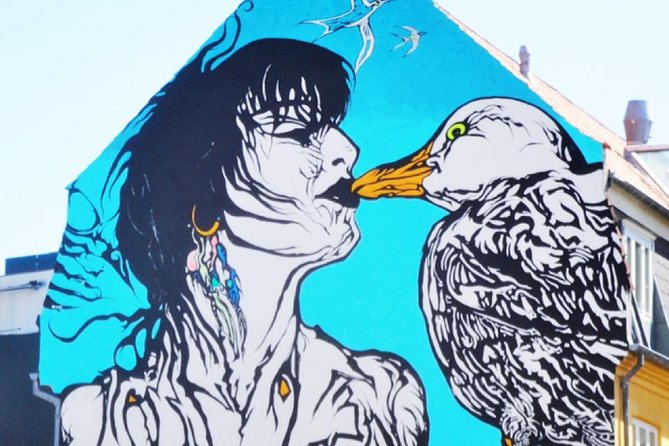
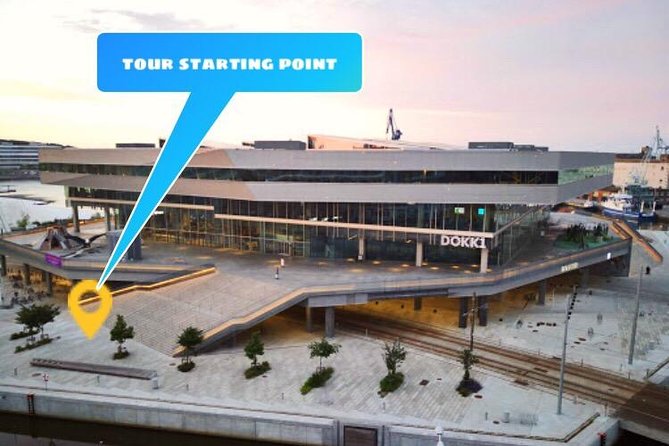
The tour starts at Europaplads 3 (and the experience begins at Dokk 1, the city multimedia center). This is a smart launching point because it’s tied to the waterfront energy of Aarhus. You’re starting with a harbor-adjacent feel, which helps you understand why the route flows the way it does—from sea side toward older neighborhoods.
In the early part, your guide typically sets the tone: how public art shows up in different corners of the city, and how you’ll spot patterns as you go. Even if you know nothing about street art, this first stage helps you learn what to pay attention to—scale, placement, materials, and the way a piece interacts with surrounding buildings.
It also helps that departure time is fixed at 10:00 am. If you like day plans that don’t sprawl, this one is neat. The whole thing runs about 2 hours, so you can still do the rest of your afternoon on your own.
The Latin Quarter walk: older streets, newer voices
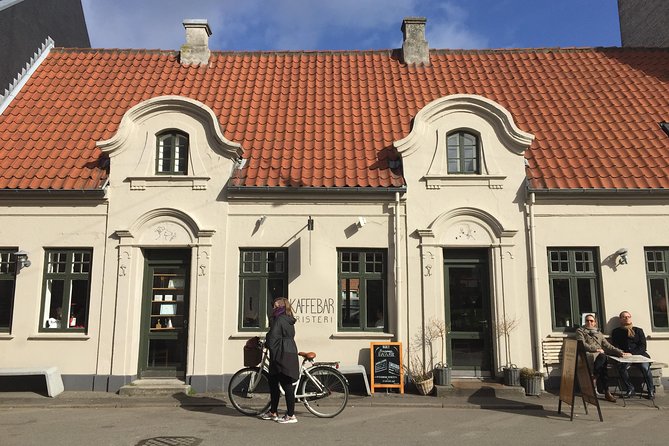
After the sea side start, the route heads toward the Latin Quarter district, known for old, charming houses. This section matters because street art often hits differently against historic architecture. It’s not the same feeling as seeing murals in brand-new districts; the contrast makes the artwork feel more like conversation than decoration.
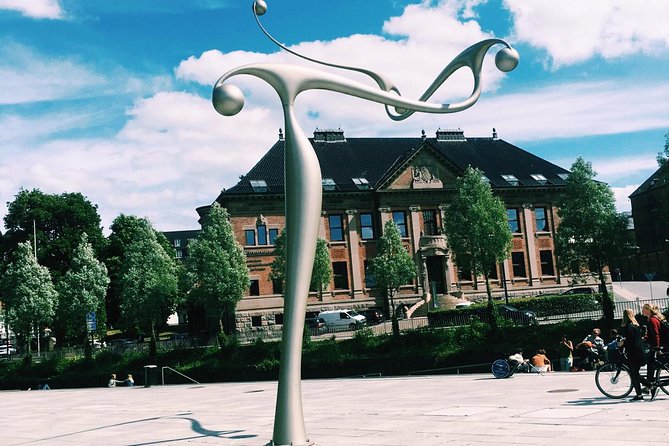
You’ll spend time looking at different types of public art—sculptures, graffiti, murals, and installations. The key is the guide’s commentary while you walk. You’re learning what the artist might be reacting to: the area, local culture, or the city’s changing identity. This is where the tour earns its reputation for giving you enough time for questions, not just a “follow the leader” sprint.
Practical tip: keep your eyes up and to the sides here. With older houses and tighter streets, the best details are often not at eye level. Expect to pause, rotate your view, and read the environment around the piece, not just the piece itself.
Rooftop hangout stop: creatives, coffee energy, and a city shift
Aarhus street art tour also includes a hipster hangout area filled with freelancers and creatives enjoying a cap of coffee on a rooftop. That rooftop stop is more than a break. It’s a shift in perspective—literally.
Up top, you can see how neighborhoods connect: the rooflines, the building shapes, and the sense of direction before you go further into the route. It’s also a good time to reset your attention. After street-level looking, your brain often needs a minute to zoom out. A rooftop works perfectly for that.
If you’re trying to decide when to take photos during the day, this is your moment. I’d treat it like a mini-landmark. After this, the tour moves toward a modern art space and then the official center—so you’ll be layering new information on top of what you’ve already mapped in your head.
Also remember: food and drinks are not included. The rooftop café element is part of the experience, but you’ll want to plan for your own refreshment needs if you’re there at a time when you normally eat.
Old industrial site to modern art space: where reinvention shows
One of the most satisfying parts of this tour is the move into an old industrial site transformed into a modern art space. That kind of setting tends to attract people who care about the same things street art does: place, identity, and change over time.
As you reach this portion, the art feels different. Industrial-to-modern conversions often come with extra texture—surfaces that can handle bigger statements, corners that frame sculpture and installation in distinct ways, and an atmosphere that’s more experimental than ceremonial.
The tour keeps you grounded by pointing out the story behind the works you see. So instead of treating the modern art space as an isolated stop, you connect it to the earlier street pieces. You start to notice how artists use public space differently depending on the setting, and why certain themes repeat.
If you love contemporary art but hate fluff, this section is usually your sweet spot. The guide’s job is to make the art readable, not mysterious for mystery’s sake. People also tend to mention that guides like Marina share fun facts and quirks about buildings and places, not just art terms. That kind of local context is what makes you feel like you saw Aarhus, not just passing highlights.
City Hall monuments and the official center: art meets civic space
After the industrial-to-art transition, you reach the official city center and hear about monuments around City Hall. This is where a street art tour can surprise you—in a good way.
Public art isn’t only about counterculture or tagging walls. In the civic center, it can feel more like commentary: how people represent values, memory, and identity in shared spaces. The guide ties the art back to the city layout and landmarks, which helps you understand why certain routes and viewpoints exist in the first place.
Even if you’re mostly here for graffiti and murals, don’t skip the civic center segment. It gives you balance. You’ll understand the difference between art that interrupts a street and art that reflects a city’s formal self-image.
Also, this segment gives you a chance to ask questions while you’re in a calmer area. That’s useful if you want to learn what to look for on your own afterward—what neighborhoods tend to show more public art, how to read symbolism, and what to notice when you spot a mural quickly while walking.
The 2017 viewpoint: the stop to plan your eyes for
You’ll end up at one of the most attractive viewpoint spots that opened in 2017, already drawing millions of visitors. That detail alone hints that this isn’t a tiny local lookout. It’s a major angle on Aarhus, and the tour times it so you get that view after you’ve already “learned the city” a bit.
Here’s how to get the most out of it:
- Look first at the big shape of the city from above.
- Then look for patterns—where old areas sit next to newer structures.
- Finally, scan back for artistic signals you saw earlier in the walk.
When you’ve seen sculptures, murals, and installations up close, a viewpoint stops being just a photo. It becomes a map. You’ll probably find yourself thinking about why artists choose certain walls, why certain rooftops attract creatives, and how the city’s geography supports all of that.
Expect the tour to stay moving, though. After the viewpoint, you continue back toward the harbor and finish where you started, Europaplads 3. The flow matters: the city ends in views, which is a great way to close a walk like this.
Price and value: does $63.20 make sense?
At $63.20 per person for about 2 hours, this tour isn’t a budget sidewalk stroll. But it can be good value if you care about art context and want a guide to point out what most people walk past.
Here’s why the pricing can work:
- You’re paying for a professional guide plus interpretation, not just a route.
- The group max is 10, so the experience doesn’t turn into a large-bus version of street art.
- No entry tickets are required for attractions on the route, which saves you from paying extra on the day.
- You get a variety of stops—Latin Quarter streets, rooftop angle, transformed industrial art space, City Hall monuments, and a major viewpoint opened in 2017.
Also, the tour is offered in English, which matters if your Danish is limited. Confirmation is received at booking, and the format includes a mobile ticket, so it’s easy to manage day-of.
One more signal: this experience has a strong overall rating (4.9) with 98% recommended. That doesn’t guarantee perfection, but it tells you most people come away feeling they got what they wanted: art-focused storytelling, smart pacing, and time to ask questions.
Who this tour suits best (and who might want a different plan)
This is best for you if you:
- Love street art and want more than surface-level descriptions
- Enjoy rooftop views and want them tied to the story of the city
- Like small-group walking tours with time for questions
- Want an art and architecture perspective rather than a pure sightseeing checklist
It may be less ideal if:
- You dislike walking for a couple hours with a moderate fitness level
- You want a food-focused experience (food and drinks aren’t included)
- You need a fully indoor, low-walking option (the tour is not entirely outdoors)
If you’re an art lover who also likes practical city orientation, this tour hits a sweet spot. You’re learning where things are and why they’re placed where they are—so later, when you wander on your own, you won’t feel lost.
What to expect on the ground: timing, pace, and comfort
This is a 10:00 am departure, lasting about 2 hours. The pace is guided, and you’ll be stopping to look and talk at multiple points. Because the tour isn’t completely outdoors, you’ll likely get small shelter breaks depending on weather and the specific stops.
Since it’s a walking tour with moderate physical fitness requirements, I’d plan on comfortable shoes and layers. Denmark weather can change fast, and even when the tour is partly indoor, you’ll still be moving between spots.
The other comfort factor is group size. With a maximum of 10 travelers, it’s easier to hear the guide and stay close enough to follow the storytelling. That matters for a tour like this, where details like style, placement, and meaning are part of the fun.
Should you book this Aarhus street art and rooftops tour?
Book it if you want an art-forward Aarhus experience that connects the dots between old streets, rooftops, civic landmarks, and a major viewpoint opened in 2017. The best reason to choose it is the format: small group, professional guide, and story-led looking at sculptures, graffiti, murals, and installations.
Skip it if you only want fast sightseeing, don’t like walking, or expect food included. In that case, you’d probably do better with a different tour type or a self-guided art route.
If you’re torn, here’s the simple test: if you’d enjoy standing still, looking closely, and learning what the art is saying in context, this one is a strong pick.
FAQ
How long is the Aarhus street art and rooftops tour?
It lasts about 2 hours.
What time does the tour start?
It starts at 10:00 am.
Where does the tour start?
The meeting point is Europaplads 3, 8000 Aarhus. The tour begins at Dokk 1, the city multimedia center.
What’s the group size limit?
The tour has a maximum of 10 travelers.
Is the tour fully outdoors?
No. It will not take place entirely outdoors.
Is the tour offered in English?
Yes, the tour is offered in English. A multi-lingual guide may operate it.
Are food and drinks included?
No. Food and drinks are not included.
Do you need entry tickets for the stops?
No entry tickets are required for any attraction the tour visits.
What fitness level do I need?
You should have a moderate physical fitness level.
Is free cancellation available?
Yes, you can cancel for a full refund up to 24 hours in advance of the experience start time.