REVIEW · BARCELONA
Street Art, Sculptures & Crime Stories Walking Tour – Barcelona
Book on Viator →Bookable on Viator
Street art tells Barcelona’s real stories. This 2.5-hour walk strings together El Raval, La Rambla, and the Gothic Quarter, using crime-tinged local history to explain why the walls look the way they do. I love the slow, story-first approach: you stop long enough to notice details, like the Joan Miró mosaic set into the pavement. One watch-out: it’s still a walking tour, and there are no snacks, so comfortable shoes and a bit of pre-planning help.
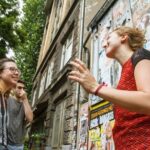
The big win is the guide. In the feedback I’m seeing a clear pattern: guides like Liliia (and sometimes spelled Leila) take their time, translate street art into plain context, and then send you off with practical spots for coffee and lunch—stuff you can actually use the rest of your trip.
Small group size also matters here. With a maximum of 15 people, you’re not just shuffled past murals; you get real answers and room to ask questions. If you’re looking for a fast hit of photos only, this format may feel a bit more thoughtful than you expect.
In This Review
- Key things that make this tour worth your time
- Street Art With a Story, Not Just a Sight List
- Starting near Carrer Nou de la Rambla: how the route sets you up
- El Raval: murals, mosaics, and crime-story context that makes the art click
- La Rambla: Joan Miró’s pavement mosaic and thought-driven murals
- Gothic Quarter: Roman and medieval stone meets modern street art
- El Born / La Ribera: optical illusions, the staring building, and Santa Caterina
- Price and Value: what $108.37 buys you in real terms
- The guide experience: why Liliia and Leila keep coming up
- Practical tips to make the walk easier
- Who should book (and who might not)
- Should you book this Barcelona street art walking tour?
- FAQ
- How long is the Street Art, Sculptures & Crime Stories Walking Tour in Barcelona?
- What does the tour cost per person?
- What language is the tour offered in?
- How many people are in the group?
- Where does the tour start and end?
- Which neighborhoods are covered?
- Are admission tickets included?
- Are snacks included?
- How do I get the tickets?
- Can I cancel for a full refund?
Key things that make this tour worth your time
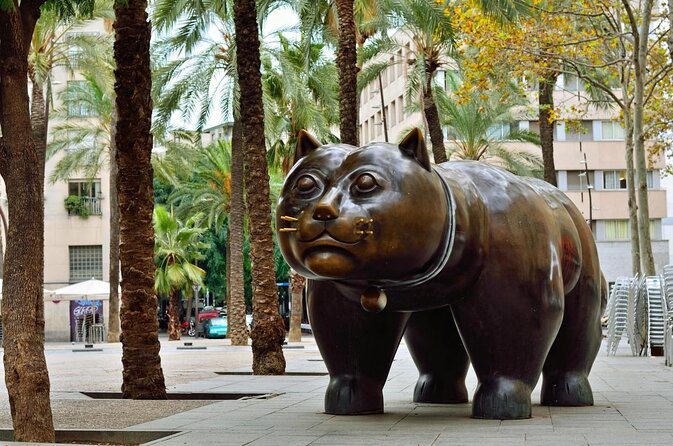
- Crime-story context in El Raval that turns murals into history you can read
- Joan Miró’s pavement mosaic on La Rambla, right where most people just walk through
- Gothic Quarter contrasts: Roman and medieval stone beside modern spray-paint storytelling
- Picasso-linked art moments during the Gothic Quarter stop
- El Born’s optical illusion street art plus the famous staring building facade
- Santa Caterina Market murals and the wavy, Gaudí-inspired roof detail
Street Art With a Story, Not Just a Sight List
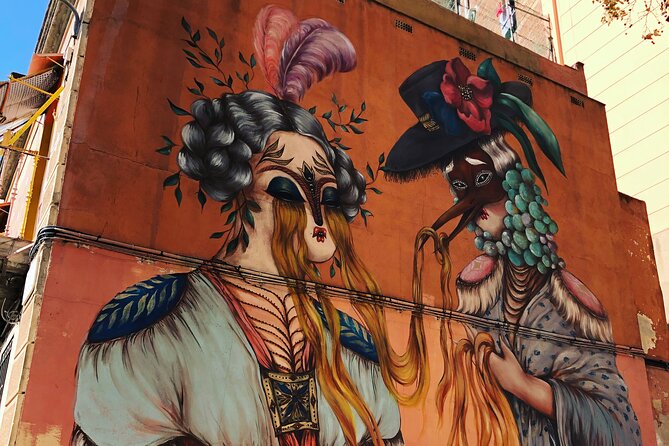
Barcelona has plenty of street art tours. What makes this one feel different is the way it connects art to the neighborhoods that produced it—especially where the past got dark. You don’t just get labels like graffiti or mural; you get reasons. Why did people paint there? What did they want to say? And how did the area change from trouble and fear to something people now wander for art?
I also like that the tour is timed to how you actually want to see street art. It’s not one long slog in the sun. You move from stop to stop—Raval first, then La Rambla, then the Gothic Quarter, and finally El Born. Each area has a different mood, so you’re not repeating the same visual style over and over.
Finally, the guide’s role is practical, not just explanatory. If you care about where to eat and what to do next, that end-of-tour recommendations list is genuinely useful. I’d rather have a guide point me toward a good coffee than hand me a long list of “must-sees” I’ll ignore later.
You can also read our reviews of more walking tours in Barcelona
Starting near Carrer Nou de la Rambla: how the route sets you up
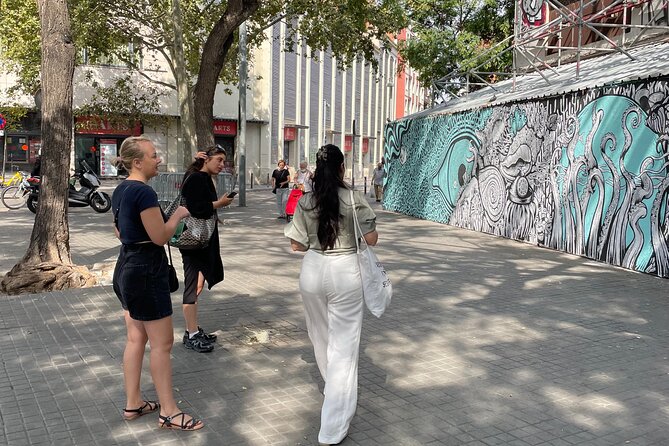
Your walk begins at Carrer Nou de la Rambla, 105 in Ciutat Vella, and you’ll finish at Carrer Antic de Sant Joan, 7 in Born (near Ciutadella). That finish matters because Born is a natural place to keep exploring right after the tour—whether you want markets, bars, or more wandering.
Since the tour is offered in English and runs throughout the day window shown (typically 7:00 AM to 8:00 PM), you have some flexibility. Still, since the tour is often booked ahead (on average about a month in advance), I’d plan earlier if you want a specific day and time.
Transportation-wise, it’s described as near public transport, and the meeting point is in central Ciutat Vella. If you’re using transit, you’ll likely find it easy to reach. If you’re already walking all day in the old city, you’ll also find the start point makes sense.
El Raval: murals, mosaics, and crime-story context that makes the art click
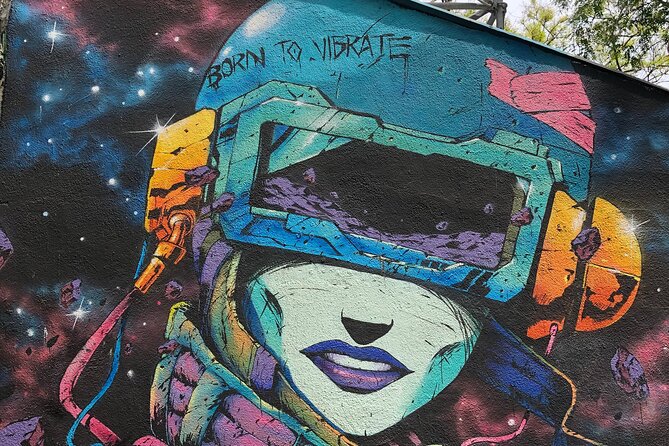
Time on this stop: about 1 hour.
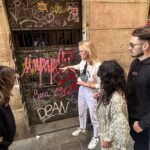
El Raval is the neighborhood that feels like it doesn’t care about being tidy. It’s known for layered cultures and for art that speaks loudly. On this stop, the goal is to show you how street art can act like local memory—especially the kind tied to darker episodes.
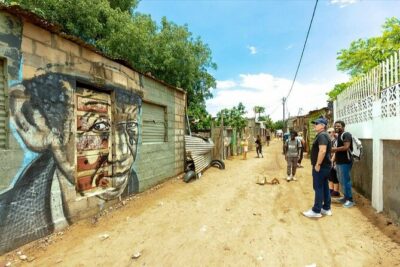
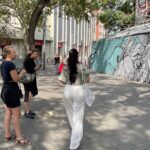
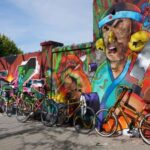
You’ll look for large-scale murals showing social struggles and local legends. You’ll also hunt for smaller work tucked into alleys and doorways, where you have to slow down to spot it. This is one of the best parts of the tour if you enjoy “seeing the seams” in a city—where people hide details in plain sight.
There’s also a specific historical thread included here: the site of a dramatic historical killing that inspired neighborhood art. That’s the kind of information that changes how you read the walls. Instead of thinking of the murals as random visuals, you start seeing how artists responded to fear, conflict, and community survival.
The tour also points out iconic mosaics symbolizing Raval’s rebellious spirit. And that’s where mosaics are extra fun: they can feel older, more crafted, yet they still get used in storytelling the same way a spray-painted mural does.
Practical consideration: Raval includes alleys and tighter streets. That’s part of the charm, but if you’re sensitive to crowds or you hate uneven sidewalks, it’s worth wearing grippy shoes.
La Rambla: Joan Miró’s pavement mosaic and thought-driven murals
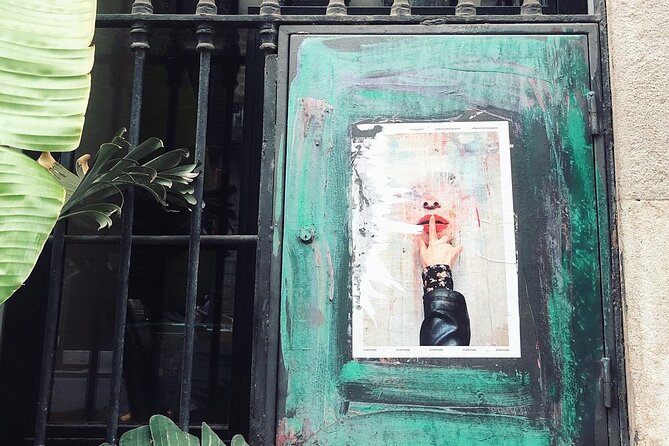
Time on this stop: about 20 minutes.
La Rambla is one of those streets where you’ll see buskers, shopfronts, and nonstop foot traffic. Most people treat it like a walkway between bigger attractions. Here, it becomes an open-air gallery.
The standout is Joan Miró’s famous mosaic artwork embedded in the pavement—a colorful tribute that many people step over without realizing it. This is the moment where the tour nudges you from passive sightseeing to active noticing. When you know where to look, the street stops being scenery and becomes a message.
You’ll also spot contemporary street art that leans philosophical—work tackling identity, freedom, and the feel of city life. That combination is interesting because it doesn’t stay in one era. It’s modern questions layered over a tourist-famous boulevard.
Ticket note: for this stop, admission is listed as free. So in the cost calculation, this is a lower-friction block of time—no extra entry fees to worry about.
Practical consideration: La Rambla can feel packed. If you’re aiming for clear photos, you may want to be patient for a gap in foot traffic or adjust your angle.
Gothic Quarter: Roman and medieval stone meets modern street art
Time on this stop: about 20 minutes.
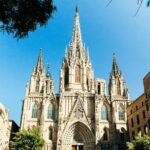
The Gothic Quarter is Barcelona’s ancient core, the kind of place where you’d expect history to stay locked behind stone walls. Instead, this stop focuses on the collision: old Roman and Gothic structure right beside bold contemporary street art.
You’ll see modern murals that blend into Gothic arches and Roman ruins. That contrast is the entire point. A thousand-year-old streetscape suddenly has modern voices speaking across time. If you’ve ever felt like you had to choose between “old Barcelona” and “new Barcelona,” this is where the tour makes that choice disappear.
The tour also highlights hidden contemporary pieces tucked into ancient alleys and courtyards. That’s another reason I like this stop: it trains you to look up, look sideways, and stop assuming the best view is the one straight ahead.
There’s a Picasso connection included here—artworks created by Picasso himself during his early Barcelona days. Even without long museum-style explanation, the guide framing helps you see why it fits the streets around you.
Practical consideration: This area is compact and architectural. If you’re prone to dizziness in tight spaces or you move slowly, plan extra care. The stop is short, but you’re still moving through old lanes.
A few more Barcelona tours and experiences worth a look


El Born / La Ribera: optical illusions, the staring building, and Santa Caterina
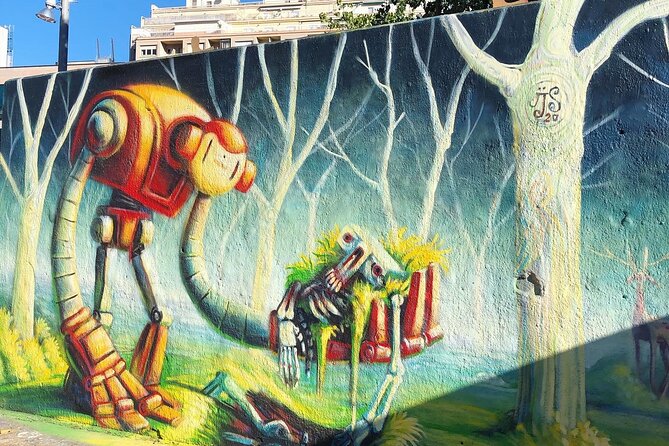
Time on this stop: about 40 minutes (the longest block after Raval).
Born is where street art starts feeling like performance art. It’s part creative neighborhood, part entertainment district, and part market life. This stop leans hard into visual tricks and recognizable landmarks.
You’ll look for optical illusion street art created by internationally known local artists. These are the pieces that make you step back, tilt your head, and realize your brain has been fooled. It’s fun in a very “wait, how did they do that?” way.
Then there’s the famous staring building facade—an eerie modernist structure where windows and details seem to watch you as you pass. It’s the kind of artwork that turns your walk into an experience. You’re not just looking; you’re part of the scene.
Next up: murals around Santa Caterina Market, with its wavy Gaudí-inspired roof. Even if you’re not a Gaudí superfan, it’s hard not to appreciate how the roof shape changes the whole streetscape. The guide’s job here is to connect that architecture mood to the mural work around it.
Ticket note: this stop is listed as free for admission. So you get more street art time without extra entry fees.
Practical consideration: Since the finish is in Born, you’ll likely keep walking after the tour. If you’re planning a big dinner later, consider eating earlier so you’re not competing with the after-tour crowd.
Price and Value: what $108.37 buys you in real terms
At $108.37 per person for roughly 2 hours 30 minutes, the price isn’t “cheap,” but it’s also not mystery-meat expensive. Here’s why it can feel like good value if street art is your thing.
First, you’re paying for a guide who interprets context. Street art is easy to consume as aesthetics. It’s harder to understand as social commentary. The guide stops you, points you to details, and gives you the story behind what you’re looking at—especially in Raval and the Gothic Quarter.
Second, the group size limit (up to 15 travelers) matters. A larger group often turns a street tour into a hurried shuffle. A smaller one makes Q&A and slower looking possible.
Third, part of the cost includes admissions at certain stops, while other stops are free. That means not every minute is dependent on extra tickets, and you don’t feel like the price is a way to pass along entry costs.
If you’re the type who likes art but hates wasting time at generic photo stops, this pricing can make sense. If you only want a quick highlight reel and you’re skipping the explanations, you might feel like you could DIY part of the route. The difference is whether you come for stories or just images.
The guide experience: why Liliia and Leila keep coming up
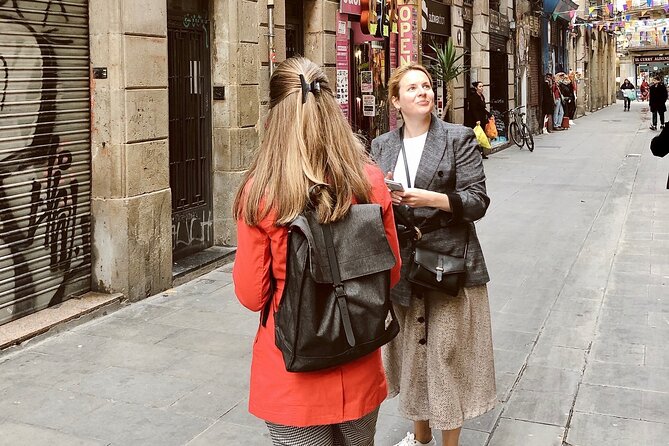
Across the feedback you shared, one name keeps shining through: Liliia. People describe her as super friendly and as someone who takes time to explain both history and context behind the street art. In plain terms, that’s what you want on a tour like this. If you’re paying for guidance, you want interpretation you can actually use while you’re still standing in front of the wall.
There’s also consistent praise for the way the tour teaches you to see more than you expected. “Lesser known parts” and not doing the same route everyone does show up clearly. That aligns with how the tour is structured: it moves beyond “famous street photos” and into alleys, doorways, and courtyard corners where the art gets more personal.
Food recommendations show up too. You’ll get guidance for coffee spots, bars/restaurants, and even lunch ideas. Since snacks aren’t included, these suggestions are more than a nice extra—they help you plan the rest of your day without guessing.
Practical tips to make the walk easier
Here are the small things that can make or break a street tour like this.
- Wear comfortable shoes. You’re moving for about 2.5 hours, and old sidewalks can be uneven.
- Consider bringing water and a light snack before you start. Snacks aren’t included, and the route packs multiple neighborhoods into one session.
- Bring a phone battery plan. You’ll likely want photos of pavement mosaics, illusion pieces, and market murals.
- Expect a mix of open streets and tighter lanes. That’s where you’ll find smaller work, but it also means more stop-and-go walking.
- If you’re booking in advance, do it early. The tour is commonly reserved about a month out, on average.
If you want the tour to fit your group, it notes that it can be customized. If you have a specific street art style you like—political, illusion, mosaics—this is worth asking about when you book.
Who should book (and who might not)
This is a great match if:
- You like art that has a social edge, not just pretty murals.
- You enjoy history, even when it’s told through crime stories and community change.
- You want a guide to help you spot what you’d miss on your own, like pavement art and tucked-away works.
It’s not the best match if:
- You hate walking in older neighborhoods with lots of turns.
- You only want brief “best-of” stops with minimal explanation.
- You’re expecting snacks or a sit-down experience.
If you’re in Barcelona for a short trip and you’ve already seen the big museum stuff, this is a nice second layer. It gives you street-level meaning without needing a whole extra day.
Should you book this Barcelona street art walking tour?
If you’re excited by the idea that street art is part history, part protest, and part art game, I’d book it. The route makes sense: Raval for the darker story angle, La Rambla for the Miró mosaic surprise, the Gothic Quarter for old stone meeting modern paint, and El Born for the illusion and market-mural finish.
You’re paying for context and pacing, not just visuals. And with a small group size and a guide who shares practical recommendations, it’s the kind of tour that can keep paying off after you leave the last stop.
FAQ
How long is the Street Art, Sculptures & Crime Stories Walking Tour in Barcelona?
The tour lasts about 2 hours 30 minutes.
What does the tour cost per person?
The price is $108.37 per person.
What language is the tour offered in?
The tour is offered in English.
How many people are in the group?
This activity has a maximum of 15 travelers.
Where does the tour start and end?
It starts at Carrer Nou de la Rambla, 105, Ciutat Vella, and finishes at Carrer Antic de Sant Joan, 7, in Ciutat Vella/Born.
Which neighborhoods are covered?
The tour covers El Raval, La Rambla, the Gothic Quarter, and El Born / La Ribera.
Are admission tickets included?
Admission is listed as included for the El Raval stop and the Gothic Quarter stop. La Rambla and El Born / La Ribera are listed as free.
Are snacks included?
No, snacks are not included.
How do I get the tickets?
You’ll receive a mobile ticket.
Can I cancel for a full refund?
Yes, you can cancel for a full refund if you cancel at least 24 hours before the experience’s start time. If you cancel less than 24 hours before, the amount you paid will not be refunded.