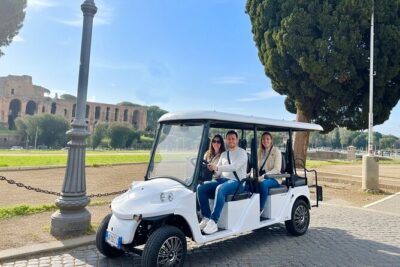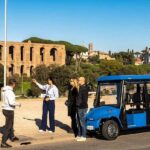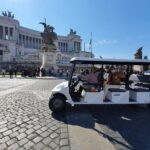
Rome is big; walking it all takes stamina. This 3-hour golf cart loop is a smart way to get your bearings fast, with stops built around iconic monuments and real explanations from the guide, usually Onofrio. Two things I really like: the hotel pickup (within golf-cart range) and the way the ride turns famous facades into places with context you’ll remember. One possible drawback: you’ll view several major sights from the outside, and key entrances (like the Pantheon and Colosseum) aren’t included in the ticket price.
I also like that this tour is paced for people who still want photos and good conversation without burning out. The group max is 7, the tour runs about 3 hours, and Italian ice cream is included as a break from the Roman heat.
Before you go, plan for reality: Rome’s crowd energy hits hard at places like Trevi, and the experience requires good weather. If the sky is bad, you’ll be offered a different date or a refund, so keep that in mind.
In This Review
- Key points to know before you ride
- Why a 3-Hour Golf Cart Tour Is a Smart First-Day Move
- The Pantheon Stop: Outside Views With Enough Context
- Piazza Navona and Piazza Colonna: Where Art Meets Power
- Trevi Fountain and Piazza di Spagna: Getting the Most From 20 to 30 Minutes
- Quirinale Palace: A Quick Look at Government Rome
- Colosseum From the Road: Great Overview, Tickets Needed for Inside
- Altare della Patria (Vittoriano) and Isola Tiberina: Views Plus a Breather
- Trastevere Streets and the Janiculum Terrace: The Best Way to Close the Loop
- Price and Value: Is $167 Worth It?
- Practical Tips to Make This Tour Go Smoothly
- Should You Book This Rome Golf Cart and Gelato Tour?
- FAQ
- How long is the golf cart tour?
- Is hotel pickup included?
- What’s included besides the ride?
- Do I need to buy tickets for the Pantheon and Colosseum?
- Are Vatican tickets included?
- How big is the group?
- What happens if the weather is bad?
Key points to know before you ride
- Small group size (max 7) keeps the stops feeling human, not like a cattle chute
- Hotel pickup within golf-cart range saves you from long walks to a meeting point
- Onofrio’s storytelling helps you connect what you’re seeing to what came before
- Outdoor viewing at major landmarks means less time waiting, but extra ticketing for interiors
- Included gelato/ice cream break turns the tour into a treat, not just sightseeing
Why a 3-Hour Golf Cart Tour Is a Smart First-Day Move
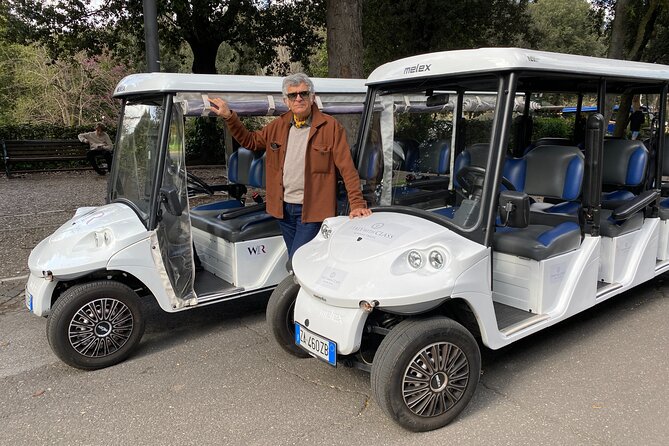
Rome can overwhelm you quickly. Streets twist, distances surprise you, and the “I’ll just walk to that next place” plan can turn into a sore-knee saga. This golf cart tour fixes that by giving you a tight loop that hits the big-name sights in about 3 hours without requiring you to negotiate every turn on foot.
The value here isn’t just transportation. It’s the rhythm. You get short, focused stops (usually around 20 minutes or less at several highlights) paired with story time from your guide. That combo is great on day one, because you learn the layout and then know where to return later for deeper visits.
Also, the practical part matters: the tour uses private transportation, and it’s designed to keep the experience comfortable. People often mention the benefit of staying shaded in summer, and the golf cart layout makes it easier to take photos while moving along.
The one thing to keep straight: this is not a “skip-the-line to everything” plan. Entrance tickets aren’t included for some stops, and several sites are primarily viewed from the outside. Think of this as an excellent intro and overview, then build your own follow-up days with tickets where you want interiors.
A few more Rome tours and experiences worth a look

The Pantheon Stop: Outside Views With Enough Context
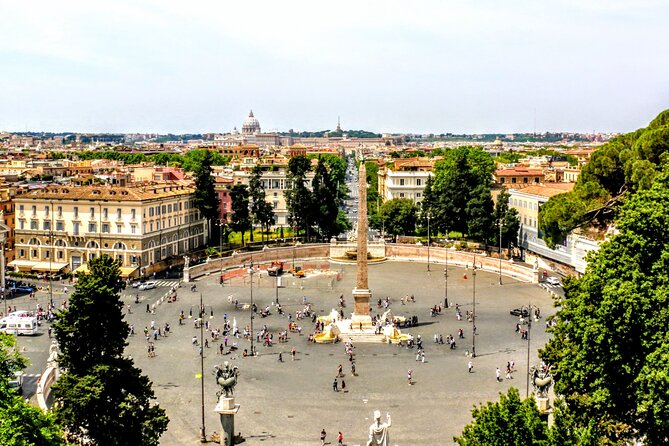
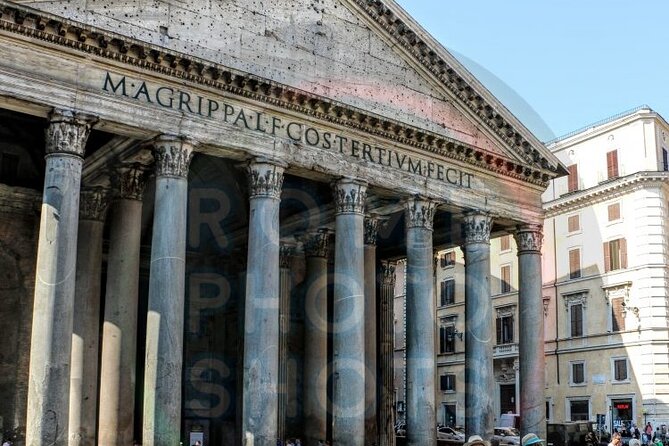
The tour’s first major anchor is the Pantheon. You’re not inside for long—this stop is focused on seeing the monument from the outside (about 20 minutes) and getting the key details that make it make sense.
Why that works: the Pantheon is one of those buildings where the shape is the story. The dome and the famous opening in the center are the kind of visual facts you’ll notice immediately if someone points them out. Even a quick stop becomes more rewarding when you know it dates back to 125 AD and has stayed central to Roman identity and architecture ever since.
A practical consideration: the Pantheon admission isn’t included here (ticket cost is listed as €7). If you want to go inside, you’ll need to plan that as a separate visit. But as a starter, seeing it from outside first can actually help you decide whether interior time is worth it for your schedule.
Tip for your photo brain: aim for a spot where you can frame the dome without walking too far. This stop is short, so move once, then shoot.
Piazza Navona and Piazza Colonna: Where Art Meets Power
After the Pantheon, you roll into Piazza Navona, a classic Roman baroque square known for its three fountains. The highlight for many people is the Fountain of the Four Rivers by Gian Lorenzo Bernini. You get about 20 minutes here, plus plenty of time to soak in the “square life” feeling—cafés around the edges, people watching, and the kind of architecture that looks like it’s performing even when it’s not.
What I like about this stop is how it changes the tempo. The Pantheon is monumental and ancient; Piazza Navona is theatrical and street-level. If you’ve been walking all day, Navona is an easy place to sit, stand, or drift—without getting lost.
Then there’s Piazza Colonna for a quick hit (around 5 minutes). This is a “check it off” square, dominated by the Column of Marcus Aurelius. It’s a reminder of Rome’s imperial scale and how power was literally carved into stone.
If you want a takeaway: Navona is about visual storytelling in motion, while Piazza Colonna is more about staying power—how long symbols can hold their meaning.
Trevi Fountain and Piazza di Spagna: Getting the Most From 20 to 30 Minutes
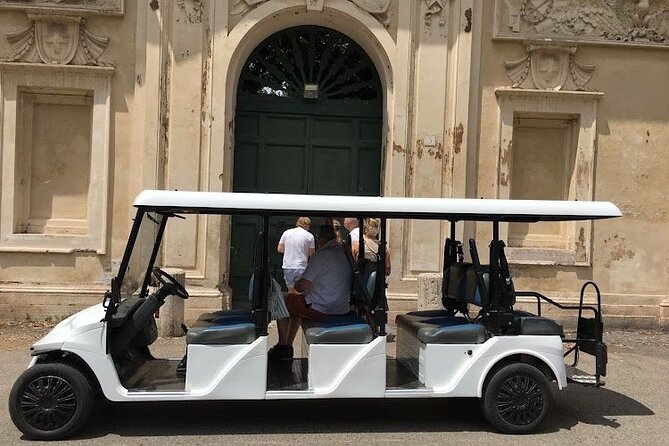
The tour walks you through the heart of postcard Rome: Trevi Fountain and Piazza di Spagna.
Trevi gets about 20 minutes, and while the fountain is always busy, this timing is usually enough for the iconic photo moment and a coin-throw legend overview. The entrance fee isn’t part of this stop (listed as free), so your main “ticket” is patience with crowds.
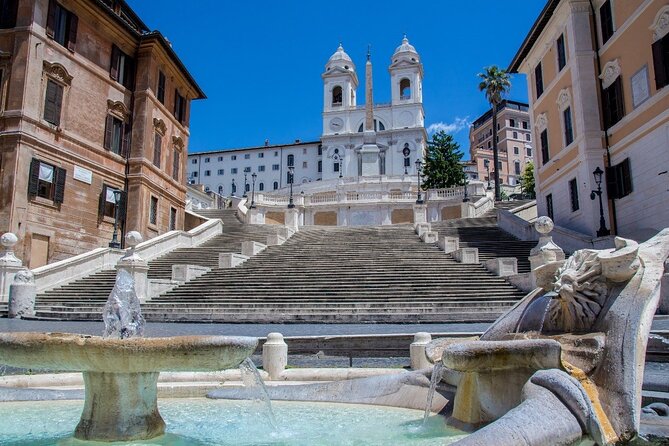
Piazza di Spagna is longer—about 30 minutes. This area centers on the Spanish Steps, Trinità dei Monti, and the Barcaccia Fountain by Bernini. Around it, you also get the mix of high-end shopping streets and café energy.
Here’s how I’d approach these stops to make your time count:
- Do your main photos first. Don’t wander and then realize you only have 3 minutes left.
- Pick a viewpoint for Trevi where the crowd isn’t blocking your frame.
- For the Spanish Steps area, it helps to plan one “target”: either the staircase view or the fountain sightline. Trying to do everything at once is how time disappears.
Also note: entrances for places tied to churches and major sites in this zone aren’t included beyond what’s explicitly listed. If there’s an interior visit you care about, build it separately.
Quirinale Palace: A Quick Look at Government Rome
One of the nice surprises in the route is a stop at the Quirinale area, described as the official residence of the President of the Italian Republic. Even without long time inside, you get a glimpse at a different side of Rome: political and cultural power, expressed through architecture and the scale of the grounds.
This stop is shorter in practice because the tour is built around quick transitions. But it adds variety. Most first-time itineraries bounce between ruins and baroque squares. Quirinale gives you a reminder that Rome is still Rome—an active capital, not a museum with traffic lights.
If you’re the type who likes “why does this building matter” moments, this is a good stop for you.



Colosseum From the Road: Great Overview, Tickets Needed for Inside
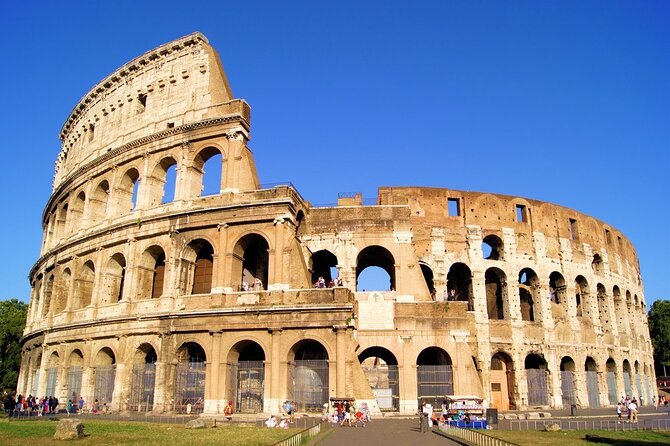
Next up is the Colosseum, with about 30 minutes for an outside viewing experience. The price data you’ll want to know: Colosseum admission isn’t included, with a starting cost listed at €15 per person.
This matters because the Colosseum is one of those places where inside access often feels like the difference between seeing a monument and really understanding it. If you want to go in, you’ll need to budget ticket time and money separately.
That said, as an overview, the exterior is still powerful. You can study the mass of the structure from a distance, get the big-picture story of gladiatorial spectacles, and understand why the Colosseum has become a symbol for ancient Rome.
My advice: use this stop to decide what kind of Colosseum visit you want later. If you like scale and photos, the outside may be enough. If you love details and want to walk the history, add an interior ticket day.
Altare della Patria (Vittoriano) and Isola Tiberina: Views Plus a Breather

After Colosseum, the route includes the Altare della Patria, also called the Complex of the Victor/Altar of the Fatherland (listed as “Complex of the Victorian Ala Brasini”). You get about 10 minutes. It’s known for Italian national unity symbolism and for the sculptural details that dominate the square, plus it’s positioned for good city views.
Then you slow down for a calmer pause at Isola Tiberina (Tiber Island), around 5 minutes. This is a small river island connected by ancient stone bridges and surrounded by long layers of story, including the Basilica of San Bartolomeo. It’s a quick reset from the big monuments.
I like these two stops because they act like a buffer:
- Vittoriano is a “wow, big structure” moment.
- Isola Tiberina is a “breathe, look, and reset your brain” moment.
If you’re visiting in hotter months, these short breaks are more valuable than they seem. They keep the whole tour from turning into one long sprint.
Trastevere Streets and the Janiculum Terrace: The Best Way to Close the Loop
The tour finishes with a taste of Rome’s everyday soul.
You spend about 15 minutes in Trastevere, known for narrow cobbled streets and medieval-feeling architecture. You also get the atmosphere: cafes and traditional restaurants nearby. Even without a long stop to eat, this is where Rome feels lived-in rather than staged.
Then comes the Terrazza del Gianicolo (Janiculum Hill) for about 20 minutes. This is the payoff view: you look over the city, including the dome of St. Peter, plus the wider skyline. The terrace is a popular spot for dramatic city views, and it’s described as especially emotional at sunset—so if your timing lines up, it’s worth staying present for it.
In my view, closing with a viewpoint is the right call. By the time you reach the terrace, you understand the shape of Rome enough to appreciate what you’re seeing.
Price and Value: Is $167 Worth It?
At $167.01 per person for a roughly 3-hour experience, you should ask: what are you paying for?
You’re paying for three things that add up in Rome:
- Transportation that keeps you comfortable and saves walking time
- Guided orientation that turns monuments into understandable stories
- A planned pace that fits a short visit, especially if you’re already tired from days on your feet
It’s also a smaller-group experience (max 7 travelers), and that matters when you’re trying to ask questions and get real answers rather than shouting over engines and other voices.
Ticket costs are separate for major interiors, specifically listed for:
- Pantheon (€7)
- Colosseum (starting from €15)
- Vatican (starting from €20, though your route includes other stops on this tour)
So the value is strongest if you use this tour as your overview plan and then pick one or two ticketed interiors you care about most.
Booking timing also hints at demand: it’s commonly reserved about 57 days in advance, so if your dates are tight, don’t wait too long.
Practical Tips to Make This Tour Go Smoothly
A few tips will help this tour feel effortless:
- If your hotel is close enough for golf-cart pickup, take advantage of the pickup window. The tour notes say the team comes about 5 minutes before start time and stays within golf-cart range.
- Keep your priorities straight: decide in advance whether you want interiors later for the Pantheon and Colosseum. This tour sets you up to choose well.
- Bring a phone camera strap or compact bag. You’ll be moving at multiple landmarks, and you don’t want to fight with your stuff while trying to frame shots.
- Wear shoes you can stand in. Even with the cart, you’ll walk short distances at stops and stand for views.
- If the weather is questionable, check the day-of plan. The experience requires good weather, and options include rescheduling or a refund.
Should You Book This Rome Golf Cart and Gelato Tour?
If you want an easy, efficient overview of Rome in a short time, this is a great choice. It’s especially good for first-time visitors who want a map in their head by the end of the ride, people who don’t want to spend every day walking, and anyone who prefers a small group format.
I’d skip it or add interiors later only if you’re the kind of traveler who expects every major site to include paid entry and long inside time. Here, you’re getting the outside sights and the stories, plus that included ice cream break.
For most people, it hits the sweet spot: fast orientation, smart stop pacing, and a fun way to see Rome without exhausting yourself.
FAQ
How long is the golf cart tour?
The tour duration is about 3 hours.
Is hotel pickup included?
Pickup is offered. You’ll be picked up 5 minutes before the tour start time at your hotel, as long as it’s within golf cart range.
What’s included besides the ride?
The tour includes snacks: Italian ice cream, plus private transportation.
Do I need to buy tickets for the Pantheon and Colosseum?
Yes. Entrance tickets to the Pantheon and Colosseum are not included. The Pantheon is listed at €7, and Colosseum tickets start from €15.
Are Vatican tickets included?
No. Entrance tickets to the Vatican are not included and start from €20.
How big is the group?
The tour has a maximum of 7 travelers.
What happens if the weather is bad?
The experience requires good weather. If it’s canceled due to poor weather, you’ll be offered a different date or a full refund.