Marble perfection, plus a hands-on art stop. This private day from Delhi pairs the Taj Mahal and Agra Fort with a real look at how Persian-style carpets are made at Mughal Carpet. I like the way the guide turns monuments into stories, so you feel what mattered to the Mughal Empire—not just what to photograph.
I also like the pacing: you get the Mehtab Bagh sunset angle after the main sites, and the day stays focused with lunch included. One possible consideration: admission tickets for the monuments are not included, so budget for those up front to avoid surprises.
In This Review
- Key points before you go
- Driving from Delhi: why the start matters for your whole day
- Entering the Taj Mahal: more than marble and photos
- Agra Fort: the walled city behind Mughal power
- Mehtab Bagh at sunset: Taj Mahal views from the back
- Mughal Carpet workshop: meet artisans and see rug making by hand
- Lunch included: the small thing that keeps the day enjoyable
- Price and value: what $46 really buys
- Who this tour is perfect for
- Who might want a different option
- Should you book this Art Tour of Agra?
- FAQ
- What is the duration of the tour?
- Is pickup from Delhi included?
- What attractions are included in the day?
- Are admission tickets included for the monuments?
- Is lunch included?
- What is included in the price?
- What is the cancellation policy?
Key points before you go
- Private Delhi-to-Agra transport with a comfortable air-conditioned vehicle and bottled water
- A guide who explains Mughal history and culture while you move between sights
- Taj Mahal visit with time to explore at your pace (plus strong details about marble work)
- Agra Fort as a walled-city experience, not just a quick photo stop
- Mehtab Bagh for Taj Mahal views from the back with sunset photo potential
- Mughal Carpet workshop with artisans + chai, and a chance to see work up close
Driving from Delhi: why the start matters for your whole day

This tour runs as a full circuit day, with you starting in Delhi and heading to Agra by expressway in a private vehicle. That matters because your time inside the monuments depends on how quickly you reach Agra and how smoothly the day flows. The upside of private transport is simple: you avoid the shuffle of random stops and keep your day focused on the places you actually came for.
You also get pickup from your requested location in Delhi, then the day ends back at the meeting point. In an 8-hour experience, that “start-to-finish” setup is worth something. It reduces stress, and it helps you arrive when you’re still fresh enough to enjoy details at the Taj Mahal instead of rushing.
You can also read our reviews of more tours and experiences in New Delhi.



Entering the Taj Mahal: more than marble and photos

The Taj Mahal stop is designed as the centerpiece: you meet your guide, transfer into the site area, and then you can spend about 2 hours looking around. Admission tickets are not included, so plan to pay separately. Once inside, the experience is about absorbing the craftsmanship and the meaning, not just snapping pictures.
I like how the guide-led angle focuses on what you can actually see up close: Persian calligraphy on the marble surfaces and inlaid semi-precious stone work. Those details are easy to miss if you’re just chasing viewpoints. With a guide explaining what you’re looking at, the Taj Mahal shifts from “icon” to a place with layers—letters, patterns, and symbolism built into the stone.
You’ll also appreciate the pacing option here: you’re not forced to sprint. The mausoleum is described as a serene place where the Queen and her beloved rest for eternity, and the tone matters. If you take a few slow minutes for the main chamber areas and then return to the outer marble designs, you’ll feel the building as a whole rather than scattered moments.
Practical note: this is still a monument, so you’ll want comfortable shoes and clothes that respect the site. Also, don’t underestimate glare off marble. Even if you’re not thinking about photos, your eyes will thank you if you’re ready for bright surfaces.
Agra Fort: the walled city behind Mughal power
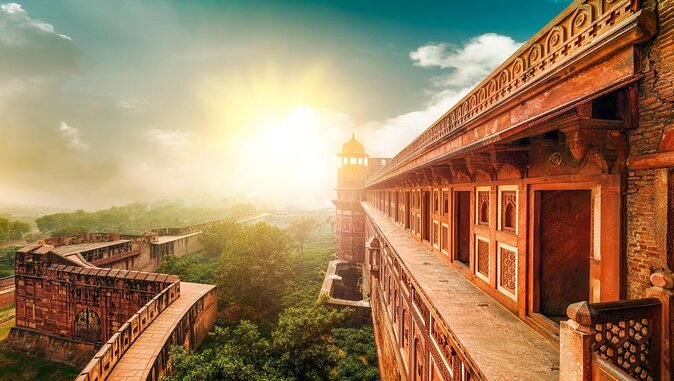
After the Taj Mahal, you move to Agra Fort, about 2.5 km away in the same general heritage zone. This stop is about 2 hours, and again, admission tickets are not included. The fort gets framed as more than a structure—it’s described as a walled city, with high walls and multiple gates.
What I love about this part is the change in perspective. The Taj Mahal is about romance and memorial beauty; Agra Fort is about authority, defense, and residence. The fort was a main residence of the emperors, and it’s tied to the idea that rulers could admire the Taj Mahal from inside the complex. That connection gives you a reason to look beyond walls and into spatial relationships: where you stand changes what you can understand.
The details that stand out here are the four high gates and the fort’s architectural importance. There’s also mention of intricate inlay work, so it’s not just “stone blocks.” It’s carved and decorated in a Mughal style that feels closer to palace craftsmanship than fortress drabness.
A consideration: forts tend to cover more walking and more levels than you expect. If you’re sensitive to stairs or long stretches, keep your pace steady. The tour gives you about two hours, which is enough to see major areas without feeling like you need to sprint between every angle.
Mehtab Bagh at sunset: Taj Mahal views from the back
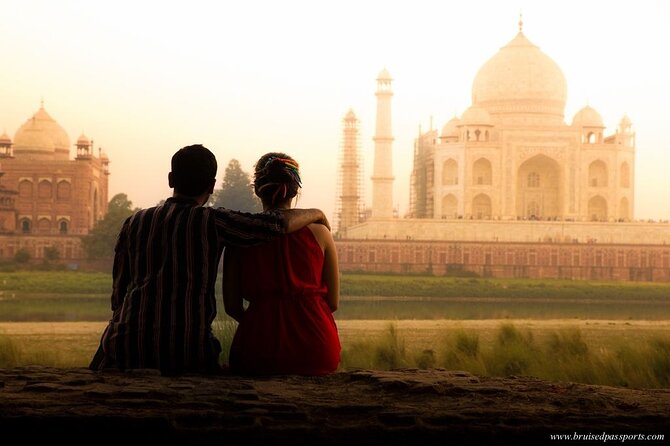
In the evening, you visit Mehtab Bagh, a garden placed behind the Taj Mahal. The point here is clear: you get a chance at the mystical, sunset-style view of the Taj Mahal from across the area. It’s about 2 hours, and tickets are not included.
I like Mehtab Bagh because it offers a different “face” of the same icon. When most people see the Taj Mahal from the main approach, it’s one story. From this side, the framing changes and the light shifts—so the building feels new instead of repetitive. If you care about photography, this is one of the best parts of the day because your angle is built into the location.
Even if you’re not a photographer, use the time for a slower sit. The garden setting helps you unwind after the earlier monument intensity. It’s also a smart way to end the story before you head to the final art stop.
Mughal Carpet workshop: meet artisans and see rug making by hand
The last stop is Mughal Carpet, and it’s short—about 30 minutes—but it’s the most human part of the day. Admission is free here, so you’re not paying extra to step into the workshop. The focus is on handmade rugs, meeting the real artisans who make them, and learning the craft’s Persian connections.
I really like that the workshop is described as a multi-generation family business tied to the kind of heritage that built the Taj Mahal. That context matters. When you hear how the patterns and techniques were passed down, the rug becomes more than a product—it’s proof of craft knowledge surviving across time.
You’ll also get a practical taste of the experience: you can enjoy masala chai and admire the handmade rugs. There’s even mention that you may take pictures with artisans and try some of their work processes. That’s the difference between a showroom and a workshop. A showroom sells; a workshop teaches.
One detail from the best-rated experiences is the emphasis on hospitality and patient explanation. The shop team includes artisans named Imran, and the vibe is described as welcoming and hospitable. Importantly, there’s also mention of no pressure. That’s a big deal on tours like this, because you don’t want your monument day to turn into a sales pitch.


Lunch included: the small thing that keeps the day enjoyable
Lunch is included with the guide. That matters more than it sounds, especially on an 8-hour day. When food is built into the schedule, you don’t lose time hunting for something reliable or trying to translate menus while you’re already tired.
Because the details of the lunch are not specified, don’t assume a specific type of meal. But do assume you’ll have a planned break, with less stress and better timing. If you have dietary needs, it’s smart to communicate those when you book, or directly with your guide on the day.
Price and value: what $46 really buys
At $46 per person, you’re paying for a full, guided day with private transport from Delhi and between sites in Agra. The tour includes bottled water and a guide, plus the lunch. There are also group discounts, and you’ll get a mobile ticket.
The value equation changes because the monument admission tickets are not included. That’s the main thing you’ll add on top of the $46 price. Still, the tour’s structure offers more than transport: the guide explanation is the practical value. Without that, you can visit these places on your own, but you’ll miss the details—Persian calligraphy, inlay work, and the Mughal cultural context that helps the sights click.
Then there’s the workshop stop, which is ticket-free and gives you a real artisan encounter instead of a quick photo moment. That’s also part of why this day feels more like an “experience” than just a route.
Also remember: tips and personal expenses are not included. If you like to tip your guide or photographer-style support, plan a little extra. It keeps the day smooth and avoids the awkward moment of realizing you’re short on cash.
Who this tour is perfect for

This works best if you’re:
- Visiting Agra for the first time and want a guided, story-focused day
- Interested in the Taj Mahal beyond the basics—especially craftsmanship and Mughal context
- Happy to include a short artisan workshop stop at Mughal Carpet
- Traveling with your own group and want a private pace, not a crowded bus shuffle
- Looking for sunset-time views without needing to figure out timing on your own
If you dislike shopping stops, this may still be fine because the carpet segment is framed as seeing live work, meeting artisans, and learning. Just know it is part of the day, and it’s not a drive-by.
Who might want a different option
If your top priority is spending long, uninterrupted hours inside the Taj Mahal and Agra Fort, this schedule might feel tight. You’re getting about 2 hours at Taj Mahal and 2 hours at Agra Fort, plus Mehtab Bagh and the carpet stop. It’s built for flow, not deep, solo wandering.
Also, if you strongly prefer to manage everything independently, the non-included admission tickets and guided structure could feel limiting. But if you want clarity, help, and a day that stays on track, the guided private setup is the point.
Should you book this Art Tour of Agra?
I’d book it if you want a practical, guide-led day that combines the big monuments with a real artisan stop. The Taj Mahal focus is supported by specifics like calligraphy and inlaid stone work, and the Agra Fort stop adds the “walled city” perspective that most short visits skip. Then you finish with Mehtab Bagh for a different angle and a real chance at sunset viewing.
The main reason to hesitate is simple: you’ll need to budget separately for monument admission tickets. If you can handle that extra step, the overall value is strong for a private, focused day with lunch, transport, and artisan access.
FAQ
What is the duration of the tour?
The tour runs about 8 hours.
Is pickup from Delhi included?
Pickup is offered, and you’ll be picked up from your requested location in Agra city and start the experience from Delhi.
What attractions are included in the day?
You’ll visit the Taj Mahal, Agra Fort, Mehtab Bagh, and the Mughal Carpet workshop.
Are admission tickets included for the monuments?
No. Admission tickets for the Taj Mahal, Agra Fort, and Mehtab Bagh are not included. Mughal Carpet admission is free.
Is lunch included?
Yes, lunch is included with the tour guide.
What is included in the price?
Included are transport by private vehicle and bottled water. Lunch is included as part of the experience.
What is the cancellation policy?
You can cancel for a full refund up to 24 hours before the experience starts. If you cancel within 24 hours of the start time, the amount paid is not refunded.