REVIEW · MADRID
Madrid: Guided Tour of the Royal Collections Gallery
Book on GetYourGuide →Operated by Fun and Tickets · Bookable on GetYourGuide
Crown jewels and old ruins share the same roof. This guided visit to the Royal Collections Gallery in Madrid strings together the Spanish Crown through the Trastámara, Habsburg, and Bourbon eras, with stops built around famous artworks and court objects. I especially like how the story stays chronological and how you also get to see the archaeological layer of Islamic Mayrit below the museum. One possible drawback: at just two hours, you’ll see highlights and key connections, not every corner in maximum detail.
Meet at Fun and Tickets, Calle Mayor, 43, and you’ll have a separate entrance to help you skip the main line. The tour includes a live guide in Spanish or English plus an audio guide in both languages, and the explanations are clearly the point here—friendly, organized, and easy to follow.
In This Review
- Key things I’d mark on your mental map
- Inside the new Royal Collections Gallery: what the tour really delivers
- Calle Mayor meet-up and the separate entrance you’ll be glad you used
- Trastámara era: Queen Elizabeth I and the story gets its footing
- Habsburg halls: tapestries, sculptures, and court art from Charles I onward
- La Roldana and Charles I’s armor: the difference between symbolism and hardware
- Velázquez’s The White Horse and the art of court performance
- Bourbon level: furniture, clocks, a 19th-century carriage, and wartime photography
- Basement archaeology: Islamic Mayrit remains under the museum floors
- Price and what $69 buys you in real terms
- Who this tour suits best
- Should you book the Royal Collections Gallery tour?
- FAQ
- Where is the meeting point for the tour?
- How early should I arrive?
- How long is the guided tour?
- What languages are available for the tour?
- Does the price include entry to the Royal Collections Gallery?
- Is there a way to skip the main line?
- What areas are included during the tour?
- What does the tour cover about Spanish history?
- Is Islamic Mayrit included?
- Is this tour wheelchair accessible?
Key things I’d mark on your mental map
- A chronological route through three dynasties: Trastámara, Habsburg, Bourbon
- Queen Elizabeth I portrait used to set the early timeline
- Velázquez’s The White Horse and court imagery you can connect fast
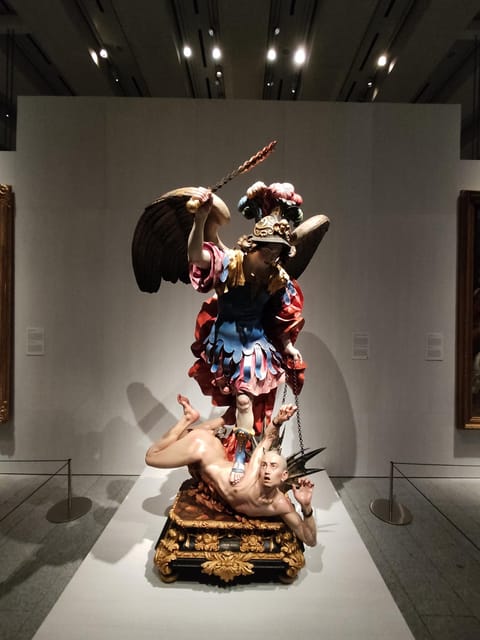
- La Roldana’s Saint Michael relief/sculpture with strong religious symbolism
- Charles I horse and rider armor for a dramatic, material link to power
- Basement Islamic Mayrit remains that add Madrid’s earlier past to the mix
Inside the new Royal Collections Gallery: what the tour really delivers
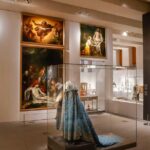
The Royal Collections Gallery opened in June 2023, and that matters because it feels like a modern museum built to explain the Spanish Crown instead of just putting objects on display. The guided tour leans into that purpose: you walk through the collection in a timeline format that moves from the Trastámara era into the Habsburg period, then up through the Bourbon reigns.
You’re not only looking at paintings. You’ll also meet tapestries, sculptures, artifacts, plus later rooms that include furniture and clocks—and even a 19th-century carriage. The tour also steps into the basement for archaeological remains connected to Islamic Mayrit, the earlier city layer that was uncovered during the gallery’s construction.
For you, the value is speed plus clarity. In a couple of hours, you get the big court names, the main styles, and the recurring themes—power, religion, ceremony, and how a monarchy presents itself through art and everyday objects.
You can also read our reviews of more guided tours in Madrid

Calle Mayor meet-up and the separate entrance you’ll be glad you used
You’ll meet at Fun and Tickets at Calle Mayor, 43. You should plan to be there on time because the operator waits 20 minutes before the visit starts.
This tour is built for getting inside without drama. You use a separate entrance for the guided group, which helps you avoid spending your limited time queueing. The guide-led timing is also important here: if you’re visiting Madrid with tight pacing, a focused two-hour route is easier to fit than a half-day museum wander.
And yes—if you use a wheelchair, this tour is marked as wheelchair accessible, so you’re not forced into the usual “hope you can manage the stairs” situation.
Trastámara era: Queen Elizabeth I and the story gets its footing
The tour begins in the Trastámara era. This is where the guide sets the chronology so the later rooms don’t feel like a random mix of centuries.
The early focus includes Queen Elizabeth I and her iconic portrait. Even if you already know the name, seeing how she fits into the Spanish Crown story is a different experience than a stand-alone portrait in an art textbook. A monarch’s image wasn’t just decoration. It was political messaging, court communication, and a way to project legitimacy across borders.
I like the way this start works. You leave the opening room understanding what you’re about to see: a collection shaped by dynastic identity, not just individual masterpieces.
Practical tip: during this first stop, pay attention to how the guide frames the timeline. It’s the foundation for everything after.
Habsburg halls: tapestries, sculptures, and court art from Charles I onward
Next come the Habsburg chamber rooms, covering the reigns of Charles I, Philip II, Philip III, Philip IV, and Charles II. Expect a strong “court world” feeling: you’ll move through spaces filled with a mix of tapestries, paintings, sculptures, and artifacts tied to these rulers.
This is one of the best parts for anyone who likes to connect art to context. The guide doesn’t treat the collection like a list. The pacing pushes you to notice how court culture changes as power shifts, and how religious and political ideas travel through different art forms.
A few standout elements you’ll specifically be pointed toward:
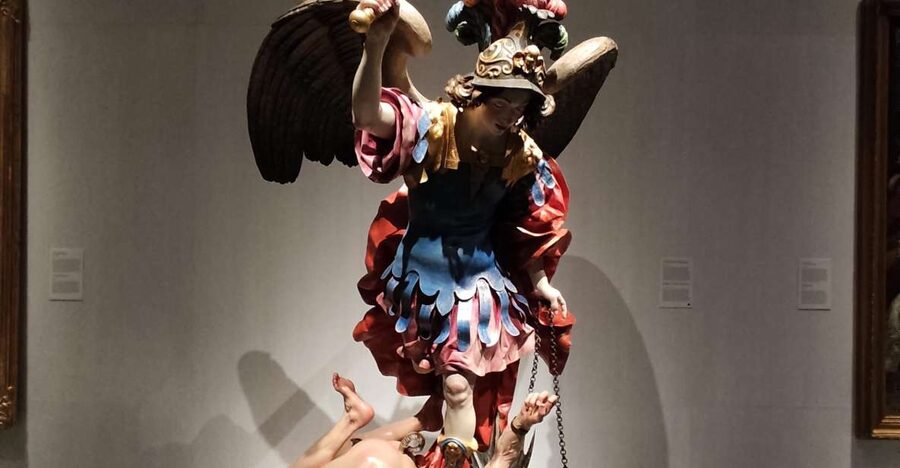
- La Roldana’s sculpture representing Archangel Saint Michael triumphing over the devil
- Diego Velázquez’s The White Horse
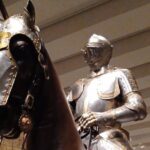
- Horse and rider armor once worn by Charles I
If you’re a first-timer, this is the “name recognition plus meaning” zone. If you’re already into Spanish art, it’s still a great refresher because the tour connects famous works to the court machine that produced them.
La Roldana and Charles I’s armor: the difference between symbolism and hardware
In the Habsburg section, the guide’s selections create a clever contrast.
On one side, you have La Roldana’s Saint Michael theme—the kind of artwork where symbolism does heavy lifting. Saint Michael winning over the devil isn’t just spiritual drama; it’s a visual statement about order, authority, and the idea that good must defeat chaos.
On the other side, you have Charles I’s horse and rider armor. That’s not symbolic in a gentle way. It’s physical. It communicates power in metal, design, and the spectacle of having an outfitted body ready for command.
When you pair those two, you start to see a pattern: monarchy expresses itself through both narrative and objects you can almost imagine touching. That’s the tour’s quiet strength. It nudges you past passive looking and into noticing what different materials are trying to do.
You can also read our reviews of more museum experiences in Madrid


Velázquez’s The White Horse and the art of court performance
The guide also points out Velázquez’s The White Horse. The subject is distinctive: a riderless horse that still feels controlled, composed, and full of presence.
What makes this work especially worth seeing on a guided tour is that you’re not just looking at a famous painter. You’re learning how court imagery can suggest status even without obvious action. That’s a useful lesson for the rest of the collection. You start recognizing how artists communicate power through pose, attention, and the way figures occupy space.
If you love art that works on more than one level—style plus message—this stop is a highlight.
Bourbon level: furniture, clocks, a 19th-century carriage, and wartime photography
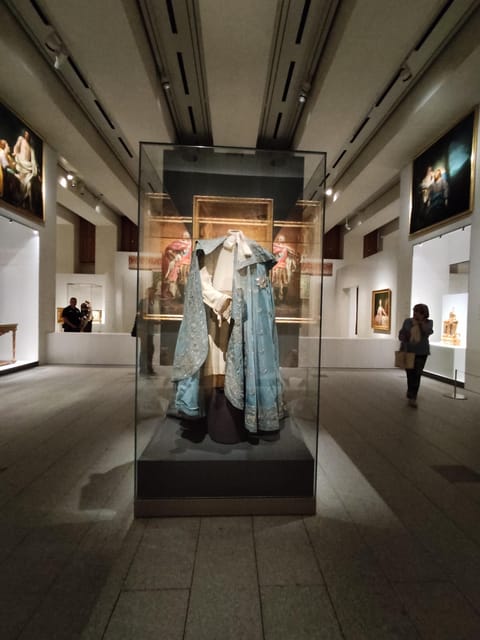
Then the tour moves to the Bourbon level, covering reigns from Philip V through Alfonso XIII. This area shifts tone. The collection here leans more heavily into objects that reflect daily court life and state representation.
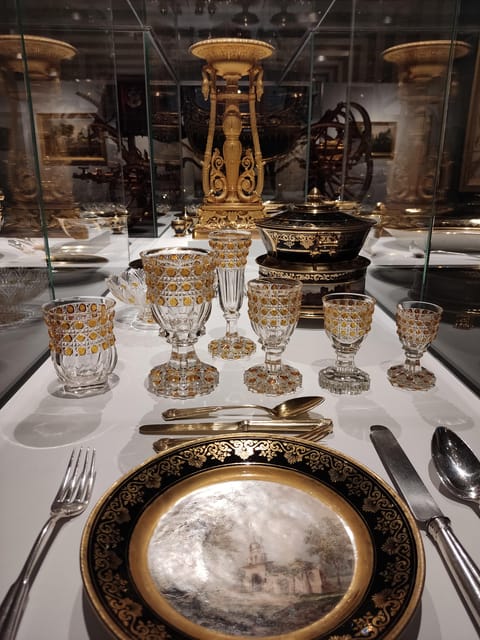
You’ll find a large presence of 18th-century material including:
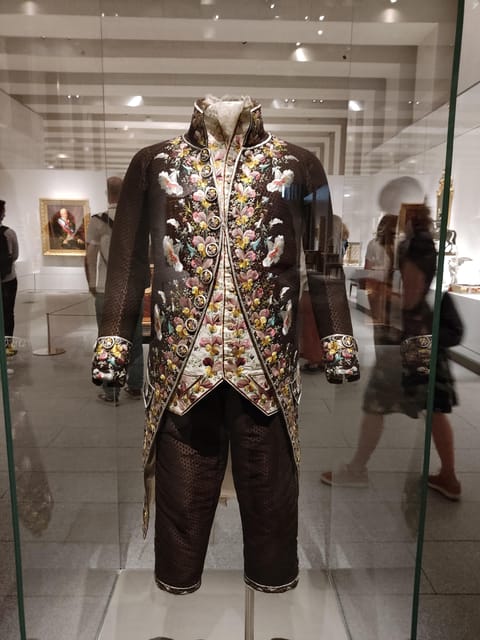
- Furniture
- Clocks
- Tapestries
- Paintings
It’s a nice change of pace from the earlier emphasis on portraiture and religious symbolism. For you, it makes the monarchy feel less like distant legend and more like a functioning system of rooms, routines, and display.
Two additional elements are specifically called out:
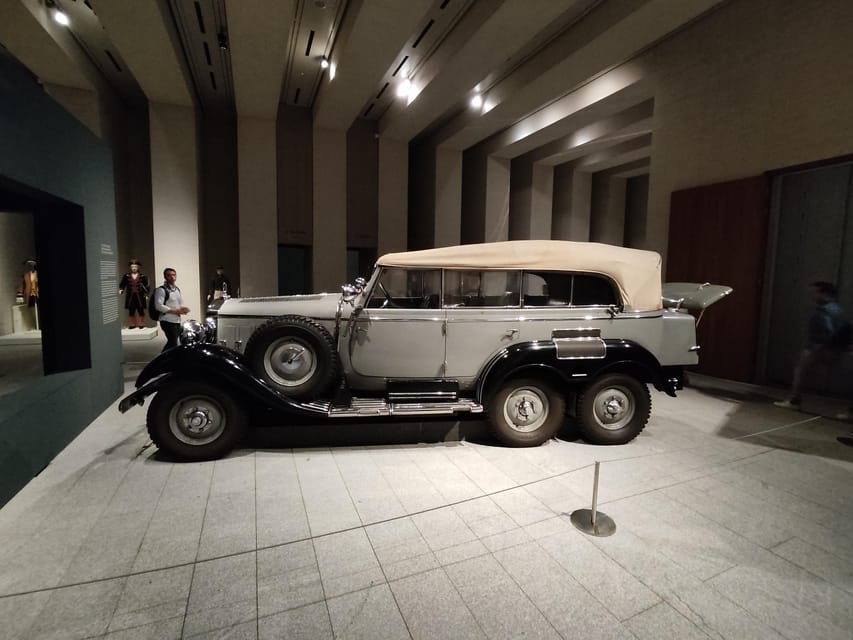
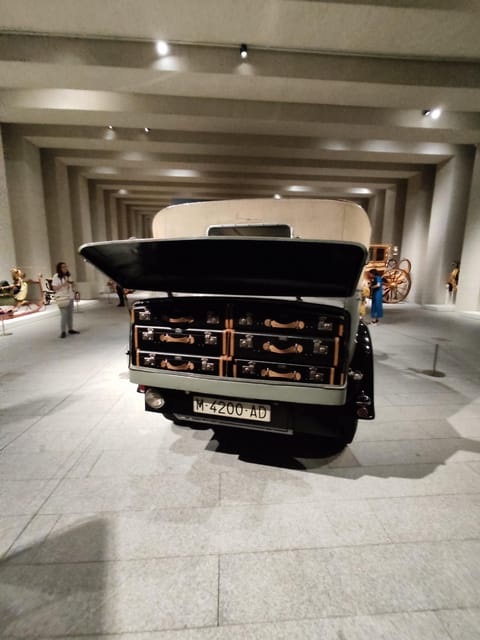
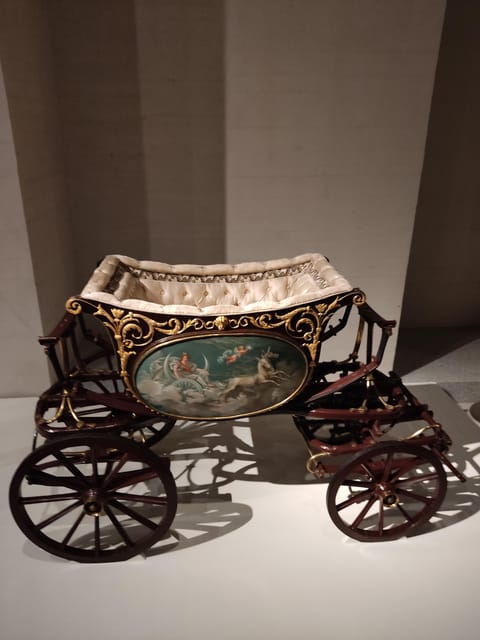
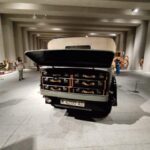
- A 19th-century carriage
- Moving photographs connected to the Prisoners’ Office, established by Alfonso XIII within the Royal Palace during World War I
That last piece is a striking reminder that even in royal spaces, modern conflict left fingerprints. The guide’s explanation helps the photographs land in the bigger story: a monarchy managing reality, not only ceremony.
Basement archaeology: Islamic Mayrit remains under the museum floors
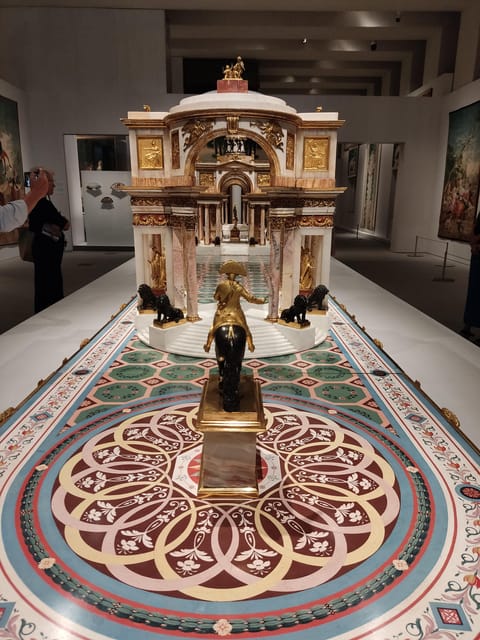
After the upper-gallery highlights, the tour goes down to the basement level for one of the most unique moments: archaeological remains of Islamic Mayrit.
These remains were unearthed during the construction of the Gallery of the Royal Collections. It’s the tour’s “Madrid has layers” reminder, delivered in a way you can actually stand in front of. One minute you’re in court art and royal objects; the next you’re confronted with the fact that the site—and the city—has older chapters beneath the newer ones.
For many visitors, that basement stop is the emotional reset. It gives you a different type of connection to place: not only through dynasties and paintings, but through what the ground itself preserved.
Price and what $69 buys you in real terms
At $69 per person for a two-hour guided tour, the value is strongest if you want structure. This price isn’t just a ticket. It includes:
- A ticket to the Royal Gallery
- A guide visit
- An official guide
- An audio guide (available in English and Spanish)
- Access via a separate entrance to skip the line
That package matters. The collection is large and visually dense, and the guide’s job is to help you connect dots quickly. If you plan to spend your time in a tight window, paying for guidance often saves time—and that’s where the cost starts to make sense.
If you’re the kind of visitor who wants to linger alone and read every label without time pressure, you might feel the two-hour pacing is fast. But if you want the “main story” and the most talk-worthy objects, this is a good fit.
Who this tour suits best
I’d point you toward this tour if:
- You’re visiting Madrid for a limited time and want the most important connections in two hours
- You like dynasties and court culture, not just isolated masterpieces
- You want variety: paintings, sculptures, textiles, furniture, a carriage, and even basement archaeology
- You prefer guided explanations with audio support in English or Spanish
It’s also a smart choice if you’re nervous about walking into a museum and not knowing where to start. The chronology does that job for you.
Should you book the Royal Collections Gallery tour?
Book it if you want a guided, story-driven route through the Spanish Crown—plus the bonus of Islamic Mayrit archaeological remains. The combination of live guide + audio in English and Spanish + skip-the-line entrance makes it easier to keep your day moving without losing key context.
Skip it or reconsider if you’re looking for a long, slow museum day. This is a highlight-focused format. You’ll get the core works and the connections, but you won’t have hours to wander at your own pace through everything.
If your goal is to leave with names, timelines, and a clear sense of how court art worked, this tour is a solid yes.
FAQ
Where is the meeting point for the tour?
You meet at Fun and Tickets at Calle Mayor, 43 in Madrid.
How early should I arrive?
They wait for you for 20 minutes before the start of the visit.
How long is the guided tour?
The tour lasts 2 hours.
What languages are available for the tour?
The live tour guide is available in Spanish and English, and the audio guide is also available in English and Spanish.
Does the price include entry to the Royal Collections Gallery?
Yes. Your ticket to the Royal Gallery is included.
Is there a way to skip the main line?
Yes. The tour uses a separate entrance to help you skip the line.
What areas are included during the tour?
You visit the Royal Collections Gallery, and the tour also goes down to the basement level to see archaeological remains.
What does the tour cover about Spanish history?
It covers the Spanish Crown across the Trastámara, Habsburg, and Bourbon dynasties.
Is Islamic Mayrit included?
Yes. The tour includes the archaeological remains of Islamic Mayrit on the basement level.
Is this tour wheelchair accessible?
Yes, it is listed as wheelchair accessible.