REVIEW · MADRID
Street Art Guided Tour in Madrid
Book on Viator →Operated by Cooltourspain · Bookable on Viator
Graffiti isn’t just decoration here. It’s politics, art, and community—shown on a smart two-hour route. You’ll start near central Madrid landmarks, then move through spaces that have gone from industry and transport to public creativity, with real artists and real messages along the way.
I love the way this tour connects the art to the places that made it possible. La Neomudéjar (a former power plant) and La Tabacalera (a 19th-century tobacco warehouse) are the kind of settings that make street art feel grounded, not staged. You also get a small group (up to 13), so your guide can actually answer questions and steer the walk toward what you’re curious about.
One thing to keep in mind: some stops depend on timing. La Tabacalera has restrictive timing on weekdays, and the urban garden stop is only guaranteed if the location is open.
In This Review
- Key Highlights Before You Go
- Where This Street Art Walk Starts (And Where It Ends)
- La Neomudéjar: From 19th-Century Power Plant to Street Art Protest Walls
- La Tabacalera de Lavapiés: Tobacco Warehouse Walls, Plus the Basement Stencil World
- Esta es Una Plaza: The Reclaimed Urban Garden Stop (When It’s Open)
- Lavapiés on Foot: Multicultural Streets and the Local Context Your Guide Adds
- Campo de Cebada: A 15-M Movement Community Space Built for Movies, Music, and Planting
- Price, Time, and Group Size: Why $30.38 Can Feel Worth It
- How to Get the Most Out of the Walk (So You Don’t Miss the Good Parts)
- Should You Book This Street Art Tour in Madrid?
- FAQ
- Is the street art guided tour in English?
- How long is the tour?
- How much does the tour cost?
- Where does the tour start and end?
- What’s the nearest metro to the end point?
- What’s included in the price?
- Are food and drinks included?
- Is the tour run in all weather?
- Is La Tabacalera open at all times?
- Will I always see the urban garden stop?
- What if I need to cancel?
Key Highlights Before You Go

- La Neomudéjar power-plant murals tied to the fight against Spain’s article 626 graffiti penalties
- La Tabacalera exterior walls and basement stencils in a former tobacco warehouse setting
- Lavapiés street-level context from your guide as you walk the multicultural streets
- Campo de Cebada as a reclaimed community stage, shaped by the 15-M movement
- Small group size (max 13) for a more personal pace and Q&A time
Where This Street Art Walk Starts (And Where It Ends)
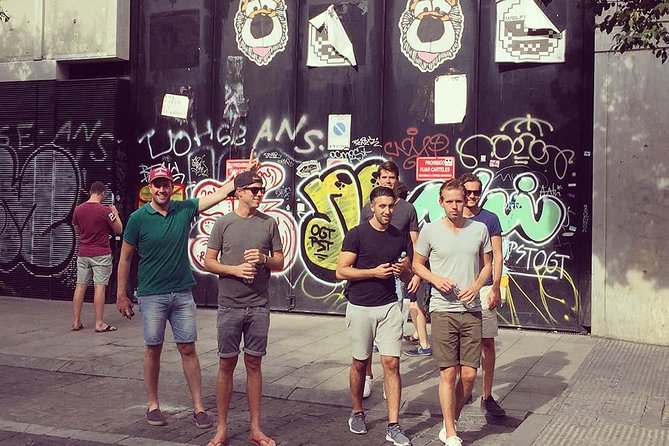
This is an easy, central-footwork outing. You meet at Teatro Valle-Inclán in the Centro area (Pl. de Ana Diosdado, s/n), and the tour finishes at Plaza de Cascorro. The end point is near La Latina or Tirso Molina metro, so you can keep moving without hunting for a ride.
The timing is built for walking: about two hours, offered in English, and you’ll usually see morning options (one listed start time is 11:15 am). You’ll also get a mobile ticket, which is handy if you’re juggling plans and transit times.
Also: this runs in all weather. Madrid can throw rain, so wear shoes that handle wet pavement and bring a light layer. Food and drinks are not included, so plan to grab a snack before or after.
You can also read our reviews of more guided tours in Madrid



La Neomudéjar: From 19th-Century Power Plant to Street Art Protest Walls
Your first big stop is La Neomudéjar, located about a 5-minute walk from where the tour begins. The setting matters here: this was a power plant tied to the station’s energy in the 19th century. Now it’s a magnet for street artists, including names like Himen, Ze Carrión, and Laguna626.
As you move through the area, you’ll also pass a couple of Madrid visual bookmarks that help set the scene. You’ll go by the big-headed babies monument outside Atocha train station, and you’ll pass an avant-garde art center inside the Mediodía metro station—a reminder that this city treats contemporary art as part of daily infrastructure.
What I find especially compelling is the theme behind the wall work. Many artists use their pieces to protest Spain’s article 626, a law aimed at penalizing graffiti creators. In other words, you’re not just looking at colorful work—you’re reading arguments painted onto real walls.
La Tabacalera de Lavapiés: Tobacco Warehouse Walls, Plus the Basement Stencil World
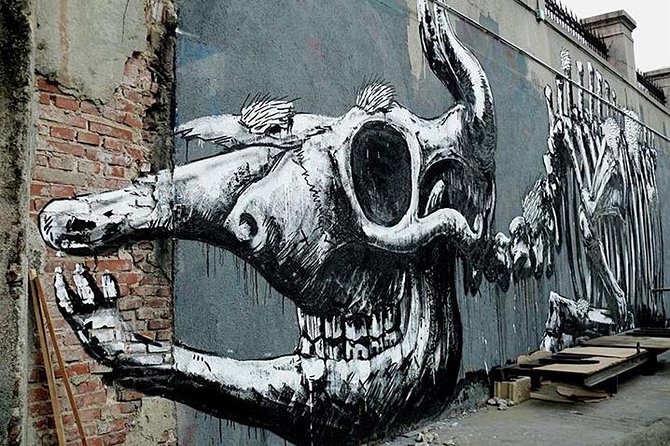
Next you head to La Tabacalera, a 19th-century warehouse that once employed over 1,000 workers handling tobacco. Today it’s a creative hub—used for art exhibitions and performance—so the street-art energy you’ll see outside feels like it belongs there.
You’ll focus on the exterior graffiti walls, paying attention to the artists, the message, and the techniques used. This matters because the guide doesn’t treat graffiti as random decoration. Instead, you learn how styles communicate—through shape, color choices, lettering habits, and message placement.
Then comes the part many people remember: you’ll go down to La Tabacalera’s basement, where hundreds of street art projects and stencils line the walls. That space changes your view of what you’re seeing above-ground. It makes the work feel like a living process, not just a final image.
Two practical notes. First, weekday timing can be restrictive at La Tabacalera, so if you’re booking for a weekday, don’t plan a tight next stop right afterward. Second, this is an outdoor-and-indoor mix, so bring something that works for both sun and shade.
Esta es Una Plaza: The Reclaimed Urban Garden Stop (When It’s Open)
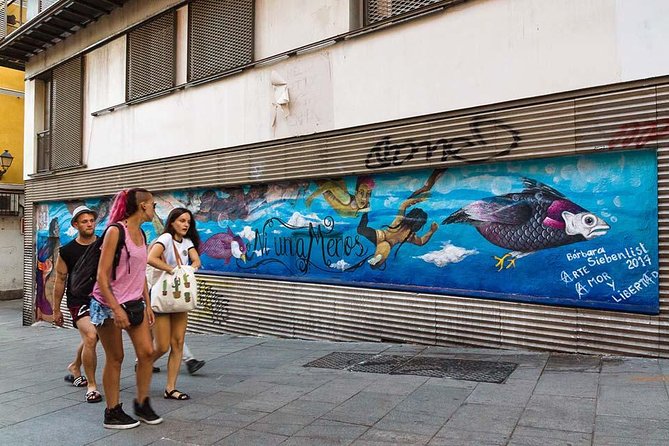
Between larger landmarks, you’ll pass through Lavapiés energy and make a brief stop at Esta es Una Plaza—an urban garden that adds calm to the route. One detail I like: it’s not just a photo stop. The idea is that street art isn’t isolated from everyday life. It grows alongside community spaces.
However, there’s one catch stated clearly for this stop: access is only guaranteed if the location is open. That means on some days you may just see the garden area from outside, depending on whether it’s currently accessible.
Even with that variable, it’s a useful contrast. After power-plant walls and warehouse murals, a small green space helps you understand the softer side of how Madrid’s creativity functions—people making places for neighbors, not only for murals.
Lavapiés on Foot: Multicultural Streets and the Local Context Your Guide Adds
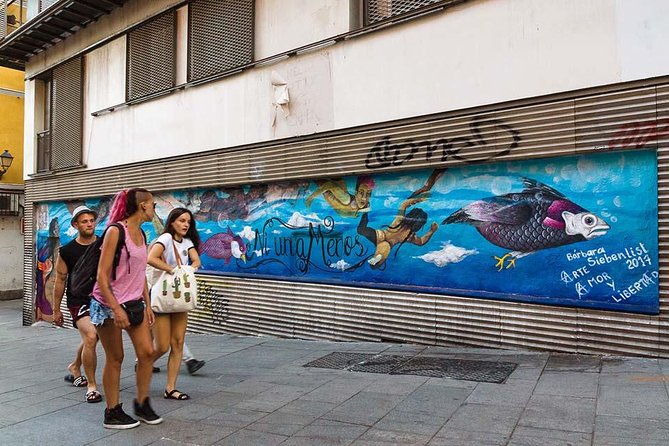
The heart of this tour is walking Lavapiés, the district where you’ll see a dense mix of street art and graffiti. Your guide explains the area’s story as you go, which is a big deal. Street art is easiest to appreciate when you know what’s happening around it—who lives there, what tensions exist, and why certain artists keep returning to public walls.
You’ll also get a sense of how Madrid handles both sanctioned and unsanctioned art. Some of what you see connects to festival activity and public artistic attention, while other works reflect the ongoing street-level urge to make statements without permission. That contrast is part of the point: the city is negotiating between official culture and street culture, sometimes in the same block.
Small-group size helps here. With a maximum of 13, your guide can slow down when someone spots a detail and wants it explained. One review-style highlight I’d pay attention to: guides like Santi and Julia (and a guide named Santiago on some departures) are praised for friendly energy and for tailoring answers to the group’s interests.
On some days, you may even catch moments where artists are actively working nearby. That’s not guaranteed every tour day, but it’s a real possibility when festivals or mural painting events overlap with your route.
A few more Madrid tours and experiences worth a look

Campo de Cebada: A 15-M Movement Community Space Built for Movies, Music, and Planting
The walk ends at Campo de Cebada, often described as a reclaimed community gathering place and performance site. It ties directly to Spain’s ’15-M Movement,’ when people recaptured public streets and squares for communal use.
Historically, the site had a swimming pool, but today local associations have reorganized the space into something more flexible: you can find summer movie screenings, music events, and even a collective vegetable garden. That’s a different type of “street art,” in a way—art as social life, not only as painted surfaces.
I like ending here because the final lesson is bigger than graffiti. You see how public space can become a canvas for community action. After two stops built around artists and walls, Campo de Cebada shows what happens when creativity is allowed to function as everyday civic culture.
Price, Time, and Group Size: Why $30.38 Can Feel Worth It
At $30.38 per person for about two hours, you’re paying for structure and interpretation. You could technically walk these areas on your own, but the value here is the guided “reading” of what you see—why these artists are painting, what laws and local politics touch their work, and how the spaces connect to the art.
The tour also stays compact: max 13 travelers (not huge, not crowded). In practice, that means you’re not just shuffling past murals while someone speaks at the front. It also helps you hear explanations and ask questions before the group moves on.
Booking demand seems steady too. This is typically booked about 16 days in advance on average, which usually means schedules can fill. If you have a narrow window in Madrid, I’d book sooner rather than later.
How to Get the Most Out of the Walk (So You Don’t Miss the Good Parts)
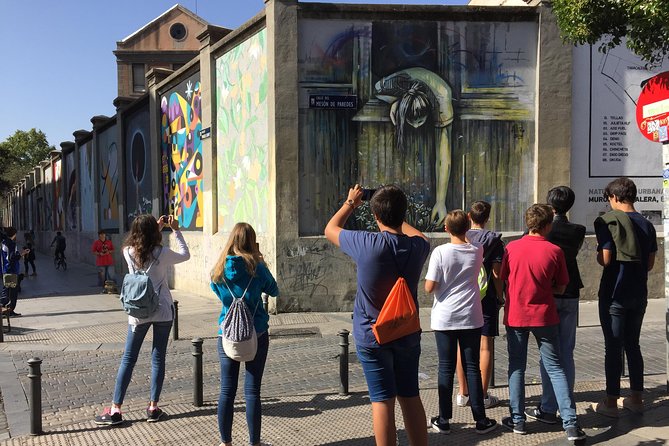
Street art tours can fail in one simple way: people rush past the art while trying to keep up. This one works best when you slow your own pace a little and let the guide’s points land.
Here are a few practical tips that will help:
- Wear comfortable shoes. You’ll be walking between multiple stops in a compact area.
- Position yourself where you can hear clearly. One review flagged that if you’re too close to the guide or stuck to the move-spot, you might miss details while trying to look around.
- Bring a phone or camera, but don’t just shoot. Try to notice the “how” (techniques, lettering, message placement).
- If you’re into the stories behind the art, be ready with questions. Guides here get praised for responding to group wishes and curiosity.
And if you’re the type who loves political context, you’ll probably enjoy the article 626 angle. The tour’s strongest moments are when a mural isn’t just pretty—it’s saying something.
Should You Book This Street Art Tour in Madrid?
Book it if you want street art with real context: La Neomudéjar, La Tabacalera, and Campo de Cebada are not generic stops. This route is designed to show street art as part of how Madrid transforms spaces—power plants, tobacco warehouses, and public squares—into platforms for creative voices.
Skip it (or consider a different option) if you mainly want a long list of the biggest-name murals with minimal explanation. Some people come expecting a specific style of graffiti selection and end up disappointed when the emphasis is broader—message, technique, and local meaning.
If you do book, you’ll probably leave with two lasting things: a new way to read the walls, and a clearer sense of why Lavapiés feels like a working neighborhood, not a curated backdrop.
FAQ
Is the street art guided tour in English?
Yes. The tour is offered in English.
How long is the tour?
It lasts about 2 hours.
How much does the tour cost?
The price is $30.38 per person.
Where does the tour start and end?
It starts at Teatro Valle-Inclán (Pl. de Ana Diosdado, s/n, Centro) and ends at Plaza de Cascorro (Pl. de Cascorro, Centro).
What’s the nearest metro to the end point?
The end point is near La Latina or Tirso Molina metro.
What’s included in the price?
You get a local guide and a visit to Muros La Tabacalera. The guide is multilingual (English/French/Spanish).
Are food and drinks included?
No. Food and drinks are not included.
Is the tour run in all weather?
Yes, it operates in all weather conditions.
Is La Tabacalera open at all times?
Not always. La Tabacalera has restrictive timing during week days, so access can be limited depending on the day.
Will I always see the urban garden stop?
The garden stop at Esta es Una Plaza is only guaranteed if the location is open.
What if I need to cancel?
You can cancel for a full refund if you cancel at least 24 hours before the experience’s start time.