REVIEW · LISBON
Lisbon Street Art Tour
Book on GetYourGuide →Operated by Lisbon Lives Walking Tours · Bookable on GetYourGuide
Street art in Lisbon is more than decoration. This tour connects big names and local voices, with guide Peter calling out the meaning behind the walls as you walk through Graça and Mouraria. I especially like the chance to spot Shepard Fairey in-context and the way the tour credits Portuguese powerhouses like Vhils. One thing to plan for: it’s a walking tour on uneven streets, and it’s not a good fit if you have mobility limits.
What makes it feel worth your time is the focus. You don’t get a scattershot “look at that mural” loop. Instead, you get guided commentary on multiple works by well-known street artists and up-and-coming local artists, plus discussion of how public art talks back to politics, society, and even the idea of what art should be.
Expect variety built right into the route. It’s not only wall-to-wall graffiti. You’ll also pay attention to other public art, like sculptures and Lisbon’s famous tiles, and there’s even a short stop that can include a fado moment when the street scene lines up that way.
In This Review
- Key things I’d circle on your map
- Street Art Stories in Graça and Mouraria
- Meeting Point and What You’ll See in 2 Hours
- Shepard Fairey in Lisbon: Seeing Fame Without Losing Meaning
- Portugal’s Big Street Names: Vhils, Bordalo II, and Friends
- Public Art Beyond the Walls: Tiles, Sculptures, and Street-Scene Texture
- Art, Society, and Why the Guide Keeps Talking About Women
- The Sweet Break: Pastel de Nata or Ginginha
- Price and Value for a Small-Group Street Art Walk
- Who This Tour Suits Best (and Who Should Skip It)
- Should You Book This Lisbon Street Art Tour?
- FAQ
- How long is the Lisbon Street Art Tour?
- What is the price per person?
- Where do we meet?
- What neighborhoods does the tour focus on?
- Who is the guide?
- Is the group small?
- What street artists will we see mentioned?
- What is included with the tour?
- What should I bring?
- Is it suitable for people with mobility impairments?
Key things I’d circle on your map
- Graça and Mouraria focus so you’re not chasing Lisbon’s street art all day
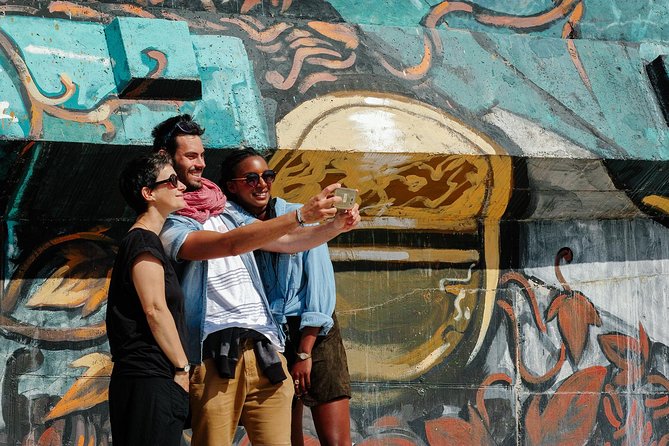
- International and Portuguese names together, from Shepard Fairey to Vhils and Bordalo II
- Meaning over photos, with commentary that links techniques to social questions
- A gender lens on street culture, exploring how women are entering spaces that were traditionally male-dominated
- Lisbon specialties included: pastel de nata or ginginha
- Small group size (up to 8) keeps questions flowing with your French guide
Street Art Stories in Graça and Mouraria
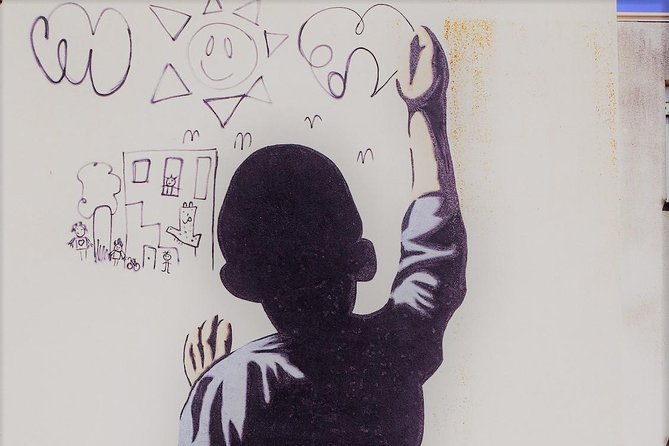
Lisbon street art isn’t one style. It’s a conversation in layers. This walk leans into that by choosing two neighborhoods with serious collections of public works: Graça and Mouraria. In practice, that means you spend your two hours looking at art that’s dense enough to matter, not just a couple of murals that happen to be near each other.
Graça tends to feel like a place where art pops against the city texture. Mouraria can feel more intimate, like the street art is talking directly to the everyday scene. Either way, the tour keeps you moving, but not rushed. The stops are chosen so you can actually see the differences between artists and approaches, instead of just spotting color from far away.
The tour’s biggest strength is that it explains the works as you encounter them. You learn what’s going on behind the image, what techniques were used, and what issues the work raises. That turns the walk from sightseeing into understanding.
A few more Lisbon tours and experiences worth a look


Meeting Point and What You’ll See in 2 Hours
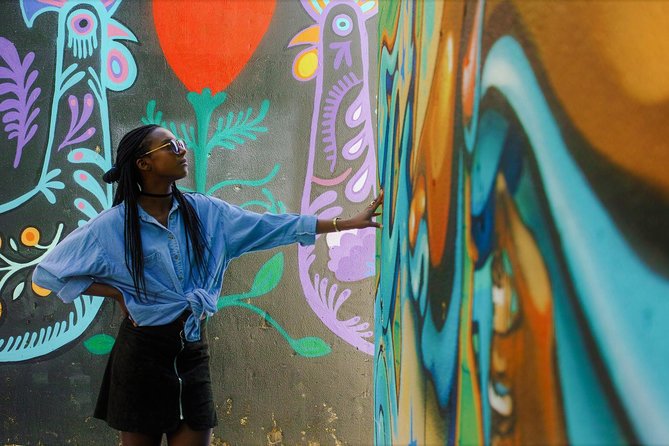
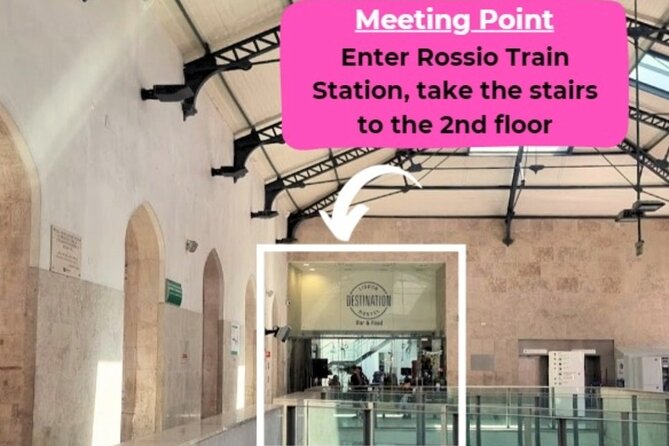
You meet in front of the church. That’s your starting anchor, and from there the guide leads you through the streets while pointing out works along the route. The pace works best if you come ready to walk for the full duration. Bring comfortable shoes, and bring water. Lisbon streets can be unexpectedly slick in spots, and 2 hours adds up once you’re doing stop-and-ask-to-learn every few minutes.
Also note the practical reality: street art changes. Some pieces get covered, some get repainted, and some disappear. The tour doesn’t promise you’ll see every single mural in Lisbon. It focuses on what’s there in these neighborhoods and uses the works as case studies for wider topics—so you still leave with a clear sense of the scene.
Group size is limited to 8 participants, which matters more than it sounds. In a small group, you can ask questions, and your guide can tailor explanations if the conversation heads somewhere interesting. Your guide’s language is French, so if you don’t feel fully comfortable, consider whether you want to rely on listening for key points versus having full back-and-forth.
Shepard Fairey in Lisbon: Seeing Fame Without Losing Meaning
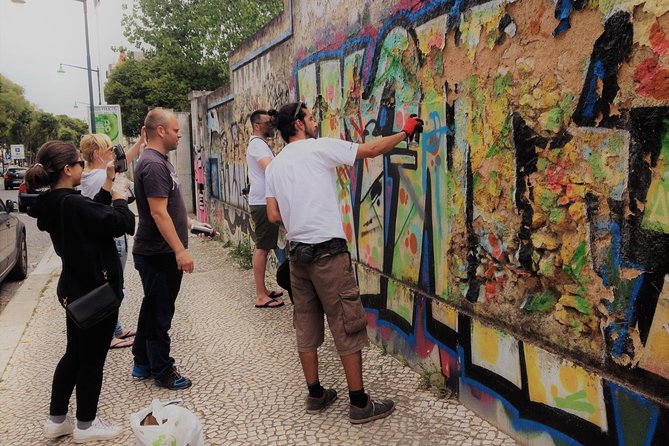
One of the tour’s most talked-about moments is the chance to see work by Shepard Fairey. This matters because Fairey is widely known for a very recognizable visual language, and the tour doesn’t treat that fame as the point. Instead, it uses the presence of a global star to set up a question: how does international street art land in a local city with its own politics, identity, and street culture?
When you’re standing in front of a major name, it’s easy to reduce it to style. The tour steers you away from that shortcut by discussing what the work raises and how it fits into public space. You also get a sense of how different artists use the street as a platform—sometimes to provoke, sometimes to record, sometimes to challenge who gets to speak.
What I like here is that you’re not just learning trivia. You’re learning how to read street art as communication. That skill carries beyond this tour, so you can look at other Lisbon walls later and understand what to watch for.
Portugal’s Big Street Names: Vhils, Bordalo II, and Friends
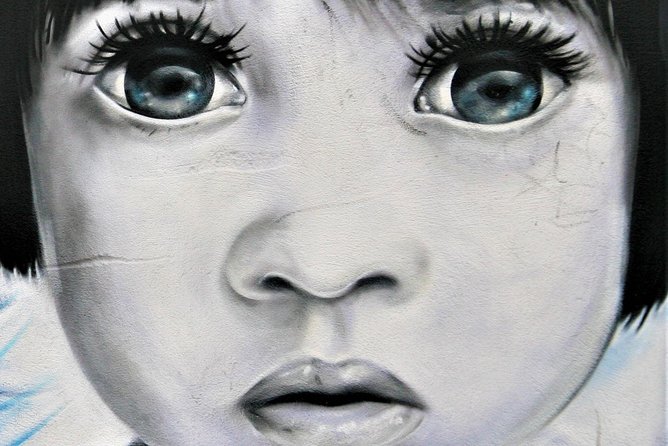
The tour moves through Portuguese street art with real intent, and it highlights several artists you’ll hear mentioned again and again in Lisbon’s street art scene. You’ll learn about Vhils and Bordalo II, plus other artists such as TV Boy, Joana Vasconcelos, Andrea Tarli, Urban Solid, and Utopia. The key is that each stop comes with explanation—what you’re seeing, why it’s done that way, and what the work is pushing you to think about.
Vhils is often linked with a distinctive relationship to walls—turning the surface itself into part of the message. Bordalo II is known for a different kind of impact: using public space to spark attention toward animals and waste, but in a way that feels like street culture rather than museum culture. On this tour, you don’t just memorize who the artist is. You understand how their approach shapes the message.
And that list isn’t just for name-checking. The tour includes international artists and up-and-coming local ones too, so you get the full spectrum of the street scene: established figures, distinct styles, and newer voices testing what public art can be.
If you care about technique, you’ll appreciate that the guide talks through methods used in each work when the artist’s words are available. Even when you don’t know the artist personally, you pick up the cues. You learn to notice how the piece was made, what materials or visual strategies it uses, and how that ties back to the social or political question underneath.
Public Art Beyond the Walls: Tiles, Sculptures, and Street-Scene Texture
Street art gets most of the spotlight, but this tour doesn’t ignore Lisbon’s other public art languages. You’ll also pay attention to sculptures and Lisbon’s iconic tiles. That matters because Lisbon’s visual identity isn’t only about graffiti. Tiles are part of the city’s everyday look, and sculptures show another way the city organizes public meaning.
This is a smart inclusion because it helps you avoid the all-or-nothing trap. If you only focus on street art, you might miss how Lisbon has long used public visuals to teach, mark identity, or add character to public space. By weaving in tiles and sculpture, you start seeing the city as a gallery of messages—not just as a backdrop for murals.
The walk also trains your eyes for the small things. How a piece sits in its spot. How a wall’s texture changes how the image reads. How nearby buildings and street life influence what the art feels like. Those details are the difference between collecting photos and actually understanding place.



Art, Society, and Why the Guide Keeps Talking About Women
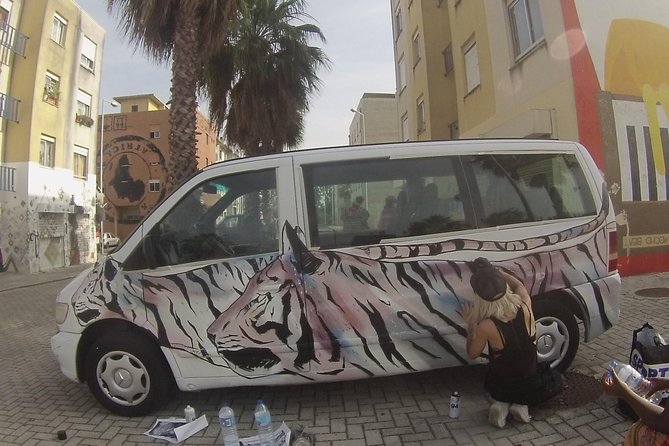
One of the tour’s standout themes is about how women are entering what’s traditionally been a male-dominated sphere of street art. That topic isn’t treated like a side note. It’s part of the way the guide frames the scene and the conversations the works trigger.
That framing helps because it connects what you see to who gets heard. Public art isn’t neutral. It’s made by people with perspectives, and it lands in spaces shaped by power. When the tour addresses gender and street culture directly, you start noticing how artists claim space and how audiences interpret those claims.
You’ll also get discussion around the place of art in society—social and political issues of all kinds—and even what makes something art in the first place. That’s valuable because it gives you a way to process what can feel chaotic at street level. Instead of getting lost in style, you get a set of questions the works are asking.
The Sweet Break: Pastel de Nata or Ginginha
Lisbon doesn’t run on murals alone. This tour includes a Lisbon specialty as part of the experience: pastel de nata (cream tart) or ginginha (wild cherry liqueur). It’s a short pause, but it adds a nice rhythm shift. You’ve been reading walls for a while, and then you get a taste of local food culture to reset your brain.
If you have preferences, plan ahead. Pastel de nata is the obvious crowd-pleaser. Ginginha is more of a shot-and-go choice, and it carries the cherry-liqueur punch. Either way, the inclusion makes the tour feel like more than a lecture. You get the street art and you get a proper Lisbon bite.
Price and Value for a Small-Group Street Art Walk
At $41 per person for a 2-hour walk, the value comes from the quality of the guidance, not just the sights. In a small group of up to 8, you’re paying for interpretation: your guide comments on each work, brings in artist words when available, and connects technique to meaning. That kind of explanation is what transforms a street art stop from a quick photo to something you understand.
You also get something tangible included—pastel de nata or ginginha—which helps justify the price. What’s not included is coffee or other hot or cold drinks, so if you know you’ll want a beverage during your walk, consider grabbing one before you start or after you finish.
For timing, the tour works best if you want a focused slice of Lisbon rather than trying to see everything. Two hours is short enough to fit into a packed day, but long enough to get multiple neighborhoods and multiple artists on a meaningful loop.
Who This Tour Suits Best (and Who Should Skip It)
This is a strong choice if you like street art but also want context. If you enjoy understanding what images are doing—socially, politically, culturally—you’ll get a lot more out of this than just a casual walk.
It’s also a good fit if you want your Lisbon experience to include both famous and local voices. Seeing Shepard Fairey alongside Portuguese artists like Vhils and Bordalo II gives you a sense of the street art ecosystem: how influences travel, how local artists respond, and how the city’s public space shapes messages.
Skip it if mobility is a concern, because it isn’t suitable for people with mobility impairments. The route involves walking, and the city streets can be uneven.
Language is another deciding factor. The live guide is French, so choose based on what you feel comfortable with.
Should You Book This Lisbon Street Art Tour?
Book it if you want a smart, small-group introduction to Lisbon street art that goes beyond surface-level photos. I’d especially recommend it if you’re curious about how international fame and local voices coexist on the same walls, and if you like conversations about how art intersects with society and gender.
Don’t book it if you’re mainly looking for a casual wander with minimal explanation, or if walking uneven streets would be uncomfortable for you. Also keep in mind that you won’t get extra drinks included, so plan your hydration and snacks accordingly.
If you’re the kind of traveler who likes learning how to read a place, this tour gives you that skill quickly—and you’ll carry it with you long after the last mural fades from view.
FAQ
How long is the Lisbon Street Art Tour?
It lasts 2 hours.
What is the price per person?
The price is $41 per person.
Where do we meet?
Meet in front of the church.
What neighborhoods does the tour focus on?
It focuses on Graça and Mouraria.
Who is the guide?
The tour has a live guide named Peter, and the tour language is French.
Is the group small?
Yes. The group is limited to 8 participants.
What street artists will we see mentioned?
The tour highlights works by Shepard Fairey and Portuguese street artists such as Vhils and Bordalo II, plus additional artists including TV Boy, Joana Vasconcelos, Andrea Tarli, Urban Solid, and Utopia.
What is included with the tour?
You get a Lisbon specialty: pastel de nata or ginginha.
What should I bring?
Bring comfortable shoes and water.
Is it suitable for people with mobility impairments?
No, it is not suitable for people with mobility impairments.