REVIEW · LISBON
Lisbon Street Art and Lookout Point Tour
Book on Viator →Operated by My Lisbon Tours · Bookable on Viator
Lisbon rewards slow looking, and this tour is built for it. You’ll combine major miradouros (viewpoints) with street art stops across Graça and Alfama, then finish with a Tagus-and-bridge view and a look at contemporary pieces tucked into the area. I especially liked how the guide ties murals to neighborhood mood and social issues, and how the route keeps switching between big-picture views and close-up street details.
One thing to plan for: it’s scheduled for about 3 hours, but the pace can stretch closer to 4 depending on how much there is to photograph and how long you chat at each stop. Since you’ll walk and climb a bit, wear shoes you trust.
In This Review
- Key Highlights You’ll Actually Feel on the Ground
- Why Miradouros + Street Art Works Better Than Usual Sightseeing
- Price and What’s Included (and What You’ll Still Pay For)
- The Small-Group Size That Changes the Whole Tour
- Start at Miradouro da Graça for a Real First Impression
- Graça and São Vicente: Where Murals Carry Neighborhood Meaning
- A Planned Coffee Break (and the Janela da Voz Do Operário Note)
- Miradouro das Portas do Sol: Alfama’s Maze with Photo Angles
- Museu de Lisboa – Teatro Romano: When Ancient Stone Meets Modern Layers
- Chão do Loureiro Finale: Tagus Views + a Hidden Gallery Walk
- What I’d Pack and Plan for (So You Enjoy the Walking)
- Who This Tour Is Best For
- Should You Book It?
- FAQ
- Where does the tour start?
- What time does the tour start?
- How long is the tour?
- How many people are in a group?
- Is hotel pickup included?
- What ticket type do I need?
- Do I need to pay for admissions at the stops?
- Is the coffee break included in the price?
- What are the main street art areas covered?
- Where does the tour end?
- Is service available for people traveling with service animals?
Key Highlights You’ll Actually Feel on the Ground
- Miradouro da Graça first, so you get your bearings fast before the street-art walk starts.
- Graça and São Vicente mural focus, with specific artists highlighted along the way.
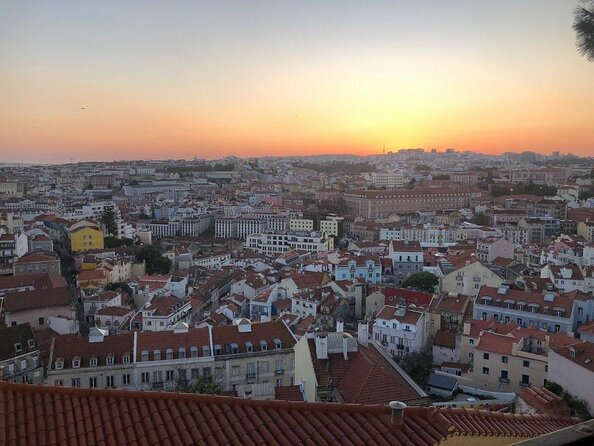
- Alfama from Portas do Sol, where the streets turn into a maze you can photograph from above.
- Teatro Romano exterior stop, mixing archaeology with contemporary street-art touches on nearby facades.
- Chão do Loureiro finale, with Tagus River and 25th of April Bridge views plus a street-art gallery walk.
- Max 8 travelers, so you’re not just following a herd.
Why Miradouros + Street Art Works Better Than Usual Sightseeing

Most Lisbon sightseeing is either views-only or museum-only. This tour cleverly pairs both, so the city doesn’t just look good from afar. You get that classic Lisbon postcard moment, then you immediately shift to the human stuff at street level: marks, stencils, tags, and murals that reflect what people care about right now.
The payoff for you is practical. When you stand at a miradouro, Lisbon becomes easier to understand—hills, neighborhoods, and the way the city tumbles toward the water. Then the street art gives you context for what you’re seeing, because it’s often responding to politics, identity, and local culture instead of just showing pretty color.
A few more Lisbon tours and experiences worth a look


Price and What’s Included (and What You’ll Still Pay For)
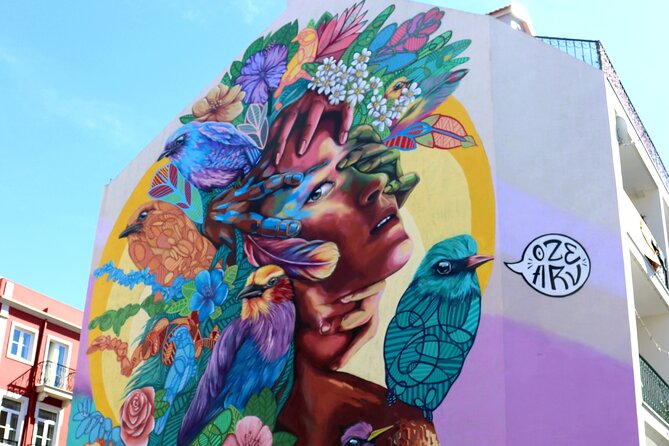
The price is $38.99 per person for a 3-hour walking tour with hotel pickup and a professional guide. That’s not a steal, but it’s also not inflated for what you get: small group size, multiple viewpoints, and guided interpretation rather than a loose “wander and hope” experience.
Here’s the value math that matters: you’re paying for time and direction. Lisbon hills are no joke, and street art isn’t always obvious unless someone knows where to look and how to read it. With hotel pickup included, you also save hassle, especially if you’re staying near the center and don’t want to figure out transit for a late afternoon start.
What’s not included is food and drinks. There’s a scheduled coffee break, but the cafe option listed is noted as closed, so treat that as an open slot, not a guaranteed caffeine plan. If you want something like water or a snack, plan to buy it during breaks.
The Small-Group Size That Changes the Whole Tour
The group max is 8 travelers, which is a big deal in Lisbon. With fewer people, you’ll spend more time hearing the guide and less time waiting while everyone else takes one more photo.
It also affects pacing. The route includes stops with time for looking and listening, not just line-of-sight “move along” moments. In the reviews I read, guides like Andre’ and Rui Fernandes are praised for going the extra mile—less rushing, more explanation, and more time to talk through meaning behind the art.
If you like asking questions, this size makes it easier to do so without derailing the whole group.
Start at Miradouro da Graça for a Real First Impression
The tour kicks off at Miradouro da Graça (Calçada da Graça area, near Sophia de Mello Breyner Andresen). This is a smart opener because it gives you a wide, organized view before you get swallowed by narrow streets later.
Expect to orient yourself and then connect the dots between what you see from above and what you’ll hunt for at street level. A good guide uses that first viewpoint to set the theme: Lisbon is not just monuments; it’s also contemporary voices painted into old neighborhoods.
Tip for you: bring your camera ready, but also look with your eyes first. It’s easy to snap photos nonstop and lose the big picture. After 5 minutes, you’ll start noticing how the hills and angles shape what street artists choose to place on walls.
Graça and São Vicente: Where Murals Carry Neighborhood Meaning
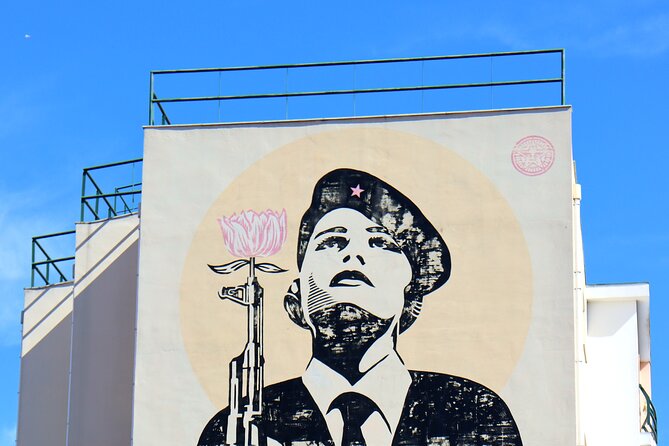
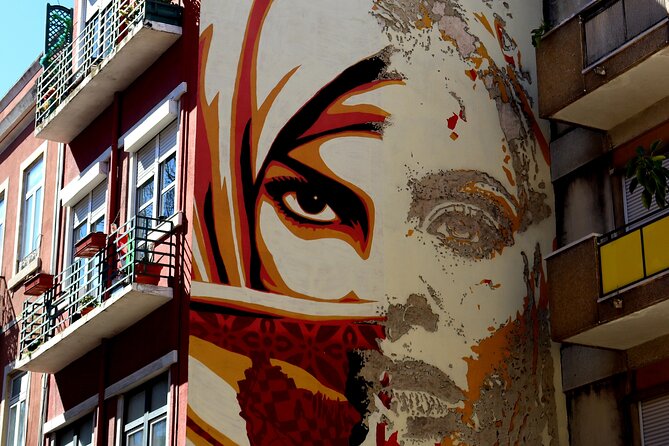
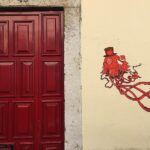
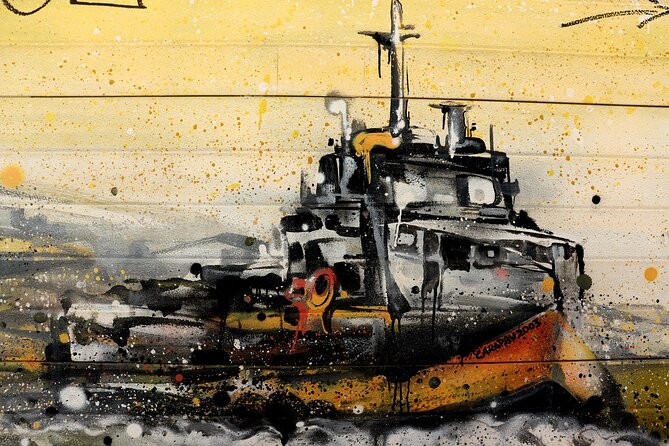
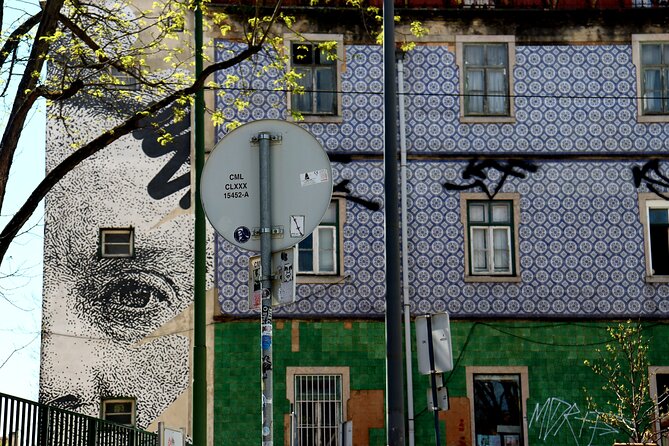
Next, you’ll move through Graça and São Vicente, a laid-back area where street art lovers can spot works by artists like OBEY, Vhils, and Pariz One. This is where the tour becomes more than scenery, because the guide doesn’t treat murals like random decoration.
What you’ll get is a sense of how different neighborhoods interpret style and message. The tour framing focuses on how street art can reflect social issues and local identity, not just aesthetic trends. The guide also helps you notice differences in mediums and techniques, so you start reading layers instead of just seeing color.
Watch for details. From a distance, some pieces look like simple shapes. Up close, you’ll often see how the work interacts with the wall texture, wear, and other nearby marks. That’s part of the story—street art lives in real city surfaces, not clean museum walls.



A Planned Coffee Break (and the Janela da Voz Do Operário Note)
Around the middle, you get a coffee break at A Janela da Voz Do Operário. It’s listed for about 20 minutes, and food and drinks aren’t included.
One practical wrinkle: the tour info lists this stop as FECHADA, meaning closed. So I’d plan your break as flexible. If the cafe isn’t operating when you arrive, you’ll still have the group pause—but the exact coffee spot may not match your expectations.
What to do: bring a small bottle of water and a snack option you can handle if there’s a delay finding drinks. Lisbon afternoons can be warm, and you’ll be doing a walking tour.
Miradouro das Portas do Sol: Alfama’s Maze with Photo Angles
Miradouro das Portas do Sol is next, and it’s a fantastic place to understand why people fall for Alfama. From here, the streets look like a maze—narrow lines, steep turns, and viewpoints that keep popping up at odd angles.
This stop also brings more street art into the mix. You’ll have chances to see works by artists listed on the tour route, including Vhils, Tami Hopf, and Nuno Saraiva.
Why this matters for you: Alfama can feel chaotic if you don’t have a route. The miradouro gives structure. From above, you can map what you’re about to walk through, and you’ll spot where murals are placed to be seen by people coming up from below.
Photo tip that will save your patience: don’t just photograph the walls. Photograph the relationship between wall and street—where the alley lines lead toward a piece.
Museu de Lisboa – Teatro Romano: When Ancient Stone Meets Modern Layers
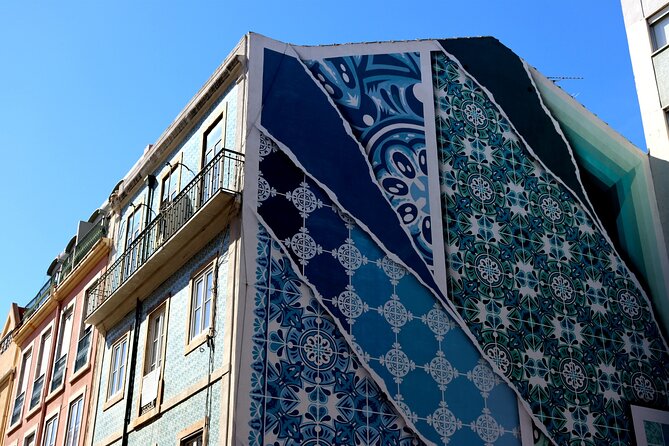
You’ll then stop at Museu de Lisboa – Teatro Romano, spending about 10 minutes. This is an archaeology stop, but not a full museum experience—think exterior focus, plus the context of how local art can appear around historical sites.
The exteriors here are noted as being decorated by local artist Gonçalo Mar. That connection between old structures and contemporary visual language makes Lisbon feel like one continuous conversation, not separated time periods.
The value for you is that you don’t have to choose between history and street art. This route shows how they overlap in everyday space, which is how Lisbon actually works. It’s a city where a centuries-old site can share attention with what someone painted last year.
Chão do Loureiro Finale: Tagus Views + a Hidden Gallery Walk
The last major stop is Miradouro Chão do Loureiro, about 45 minutes. This is where you get a strong payoff: views overlooking the Tagus River, the 25th of April Bridge, and the city center.
Then the guide shifts you from open-air viewpoints to a more intimate street-art moment. You’ll get commentary and a look at a hidden street art gallery, with pieces attributed to artists including Nomen, MAR, RAM, Paulo Arriano, and Miguel Januário.
This ending format works for many travelers because it combines atmosphere and meaning in the same segment. After hours of murals and viewpoints, a closer gallery look gives you a last chance to slow down, focus, and compare styles.
Practical tip: give yourself a minute before you move again. At viewpoints, people rush into standing spots. Instead, take a few seconds to find the angle where the bridge is framed and the street art detail is visible in your shots.
What I’d Pack and Plan for (So You Enjoy the Walking)
You’ll want shoes with solid grip because the route includes viewpoints and neighborhoods with hills and uneven sidewalks. The tour lists a moderate physical fitness level, which to me means you should be comfortable with steady walking and some uphill segments.
Also, think about timing. The tour starts at 3:00 pm. That’s great for softer light for photos, and also good because you’re not starting at the heat peak. Still, bring a light layer—late afternoon winds near the viewpoints can feel cooler than you expect.
If you’re relying on public transport, the tour is noted as near public transportation, which is helpful if hotel pickup doesn’t match your exact location.
Who This Tour Is Best For
This is a strong fit if you like street art, photography, or just a Lisbon route that’s not copy-paste monument hopping. The small group and guide interpretation make it ideal for travelers who want meaning, not just images.
It’s also a good choice if you care about how art connects to politics and social themes. The guide’s style—praised in the past by people who highlighted Andre’ and Rui Fernandes—leans into the story behind the murals and how those messages vary by neighborhood.
On the flip side, if you only want famous sights with minimal walking, you may find the route more “exploration” than “checklist.” This tour moves you through real neighborhoods with real streets, and that’s the point.
Should You Book It?
Yes, if you want Lisbon to feel current and human—not just historical and scenic. The best reason to book is the pairing: viewpoints give you orientation, and street art gives you a reason to care about what you’re seeing once you’re off the main tracks.
I’d especially recommend it if you:
- like guided interpretation of modern art
- want a small-group experience with time to talk
- enjoy mixing neighborhoods like Graça, Mouraria, and Alfama rather than repeating the same central streets
If you hate hills or dislike walking, you might feel pushed by the miradouro-and-street rhythm. But if you can handle a moderate walking pace with good shoes, this tour is a smart way to see Lisbon from two angles at once: the city from above, and the voices at street level.
FAQ
Where does the tour start?
The tour starts at Miradouro da Graça, Calçada da Graça, 1100-265 Lisboa, Portugal.
What time does the tour start?
The start time is 3:00 pm.
How long is the tour?
It’s listed as about 3 hours.
How many people are in a group?
The tour has a maximum of 8 travelers.
Is hotel pickup included?
Yes. Hotel pickup is included.
What ticket type do I need?
You’ll use a mobile ticket.
Do I need to pay for admissions at the stops?
The listed viewpoints and the museum exterior stop show admission ticket free. The coffee break food and drinks are not included.
Is the coffee break included in the price?
Food and drinks are not included, and the tour includes a coffee break time (about 20 minutes).
What are the main street art areas covered?
You’ll walk through Graça and São Vicente, plus Alfama/Portas do Sol areas, and you’ll also visit a street-art gallery during the Chão do Loureiro segment.
Where does the tour end?
The tour ends at Largo Chão do Loureiro, 1100-535 Lisboa, Portugal.
Is service available for people traveling with service animals?
Yes, service animals are allowed.