REVIEW · LISBON
3-Hour Guided Street Art Walking Tour of Lisbon
Book on Viator →Operated by TheCityGuru · Bookable on Viator
Lisbon looks different when you start looking at walls. This guided street art walking tour connects murals, graffiti, tiles, and neighborhood history in just 3 hours, and you get to work the route without getting lost. I especially like the small-group setup with lots of question time, and the way guides like Erica or Maria explain street art through social and political context, not just visuals. The one trade-off: it is a hilly, uneven walking tour, so plan for serious shoe time.
What makes this worth your money is the format. You’re paying $42.27 for a local guide, a mid-tour rest break, and a focused route that hits multiple artsy micro-areas fast, from Bairro Alto nightlife walls to Alfama’s towering street-art building. If you want photos, you’ll also love the variety of textures to shoot, from painted scenes to azulejos-style storytelling on cobblestones.
In This Review
- Key takeaways at a glance
- Street Art in Lisbon: Why This Route Works
- Price, Time, and Meeting Point: Plan Like a Local
- The Hill Factor: What to Wear and How to Keep It Easy
- Stop 1: Bairro Alto Street Art and Nightlife Traditions
- Stop 2: Elevador da Glória and Calçada da Glória’s Urban Art Gallery Mood
- Stop 3: Baixa de Lisboa Tiles and Cobblestone Storytelling
- Stop 4: Miradouro da Graça and Workers Rights in the Wall Messages
- Stop 5: Alfama’s Chão do Loureiro Car Park Turned Street-Art Gallery
- The Mid-Tour Rest Break and Photo Strategy
- Guides, Language, and the Small-Group Advantage
- Who Should Book This Tour (and Who Might Want Another Option)
- Should You Book This 3-Hour Lisbon Street Art Walk?
- FAQ
- How long is the guided walking tour?
- How much does the tour cost?
- Where does the tour start and end?
- Is the tour offered in English?
- What kind of walking is involved?
- What’s included in the price?
Key takeaways at a glance
- Small group focus (max 12) means you can actually ask why a piece matters.
- Street art + azulejos: tiles and cobblestones are treated like part of the same visual language.
- Five distinct neighborhoods keep the tour from feeling repetitive.
- Photo-friendly stops with scenic viewpoints and wall-level details.
- Good pacing for 3 hours with an included mid-tour rest break.
Street Art in Lisbon: Why This Route Works
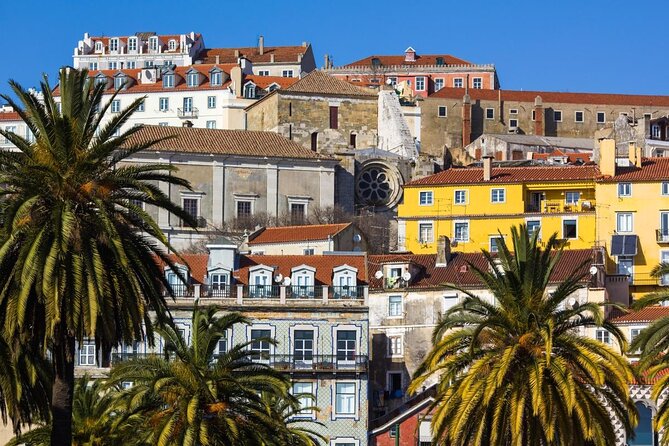
Lisbon is not short on street art. The twist is how the city blends it into daily life, block by block. This tour works because it groups art styles with the neighborhoods that shaped them—so you’re not just looking at images, you’re learning what the city is saying.
You also get a fast education in how Lisbon puts “public art” on the street. You’ll see work that looks like graffiti, work that looks like murals, and work that’s really closer to storytelling through tiles. And if you’re a photographer, you’ll quickly notice the city gives you lots of angles: alley walls, stair-step streets, and lookout spots that frame the art like a stage set.
You can also read our reviews of more walking tours in Lisbon



Price, Time, and Meeting Point: Plan Like a Local
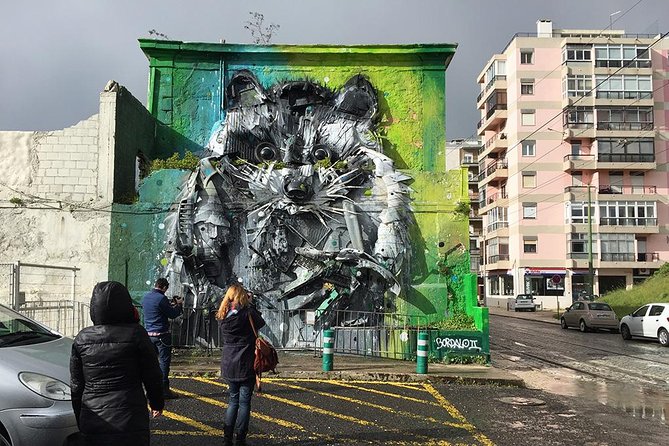
This is a 3-hour guided walking tour in Lisbon, offered in English with a mobile ticket. It costs $42.27 per person, which sounds simple until you compare it to the value you get: a local guide, a rest break, and a route that strings together multiple art clusters you’d struggle to piece together on your own.
You start at R. Luz Soriano 67, 1200-246 Lisboa and end around Miradouro da Graça / Calçada da Graça, 1100-265 Lisboa. That means you should plan your day like a true neighborhood walk: comfy shoes, water, and a rough idea of how you’ll get back after you finish uphill-ish.
One more practical note: this tour depends on good weather. Lisbon weather can be dramatic, so if the forecast looks rough, expect the operator to adjust plans or offer an alternative date.
The Hill Factor: What to Wear and How to Keep It Easy
This is a walking tour, and the rules are clear: you must be able to walk on unpaced and uneven terrain. Lisbon streets are often cobbled and sloped. That’s charming until your calves file a complaint.
Wear comfortable clothes and shoes with real grip. If you’re bringing a camera, strap it on and keep one hand free—stairs and turns are part of the fun, but you still want control. The route is paced and includes a rest break, but it’s still a city-walking workout.
Stop 1: Bairro Alto Street Art and Nightlife Traditions
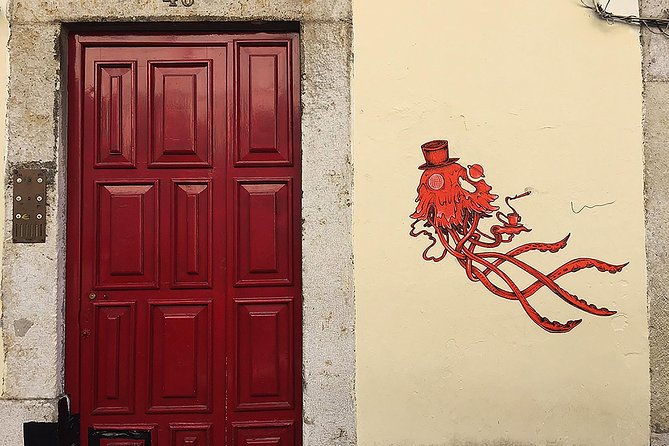
Your first neighborhood is Bairro Alto, a place where nightlife culture spills onto walls. This stop leans into street art tied to the quarter’s long-running traditions—so you’re seeing art that feels connected to the pulse of the area, not just a one-off installation.
In practice, this is where you learn to look beyond the obvious. A tag or mural here often reads differently once you understand the setting: who passes, when things happen, and why certain styles show up in that kind of crowd-driven environment. It’s also a strong opening stop because it teaches your eye how to “decode” what you’re seeing as you move.
You’ll spend about 30 minutes here. That’s long enough to spot multiple pieces and short enough to keep the tour moving before your legs protest too much.
Stop 2: Elevador da Glória and Calçada da Glória’s Urban Art Gallery Mood
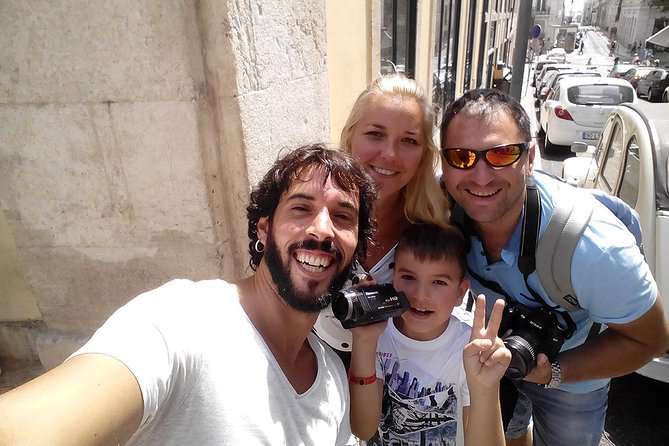
Next comes Elevador da Glória, with a focus on Calçada da Glória, where street artists from around the world create projects. It’s like an open-air gallery, but it doesn’t feel precious. It feels lived-in, with the art shaped by the street itself.
This is a great stop for two reasons. First, it helps you understand that street art is not only local. Second, it shows how the city can act like a connector between scenes from different places—styles travel, but they also get translated into Lisbon’s visual language.
If you like photography, this is the kind of location where you’ll benefit from moving a little. Look for wall surfaces that catch different light angles, and watch how the perspective changes as you step around corners. The guide helps you spot the pieces worth slowing down for.
You can also read our reviews of more guided tours in Lisbon


Stop 3: Baixa de Lisboa Tiles and Cobblestone Storytelling
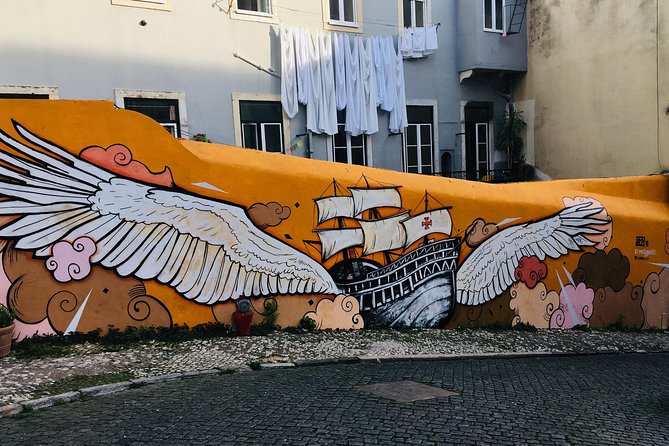
Then you shift to Baixa de Lisboa, and the vibe changes from street-corner art to city-wide visual storytelling. This stop puts azulejos—Lisbon’s iconic tiles—front and center, along with cobblestone streets and the designs and symbols that run through the area.
This is where many people get surprised in a good way. In Lisbon, “street art” is bigger than graffiti and murals. Tiles are part of how the city remembers, teaches, and decorates public space. Learning to see tiles as a kind of street-level communication helps you carry that skill beyond the tour.
You’ll spend around 30 minutes here. It’s a solid reset too: the scenery opens up compared to tighter alleys, and you get more “read” time for symbols and patterns before heading back toward viewpoints.
Stop 4: Miradouro da Graça and Workers Rights in the Wall Messages
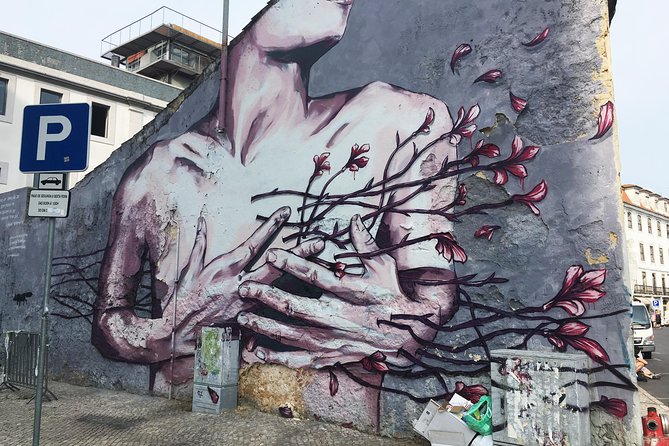
Next is Miradouro da Graça, connected to Sophia de Mello Breyner Andresen, and the nearby residential district of Bairro da Graça. Here the street art is tied to a legacy connected to workers unions and workers rights. The point is not academic trivia. The point is that the art shows the emotional and political backbone of real communities.
This stop is where the tour’s “why” gets strongest. A good street art guide teaches you that walls can hold messages when official channels are slower, smaller, or biased. You’ll likely notice symbols and themes repeat—because movements repeat. And you’ll also start seeing how local history leaves fingerprints on what gets painted.
Expect about 30 minutes. It’s also a natural moment to catch your breath, because viewpoints change the pace from searching down streets to looking out across them.
Stop 5: Alfama’s Chão do Loureiro Car Park Turned Street-Art Gallery

Your last stop is Alfama, at Chão do Loureiro, where a car park has been transformed into a five-floor street-art gallery. This is the kind of place that feels like a mini-culture world. You’re not just seeing one piece—you’re walking through a vertical collection, where multiple artists leave their marks on the south margin of Lisbon.
This is also where the tour’s promise about variety turns real. You’ll see work that ranges in scale, from smaller pieces you spot at a glance to bigger works that demand time. The guide’s role here is huge: they help you connect what you see to the artists, the neighborhoods, and the global street art scene.
You’ll spend around 30 minutes. In that time, you can take in the overall feel, then do a second pass with your eyes adjusted—like switching from a quick read to a slower one.
The Mid-Tour Rest Break and Photo Strategy
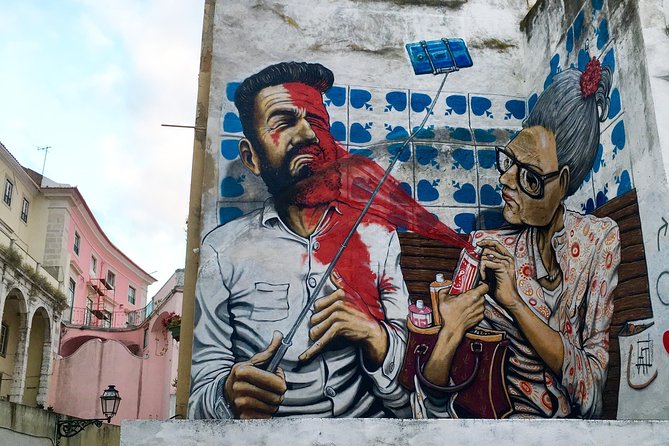
The tour includes a rest break at about the halfway point. That’s important on a walking route with hills and uneven ground. Use it to drink water, check your phone battery, and decide what you want to shoot next instead of trying to do it all while walking.
For photos, I like a simple plan: one wide shot to capture context, then three close-ups of details—edges, lettering, and any symbol that repeats. Lisbon street art often has layered meaning, and the best photos show texture and place, not just a full mural straight-on.
Also, don’t be shy about asking your guide to point out why a piece is worth your time. The most common theme from guides is context: social issues, neighborhood identity, and how street art fits into the bigger art world.
Guides, Language, and the Small-Group Advantage
This tour has a maximum group size of 12, and the tour overall is capped at 15. That matters because Lisbon neighborhoods are easy to lose your way in, especially if you’re trying to photograph while navigating. A guide also keeps the pacing logical, so you’re not wasting energy backtracking.
English is offered, and guides are praised for bringing street art into social, cultural, and historical context. You’ll hear how street art includes murals, graffiti, and building decoration, plus how Lisbon lets it happen—or sometimes doesn’t. People like Erica, Maria, and Laith/Leith get singled out for turning the tour into a kind of street-level art class.
If you like your tours with personality, you’ll probably enjoy the conversational style too. Guides often end with practical recommendations for the rest of your trip, which is a nice bonus when you want to keep exploring beyond the route.
Who Should Book This Tour (and Who Might Want Another Option)
This is best for you if you love street art, street photography, or you want a new way to see neighborhoods beyond viewpoints and postcards. If you’ve never studied street art before, the guide helps you learn the language: what the styles mean, why they show up where they do, and how Lisbon’s history connects to what you see on walls.
You should also book if you’re visiting Lisbon for the first time and want a fast orientation. You’ll move through iconic-feeling areas like Bairro Alto, Baixa, and Alfama, but in a way that feels personal—focused on what makes each place look the way it does.
Skip this tour if you have mobility limitations. It’s not recommended for travelers with mobility issues, and it requires walking on uneven terrain. Also, if you know you can’t handle hills, be honest with yourself before you pay—this isn’t a flat stroll.
Should You Book This 3-Hour Lisbon Street Art Walk?
If you like art that has a backstory, yes, book it. The value is strong for $42.27 because you’re not just touring walls—you’re touring meaning, and you’re doing it with a guide who can connect the dots between neighborhoods, tiles, and street-level messages.
I’d especially recommend it if:
- You want a small-group experience with time to ask questions.
- You care about both visuals and context (history, politics, culture).
- You’re a photographer looking for varied textures and angles in a short window.
One reason to pause: you have to be comfortable with hills, cobblestones, and uneven ground. If that’s a dealbreaker, look for a different Lisbon format.
FAQ
How long is the guided walking tour?
It runs about 3 hours.
How much does the tour cost?
The price is $42.27 per person.
Where does the tour start and end?
It starts at R. Luz Soriano 67, 1200-246 Lisboa, Portugal, and ends at Miradouro da Graça / Calçada da Graça, 1100-265 Lisboa, Portugal.
Is the tour offered in English?
Yes, the tour is offered in English.
What kind of walking is involved?
You should wear comfortable shoes and be able to walk on unpaved or uneven terrain. It is not recommended for travelers with mobility issues.
What’s included in the price?
A local guide, a rest break at the halfway point, and a small group tour are included. Food and drinks are not included.