REVIEW · LISBON
Lisbon: Street Art and Historical Walking Tour
Book on GetYourGuide →Operated by My Lisbon Tours · Bookable on GetYourGuide
Street art in Lisbon comes with stories. In just 3 hours you get views, neighborhoods, and murals with context, not just wall-hopping. This is art you can read in the streets.
Two things I like a lot: the street-art references are specific (Vhils, Nomen, Odeith, Gonçalo Mar.Pro and others you’ll spot as you walk), and the guide explains what’s behind the images—often tying the work to city life, politics, and cultural memory. You’re also not stuck in the postcard loop, because you’ll move through Graça, Mouraria, and Alfama.
One thing to consider: this is real walking on uneven old-city ground. It’s not suitable for people with mobility impairments, and you’ll want truly comfortable shoes for steps, cracks, and stone tiles.
In This Review
- Quick hits: what makes this Lisbon walk worth your time
- Starting at Miradouro da Graça: Lisbon’s first jaw-drop view
- Street art with context: Vhils, Nomen, Odeith, and Gonçalo Mar.Pro
- Graça, Mouraria, and Alfama: three neighborhoods, one walking storyline
- East-side lookouts: Miradouro Portas do Sol and Lisbon’s shifting angles
- São Jorge Castle area: old walls, new messages
- The 3-hour walk: pace, shoes, and how to enjoy it without stress
- Price and value: why $35 can feel like a bargain
- Who should book this street art and history walk?
- Should you book this Lisbon street art and history walk?
- FAQ
- How long is the Lisbon street art and historical walking tour?
- Where do I meet the group?
- What’s the group size?
- Is the tour offered in English?
- What’s included in the price?
- Are meals or drinks included?
- Do I need hotel pickup or drop-off?
- Is the tour suitable for mobility impairments?
Quick hits: what makes this Lisbon walk worth your time
- Miradouro da Graça to start: get your bearings fast with Lisbon spread out below you.
- Street art with names and meaning: you’ll see major urban artists and learn how to interpret the style and message.
- East-side lookouts on the route: the views keep improving, including Miradouro Portas do Sol.
- São Jorge Castle area context: you’ll connect the art you see to the city’s older layers.
- Small group (up to 8): easier pacing, more questions, and better navigation on narrow streets.
- Licensed English-speaking guides: guides like Rui, Andriy, and Andre are known for safety-first street skills and clear explanations.
Starting at Miradouro da Graça: Lisbon’s first jaw-drop view

Your tour begins at the church by Miradouro Sophia de Mello Breyner Andresen, known as Miradouro da Graça, on Calçada da Graça. This matters because you start high, so the city makes sense right away. Even before the first mural, you’ll understand how Lisbon is built across hills and viewpoints.
This first stop is your visual warm-up. You can pick out rooftops, the sweep of the city, and how the neighborhoods stack on different levels. It also sets a good expectation for what comes next: you’re going to walk through slopes, not flat streets.
If you’re arriving a bit early, take a few minutes to enjoy the view before the group gathers. It’s a small moment, but it helps the rest of the tour click into place.
You can also read our reviews of more walking tours in Lisbon



Street art with context: Vhils, Nomen, Odeith, and Gonçalo Mar.Pro

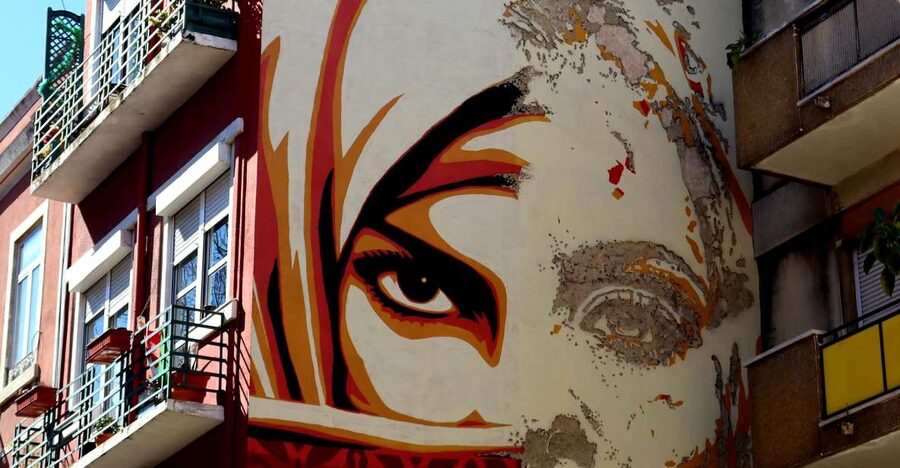
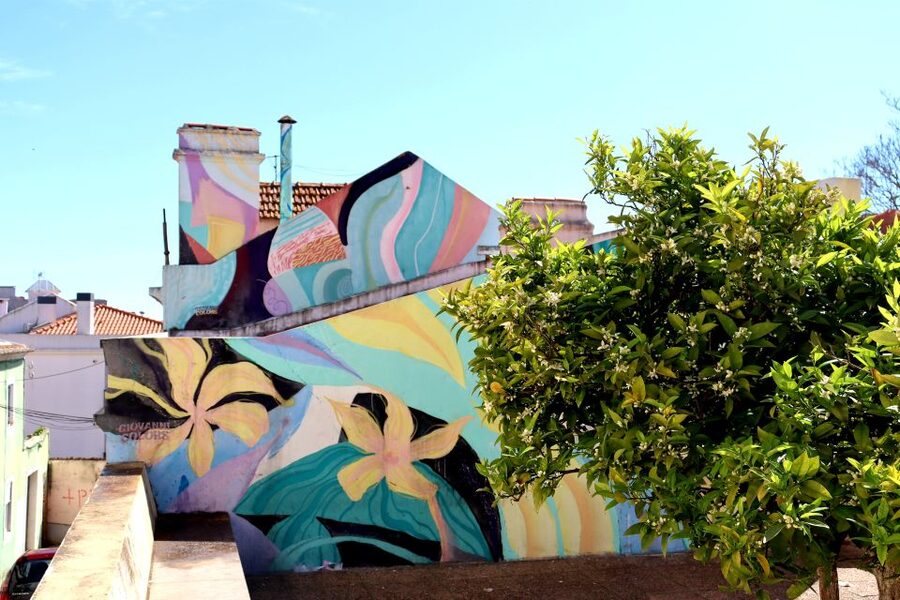
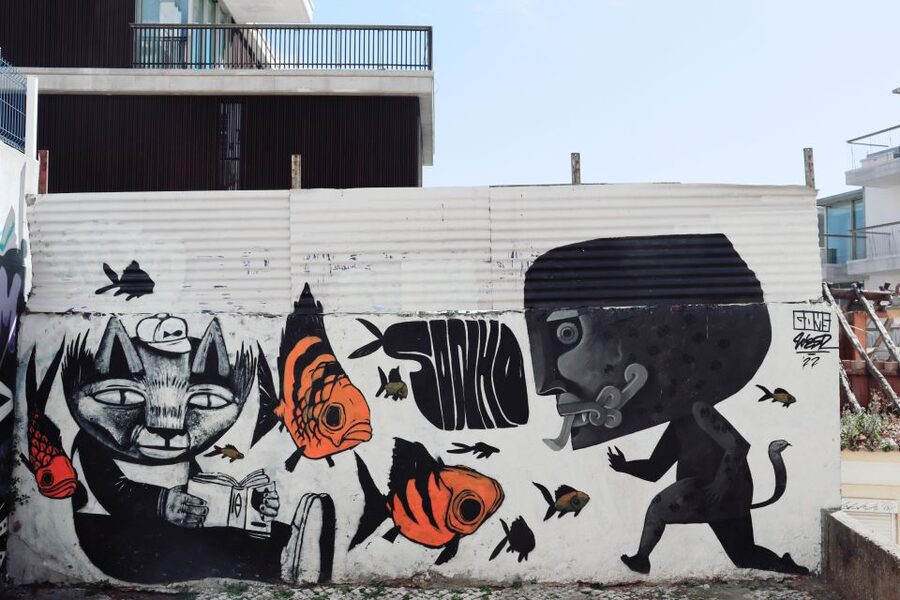
Once you start moving, the tour becomes a street-level gallery with commentary. You’ll see works by well-known urban artists, including Vhils, Nomen, Odeith, and Gonçalo Mar.Pro. The point isn’t just spotting signatures—it’s learning how to read what you’re looking at.
A big reason this tour works is the guide’s approach. Guides such as Rui (and others like Andriy or Andre, depending on who leads your date) tend to connect the artwork to real-world themes: how artists react to power, how messages travel through neighborhoods, and how the city’s identity shows up on walls.
You’ll also learn why Lisbon’s street art doesn’t feel random. Over the walk, the murals and tags start lining up with what you’re hearing about the culture around them. That makes your photos better too. Instead of snapping because you recognize a name, you’ll snap because you understand why it’s there.
Safety and street sense are part of the experience, not an add-on. One advantage I’d expect from a small group is that your guide can keep you aware of traffic, uneven pavement, and those Lisbon stone tiles that love to stick up at the worst moment.
Graça, Mouraria, and Alfama: three neighborhoods, one walking storyline
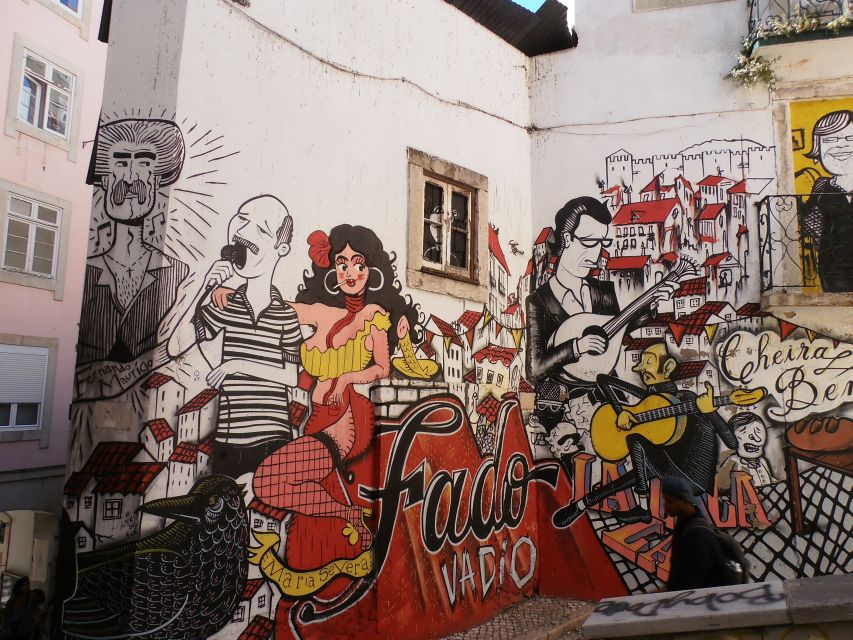
This tour is built around three districts: Graça, Mouraria, and Alfama. Each one has a different vibe, and the guide helps you notice the differences while you’re walking.
- Graça is where the tour starts to feel panoramic. It’s a good place to get your first sense of Lisbon’s layers: hills, viewpoints, and older streets that still function like a neighborhood.
- Mouraria is where you start seeing the city’s everyday texture—life in the streets, not just the big sights. It’s a district that rewards slow attention, and the murals help you look past the obvious routes.
- Alfama is where you’ll feel the “older Lisbon” mood most strongly. The streets can be narrow and the turns come fast, so the guide’s pacing and explanations keep you from feeling lost.
A key value here is that you’ll go off the beaten path for hidden treasures—especially in Alfama and Mouraria. That off-route wandering is often where people lose tours because it feels like they’re just walking. Here, you don’t just wander; you walk with purpose and a running explanation of what you’re seeing and why it matters.
East-side lookouts: Miradouro Portas do Sol and Lisbon’s shifting angles
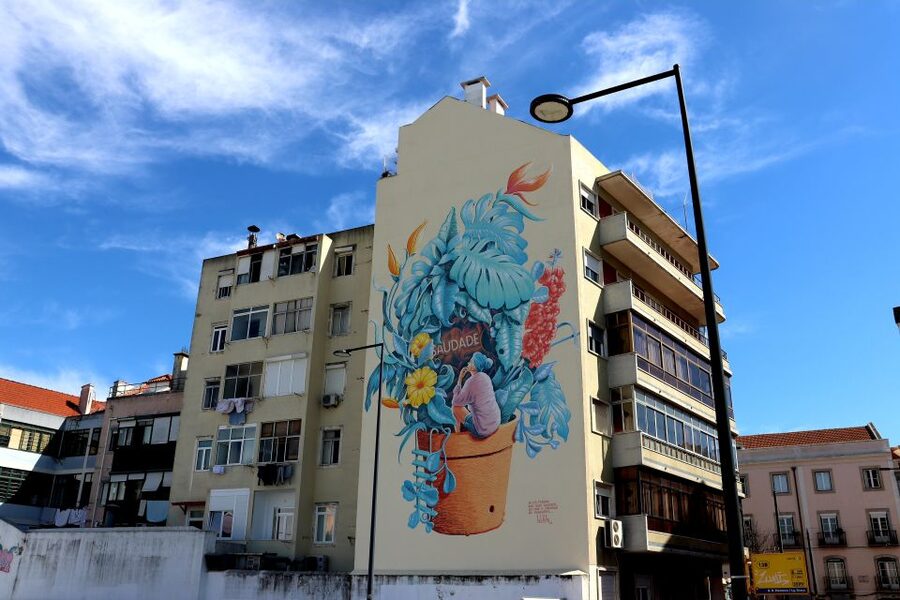
After the early Graça views and the first stretch of street art, you’ll head toward the east side to find more top-level perspectives. One highlight is Miradouro Portas do Sol—a famous viewpoint, but still the kind of place that feels new when you’ve been learning the city as you walk.
Lookouts aren’t just pretty in Lisbon. They’re a practical tool. When you keep hopping between viewpoints, you understand distances and neighborhood placement in a way that maps alone can’t do. And because you’re learning about the city’s heritage while you walk, the views start to feel like part of the story—not a pause button.
This section also helps you appreciate the tour’s pacing. It’s a mix of walking and “reset” moments, so you’re not mentally drained when you reach the castle area.
São Jorge Castle area: old walls, new messages
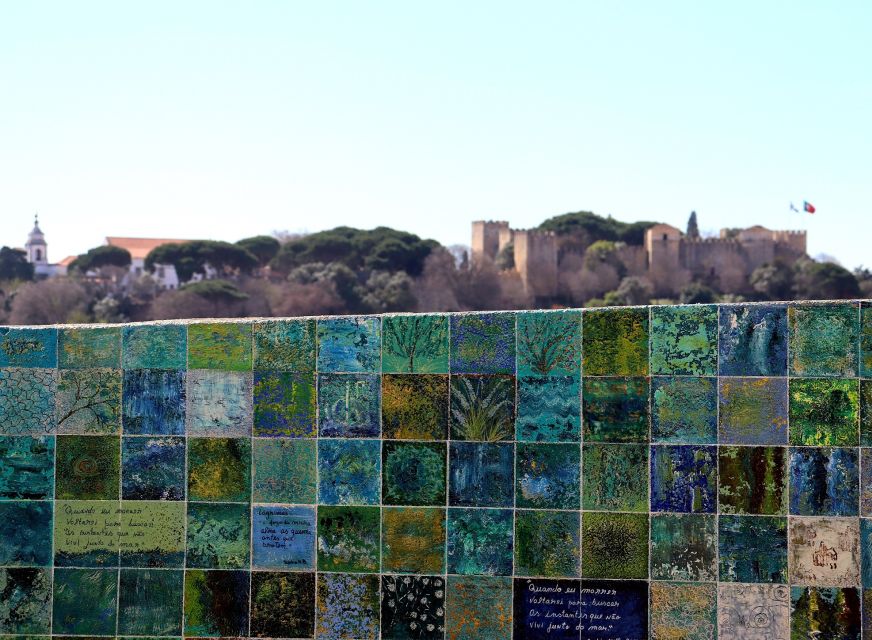
The route includes time around São Jorge Castle, which adds cultural depth to the street art you’re learning about. You’ll get context for Lisbon’s heritage while you’re standing in a place that represents the city’s older power and long memory.
This pairing—street art plus medieval context—makes sense. Street art often talks to the present, but it borrows energy from the past. Here, you’re reminded that Lisbon’s neighborhoods have always been shaped by who lived there, who governed them, and how the city defended itself.
Don’t expect a long castle tour with museum stops. The value is the connection: you see the castle area as a historical anchor while your guide explains how modern creative voices fit into Lisbon’s larger cultural pattern.




The 3-hour walk: pace, shoes, and how to enjoy it without stress
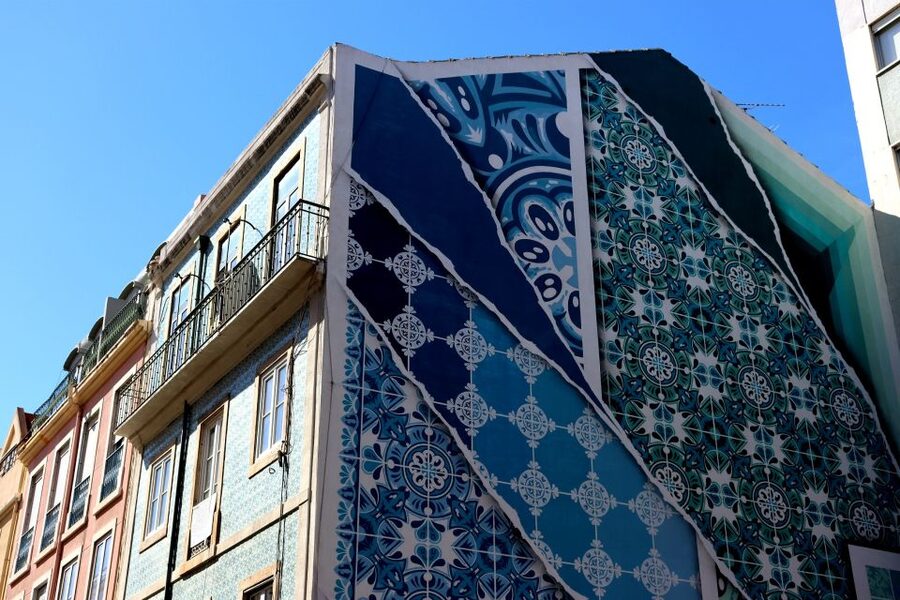
The tour lasts 3 hours, and with a small group (limited to 8 participants), it tends to feel manageable. The walking is not just scenic stroll time. Lisbon’s streets bring you uneven ground, cracks, and protruding stone tiles, and your guide will guide you through traffic awareness and careful steps.
In practice, that means you should plan for discomfort that comes from movement—not pain, just the normal old-city reality. If you’re the type who hates slowing down for stairs and turns, this might test your patience. If you enjoy walking and you’re okay with short climbs, it feels like a perfect length: enough time to learn, not so long you lose the thread.
It’s also not suitable for mobility impairments, so if that’s part of your situation, you’ll want to choose a different format.
Bring comfortable shoes. I’d treat that as non-negotiable. Your feet will notice everything in Lisbon, and a great guide can keep you safe but can’t erase the physics of stone steps.
Price and value: why $35 can feel like a bargain
At $35 per person, this tour is priced like a budget-friendly experience—but it doesn’t feel basic. What you’re paying for is a licensed local guide, live English commentary, and local taxes and fees. Meals and drinks are not included, and there’s no hotel pickup or drop-off, so you’re free to meet the group and keep the schedule simple.
The real value is the guide’s “translation layer.” Without that, street art can look like random decoration, even when it’s impressive. With a guide, you learn how artists work, why certain styles show up in certain places, and how the messages fit Lisbon’s political and cultural conversation.
Also, the small group size matters. With up to 8 people, your attention stays on the street, not on waiting for someone to catch up while you’re all craning for the same wall.
If you want one activity that combines art, city context, and the chance to see parts of Lisbon that don’t feel like a theme park, this is a strong bet for the money.
Who should book this street art and history walk?
I’d recommend this tour if:
- you like street art with meaning, not just photos
- you want to learn how Lisbon’s neighborhoods work beyond the main tourist streets
- you enjoy viewpoints and want them stitched into a walking story
- you’d rather ask questions than just follow a crowd
It’s especially good for art lovers who also like politics, culture, and the “why” behind what you see. The guides who lead these walks (for example Rui, Andriy, and Andre) have a reputation for clear explanations and safety-first street handling, and that tends to make the whole experience smoother.
Should you book this Lisbon street art and history walk?
If you’re excited by street art and you want Lisbon to feel real, yes—book it. This is one of those rare experiences where you’re not only seeing murals, you’re also learning how Lisbon’s present-day voices connect to its older layers.
Skip it if you can’t handle uneven walking or if you want a car-and-van style tour with minimal stairs. For everyone else, this is a smart use of a half-day: you’ll leave with a sharper eye, better photos, and a clearer sense of how Graça, Mouraria, and Alfama fit into the city’s bigger picture.
FAQ
How long is the Lisbon street art and historical walking tour?
It lasts 3 hours.
Where do I meet the group?
Meet at the church located at Miradouro Sophia de Mello Breyner Andresen, also known as Miradouro da Graça. Address: Calçada da Graça, 1100-265 Lisboa, Portugal.
What’s the group size?
The tour is a small group limited to 8 participants.
Is the tour offered in English?
Yes, the live tour guide speaks English.
What’s included in the price?
The price includes the guide and local taxes and fees.
Are meals or drinks included?
No. Meals and drinks are not included.
Do I need hotel pickup or drop-off?
No. Hotel pickup and drop-off are not included.
Is the tour suitable for mobility impairments?
No. It is not suitable for people with mobility impairments.