REVIEW · TOKYO
Tokyo: Asakusa, Skytree & Akhihabara Go-Kart City Experience
Book on GetYourGuide →Operated by Monkey Adventure Kart · Bookable on GetYourGuide
Tokyo from a car window feels different.
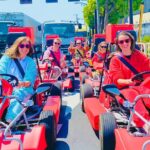
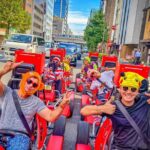
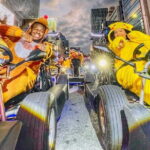
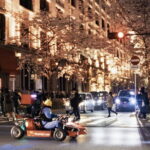
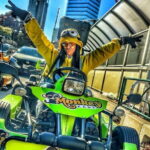
This go-kart city tour lets you experience Tokyo’s iconic neighborhoods street-level, with a guide leading the way and taking photos at the right moments. I like that you can dress up from the costume selection and turn the ride into something playful, not just sightseeing. I also love the photo service: your guide captures you during key stops, then shares the images by AirDrop or email afterward. The main catch is practical: to drive you need a hard-copy 1949 Geneva Convention IDP (online copies do not count), plus you must meet the height/weight limits.
What makes it work is the “small group” feel (max 8) plus a clear briefing before you start. You’re not solo on Tokyo streets; you’re part of a guided line, with someone managing the pace and safety. And if you want the night vibe, you’ll often see people booking later times around golden hour for the city lights.
One more consideration: rain can change plans, so have a flexible mindset. And do plan to arrive early. The meetup point is a short walk from Oshiage Station, but the timing matters because everyone needs to be checked in and ready.
In This Review
- Key Points That Make This Tour Worth It
- Street-Level Tokyo: Asakusa, Skytree Town, and Akihabara in One Ride
- What 70 Minutes Feels Like (And Why That Timing Works)
- Before You Drive: Costume Choice, Safety Briefing, and Setup
- Skytree Town Stop: A Photo Moment You Can Actually Enjoy
- Asakusa Streets From Behind the Wheel
- Akihabara’s Pop-Culture Energy, Up Close and Personal
- Photos Done For You: AirDrop or Email Delivery After the Ride
- Go-Kart Camera Mount: Record Your Point of View
- Price and Logistics: Is $96 Good Value in Tokyo?
- Driving License Reality Check: The IDP Rules You Can’t Ignore
- Safety, Pace, and Small-Group Control (Up to 8)
- Best Time to Book: Morning Fun vs Late-Afternoon Night Lights
- Who This Tour Fits Well (And Who Should Skip)
- Should You Book Monkey Adventure Kart in Tokyo?
- FAQ
- How long is the Tokyo Asakusa, Skytree & Akihabara go-kart tour?
- How much does the tour cost?
- Where is the meeting point?
- What do I need to drive in Japan for this tour?
- Are online or digital copies of my permit accepted?
- Is alcohol or drugs allowed during the tour?
- Is a costume included?
- Does the guide take photos?
- How do I get the photos after the tour?
- What if it rains?
- Is there free cancellation?
Key Points That Make This Tour Worth It
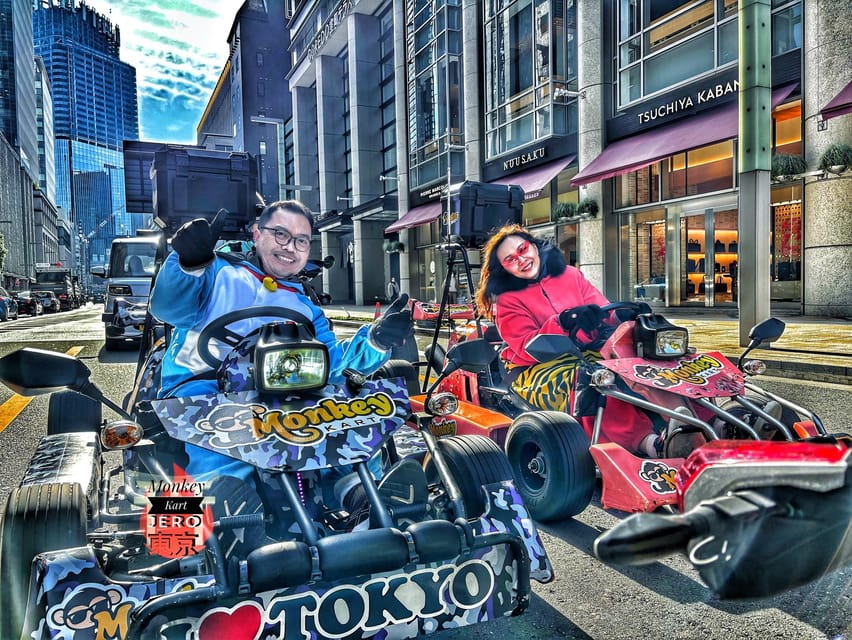
Street-legal go-karts on real Tokyo routes: Custom-built karts built for city driving, guided start to finish.
Costume adds fun and great photo energy: You’ll pick a character outfit before you roll.
Guide-run photo moments plus AirDrop/email delivery: You can focus on driving without missing the shots.
Skytree Town photo stop is built into the flow: It’s not just passing by; you get a moment to see it properly.
Small group of up to 8 drivers: Less chaos, more attention, easier safety management.
Street-Level Tokyo: Asakusa, Skytree Town, and Akihabara in One Ride
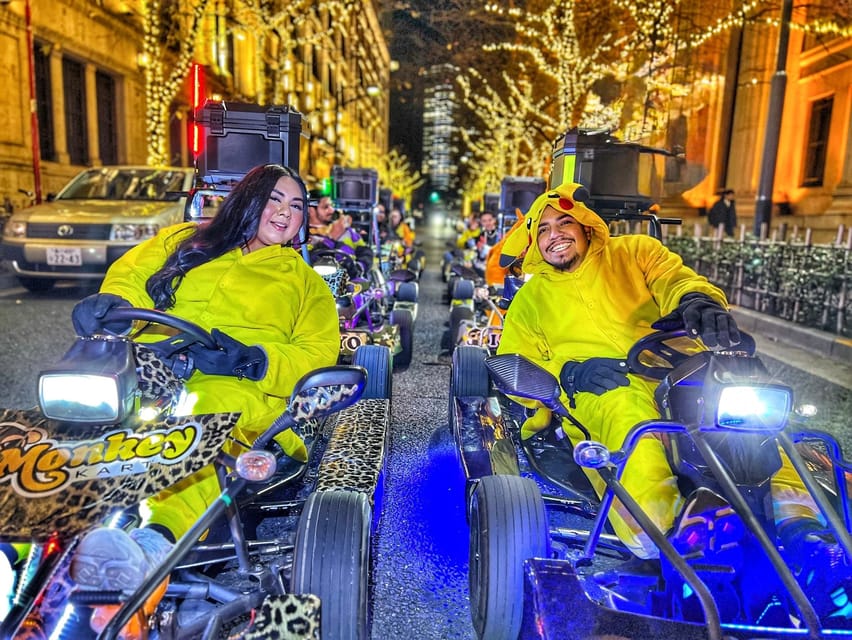
I love tours that help you feel the city instead of just looking at it. This one works because you’re traveling through Tokyo the way pedestrians experience it, only you’re doing it at go-kart speed. In about 70 minutes, you get a guided route linking Asakusa, the Tokyo Skytree area, and Akihabara—three districts that feel totally different from each other.
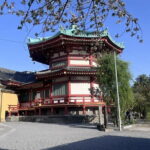
Asakusa is the old-Tokyo mood: traditional streets, temple energy, and that sense of history you can’t fully capture from a viewpoint. Skytree Town brings a modern anchor and a big, visible skyline moment. Then Akihabara shifts into the pop-culture world—bright, playful, and very Tokyo in a different way.
The value here isn’t only the sights. It’s the rhythm: briefings first, then you’re out riding, then you’re back with photos. You’re not spending half your trip commuting between neighborhoods.
You can also read our reviews of more city tours in Tokyo

What 70 Minutes Feels Like (And Why That Timing Works)
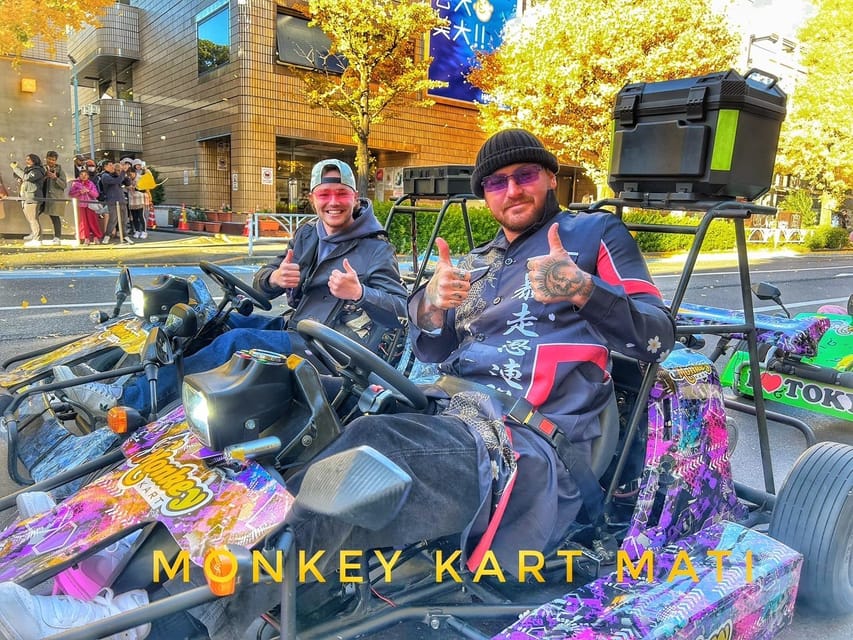
Seventy minutes sounds short until you’re actually driving. The tour is timed so you spend most of the experience moving, not waiting. You also get enough time for multiple photo moments and at least one proper stop (Skytree Town) without the ride dragging.
In Tokyo, where trains and walking add up fast, this format can be a relief. You get a lot of visual variety in one session, and because it’s guided, you don’t have to solve navigation while you’re excited.
Group size also matters. Limited to 8 participants, you’ll typically experience less bottlenecking and more direct attention from the staff. That’s the difference between a “fun activity” and a “I felt taken care of” activity.
Before You Drive: Costume Choice, Safety Briefing, and Setup
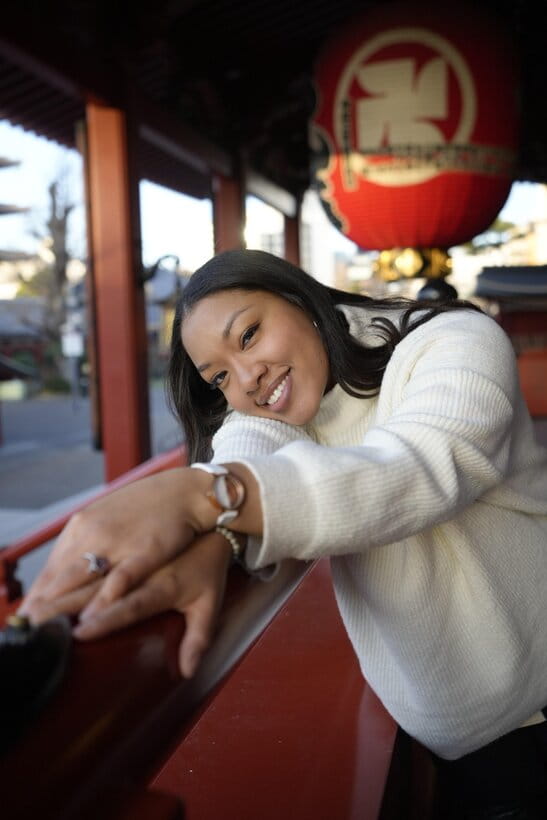
Your experience starts at the meeting point at 4-chōme-9-9 Yokokawa, which is about a 7-minute walk from Oshiage Station. Plan to arrive early—20 minutes before your time—because you’ll need time for check-in, equipment prep, and the safety briefing.
This is not one of those activities where you’re thrown onto the road right away. There’s a briefing first, and it covers how the group stays together and how to follow the lead instructions. That matters because Tokyo traffic can look intense from the sidewalk, even when you’re moving slowly as a group.
Then you pick from a selection of costumes. It’s a simple thing, but it changes the vibe instantly. Instead of looking like another tourist with a camera, you’ll look like part of the show. It also gives your guide easy photo moments because everyone looks coordinated and playful.
Skytree Town Stop: A Photo Moment You Can Actually Enjoy
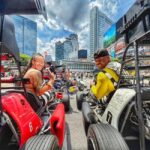
One stop is clearly planned: Tokyo Skytree Town. You’ll get a photo stop and a visit component, plus time to see it rather than just drive past and move on.
Skytree Town is worth it because it gives you a recognizable “Tokyo skyline” anchor. Even if you’ve seen it in photos before, standing near it and then transitioning straight back into driving makes the whole tour feel connected—like you moved through Tokyo’s eras in one loop.
Practical tip: if you’re aiming for night lights, consider booking the later slot. People often recommend doing this around late afternoon into evening, because the city lighting kicks in and your ride photos look more dramatic.
Asakusa Streets From Behind the Wheel
Asakusa is the kind of neighborhood where you want to slow down and look at details. On this tour, you can’t stop every few meters, but you get something better: a moving street-level perspective.
Driving through Asakusa gives you a different sense of scale. You’re not just viewing lanes and buildings from the sidewalk; you’re experiencing how the streets flow around you. You’ll notice how shop fronts, pedestrian crossings, and temple-area street layouts shape the ride.
Also, because it’s guided, you’re less likely to make the classic mistake of getting distracted by scenery. Your guide keeps the route and pacing clear, so you can enjoy the sights without turning into a hazard yourself.


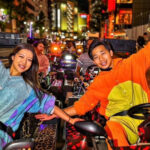
Akihabara’s Pop-Culture Energy, Up Close and Personal
Akihabara has a distinct feel. It’s loud in color and identity, and it’s the kind of place where you can spot references instantly. From a go-kart seat, you see it with a kind of momentum that walking doesn’t always provide.
You’ll pass through the vibrant streets of Akihabara known for its electric pop-culture atmosphere. And because the tour includes photo stops led by your guide, you’re not scrambling for angles while you’re trying to keep your kart straight.
If you’re the type who likes themed neighborhoods, Akihabara is the emotional payoff. Asakusa sets the tone, Skytree gives you the skyline moment, and then Akihabara delivers the fun chaos.
Photos Done For You: AirDrop or Email Delivery After the Ride
This is one of the biggest reasons I’d recommend the tour. Capturing driving photos in a crowded city is hard. Here, your guide takes photos at key points during the experience, so you can enjoy the ride without worrying about camera timing.
After the tour, you receive the photos conveniently via AirDrop or email. That’s a real convenience in Tokyo, where you might not want to spend your evening hunting for your best shots across camera apps.
You also get one hard-copy photo included. So you can walk away with both digital and physical proof. For some people, that physical keepsake is exactly what makes the experience feel “real,” not just another memory folder.
Costume helps too. The photos tend to look more like a moment than a standard vacation snapshot.
Go-Kart Camera Mount: Record Your Point of View
The tour includes an Action Camera or Insta 360 mount. That’s a practical perk if you like filming while you move. Even if you just use it for short clips, it can give you a perspective you won’t get from a phone held at arm’s length.
If you’re bringing a camera, test your setup before you ride. The more you can do beforehand, the less you have to think about while you’re focusing on driving and staying in formation.
Price and Logistics: Is $96 Good Value in Tokyo?
At $96 per person for about 70 minutes, the pricing makes sense when you look at what’s included. This isn’t just a kart rental. You’re paying for:
- a tour guide running the route and pacing
- the go-kart itself
- a costume selection
- a photoshoot plus guide photo capture
- water
- one hard-copy photo
- and the camera mount option
In Tokyo, getting a guided activity with photo handling and gear support bundled in can be worth it compared to paying separately for transport, attraction tickets, and then trying to get good photos yourself.
That said, the value depends on your situation. If you’re not comfortable driving (and you’ll have to drive), you might feel like you’re paying mostly for the experience, not the convenience. If you are comfortable and you want both sights and fun photos, the bundle approach is the whole point.
Driving License Reality Check: The IDP Rules You Can’t Ignore
If you’re planning to drive, this is the part you have to treat like an actual checklist.
You must have a valid driving license for Japan, including a hard-copy International Driving Permit (IDP) issued under the 1949 Geneva Convention. Online or soft copies are not valid. Japan also does not recognize permits issued under the 1968 Vienna Convention, and certain permit types (like those listed in the rules) are not accepted.
There are also country-specific requirements. For drivers with licenses from France, Switzerland, Taiwan, Germany, Monaco, and Belgium, you need a Japanese translation of your local license, obtained physically from the JAF office (Japan Automobile Federation).
And importantly: some countries’ permits are not allowed, depending on whether your IDP is the 1949 Geneva Convention type. So before you pack, verify it matches what Japan accepts.
One more detail: drivers must get a hard-copy paper booklet of the 1949 IDP. Not a screenshot. Not an app. Paper.
This is also where arriving early helps. If you realize at the last minute that a document isn’t correct, you’ll lose time fast.
Safety, Pace, and Small-Group Control (Up to 8)
The reviews-style vibe for this tour is consistent: people feel safe because the staff runs a structured start and keeps the ride controlled. Since your group is limited to 8 participants, the lead guide can manage spacing and keep everyone moving in sync.
You should still be ready to follow instructions closely. Go-kart driving in city streets is not the same as driving on an empty track. Even if you’re experienced, you’ll need to react to group cues and pedestrian behavior.
The tour also bans alcohol and drugs, and intoxication is not allowed. That’s good. It keeps everyone focused and reduces risk.
If you’re nervous about driving, that’s normal. Just treat the briefing seriously. Once you start moving and you realize the staff is actively managing the ride, the stress tends to shrink.
Best Time to Book: Morning Fun vs Late-Afternoon Night Lights
Timing is where you can personalize this tour.
If you want day views, an earlier time gives you more daylight for photos around Skytree Town and the neighborhoods. If you want the look of Tokyo at night, consider the late-afternoon to early-evening window. People often recommend a slot around 4pm because it lines up with the city’s night-life energy while there’s still enough light for good photos.
Also think about temperature. If you’re riding in hot conditions, the tour includes water, but you’ll still want to dress comfortably for movement.
Who This Tour Fits Well (And Who Should Skip)
This is a go-kart driving activity, so it comes with clear limits.
It is not suitable for:
- pregnant women
- people over 331 lbs (150 kg)
- people over 5 ft 9 in (180 cm)
- anyone under 18
You’ll also need to meet the driving documentation requirements. So if you don’t have the correct IDP, you may not be able to drive.
If you are comfortable following safety instructions, enjoy a fun guided experience, and want a fast way to see multiple districts in one go, this is a great match. It’s also a strong choice for first-timers in Tokyo because it gives structure without taking away the excitement.
For people who just want to photograph landmarks from the sidewalk with zero driving involved, you might feel this isn’t your best use of time. This tour is about driving first, sightseeing second.
Should You Book Monkey Adventure Kart in Tokyo?
I’d book this if you want something hands-on and photogenic in Tokyo without spending your day on transport juggling. The combination of street-level districts (Asakusa, Skytree, Akihabara), a guided line on the road, costume fun, and a real photo service makes it feel like more than a stunt. It’s structured adventure.
I would pause if driving paperwork could be an issue for you. The IDP rules are specific, and Japan is strict about hard-copy 1949 permits. If you’re not ready on documents, don’t rely on last-minute fixes.
If you’re eligible, arrive early, follow the briefing, and pick a time that matches your preferred lighting, you’ll likely leave with the kind of Tokyo memory that feels different from every standard tour photo.
FAQ
How long is the Tokyo Asakusa, Skytree & Akihabara go-kart tour?
The duration is 70 minutes.
How much does the tour cost?
The price listed is $96 per person.
Where is the meeting point?
The meeting point is at 4-chōme-9-9 Yokokawa, about a 7-minute walk from Oshiage Station.
What do I need to drive in Japan for this tour?
You must have an International Driving Permit (IDP) in hard copy issued under the 1949 Geneva Convention, plus a valid driving license that meets Japan’s rules.
Are online or digital copies of my permit accepted?
No. Online/soft copies are not valid for driving.
Is alcohol or drugs allowed during the tour?
No. The tour rules state that alcohol and drugs are not allowed, and intoxication is not permitted.
Is a costume included?
Yes. Costume is included, and you’ll be able to choose one before you start.
Does the guide take photos?
Yes. There is a photoshoot included, and your guide takes photos at key moments.
How do I get the photos after the tour?
Photos are shared with you after the experience via AirDrop or email. A hard-copy photo is also included.
What if it rains?
The tour may be rescheduled due to rain.
Is there free cancellation?
Yes. Free cancellation up to 24 hours in advance is offered for a full refund.