REVIEW · TOKYO
Tokyo Private Art Tour in Kagurazaka Shinjuku with Licensed Guide
Book on Viator →Operated by Tokyo Licensed Guide Volunteer Group · Bookable on Viator
Kagurazaka is Tokyo’s time-machine neighborhood. This private route uses art as your compass, mixing Tokyo’s Edo-flavored streets with museum-level stops and modern design details. You’ll walk from Shinjuku into Chiyoda, with a licensed guide steering you through what you’re seeing and why it matters.
I love two things most: the focus on Yayoi Kusama (including an admission ticket and a full hour inside), and the way the itinerary threads art into everyday Tokyo spaces—like architecture designed by Kengo Kuma. The one possible drawback: with only a few overall ratings and mixed feedback, you’ll want to go in with clear expectations and be ready to ask your guide to keep the conversation art-focused.
In This Review
- Key things I’d plan for on this tour
- Tokyo/Edo art through real streets, not just museum walls
- Possible tradeoff: art depth vs. short stops
- Your 2:30 pm start and private pacing
- Stop 1: Yayoi Kusama Museum for art you can actually see
- What I’d watch for during that hour
- A note based on real feedback
- Stop 2: Akomeya Tokyo and the Kengo Kuma architecture hit
- Why this stop adds value
- Stop 3: Akagi Shrine for a modern, polished feeling
- How to enjoy this stop in limited time
- Stop 4: Kagurazaka—Edo mood meets a Paris-style vibe
- What you’re really learning here
- Stop 5: Ushigome Mitsuke and the samurai-era thread
- Price and value: what you’re paying for at $46.05
- When the price might feel less worth it
- Booking timing: plan ahead for the 2:30 pm slot
- Who this tour is best for (and who might skip it)
- Should you book this private Kagurazaka art tour?
- FAQ
- How long is the Tokyo Private Art Tour in Kagurazaka Shinjuku?
- What is included in the price?
- Is this a private tour?
- Where do I meet the guide and where does the tour end?
- What time does the tour start?
- Do I need to use a paper ticket?
- Can I cancel for a full refund?
Key things I’d plan for on this tour
- Kusama Museum time (1 hour) with admission included, so you’re not rushing your way through
- Akomeya Tokyo and Kengo Kuma architecture, a quick stop with a strong visual payoff
- A modern-feeling shrine stop (Akagi Shrine) that helps you see continuity and change in Tokyo
- Edo atmosphere + sophisticated streets in Kagurazaka, a useful way to understand the neighborhood’s tone
- Ushigome Mitsuke near Idabashi, finishing where you can keep exploring by JR
Tokyo/Edo art through real streets, not just museum walls
If you’ve only seen Tokyo as neon, you’ll probably enjoy this angle. This tour treats Tokyo’s art as something you can walk through: paintings, architecture, shrines, Geisha-era vibes, and samurai-era traces. You’re not just looking at objects—you’re learning how Edo-era culture still shows up in street shapes, building styles, and religious spaces.
You also get a licensed guide for the whole 2 hours 30 minutes (approx.). That matters because Tokyo’s art cues aren’t always obvious on first glance. Even when the stops are free, the guidance can help you decode what you’re looking at instead of relying only on wall text.
You can also read our reviews of more guided tours in Tokyo


Possible tradeoff: art depth vs. short stops
The museum gets the heavy time (one full hour). After that, the rest of the route is shorter—around 20 to 30 minutes each. If you want a super long, slow “study session,” you might find this is more of a smart overview than a deep seminar.
Your 2:30 pm start and private pacing
This is a private tour, meaning it’s just your group. That’s a real advantage when you want your guide to slow down for questions, photography, or a quick re-route on the fly. It also tends to feel less hectic than squeezing art talk into a crowded group.
The meeting point is at FamilyMart Evergrace Haramachi, 1-chōme-13-13 Haramachi, Shinjuku City, Tokyo 162-0053, Japan. The tour starts at 2:30 pm and ends at 2 Chome-9 Fujimi, Chiyoda City, Tokyo 102-0071, Japan—near Idabashi Station on the JR line. That’s convenient. After the tour, you can hop back onto trains without needing extra planning.
You’ll also use a mobile ticket, so you’re not hunting for printouts. And since confirmation is received at booking time, you’ll feel less guesswork before you arrive.
Stop 1: Yayoi Kusama Museum for art you can actually see
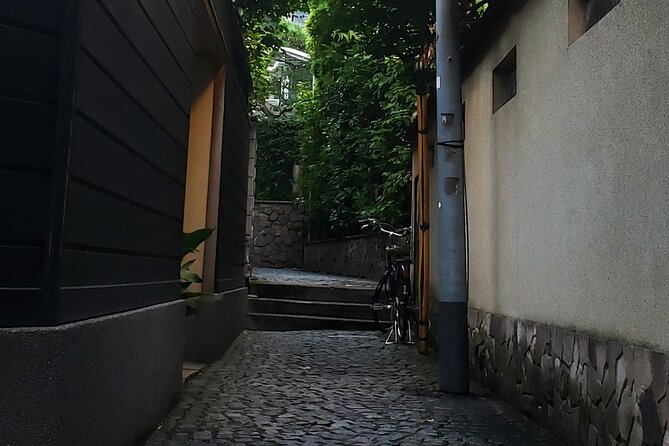
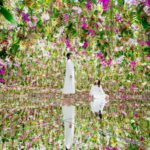
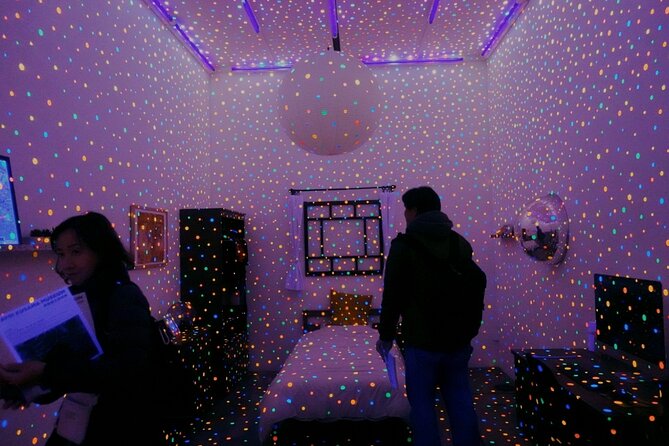
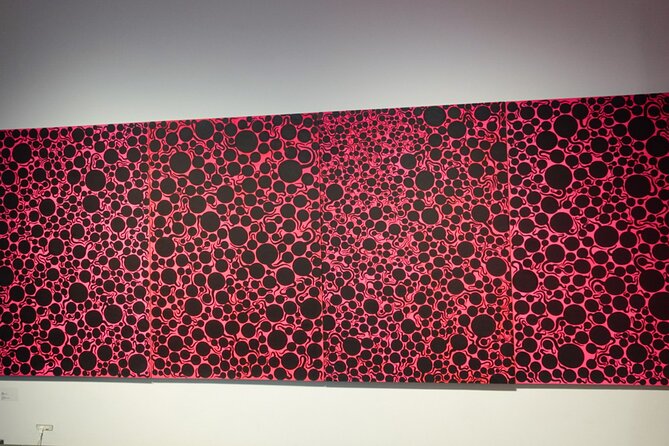
The anchor stop is the Yayoi Kusama Museum, where you’ll spend about 1 hour. The admission ticket is included, which is a nice value plug-in. Kusama’s work is famous worldwide, but what makes this stop click for me is that a guide helps you connect the artworks to the person behind them—so the visuals don’t feel random.
Kusama can be an “I get it or I don’t” artist for some people. With a tour, you get structure: you’re not just walking through, you’re learning how to look. In the best moments, the guide’s explanation can make the work feel more intentional—like you’re seeing patterns repeat across time and medium.
What I’d watch for during that hour
Plan to slow down. Don’t treat it like a checklist. If you like art that’s obsessively patterned, mirrored, or playful in a slightly unsettling way, you’ll probably feel at home here.
Also: if you’re new to Kusama, ask your guide how the pieces connect. If you’re already a fan, ask what you should look for first. The museum hour is tight enough that good direction helps.
You can also read our reviews of more private tours in Tokyo
A note based on real feedback
The strongest praise in the experience came from guides who clearly kept the talk art-centered—one guide named Nao was described as friendly, easy to talk with, and focused on Kusama and related history. On the flip side, one account described a guide who didn’t seem prepared for an art tour. That doesn’t mean this happens every time, but it’s a reason to choose this only if you’re comfortable asking questions and setting the tone early.
Stop 2: Akomeya Tokyo and the Kengo Kuma architecture hit
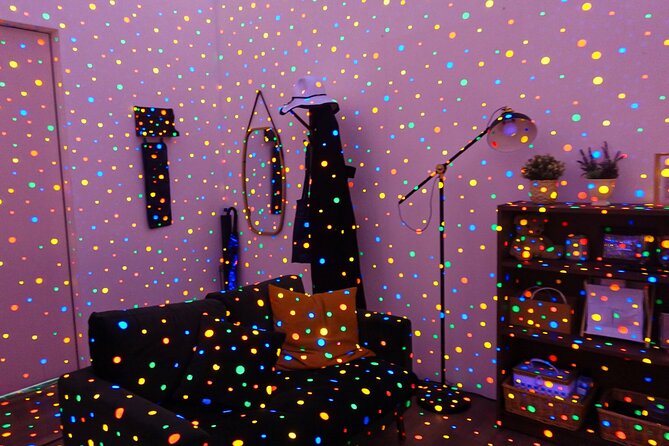
Next you’ll visit Akomeya Tokyo for about 20 minutes. Admission is free, and this stop is about seeing architecture as part of the art story.
The building design is by Kengo Kuma, a globally known architect. Even if you’re not chasing architectural theory, Kuma’s work often reads like “human scale meets elegant restraint.” On a short tour like this, that’s helpful because it gives you an immediate visual lesson: Tokyo’s art conversation isn’t only in galleries. It’s also in the surfaces you walk through.
Why this stop adds value
After the museum, your brain might want something lighter. Akomeya gives you a quick reset. It also fits the tour theme—Tokyo/Edo art isn’t trapped in the past. It keeps reappearing in modern design.
This is also a good place to take a step back and look at the building as a whole before you focus on details. A guide can point out what to notice, but you still get the satisfaction of seeing it yourself.
Stop 3: Akagi Shrine for a modern, polished feeling
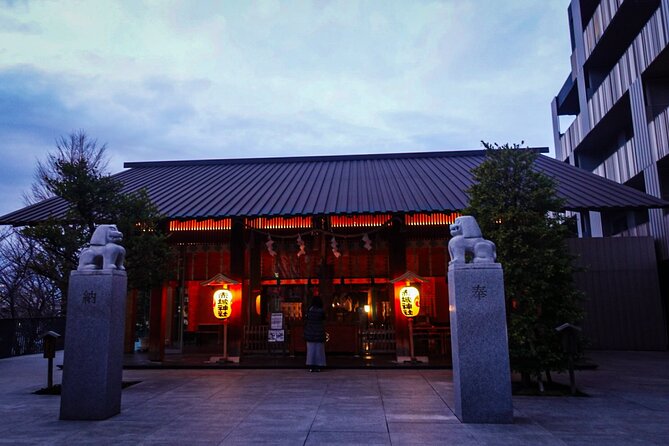
Then comes Akagi Shrine for about 20 minutes, with admission free. The tour description calls it modern and sophisticated, and that’s the point: Tokyo religious spaces aren’t frozen in time. They can feel carefully designed, and the mood can shift quickly as you move from street to shrine grounds.
A short shrine stop might sound small, but it helps you understand Tokyo’s layers. You get Edo-era traces without pretending everything looks Edo. You’re watching continuity—not a museum reenactment.
How to enjoy this stop in limited time
Bring your attention to transitions: the entrance, the path in, and how the space changes your pace. If your guide explains the background, that’s great. If not, you can still enjoy it by noticing how the shrine’s atmosphere differs from nearby streets.
Stop 4: Kagurazaka—Edo mood meets a Paris-style vibe
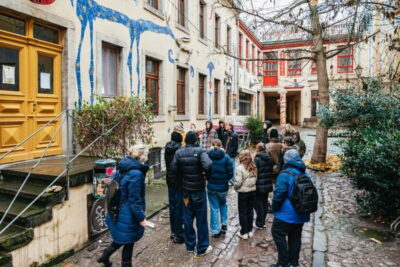
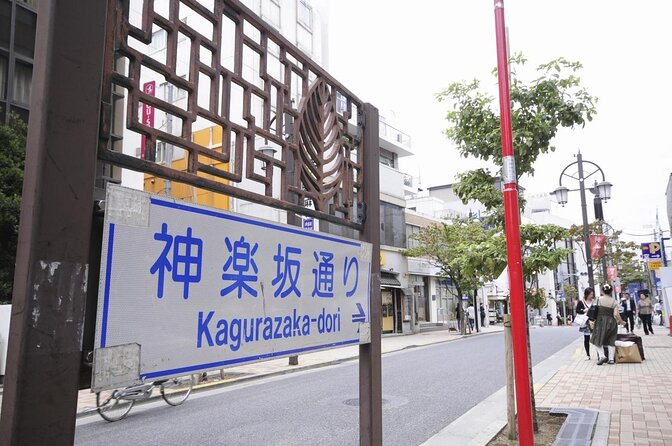
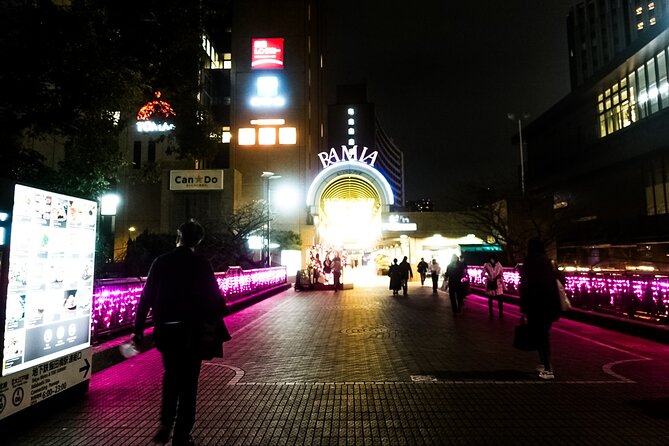
The itinerary sets aside around 30 minutes for Kagurazaka, a neighborhood described as where Edo-period atmosphere and a sophisticated Paris-like feel meet.
I like Kagurazaka because it’s the kind of place where walking teaches you. Streets feel narrower. The layout feels human. And the mood tends to be more “stroll and notice” than “rush and consume.”
What you’re really learning here
This is the neighborhood chapter of the tour. By the time you reach Kagurazaka, you’ve already seen Kusama and modern architecture. Now you’re placing those ideas into a real setting: how Tokyo neighborhoods carry different identities at once.
If you’re curious about Edo-era culture and how it influences today’s street life, this portion helps you connect the dots. If you’re only focused on famous buildings and museum tickets, you might treat this as a break. But it’s one of the most useful segments for getting your bearings.
Stop 5: Ushigome Mitsuke and the samurai-era thread
You’ll finish at Ushigome Mitsuke, about 20 minutes, with admission free. This is positioned as one of the samurai-era heritages, and your licensed guide explains it.
Finishing with a samurai-era marker makes sense. After Kusama and architecture, you return to human history and power structures—how people lived, defended spaces, and how those traces stayed in the urban map. Even if the actual site you see is small, the explanation can make it feel meaningful.
The tour ends near Idabashi Station on the JR line. That’s a practical win. When you’re done, you can travel onward without having to backtrack.
Price and value: what you’re paying for at $46.05
At $46.05 per person for about 2 hours 30 minutes, you’re paying for three things: a private guided art walk, a licensed guide, and at least one included ticket (Yayoi Kusama Museum).
Here’s how I judge value for this kind of tour:
- The Kusama Museum admission is included for 1 hour. That’s often the biggest “single-ticket” cost in a route like this.
- Most other stops are free (Akomeya Tokyo, Akagi Shrine, Kagurazaka, Ushigome Mitsuke). That means your money goes mainly to time, guidance, and transitions.
- Private format helps you spend time talking instead of waiting in a crowd.
So if you like art explanations and want less mental work—someone else translating what you’re seeing into context—this can be a fair deal.
When the price might feel less worth it
If you mostly want to wander on your own and you’re already confident spotting meanings from signage, you may prefer a self-guided day. Also, because the non-museum stops are short, this isn’t the option if you need long museum-style pacing.
Booking timing: plan ahead for the 2:30 pm slot
The tour is booked on average 46 days in advance, which signals demand. For a 2:30 pm start, I’d plan early rather than hoping for last-minute space—especially if you’re traveling in a busier season.
The tour also uses a mobile ticket and confirmation at booking time, which should keep last-minute stress low.
Who this tour is best for (and who might skip it)
I’d recommend this most strongly if:
- You like Yayoi Kusama and want help reading her work
- You enjoy combining art + architecture + neighborhoods rather than only doing museums
- You want a structured route in Kagurazaka without building one from scratch
It might be less ideal if:
- You want an art tour that’s heavy on depth at every stop, not just the museum
- You’re very sensitive to guide style and want zero variation. With a small set of ratings and a mixed account in the mix, you should be comfortable communicating early if something feels off.
Should you book this private Kagurazaka art tour?
If you’re into Kusama and you want a guided, art-themed walk that also shows you modern Tokyo design and Edo-era traces, I think it’s a solid pick—especially because the Kusama Museum admission is included and the route finishes near JR for easy onward travel.
My main “only book if” is simple: go in ready to engage. Ask your guide how to look, what connections to notice, and what you should pay attention to at each stop. The difference between a great and a disappointing experience here seems to come down to how art-focused the guidance stays, and you can help steer that early.
FAQ
How long is the Tokyo Private Art Tour in Kagurazaka Shinjuku?
The tour lasts about 2 hours 30 minutes.
What is included in the price?
The price is listed as $46.05 per person. The Yayoi Kusama Museum admission ticket is included, while other stops listed have admission free.
Is this a private tour?
Yes. It’s private, and only your group will participate.
Where do I meet the guide and where does the tour end?
Meet at FamilyMart Evergrace Haramachi, 1-chōme-13-13 Haramachi, Shinjuku City, Tokyo 162-0053, Japan. The tour ends at 2 Chome-9 Fujimi, Chiyoda City, Tokyo 102-0071, Japan near Idabashi Station on the JR line.
What time does the tour start?
The start time is 2:30 pm.
Do I need to use a paper ticket?
No. The tour uses a mobile ticket.
Can I cancel for a full refund?
Yes. Free cancellation is available up to 24 hours before the experience’s start time for a full refund.