REVIEW · TOKYO
Tokyo: teamLab Planets TOKYO Digital Art Museum Entry Ticket
Book on GetYourGuide →Operated by LINKTIVITY Inc. · Bookable on GetYourGuide
Digital art that responds to you.
At teamLab Planets TOKYO, I love how the show turns into your experience—your movement can change the artwork—and I also really enjoy the signature zones like the Water Gallery and the falling flower installations. One thing to plan for: you’ll be barefoot, and some areas include water that can rise to about knee height.
This is a big, sensory-heavy space (over 10,000 square meters) that can feel part gallery, part playground, and part quiet dream—depending on where you are. The value is strong if you like hands-on art and don’t mind getting a little wet and a little disoriented in a good way.
In This Review
- Key Things to Know Before You Go
- What teamLab Planets in Tokyo Feels Like (Not Just a Digital Art Museum)
- Price and Value: Is $25 Worth It?
- Timing Rules That Can Make or Break Your Visit
- Inside the Exhibit: Water Gallery, Forest Atmospheres, Orchids, and Flower Rooms
- The Water Gallery (the crowd-pleaser for good reason)
- Forest-style areas (when you want to feel calmer)
- Orchids and flower installations (where the room becomes a garden)
- The Barefoot + Water Reality: What to Wear and Bring
- Practical Planning for a Smooth Visit (Flow, Noise, and Staying Present)
- Who Should Skip This (And Who Will Be Happiest Here)
- You should consider skipping if:
- You’ll likely love it if:
- Should You Book teamLab Planets TOKYO?
- FAQ
- How long is the teamLab Planets TOKYO experience?
- What is included in the ticket price?
- Can I buy tickets for the same day at the museum?
- When can I enter after my selected time?
- Do I need to bring an ID?
- Is it accessible for wheelchair users?
- Is the exhibit fully for anyone who has light sensitivity?
Key Things to Know Before You Go
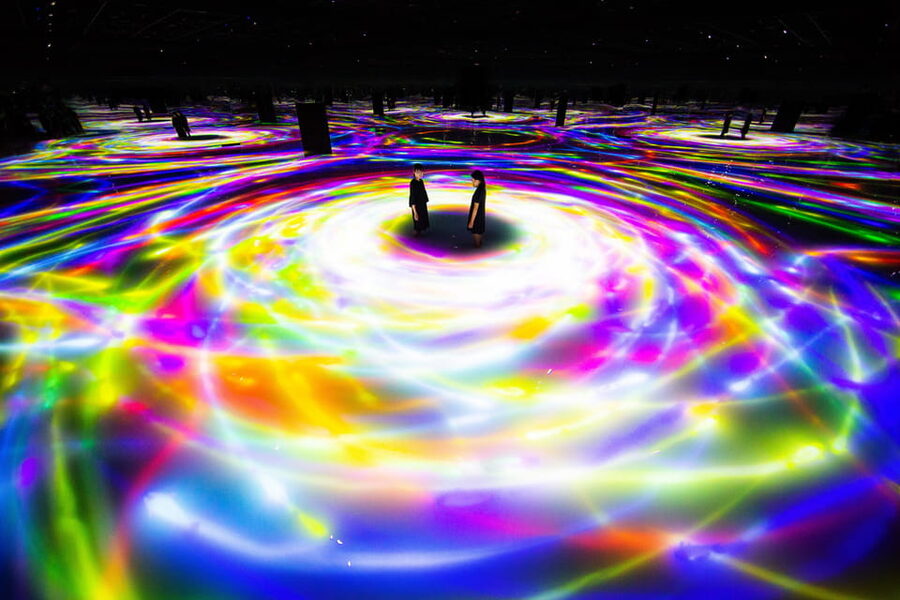
- Your presence changes the art: move through zones and the visuals respond to people in real time.
- Water is part of the plan: expect sections where the floor becomes a shallow pool.
- It’s all five senses: light, sound, and materials work together, not just screens.
- You enter on a timed slot: you can only enter in the first 30 minutes after your selected entry time.
- Scale matters: plan time to wander—this isn’t a quick photo stop.
- Not for everyone: it’s not recommended for light sensitivity, epilepsy, or people with heart problems.
What teamLab Planets in Tokyo Feels Like (Not Just a Digital Art Museum)
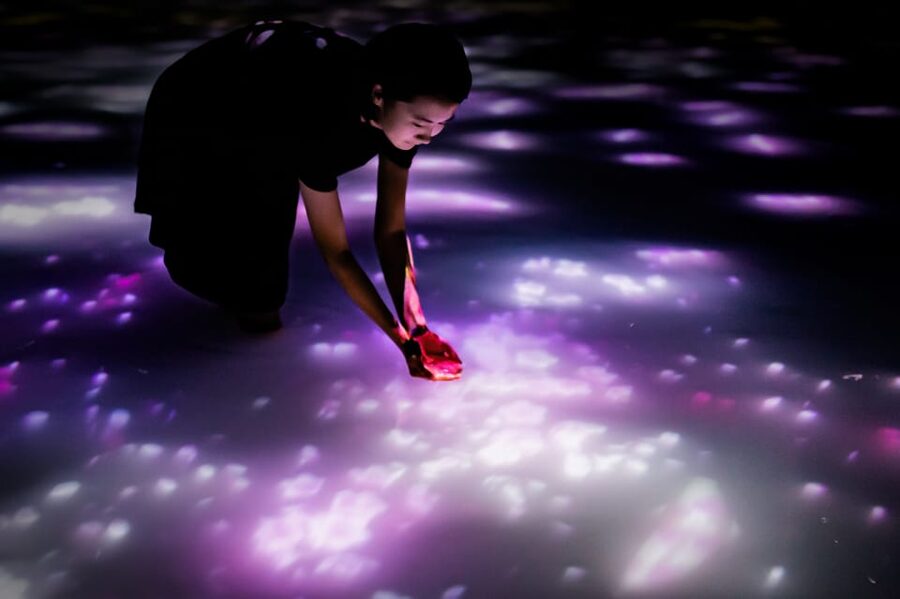
teamLab Planets TOKYO isn’t a sit-and-watch show. It’s a place where you walk, pause, turn, and react, and the installation keeps shifting with that energy. The biggest surprise is how physical it feels: light and sound don’t just surround you, they guide your movement, like the art is steering your next step.
You’ll also notice it’s built like a sequence of themed worlds. Reviews commonly point to standouts such as the Water Gallery, a forest-like area, orchid-themed spaces, and flower rooms where petals and shapes appear to drift around you. Even if you’ve seen digital art before, this setup has a different vibe—less like looking at art, more like stepping into a system.
A few more Tokyo tours and experiences worth a look

Price and Value: Is $25 Worth It?
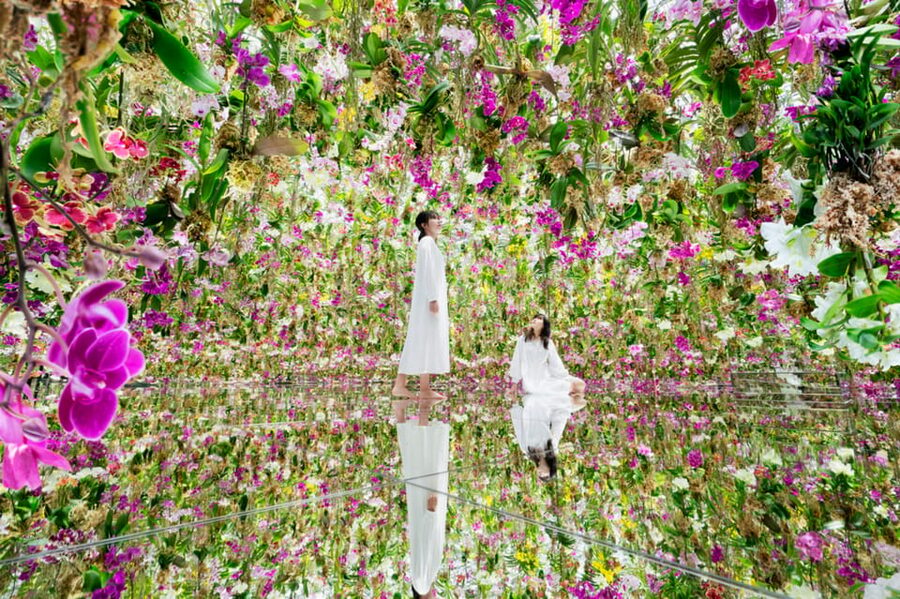
At about $25 per person for a 1-day entry ticket, the value depends on what you want from a Tokyo outing. If you’re looking for a museum that rewards patience and curiosity, this price can feel fair fast. You’re getting a large footprint (over 10,000 square meters) and a full-body format that uses multiple senses, not just visuals.
It’s also a good use of time because it’s designed as one complete experience rather than a collection of quick stops. The ticket is not refundable, and late entry can be a problem, so it pays to commit mentally: this is a do-it-on-purpose kind of visit.
One more value angle: booking ahead often helps you avoid spending your trip standing in long ticket lines. Even if the exhibit itself has its own flow, getting inside smoothly is a real quality-of-life win in Tokyo.
Timing Rules That Can Make or Break Your Visit
teamLab Planets uses timed entry. You select a start time, and then you must enter within the first 30 minutes after that time window. Miss that window and you’re out of luck—so treat this like a timed event, not a casual drop-in.
Also, you should know that you cannot purchase tickets for same-day admission. So if you’re the type who always tries to wing plans, you’ll want to fix this early and lock in a slot.
What I recommend in practice:
- Arrive early enough to handle getting your bearings and transitioning into barefoot mode.
- Keep your group together and agree on a meeting spot before you enter, since you’ll want to stay in the same pacing.
This matters because the exhibit flows people through spaces, and you’ll enjoy it more when you’re not rushing to catch up.
Inside the Exhibit: Water Gallery, Forest Atmospheres, Orchids, and Flower Rooms
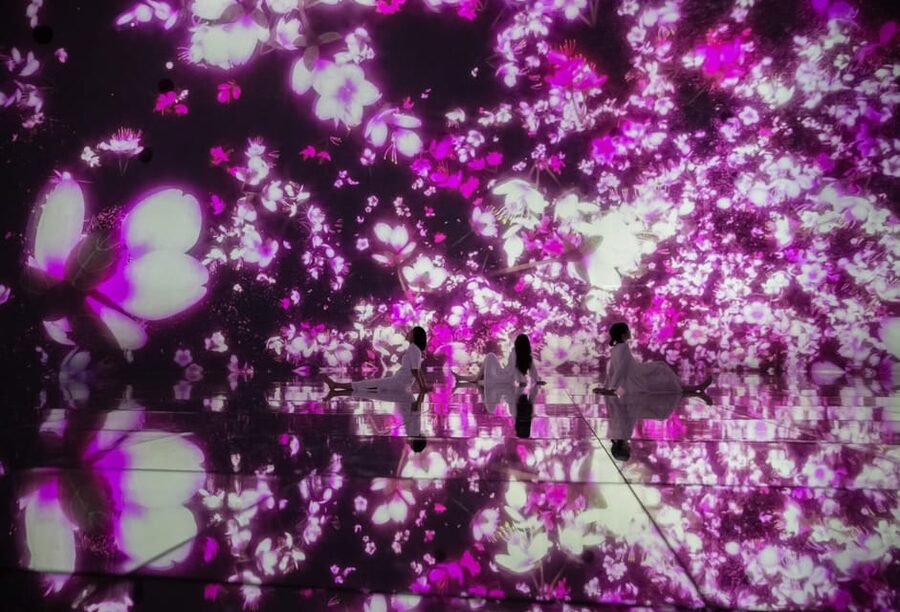
The experience is organized into multiple areas with different visual effects, soundscapes, and interactive behaviors. The installations you’ll likely encounter include the Water Gallery, forest-like settings, orchid-themed rooms, and flower zones where petals and blossoms appear to fall or spread across the space.
The Water Gallery (the crowd-pleaser for good reason)
Expect the Water Gallery to be the main event. It’s where many people feel the biggest WOW factor because water turns the installation into something you can move through. Some zones include water that rises to about knee height, so the art doesn’t just reflect on the floor—it interacts with your legs and movement.
If you like cinematic effects, this is where you get that feeling most. The light changes against the water surface, sound feels more layered, and you naturally slow down when you realize your motion is part of the show.
You can also read our reviews of more museum experiences in Tokyo
Forest-style areas (when you want to feel calmer)
The forest spaces give you a different emotional tone. Instead of focusing on water immersion, you’re often moving through a more atmospheric environment—different lighting, shifting sounds, and a sense of being inside something alive.
This is a nice contrast after the wetter zones, especially if you get overstimulated. You can also use the forest areas as a reset: pause, breathe, and let the pace slow down.
Orchids and flower installations (where the room becomes a garden)
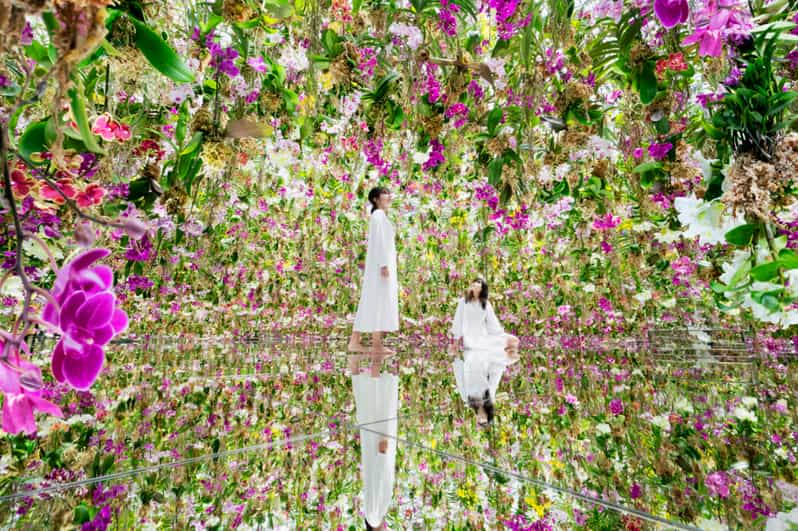
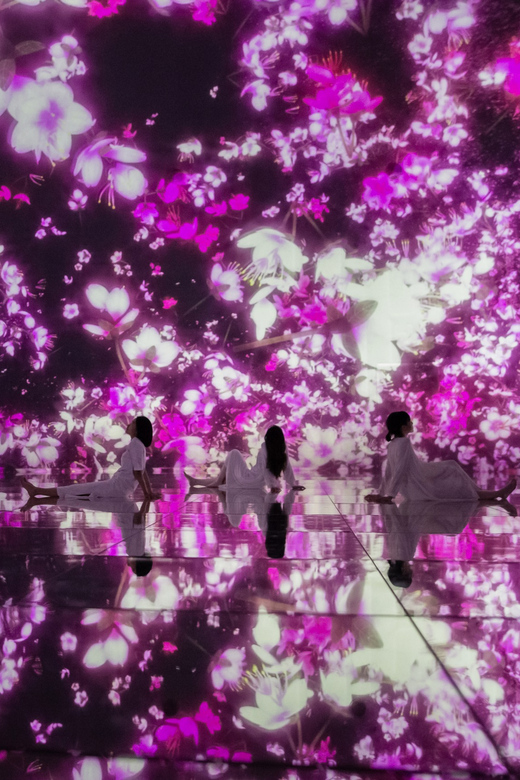
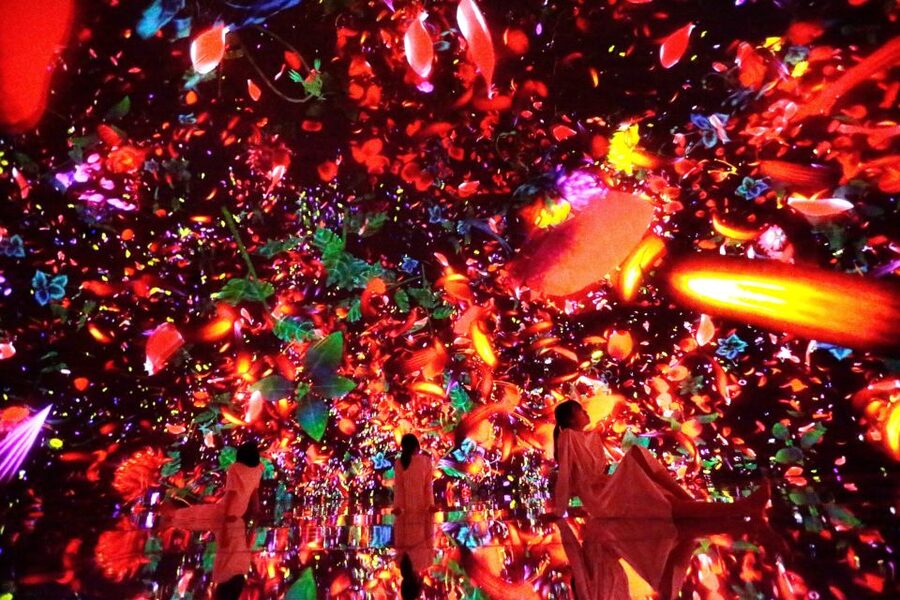
Orchid rooms and flower installations are repeatedly mentioned as highlights. One of the most memorable moments is the feeling of being surrounded by drifting or falling flowers and petals—so instead of just looking upward, you’re often watching the floor, the air, and the way shapes react to you.
If you’re going for the pure aesthetic factor, this section is why people plan their day around the exhibit.
The Barefoot + Water Reality: What to Wear and Bring
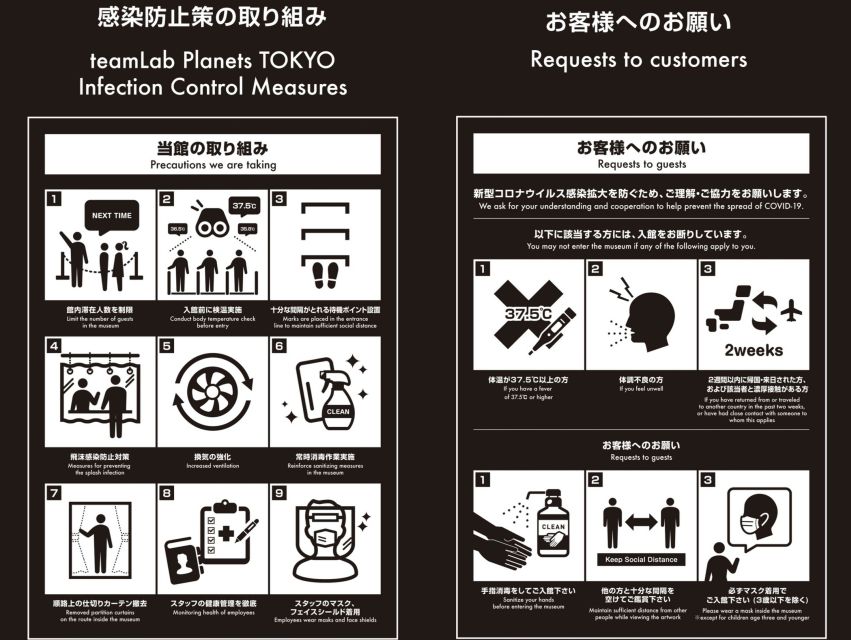
Here’s the deal: you enter barefoot, and some areas use mirroring materials on the floor. On top of that, there are zones where water levels can rise up to knee height.
So I’d dress for movement and comfort:
- Wear trousers you can roll up past the knee before you reach water areas.
- Choose clothing that won’t fight you when you’re walking barefoot in wet spaces.
- Bring an ID or passport, since visitors may be asked to show it for proof of age and/or school affiliation.
For small items, there are lockers available. That’s a relief because you don’t want to manage bags while you’re stepping around reflective surfaces and water.
One more practical point: the exhibit includes areas that can be semi-outdoor, so bring layers if you visit in cooler seasons. People often talk about needing warmth, and that makes sense when you’re wet and barefoot.
Practical Planning for a Smooth Visit (Flow, Noise, and Staying Present)

teamLab Planets is designed for lots of people. That can be great—there’s energy—but it also means you should plan your mindset. The show is sensory-rich, and if you’re aiming for a calm, reflective experience, you’ll want to time your movement so you’re not constantly surrounded by chatter.
A few things that help:
- Use the timed entry seriously, then take your time inside. This isn’t a 30-minute activity unless you’re speedrunning.
- Expect some parts to feel busier than others. staff manage the flow of traffic, so it rarely becomes chaos, but it can still feel intense in peak moments.
- If you can, consider going for an earlier slot. People often mention that timing choices make the visit more pleasant.
Also, since eating, drinking, and smoking are prohibited inside the exhibition, plan hydration and snacks before you go (or on your trip around it). You’ll feel better if you don’t spend the middle of the show thinking about food.
Who Should Skip This (And Who Will Be Happiest Here)

This is one of those Tokyo experiences that really fits some travelers and not others.
You should consider skipping if:
- You have heart problems
- You have epilepsy
- You have light sensitivity
- You use a wheelchair (some areas are not accessible)
- You need a fully accessible route through the entire exhibit (wheelchair access is limited)
You’ll likely love it if:
- You like hands-on art where your movement matters
- You’re curious about how technology can create emotional effects, not just visuals
- You enjoy sensory experiences that involve sound and light changes, not only images
And if you’re visiting as a solo adult, you might find some areas feel awkward at first—but the exhibit is built to work whether you’re alone or with a group. Many people end up adjusting quickly and just letting the space take over.
Should You Book teamLab Planets TOKYO?
If you enjoy interactive art, can handle barefoot rules, and don’t mind a bit of water, I think it’s worth booking. The strongest reason to go is the format: you’re not standing outside the artwork. Your presence affects it, and the Water Gallery plus flower installations create moments that are hard to recreate anywhere else.
Book it if:
- You want a memorable, multi-sensory Tokyo stop
- You’re okay with knee-height water areas
- You’re flexible with pacing and won’t be mad about crowds
Maybe skip it (or pick a different activity) if:
- Light sensitivity, epilepsy, or heart conditions apply
- You need full wheelchair accessibility throughout
- You hate being barefoot or getting wet
FAQ
How long is the teamLab Planets TOKYO experience?
The ticket is valid for 1 day, and you can explore the exhibition at your own pace within your entry window. Plan for more than an hour so you’re not rushing.
What is included in the ticket price?
Your entry ticket is included. Transportation is not included.
Can I buy tickets for the same day at the museum?
No. You can’t purchase tickets for same-day admission.
When can I enter after my selected time?
Entrance is only possible in the first 30 minutes after your selected entry time. Late arrivals are not refunded.
Do I need to bring an ID?
Yes. Visitors may be asked to show a passport or ID card for proof of age and/or school affiliation.
Is it accessible for wheelchair users?
Some areas are not accessible by wheelchair, so it may not be suitable if you rely on wheelchair access.
Is the exhibit fully for anyone who has light sensitivity?
It’s not recommended for people with light sensitivity, and it is also not suitable for people with epilepsy or heart problems.