REVIEW · TOKYO
Asakusa/Tokyo Bay & Akihabara Go Karting Tours
Book on GetYourGuide →Operated by JAPANKART · Bookable on GetYourGuide
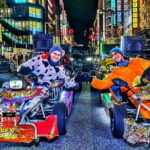
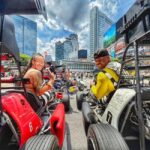
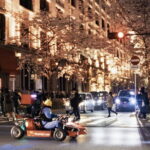
Tokyo streets look wild from a go-kart. With JAPANKART, you cruise real city roads beside an instructor and hit major East Tokyo landmarks like Rainbow Bridge, Ginza, Akihabara, Ueno and Asakusa—all with costumes and photos included.
I especially like how the staff work to get you comfortable fast. You’re not just handed a kart; you get professional safety explanations and traffic guidance before you roll out, which makes the whole experience feel controlled. I also like the mix of city energy and classic neighborhoods, so you’re not stuck only in one kind of Tokyo.
One big consideration is the driving paperwork. To join as a driver, you must bring your home-country license plus a correctly issued Geneva Convention 1949 IDP (booklet form, hard copy), and Japan’s rules are strict—missing the right documents can mean you can’t ride.
In This Review
- Key things that make this go-kart tour worth it
- Driving Tokyo from street level (and why that’s the point)
- Pick your route: 1 hour near Skytree or 2 hours with Bay and more landmarks
- The 2-hour East Tokyo + Tokyo Bay loop
- The 1-hour route focused on Asakusa, Ueno, Akihabara, and Skytree
- One practical tip about timing
- Tokyo Bay and Rainbow Bridge: the biggest “wow” moment
- Ginza, Nihonbashi, and Kanda: modern Tokyo at kart speed
- Akihabara: neon energy, but from the inside
- Ueno and Asakusa: the old Tokyo switch you’ll notice
- How the safety briefing keeps the experience fun
- What you’ll actually get: karts, costumes, photos, and the pacing
- Price and value: what $70 buys you in Tokyo
- Docs and gear: the rules you must follow to ride
- You must bring
- If your license is from specific countries
- IDP type matters
- What to wear
- The route experience vs. sightseeing-only expectations
- Who should book this (and who should skip it)
- Should you book JAPANKART Go Karting in Asakusa and Tokyo Bay?
- FAQ
- What documents do I need to drive in Japan for this tour?
- Are Vienna Convention IDPs accepted in Japan?
- Where do I meet for the 1-hour vs 2-hour tours?
- How long should I plan for the activity if I book the 1-hour option?
- What should I wear or bring for the ride?
- What’s included in the price?
- What happens if bad weather cancels the tour?
Key things that make this go-kart tour worth it
- Public-road go-karting in East Tokyo with an instructor leading you through real streets
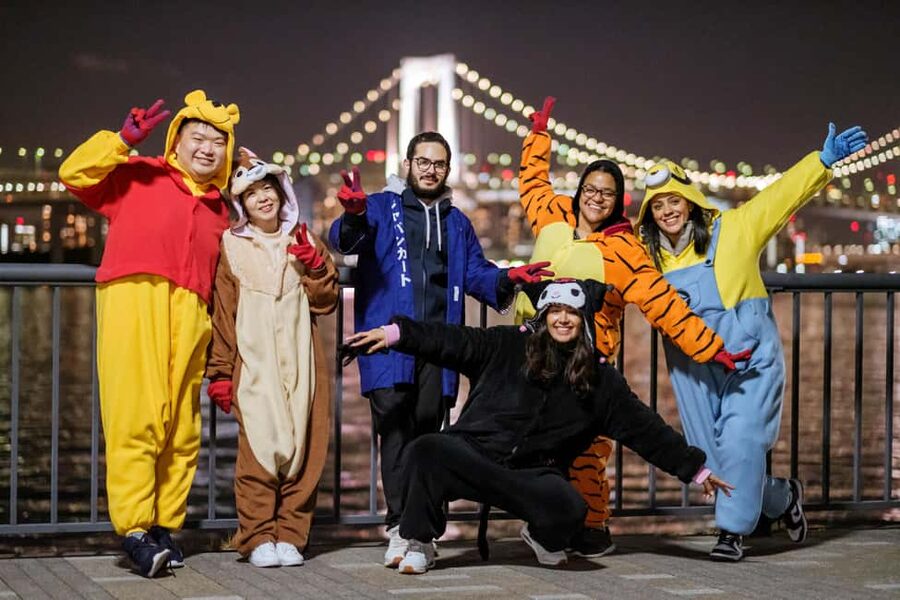
- Rainbow Bridge and Tokyo Bay views on the longer route, plus a short break for photos
- Safety briefing that actually matters (traffic, kart use, group handling) before you start
- A route that hits both modern and old Tokyo (Ginza and Akihabara, then Ueno and Asakusa)
- Costumes, props, and photos included so you look the part and capture the moment
Driving Tokyo from street level (and why that’s the point)
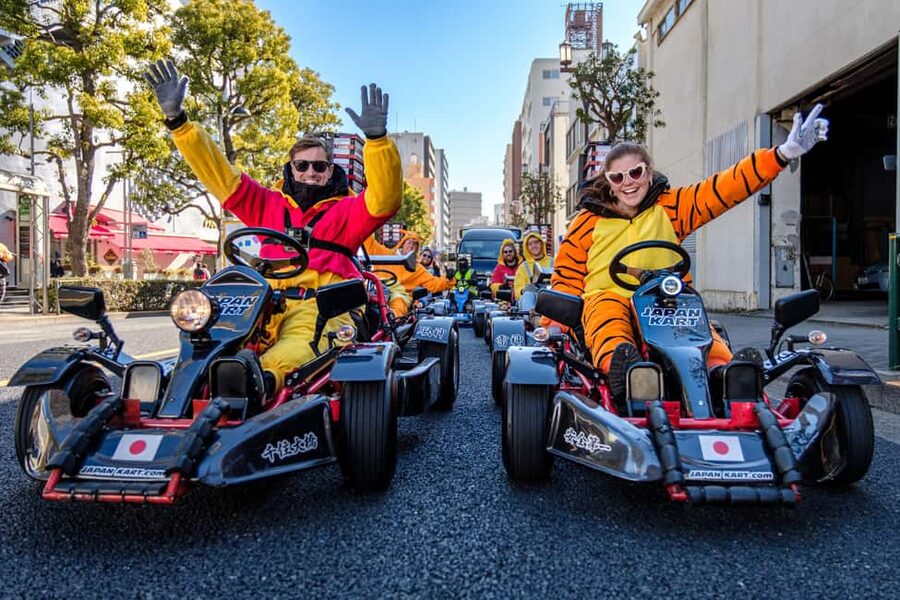
Tokyo is easy to watch from a train window. It’s harder to feel the pace of the city, judge turns, and understand how traffic flows when you’re part of it. This tour puts you in the driver’s seat—on public roads—so the sights aren’t just seen, they’re lived.
What makes that fun (and genuinely useful) is the way the operation is built around confidence. Before you start, the team gives a safety briefing/demonstration and explains how to handle the kart and what to expect on the road. That pre-ride orientation turns go-karts from a “how do I not mess this up” moment into a “okay, I’ve got it” moment.
Then you get a guided route that strings together neighborhoods people usually visit one by one. Instead of spending a day hopping between stations, you get one flowing loop through East Tokyo highlights—Ginza, Nihonbashi, Akihabara, Ueno and Asakusa—plus the Tokyo Bay angle on the 2-hour option.
You can also read our reviews of more tours and experiences in Tokyo.
Pick your route: 1 hour near Skytree or 2 hours with Bay and more landmarks
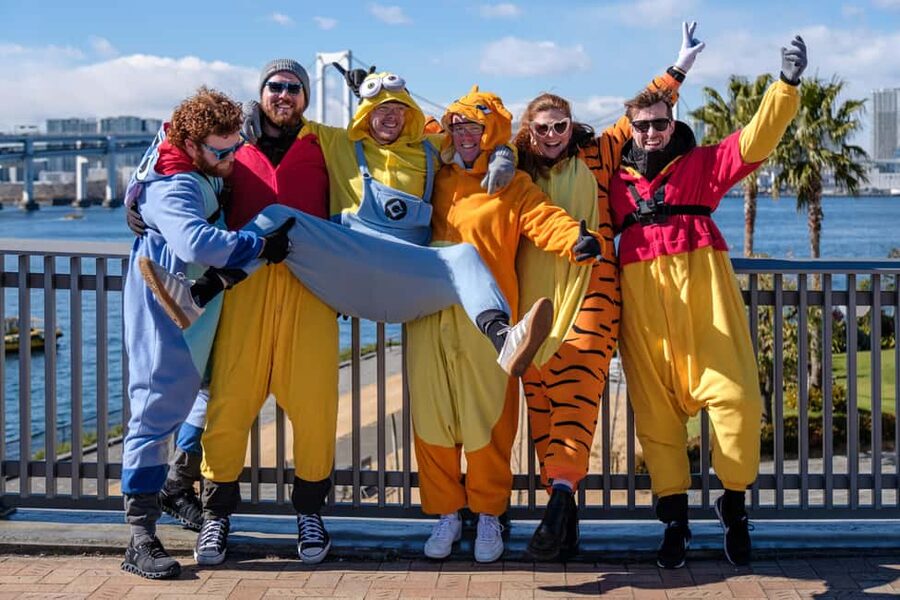
This experience comes in two flavors, and choosing the right one depends on what you want most.
The 2-hour East Tokyo + Tokyo Bay loop
The 2-hour tour has you driving through areas such as Toyosu, Ginza, Nihonbashi, Akihabara, Ueno, and Asakusa. The itinerary also includes a Tokyo Bay stop with break time, plus major pass-by sections along the way.
This is the better fit if you:
- Want the iconic “big view” moment over Rainbow Bridge and the bay area
- Like when the route covers more of Tokyo without you thinking about trains and transfers
- Prefer a longer, more relaxed “stay in motion” ride
The 1-hour route focused on Asakusa, Ueno, Akihabara, and Skytree
The 1-hour option uses a different meeting point and concentrates on East Tokyo highlights in less time. You drive through Asakusa, Ueno, Akihabara, Ueno Park, Kappabashi Kitchen Tools Street, and end near Tokyo Skytree.
This is the better fit if you:
- Have limited time but still want the go-kart experience on public streets
- Want a more compact route with iconic districts close together
- Plan to add other activities around Skytree, Asakusa, or Ueno
One practical tip about timing
Even when the driving portion is shorter, you should plan extra time for check-in, document checks, and the safety briefing. A good rule: show up early, because Japan-grade ID paperwork takes priority and you don’t want to rush it.


Tokyo Bay and Rainbow Bridge: the biggest “wow” moment
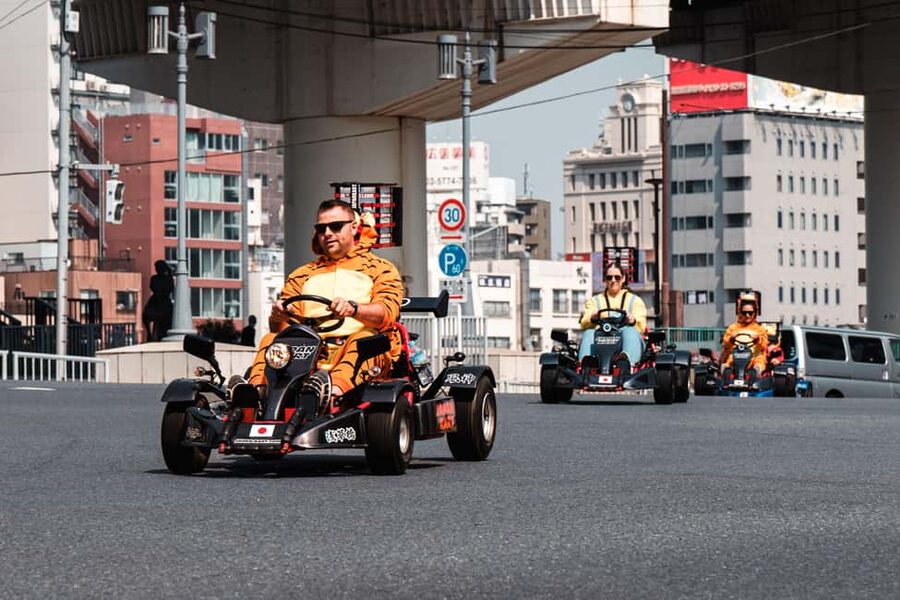
If you choose the 2-hour itinerary, Tokyo Bay is where the tour feels extra special. You get an open-city view angle that’s hard to capture in the usual “walk around downtown” style of sightseeing.
The route builds in a break time at the bay area, and there’s also a short stop connected to the bridge viewpoints for photos. This is one of those moments where slowing down helps you reset—then you’re back in the karts with the rest of the city coming at you.
What you’ll likely feel here:
- The sense of scale in Tokyo when you’re not surrounded only by buildings
- Better photo odds because the group pauses briefly
- A change of rhythm from shopping streets to a more open waterfront viewpoint
Ginza, Nihonbashi, and Kanda: modern Tokyo at kart speed

On the 2-hour route, Ginza is part of the ride. It’s one of the areas where Tokyo reads as sleek and expensive fast—big streets, strong lighting, and that “main-character” shopping energy.
After that, you pass through Nihonbashi and Kanda (the itinerary lists these as pass-by sightseeing stops). Even if you don’t stop to shop, you’ll get the street-grid rhythm and the sense of how Tokyo connects business areas to popular districts.
The practical value here is navigation learning. If you later explore on foot, you’ll recognize the streets and feel less lost. Seeing these districts from the road helps you understand Tokyo’s layout in a way that walking-only tours can’t always do.
Akihabara: neon energy, but from the inside
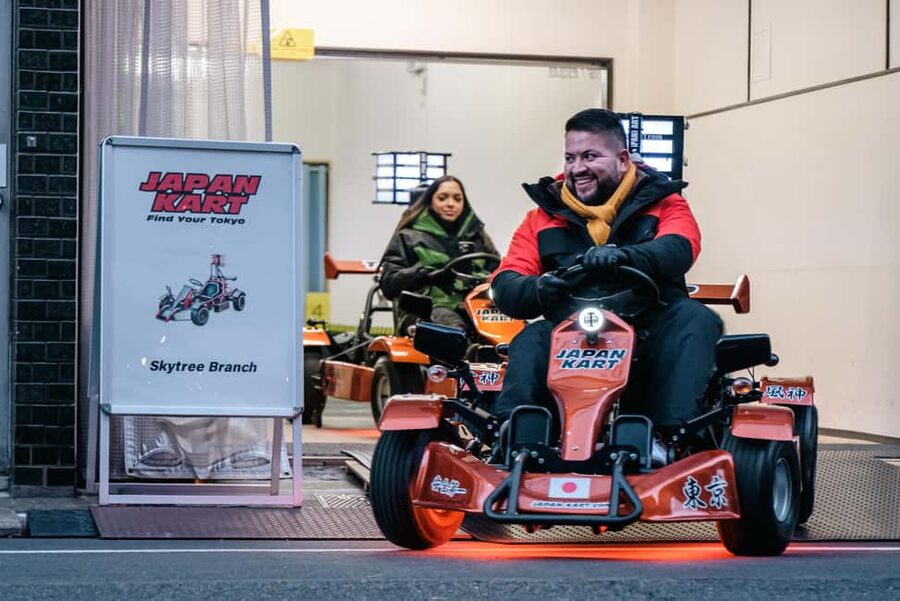
Akihabara is famous for a reason, and going through it on wheels changes the experience. You’re close enough to the storefronts that the district feels immediate, not distant.
The itinerary includes Akihabara as a pass-by stop. That means you’re not just driving through empty streets—you’re routing through the kind of neighborhood where people are out and moving. It’s also the kind of area where photo moments happen naturally because the buildings and signs do the work for you.
If you’re the type who likes tech, games, collectibles, or just people-watching, you’ll probably enjoy the way the kart route compresses multiple city textures into one ride.
Ueno and Asakusa: the old Tokyo switch you’ll notice
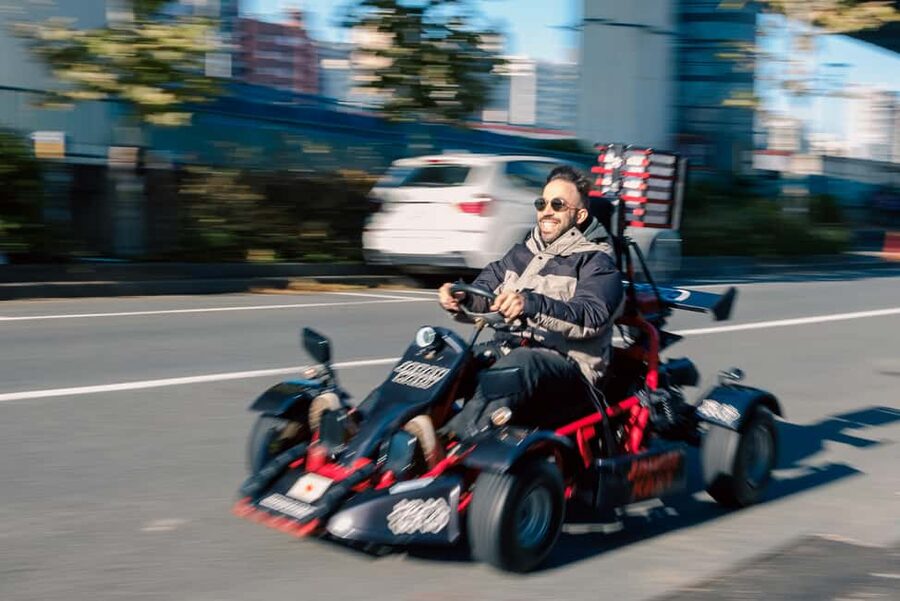
When the route turns toward Ueno and Asakusa, Tokyo shifts tone. You’re moving from commercial street scenes into neighborhoods that feel more layered and rooted.
Ueno appears on both route options as a sightseeing/passing section. Asakusa is included as well, and this is often where the tour starts feeling like a “real Tokyo day” instead of just driving.
Here’s what I think makes this pairing work:
- Ueno offers a transition space—big city, then culture-adjacent streets
- Asakusa brings you into the classic Tokyo imagery most people come to see
- Riding through it on a go-kart gives you street-level perspective without standing in crowds for every photo
How the safety briefing keeps the experience fun
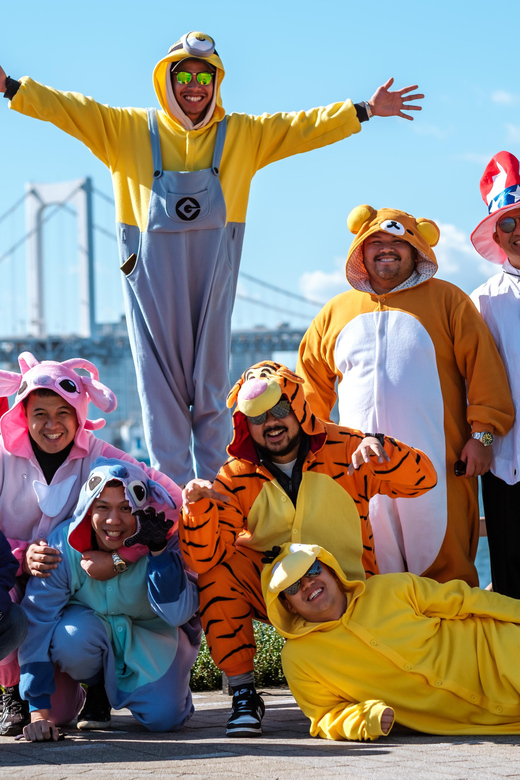
This tour’s quality lives or dies in how the staff handle safety, and the operation leans hard into it. You get professional safety briefings/demonstrations before every tour, and the guide stays involved throughout so the group stays together.
That matters because city driving is busy. Even when roads are manageable, you’ll still encounter cars and the usual Tokyo movement. The staff’s job is to reduce uncertainty—so you can focus on driving instead of guessing what everyone else is doing.
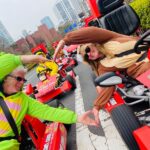
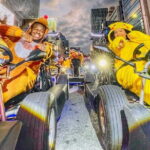
Costume use also ties into the safety rhythm. You may see harnesses offered for phones or GoPros (so you can film without doing something risky). Costumes and props are included, which adds fun without changing how the ride is run.
If you’re nervous at the start, that’s normal. The karts are quick once you get comfortable, but the briefing is designed to get you past the first awkward minutes.
What you’ll actually get: karts, costumes, photos, and the pacing
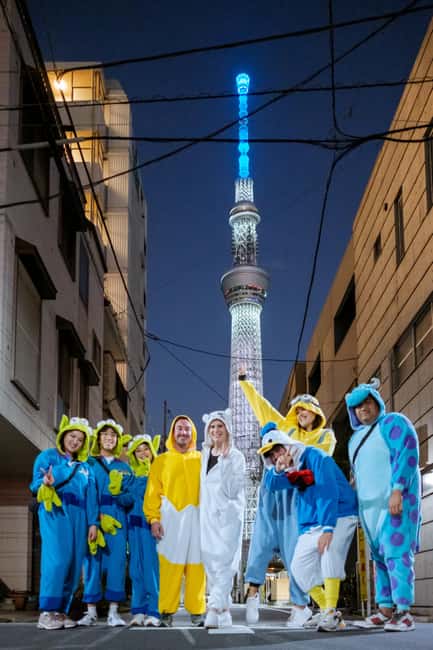
This isn’t just a “ride time” product. It includes:
- Go-kart ride on public roads
- All fees and taxes and gas
- Costumes
- Photos
The pacing typically includes pass-by sections where you stay on the road, plus scheduled stops like the Tokyo Bay break on the 2-hour loop. There’s also time for a group photo moment, and the team manages the transitions between segments so you’re not scrambling to catch up.
Because this is a guided small-group option, you’re more likely to feel like you’re on an actual route rather than a chaotic pack. That also helps with photo chances—especially at viewpoint spots like the bridge area.
Price and value: what $70 buys you in Tokyo
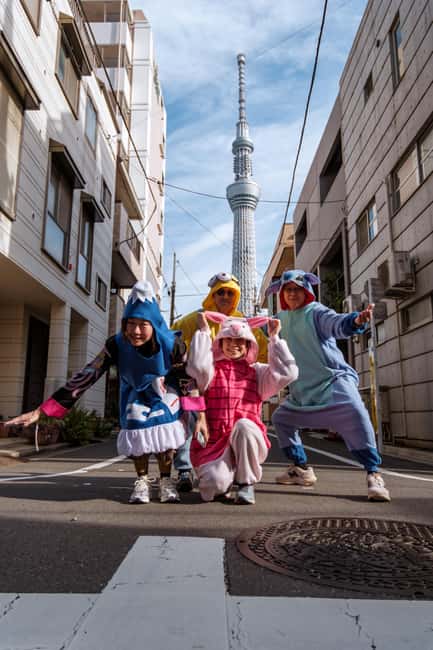
At $70 per person, this is one of those Tokyo activities that feels more expensive on paper than it does in motion. Here’s what you’re buying:
- Real city driving on public roads with an instructor
- A guided route across several major districts
- Included safety briefing and ongoing group leadership
- Included costumes and photos
If you’re already planning to visit Ginza, Akihabara, Ueno, and Asakusa anyway, the value comes from reducing planning and compressing time. You’re effectively “seeing Tokyo districts” while also getting a high-energy activity you can’t replicate from a normal walking tour.
If you only have time for one district, the shorter option may be the better value choice for you. If you want the bay viewpoint and more neighborhoods in one go, the 2-hour route justifies its longer time with a bigger payoff.
Docs and gear: the rules you must follow to ride
This part is not optional. The tour is clear about it, and Japan is strict about it.
You must bring
- Passport
- Driver’s license from your country of origin
- International driving permit (IDP) issued under the Geneva Convention 1949 (issued in your own country)
Key detail: the IDP must be hard copy and in booklet form, not a paper slip. If you arrive without the correct hard copy IDP, you won’t be able to participate.
If your license is from specific countries
The requirements get more specific for drivers with licenses from Switzerland, Germany, France, Taiwan, Belgium, Estonia, or Monaco. In those cases, you need your original driving license plus an official Japanese translation from an authorized organization (JAF is listed for online translation).
IDP type matters
- IDPs issued under the Vienna Convention 1968 are not accepted in Japan.
- Your IDP must be issued by your country’s approved issuer—an online-purchase IDP is a risk.
What to wear
- Avoid high-heeled shoes
- No sandals or flip-flops
- No bare feet
- Skip alcohol and drugs, and don’t bring alcoholic drinks in the vehicle
A simple packing strategy: wear comfortable closed-toe sneakers, and keep your phone/gear secure (the staff may offer harnesses).
The route experience vs. sightseeing-only expectations
A small reality check: when you’re driving a kart, you’ll spend a lot of your attention on the road. That doesn’t ruin the sightseeing. It just changes how you experience it.
You’ll still see the districts—Ginza, Akihabara, Ueno, Asakusa, and the bay area viewpoint if you book the 2-hour route. But you won’t be stopping frequently to wander and read signs like you would on foot. Think of the kart ride as a fast, guided “street feel” tour first, and sightseeing second.
If you want a more relaxed walking-style museum day, this won’t replace that. If you want an energetic, guided way to cover East Tokyo with a big view moment, it fits.
Who should book this (and who should skip it)
This go-kart tour is a great match if you:
- Want an active Tokyo experience, not just another photo stop
- Like structured tours where someone leads and keeps you on track
- Enjoy driving enough to focus on the road while still getting landmark exposure
- Want value: included costumes, photos, and a route across major East Tokyo districts
You might consider skipping if:
- You don’t have the correct IDP or you’re worried about document compliance
- You’re looking for long stops to explore, read, and browse like a walking tour
Age-wise, it’s not suitable for drivers under 18.
Should you book JAPANKART Go Karting in Asakusa and Tokyo Bay?
If you can meet the driving-document requirements, I think this is an easy yes. The combination of public-road driving, a real instructor-led safety system, and a route that mixes Tokyo Bay views with iconic neighborhoods makes it feel like you’re getting more than just a thrill ride.
Book the 2-hour option if you want the bay/Rainbow Bridge payoff and more districts. Choose the 1-hour option if you want a shorter route that still hits the big names around Asakusa, Ueno, Akihabara, and Tokyo Skytree.
FAQ
What documents do I need to drive in Japan for this tour?
You need your passport, your home-country driver’s license, and an international driving permit issued under the Geneva Convention 1949. The IDP must be a hard copy in booklet form, and you must show it on the day of the activity.
Are Vienna Convention IDPs accepted in Japan?
No. International driving permits issued under the Vienna Convention 1968 are not accepted for driving in Japan for this activity.
Where do I meet for the 1-hour vs 2-hour tours?
The meeting point changes depending on which option you book. The 2-hour option meets at JAPANKART, while the 1-hour option meets at the JAPANKART SkyTree Branch (a different meeting point).
How long should I plan for the activity if I book the 1-hour option?
The activity is scheduled as 1 hour, but you should plan a longer window for check-in and the safety briefing. It can take about 1 hour 30–1 hour 40 from the start time.
What should I wear or bring for the ride?
Wear shoes that are not high-heeled and not sandals or flip-flops. Don’t go barefoot. Bring your passport, driver’s license, and international driving permit.
What’s included in the price?
The price includes the go-kart ride, all fees and taxes, gas, costumes, and photos. There is no hotel pickup or drop-off included.
What happens if bad weather cancels the tour?
If the tour is canceled due to bad weather, you’re eligible for a full refund. You may also be able to reschedule depending on availability.