REVIEW · ROME
Jewish Rome Private Golf Cart Tour
Book on Viator →Operated by Italy VIP Tours · Bookable on Viator
Jewish Rome hits harder in comfort. I like how this private golf cart tour keeps the pace efficient, and I like how the guide (often Andrea) explains the meaning behind each stop, not just the postcard facts. One drawback: with a ~3-hour schedule, time at each site is brief, so plan on a little self-guided extra time later if you want more depth.
You’ll meet in the Jewish Ghetto area at Piazza Mattei, then move through a mix of sacred and hard-history places, including free stops plus one memorial where admission is included. The tour runs in English, uses a mobile ticket, and is private (just your group) with pickup offered if you need it.
In This Review
- Key highlights you should notice before you go
- Why a Jewish Rome golf cart tour works better than shoe-leather
- Meeting at Piazza Mattei: right where the story begins
- Il Portico di Ottavia: the Ghetto’s symbolic boundary
- The Colosseum connection: ancient Rome, forced labor, and painful memory
- Arco di Tito: the Temple loot relief and the Jewish diaspora
- Terme di Caracalla: where work, deportation, and architecture intersect
- Via Appia Antica: a fast look at 16 km of archaeological Rome
- Mausoleo delle Fosse Ardeatine: the memorial stop you should treat seriously
- Roseto Comunale on the Aventine Hill: Menorah-shaped symbolism with city views
- Vicolo Dell’Atleta: Trastevere’s old Jewish neighborhood and a synagogue still there
- Tempio Maggiore di Roma: emancipation made monumental
- Price and value: is $204.46 per person fair?
- Who this tour is for—and who might want a different plan
- Should you book the Jewish Rome Private Golf Cart Tour?
- FAQ
- FAQ
- What is the tour duration?
- Where does the tour start and end?
- Is pickup available?
- Is the tour private?
- What sites are included?
- What is the cancellation policy?
Key highlights you should notice before you go
- Piazza Mattei as the starting point puts you right inside the neighborhood the tour is talking about.
- A private golf cart means less grid-walking and quicker repositioning between key sights.
- Andrea-style storytelling ties big landmarks to Jewish life, displacement, and later emancipation.
- A heavy stop in the Fosse Ardeatine is built into the route, not tacked on at the end.
- Tempio Maggiore di Roma is treated as a turning point, where rights and identity show up in stone.
- Appian Way drive-by views include major archaeological zones without the full hike.
Why a Jewish Rome golf cart tour works better than shoe-leather
Rome can be brutally efficient—meaning you can spend half your day simply getting from one place to another. This tour is designed to solve that with private transportation, so your time stays focused on the sites themselves.
The route also makes sense if you’re visiting for the first time and want the bigger threads: Jewish community life in the city, the trauma written into monuments, and the later shift toward emancipation. You won’t just get a list of stops; you get a guided path that connects them.
You can also read our reviews of more private tours in Rome


Meeting at Piazza Mattei: right where the story begins
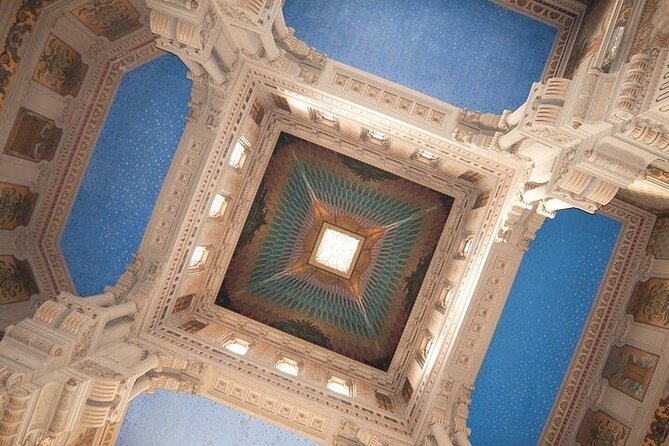
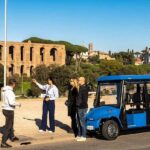
Your tour starts and ends back at Piazza Mattei, in the heart of the Jewish Ghetto area. You’ll recognize the guide by the white T-shirt, which is a nice practical detail when you’re trying to meet on a busy street corner.
Starting here is more than convenient. It frames the day so the later “major Rome” stops (like the Colosseum area) feel less random and more like part of the same long timeline.
Il Portico di Ottavia: the Ghetto’s symbolic boundary
One of the most interesting early stops is Il Portico di Ottavia, tied directly to the Jewish Quarter (the Ghetto). The portico complex became associated with the space reserved for the Roman Jewish community after the Ghetto was established in the mid-1500s.
What I like about this stop is that it’s not only architecture. It’s also geography—how a physical structure helps explain where life was allowed to happen, and where people were forced to live. You get a short visit (about 10 minutes), and it’s a good setup for everything heavier later.
The Colosseum connection: ancient Rome, forced labor, and painful memory
From there, the tour moves to the Colosseum, and the guide ties it to a painful chapter: Jewish slaves deported to Rome and used in the labor behind the arena. Even if you’ve seen the Colosseum before, this framing changes how you look at the place.
A key consideration: the tour’s theme includes suffering and persecution. If you prefer purely celebratory sightseeing, you might find this part emotionally intense. If you want historical context instead of just spectacle, it’s exactly the point.
Arco di Tito: the Temple loot relief and the Jewish diaspora
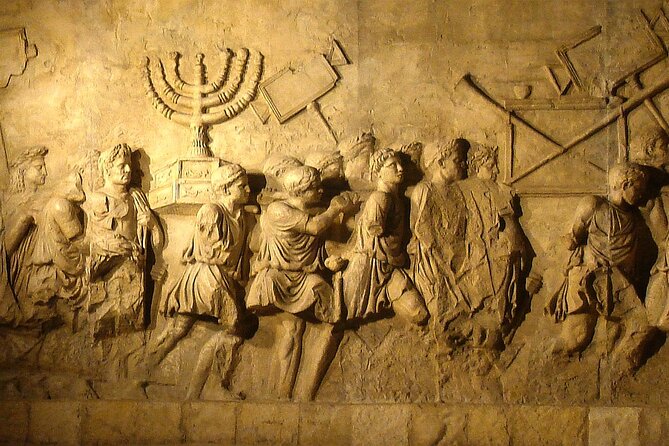
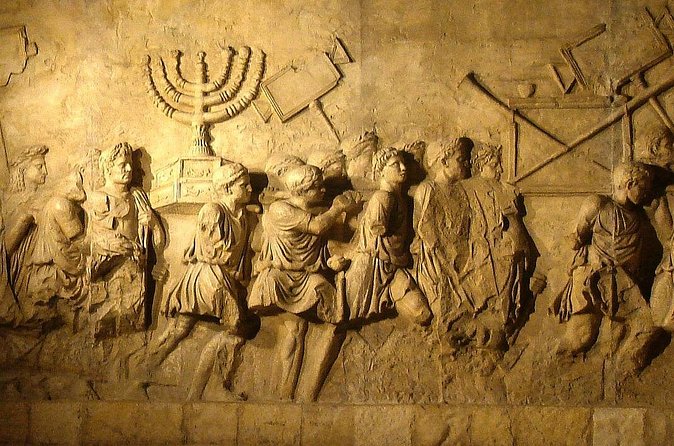
Next up is Arco di Tito, a monument erected to celebrate a Roman victory over a Jewish uprising in Judea. What makes this stop click is that the arch doesn’t stay abstract—it houses reliefs showing the loot of the Temple of Jerusalem, including the seven-armed candelabra (the Menorah).
This is one of those moments where you can feel the way monuments carry meaning forward. The tour treats the arch as tangible evidence of diaspora history—history you can literally see carved into stone. Plan for about 30 minutes, enough time to take in the reliefs and connect the dots.



Terme di Caracalla: where work, deportation, and architecture intersect
Then you’ll reach Terme di Caracalla (the Baths of Caracalla), presented as a spa complex where Jewish slaves deported after the destruction of Jerusalem also worked. The guide balances the impressive architectural scale with the uncomfortable human reality behind it.
This stop lasts about 20 minutes, and it’s a good pace: you get time for photos and reflection without rushing through the emotional context. If you’re the type who likes your Roman ruins to come with an explanation, this section will land well.
Via Appia Antica: a fast look at 16 km of archaeological Rome
The route continues with a segment on Appian Way (Via Appia Antica), described as an itinerary of roughly 16 km stretching from near Porta Capena toward the Frattocchie/Santa Maria delle Mole area. For this tour, it’s about experiencing the start of that famous corridor rather than doing the full walk.
You’ll pass through areas known for major archaeological remains, such as the Mausoleum of Cecilia Metella, catacombs, and Villa dei Quintili. There’s also a scenic element through parks of the Appia Antica and the Caffarella area, plus aqueduct territory. You’ll get about 30 minutes here—enough to orient you if you want to come back later for a longer self-guided wander.
Mausoleo delle Fosse Ardeatine: the memorial stop you should treat seriously
One of the most important stops on the itinerary is Mausoleo delle Fosse Ardeatine, a memorial commemorating victims of a Nazi massacre in 1944. The tour frames it as a place to remember and reflect on the Shoah and the sacrifice of people killed through hatred.
This is about 30 minutes, and it’s not a photo-op stop. If you’re sensitive to heavy history, give yourself a moment before and after to reset your head. The value here is that the tour doesn’t flatten Jewish history into just ancient sites; it carries the story into modern trauma and remembrance.
Roseto Comunale on the Aventine Hill: Menorah-shaped symbolism with city views
On Aventine Hill, you’ll stop at the Roseto Comunale (Municipal Rose Garden). The garden is tied to a deeper past: it once housed the Jewish cemetery of Rome, and later it became a place known for rebirth and continuity.
Here’s the neat detail the tour highlights: the garden’s shape evokes the Menorah. You also get panoramic views of the city, which helps balance the emotional weight earlier in the day. This is a shorter stop (around 10 minutes), but it gives your eyes a break and your brain a symbol to hold onto.
Vicolo Dell’Atleta: Trastevere’s old Jewish neighborhood and a synagogue still there
The tour then goes into Trastevere-style alley territory with Vicolo Dell’Atleta. The guide connects its story to older naming and Jewish settlement patterns in Rome, including references to how medieval areas were marked (including “Giu DE cca” as a medieval reference to Jewish quarters).
What makes this stop especially compelling is that you’ll learn about surviving synagogue heritage in the area. The tour points out that an old synagogue founded in the late 11th century by Nathan Ben Yehiel (a member of a prominent Roman Jewish family) still stands in this district, and it’s tied to the route’s stop here.
Expect about 20 minutes. This is the kind of stop where you’ll benefit from slowing down, looking up, and letting the guide translate the maze of Rome into a story you can actually follow.
Tempio Maggiore di Roma: emancipation made monumental
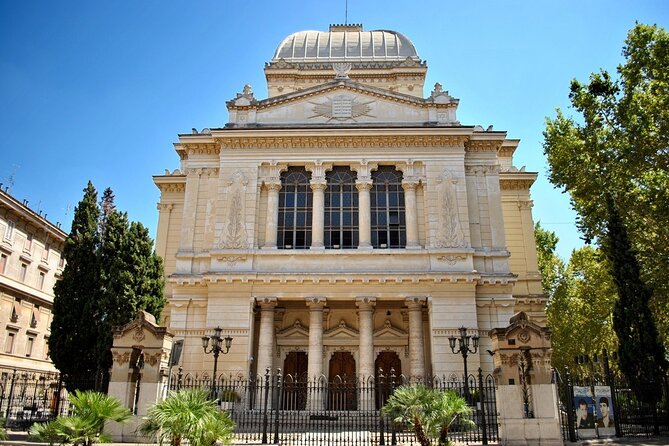
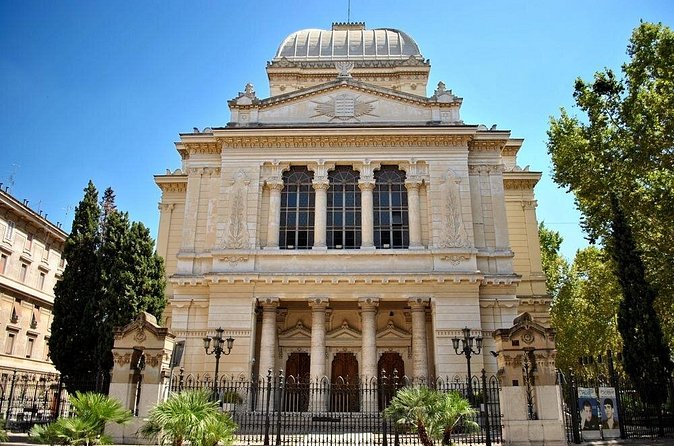
You’ll finish with Tempio Maggiore di Roma (the Great Temple), introduced as the monumental synagogue that Jews could build after emancipation and equalized civil rights in the 19th century. The tour emphasizes a powerful contrast: a community that was restricted for centuries now erects something meant to be seen and experienced.
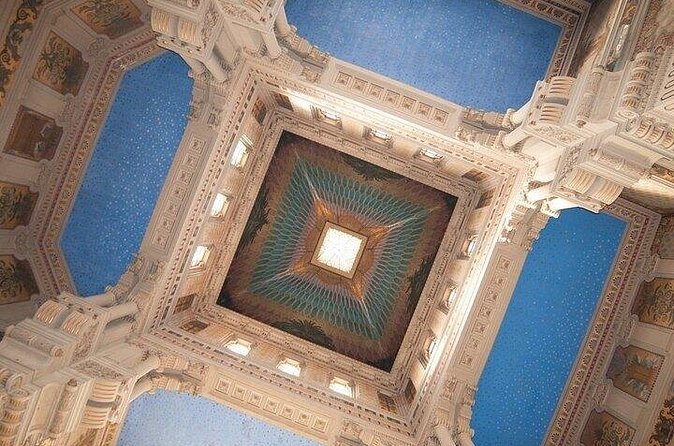
This synagogue is tied to the former ghetto area, which was demolished and reclaimed as part of town planning in 1888. The guide also notes the design competition winners: Osvaldo Armanni and Vincenzo Costa, and that the building was inaugurated in 1904. The dome is described as aluminum-clad, and the interior features a bimah arrangement in a way that’s not exactly in line with Roman Rite tradition, with an art nouveau style decorating the space.
The stop is about 10 minutes, and it’s worth knowing in advance: if you want more time inside the synagogue, you’ll probably want an additional visit on a different day. But for fitting it into a themed route, the timing makes sense.
Price and value: is $204.46 per person fair?
At $204.46 per person, this isn’t a cheap add-on. But it also isn’t just “someone driving you to sights.” You’re paying for private transportation via a golf cart, a structured English route, and an itinerary that includes both ancient “big Rome” and Jewish-specific memorial and synagogue sites.
Here’s how it can feel like good value:
- You avoid a lot of time lost to repositioning between far-flung stops.
- You get guided context for the Jewish landmarks and the harder historical framing.
- Several stops have admission free noted in the plan, while the Fosse Ardeatine memorial admission is included, which reduces surprise costs.
Also keep in mind group discounts are mentioned, and bookings tend to happen well ahead (on average about 34 days). If you can travel with companions and qualify for discount pricing, the per-person value improves.
Who this tour is for—and who might want a different plan
This tour suits you if you want a guided Jewish Rome route that connects sites into a timeline: medieval community life, forced displacement reflected in Roman monuments, later emancipation, and modern remembrance. The private format is a plus if you like asking follow-up questions without competing with other groups.
You might choose a different option if you want a lighter, purely sightseeing day. The itinerary includes painful themes tied to forced labor, destruction, persecution, and massacre remembrance. If that’s exactly what you’re looking for, you’ll likely appreciate how the day is paced and framed.
Should you book the Jewish Rome Private Golf Cart Tour?
I’d book this tour if you care about meaning and context, not just checking famous landmarks. Starting at Piazza Mattei and ending at Tempio Maggiore creates a clear arc—restricted life, visible monuments of trauma, then emancipation made monumental. The private golf cart format also helps if you want to see a lot without burning your energy on long walks.
If you’re short on time in Rome, this plan is also efficient. And if you’re planning a broader trip around Jewish history in Italy, these stops give you solid anchors that make later self-guided visits feel more personal and easier to understand.
FAQ
FAQ
What is the tour duration?
The tour runs for about 3 hours.
Where does the tour start and end?
It starts at Piazza Mattei, 00186 Roma RM, Italy, and it ends back at the meeting point.
Is pickup available?
Pickup is offered, and the meeting point is still Piazza Mattei. You’ll recognize the guide by a white T-shirt.
Is the tour private?
Yes. It’s a private tour/activity, so only your group participates.
What sites are included?
The route includes Il Portico di Ottavia, the Colosseum (as framed in the tour), Arco di Tito, Terme di Caracalla, Via Appia Antica, Mausoleo delle Fosse Ardeatine, Roseto Comunale, Vicolo Dell’Atleta, and Tempio Maggiore di Roma.
What is the cancellation policy?
Free cancellation is available up to 24 hours in advance for a full refund. If you cancel less than 24 hours before the start time, the amount paid is not refunded.