REVIEW · ROME
Rome: City Highlights Golf Cart Tour with Local Guide
Book on GetYourGuide →Operated by Biga Tours · Bookable on GetYourGuide
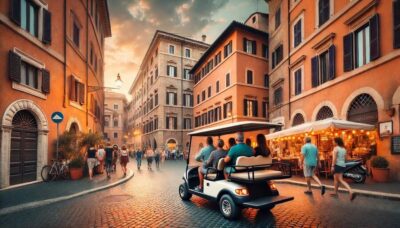
Skip the slog through Rome in one smart loop. This electric golf cart highlights tour glides you past major landmarks like the Pantheon and the Colosseum while your local guide narrates the stories in your headset, not over your shoulder.
I especially like the pace: you get multiple photo stops and quick looks at big-ticket sights without committing to full entrance visits. And I like the small-group feel, capped at 14 people, with guides who can actually shape the experience; I’ve seen names like Leo and Amber get singled out for engaging storytelling.
The main catch is that it’s not a ticket tour. You’ll see plenty from the outside, and at some points you’ll need short walks; on days with two carts running together, staying close helps you hear the guide clearly through the earpieces.
In This Review
- Key Things I’d Bet You’ll Notice
- How the Electric Golf Cart Keeps Rome from Wearing You Out
- First Stop at Via Monterone 19: What Happens Before You Roll
- Pantheon and Piazza Colonna: Getting Oriented with Real Context
- Trevi Fountain and the Left-Shoulder Coin Tradition
- Piazza Venezia to the Colosseum: Big Sights, No Ticket Hassle
- Circus Maximus and Teatro Marcello: Seeing the City Beyond the Postcards
- Largo Argentina: Caesar’s Assassination in a Single Square
- Piazza Navona Finish: Bernini’s Fountain as the Grand Closing Scene
- Price and Value: Is $71 Worth 90 Minutes of Rome?
- Who This Tour Fits Best (and Who Might Want Something Different)
- A Practical Note on Hearing, Stops, and Mobility
- Should You Book This Rome Golf Cart Highlights Tour?
- FAQ
- How long is the Rome City Highlights golf cart tour?
- How many people are in each group?
- What’s the price per person?
- What does the tour include?
- Are entrance tickets included?
- Where do we meet and where does the tour end?
- Is hotel pick-up included?
- What language is the guide speaking?
- Is the tour wheelchair accessible?
- What are the age limits for children?
Key Things I’d Bet You’ll Notice
- Up to 14 people, usually in 1–2 connected carts: you cover a lot without the crush.
- Headsets included: commentary stays clear as you move through traffic and tight streets.
- A classic Trevi Fountain moment: you throw a coin over your left shoulder as part of the stop.
- Major sights in one loop: Pantheon, Trevi, Piazza Venezia, Colosseum, Circus Maximus, Teatro Marcello, Largo Argentina, and Piazza Navona.
- Some stops are drive-by, some are up close: you’ll get photo time plus a couple of real sight-walk moments.
How the Electric Golf Cart Keeps Rome from Wearing You Out

Rome is a workout before you even start. This tour is built around the practical idea of reducing walking while still seeing the sights that usually eat an entire day.
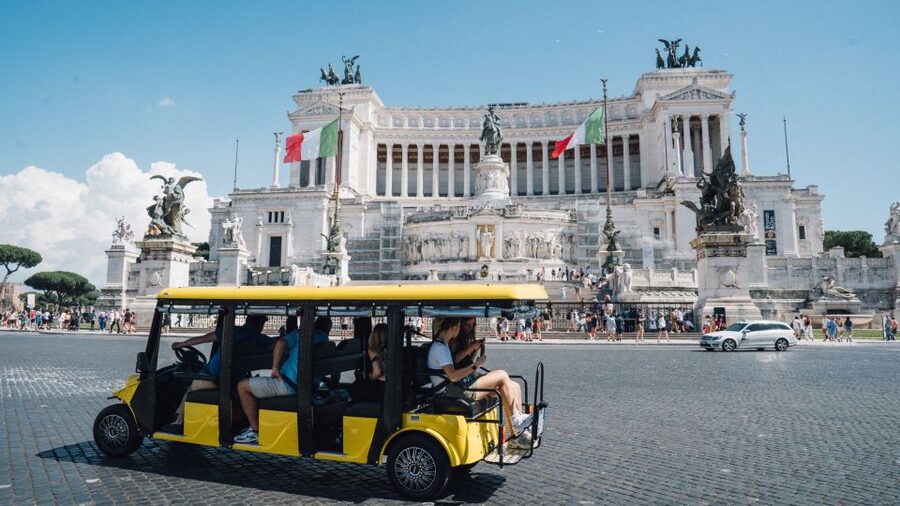
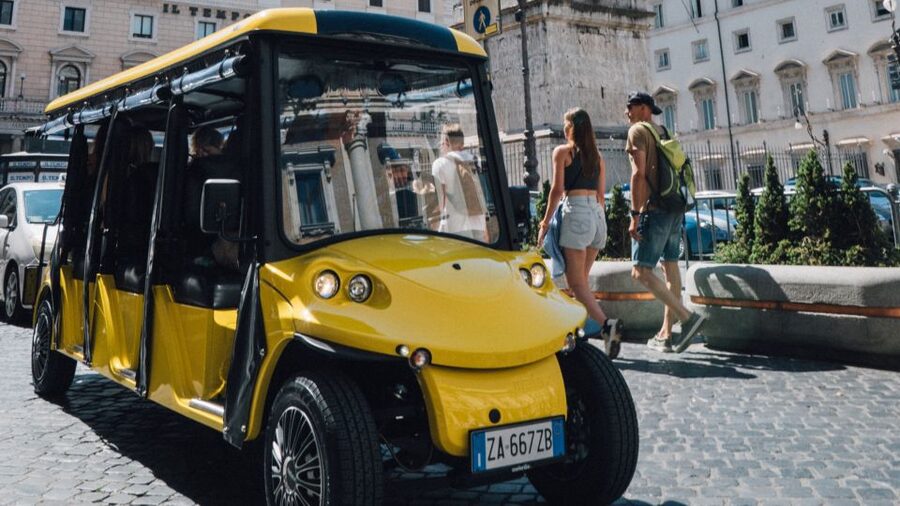
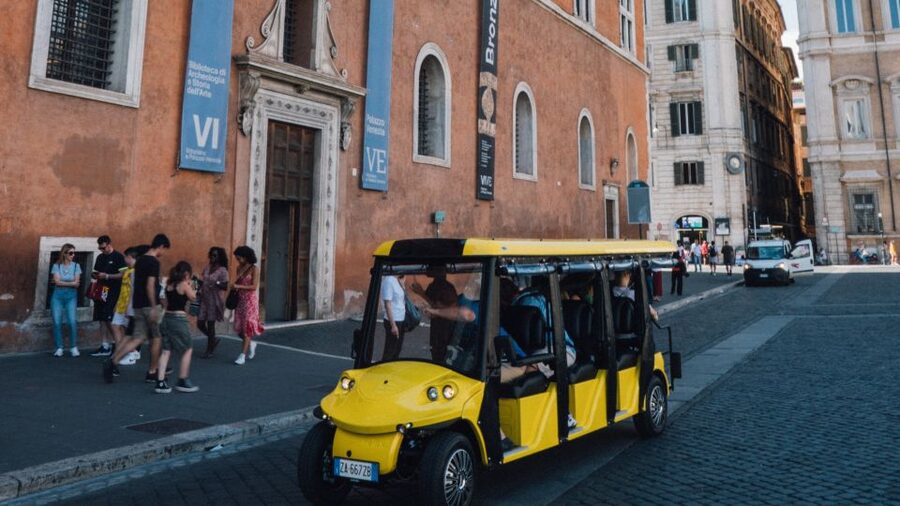
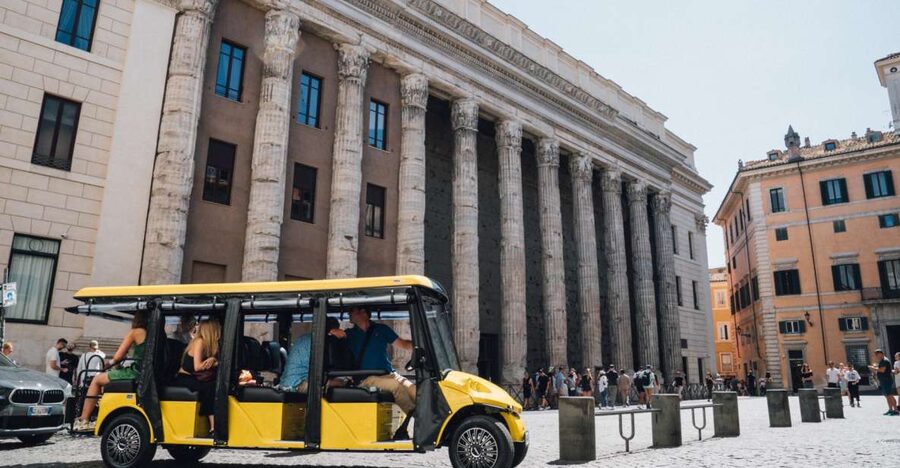
You ride in comfortable electric carts that can get you close to top monuments. That matters because Rome’s center streets can be tight, busy, and hot—so shaving off distance is a real upgrade, not a luxury. And since you’re not paying for entry tickets as part of the tour, you can stay focused on seeing and understanding the landmarks rather than planning queues.
The second advantage is the commentary. Your guide speaks live in English, and everyone listens through headsets, which helps you keep up even when the cart is rolling and traffic is loud. That headset setup also helps if you’re traveling with kids, or if your group’s attention span varies.
You can also read our reviews of more guided tours in Rome


First Stop at Via Monterone 19: What Happens Before You Roll
Meet at the tour office on Via Monterone, 19. The road forms an “L,” and you’ll find the office on the section next to Via di Torre Argentina. Look for glass doors so you don’t waste time hunting around.
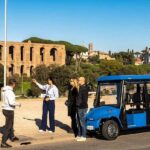
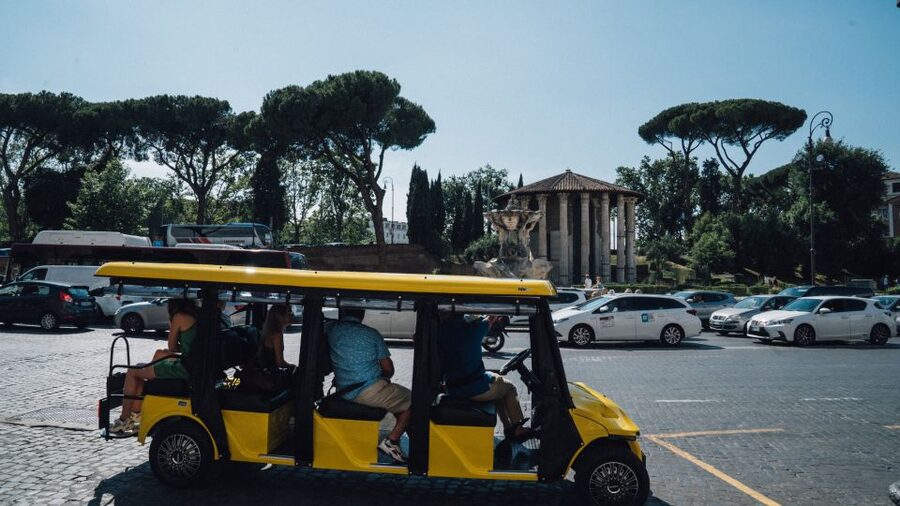
Once you’re set, you’ll hop in and begin the route from the Pantheon area. The tour runs with up to two vehicles, and each vehicle holds up to seven people. Vehicles travel together, like connected carriages, and everyone hears the same guide through the earpieces.
In past groups, I’ve seen mention of small welcome touches like a cold bottle of water during check-in. Even if those details vary, the process is straightforward: find the office, get your headset, and get ready for a smooth, guided circuit.
Pantheon and Piazza Colonna: Getting Oriented with Real Context
The Pantheon is the first big anchor. You’ll get a photo stop and a guided moment there, plus the kind of architectural trivia that makes the building feel less like a postcard and more like an engineering miracle. The guide explains how it was built to honor all deities in the Roman pantheon, and you’ll hear about the largest unsupported dome in the world.
This is a smart opener because it gives you a mental framework for what you’ll see later: Rome wasn’t just stones and statues. It was power, design, and problem-solving.
From there, the cart continues toward Piazza Colonna for another photo stop with guided commentary. Piazzas in Rome are more than scenic breaks. They’re where city life and political life overlap, and your guide uses the viewpoints to help you “read” what you’re seeing—where people would have gathered and why this area matters.
Trevi Fountain and the Left-Shoulder Coin Tradition
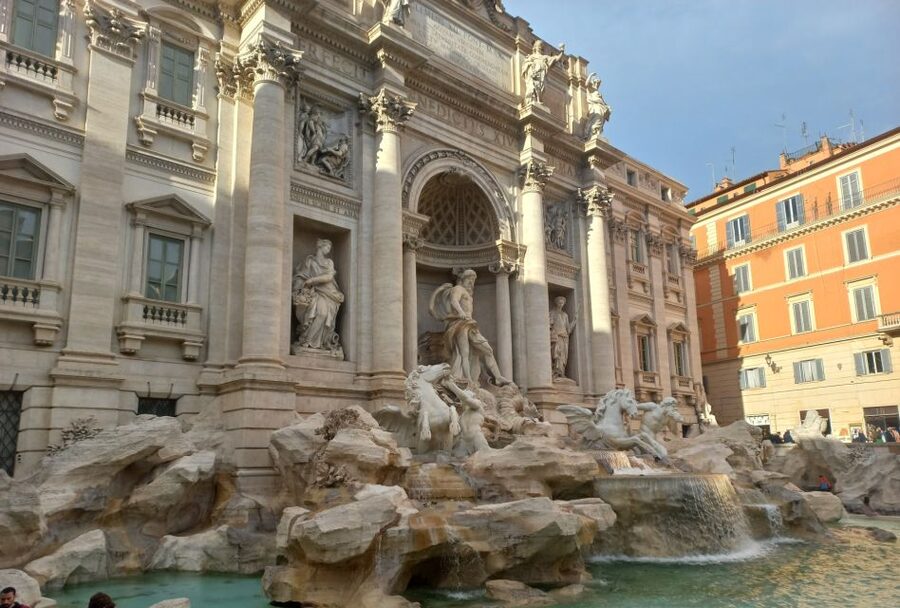
Next comes Trevi Fountain, one of the most famous places in Europe—and for good reason. You’ll have a photo stop plus guided context, and the tour includes the tradition of throwing a coin into the fountain’s waters over your left shoulder.
That coin moment is more than a ritual for fun. It’s a built-in reason to slow down and take in the scale and details, because you’re already paused at one of the city’s loudest visual spectacles. Instead of rushing past it like a crowd selfie, you get an actual moment to look.
From Trevi, you drive via del Corso, a well-known shopping street, and then you head toward Piazza Venezia. This part of the route is useful if you want to understand Rome as a living city—commercial corridors, landmarks, and turning points that connect neighborhoods.
Piazza Venezia to the Colosseum: Big Sights, No Ticket Hassle
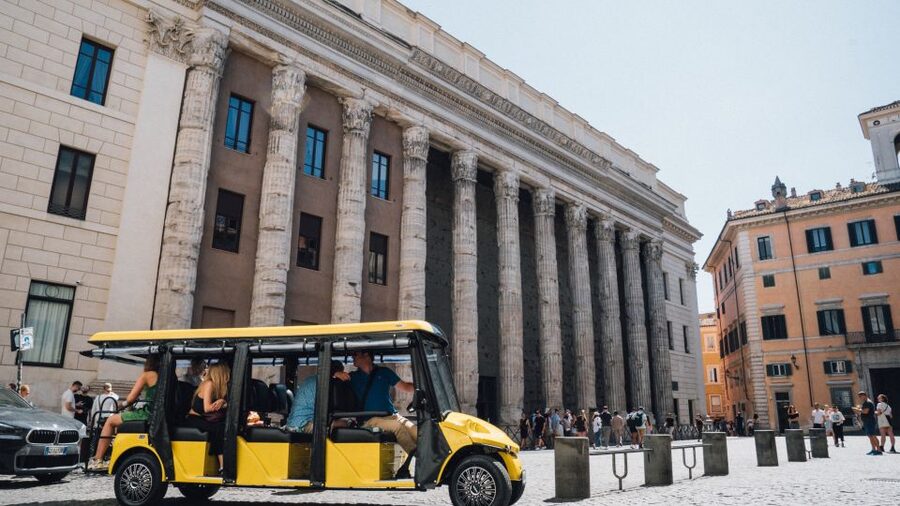
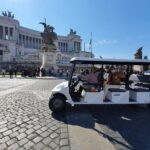
At Piazza Venezia, you’ll admire the Altar of the Fatherland (also called the Victor Emmanuel II national monument). You don’t need an entrance ticket to appreciate it from outside because the point here is scale and sightlines.
Then you reach the Colosseum, Rome’s “yes, that one” monument. The guide tells stories that connect the architecture to how Romans used the arena: gladiators fighting for their lives and the kinds of people who paid to watch. Even if you’ve seen photos before, this explanation helps you visualize the arena as a stage, not just ruins.
This is also where you benefit from doing the tour early in your trip (or at least before you’re too tired). Once you understand what the space was designed for, you’ll look at it differently during any later visits—whether that’s from the outside again or on a ticketed stop.
You can also read our reviews of more city tours in Rome


Circus Maximus and Teatro Marcello: Seeing the City Beyond the Postcards
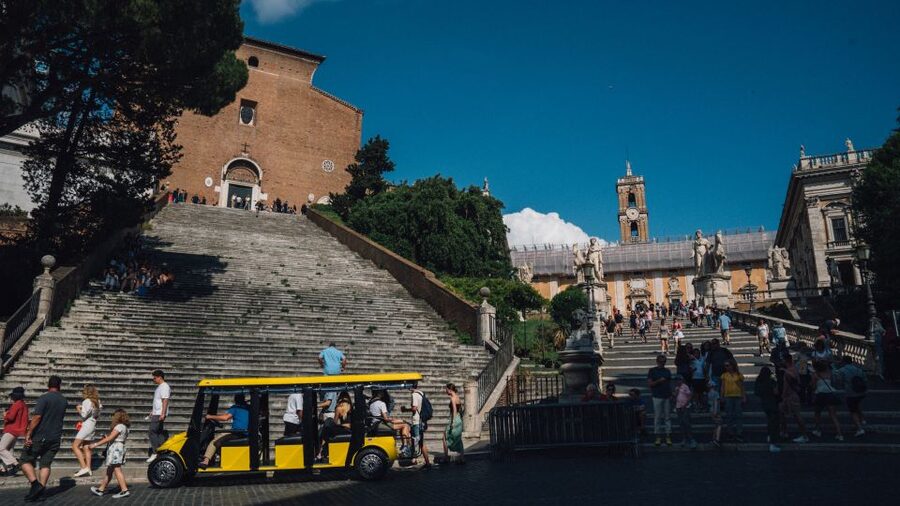
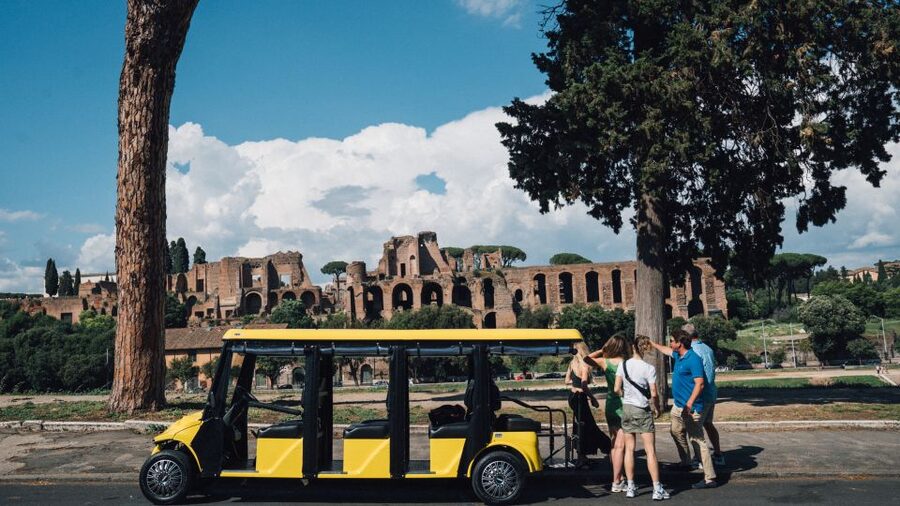
After the Colosseum, the route continues to Circus Maximus. You’ll visit this area with guided commentary. It’s a reminder that Rome’s spectacle culture wasn’t only about arenas with stone seating. It also included large-scale entertainment landscapes that stretched across the city.
Next is the Theatre of Marcellus, dating back to the first century BC. This stop is special because it’s quieter than the headline attractions, but it still feels like a real piece of Rome’s performance world. A guided stop here helps you notice shapes and proportions that you might otherwise miss when you’re just trying to snap a photo and move on.
A key practical benefit: these are stops where you can catch glimpses of how the ancient city sits in modern Rome. That contrast is one of the reasons this style of tour feels efficient instead of superficial. You’re still getting variety.
Largo Argentina: Caesar’s Assassination in a Single Square
Then you arrive at Largo Argentina, where the guide explains Julius Caesar’s assassination. This is one of those “small space, big event” places in Rome, and the guided approach helps because the history is specific.
What I like about this stop is that it gives you a different angle than the gladiators and emperors of the arena stories. Instead of focusing on entertainment, you’re looking at power, politics, and consequences—right where history took a sharp turn.
The cart-based format also helps you reach this kind of site without turning the day into a logistics puzzle. You’re not trying to navigate between scattered landmarks on foot while crowds surge.
Piazza Navona Finish: Bernini’s Fountain as the Grand Closing Scene
The tour ends at Piazza Navona, with a photo stop and guided story. The highlight here is Bernini’s Fountain of the Four Rivers, a dramatic centerpiece that’s easy to understand at a glance: four rivers, symbolic meaning, and a fountain that looks built for an audience.
This is a good ending point because the square is atmospheric even after the tour wraps. You’re not dropped in some empty corner—you’re finished in a lively, walkable plaza where you can keep exploring at your own pace.
Also, since the tour duration is short, finishing at Piazza Navona often lines up well with your next plan, whether you’re grabbing gelato, wandering for a meal, or building your own route back toward the next neighborhood.
Price and Value: Is $71 Worth 90 Minutes of Rome?
At $71 per person for about 1.5 hours, the value comes from what you’re buying: time saved, guided interpretation, and transportation that reduces walking.
Here’s what you get that changes the math:
- A local guide telling stories across multiple major landmarks
- Golf cart transportation that gets you closer than walking would
- Headsets so you don’t miss the commentary
- A small group size (up to 14), with up to two vehicles running together
What you do not get: entrance tickets. That’s important for your expectations. Since tickets aren’t included, you’re not paying for access inside museums or sites. Instead, you’re paying for a guided highlights loop that helps you understand what you’re looking at while you keep moving.
If you’re short on time—like you land in Rome and want a fast overview—this tour often feels like the smartest early move. You’ll likely leave with a mental map of what’s most important to you for any later ticketed visits.
Who This Tour Fits Best (and Who Might Want Something Different)
This tour fits best if you want a fast orientation and you don’t want to spend your limited energy grinding across long distances. It’s also a strong option for families and mixed-mobility groups, because the carts can get close to monuments.
It’s especially appealing if you prefer your Rome with structure: guide-led stops, clear narration, and photo chances built into the route. And if you’re arriving with jet lag or you hate being “stuck” waiting in lines, the outside-view format can feel relieving.
You might want a different kind of tour if you’re the type who wants long, in-depth time inside specific sites. Since entrance tickets aren’t included and some stops are brief, you’ll get the big picture—not the full chapter.
A Practical Note on Hearing, Stops, and Mobility
All tours run in English and use headsets to hear the guide’s voice. On days when two carts operate together, your experience depends partly on staying near the transmitter. One practical tip for you: if you’re in the second cart during two-cart operation, keep close to the guide-side of your vehicle so audio stays steady.
For mobility: the carts are wheelchair accessible, and they can get very close to top city monuments. But the tour asks wheelchair users to leave their chair in the office at the meeting point. Also, it’s expected that guests can get on and off the vehicles without assistance from staff. For that reason, it’s best to plan for a bit of walking at select points where the vehicle can’t stop directly in front of every monument.
Should You Book This Rome Golf Cart Highlights Tour?
I’d book it if you want an efficient Rome “greatest hits” day with guide-led context and minimal walking. The route hits the landmarks that most first-timers come for—Pantheon, Trevi, Piazza Venezia, Colosseum, Circus Maximus, Theatre of Marcellus, Largo Argentina, and Piazza Navona—without turning your trip into a full-day slog.
Skip it if you know you want to go deep inside major sites, or if you need long, uninterrupted time at one location. This tour is about seeing, understanding, and moving on—not about slow exploration.
If you’re deciding between options, my simple rule is this: if you’re time-poor and want clarity fast, this one is a strong bet.
FAQ
How long is the Rome City Highlights golf cart tour?
The tour lasts 1.5 hours.
How many people are in each group?
It’s a small group with up to 14 participants, with up to 2 vehicles running.
What’s the price per person?
The price is $71 per person.
What does the tour include?
It includes a small group sightseeing tour, transportation by golf cart, a local guide, and headsets to hear your guide’s voice.
Are entrance tickets included?
No, entrance tickets are not included.
Where do we meet and where does the tour end?
Meet at the office on Via Monterone, 19. The tour ends at Piazza Navona, 11, 00186 Roma RM, Italy.
Is hotel pick-up included?
No, hotel pick-up or drop-off is not included.
What language is the guide speaking?
The guide provides the tour in English.
Is the tour wheelchair accessible?
Yes, it’s wheelchair accessible, and the electric golf carts can get close to top monuments. Wheelchair users are asked to leave their chair in the office, and guests need to be able to get on and off the vehicles without assistance.
What are the age limits for children?
Infants under 1 year old can’t be accepted for safety regulations. Children ages 1 to 12 are welcome.