REVIEW · ROME
Rome: Golf Cart Tour of the Eternal City
Book on Viator →Operated by Facile Tours · Bookable on Viator
Rome by golf cart is the perfect shortcut. This tour strings together Rome’s biggest landmarks in a photo-friendly loop, with the added ease of hotel pickup and an English-speaking guide who keeps the story clear while you glide through narrow streets. Limited to your group, it also feels more personal than the big-bus shuffle.
My favorite part is how much ground you cover without killing your feet or your vibe. One thing to consider: the timing is tight, and if you’re the type who needs every word to land, you’ll want to make sure you can hear your guide during the ride and photo stops, especially when the pace gets quick.
Key highlights at a glance
- Central pickup that reduces hassle (and a clear fallback meeting point if you’re farther out)
- English-speaking guidance that helps you place monuments in context fast
- A tight, efficient route mixing ancient Rome, hilltop views, and baroque icons
- Photo-friendly speed suited for stopping often without long bottlenecks
- Limited to your group, which keeps questions and pacing from getting lost
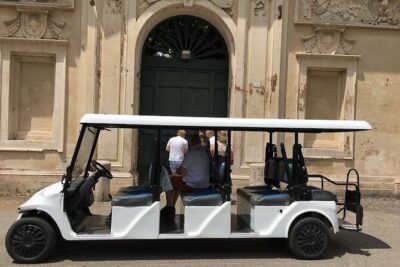
- A golf cart setup that’s easier for people who tire out from walking
In This Review
- What a Rome Golf Cart Tour Gets Right: Pace, Comfort, and Time
- Hotel Pickup and the Meeting Point: How to Avoid Start-Time Stress
- Villa Borghese Gardens: Park Calm at the Start
- Piazza del Popolo and the View From the Pincio
- Mausoleo di Augusto: A Quiet Ancient Moment
- Via del Corso: Rome’s Main Shopping Artery, Briefly
- Column of Marcus Aurelius: One Spiral Story You Can Actually See
- Piazza Venezia and the Vittoriano: A Giant Landmark With Modern Views
- Trajan Market (Mercati di Traiano): Ancient Commerce in Ruin Form
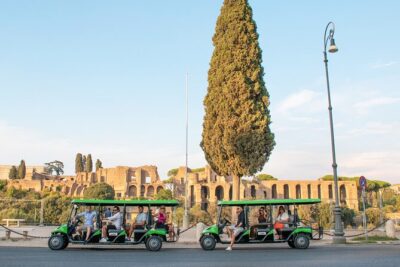
- Circus Maximus: Big Ancient Scale, Now a Park
- Giardino degli Aranci: Orange Trees and the Keyhole View
- Bocca della Verità: A Legend That’s More Fun Than You’d Expect
- Piazza del Campidoglio and the Capitoline Museums Area
- Piazza Navona: Fountains, Street Life, and the Rome That Smiles Back
- The Pantheon: Quick, Awe-Proof, and Worth Every Second
- Chiesa di Sant’Ignazio di Loyola: Baroque Trick Art Inside a Church
- Trevi Fountain and the Spanish Steps: The Big Finale for Photos and People-Watching
- Guides Make the Difference: The Human Side of the Route
- How Much It Really Costs (and When It’s Worth It)
- Who This Tour Suits Best
- Should You Book the Rome Golf Cart Tour?
- FAQ
- How long is the Rome golf cart tour?
- What is the price per person?
- Is pickup included?
- What language is the tour guide?
- Is this tour private?
- Where does the tour start and end?
- Is a mobile ticket provided?
- Is admission required for the listed stops?
- What is the cancellation policy?
- Is the tour accessible for most travelers?
What a Rome Golf Cart Tour Gets Right: Pace, Comfort, and Time
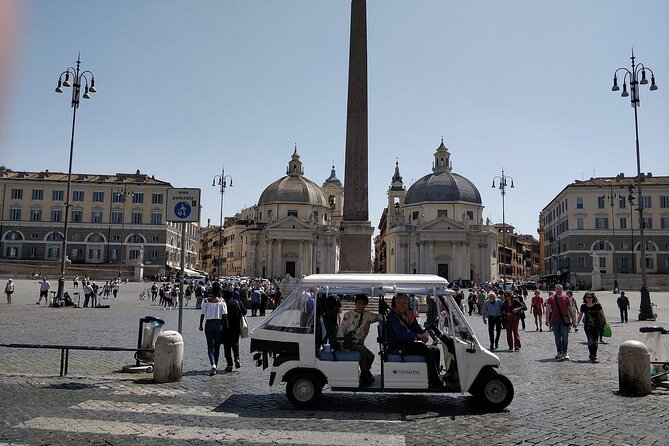
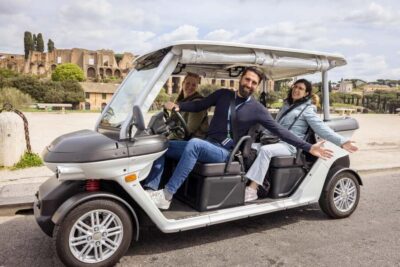
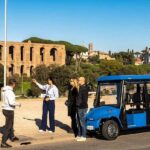
Rome rewards curiosity, but it also punishes impatience. This golf cart format is basically a compromise between seeing everything and still enjoying it. You get the open-air feel for skyline views and street scenes, while the driver and guide keep the timing realistic for a 3-hour overview.
The best value here is not just convenience. It’s focus: you’re moving efficiently between areas, and your guide helps you connect what you’re seeing to what mattered back then—emperors, churches, and the way Rome keeps remixing itself.
The group setup matters too. “Only your group participates” means you’re not competing with strangers for attention or photo angles. And if your party includes mixed ages, the cart helps everyone keep up without turning the day into a endurance event.
Hotel Pickup and the Meeting Point: How to Avoid Start-Time Stress
Pickup is offered from a central Rome hotel, and that alone saves a chunk of holiday energy. If your hotel is outside the central area, you’ll need to meet the driver guide at a designated meeting point or another central spot.
That detail matters because a tour that’s timed tightly can’t wait long at the curb. I’d strongly suggest you confirm the exact pickup plan ahead of time, especially if you’re staying just outside the center or if you’re unsure how your hotel describes its entrance. A smooth start usually means a better pace for the whole tour.
For those who prefer a fixed rendezvous, the tour meeting point is at Piazzale delle Canestre, SNC, 00197 Roma RM, Italy, and the activity ends back at that meeting point.
You can also read our reviews of more city tours in Rome
Villa Borghese Gardens: Park Calm at the Start
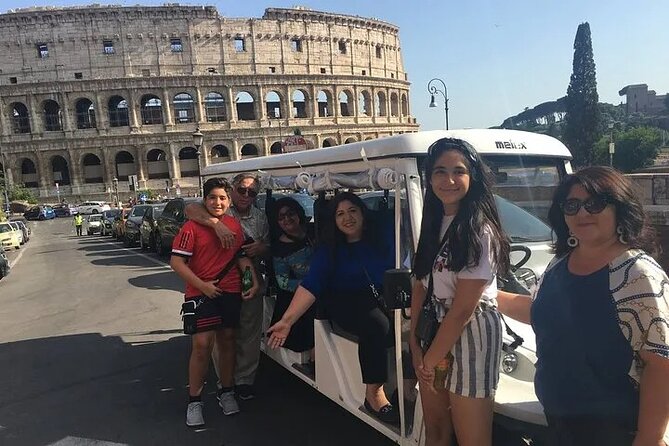
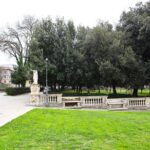
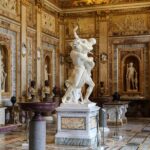
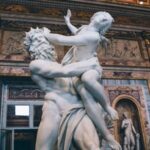
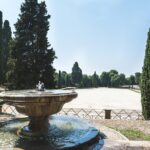
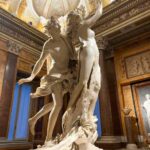
You kick things off at Villa Borghese Gardens, one of Rome’s great “pause buttons.” This park sprawls over 80 hectares and mixes greenery with water features, fountains, and major art-adjacent areas like the Borghese Gallery zone. Even with a short stop, it’s a welcome change from Rome’s street noise.
What I like about starting here: it sets your bearings. You’re not yet deep in the historic crush, and you can ease into the day with a calmer visual rhythm—trees, lakes, and the feeling of space. If you enjoy quiet viewpoints or simply want a quick reset, this stop works.
Practical tip: wear comfortable shoes anyway. You’ll be in open-air and you may want a few extra steps for photos or for a better angle at the water and sculptures.
Piazza del Popolo and the View From the Pincio
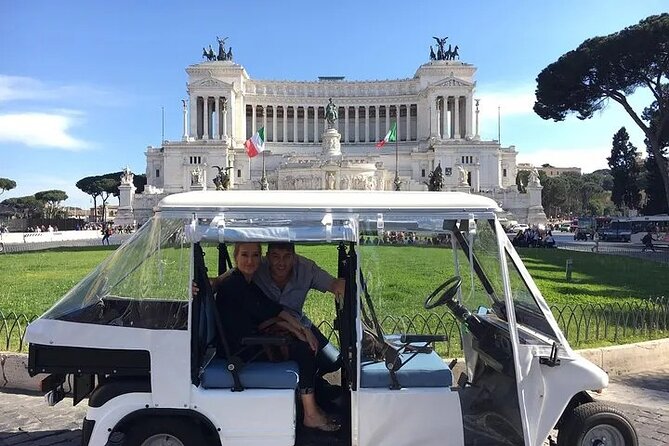
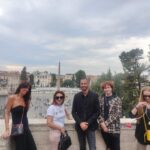
Next is Piazza del Popolo, a classic Rome square with historic buildings hugging the edges and an Egyptian obelisk dominating the center. The energy here is real—locals and tourists both pass through—so it’s a good place for a fast orientation stop.
Your guide can also point you toward how the square connects visually to other areas. If you catch the views from the Pincio (the terrace area above the square), you’ll get a “Rome in one glance” feeling that helps anchor the rest of the route.
A short stop is enough to appreciate the layout and snap the big photo angles. Just don’t plan a long wander here unless you’re comfortable with crowds.
Mausoleo di Augusto: A Quiet Ancient Moment
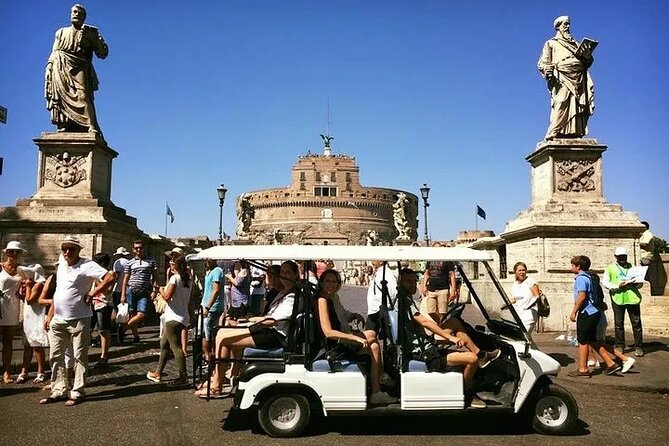
Then you move to the Mausoleo di Augusto (Mausoleum of Augustus). This is an ancient tomb built to commemorate the first Roman Emperor, Augustus, originally from 28 BC. Today, only part of the original structure remains, but what’s left is still dramatic—and it’s set in a greener, calmer park-like area.
The payoff in a quick visit is contrast. After the city’s noise and crowds, you get a more reflective ancient stop. If your guide takes a minute to explain who Augustus was and why this monument mattered, you’ll feel the stop land more than if you just rush through.
Via del Corso: Rome’s Main Shopping Artery, Briefly
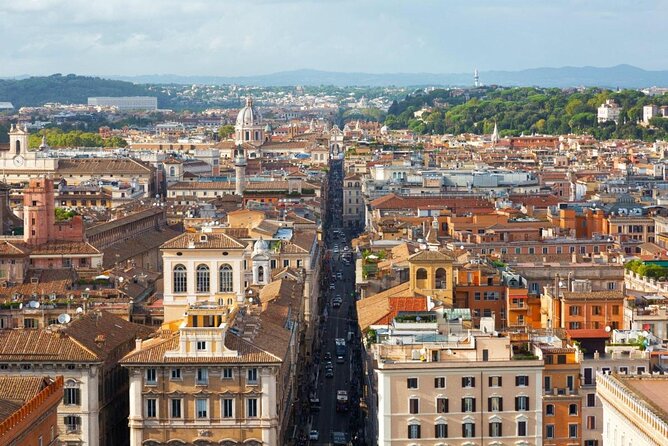
You pass through Via del Corso, one of the city’s best-known shopping streets stretching from Piazza del Popolo toward Piazza Venezia. It’s not a “museum stop,” but it’s useful because it shows you how Rome’s modern pulse runs through historic corridors.
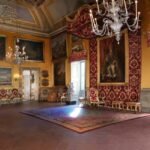
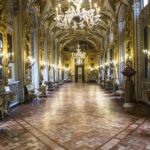
You’ll also hear about major nearby landmarks (like Palazzo Doria Pamphilj) and how this area connects across eras. Think of this part as a living map. Even if you don’t shop, it helps you visualize where you are and how people move through the center.


Column of Marcus Aurelius: One Spiral Story You Can Actually See
At Piazza Colonna, you get the Column of Marcus Aurelius. This is one of those monuments that rewards even a short look: the column’s spiral relief depicts Marcus Aurelius’ military campaigns in a continuous sculpted narrative.
If your group gets the time, the column can be climbed for views, and that’s worth knowing. Even if you can’t climb, standing close makes it easier to appreciate why it’s considered one of Rome’s best-preserved ancient monuments.
Photo note: the relief is detailed. If you’re photographing, slow down for a few frames rather than taking one quick snap and moving on.
Piazza Venezia and the Vittoriano: A Giant Landmark With Modern Views
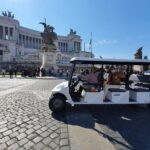
Next up is Piazza Venezia, dominated by the Vittoriano, the large white marble monument dedicated to King Victor Emmanuel II. It’s unmistakable, and it’s also useful because it’s a strong visual anchor for central Rome.
If your plan includes time inside or up top (the tour info indicates you can climb for panoramic views), that’s a practical win. The Vittoriano area helps you see how Rome’s neighborhoods stack around the center—and it makes later stops feel less random.
This stop can also help you understand Rome’s identity layers: ancient ruins and emperors nearby, then a modern monument that claims the skyline.
Trajan Market (Mercati di Traiano): Ancient Commerce in Ruin Form
You then hit Mercati di Traiano – Museo dei Fori Imperiali, the Trajan Market area. Built under Emperor Trajan, it originally worked as a commerce hub—an impressive complex with a strong architectural presence. Today it’s partially restored, and you’ll see interconnected buildings, courtyards, and underground spaces connected to the broader Imperial Fora.
Even in a short stop, it’s memorable because it’s not just “columns and stones.” It’s a reminder that ancient Rome had a full daily economy—markets, movement, and built infrastructure.
If you care about architecture, this is one of the stops where the short time still feels worth it. It’s a visual bridge from grand monuments to how people actually lived.
Circus Maximus: Big Ancient Scale, Now a Park
Then comes Circo Massimo (Circus Maximus), an ancient chariot racing stadium that could hold enormous crowds in its day. Today, it’s a public park, and you can walk along parts of the ancient track area to grasp the scale.
The best moment here is the “hold your head up” feeling. Even if much of the original structure is gone, you’ll see why it mattered: open space, a central position, and a size that made mass spectacle a daily reality.
This is also a helpful stop for energy management. Compared with tightly packed interiors, a park-like area lets people breathe and reset before the tour turns more baroque and photo-heavy.
Giardino degli Aranci: Orange Trees and the Keyhole View
You’ll finish one of the more serene stretches at the Giardino degli Aranci (Orange Gardens) on Aventine Hill. The name isn’t just cute: the park features citrus trees, lush plantings, and calm pathways. It’s also a viewpoint area overlooking the city and the Tiber River.
One fun detail you’ll hear about is the small keyhole in the wall that can frame St. Peter’s Basilica from the right angle. It’s the kind of “wait for the right view” moment that turns a short stop into a story you’ll remember.
Even if you only catch a few photos, it feels like a pause between the bigger monuments.
Bocca della Verità: A Legend That’s More Fun Than You’d Expect
At Bocca della Verità, you’ll see the famous stone disk (the Mouth of Truth) at the church of Santa Maria in Cosmedin area. The legend says you’ll lose your hand if you tell a lie while placing it in the mouth—so yes, people line up for that photo.
The reality is more cultural than supernatural, but the experience is still entertaining. It’s one of the few stops where the tourist activity is part of the charm. Your guide can help you understand why the legend took off and how it ended up in movies.
If you want the most enjoyment, don’t treat it like a drive-by. Spend the extra minute getting into position and making the most of the picture moment.
Piazza del Campidoglio and the Capitoline Museums Area
Next is Piazza del Campidoglio, on Capitoline Hill. This is a major symbolic center from ancient Rome, tied to major political and religious life. Today, it’s also an architectural and art hub, and the square design was influenced by Michelangelo.
The highlight you may be able to spot during the stop is the equestrian statue of Marcus Aurelius, one of the few surviving equestrian statues from ancient Rome. Even from outside, the square layout feels designed for perspective—great for quick photos that actually show “Rome on a hill.”
If your time is tight, focus on the square composition and the statues. You’ll get the bigger message quickly.
Piazza Navona: Fountains, Street Life, and the Rome That Smiles Back
Then it’s Piazza Navona, famous for its three fountains, including the Fontana dei Quattro Fiumi by Bernini. This stop is all about atmosphere. The square pulls in street performers, outdoor dining, and the kind of energy where Rome feels like a real city rather than just a backdrop.
A short stop works because the fountains give you something immediate to look at, and the surrounding façades make the square feel like a living stage.
If you want photos without stress: aim for one fountain angle first, then do one wide shot. You’ll avoid the trap of photographing everything but leaving with nothing satisfying.
The Pantheon: Quick, Awe-Proof, and Worth Every Second
One of the main anchors of the tour is the Pantheon. This ancient structure is famous for its massive dome and the oculus, which brings in natural light through the ceiling opening. The design creates a feeling of space that hits even if you only have a short time inside.
The reason this stop matters in a golf cart tour: it’s one of the best “big wow” moments that doesn’t require hours. You’re not just seeing a landmark. You’re experiencing how ancient Roman engineering still shapes how you feel in the space.
When your stop is brief, prioritize entering, looking up, and taking in the dome lighting. That’s the whole point.
Chiesa di Sant’Ignazio di Loyola: Baroque Trick Art Inside a Church
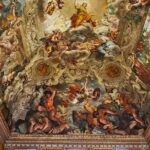
Then comes Sant’Ignazio di Loyola, a baroque church known for its interior fresco work and the famous painted “false dome.” The trick creates the illusion of a real dome even though it’s not there.
This is a good stop if you like art and want Rome to surprise you in a different way. You’re not only seeing stone from antiquity. You’re seeing how later artists used illusion, perspective, and paint to make architecture feel bigger than it is.
Give this one a real minute or two. Even in a short visit, the “how did they do that” effect is strongest when you slow down.
Trevi Fountain and the Spanish Steps: The Big Finale for Photos and People-Watching
The final stretch leans into the iconic Rome most people dream about.
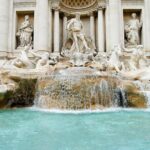
Trevi Fountain is baroque drama in water form—Neptune at the center, sculptures around it, and the coin-toss tradition meant to bring you back to Rome. The constant crowds are part of the scene, so plan to enjoy it for what it is: an instant classic and a great place to wrap your photo set.
After that, you reach Piazza di Spagna and the Spanish Steps. These steps (138 of them) link the square area with Trinità dei Monti, and the views make the stop feel like more than just a photo backdrop. It’s also prime people-watching time—sit, take a breath, and let Rome be Rome for a few minutes.
Guides Make the Difference: The Human Side of the Route
The route works because the guides turn points of interest into a story you can hold in your head. In the best moments from past groups, guides like Hadi, Francesco, Sahar, Marco, and Pietro were praised for explaining not just facts, but also how different neighborhoods felt and why.
Some guides even adjusted pacing based on what the group already saw, and that flexibility is what prevents the tour from feeling like a checklist. If you end up with a guide who’s good at translating the city’s layers into plain talk, you’ll walk away with a stronger sense of what to do next in the days ahead.
How Much It Really Costs (and When It’s Worth It)
The price is $160.91 per person for about 3 hours, and that’s not “cheap,” but it’s also not trying to be. The value comes from three things Rome needs: time, logistics, and access.
- Time: You pack a lot into one outing without spending the whole day commuting between scattered sights.
- Logistics: You avoid constant transfers and help navigating central Rome’s traffic and narrow streets.
- Energy savings: The golf cart keeps the day enjoyable for people with lower stamina.
If you have only a short stay—especially your first day—this tour can be a strong way to get your bearings fast. If you already know you want to spend your time in fewer places with longer museum visits, you may prefer to build a lighter plan and add time on your own.
Who This Tour Suits Best
This is a great match for:
- First-time Rome visitors who want a fast, structured overview
- Families with mixed ages, including grandparents or kids
- Anyone who wants photos without sprinting between stops
- People who appreciate clear, practical explanations over long museum time
It’s less ideal if:
- You want long stays inside major sites
- You need to hear every word from the guide regardless of street noise
- You dislike quick stops and prefer slow wandering only
Should You Book the Rome Golf Cart Tour?
I’d book this tour if you want an efficient, photo-friendly introduction to Rome with pickup convenience and an English-speaking guide who helps you connect the dots from ancient power to baroque art. The limited-to-your-group setup and the cart’s ability to move through small streets makes it a smart way to see a lot without spending your whole day walking.
I’d think twice if you’re very sensitive to audio clarity or you hate rushed timing. Also, double-check the pickup plan if you’re not in the central hotel zone, because the tour starts strong and expects you to be ready.
If you’re aiming for a first-day overview that sets up the rest of your trip, this is one of the more practical ways to do it—especially when your feet need a break.
FAQ
How long is the Rome golf cart tour?
The duration is about 3 hours.
What is the price per person?
It costs $160.91 per person.
Is pickup included?
Pickup is offered, with the driver guide waiting at the main entrance of your central Rome hotel. If your hotel is outside the central area, you may need to meet at the designated meeting point or another central location.
What language is the tour guide?
The tour is offered in English.
Is this tour private?
Yes. Only your group will participate.
Where does the tour start and end?
The activity starts at Piazzale delle Canestre, SNC, 00197 Roma RM, Italy, and it ends back at the meeting point.
Is a mobile ticket provided?
Yes, a mobile ticket is included.
Is admission required for the listed stops?
The itinerary lists admission ticket free for the stops included.
What is the cancellation policy?
Free cancellation is available up to 24 hours in advance for a full refund.
Is the tour accessible for most travelers?
Most travelers can participate.