REVIEW · ROME
Rome: imperial city ,private golfcart tour & hotel pick-up.
Book on GetYourGuide →Operated by Exclusive Experience · Bookable on GetYourGuide
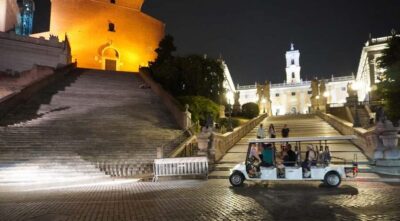
Rome makes more sense from a golf cart. This private 3-hour loop links the Colosseum, Pantheon, Trevi Fountain, and more with less foot slog, and the hotel pickup keeps you from wasting time. The one thing to watch is the clock: it’s packed, so the best way to avoid feeling rushed is to tell your guide what you want most.
I also love how much control you get from the start. Guides like Marina, Sam, Mauricio, and Max keep the pacing easy and adjust on the fly, and you’re not just collecting monuments—you’re getting context and photo-friendly stop timing, with an optional Italian food tasting if you want it.
In This Review
- Key points before you go
- Why this Rome golf cart format feels smarter than walking
- Piazza Venezia and Via del Corso: your quick start to Imperial Rome
- Trevi Fountain, Largo del Tritone, and the Spanish Steps rhythm
- Pincio Gardens, Villa Borghese, and Piazza del Popolo photos that actually matter
- The Secret Stop and Santissima Trinità dei Monti: the quick win moments
- Theatre of Marcellus to Altar of the Fatherland: big scale in short time
- Colosseum and Roman Forum: the main story, explained in motion
- Trajan’s Forum, Trajan’s Market, and the Pantheon finish
- Price and value: $41 for a guided “best of Imperial Rome” loop
- Making the schedule work: crowds, photos, and pacing
- Rules of the road: what’s not allowed and why it matters
- Should you book this private Imperial Rome golf cart tour?
- FAQ
- How long is the Rome private golf cart tour?
- Is this tour private?
- What languages are available for the tour guide?
- Do I get hotel pickup and drop-off?
- Is the Italian food tasting included?
- Is it wheelchair accessible?
Key points before you go
- Hotel pickup, city-style route so you start with monuments already on your timeline.
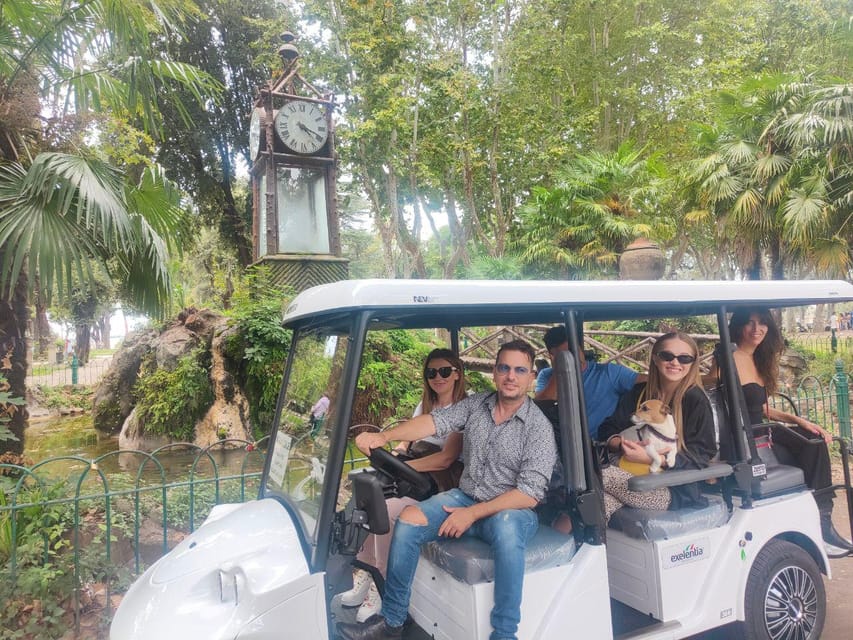
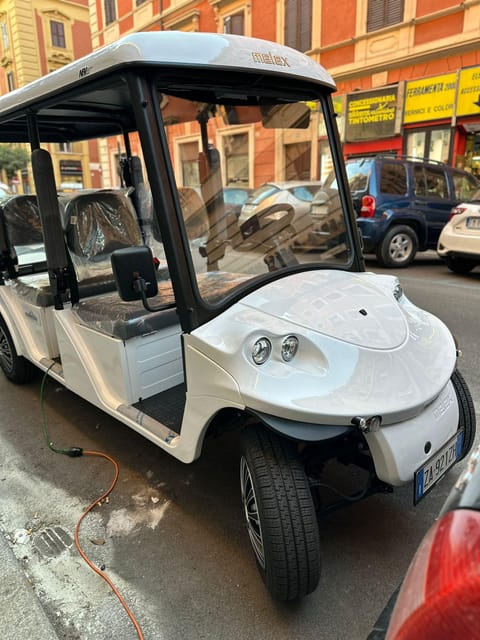
- Private golf cart comfort that helps you cover a lot without wearing out your legs.
- Multilingual guides available in English, Italian, Russian, Spanish, Ukrainian, and Byelorussian.
- Photo stops built in for Trevi, Spanish Steps, and the big Rome icons—plus time to ask questions.
- Secret stop for extra wow (often a timed viewpoint moment, depending on guide and conditions).
- Optional food tasting for when you want Rome’s stories in edible form too.
Why this Rome golf cart format feels smarter than walking
Rome is a feast for the eyes, but it can also be a leg workout. A golf cart tour solves the main problem: you still see the real sights, yet you skip the long stretches of uneven sidewalks and steep crossings. For first-time visitors, it also gives your brain a quick map of how Imperial Rome fits together.
The private part matters. With your own guide, you’re not stuck listening to a one-size-fits-all script. In the reviews I’m drawing from, guides like Marina and Sam kept checking what you wanted—more time, fewer stops, extra photo angles—without turning the tour into chaos.
The trade-off is simple: 3 hours is short. This is not the kind of experience where you linger for an hour at every monument. If you’re the type who wants a deep, slow museum-style visit, you’ll still love this—but plan one or two longer follow-up stops after.
You can also read our reviews of more city tours in Rome

Piazza Venezia and Via del Corso: your quick start to Imperial Rome
You start near Piazza Venezia, then move along Via del Corso. Even with a short stop, Piazza Venezia sets the stage because it’s one of those locations where Rome feels political, ceremonial, and historic all at once. Expect a guided look that helps you understand what you’re seeing rather than just snapping photos.
From there, Via del Corso acts like a “move-you-forward” street. It’s a classic Rome connection point, and it works well in a golf cart format because you get the feel of the city’s center without losing time to backtracking. Your guide will typically use this stretch to frame what comes next—baroque drama, big squares, and then the ancient power centers.
A nice bonus here: this early pacing lets you get comfortable with the route before the more crowded photo zones. If you’re camera-minded, it’s also a good moment to ask where the best angles are for your group.
Trevi Fountain, Largo del Tritone, and the Spanish Steps rhythm
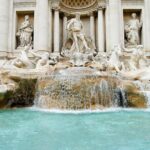
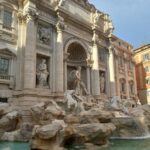
Trevi Fountain gets the big spotlight, and the tour gives it a solid block of time (about 20 minutes) for sightseeing. You’ll also have a short stop at Largo del Tritone (about 10 minutes), which is helpful because the area around Trevi can feel like a photo bottleneck. Your guide can help you pick the moment to look, then reposition for better views.
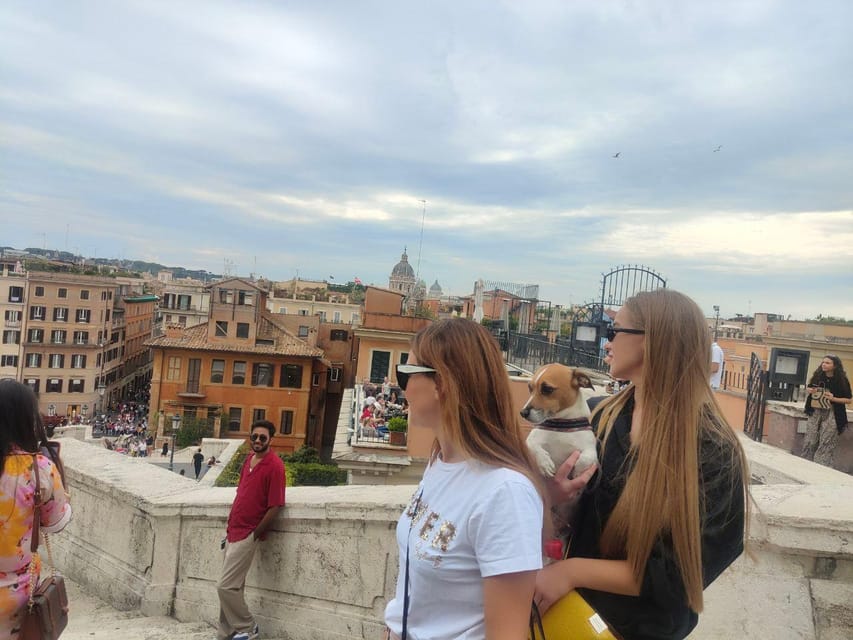
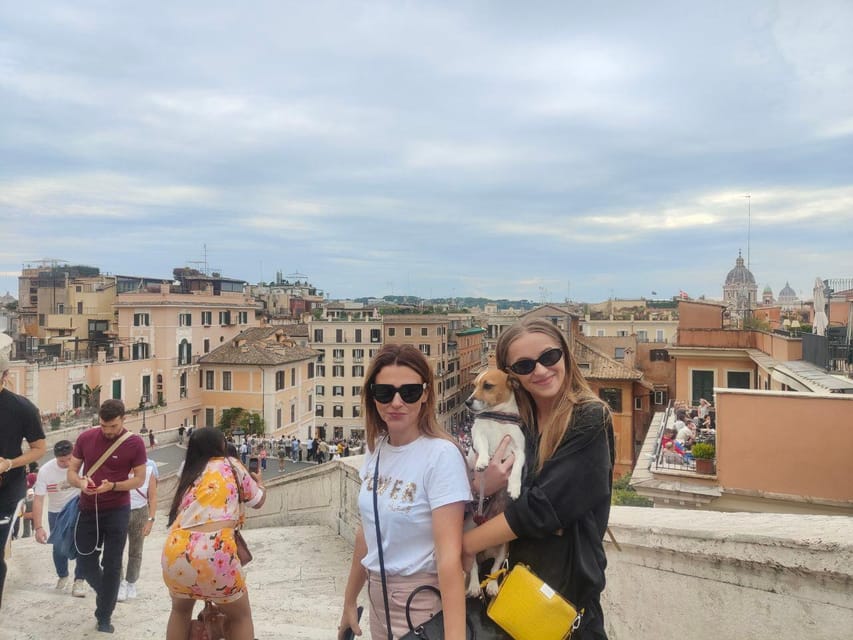
Then comes Spanish Steps, with a guided portion around 15 minutes. This is one of those Rome spots where everyone goes, but not everyone understands what they’re looking at. With a guide, you’re not just watching the crowd—you’re learning how the square and surrounding streets fit into the city’s design.
One of the smartest things your guide can do is manage the side of the cart and the order of stops so you don’t miss key views. In the reviews, guests specifically praised guides for timing and positioning so they saw the right angles without rushing through.
Tip: if you hate shoulder-to-shoulder crowds, go earlier in the day. More than one guide-led experience noted that later morning can get noticeably busy around the major squares.
Pincio Gardens, Villa Borghese, and Piazza del Popolo photos that actually matter
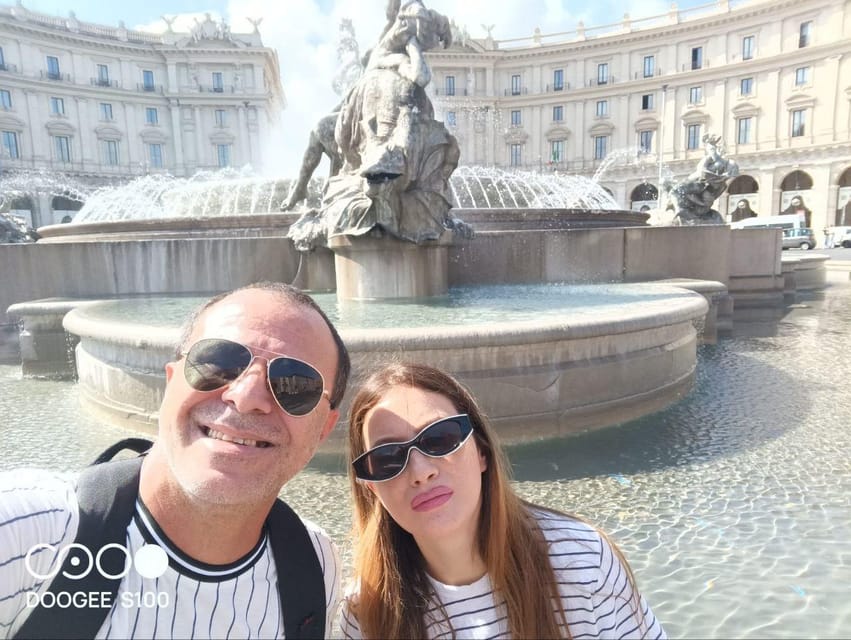
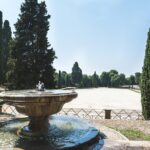
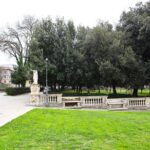
After the baroque hits, you shift into viewpoint territory. Pincio Gardens gets about 20 minutes of sightseeing, and this is a classic Rome “pause and breathe” moment. You’re high enough to see how the city opens up, and it helps your photos look more intentional than just a monument selfie.
Villa Borghese follows with around 20 minutes of guided time. Even if you’re not doing a long park walk, the guide’s job is to connect what you see to Rome’s bigger story—who built what, why certain areas gained prestige, and how the city expanded and rebranded over time.
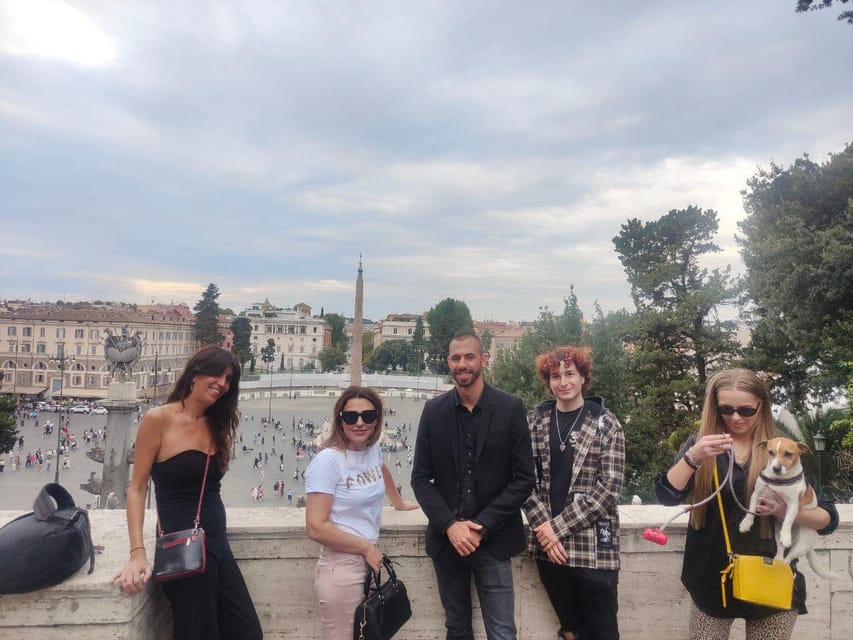
Then you hit Piazza del Popolo with a photo stop (about 20 minutes). This is a good slot for group photos, quick orientation, and letting everyone reset. One of the values of a golf cart tour is that you get these “rest points” without needing to find them yourself.
The Secret Stop and Santissima Trinità dei Monti: the quick win moments
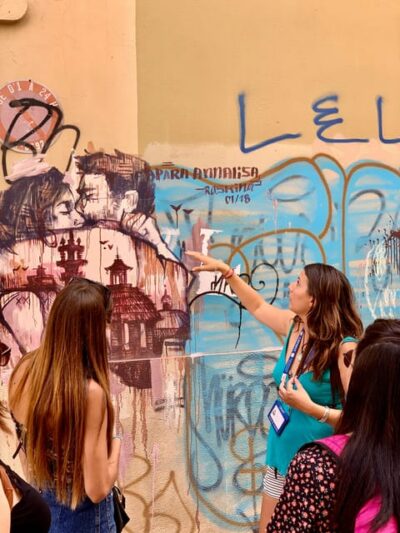
You’ll have a short guided “secret stop” of about 10 minutes. This is exactly the kind of time that works on a golf cart tour: it’s short enough to fit the schedule, but long enough for your guide to tell you what makes the spot special.
In at least one account, a guide timed a keyhole-style viewpoint so it wasn’t surrounded by a queue. That’s the key idea: a good guide doesn’t just bring you to famous places; they help you arrive at the famous moment.
Santissima Trinità dei Monti is next for a photo stop (about 10 minutes). This is the kind of church-and-steps combo where the view is the point, and the guide can tell you what to look for without needing you to spend an hour reading every plaque.
If you want the best payoff from these brief stops, keep your questions simple: ask what you’re likely missing and where the best angle usually is. Guides tend to have a fast answer because they’re constantly working the route.
You can also read our reviews of more private tours in Rome


Theatre of Marcellus to Altar of the Fatherland: big scale in short time
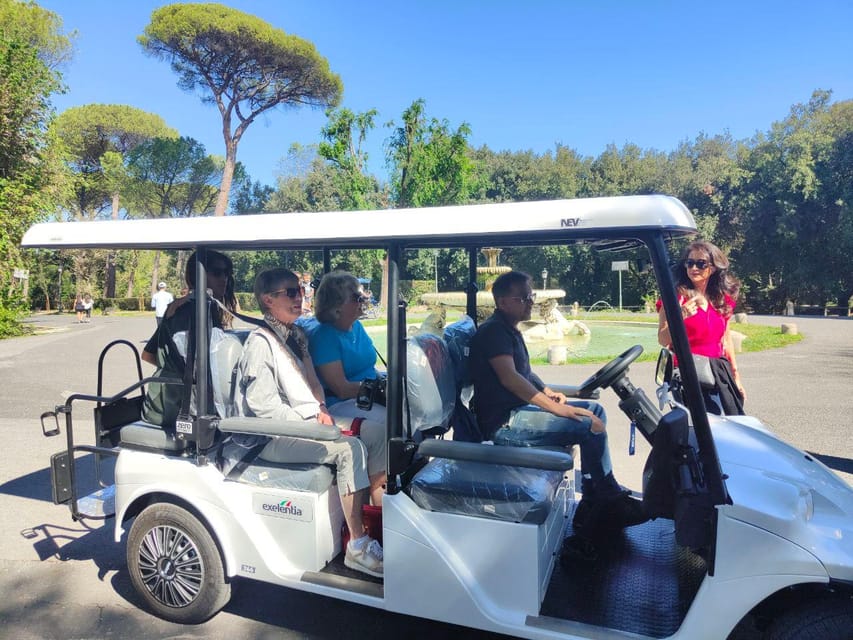
Then you swing to the Theatre of Marcellus for a visit of about 15 minutes. This is a great “ancient grounding” moment because it shows Rome’s scale and reuse of space—ancient structures that still sit inside a living city. Even if you don’t go inside a museum setting, you’ll get a guided explanation that helps the stones make sense.
Next is a brief photo stop at the Altar of the Fatherland (about 5 minutes). It’s short, but it’s effective for context. You’re seeing a power-and-identity symbol that sits at the center of modern Rome’s relationship with its past.
These quick stops are a strength of a 3-hour plan. You’re not trying to conquer everything on foot; you’re sampling the main beats and getting enough interpretation that you’ll know what to pursue later if you want deeper time.
Colosseum and Roman Forum: the main story, explained in motion
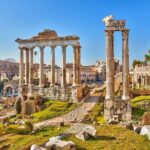
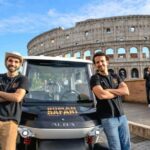
Now you hit the big ones. The Colosseum is a photo stop around 10 minutes, followed by a Roman Forum photo stop around 15 minutes. That’s not long by museum standards, but it works if your goal is orientation and understanding.
A good guide uses this part to connect the dots: how Rome’s power system worked, why these spaces mattered, and what you’re seeing when you look at walls, arches, and street layout. In the accounts I’m drawing from, guides like Mauricio and Max were praised for storytelling that kept people engaged through the key visual moments.
If you’re a history lover, this section is where your guide’s style matters most. One review highlighted that a guide ordered the explanation in a way that matched the timeline, which helps a lot when you’re compressing a city into a short visit.
One practical note: even in a golf cart, you may need to step a bit for photos. Comfortable shoes still help, especially if you’re trying to move quickly to your preferred side of the cart for a shot.
Trajan’s Forum, Trajan’s Market, and the Pantheon finish
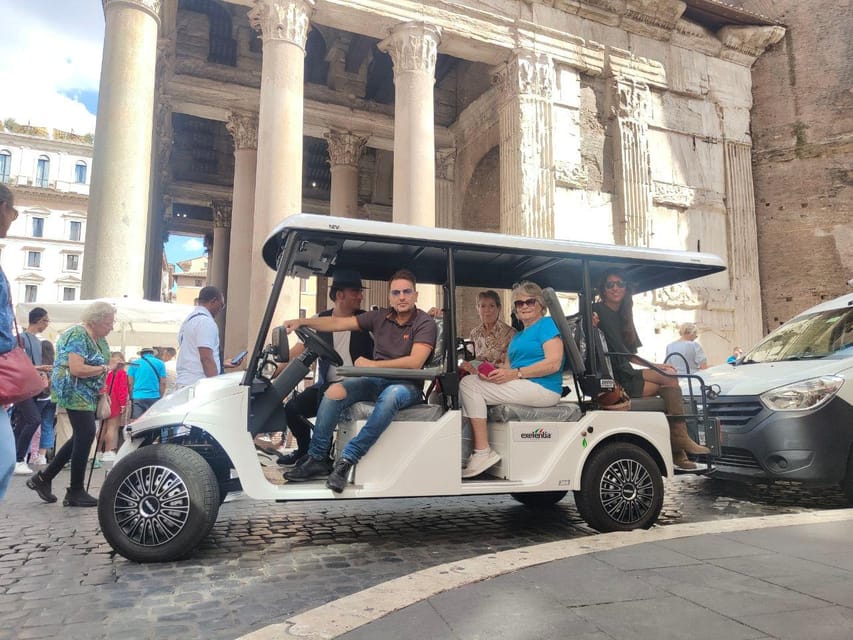
After the Forum, you continue to Trajan’s Forum (guided about 15 minutes) and Trajan’s Market (guided about 10 minutes). These stops tend to feel less “tour-bus crowded” than the most famous icons, and that can make the guided explanation land better. Your guide can point out what was built to impress, what was designed for daily life, and why certain structures keep showing up in Rome’s visual language.
Then the tour ends at the Pantheon with a guided visit. This is a brilliant way to finish because the Pantheon gives you a satisfying architectural moment after all the political and civic spaces. Even with limited time, a guide can help you focus on the right things: scale, proportions, and why the building still hits so hard visually.
If you’re thinking ahead, the Pantheon-area timing often makes it easier to continue your day by walking to nearby streets afterward. Your guide may also offer practical tips on what to do next depending on your interests.
Price and value: $41 for a guided “best of Imperial Rome” loop
At $41 per person for about 3 hours, the value comes from stacking several things together. You’re paying for a private local guide plus transport that lets you move through the city more efficiently than a walking-only plan. That matters most if you’re traveling with kids, older relatives, or anyone who tires quickly.
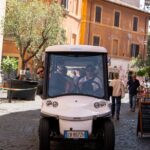
In the reviews I’m using, the biggest value signals were comfort and flexibility. People in their 60s appreciated the reduced walking. A pregnant guest noted the golf cart made the experience easier without losing access to major sights. Others mentioned the carts were clean and comfortable, even with weather covers in colder months.
Also, the tour can become better than a checklist if you treat it like a planning session. Tell your guide what you care about—architecture, photos, Roman daily life, or family-friendly pace—and you’ll leave with a clearer map of what’s worth your time later.
If you want food too, the optional Italian food tasting adds another layer of value because it turns Rome into flavors, not just views.
Making the schedule work: crowds, photos, and pacing
This tour is built around many stops with short windows. That’s not a flaw—it’s the point—but it means you should go in with a strategy.
First, choose an early slot if you can. Multiple experiences pointed out that around 10am, crowds start to spike around major squares. Earlier usually makes your photos cleaner and your guide’s timing more effective.
Second, be honest about how long you want at each place. Guides in this program are described as flexible about spending more or less time. If Trevi is your top priority, say it early. If you’ve already seen something before, tell them and you’ll likely get a better use of the 3 hours.
Third, set yourself up for good photos. The guide’s side positioning from the cart matters, and you’ll get better results if you ask where the best angle is for your group before you walk a few steps.
And yes, weather can happen. The tour runs in all weather conditions, so dress for rain or cold, and you won’t lose the day.
Rules of the road: what’s not allowed and why it matters
Two simple rules: no drones and no littering. Drones can get shut down quickly in busy historic zones, and littering is a fast way to ruin the vibe for everyone nearby.
Also, plan for practical movement. You’ll be meeting the driver at a pickup spot and you should wait near the road at your scheduled time. If something goes sideways with late pickup, there’s an emergency number in the app—so keep your phone handy and stop searching the street like a detective.
If you’re traveling with kids, there’s one extra detail that can affect eligibility. Children under 2 aren’t suitable for this tour. For kids under 5, you need to inform the provider in advance so the golf cart can be equipped with a child seat or booster.
Should you book this private Imperial Rome golf cart tour?
Book it if you want a high-efficiency introduction to Rome’s Imperial highlights—Colosseum, Forum area, Trajan’s sites, and the Pantheon—without spending your vacation power walking between them. It’s especially worth it if someone in your group has limited stamina, you’re traveling with kids, or you want help getting your bearings on day one.
Skip it or add extra time if you’re the kind of traveler who wants long, slow visits inside major sites. This tour gives you the big picture and the guided context, but it’s still a compressed plan.
If you’re torn, here’s the quick decision rule: if you’ll benefit from a guide shaping your route and timing your photo moments, you’ll likely love it. If you already know Rome deeply and plan to spend hours per monument, you may prefer separate focused tours instead.
And if your dates are flexible, the provider offers free cancellation up to 24 hours in advance and a reserve-and-pay-later option, which makes it easier to lock in a slot without stress.
FAQ
How long is the Rome private golf cart tour?
The tour lasts 3 hours. It’s designed as a compact way to see multiple Imperial Rome and central landmarks with a live guide.
Is this tour private?
Yes. It’s a private group tour, with a live local guide and a golf cart experience built around your party.
What languages are available for the tour guide?
The live tour guide is available in English, Italian, Russian, Spanish, Ukrainian, and Byelorussian.
Do I get hotel pickup and drop-off?
Pickup is included, and the tour includes returning you to your hotel area at the end. You’ll need to communicate your pickup details after booking and wait near the road at the pickup time.
Is the Italian food tasting included?
Food tasting is listed as an option (so it’s not presented as a guaranteed base inclusion). If you want it, you should plan to choose that add-on when available.
Is it wheelchair accessible?
The activity details list wheelchair accessibility, but it also states it is not suitable for wheelchair users. If wheelchair use is part of your needs, you should check with the provider before booking to make sure it works for your situation.