REVIEW · ROME
Rome: Golf Cart Tour with Augmented Reality
Book on GetYourGuide →Operated by Eve Tours · Bookable on GetYourGuide
Rome feels like it rewinds on a golf cart. What makes this tour fun is the augmented reality 3D layer, which helps you picture ancient Rome in the same spots you’re standing in today. I also love the guided landmarks loop in a comfortable cart, with short photo stops so you keep moving instead of getting stuck in lines. One thing to consider: you get great exterior views and storytelling, but there are no monument interior entries included.
You’ll ride in a small group (limited to 7) with an English-speaking local guide, and the GPS-driven app keeps the story aligned with where you are. In particular, the guide Federico stood out to recent guests for mixing must-see highlights with some personal favorites, while still keeping the pace organized. If you want a heavy, museum-style deep dive or ticketed inside access, this may feel a bit more like a fast, high-impact overview than a full day.
In This Review
- Key things I’d bet on
- Golf Cart Comfort Meets Augmented Reality
- The Route: A Focused 2.5-Hour Loop Through Central Rome
- Colosseum: Photo Stop First, Then Guided Context
- Circus Maximus: Big Scale, Short Stop, Smart Storytelling
- Mouth of Truth: The Kind of Stop You Don’t Want to Skip
- Theatre of Marcellus and Piazza Venezia: Power, Politics, and Views
- Largo di Torre Argentina: A Short Stop With Big Historical Weight
- Piazza Navona: A Classic Photo Stop That Feels Alive
- Pantheon: Exterior Focus, Best-Value for Understanding
- Trevi Fountain and the Finish: See It, Then Leave With Context
- Pricing: Is $105 Good Value for an AR Golf Cart Tour?
- Who This Tour Suits Best (and Who Should Skip It)
- Should You Book This AR Golf Cart Tour?
- FAQ
- How long is the Rome golf cart tour with augmented reality?
- Where does the tour start?
- What landmarks are included on the route?
- Is there a guided tour included?
- Does the tour include entry into monuments?
- What does the augmented reality add to the experience?
- How big is the group?
- What type of transportation is used?
- Is the tour wheelchair accessible?
- What is the cancellation policy?
Key things I’d bet on
- 3D augmented-reality scenes that help you visualize temples, emperors, and ancient structures on location
- Small-group pace (up to 7) with a professional English guide calling the shots
- Real-time GPS and interactive storytelling, so the app follows the route instead of feeling random
- Comfort-first transport on a golf cart for a long list of central landmarks in 2.5 hours
- Guided photo stops that balance quick snapshots with explanations you can actually use
Golf Cart Comfort Meets Augmented Reality
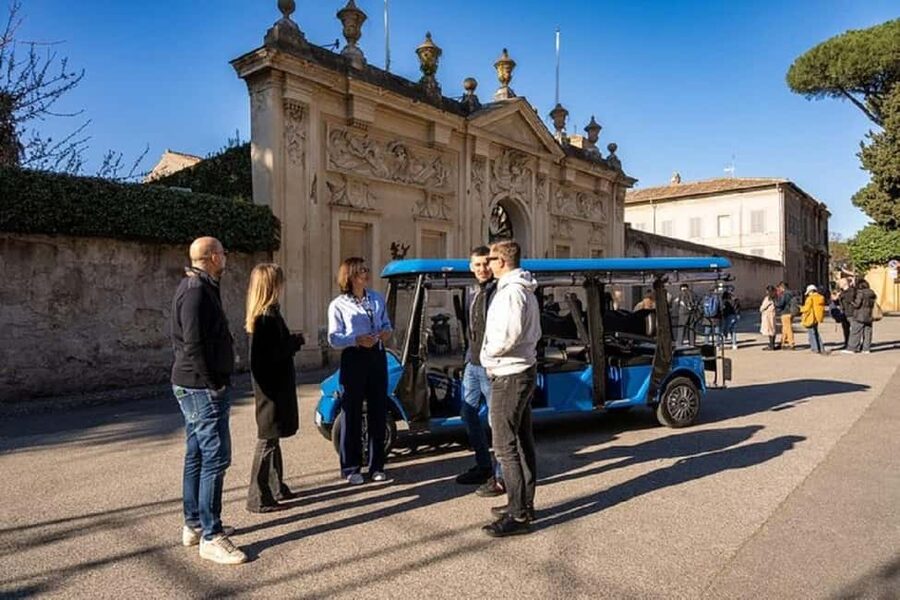
Rome on foot can be a lot: cobblestones, long sightlines, and the constant need to re-check your bearings. This tour solves a big part of that by putting you on a golf cart for most of the route, then pairing those rides with short, focused stops.
The star feature is the augmented reality app. As you approach each landmark, you’re not just looking at ruins or facades—you’re seeing 3D visuals layered onto the real location. The effect is practical: it’s easier to understand what you’re looking at when the app shows what used to be there, and when the guide connects the dots. You also get real-time GPS, so the timing feels tied to your position in Rome rather than a general audio track.
For value, I like that this tour is built around “see and understand” instead of “run and guess.” You still do sightseeing outdoors, but the explanations are guided, and the AR helps you make sense of ancient Rome fast—especially if you’re visiting for only a couple of days.
You can also read our reviews of more tours and experiences in Rome.



The Route: A Focused 2.5-Hour Loop Through Central Rome
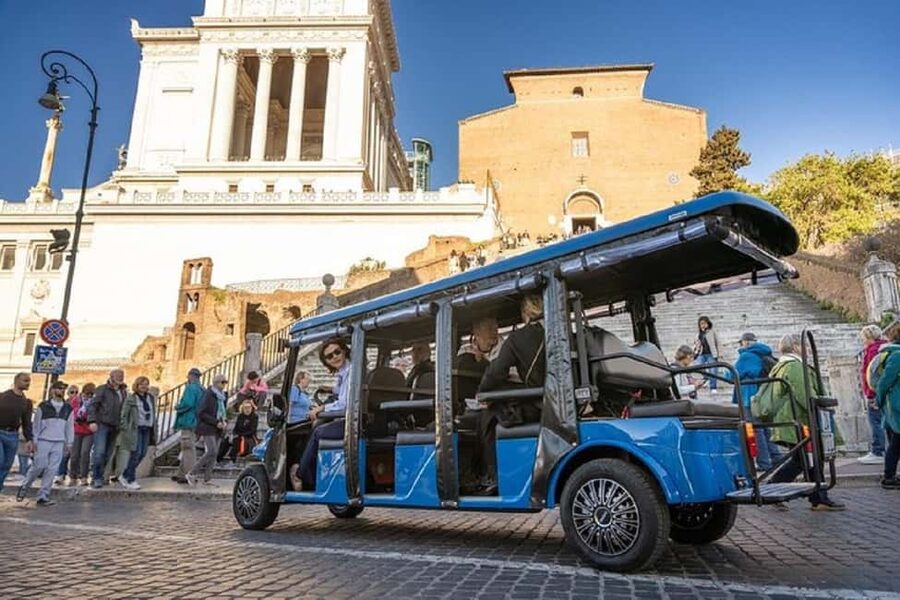
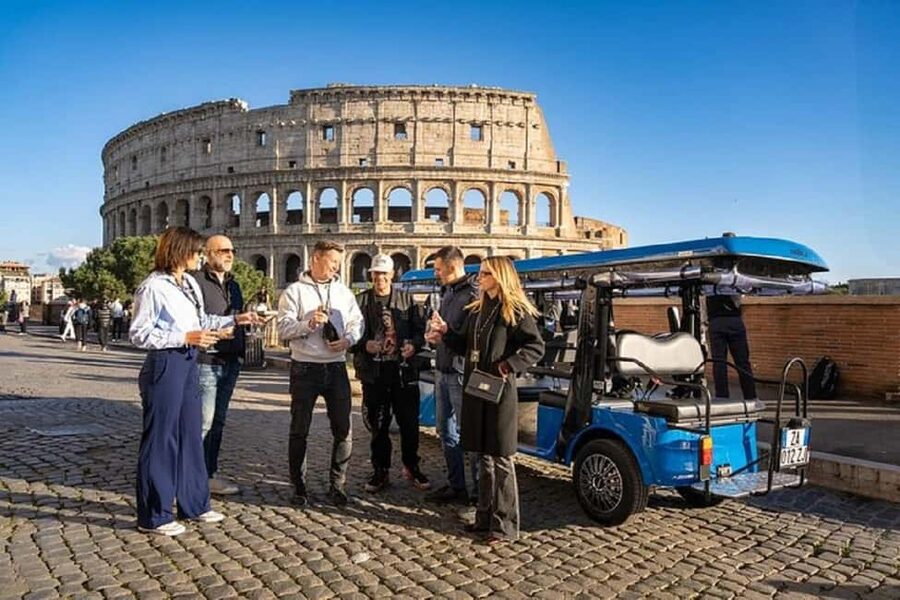
The tour runs about 2.5 hours and hits a tight cluster of major sights. You’ll start at Via del Colosseo, 31, then board a blue golf cart. Your pickup point is described as being in front of Caffe Roma, so plan to arrive a few minutes early and avoid wandering once you’re nearby.
In terms of pacing, you’ll notice the pattern: most stops include a short visit plus guided commentary, often around 10–20 minutes, with some stops specifically marked as photo stops. That structure matters. It keeps the route moving, but it also gives you enough time to look around, snap pictures, and still hear the story before you roll on.
Also, remember what’s included: a professional guide. What’s not included is entrance to monument interiors. So the best use of your time here is to treat each stop like a “guided orientation,” where the AR and the guide help you understand what you’re seeing from outside.
Colosseum: Photo Stop First, Then Guided Context
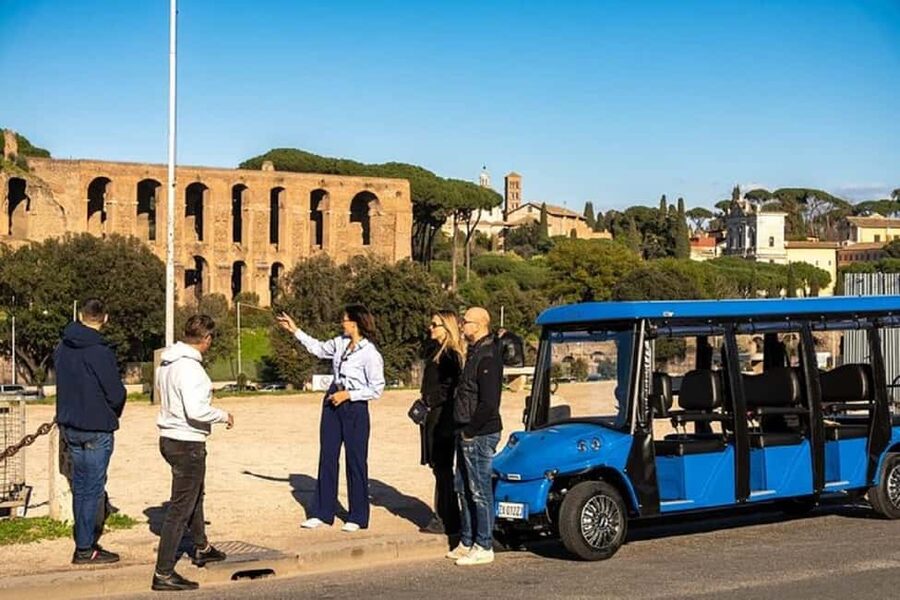
The Colosseum stop is your first big moment. You’ll get a photo stop, a visit window, and then guided tour time (about 20 minutes total for this stop).
Why this works: starting here gives your brain a foundation. The Colosseum isn’t just a giant oval of stone—it’s also a reference point for how Roman public spaces were built to impress. With the AR app, you should see visuals designed to put ancient life back into the scene. The guide’s job is to connect those visuals to what you can still recognize today.
Practical tip: stand in a spot where you can take in both the facade and the surrounding context. It’s easy to get tunnel vision on the arena, but you’ll learn more if you can track how the monument fits into the larger urban setting. And since the stop is timed, don’t spend your whole window hunting for the perfect angle—listen first, then photograph.
Circus Maximus: Big Scale, Short Stop, Smart Storytelling
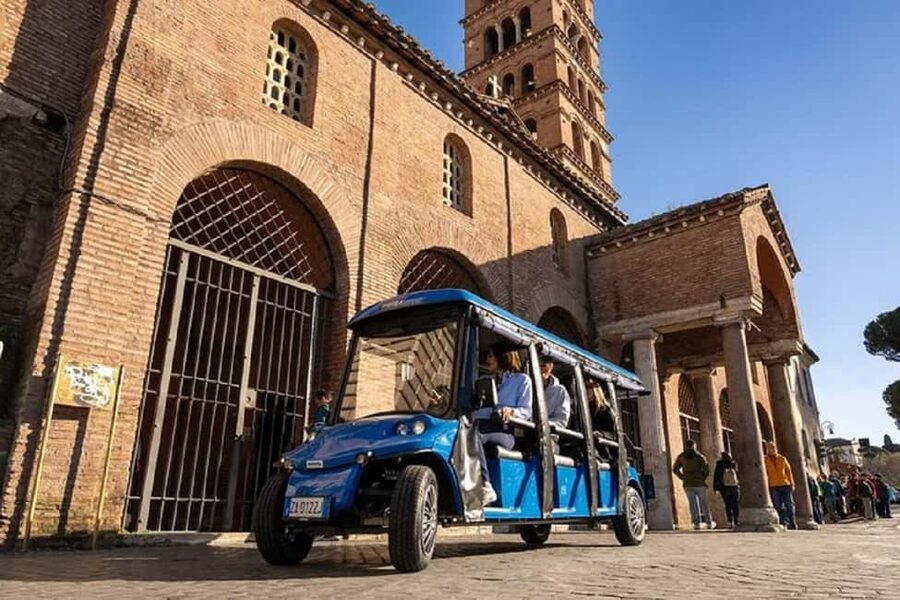
Next up is Circus Maximus, with another photo stop and about 20 minutes for the guided visit.
This is a monument type that can disappoint if you expect an intact building. Circus Maximus is more about scale and shape than surviving “rooms.” That’s where augmented reality and GPS-driven storytelling help: the app can show what the space looked like when it was functional, and the guide can help you understand how crowds moved and how the space worked.
What I like about this stop in a cart tour is timing. You see it early enough that you still have energy to absorb it, and you’re not stuck there trying to solve the site alone. You get a guided framework, then you move on while your impressions are fresh.
If you’re the kind of person who likes to compare what you see to what you imagined before a visit, this is one of the most rewarding stops on the route.
Mouth of Truth: The Kind of Stop You Don’t Want to Skip
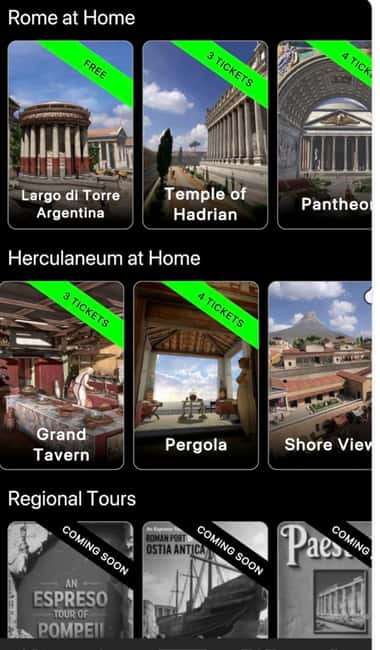
The tour hits the Mouth of Truth with about 10 minutes of guided time.
This stop is compact and very visual. Even if you’ve heard of it from pop culture, having a guide here matters because you’ll get the story and significance in context, and you’ll also get help understanding why this spot is so memorable. The AR element is likely the most fun for people who enjoy a quick “watch it become something else” moment, without needing a long museum visit.
Here’s my practical advice: keep your expectations realistic. It’s a short stop, not a long slow walk. But if you like memorable details—things you can point to later—this is exactly the kind of stop a well-timed tour should include.


Theatre of Marcellus and Piazza Venezia: Power, Politics, and Views
Two more stops come quickly in sequence: the Theatre of Marcellus (about 10 minutes) and Piazza Venezia (about 15 minutes).
These are the kind of landmarks where the guide’s narrative really makes a difference. Ancient Rome wasn’t only about entertainment venues and ruins—it was also about power, government messaging, and the way monuments signaled status. The app’s 3D visuals can help reinforce what these structures represented, while the guide adds the human story.
Piazza Venezia is also helpful for orientation. It’s a place where you can re-anchor yourself visually in Rome’s central layout. Even if you don’t go inside anything, you’ll walk away with a clearer sense of how these monuments relate to each other in a real city plan.
If you tend to lose the thread during self-guided sightseeing, this segment is one reason to pick a guided route: you’ll get the storyline laid out for you, and the app keeps the visuals aligned with where you are.
Largo di Torre Argentina: A Short Stop With Big Historical Weight
At Largo di Torre Argentina, you’ll have about 10 minutes of guided time.
This stop is different from the others because it can feel quieter and more broken-up visually. That’s part of its appeal, but it also means you’ll benefit from having someone explain what you’re seeing and why the site matters. A golf cart tour is a smart format here because it gives you a quick guided framework without requiring you to spend lots of time figuring it out on your own.
With augmented reality and GPS, this is also a place where the contrast between past and present becomes very clear. You’ll see how the location functions as a historical stage—then you’ll be back on the cart soon enough to keep the tour lively.
Piazza Navona: A Classic Photo Stop That Feels Alive
Piazza Navona gets about 20 minutes, with a photo stop and guided visit.
Even with AR in the mix, Piazza Navona can be enjoyed for what it is now: a lively public space that visually sells the idea of Rome as a city built for people to gather. The guide’s storytelling helps you connect the square’s history to the broader Roman timeline, so it doesn’t feel like a stop you’re just passing through for photos.
Practical note: squares are great for pictures but also crowded. Since the tour is structured for a limited time here, come prepared to accept “good enough” angles. Listen while you look, snap your key shots, then move on when it’s time.
For many people, this is where the tour starts to feel less like a list and more like a satisfying loop.
Pantheon: Exterior Focus, Best-Value for Understanding
Pantheon takes about 20 minutes, including photo stop and guided tour time.
This is one of the most famous buildings in Rome, and because interior access isn’t included, the value comes from what you can learn from outside: the building’s scale, proportions, and the way it dominates its surroundings. Pair that with AR visuals and your guide’s explanation, and you can walk away with a more accurate mental picture than you’d get from simply taking a landmark selfie.
If you’re thinking about this stop, consider it a “reset moment.” The Pantheon is a strong anchor for any Rome itinerary, and having a guide interpret it in context is useful—especially when you’re seeing multiple monuments in one afternoon.
You’ll also get a chance to appreciate street-level Rome around it, which is part of the experience many people miss when they only chase museum schedules.
Trevi Fountain and the Finish: See It, Then Leave With Context
The tour includes a Trevi Fountain stop (about 20 minutes) and finishes at Fontana di Trevi.
This is the big finale, and it’s also a place where AR can add a fun “time shift” even though the modern view is what everyone comes for. Since you’re finishing there, it’s a convenient way to end a sightseeing loop. You can take your final photos without the pressure of needing to return to a pickup point.
One important consideration: Trevi Fountain is popular. So treat this as your guided “arrival with meaning,” not as a quiet moment. If you want calmer photos, you may still need another visit later—but on a limited-time trip, this tour gets you there with guidance and timing that make the stop worthwhile.
Pricing: Is $105 Good Value for an AR Golf Cart Tour?
At $105 per person for about 2.5 hours, the price makes sense if you value guided interpretation and comfort over self-guided wandering.
Here’s the math that matters: you pay for a professional local guide and a transport format that lets you see many central monuments in one go. You’re also paying for the AR component, which is the real “extra” beyond a standard driving route. Since entrances inside monuments aren’t included, this isn’t meant to replace ticketed history days. It’s meant to give you a solid Rome overview quickly, with visuals and explanations that help you remember what you saw.
If you’re traveling with someone who finds lines and long walks annoying, this format can feel like good money spent. If you already have a strong plan for inside visits (Colosseum arena access, Pantheon hours, and other ticketed priorities), you can pair those with this tour for a faster, clearer understanding of what you’ll later revisit.
Who This Tour Suits Best (and Who Should Skip It)
This tour is a strong match if you:
- Want to see a wide sweep of central Rome without exhausting walking
- Like guided storytelling and short stops where someone explains what you’re seeing
- Enjoy tech-assisted history learning, especially 3D AR visuals
- Prefer small-group attention (limited to 7) over big bus chaos
You might choose something else if you:
- Want long, ticketed museum time or monument interior access
- Prefer slow wandering with no structured route
- Are looking for a single-site deep dive rather than a highlights loop
Also, if you’re a first-time Rome visitor, this tour can help you get your bearings fast. The guided order of stops gives you a mental map of where things are and how the sites relate.
Should You Book This AR Golf Cart Tour?
I’d book it if your goal is a guided, high-impact Rome overview in a short window—and you’re curious about seeing ancient scenes re-created with AR right where they belong. The small group size, the professional English guide, and the focus on meaningful stops make it feel efficient without feeling rushed.
I’d think twice if you’re mainly chasing interior access. Since this experience doesn’t include inside entries, you’ll get the best outcome by treating it as your “orientation and storytelling” layer, then using separate tickets for the sites you truly want to step into.
FAQ
How long is the Rome golf cart tour with augmented reality?
It lasts about 2.5 hours.
Where does the tour start?
The starting location is Via del Colosseo, 31, with pickup by a blue golf cart in front of Caffe Roma.
What landmarks are included on the route?
The tour route includes the Colosseum, Circus Maximus, Mouth of Truth, Theatre of Marcellus, Piazza Venezia, Largo di Torre Argentina, Piazza Navona, the Pantheon, and it finishes at Fontana di Trevi.
Is there a guided tour included?
Yes. A professional local guide is included, and the tour is in English.
Does the tour include entry into monuments?
No. Entrance in the inside of the monuments is not included.
What does the augmented reality add to the experience?
The AR app uses 3D visuals to bring ancient Rome to life, with visuals triggered as you move through the route using real-time GPS and interactive storytelling.
How big is the group?
The group is small, limited to 7 participants.
What type of transportation is used?
You’ll ride in a golf cart during the tour.
Is the tour wheelchair accessible?
Yes, it is listed as wheelchair accessible.
What is the cancellation policy?
Free cancellation is available up to 24 hours in advance for a full refund.