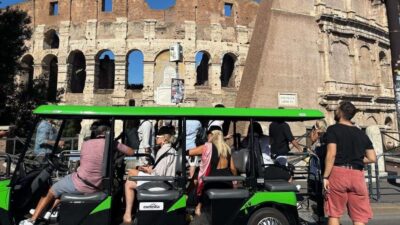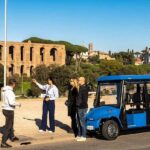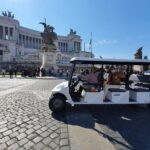
Rome by golf cart beats the long walks.
This private ride is a smart way to see Rome’s biggest landmarks with insightful commentary and a pace that feels easier on your feet, especially if your group likes lots of photo stops. It’s also set up to be flexible, because your guide plans the route with your interests in mind before you roll out.
I love the mix of major stops and short time on each one. You get included admission tickets for several iconic sights like the Colosseum, Circo Massimo, Bocca della Verità, Spanish Steps, Fontana di Trevi, and Piazza Navona. I also like the onboard comforts: water, plus coffee or tea, and a choice of ice cream or a traditional snack.
One thing to consider: the tour depends on good weather. If it’s canceled for poor conditions, you’ll need to reschedule (or get a full refund).
In This Review
- Key points to know before you book
- Why a Private Golf Cart Tour Works for Rome
- How the Route Gets Tailored at the Start
- Centro Storico to the Colosseum: What You Get in 30 Minutes
- Circo Massimo: The Chariot-Race Stadium Moment
- Bocca della Verità: The Lie-Detector Myth That Everyone Smiles About
- Piazza Venezia, Campidoglio Terrace, and Largo Argentina Pass-by
- Spanish Steps, Pantheon Timing, and the Money Math
- Trevi Fountain and Piazza Navona: Two Icons, One Smooth Finish
- What’s Included vs. What You Pay Separately
- Price and Value: Is $266.28 Per Person Worth It?
- Who This Tour Fits Best (and Who Might Be Happier Elsewhere)
- Should You Book This 3-Hour Private Golf Cart Tour?
- FAQ
- How long is the 3-hour private golf cart tour around Rome?
- Is the tour private?
- Do you get pickup in Rome?
- What language is the guide?
- Which landmarks can you visit during the tour?
- Are entrance tickets included?
- Is the Pantheon included, and do I pay extra?
- What’s included for snacks and drinks?
- What if the weather is bad?
Key points to know before you book
- Private = your own pace. Your guide maps the route at the start and can adjust with time.
- Tickets are built into the price for key stops. Multiple major landmarks include entry.
- Campidoglio Terrace is part of the loop. You get a viewpoint, not just street-level passing photos.
- You’ll cover Rome classics efficiently. Colosseum area, Trevi, Navona, and more in one outing.
- Snacks and coffee/tea keep breaks simple. No hunting for a caffeine fix mid-tour.
- Good weather is required. Plan for that and keep a little flexibility in your schedule.
Why a Private Golf Cart Tour Works for Rome
Rome is famous for big monuments and crowded streets. A golf cart tour cuts down the stress of constant moving, crossing busy roads, and waiting behind slow lines. With a private setup, you’re not stuck with a stranger’s pace or their priorities. You’re with your group, and the guide can tune the day to what you actually want to see.
This isn’t a get-on-a-cart-and-zone-out kind of tour either. The point is to get your bearings fast, then focus on the sights that matter most. You also get a family-friendly ride style, so it tends to feel calmer than the typical sprinting you see around the center.
The best value angle here is not just convenience. It’s that the tour wraps several top-name stops into about 2 to 3 hours. In a city where transportation and lines can eat your day, that timing matters.
You can also read our reviews of more private tours in Rome

How the Route Gets Tailored at the Start
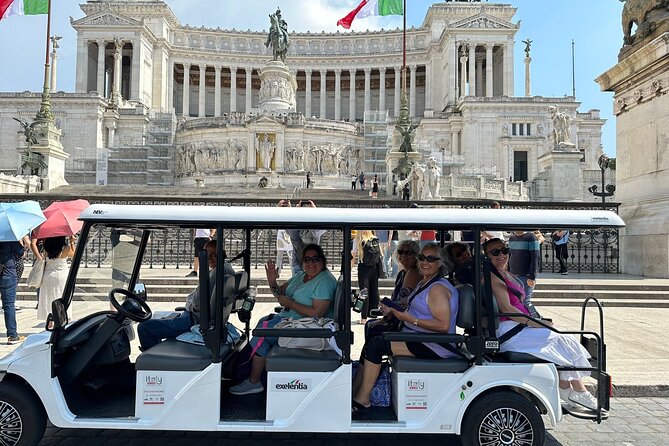
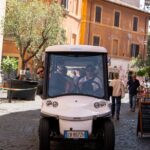
At the beginning of the tour, your guide talks through what you want to prioritize and calculates the route accordingly. That’s key. Rome has multiple “best views” and multiple “must-sees,” but they aren’t always close together in a way that makes walking feel reasonable—especially if your group has mobility limits.
The schedule is also described as flexible with time. In practice, that means you should expect your guide to make trade-offs based on timing, your energy level, and how smoothly stops go. If your group cares more about viewpoints than indoor entry, you’ll likely lean that direction. If you want classic photo landmarks in quick succession, the route can reflect that.
Also, you’ll get a mobile ticket. That sounds small, but in Rome it helps keep things moving. Less fumbling for paper on the day you arrive.
Centro Storico to the Colosseum: What You Get in 30 Minutes
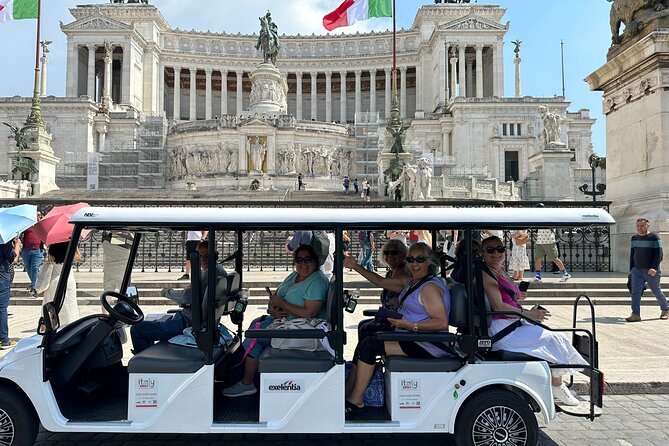
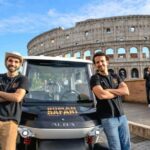
The tour’s first major anchor is the Colosseum area in the Centro Storico zone, with about 30 minutes at the Colosseum stop. This is the site that most people picture immediately: a massive Roman amphitheater that began around 72 AD under Vespasian and finished around 80 AD under Titus. The scale numbers alone help your brain understand why it was so important: roughly 188 meters long, 156 meters wide, and about 57 meters high.
You’ll get an admission ticket included for this stop, which is a big value booster. Without included entry, a tour can suddenly turn into a long list of extras. Here, at least for the Colosseum (and several other highlights), you avoid that “wait, what’s paid separately?” moment.
A practical tip: the Colosseum is a place where people either feel overwhelmed or they feel energized. The difference is usually what you look for. If you’re into architecture, focus on shape and scale. If you’re into daily life, listen closely to the guide’s commentary about what events were like and how the venue worked. Even in a shorter visit, a good guide helps the monument turn from photo backdrop into an actual story you can follow.
Circo Massimo: The Chariot-Race Stadium Moment

Next up is Circo Massimo, with around 10 minutes on-site. This is one of the big “Rome was enormous” reminders. It’s described as the largest stadium ever built and used for chariot races for thousands of years.
Why this stop is worth making: it’s not just another ruin you pose in front of. It’s tied to how Rome organized spectacle. The guide commentary helps connect the dots between the space and the show—how crowds moved, what people came for, and why chariot racing mattered so much.
In a short time window, your goal is simple: get the layout in your mind. Look at the shape, imagine the track, then compare that mental picture to what you see around you today. That’s the kind of quick “Rome-brain” shift that’s hard to get when you’re rushing between neighborhoods.
Bocca della Verità: The Lie-Detector Myth That Everyone Smiles About
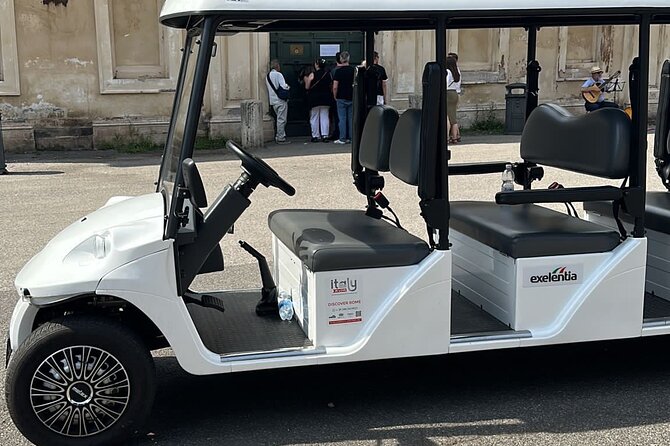
Bocca della Verità is an easy win for mood. You’ll have about 10 minutes here, and admission is included. The famous marble mouth is the one where people place their hand in to test their honesty—at least that’s how the legend played out through the Middle Ages.
Even if you approach it like a fun tradition (not a scientific test), it’s still a clever stop. It breaks the heavy monument feeling and gives you a memorable, silly photo moment. More importantly, a good guide can connect the cultural meaning to Rome’s mix of everyday life and myth.
Practical thought: lines and crowds can happen around this area, so arriving with your group timing matters. The cart tour’s advantage is that you’re not planning everything alone. Your guide keeps the day moving so you’re less stuck waiting around.
A few more Rome tours and experiences worth a look




Piazza Venezia, Campidoglio Terrace, and Largo Argentina Pass-by
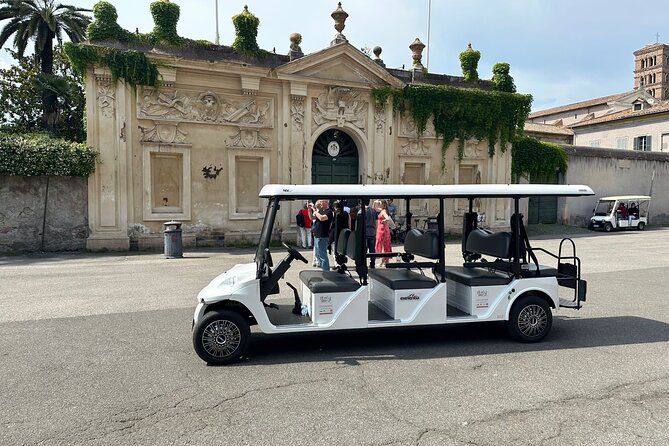
Piazza Venezia is a “stories collide here” kind of place. The tour frames it as a busy square full of accumulated history, and it’s exactly the sort of Roman junction where you can lose track fast if you’re on your own.
This stop also includes the Terrace of Campidoglio, with about 15 minutes. That matters because it’s a viewpoint, and viewpoints are what turn a city into a map in your head. From higher ground, Rome starts making geometric sense: the direction streets run, where landmarks line up, and how neighborhoods connect.
The tour can also pass by Largo Argentina, where you can see remains of Roman history. One extra note that’s worth knowing: the plan is described as including potentially a smaller amphitheater-style stop—something like a scaled-down version of the Colosseum, tied to Caesar and described as privately owned. That sort of stop is a bonus for people who like Roman details beyond the main blockbuster sites.
Spanish Steps, Pantheon Timing, and the Money Math
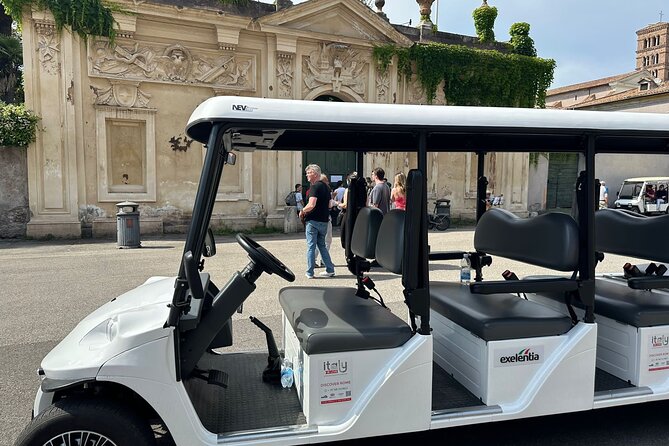
Spanish Steps is a classic stop, with about 15 minutes, and the tour includes that landmark time as part of the loop. You’ll see the broad, irregular stair design known as Scalina Spagna. It’s popular for a reason: it’s a strong example of Roman Baroque style, but it also functions like a public meeting place. You can pause, look up, and then watch the flow of people without feeling like you’re stuck in a one-photo hurry.
Then comes the Pantheon area. You’ll spend about 15 minutes here, but the tour specifically notes that you’ll see it from outside. If you want to go inside, you’ll need a separate ticket. The price listed is 5€ for adults and 3€ for those under 18.
That detail is the key to value planning. Since Pantheon entry isn’t included, decide early if it’s a “must for you.” If yes, budget for that extra cost and treat your visit inside as its own priority. If no, you can still enjoy the exterior and move on without turning the day into a long ticket line puzzle.
Either way, your guide can help you get the right angle and timing for photos, and the golf cart format keeps you from losing time hopping between distant stops.
Trevi Fountain and Piazza Navona: Two Icons, One Smooth Finish
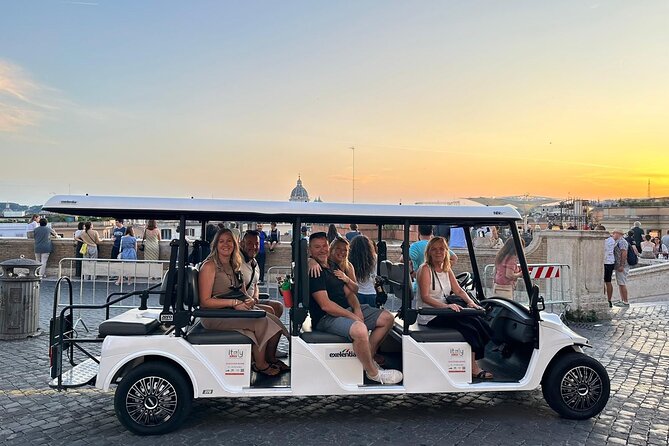
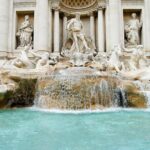
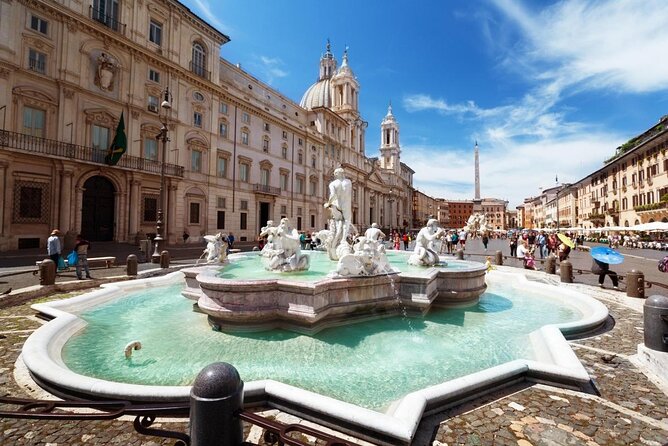
Fontana di Trevi is one of those places where arriving feels like a moment in the movie. The tour schedules about 15 minutes here and includes admission for this stop. The fountain is described with serious scale: around 26 meters high (85 feet) and about 49 meters wide. The central figure is Pietro Bracci’s Oceanus, riding a chariot pulled by sea horses and accompanied by tritons, with statues representing Abundance and Health.
If you’re short on time, you want two things: the overall composition and one close detail. Trevi is perfect for that. Take a step back first to read the full design, then move in for a detail shot. That’s how you avoid the common mistake of only photographing one portion.
Then you roll into Piazza Navona, about 15 minutes, also with included entry. This square is described as Rome’s most beautiful square and is dominated by the Fountain of the Four Rivers. It’s elliptic in shape and tied to the ancient stadium of Domitian, which helps you understand why the square feels so “staged” even today.
Piazza Navona is also a great place to end because it’s lively without needing another ticket. You can linger with gelato, soak in the atmosphere, and let the day’s stops settle in your brain.
What’s Included vs. What You Pay Separately
One of the smartest parts of this tour is how much is included up front. You get all fees and taxes, plus water, coffee and/or tea, and snacks. There’s also an ice cream taste option, and it’s your choice: ice cream, coffee, or a snack of traditional Roman foods.
Entrance fees are included for several major stops: the Colosseum, Circo Massimo, Bocca della Verità, Spanish Steps, Fontana di Trevi, and Piazza Navona. That reduces the hassle factor and keeps the day predictable.
The standout separate cost is Pantheon entry. The tour notes that the Pantheon is seen from outside, with paid entry required if you want to go inside (5€ adults, 3€ under 18).
Also, the tour mentions no locker. That means if you’re carrying bulky items, you’ll need to handle those yourself at the day’s stops.
Price and Value: Is $266.28 Per Person Worth It?
At $266.28 per person, this is not a budget activity. But it’s also not priced like a long private luxury car service. The value comes from three things: privacy, included admissions for multiple landmarks, and time efficiency in a packed city.
If you were trying to recreate this day on your own, you’d pay for transport (or time), you’d likely buy tickets individually for major sights, and you’d lose time negotiating with crowds and schedules. Here, the cost bundles the guide, the golf cart logistics, and several included entries, plus drinks and snacks.
That said, you’ll get the most value if your group will actually use the private nature. If you want a self-guided walk-through with maximum indoor time and you love moving on your own schedule, you might find other options that better fit your style. But if you want Rome’s “greatest hits” with less friction, the private golf cart approach is exactly the kind of purchase that can save both energy and planning time.
Who This Tour Fits Best (and Who Might Be Happier Elsewhere)
This tour is a strong match for anyone who wants to see headline landmarks without turning the day into a fitness test. It’s specifically positioned as family-friendly, and the private format is also ideal if your group’s needs don’t line up with a shared tour.
It’s especially useful if someone in your group has mobility concerns. The golf cart helps reduce the amount of time you spend crossing the city from one end of Rome to another. Even then, remember that the stops themselves still have time on-site, so it may not solve every walking challenge. Think of it as a way to reduce the city fatigue, not erase it.
This is also a good choice if you’re in Rome for a short stay and want a curated overview. You’ll leave with a mental map of where things sit and a stack of landmark photos you can build on with your remaining days.
Should You Book This 3-Hour Private Golf Cart Tour?
Book it if you want an efficient, low-stress way to hit Rome’s top landmarks in about 2 to 3 hours, and you like the idea of a private guide planning the route around your interests. The included tickets for major stops plus the included drinks and snacks make it easier to trust the total cost.
Consider something else if Pantheon interior access is a top priority for you and you hate paying add-ons. Also, since the tour requires good weather, build in a little flexibility in your Rome plan so you’re not stuck if conditions change.
If you’re aiming for a smart first pass at the city—then using the rest of your time for deeper exploring—this tour fits that role nicely.
FAQ
How long is the 3-hour private golf cart tour around Rome?
The tour duration is listed as about 2 to 3 hours.
Is the tour private?
Yes. It’s a private tour/activity, and only your group participates.
Do you get pickup in Rome?
Pickup is offered.
What language is the guide?
The tour is offered in English.
Which landmarks can you visit during the tour?
The stops listed include the Colosseum, Circo Massimo, Bocca della Verità, Piazza Venezia/Ancient City (with the Terrace of Campidoglio), Spanish Steps, the Pantheon (outside view), Fontana di Trevi, and Piazza Navona. The route can be adjusted based on time.
Are entrance tickets included?
Admission tickets are included for the Colosseum, Circo Massimo, Bocca della Verità, Spanish Steps, Fontana di Trevi, and Piazza Navona.
Is the Pantheon included, and do I pay extra?
You’ll see the Pantheon from the outside. If you want to visit inside, tickets are not free, and the listed cost is 5€ for adults and 3€ for under 18s.
What’s included for snacks and drinks?
The tour includes water, coffee and/or tea, and snacks. It also offers an ice cream taste with a choice of ice cream, coffee, or a traditional food snack.
What if the weather is bad?
This experience requires good weather. If it’s canceled due to poor weather, you’ll be offered a different date or a full refund.