REVIEW · ROME
Private Golf Cart Tour of the Eternal City
Book on Viator →Operated by Rome Tours · Bookable on Viator
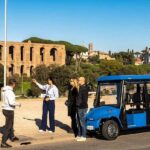
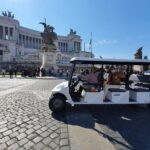
A golf cart turns Rome into a fast story. This private ride helps you skip street stress and glide along Roman backstreets while a guide ties each stop to what matters. You get a mix of big-ticket landmarks and quieter corners, with enough flexibility that the tour feels paced for real people, not a factory line.
I especially like how this style of touring keeps you comfortable while still hitting classic sights like the Pantheon and Trevi Fountain. One thing to keep in mind: the cart covers a lot, but it is still time-limited (about 2 to 3 hours), and several entry tickets are not included, so you may pay extra if you want to go inside.
In This Review
- Key things to know before you ride
- Why a private golf cart is smart in Rome
- Where you start and how the route lands at Trevi
- Arco di Costantino: a quick stop with big meaning
- Bocca della Verità and Temple of Portunus: myth beside stonework
- Teatro di Marcello: Julius Caesar to Augustus, seen in fragments
- Piazza Venezia and Largo di Torre Argentina: power and politics in one ride
- Piazza di Spagna and Trevi Fountain: classic postcard views, timed for sanity
- Pantheon: the stop that feels different from the rest
- Piazza Navona: three fountains and a front-row baroque setting
- Cost and value: when $930.85 makes sense
- What to expect from your guide and driver
- Who should book this private golf cart tour
- Should you book this private golf cart tour of Rome?
- FAQ
- How many people are in a group for this golf cart tour?
- How long is the private golf cart tour in Rome?
- What is included in the tour price?
- Are food and drinks included?
- Do I need to pay for admissions at the stops?
- Where does the tour start and end?
Key things to know before you ride
- Private for up to 6 people: one group price, so it can be good value when you travel with friends or family.
- Zippy golf cart, less traffic stress: ideal for moving quickly through narrow streets and around heavy crowds.
- Stops are short and focused: you’ll usually get about 10 minutes per listed highlight, then move on.
- Guide-led storytelling: expect history told in plain language, and the route can be adjusted to what you’ve already seen.
- Mobile ticket: you won’t need to scramble for paper.
- Ends at Piazza di Trevi: you finish right where many people want to be for a last walk or dinner.
Why a private golf cart is smart in Rome
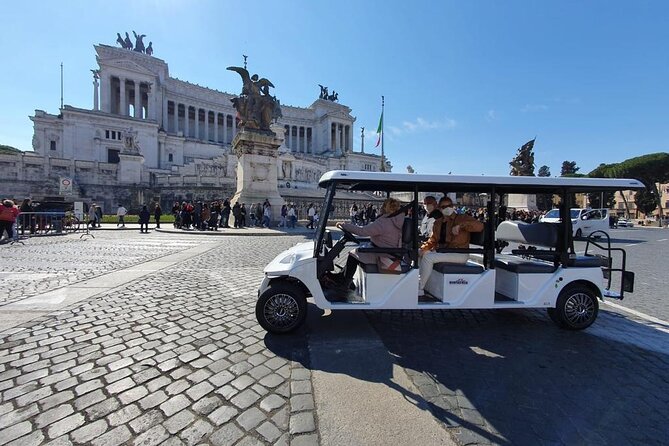
Rome is a city you can walk forever and still feel like you missed things. But walking the “greatest hits” can turn into a grind: cars, buses, crowds, and those long stretches where you’re just trying to get from one sight to the next.
This tour solves that problem with a private golf cart. Instead of battling traffic and taking 20-minute detours on foot, you cover ground fast and keep the day relaxing. It’s also a practical choice if you don’t want to spend your trip bouncing between museums and ticket lines. You get a guided route built around major landmarks, plus the chance to see Roman streets you might otherwise only notice from a taxi window.
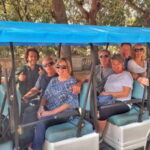
The private setup matters too. It’s not you squeezed into a larger group, and you can stay together as a unit. The experience is designed for groups of up to 6, so you can spread out your attention—whoever loves architecture can spend a minute longer looking at details, while the coin-tossers get their own moment at Trevi.
You can also read our reviews of more city tours in Rome

Where you start and how the route lands at Trevi
The tour starts at Via del Cardello, 31, 00184 Roma RM and ends at Piazza di Trevi (near Trevi Fountain, 00187 Roma RM). That end point is a big deal: you don’t have to figure out how to close the day after the tour. You’re already in the heart of the tourist zone, which makes it easier to head to dinner, gelato, or a nighttime stroll.
Because the meeting area is near public transportation, it’s also easier to connect from wherever you’re staying. And the tour uses a mobile ticket, which reduces last-minute fuss.
Time is the other big factor. The tour is listed at 2 to 3 hours. That’s enough to hit many highlights, but not enough to turn this into a slow, deep museum day. Think of it as a guided, high-impact introduction (or a smart redo) of Rome’s top sights.
Arco di Costantino: a quick stop with big meaning
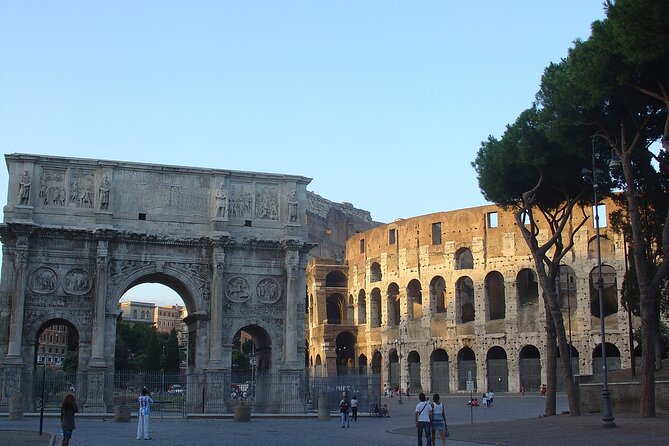
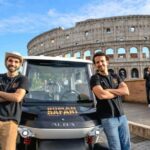
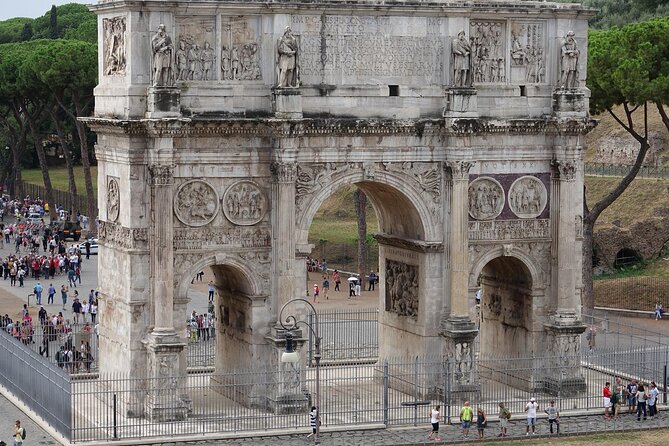
One of the route highlights is the Arch of Constantine (Arco di Costantino), right near the Colosseum area. Even if you’ve seen photos before, you’ll get a feel for how the arch fits into the Roman urban fabric.
What makes this stop worth the short time: the arch isn’t just a victory monument. It was commissioned by the Roman Senate to honor Emperor Constantine the Great, and it celebrates the victory over Maxentius at the Battle of the Milvian Bridge (AD 312). Another detail that helps the whole thing click is how the arch incorporates elements from earlier monuments. It’s a visual signpost for a turning point in Roman power and, in the same era, the growing shift toward Christianity.
If you like history you can actually point to, this is a good early anchor. It sets the tone before the tour starts moving into the more “everyday famous” sights.
Bocca della Verità and Temple of Portunus: myth beside stonework
Next up is Piazza della Bocca della Verità at Basilica di Santa Maria in Cosmedin. The star here is the Mouth of Truth, a large stone disc with a carved humanoid face and a famously open mouth. The legend says it bites the hand of people who lie, but the details behind it are debated—its original function may have been a ceremonial well cover, a decorative element, or even a manhole cover.
Even if you skip the myth-playing, it’s still a fascinating Roman object to see in person because it connects craft, superstition, and tourism all in one place.
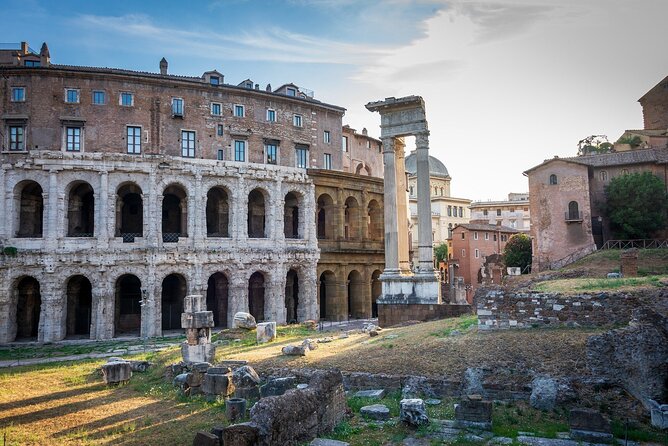
Right nearby is the Tempio di Ercole Vincitore, linked in the area description with the Temple of Portunus (also called the Temple of Fortuna Virilis). This one is quieter but very rewarding if you like architecture. It dates back to the 4th century BCE and shows a blend of styles, including Ionic elements. The columns and the way the structure has survived give you a real sense of Roman religious building design—and why it still pulls people in.
One practical note: this stretch is listed with short viewing time, and admission isn’t included. That doesn’t make it a bad stop; it just means you should treat it as a look-see moment first, and decide on entry only if you feel like it.
Teatro di Marcello: Julius Caesar to Augustus, seen in fragments
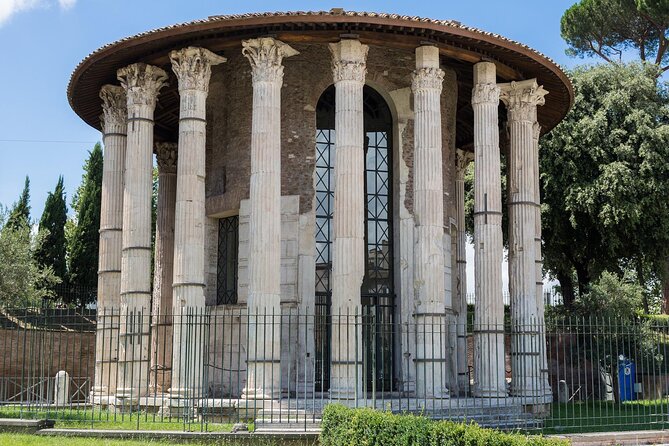
The tour also includes the Theater of Marcellus (Teatro di Marcello). This is one of those Roman sights where you can feel the layering of the city. The theater was inaugurated in 13 BCE, commissioned by Julius Caesar, and completed by Augustus in honor of his nephew Marcellus. It could seat around 20,000 people, which is mind-blowing when you’re standing close enough to see how parts of it are now wrapped into later buildings.
What I like here is how the architecture shows its age without feeling like a full ruin. You can still read the semi-circular design and understand how theater shaped social life in ancient Rome. You get context in a place that might otherwise look like just another chunk of old stone tucked into the city.
This is also a good reminder that Rome doesn’t always separate past and present. You’ll see both at once—especially at stops like this.
You can also read our reviews of more private tours in Rome

Piazza Venezia and Largo di Torre Argentina: power and politics in one ride
Later, you move through Piazza Venezia, one of the city’s main squares. This area sits at the foot of Capitoline Hill and is named for nearby Palazzo Venezia, built in the 15th century for Venetian ambassadors. The square is also tied to modern Italian identity through the Altare della Patria dedicated to Victor Emmanuel II.
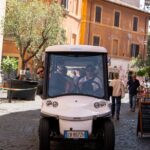
It’s a bit of a traffic hub on foot, which is exactly why this tour format helps. Being in a cart means you can take in the monumental setting without the same stress of crossing and queueing.
Then you head to Largo di Torre Argentina, an archaeological square with multiple Republican-era temples dating back to the 3rd and 2nd centuries BCE. There’s also the site of Pompey’s Theatre (55 BCE), tied to Gnaeus Pompeius Magnus. And yes, there’s the strong association with the assassination of Julius Caesar—this is believed to be where it happened.
One extra detail you’ll notice here: a cat sanctuary. The site is famous for stray cats that are cared for right in the middle of all that ancient stone. It creates a surprising, human-scale moment after the big political story.
Piazza di Spagna and Trevi Fountain: classic postcard views, timed for sanity
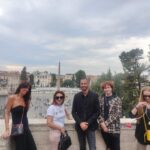
The tour includes Piazza di Spagna, home to the Spanish Steps (Trinità dei Monti sits above). This square is a magnet for both tourists and locals, and you’ll see why: the steps, the surrounding streets, and the mix of cafes and shopping makes it feel like a social hub rather than just a photo stop.
This is a good moment to stretch your legs briefly and watch street life. Because the tour is private, you don’t have to keep pace with a packed herd.
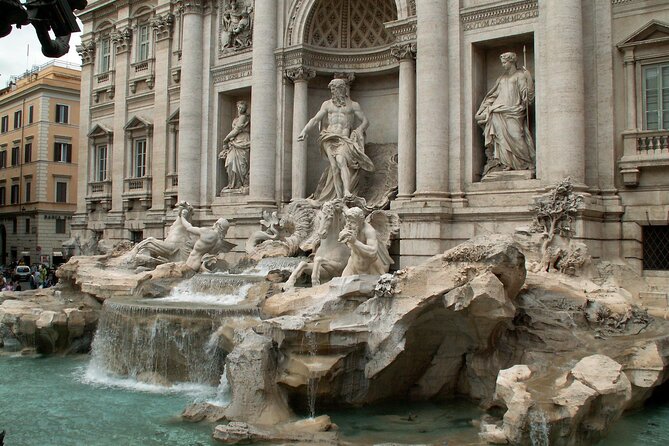
From there, you reach Fontana di Trevi. The fountain is a Baroque masterpiece completed in 1762, designed by Nicola Salvi. The composition is built around Neptune in the center, flanked by allegorical figures representing abundance and health. There’s also the coin toss legend—toss a coin and you’ll return to Rome—which is exactly the kind of cultural ritual Rome does so well.
The fountain is listed as having admission not included, which fits the reality that it’s mainly about viewing. For me, the best part is how the fountain shifts with lighting. The info here even points out it’s especially captivating when illuminated at night. So if your schedule allows, try to catch at least a glimpse after the cart tour ends—or use your evening plans to make it happen.
Pantheon: the stop that feels different from the rest
If you’re going to pick one stop that tends to anchor people’s Rome memories, it’s the Pantheon. This isn’t just a pretty exterior. The building is an engineering flex: it’s largely built with bricks and concrete, and it features a grand portico with 16 granite columns. Inside, the real star is the huge domed rotunda and the oculus, the opening at the top.
Even with limited time, it’s hard not to feel how Roman designers blended symmetry, structural technique, and scale into one clear experience. The oculus changes the light as the day moves, which is a big part of why this building has inspired others for centuries.
Admission for the Pantheon is not included in the tour package, so you’ll need to decide if you want to go inside. If it’s on your personal bucket list, I’d treat this as your main “if we’re doing entry tickets, this is the one” candidate.
Piazza Navona: three fountains and a front-row baroque setting
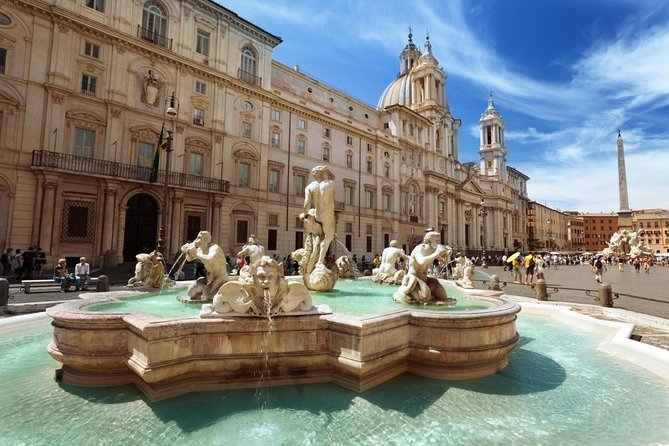
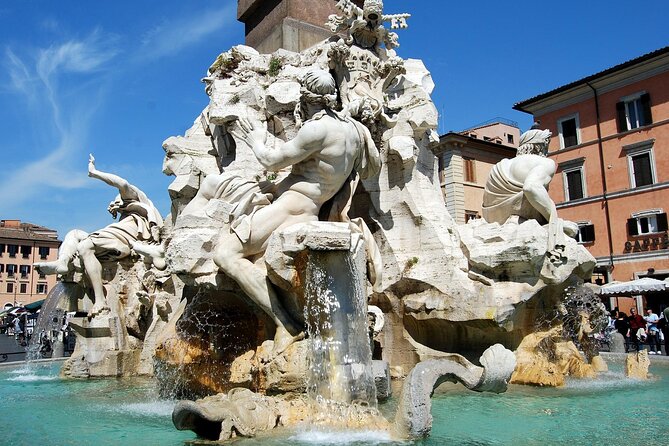
The tour finishes with Piazza Navona, one of Rome’s most striking public squares. It’s known for Baroque architecture and for its three fountains, with the centerpiece being the Fontana dei Quattro Fiumi. That fountain includes an obelisk and allegorical figures representing four major rivers of the world.
A second reason to enjoy the stop is the surrounding backdrop. The Church of Sant’Agnese in Agone, designed by Francesco Borromini, adds a dramatic visual frame to the square.
This stop is listed with admission ticket free, which means it’s built for pure sightseeing. You can sit, look up, and let the square do its job—no ticket calculations needed just to appreciate the art and architecture.
Cost and value: when $930.85 makes sense
The price is $930.85 per group, up to 6 people. The tour is listed as being commonly booked about 38 days in advance, which tells me it’s a popular “I want Rome under control” option.
Here’s the value math. If you fill the cart capacity, you’re effectively paying about $155 per person. That’s in the range where a lot of couples start thinking about private experiences, especially when you’re also buying time and stress reduction.
What’s included is helpful: transport by golf cart and a professional guide. What’s not included is also clear: food and drinks, tips, and entry/admission to Rome (with several stops specifically marked as not included).
So the biggest factor for value is your group size. If you’re only two people, your per-person cost jumps a lot. If you’re four to six, this becomes easier to justify as a real money-saver compared to spending a full day paying for separate transit, multiple timed tickets, and hours of crowd frustration.
Also think about what you’ll skip. If you were planning to do long walking routes through several heavy areas, a cart tour can be a smart way to redirect your time budget into better meals, better views, or a more relaxed evening.
What to expect from your guide and driver
A big part of why these tours get repeated praise is the way the guide handles the story and the pace. Names that show up in guide notes include Andrea and Elaine, and a driver name that appears is Alex. Another guide name that’s noted is Vino.
The practical takeaway: you should expect a guide who can tailor the route a bit based on what you’ve already seen. That kind of flexibility helps a lot in Rome, where everyone arrives with a different “I already did that” list.
If you want this tour to hit your interests, do one simple thing before you start: tell your guide what you care about most—ancient power, architecture, fountains, or just cruising with stories—and ask for the most efficient order.
Who should book this private golf cart tour
This is a strong match for people who want a guided Rome sampler without burning the day on transit. It’s also a good choice if you’re traveling in a group of up to six and want everyone to see the key sights without splitting up or negotiating pace.
It’s also listed as not suitable for babies/children. If you’re traveling with very young kids, you’ll want to rethink this format.
The other practical fit: if you want facts that land with different ages, the tour seems designed to work that way. One guide mention notes a focus on what would resonate with teenagers, which tells me the storytelling style likely doesn’t talk down—it just stays focused.
Should you book this private golf cart tour of Rome?
I’d book it if you want Rome highlights done with less friction. The golf cart format is the point: it saves energy, cuts down on dealing with traffic, and lets you spend more of your limited sightseeing time actually looking at things.
I’d also book it if you’re traveling with others who can share the group cost. At full capacity, the price feels more reasonable for what you’re getting: guide-led route planning plus transportation for a focused 2 to 3 hour run.
I’d think twice if you’re traveling solo or as a small party, or if you hate the idea of short viewing windows. This tour is built to move. If you want long, slow museum-style time, you’ll probably need to add separate stops later.
FAQ
How many people are in a group for this golf cart tour?
It’s priced per group and can host up to 6 passengers, with the tour being private for your group only.
How long is the private golf cart tour in Rome?
The duration is about 2 to 3 hours.
What is included in the tour price?
The price includes golf cart transport and a professional guide.
Are food and drinks included?
No. Food and drinks are not included.
Do I need to pay for admissions at the stops?
Admission tickets for attractions are not included. Some stops are listed as free, but several have admission not included.
Where does the tour start and end?
It starts at Via del Cardello, 31, 00184 Roma RM, Italy and ends at Piazza di Trevi, 00187 Roma RM.
Would you like me to tailor a sample 1-day plan around this tour (morning/afternoon dinner ideas) using only the stops you’ll likely prioritize?