REVIEW · LISBON
Lisbon: Street Art Tour
Book on GetYourGuide →Operated by City Guru · Bookable on GetYourGuide
Street art in Lisbon reads like street-level history. This 3-hour walk tracks major murals and street sculptures with a real guide across Lisbon neighborhoods—not a hit-and-miss photo stop.
You’ll move through Bairro Alto, Chiado, Baixa de Lisboa, Mouraria, and Graça, so you can see how street art changes with the area and the people living around it.
I love that the tour focuses on big works and the smaller pieces you’d walk past without context. I also like that the guide connects the art to Lisbon’s streets—history, daily life, and the social side of the scene.
One catch: this is active walking on uneven terrain, so it’s best if you’re comfortable with Lisbon’s hills and patchy pavement.
In This Review
- Key Points You’ll Appreciate
- Street Art Tour Lisbon: Why This Route Works
- Starting Point: Where You Meet and How to Show Up Right
- Price and Value: Is $40 Worth a 3-Hour Walk?
- How the Guide Changes the Experience (Especially in Lisbon)
- Stop-by-Stop: What You’ll See and Why Each Area Matters
- Bairro Alto (About 1 Hour): Street Art in a Social Hub
- Chiado (About 20 Minutes): Where Art Meets the City’s Older Pulse
- Baixa de Lisboa (About 20 Minutes): Art Against the City Grid
- Mouraria (About 30 Minutes): The Neighborhood Layer You Feel in the Streets
- Graça Historic District (About 1 Hour): Scale, Views, and Finish Strong
- What You’re Actually Learning to Look For
- Logistics That Make or Break the Day
- Who Should Book This Street Art Tour?
- Should You Book It?
- FAQ
- Where is the meeting point for the tour?
- How long is the Lisbon street art walking tour?
- How much does the tour cost?
- Is the tour offered in English?
- What should I bring and what terrain should I expect?
- Is this tour wheelchair accessible?
- What is included in the price?
- What is not included?
- Can I cancel or pay later?
Key Points You’ll Appreciate
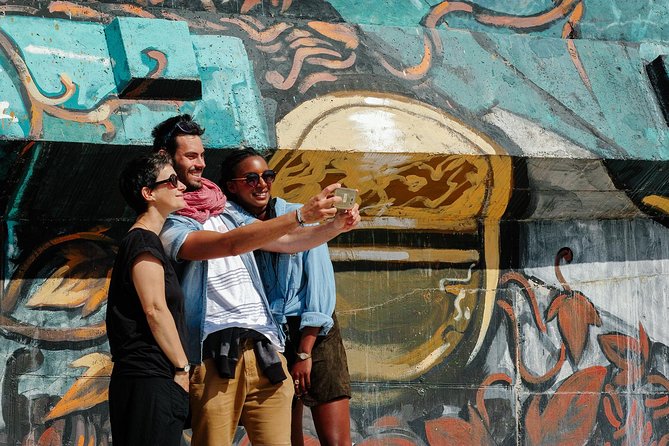
- Street-artist-led route across multiple districts that changes the art’s meaning block by block
- A mix of famous murals and tiny details you’ll start spotting after you’re done
- English live guidance with room for questions and discussion as you walk
- Smaller, calmer feel with less time standing around in crowds
- End with Graça views and landmark-scale walls rather than just finishing in a dead-end street
- Rain-friendly mindset, since the tour keeps moving even with a little weather
Street Art Tour Lisbon: Why This Route Works
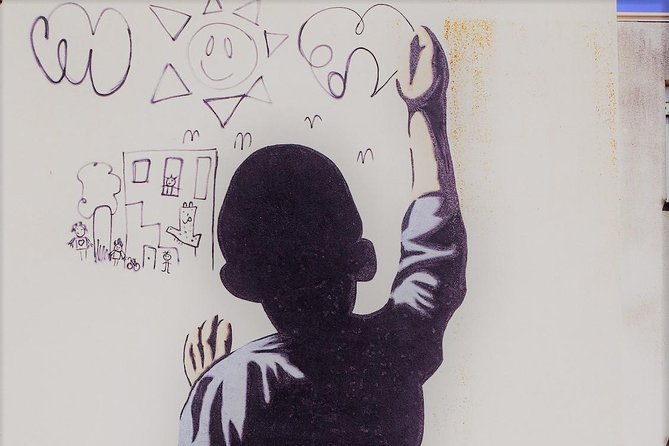
Lisbon’s street art isn’t one style pasted onto one wall. It’s local life, local tension, local pride—plus international artists working with what they find. That’s why this tour’s route matters. You’re not just seeing art; you’re seeing where it’s placed and what that placement does to the neighborhood.
What you get here is a neighborhood-to-neighborhood story. Bairro Alto brings one kind of energy, Chiado adds a different layer, Baixa keeps things tied to the city’s older fabric, Mouraria adds its own mix of characters, and Graça brings you toward the historic district feeling. In other words: the art isn’t floating in space. It’s anchored.
At $40 per person for a 3-hour walking tour, the value isn’t about a pile of included extras. It’s about paying for interpretation. Street art is easy to miss if you only look at it like decoration. With a strong guide, you learn how to read it—symbols, messages, techniques, and the way artists react to the city.
A few more Lisbon tours and experiences worth a look



Starting Point: Where You Meet and How to Show Up Right

You meet your guide at the Interpress building. The tour’s listed starting location is R. Luz Soriano 67, so aim for that area and find the guide out front.
This is a walking tour, so your first job is simple: be comfortable. The tour notes say you should wear comfortable shoes, and that you must be able to walk on uneven or unpaved terrain. Lisbon is famous for its hills and irregular streets; this tour leans into that reality instead of trying to pretend it isn’t there.
You also can’t bring oversize luggage. That’s a helpful rule because it keeps the group moving and stops the walk from turning into a logistics problem. Plan for a daypack or small bag only.
If you’re traveling with mobility limits, take the “not suitable for wheelchair users” note seriously. This tour is designed for feet, not wheel rollouts.
Price and Value: Is $40 Worth a 3-Hour Walk?
Let’s talk value without the hype.
For $40 per person you get:
- A walking tour
- A live guide (English)
No hotel pickup. No food or drinks included. So you’re paying for time with a guide who helps you see Lisbon differently. And judging by the praise across guides like Erica and Maria, and also Erika and Leith/Laith in past tours, the real product is interpretation: what the works are saying, why they’re here, and how they connect to Lisbon’s neighborhoods.
If your plan is to take one “culture-ish but fun” activity early in your trip, this can be a strong fit. Afterward, you don’t just remember a few murals—you start noticing tags, stencils, figures, and mini surprises on your own.
If you want only giant, famous walls for maximum Instagram impact, you might find the tour’s emphasis on context and smaller details takes a little longer to process. Still, that’s the point: you’re learning to read the city.
How the Guide Changes the Experience (Especially in Lisbon)
The tour is led by a street artist. That matters because street art has its own language. A guide who’s close to the scene can talk about technique, intention, and placement in a way that feels connected rather than academic.
In particular, many guides featured on this route are praised for:
- Answering lots of questions without rushing you
- Explaining the art techniques and the artist’s choices
- Linking street art to Portuguese and Lisbon history, plus the social and political side of the city
For you, the practical outcome is this: you’ll stop treating murals like random pictures. You’ll start looking for story logic. Why this symbol here? Why that style on that street? How does the neighborhood’s identity show up on the wall?
It’s also a Q-and-A friendly format. That’s not guaranteed on every tour, but the feedback here consistently highlights that the guide stays approachable and answers along the way. That turns the walk into more of a conversation than a lecture.
Stop-by-Stop: What You’ll See and Why Each Area Matters

This is the core of the tour: a structured walk across districts, with each stop giving you a different lens.





Bairro Alto (About 1 Hour): Street Art in a Social Hub
Bairro Alto is known for personality—streets that feel alive, mixed crowds, and a sense that people come here to move around. That kind of neighborhood mood tends to attract certain kinds of street art: bold visuals, messages that play to community awareness, and works that feel like they’re responding to who’s passing by.
Expect your guide to show you more than just the main mural. You’ll likely be pointed toward the smaller elements too—little additions, layers, or details that turn a flat image into a street-level narrative.
If you’re starting the tour, Bairro Alto works as your baseline. Once you learn what to look for here, you’ll spot patterns (and contrasts) as you move on.
Chiado (About 20 Minutes): Where Art Meets the City’s Older Pulse
Chiado is a shorter stop, but it has a purpose. It helps you understand how street art sits alongside more established parts of Lisbon. You’re not only learning about modern graffiti culture—you’re learning how it coexists with older streets, older rhythms, and visitors who may never look down long enough to notice.
A quick stop like this can be great if you’re tired of long walks without payoff. It keeps momentum, and it gives your brain a shift in context.
Baixa de Lisboa (About 20 Minutes): Art Against the City Grid
Baixa de Lisboa is more structured than some of the hillier neighborhoods, so street art can feel almost “friction-like.” It’s a change in the background: wider streets, classic city layout energy, and walls that stand out because the street feels more planned.
This stop is often where you start thinking about placement more clearly. Street art here doesn’t just decorate. It interrupts the expected view and gives you something to read while you’re moving through town.
Mouraria (About 30 Minutes): The Neighborhood Layer You Feel in the Streets
Mouraria is a district with its own character, and that shows up in the art. This stop gives you more time than Chiado and Baixa, which suggests your guide is using Mouraria to slow down a bit and help you understand local context—how the neighborhood’s identity influences what artists do and how residents perceive it.
This is a good area if you like art that feels grounded in daily street life. You’ll also likely pick up more of the “why this matters” connections, not just “what it looks like.”
Graça Historic District (About 1 Hour): Scale, Views, and Finish Strong
Graça is where the tour tends to land with impact. The historic district feel plus higher viewpoints makes this last stretch memorable. You’re not just collecting images—you’re taking in Lisbon from angles that make the street art feel bigger than the wall.
Finishing with longer time here is smart. It lets you shift from “learning mode” to “appreciation mode.” And you’re also more likely to notice how street art interacts with architecture—how a mural and a building team up to create a new kind of landmark.
What You’re Actually Learning to Look For
Street art can look like noise if you don’t know where to focus. The best guides train your eyes.
Here are the things you’ll likely leave able to spot:
- Technique: how artists build layers, create depth, or use style to deliver a message
- Placement logic: why a work appears in this street, not that one
- Scale choices: when artists go small for surprise and when they go big for statement
- Message context: how social and political themes show up in local culture
And there’s another real benefit: street art changes your way of walking. After a tour like this, you naturally start looking up and scanning alley corners. Lisbon is full of details, but it can be easy to miss if your attention is only on tiles and viewpoints.
Logistics That Make or Break the Day
This isn’t a “sit and watch” tour. It’s 3 hours of walking, with terrain that may be uneven or unpaved. That means your comfort matters more than on a flatter city walk.
Here’s how to set yourself up:
- Wear comfortable shoes with grip
- Keep luggage small (no oversize luggage)
- Expect some hill walking and take it at a steady pace
Also, the tour is scheduled in neighborhoods that can vary in temperature and weather exposure. One review note highlighted that the group still had a great time even with a little rain, which is a good sign that the tour isn’t a fragile plan. Bring the mindset that this is street-level and will be real.
Finally, because food and drinks aren’t included, don’t treat this as your meal plan. Plan to eat before or after so you don’t end the walk hungry and cranky.
Who Should Book This Street Art Tour?

This tour is ideal if you:
- Want Lisbon beyond postcard highlights
- Enjoy street art as culture, not just graffiti
- Like guided stories tied to neighborhoods
- Prefer a calmer experience away from massive crowds
It may not be the best choice if you:
- Need wheelchair-friendly access (it isn’t suitable for wheelchair users)
- Want a totally flat, low-effort walking experience
- Prefer art explained mainly through museums rather than street context
If you’re on a short trip and want one activity that helps you “read” the city, this is a smart early pick. It gives you a vocabulary you can use all week.
Should You Book It?
Yes—if you want to leave Lisbon with more than a few photos. This tour’s strength is the street-art storytelling tied to specific neighborhoods, led by a guide connected to the scene (names you may see include Erica, Maria, Erika, and Leith/Laith). You’re paying for interpretation and for learning what to notice next.
If you’re fit enough for hills and uneven streets, and you’re comfortable walking for 3 hours, this is a high-value way to get local context without feeling trapped in a big-group bus-and-brochure day.
If that sounds like your style, book it early in your stay so the city starts teaching you back.
FAQ
Where is the meeting point for the tour?
Meet your guide in front of the Interpress building. The tour’s listed starting location is R. Luz Soriano 67.
How long is the Lisbon street art walking tour?
The tour lasts 3 hours.
How much does the tour cost?
The price is $40 per person.
Is the tour offered in English?
Yes, the live guide speaks English.
What should I bring and what terrain should I expect?
Bring comfortable shoes. You must be able to walk on unpaved or uneven terrain.
Is this tour wheelchair accessible?
No, it is not suitable for wheelchair users.
What is included in the price?
The tour includes a walking tour and a live guide.
What is not included?
Hotel pickup and drop-off are not included, and food and drinks are not included.
Can I cancel or pay later?
You can cancel up to 24 hours in advance for a full refund. You can also reserve now and pay later.