REVIEW · ROME
Private Golf Cart Tour with Roman and Gelato (more options)
Book on GetYourGuide →Operated by Aromatour srls · Bookable on GetYourGuide
Rome from a golf cart hits different.
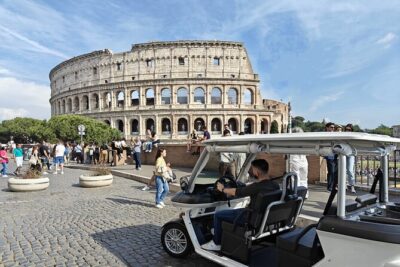
You get a private golf cart ride that covers big sights without turning your feet into sandpaper, plus native Roman guides who share street-level stories and practical food advice as you roll past the Colosseum and Trevi Fountain. The main thing to factor in is logistics: there’s no hotel pickup, you meet at Piazza della Repubblica 48, and you can’t bring luggage or large bags.
I also like that the tour is built for short stops and good photos, with time to actually sit back. The tour ends with artisanal gelato from a shop that’s been operating since 1947, and you can add options like Roman pizza or a wine-and-snack break at a panoramic orange garden.
In This Review
- Key things I’d plan around
- The value of seeing Rome fast, without doing the foot marathon
- Where you meet at Piazza della Repubblica (and why it matters)
- What native Roman guides bring to the ride
- Colosseum area: more than a photo, even when you’re outside
- Trevi Fountain and Pantheon: getting the Rome postcard without the chaos
- Aventine Hill, Mouth of Truth, and Saint Mary Major
- Orange Garden and optional wine snack: a romantic reset above the city
- Gelato stop from a shop founded in 1947
- Optional Roman pizza: where the tour can feed you, not just teach you
- Photo stops and the reality of short monument visits
- Price and value: is $88 per person fair for Rome’s big hitters?
- Who should book this cart tour, and who should skip it
- Should you book this tour?
- FAQ
- How long is the Rome golf cart tour?
- How much does the private tour cost?
- Is this a private group tour?
- Where do we meet the guide?
- Is hotel pickup included?
- What is included in the tour price?
- Is the tour wheelchair accessible, and is it suitable for everyone?
Key things I’d plan around

- Private means your pace: only your group rides, so you’re not stuck waiting on strangers.
- Native Roman guide stories: you’ll hear anecdotes and curiosities tied to what you see, not generic facts.
- Cover more ground: the golf cart helps you hit major landmarks in a 3-hour window without foot fatigue.
- Gelato stop with serious heritage: the included gelato comes from a shop established in 1947.
- Food options that fit your mood: you can choose Roman pizza, or wine plus a small Apulian snack at the orange garden.
- Route flexibility: stops can shift due to political, sporting, or musical events, with updates provided.
The value of seeing Rome fast, without doing the foot marathon
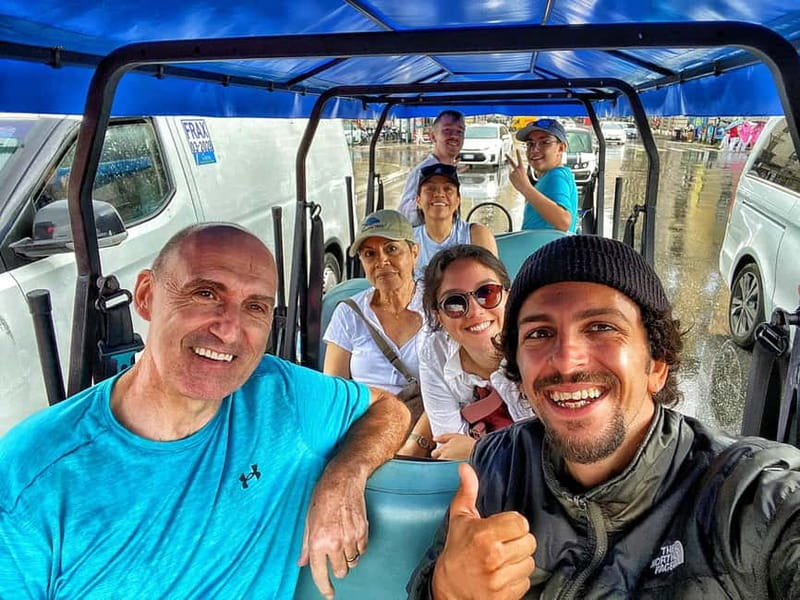
If Rome is on your list, you already know the problem: the city is huge, and the must-sees are spread out. This tour solves that with a golf cart format. You still get views and photo time, but you’re not doing constant stop-and-go walking between neighborhoods that feel like separate worlds.
In 3 hours, you’ll get a real sense of how the city is stitched together: ancient ruins, church fronts, piazzas, and streets people still live on. I like that the guide doesn’t just point things out. The tour is structured so you can listen while you move, then pause to look, take a picture, and enjoy the gelato stop.
The private aspect matters, too. In a shared tour, you often lose time to other groups moving slower, or to late arrivals. Here, your group sets the rhythm. That usually means fewer awkward delays and more time for the moments you care about most, like the Trevi Fountain vibe or getting your bearings around the Colosseum area.
You can also read our reviews of more private tours in Rome

Where you meet at Piazza della Repubblica (and why it matters)
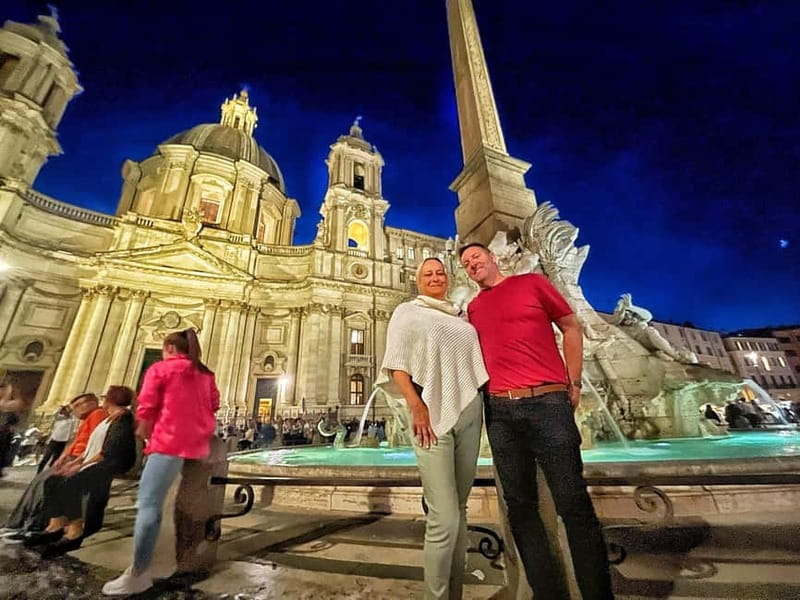
You meet your guide at Piazza della Repubblica 48, in front of Hotel Anantara. There’s no hotel pickup and drop-off, so you should plan to get yourself to the meeting point. If your hotel is far into the ZTL (restricted traffic zone) area, that can affect how easy it is to reach the start.
Also, the tour is strict about bags: no luggage or large bags are allowed. If you’re traveling with a suitcase, use a storage service before you start your day. It’s a small detail, but it can save you from the uncomfortable scramble right before boarding.
One more logistics point: the tour doesn’t include exiting the ZTL zone. Practically, that means the tour operates around getting you to the meeting point and using the route that works for the cart. If you’re planning a tight schedule on arrival day, give yourself a buffer so you’re not sprinting to Piazza della Repubblica.
What native Roman guides bring to the ride
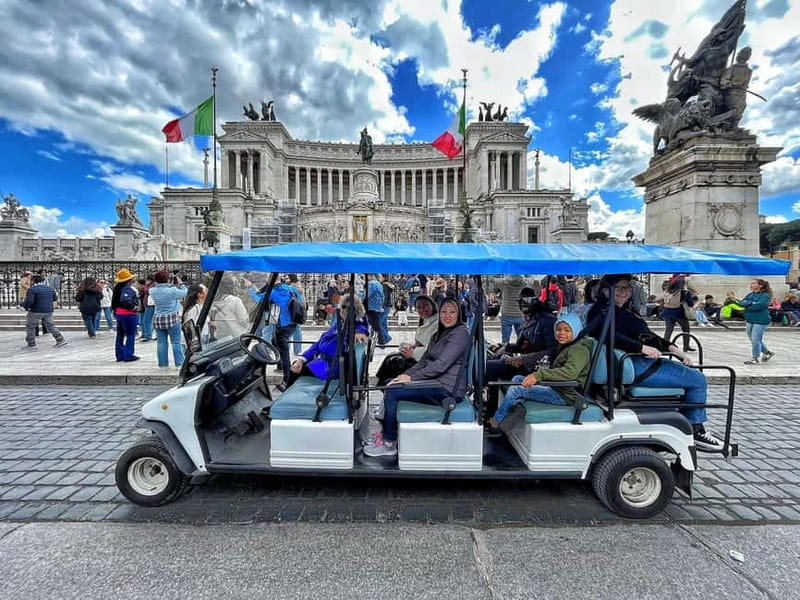
The biggest difference between a “see the sights” tour and a genuinely fun Rome tour is the guide voice. Here, the guides are native Romans, and the experience is built around anecdotes, curiosities, and cultural context tied to what you’re seeing right now.
You’ll also get restaurant advice designed to help you eat like a Roman and avoid tourist traps. That’s not just a nice extra. In Rome, where a menu can look appealing and still be a bad deal, having a local steer you can be the difference between a great meal and a disappointing one. If you’ve got only a day or two, this kind of advice is high leverage.
The guide also supports multiple languages: English, Spanish, Russian, and Italian. And at least one recent booking highlighted a guide who was very adaptable and friendly, including helping with practical planning like reserving a restaurant table. That’s a good sign: you’re not just being talked at, you’re being guided.
Colosseum area: more than a photo, even when you’re outside
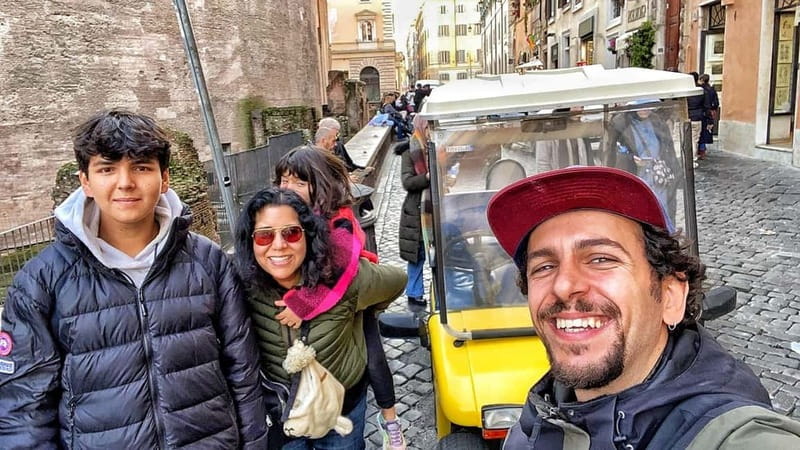
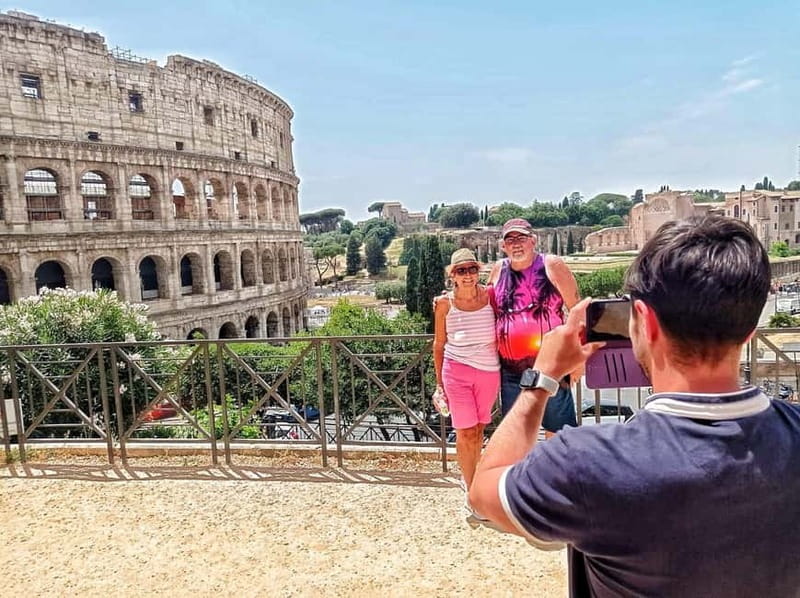
The Colosseum is obviously the headline, but what I like about this tour is that it doesn’t stop at one moment. You’ll also roll past key nearby areas connected to how Rome functioned.
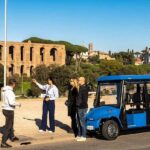
On the Colosseum side, the tour includes the Column of Trajan and Roman Forum (outside). You won’t be doing a museum-style walkthrough, but that’s not the point. The cart ride gives you the big-picture geography: where power was displayed, where crowds moved, and how the Forum complex sits in relation to the Colosseum.
You’ll also pass spots that help explain Rome’s layers:
- Suburra, an area tied to old street life and urban energy.
- Marcellus Theater, a reminder that entertainment and politics sat close together.
- Insula, noted as the first condominium in the world. Even from the outside, it’s the kind of detail that makes ancient Rome feel like a real place people lived in, not a distant textbook.
A possible drawback to flag: when you’re seeing many sights in 3 hours, you won’t get long lingering at every monument. So if your goal is deep, slow, step-by-step history with lots of time to wander, you might want a separate focused walking tour later. For orientation plus standout “wow” moments, this works.
Trevi Fountain and Pantheon: getting the Rome postcard without the chaos
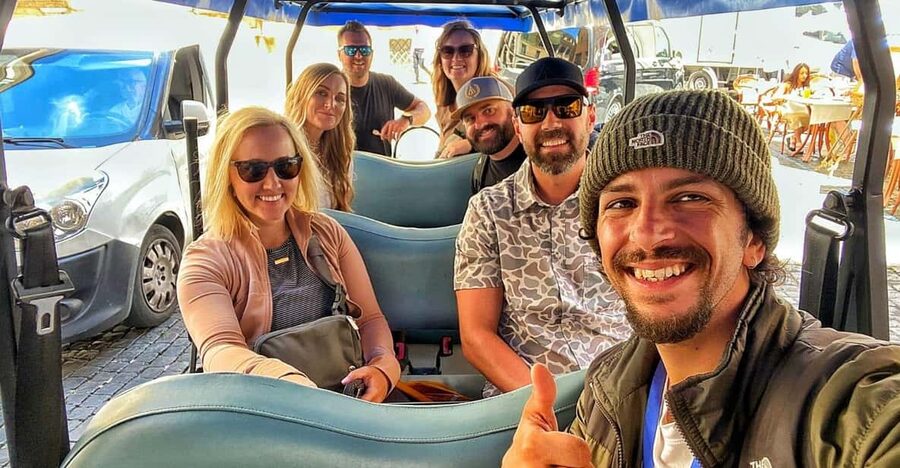
Some tours feel like cattle lines. This one is designed to keep things moving while still giving you chances to stop and look.
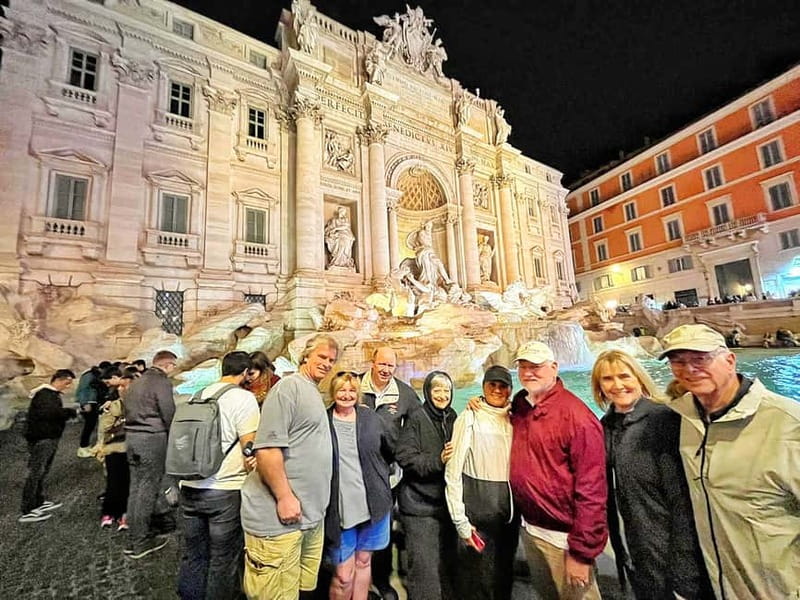
You’ll see Trevi Fountain and the Pantheon. Those are two stops where the crowd energy can overwhelm your experience if you’re there without a plan. Here, the guide helps you experience them in context, not just as a photo backdrop. You’ll likely get better timing and a more thoughtful pause, because the cart route is built around covering multiple landmarks rather than spending the entire session stuck in one bottleneck.
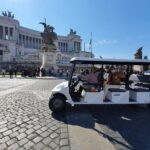
You’ll also pass Venice Square (Piazza Venezia). It’s a useful “anchor” stop because it helps you understand where monuments sit relative to major roads and viewpoints.
And if you like a story behind the stone, this route keeps delivering. The Pantheon especially tends to land differently when someone gives you a few guiding clues for what you’re looking at before you try to interpret it yourself.



Aventine Hill, Mouth of Truth, and Saint Mary Major
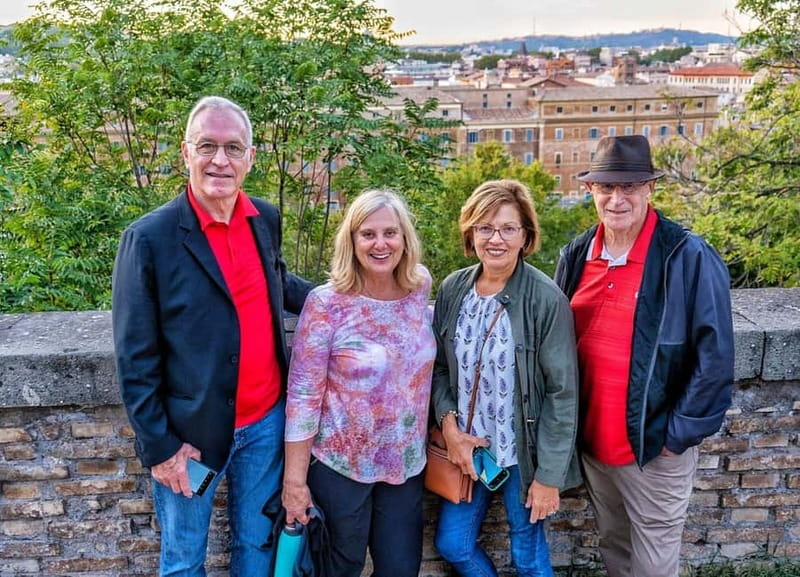
As the tour pushes away from the most obvious postcard loop, you start picking up the Rome that feels lived-in and characterful. The itinerary includes Aventin Hill, the Mouth of Truth, and Papal Basilica of Saint Mary Major.
Here’s why those stops matter for your overall Rome picture:
- Aventine Hill helps show how Rome isn’t just “one center.” It’s stacked with viewpoints, neighborhoods, and different vibes.
- Mouth of Truth gives you a fun, iconic cultural moment. It’s playful, but it also helps connect you to Roman traditions and legends you’ll hear people reference later.
- Saint Mary Major is a reminder that Rome’s story continues into later centuries. Even if your main focus is antiquity, you’ll still want to understand how religious Rome shaped the city’s landmarks.
These are the moments where you may notice the tour’s sweet spot. It’s not only about the top three monuments. It’s about giving you enough variety that you don’t leave Rome feeling like you only saw one era.
Orange Garden and optional wine snack: a romantic reset above the city
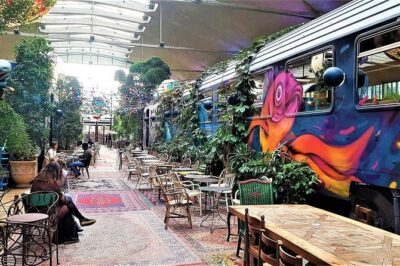
If you pick the second option, one of the best parts is the orange garden stop. This is described as a panoramic, beautiful viewpoint over Rome, and it can come with wine and a small snack from Apulia.
That matters because after you’ve been staring at stone and history, you need a palate cleanser. Even in a short tour, a viewpoint stop helps your brain connect the dots. From above, Rome stops looking like scattered monuments and starts looking like a city you can navigate.
The wine-and-snack option is also a smart way to add local flavor without turning the tour into a long lunch. You’re not stuck waiting on courses. You can take a breath, enjoy a view, and then keep rolling.
If you’re booking with friends or family, this is also a good “everyone wins” moment. Even people who aren’t history nerds usually like a viewpoint plus a drink and snack.
Gelato stop from a shop founded in 1947
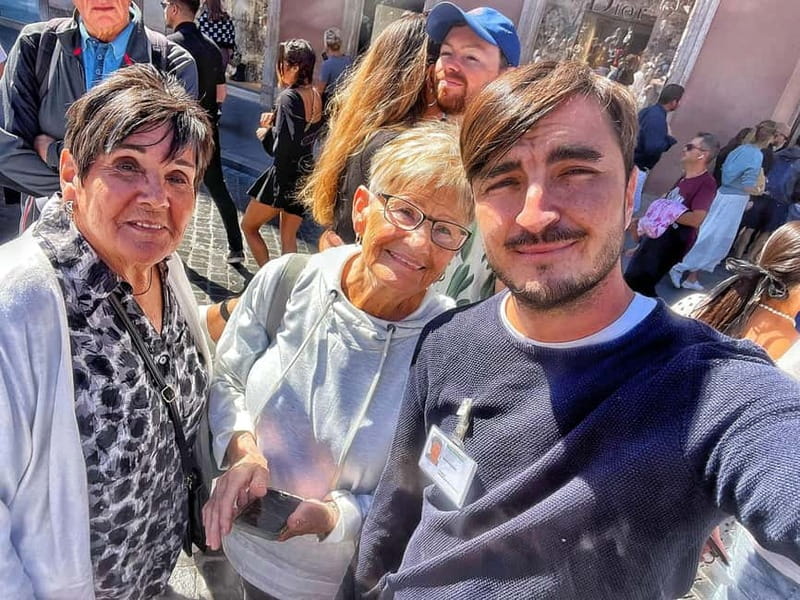
Let’s be honest: the gelato stop is not an afterthought. The tour includes a stop for homemade gelato at a shop that’s been operating since 1947. That’s the kind of detail that signals staying power. When a shop survives decades in a tourist-heavy city, it usually means locals trust it, or at least the quality holds up.
You’ll get a moment to relax, take photos, and enjoy something that feels very Roman without needing reservations. In a 3-hour tour, that timing is ideal. It lands after you’ve seen enough sights that gelato feels like a reward, not just a random “tour snack.”
If you’re the type who plans meals around where you’ll eat later, gelato can also act like a soft scout. You’ll get a sense of what you like in Italian ice cream, and then you can decide what to order for dessert tonight.
Optional Roman pizza: where the tour can feed you, not just teach you
There’s an option to taste real Roman pizza, and if you choose it, it’s a nice way to turn “food advice” into a food experience. Rome pizza is different depending on style and neighborhood, so having a guide’s recommendation and having the tour include a pizza moment can be helpful, especially if you don’t want to spend your limited time deciding where to eat.
This is also why the gelato stop plus a pizza option feels like a good package. You get two classic Roman-style bites, spread out through the day. That lets you enjoy local food without blowing your schedule.
If you’re doing multiple tours in one trip, choosing the right food option matters. Pick pizza if you want a more filling stop. Pick wine/snack at the orange garden if you want a lighter, scenic break.
Photo stops and the reality of short monument visits
This tour includes opportunities for photo stops and sightseeing breaks. That’s essential, because Rome is one of those cities where you’ll want visual proof: the angles, the façades, the way the city opens up between streets.
But you should go in with the right expectation: this is a 3-hour private tour with many stops. That means each monument is likely a “see, react, photograph” moment rather than a long wandering session.
Also, the tour notes that stops could change for political, sporting, and musical events, and there may be time changes for visits or demonstrations. That’s normal in a city where big public events happen. The key is that you’ll be notified soon, so you’re not left guessing.
If your schedule is strict (like a later dinner reservation or a timed museum ticket), you should plan for some flexibility. The tour isn’t designed to be a rigid checklist. It’s designed to keep the ride smooth and the sights meaningful.
Price and value: is $88 per person fair for Rome’s big hitters?
At $88 per person for 3 hours, the price looks pretty straightforward for what you get: a private golf cart tour, a guide, insurance, and gelato, plus restaurant advice. The cart and private format are the big drivers of the value here.
To judge if it’s worth it, ask yourself two questions:
1) Do I want to see several major landmarks without spending my day walking and commuting between far-flung areas?
2) Do I want a guide who can steer me toward better food choices once I’m done sightseeing?
If both answers are yes, this is likely a good fit. You’re paying for efficiency plus a local voice. And because it’s private, you’re not paying extra for room to wait around or lose time.
If you’re traveling with someone who can walk comfortably for long stretches and you have a strong plan for neighborhoods, you might choose a walking tour plus your own gelato stop. But if your priority is orientation and standout “Rome must-sees” without foot pain, this price tends to make sense.
Who should book this cart tour, and who should skip it
This is a smart choice if you:
- Want first-time Rome orientation with multiple landmarks in one go.
- Prefer comfort over long walking.
- Like the idea of local restaurant advice paired with seeing the city.
- Travel as a small group and want your own pace.
It may not be your best option if you:
- Have back problems.
- Are pregnant (the tour is listed as not suitable).
- Need to bring luggage or large bags (not allowed).
- Can’t easily reach the meeting point at Piazza della Repubblica 48 (no hotel pickup).
Good to know: it’s listed as wheelchair accessible, so if mobility is a concern for you, this format can still work.
Should you book this tour?
I’d book it if you want a clean, efficient way to get the big Rome sights plus a local guide who talks about more than just dates. The private golf cart, the chance to see landmarks like the Colosseum, Trevi Fountain, Pantheon, and the extra layers like Insula and Mouth of Truth make it a solid “get your bearings fast” plan.
Skip it if you want an in-depth, slow, museum-style experience at a single monument. This tour is about coverage, stories, and food moments like gelato from a 1947 shop. That’s exactly what it’s built to do.
FAQ
How long is the Rome golf cart tour?
The tour duration is 3 hours.
How much does the private tour cost?
The price is $88 per person.
Is this a private group tour?
Yes, it’s a private group tour, so only your group participates.
Where do we meet the guide?
Meet your guide in front of the Hotel Anantara at Piazza della Repubblica 48.
Is hotel pickup included?
No, hotel pickup and drop-off are not included.
What is included in the tour price?
Included are the golf cart tour, guide, insurance, gelato, and restaurant advice.
Is the tour wheelchair accessible, and is it suitable for everyone?
The tour is listed as wheelchair accessible, but it is not suitable for pregnant women or people with back problems. Luggage or large bags are also not allowed.