REVIEW · ROME
Private Tour – Doria Pamphilj Gallery
Book on Viator →Operated by Rome Guides · Bookable on Viator
Two hours, one palace, serious art. I love that this is a private tour with admission tickets included, so you focus on the paintings instead of ticket lines. You’ll also get a guide who can connect the gallery’s layout to how it was meant to be viewed, plus you’ll see standout works by artists like Raphael and Caravaggio. The main thing to consider: there’s no hotel pickup, and the visit is only about 2 hours, so plan to arrive on time at Via del Corso.
My favorite part is how the guide brings the place to life through the collection’s own logic. In the Palazzo Doria-Pamphilj, the gallery paintings are arranged across four wings following an old 18th-century document that mapped where each work belongs using symmetry (and sometimes style and subject ties). That makes the visit feel like more than a list of famous names. If you’re expecting a slow, full-day museum marathon, this may feel brisk.
In This Review
- Key Highlights You’ll Care About
- Doria-Pamphilj Gallery in Rome: the “private” advantage you’ll feel fast
- Entering the Palazzo: why the building layout matters more than you expect
- The Art Lineup: Raphael, Caravaggio, Titian, Velázquez and the rest of the heavy hitters
- How the guide changes the experience (and why Vincenzo is a name to remember)
- Timing and meeting at Via del Corso 305: keep it easy on your afternoon
- What’s included vs. not included: where the value really comes from
- Who this private Doria-Pamphilj tour is for (and who should think twice)
- Price and booking timing: what $138.16 really buys you
- Should you book this Doria-Pamphilj Gallery tour?
- FAQ
- How long is the Private Tour – Doria Pamphilj Gallery?
- Is admission included in the tour price?
- Where does the tour meet?
- Is this a private tour just for our group?
- What’s included and what’s not included?
- What is the cancellation policy?
Key Highlights You’ll Care About
- Admission tickets included, so your time stays on art
- Private English-guided experience where your guide can answer questions
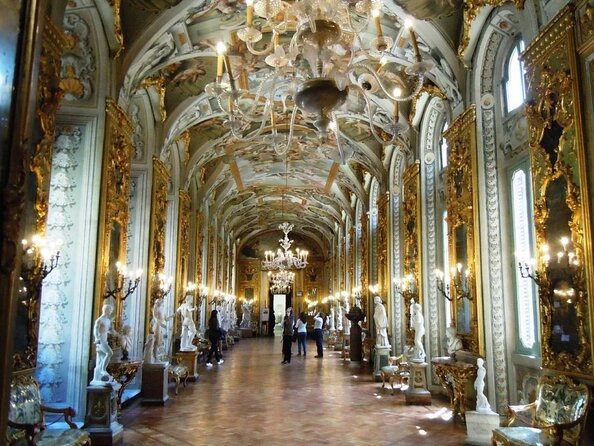
- Four-wing layout tied to an 18th-century placement plan
- Major masters on view, including Raphael, Titian, Caravaggio, and Velázquez
- Two-hour format that’s great for a focused afternoon in central Rome
- If you get Vincenzo, several visits with him are praised for energy and clear explanations
Doria-Pamphilj Gallery in Rome: the “private” advantage you’ll feel fast
Rome has lots of art, but most gallery tours turn into a race. This one doesn’t. You get a private group setting, which means your guide can slow down for the questions you actually have, not the questions that fit a set script. The stop is compact and timed—about 2 hours—so it works well when you want something meaningful without losing the rest of your day to transit and museum logistics.
Another practical win: the cost includes admission. That matters because you don’t have to budget your attention for ticketing steps or scramble to match entry windows. You’re already inside the flow of the visit with your guide.
One more detail I like for planning: the tour is offered in English. So if you’ve got art history questions you want answered clearly, you’re not guessing.
You can also read our reviews of more private tours in Rome


Entering the Palazzo: why the building layout matters more than you expect
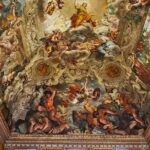
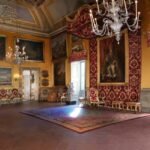
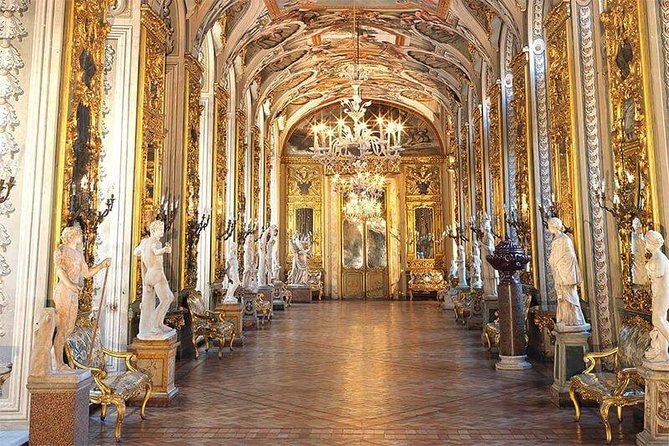
The Doria-Pamphilj Gallery isn’t just a room with paintings. It’s housed in the Palazzo Doria-Pamphilj, a building constructed from the mid-15th century into the early 18th century. That span shows up in the experience: you’re walking through a residence-turned-gallery space that feels intentionally designed, not tacked on.
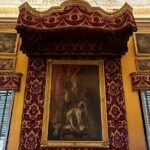
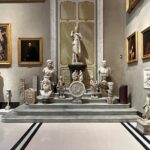
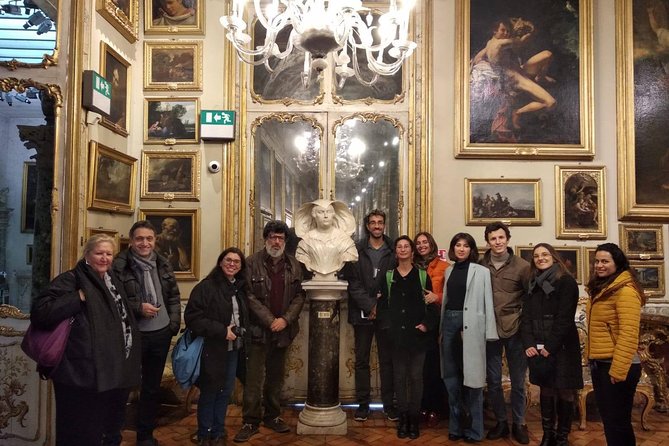
The paintings are distributed across four wings, and what makes this tour special is that the guide doesn’t only point at masterpieces. They explain the gallery’s founding documents and the placement logic. An 18th-century document even specified where each work was placed, using a criterion of symmetry, and sometimes grouping by typological or stylistic affinity.
Translation for your visit: you’ll understand why certain works sit where they do. You’re not just consuming images; you’re seeing how the collection was curated as a designed whole. That’s the kind of context that makes a museum feel more like a story you can follow.
The Art Lineup: Raphael, Caravaggio, Titian, Velázquez and the rest of the heavy hitters
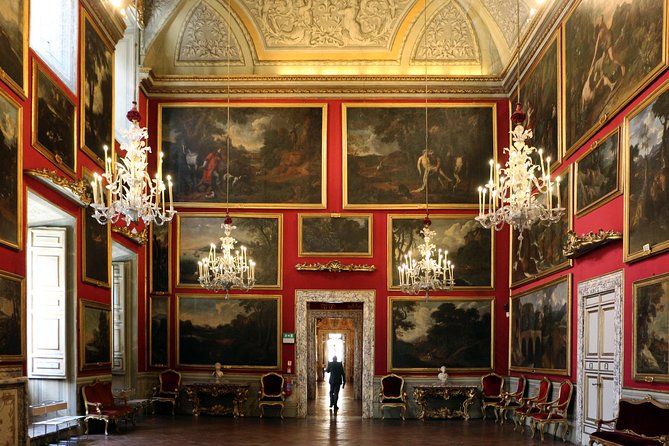
This tour is built around a set list of major works. Even if you only recognize half the artists, the range is what makes it satisfying: Renaissance portraiture, dramatic Baroque storytelling, and grand painting traditions that help you compare styles in a single afternoon.
Here are some of the works you’ll see:
- Raphael: Portrait of Andrea Navagero
- Titian: Salome with the head of St. John the Baptist
- Domenichino: Susan and the old men
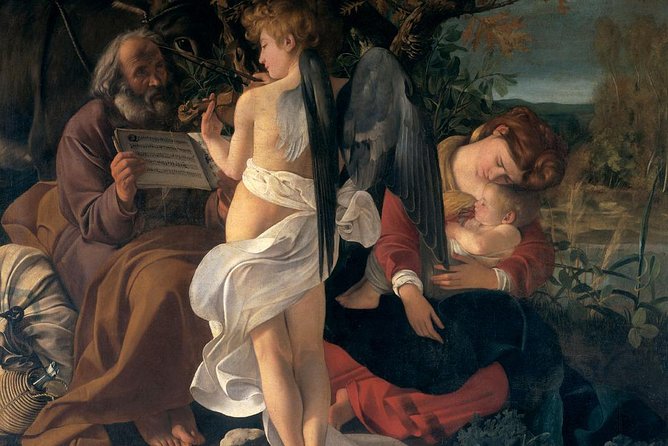
- Caravaggio: Rest during the flight to Egypt, plus works listed as St. John the Baptist and Magdalene
- Annibale e Ludovico Carracci: Satyr and shepherd, Madonna with the Infant, and St. Sebastian
- Mattia Preti: Magdalene repentant, St. John the Baptist, and Christ conducted on the Scala Santa
- Guercino: Erminia finds Tancred wounded, Allegory of springtime, Return of the prodigal son, and St. Joseph
- Guido Reni: Madonna adoring the Infant, St. Peter repentant, and Sacred and profane love
- Velázquez: portrait of Innocent the Tenth
A smart way to approach this as a viewer: pick two artists and compare what you notice in their storytelling. Caravaggio, for example, is listed with multiple works here, so you can focus your attention on how those scenes are staged and lit in different subjects. Then use Titian as your counterpoint. If Raphael is what hooks you, spend extra time with the Andrea Navagero portrait and look for how portrait painting can be both formal and expressive.
I also appreciate that the lineup doesn’t stick to one era. You’ll get a quick feel for how tastes and techniques shifted as the collection grew and how the Doria-Pamphilj holdings reflect those changes.
How the guide changes the experience (and why Vincenzo is a name to remember)
With a private tour, the guide isn’t a background voice. They’re part of what you’re actually buying. The tour focuses on the gallery’s founding documents and how the artworks were positioned based on those older plans. That’s exactly the kind of detail that turns a glance at famous paintings into a visit that makes sense.
In the feedback, Vincenzo comes up more than once, and the praise has a consistent theme: he’s energetic, able to answer questions, and he can make the paintings feel like live conversations rather than textbook entries. One note I found especially useful: there was an instance where the meeting guidance went off track, and the guide still managed to meet the group quickly once contacted. That tells me he’s engaged and responsive, not someone who just shows up, gestures, and disappears.
No matter who your guide is, the best move is simple: ask at least one question about why a particular work is positioned where it is. With this tour, that question actually matches what the guide is set up to explain.
Timing and meeting at Via del Corso 305: keep it easy on your afternoon
This tour starts at 2:00 pm and meets at Galleria Doria Pamphilj, Via del Corso 305, 00186 Roma RM, Italy. It ends back at the meeting point.
Because there’s no hotel pickup and no private transportation, your job is just to get yourself there. I recommend you give yourself a little buffer. Central Rome streets can be slow, and you don’t want to cut it close before an art-heavy visit.
Good news: it’s listed as near public transportation, so you’re not forced into a complicated routing plan. If you’re touring in the afternoon, pair this with nearby sightseeing in the same general area to cut down on cross-city travel.
Also, the tour is private for your group only. That means your schedule is yours, but it also means you shouldn’t assume there’s someone else to catch you if you’re late.
You can also read our reviews of more museum experiences in Rome


What’s included vs. not included: where the value really comes from
Here’s the value equation in plain terms.
Included:
- admission tickets
- a local/professional guide
- private tour for your group
Not included:
- hotel pickup and drop-off
- private transportation
That mix is why the price feels fair for what you get. You’re paying for expert guidance plus access, and the time is protected. You’re not paying separately for admission on top of the tour cost, and you’re not paying for a car service you may not even need in central Rome.
If you’re comparing options, count apples-to-apples: a guided experience that includes entry usually ends up being a better deal than one that makes you buy admission separately, especially in busy museums.
Who this private Doria-Pamphilj tour is for (and who should think twice)
This is a strong fit if you want:
- a focused, 2-hour art outing that still covers major names
- a guide-led explanation tied to how the collection was organized
- an experience in English with room for questions
- a private format that feels calmer than a large group scramble
It’s less ideal if you:
- want a slow, all-day museum experience
- hate punctual meet-ups
- rely on hotel pickup as part of your usual travel routine
Accessibility is described as Most travelers can participate. Still, if you have mobility needs, it’s smart to think about how palace interiors can be on your feet for a full visit.
Price and booking timing: what $138.16 really buys you
The price is $138.16 per person for the private tour, lasting around 2 hours. That’s not a bargain-basement museum outing, so it helps to be clear on what you’re buying.
You’re buying:
- your own private group experience
- admission tickets included
- professional guidance in English
- a structured look at major works with context from founding documents and layout rules
One more clue for your planning: this tour is booked about 79 days in advance on average. That’s a sign it’s popular in the months people tend to travel. If your dates are fixed, don’t wait until the last minute.
Should you book this Doria-Pamphilj Gallery tour?
I’d book it if you want a high-impact Rome art afternoon with admission included and a guide who connects the art to how it was arranged. The four-wing layout and the explanation tied to old documents give you something more than a highlight walk.
I would pause if you’re the type who needs a long sit-down museum pace, or if you know you’ll struggle to make a specific meet time without pickup help. In that case, consider a longer group option or plan a do-it-yourself gallery visit where you can move at your own speed.
Bottom line: if you like art that comes with structure—how and why paintings are placed—this private Doria-Pamphilj experience is a smart use of your time.
FAQ
How long is the Private Tour – Doria Pamphilj Gallery?
It lasts about 2 hours.
Is admission included in the tour price?
Yes. Admission tickets are included.
Where does the tour meet?
The meeting point is Galleria Doria Pamphilj, Via del Corso 305, 00186 Roma RM, Italy.
Is this a private tour just for our group?
Yes. Only your group participates.
What’s included and what’s not included?
Included: tickets, a local guide, and a private professional guided tour. Not included: hotel pickup and drop-off, and private transportation.
What is the cancellation policy?
You can cancel for a full refund up to 24 hours before the experience starts. Changes within 24 hours of start time aren’t accepted, and refunds aren’t available if you cancel less than 24 hours before.