REVIEW · MADRID
Madrid Street Art Tour (Malasaña Chueca Gran Via & Lavapies)
Book on GetYourGuide →Operated by Wolves Tours · Bookable on GetYourGuide
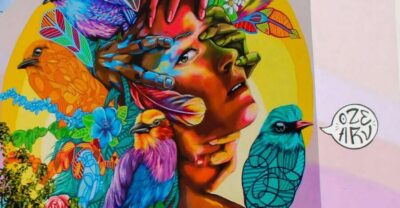
Madrid street art is everywhere here. This tour strings it into a logical route, from graffiti roots to the current look of the walls in Madrid. I like that it mixes major landmarks with small streets, so you don’t just see art—you get the neighborhood context.
I also really enjoy the way the guide connects the dots between styles and artists. You’ll stop for photos, spot named creators like MUELLE, and learn the basics of how graffiti started and why it spread. The pacing feels relaxed, with time built in for looking closely.
One thing to consider: it’s still a walking tour. If you don’t walk often, wear supportive shoes and expect a decent amount of street-level wandering for two hours.
In This Review
- Key highlights you’ll care about
- Meeting at Way Hostel: Starting in the right neighborhood
- Graffiti roots first: Why the tour starts with history
- Photo stops and the MUELLE signature: Learning to read a wall
- Puerta del Sol and Gran Vía: Big Madrid energy, street-level details
- Malasaña: Graffiti, stickers, and Spanish street culture in motion
- Chueca’s color and street scenes: Where art meets neighborhood identity
- Lavapiés: The cultural heart through murals, mosaics, and sculpture
- The guide experience: When a friendly pro makes the walls click
- Price and value: $1.77 and what you actually pay for
- Timing, walking comfort, and who should book
- Should you book the Madrid Street Art Tour?
- FAQ
- What’s the duration of the Madrid Street Art Tour?
- Is the tour really free?
- Where does the tour start?
- Where does the tour end?
- What language is the tour guide?
- What should I bring?
- What stops will we cover?
- Is anything included like museum tickets or entry fees?
- Is the tour accessible for wheelchairs?
- Can I cancel for a refund?
Key highlights you’ll care about
- Graffiti origins, explained simply before you start seeing walls up close
- Malasaña + Chueca for that colorful, local, after-dark energy
- Gran Vía and Puerta del Sol as big-city backdrops for smaller street scenes
- Named artists and styles like MUELLE, paste-ups, mosaics, and urban sculpture
- Photo stops timed so you can actually frame murals instead of sprinting past them
- English guide with a route that’s easy to follow on foot
Meeting at Way Hostel: Starting in the right neighborhood
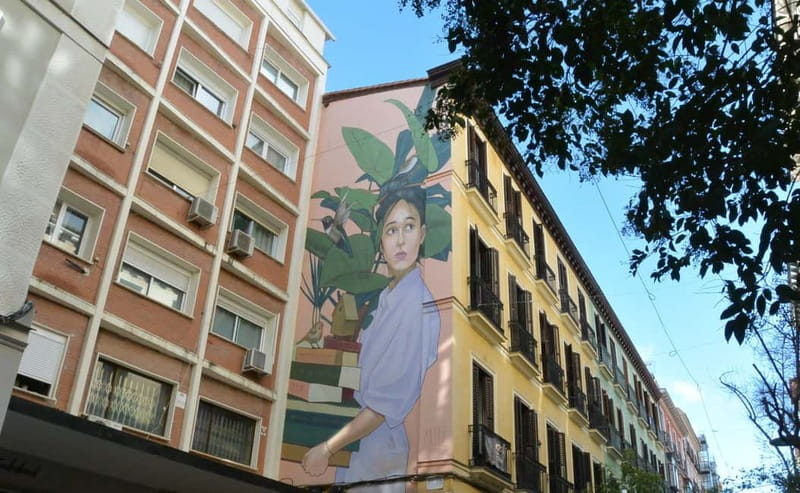
The tour kicks off at Way Hostel Madrid, with the guide waiting at the door and the group. That matters more than you’d think. When you start in a clear meeting spot, you waste less time figuring things out and more time looking at the real subject: the walls.
From there, you begin with short walking segments and early photo stops. This is a good setup for first-timers, because street art can feel random if you’re not sure what you’re looking at. The guide helps you notice patterns—tags vs. murals, stickers vs. paste-ups, and how artists use the space they’re given.
You’ll also get a sense of how the tour thinks about Madrid. It’s not only about spotting art. It’s about understanding why those neighborhoods look the way they do, and how creative expression fits into everyday life.
Practical note: the tour is on foot for about 2 hours, so comfort beats fashion. Bring a camera, and wear clothes you can walk in without constantly adjusting.
A few more Madrid tours and experiences worth a look

Graffiti roots first: Why the tour starts with history
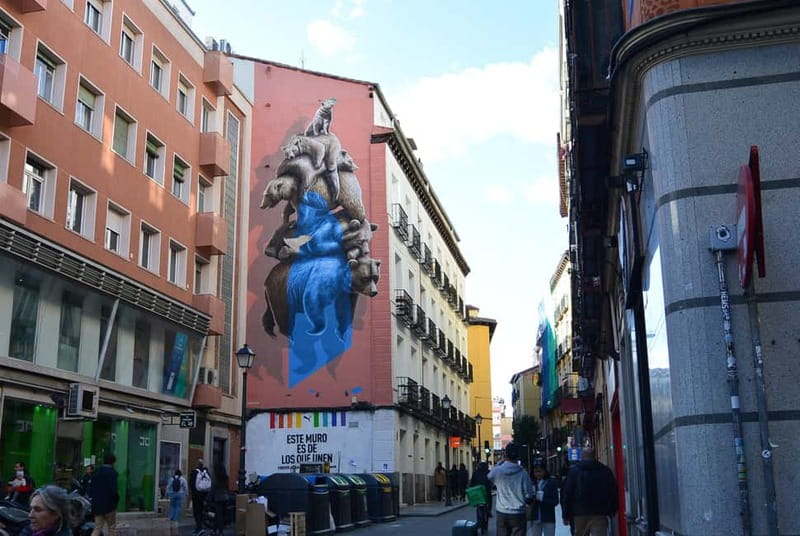
One of the tour’s smartest choices is the order of operations. Before you hit the heavier mural zones, you hear a brief history of how graffiti began and spread. It’s not an academic lecture, and it’s not about memorizing dates. It’s about giving you a mental map so the art makes sense when you see it.
As you move through Madrid’s street scene, the guide frames graffiti as a communication tool—something public, fast, and often tied to identity. That context makes the later stops more meaningful. Instead of seeing graffiti as random scribbles, you start noticing the message, the style, and the intent behind the work.
You’ll also hear about contemporary trends using a mix of national and international artists. That matters because street art isn’t one uniform style. The tour points out how different aesthetic codes can show up on the same street, and how some works reference past practices while still feeling current.
If you’re coming with zero background, this history primer makes the rest of the tour easier to follow. If you already like street art, it gives you a cleaner way to compare styles as you go.
Photo stops and the MUELLE signature: Learning to read a wall
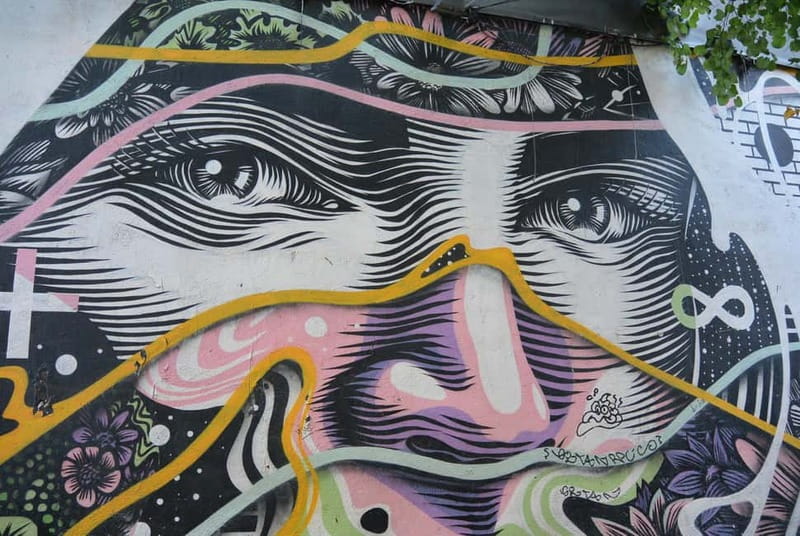
Early on, you’ll have several quick photo stops. This is where the tour helps you slow down. Street art can look best when you pause long enough to notice edges, layers, lettering styles, and how pieces interact with the building around them.
A standout mention is the protected signature of Madrid artist MUELLE. When you hear about a work being protected, it changes how you perceive the city’s “rules.” It’s a reminder that street art isn’t always temporary vandalism—it can also be treated as part of cultural heritage in certain contexts.
You’ll also get a sense of the range of techniques you’re about to see: paste-ups, urban sculpture, and mosaic-like work by local artists. The guide’s job here is to point out what each technique usually communicates and how it fits the neighborhood’s visual language.
If you like photography, this portion of the tour is valuable because it trains you to shoot thoughtfully. You’ll be looking for details instead of only wide angles.
Puerta del Sol and Gran Vía: Big Madrid energy, street-level details
After the warm-up, you’ll reach Puerta del Sol and then move to Gran Vía, often described as the Spanish Broadway. These are huge, high-visibility places. That’s exactly why they work well on a street art route.
In a busy area, street art becomes a contrast game. You’re surrounded by classic city landmarks and modern foot traffic, but the tour keeps nudging you toward smaller details—how murals sit alongside everyday life, and how artists use prime locations to grab attention without needing permission.
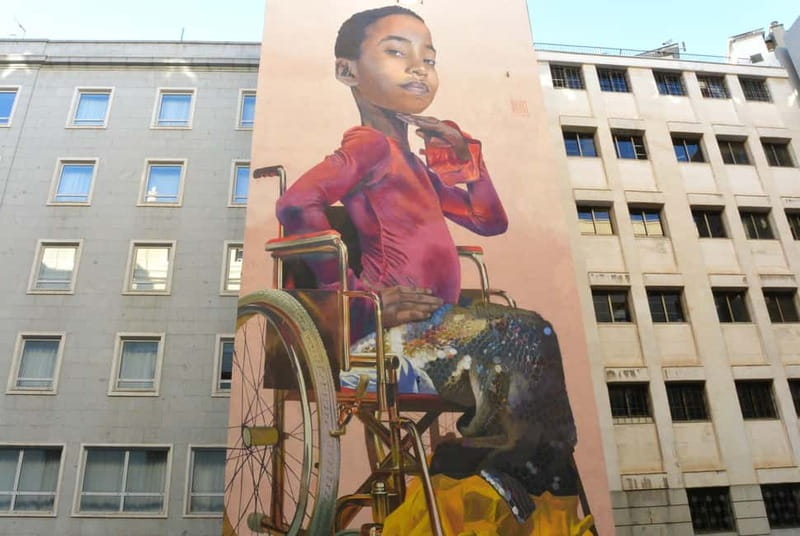
At Gran Vía, the scale changes. Even if you’ve seen murals before, you’ll likely notice how street art can feel different when it’s framed by tall buildings and long sight lines. It’s a reminder that location affects impact: a piece that looks fine on a side street can hit harder when it’s placed in a visual corridor.
The tour doesn’t ask you to ignore the famous streets. It uses them as context. Once you’ve got that frame in your head, you start spotting street art like it belongs to the city’s bigger story, not just the margins.
Malasaña: Graffiti, stickers, and Spanish street culture in motion
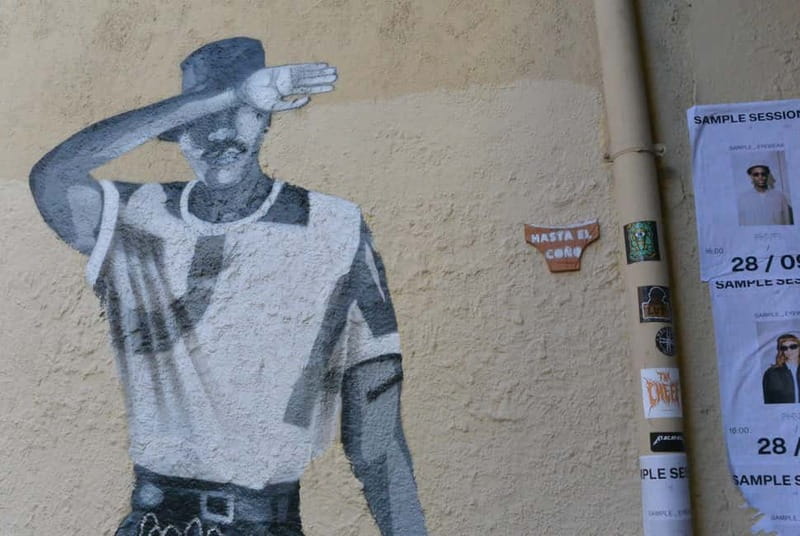
Malasaña gets a long stop, about half an hour, and for a reason. This is one of Madrid’s most “you have to be here” neighborhoods, full of small streets where creative expression feels woven into daily life.
In Malasaña, you’ll be focused on fresh street art and the blend of styles that show up through different artists and techniques. The tour highlights paste-ups and other forms you might miss if you’re only chasing big murals. That’s a big win if you like discovering art that feels personal and local rather than staged.
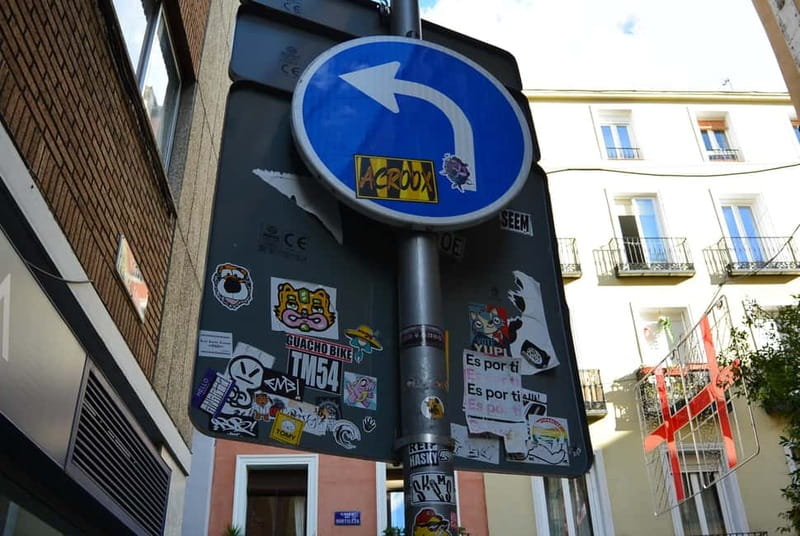
This is also a good zone for photos because you can find layers. Some walls have a clean mural look; others feel like they’ve accumulated years of stickers and tags. The guide helps you recognize what’s deliberate design and what’s more spontaneous street writing.
If you want the tour to feel authentic, Malasaña is where it starts feeling less like a sightseeing route and more like walking through a living gallery.


Chueca’s color and street scenes: Where art meets neighborhood identity
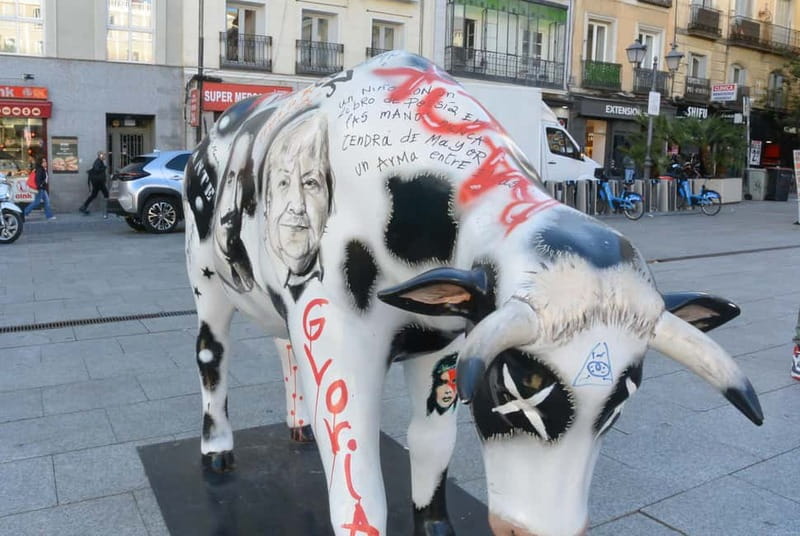
Then comes Chueca, also around a half hour. This neighborhood is known for color and a strong local vibe, and the tour leans into that by focusing on the visual mood of the streets, not just individual artworks.
You’ll likely notice how the art style changes with the street texture: more playful color, more visible layering, more attention to how pieces interact with shop fronts and street corners. This part of the tour is a strong reminder that street art isn’t only about the artist’s hand—it’s also about the neighborhood’s attitude.
The tour also works in more variety here. You may see references to art events, including murals connected with the Urvanity Art Fair and work linked to Calle the festival. Even if you don’t know these events, the guide helps you connect them to the larger picture: street art today often moves through festivals, fairs, and networks, not only via nighttime walls.
If you love art that feels current, Chueca is where the tour’s “modern street scene” theme becomes obvious fast.
Lavapiés: The cultural heart through murals, mosaics, and sculpture
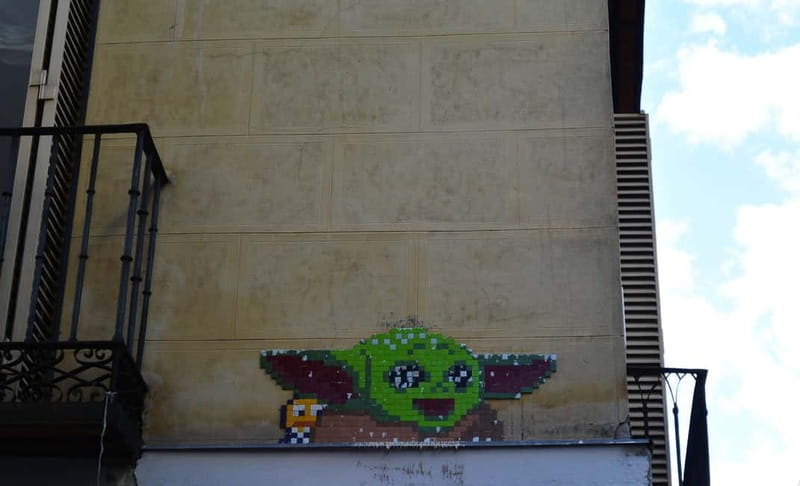
The tour description also frames Lavapiés as a cultural heart of the city, and you’ll include time for it as part of the overall walk. Lavapiés typically feels like a neighborhood where many cultures overlap, and that energy often shows up in the art.
Here you’ll look for works that integrate different codes and visuals—things like mosaics by local artists, urban sculpture, and the kind of street-level creativity that feels connected to real people moving through real streets every day. The tour’s focus stays practical: the guide shows you what you’re looking at and what to notice.
Specific artist names you may see in this portion include Okudart, Basket of Nean, El Rey de la Ruina, and Done Street. Knowing names helps you learn street art as a subject, not only as decoration. It turns random walls into a set of creators you can recognize later in other cities.
This is also a great zone if you want street art that doesn’t only look good—it tells you something about the city’s social mix and creative identity.
The guide experience: When a friendly pro makes the walls click
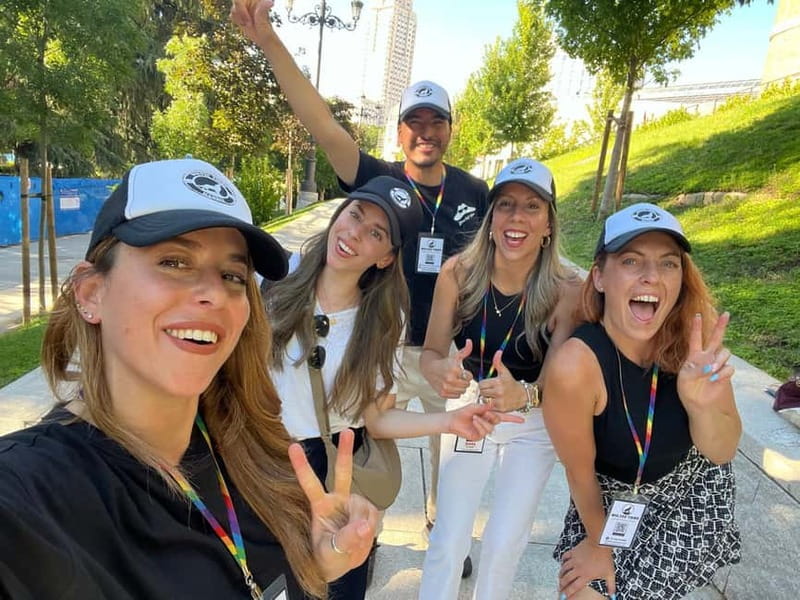
The tour runs with a live guide in English, and the guide’s personality shows in how you walk and look. One review specifically called out Diana as a great guide, which fits what you want from this kind of tour: clear explanations, easy pacing, and a knack for pointing at details without rushing.
Group walking can be hit or miss, but this tour seems designed for a comfortable rhythm. You’ll have enough time for guided stops while still moving steadily through neighborhoods.
If you’re worried about whether you’ll get value from a street art tour, focus on this: you’re not buying the mural alone. You’re buying the interpretation. The guide helps you connect technique, artist, neighborhood, and the graffiti story.
And yes, the tour style is also practical: it’s built around letting you decide what it’s worth at the end. That can be a good match if you like flexible travel spending and don’t want fixed-price add-ons.
Price and value: $1.77 and what you actually pay for
The listed price is $1.77 per person and the overall concept is a choose-your-value street tour. That doesn’t mean you’re paying nothing for everything. It means the cost you pay upfront is low, and your real contribution can happen at the end based on your experience.
For me, the value comes from the balance:
- You get a 2-hour guided route through multiple neighborhoods
- You get explanation of graffiti origins, not only photo stops
- You get a focused walk that covers major areas like Puerta del Sol and Gran Vía, plus the more artsy neighborhoods like Malasaña and Chueca
If you’re planning your day and want a low-commitment activity with real payoff, this is a smart use of time. It also works well as an early orientation walk, because it helps you spot where street art lives so you can explore on your own later.
Just don’t treat it like a magic shortcut to see everything. It’s selective by design. You’ll cover a lot of texture, but you’ll still want to return to neighborhoods after to explore the streets beyond the route.
Timing, walking comfort, and who should book
This tour lasts about 2 hours, so it fits nicely into a half-day plan. It includes multiple stops and photo moments, but it’s still mostly walking on city streets.
You’ll want comfortable shoes. One participant noted walking was the hardest part because they don’t walk often. That’s the main real-world caution I’d repeat. If your feet handle city walking well, you’ll likely find the pace relaxed and enjoyable.
Who it suits best:
- You like street art but want structure so you understand what you’re seeing
- You want a mix of famous Madrid streets and artsy neighborhood energy
- You’re traveling with a flexible mindset and like meeting guides in smaller, walkable settings
If you hate walking, have mobility limits that make street-level movement difficult, or need long museum-style breaks, this might feel like too much time on your feet. The tour is listed as wheelchair accessible, but it’s still a walking route, so you should judge based on your personal needs.
Should you book the Madrid Street Art Tour?
Book it if you want a guided way to see Madrid’s street art as part of the city’s culture, not just as random photos. I especially recommend it if you want context on graffiti’s origins and you like neighborhoods with character, like Malasaña and Chueca.
Skip it if you’re expecting indoor exhibits or museum entries. This tour is about street-level art, public space, and neighborhood stories. You’ll get names, techniques, photo stops, and explanations, but not attraction tickets or museum time.
If you do book, bring a camera, wear supportive shoes, and give yourself permission to slow down at the murals. The best part of a street art tour is standing close enough to notice the details you’d normally walk past.
FAQ
What’s the duration of the Madrid Street Art Tour?
The tour lasts about 2 hours.
Is the tour really free?
It’s called a free street art tour style, where you reserve your spot and then you can reward the guide with whatever amount you think it was worth at the end.
Where does the tour start?
The guide meets you at the door of Way Hostel Madrid.
Where does the tour end?
The tour finishes at Calle de la Magdalena, 23, Centro, 28012 Madrid, España.
What language is the tour guide?
The tour is guided in English.
What should I bring?
Bring comfortable shoes, a camera, and comfortable clothes.
What stops will we cover?
You’ll visit key areas including Puerta del Sol, Gran Vía, Malasaña, Chueca, and Lavapiés, plus street stops connected to the tour route.
Is anything included like museum tickets or entry fees?
No. Entry to attractions and museums is not included.
Is the tour accessible for wheelchairs?
The tour is listed as wheelchair accessible.
Can I cancel for a refund?
Yes. There is free cancellation up to 24 hours in advance for a full refund.