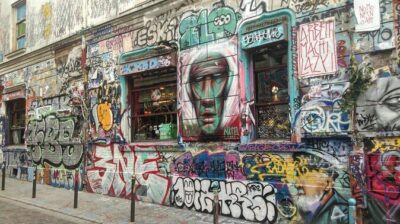
Street art in Madrid is a living language. This Lavapiés tour helped me appreciate how big murals and tiny details tell stories right on the street. I love the low-key group size and the chance to learn how to read what you’re seeing. One thing to consider: it’s a walking experience, so comfortable shoes matter.
What makes this tour click is the guide setup. You’re led by an art professional (an artist or an art historian), and the tone stays personal. In one recent group, Roberto led the way and did a great job connecting the work to the neighborhood, not just the images on the wall. It’s the kind of walk where you feel like you’re tagging along with a local friend, not herded through set stops.
You’ll also get a payoff beyond the street scenes. The walk ends at a local gallery, where you can meet working artists and see how street ideas translate into art spaces. Just remember: anything you fall for at the gallery is not included in the tour price, so keep a little budget aside if you want souvenirs you actually want to keep.
In This Review
- Key things you’ll get from the Lavapiés street art walk
- Why Lavapiés is the right neighborhood for street art in Madrid
- Price and time: Is $33 worth two hours?
- Starting at Portomarin: the best way to kick off your walk
- Calle de Argumosa and the Reina Sofía pass-by: street art meets the city’s art map
- Mercado Antón Martín: where the neighborhood’s daily rhythm shows up
- Trampantojo cerámico de Lola Gil: tile illusions that train your attention
- Calle de Embajadores: the walk where you start spotting clues on your own
- Local gallery stop: the art that follows you indoors
- What the guide teaches you about graffiti, symbolism, and style
- What’s the walking like, and what should you bring?
- Who should book this Madrid street art tour (and who might skip)
- Should you book this Lavapiés street art experience?
- FAQ
- FAQ
- How long is the Madrid: Hidden Street Art Tour?
- How big is the group?
- What language is the tour guide?
- Is the tour wheelchair accessible?
- Where do we meet?
- What is included in the ticket price?
- Is the art at the gallery included?
Key things you’ll get from the Lavapiés street art walk
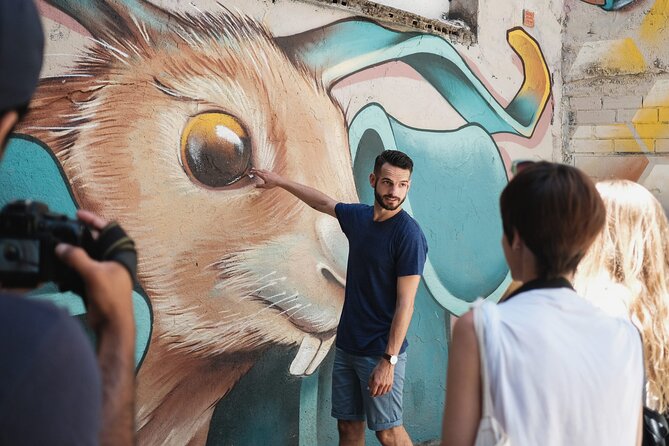
- Small group, up to 10 people, so you can actually talk and ask questions
- Big murals plus micro-details, including pieces you’d likely miss on your own
- Guides are art professionals, like artists and art historians (not just random narrators)
- A market-and-street mix, with stops that feel like real neighborhood life
- Finish at a local gallery, with a chance to meet artists
Why Lavapiés is the right neighborhood for street art in Madrid
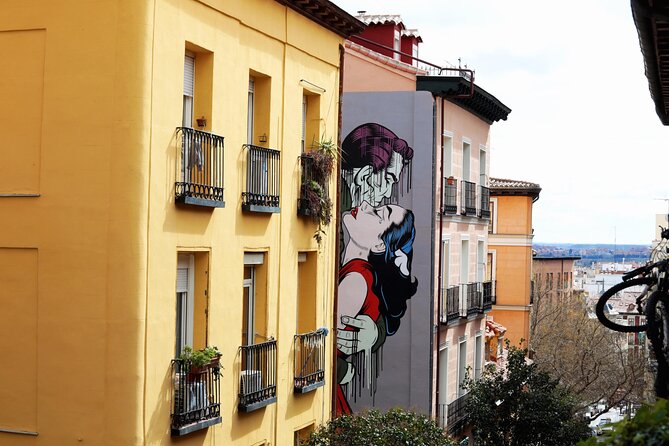
Lavapiés is the kind of Madrid neighborhood where art doesn’t sit politely behind glass. It’s on walls, on corners, and sometimes on surfaces you didn’t expect to look at twice. That matters, because street art is often about place—politics, identity, migration stories, humor, protest, and pop culture all collide right there.
This tour leans into that reality. You’re not just looking at famous works from a distance. You’re learning how the neighborhood works as a canvas. The guide explains the main artists and what their work is referencing, so you start connecting symbols and styles to the culture around you.
It also helps that the pacing is walk-friendly. One reason people rate this so highly is that the rhythm stays steady, even when the weather is hot.
A few more Madrid tours and experiences worth a look


Price and time: Is $33 worth two hours?
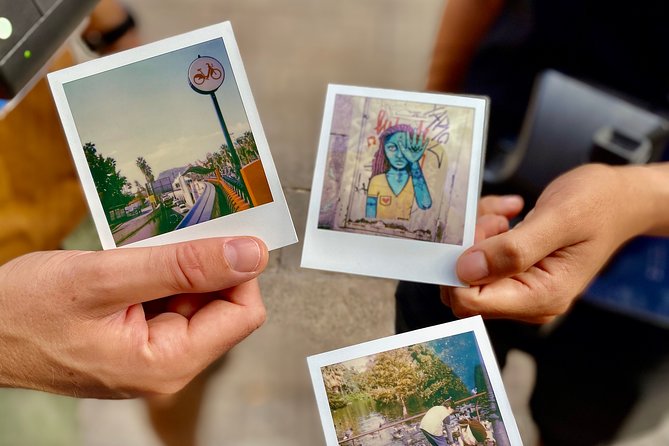
At $33 per person for a 2-hour walk, this is a solid deal if you care about art beyond postcard sightseeing. The value comes from a few specifics: a small group (so you’re not lost in a crowd), an art professional guide, and a planned route that includes both major murals and smaller discoveries.
You’re also getting more than street stops. The tour ends with a visit to a local gallery in the neighborhood. That adds real context because you see how street art culture sits alongside more traditional art spaces.
The main “cost” to watch is your own spending impulse at the gallery. The tour doesn’t include art purchases there, so if you like what you see, budget for it.
Starting at Portomarin: the best way to kick off your walk
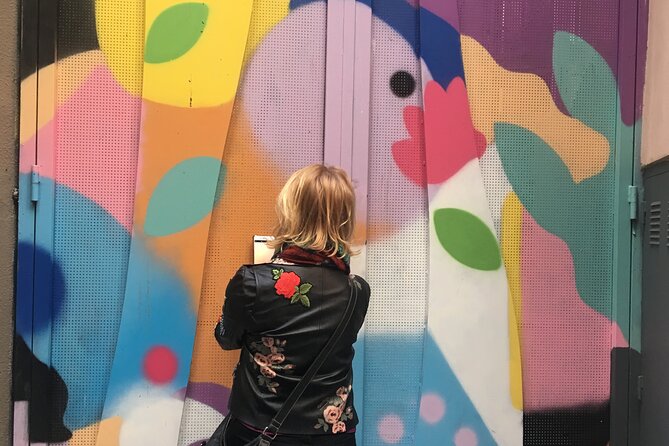
You meet in front of the Portomarin restaurant. If you arrive early, it’s a good spot to grab a coffee or a refreshment before the group heads out.
That first moment is more useful than it sounds. Street art tours go faster once your eyes are trained, and starting together means your guide can set the frame right away. You’ll learn what to look for—styles, symbols, and how to spot the difference between a quick tag and a more worked piece.
The group stays small, limited to 10 participants, which helps with that “ask questions anytime” feeling. It also makes the walk easier to enjoy if you’re traveling solo.
Calle de Argumosa and the Reina Sofía pass-by: street art meets the city’s art map
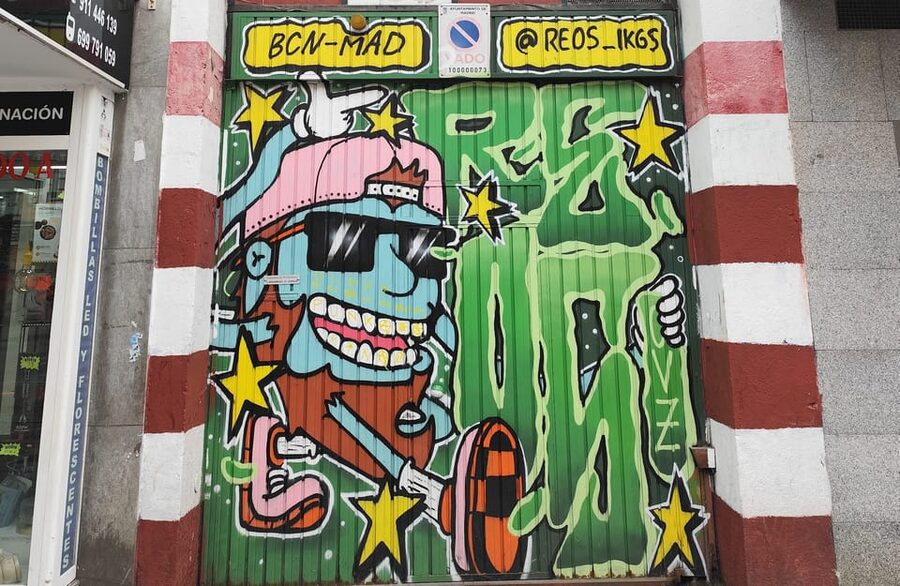
From the meeting area, you head toward Calle de Argumosa (about a 10-minute walk). This is the kind of street where you can start noticing how quickly murals can change mood from block to block—color, scale, and tone all shifting as you go.
You also pass by the Museo Nacional Centro de Arte Reina Sofía. You’re not doing a museum visit here, but the timing helps. It’s a reminder that Madrid’s art world isn’t just galleries and ticket lines. The city keeps a conversation going between formal art spaces and the street.
If you like context, this transition is useful: the guide is likely to help you connect why certain urban art looks the way it does and how it fits into Madrid’s broader art ecosystem.
Mercado Antón Martín: where the neighborhood’s daily rhythm shows up
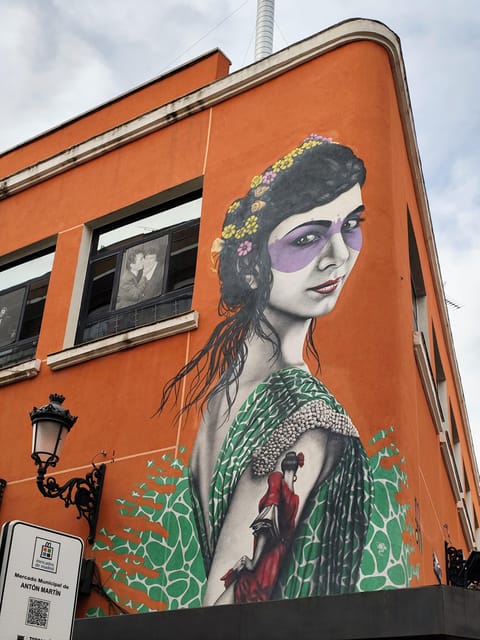
Next you stop at Mercado Antón Martín for a visit and a bit of sightseeing (around 10 minutes). This is one of those stops that makes street art tours feel real. Instead of treating walls like isolated artworks, you see them embedded in everyday life.
Markets are where you can sense the neighborhood’s energy in a practical way: people moving, conversations happening, food and errands taking center stage. That matters because street art in Lavapiés isn’t just decorative. It often comments on community life, identity, and current debates—things people experience daily.
Even in just 10 minutes, the goal is to reset your eyes. Then you move on to pieces that might otherwise slip by if you’re only chasing the biggest mural.





Trampantojo cerámico de Lola Gil: tile illusions that train your attention
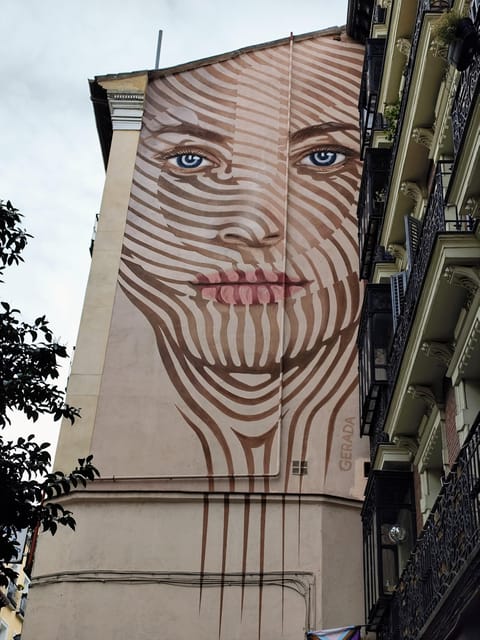
One of the most interesting visits is to the Trampantojo cerámico de Lola Gil (about 10 minutes). A trampantojo is an illusion—art that plays with how surfaces and objects seem to look.
Why this matters for the street art theme: it teaches you to slow down. Street art often hides its best clues in small visual tricks: perspective, repetition, layered textures, and messages tucked into unexpected spots.
So even if this specific stop isn’t your usual graffiti style, it supports the tour’s main mission. It pushes you to read what you’re seeing instead of just scrolling past it.
Calle de Embajadores: the walk where you start spotting clues on your own
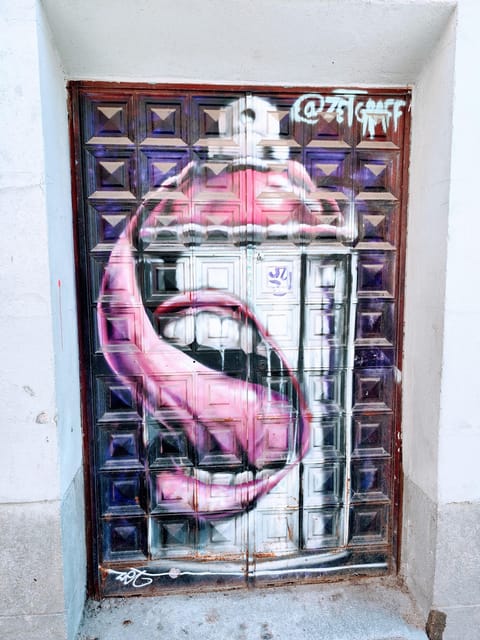
Then comes Calle de Embajadores (roughly 20 minutes of visit, sightseeing, and walking). This stretch is where you’ll likely feel the tour’s full range: big walls, small details, and the kind of street art that mixes different techniques in one neighborhood.
This is also where your guide’s “how to read it” training becomes practical. You’re not just told what the work is. You’re taught how to recognize styles and types—think tags and paste-ups, plus the more sculptural side of urban art when it appears.
One reason people love the experience is that the guide often points out the hidden stuff—pieces that don’t feel like they’re designed for a camera. You start noticing how some murals act like landmarks while tiny additions feel like jokes, signatures, or messages meant for locals.
And if it’s a hot day, the pacing is designed to be manageable. One rating specifically notes that the pace worked well during an afternoon in the heat.
Local gallery stop: the art that follows you indoors
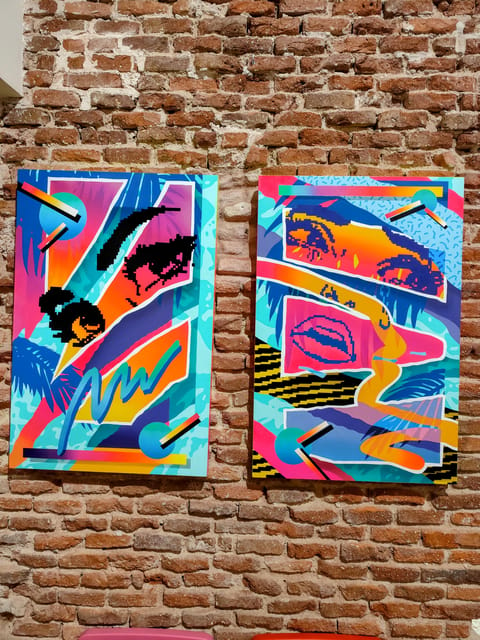
The tour ends with a visit to a local gallery in Lavapiés. This part changes the whole vibe from street walls to curated art space without turning the street art into something sterile.
You’ll get a chance to meet local artists at the gallery visit. That interaction is the real difference-maker. Seeing how artists explain their work—what it references, why they use certain styles, and how the neighborhood supports the scene—helps everything you saw outside click into place.
This is also where the tour’s “bring home something meaningful” option shows up. The art you fall in love with at the gallery isn’t included, but the fact that you can actually buy a piece you connected with makes the experience feel more personal than a photo-only souvenir.
What the guide teaches you about graffiti, symbolism, and style
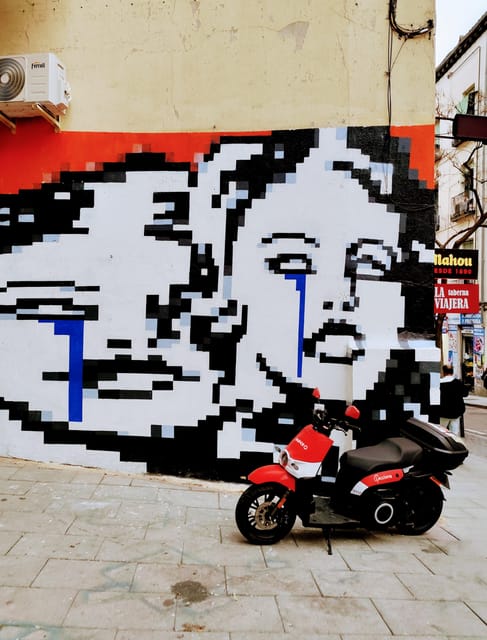
The best tours don’t just point at art. They teach you to spot patterns. This one aims to give you a toolkit.
By the end, you should be able to:
- Recognize different street art styles, from quick tags to paste-ups
- Notice when a mural is making a cultural reference versus telling a community story
- Understand how artists communicate using symbols and visual language
- Spot those tiny “extra” details that often carry the deeper meaning
Guides in this format are usually able to explain not only what the art looks like, but how it got there and why the neighborhood keeps generating new work. One recent group noted how an annual festival helps keep the scene alive with new art—so you’re not only learning the past, you’re hearing how the cycle continues.
What’s the walking like, and what should you bring?
This is a 2-hour walking tour through Lavapiés, with multiple short stops. Because the route moves at a city-walk pace, plan for uneven pavement and some time with your feet.
What I’d bring:
- Comfortable walking shoes
- Water, especially if you’re going in warmer months
- A phone camera, but use it as a tool, not a distraction
- A little extra cash if you want to buy something at the gallery
On the plus side, the tour is wheelchair accessible. If you use mobility support, it’s worth noting that the tour is designed to be compatible—but you’ll still want to use caution on outdoor sidewalks.
Who should book this Madrid street art tour (and who might skip)
You’ll love this if:
- You enjoy urban art and want the neighborhood context, not just a photo list
- You want to learn how to read street art—styles, symbols, and cultural references
- You prefer small groups and a conversational walk
- You’re open to ending at a local gallery, not just a final street photo
You might skip it if:
- You’re only interested in top-ticket museums and major monuments
- You want a high-speed, “see everything fast” itinerary
- You hate walking outdoors with frequent pauses
Should you book this Lavapiés street art experience?
If your idea of a great Madrid day includes street art with meaning, I’d book this. The price-to-time value is strong, and the format makes the tour feel personal thanks to the small group size and the art professional guides. I also like that the walk balances big murals with those smaller, easy-to-miss details—and that it ends in a local gallery where street culture stays connected to real people.
If you’re on the fence, here’s the quick test: if you’d enjoy learning how to read walls like a local, this is your kind of tour.
FAQ
FAQ
How long is the Madrid: Hidden Street Art Tour?
The tour lasts 2 hours.
How big is the group?
The group is small, limited to 10 participants.
What language is the tour guide?
The live tour guide speaks English.
Is the tour wheelchair accessible?
Yes, the tour is wheelchair accessible.
Where do we meet?
You meet in front of the Portomarin restaurant.
What is included in the ticket price?
Included features are a curated route of the best street art and the local guide’s expertise. The tour also includes a visit to a local gallery as the experience ends there.
Is the art at the gallery included?
No. Any art you want to buy at the gallery is not included in the tour price.