REVIEW · MADRID
Madrid: Street Art Bike Tour
Book on GetYourGuide →Operated by Cooltourspain · Bookable on GetYourGuide
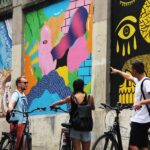
Street art looks best when you move. This Madrid street art bike tour pairs a local graffiti artist’s storytelling with real neighborhoods like Malasaña and Lavapiés. I love the way it connects artwork to the city’s timeline, from preserved tags to festival walls. I also like that you get guided context as you ride, not just photo stops.
One thing to plan for: this is a medium cycling outing in active city traffic, with at least one uphill to work with. The good news is the guide can adjust the pace for different comfort levels, and you’ll use a helmet and lock the whole time.
In This Review
- Key things you’ll actually care about
- Why a bike is the perfect way to see Madrid’s street art
- Getting started at Gran Vía and Sol: easy meeting, real momentum
- The opening hit: Muelle’s 1989 tag and the roots of Madrid graffiti
- Alonso Martínez and Boa Mistura: a photo stop with purpose
- Malasaña by bike: Plaza Dos de Mayo and the traffic-art moment
- Lavapiés and Noviciado: Solar Antonio Grilo and Esto es una Plaza
- The artists you’ll hear by name (and why the names matter)
- Bikes, helmets, and Madrid traffic: what the medium level really means
- Price and value: is $46 fair for this 2.5-hour format?
- Who should book this street art bike tour
- What to bring so the ride feels easy
- Should you book it?
- FAQ
- Where does the tour start?
- How long is the Madrid street art bike tour?
- Is a bike rental included?
- What languages are offered for the live guide?
- Are restroom stops included?
- What should I bring?
- Are beverages included?
- How hilly is the route?
- How far ahead can I cancel for a refund?
Key things you’ll actually care about
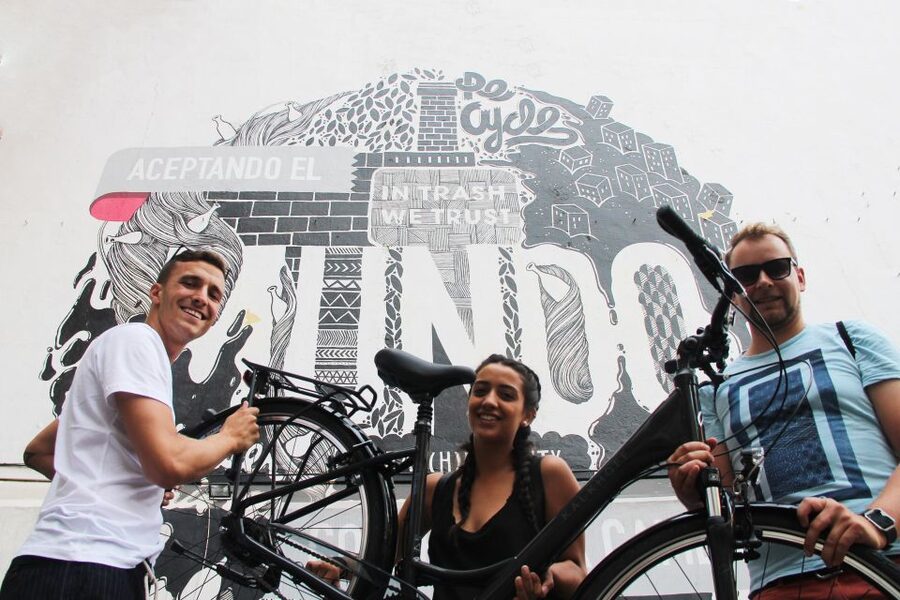
- Local graffiti artist guidance: you learn the meaning and technique, not just the names of murals.
- Festival artwork focus: you see pieces connected to national and international street art events.
- Malasaña and Lavapiés by bike: you pedal through hip neighborhoods where the street scene feels lived-in.
- A preserved 1989 tag (Muelle): early Madrid graffiti history, right there on the wall.
- Boa Mistura photo stop at Alonso Martínez: a major Spanish design/creative crew in a rideable route.
- Community urban gardens: Solar Antonio Grilo and Esto es una Plaza show street art tied to shared spaces.
Why a bike is the perfect way to see Madrid’s street art
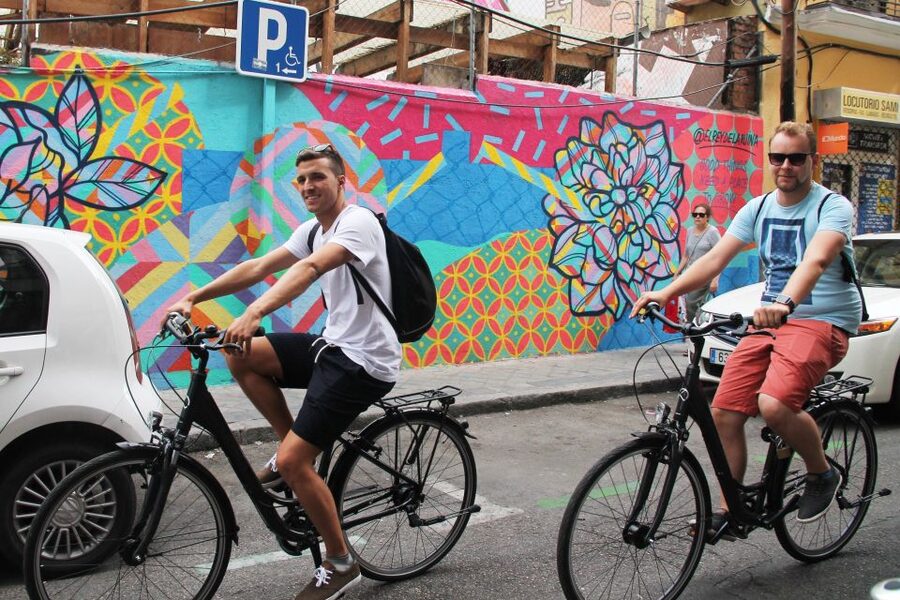
Madrid street art is not one big museum wall. It’s hundreds of decisions made by artists, neighborhoods, and time. A bike is how you feel that. You glide past different textures fast enough to keep the story going, but slow enough to really look up.
What makes this tour work is that it’s not just a scavenger hunt. You’re guided by a local graffiti artist who explains street art history, plus the practical side: how tagging and graffiti techniques show up on shutters, walls, and other city surfaces. That matters, because street art changes when the canvas changes. Paint behaves differently on metal shutter edges than on brick, and artists choose techniques based on what’s available.
And you’ll cover two of Madrid’s most personality-rich areas on wheels—Malasaña and Lavapiés—where the art doesn’t feel staged. It feels woven into everyday life: storefronts, courtyards, small squares, and the edges of community projects.
You can also read our reviews of more tours and experiences in Madrid.


Getting started at Gran Vía and Sol: easy meeting, real momentum
You start at the entrance of a small supermarket called Carrefour Express on C/Montera 32, near Gran Vía & Sol. That’s a smart location for a short tour. You’re near major transit lines, and you can get there without a complicated transfer.
You’ll likely do a quick rhythm check at the start too: bike setup, safety instructions, and a practical briefing. Since you’re biking through busy streets, this isn’t a detail you can skip. Even if you consider yourself a confident rider, you still want the guide’s expectations for where to stop, how to regroup, and how to handle intersections.
You’ll also get a helmet and lock, plus a Madrid city map. Those extras are small but useful. The lock matters because you might need to park the bike briefly at stops. The map helps you keep your bearings if you want to continue exploring on your own afterward. And there’s a restroom break, which is exactly what you want on a 2.5-hour format.
The opening hit: Muelle’s 1989 tag and the roots of Madrid graffiti
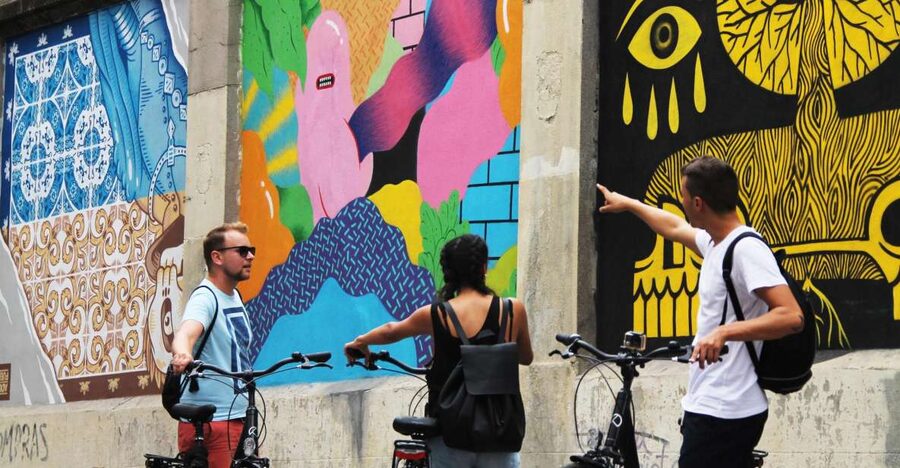
The first part of the ride is where the tour sets its tone: history you can see with your own eyes. Before you move deeper into the route, you’ll get the bicycle safety instructions and then start spotting the early marks of Madrid’s graffiti movement.
One of the standouts is Muelle, described as a pioneer of the graffiti movement in Madrid. You’ll observe a tag preserved from 1989. That’s a big deal because it turns graffiti from a “cool modern thing” into something with real continuity. It also gives you a baseline for the rest of what you see later—how styles shift, how public spaces accept or reject art, and how artists leave a long-term footprint even when the city changes around them.
This stop works especially well if you like street art that has a backstory. You’re not just scanning for colors. You’re learning how tags function like signatures and time stamps.
Alonso Martínez and Boa Mistura: a photo stop with purpose
Once the safety part is handled, the ride heads toward Alonso Martínez. This is where you’ll see the first piece created by Boa Mistura, and you’ll have a chance to photograph it.
Boa Mistura is one of the big Spanish names that keeps popping up in street art discussions. What I like about including them here is that it bridges the gap between street graffiti culture and design-led creative work. You’re not only learning about writing and tagging. You’re also getting a sense of how concept-driven visual crews operate across countries.
The photo stop is fun, but the real value is that you’re given context before you shoot. You’ll know what you’re looking at and why it matters, not just that it looks good on Instagram.
Malasaña by bike: Plaza Dos de Mayo and the traffic-art moment
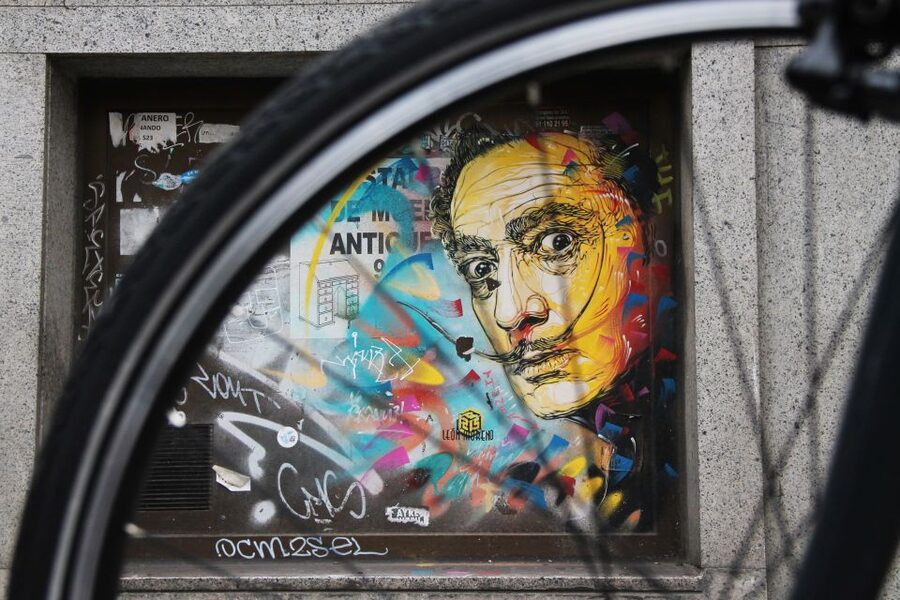
After Alonso Martínez, you’ll roll into Malasaña, one of Madrid’s most trendy, hipster-leaning neighborhoods. The guide will point out national artists connected to the 2017 edition of Pinta Malasaña, a festival that colors the area during April.
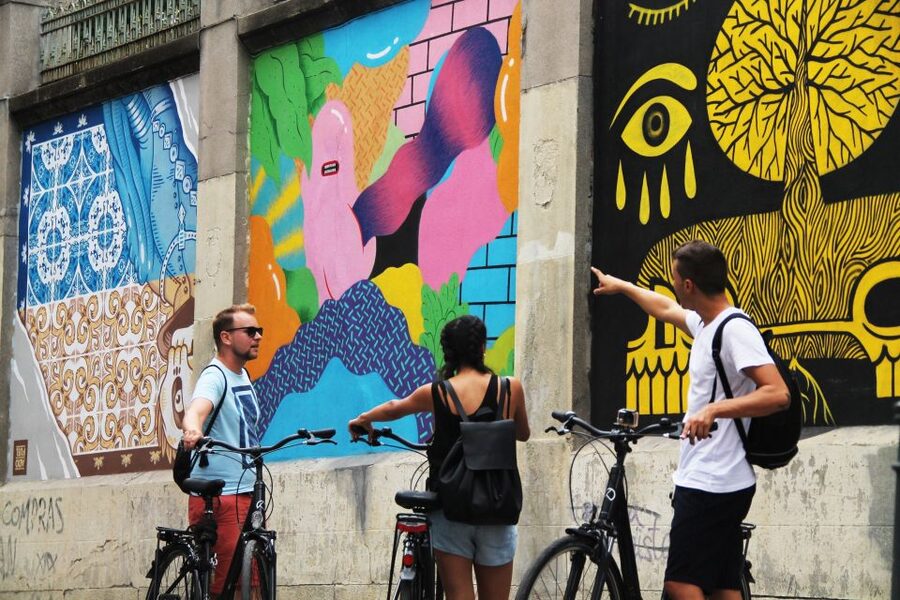
Your Malasaña anchor is Plaza Dos de Mayo. It’s the kind of place where the art feels like it belongs to the street rhythm, not pasted on as an attraction. Here you’ll find a colorful display of traffic elements called Bolardo Voy, Bolardo vengo. It’s the sort of street art that catches your eye because it’s playful, and because it borrows from everyday city hardware—bollards, signals, the stuff you normally ignore.
This part of the tour is a good reminder of a key street art lesson: artists don’t only decorate blank walls. They can also transform objects you see every day. That’s why traffic-themed pieces often land so well. They interrupt your routine just enough to make you notice the city again.
A few more Madrid tours and experiences worth a look
Lavapiés and Noviciado: Solar Antonio Grilo and Esto es una Plaza
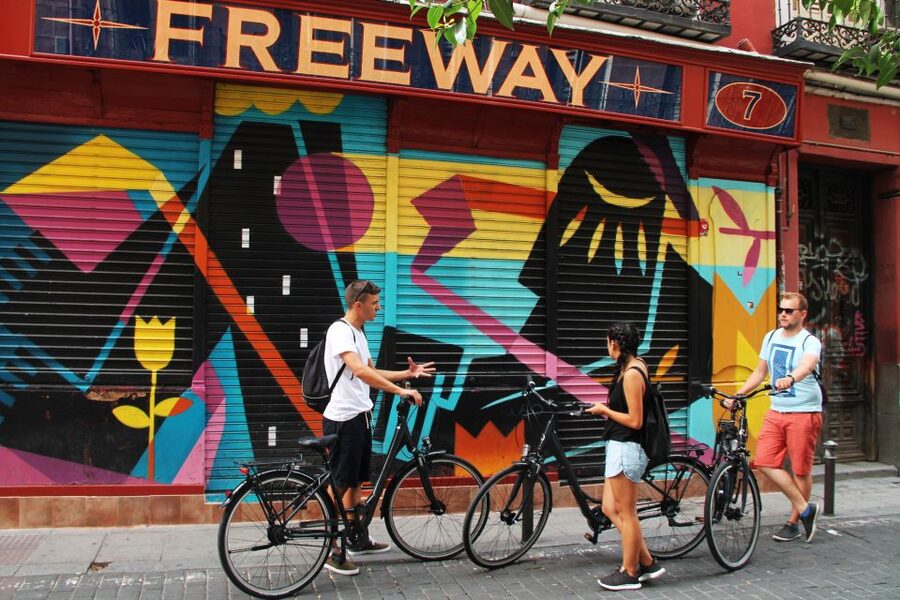
When the route heads toward Lavapiés and Noviciado, the street art shifts from festival energy to community momentum. You’ll have time to visit Solar Antonio Grilo and Esto es una Plaza by bike.
These are urban hubs and garden spaces created for and by the community. The tour frames them as examples of how abandoned places can turn into useful public spaces. That theme matters because it puts street art in a bigger social context. It’s not only about style. It’s also about reclaiming space.
You’ll learn that these gardens show how hybrid economy systems can work in practice. Even if you’re not analyzing economics on vacation, the practical takeaway is simple: you’re seeing how art, community effort, and public space can reinforce each other. Street art here doesn’t feel like a one-time installation. It feels like part of a living system.
This segment is also where you’ll hear about multiple artist interventions tied to the area, including names like El Rey de la Ruina, Cassassola, Ze Carrión, Por Favor, and more. Those names are your map for continuing the story after the tour ends.
The artists you’ll hear by name (and why the names matter)
Street art can feel like a blur of murals if nobody explains it. This tour helps you slow down just enough to make the names stick.
You’ll encounter:
- Muelle, tied to preserved 1989 graffiti history in Madrid
- Boa Mistura, highlighted at Alonso Martínez
- Multiple festival-linked artists connected to Pinta Malasaña
- Community-linked artists referenced throughout the Lavapiés/Noviciado sections, including El Rey de la Ruina, Cassassola, Ze Carrión, and Por Favor
Why this helps you: when you can name the people and connect them to places, you start spotting patterns. You can look at a mural and think about process, location, and purpose. It also makes your own post-tour wandering easier. If you decide to go back to Malasaña or Lavapiés later, you’ll recognize what kind of art you’re seeing and why it’s there.
Bikes, helmets, and Madrid traffic: what the medium level really means
This isn’t a spin class. The tour is described as a 2.5-hour outing, and the “medium level” note adds up to about 3 hours in real life. You’re also told there’s just one uphill.
The bigger factor isn’t fitness. It’s traffic comfort. Madrid streets can be loud, fast, and full of crosswalk confusion. That’s why the safety instructions at the start matter so much, and why the guide’s job includes keeping the group together.
The best practical tip here: if you’re nervous about riding in traffic, don’t pretend you’re fine. Say so at the beginning. The tour format supports adjustments, and the ride can be easier for participants who need a gentler pace.
One more practical note: wear comfortable shoes. You’ll want stability when you stop, dismount, and look closely at wall art.
Price and value: is $46 fair for this 2.5-hour format?
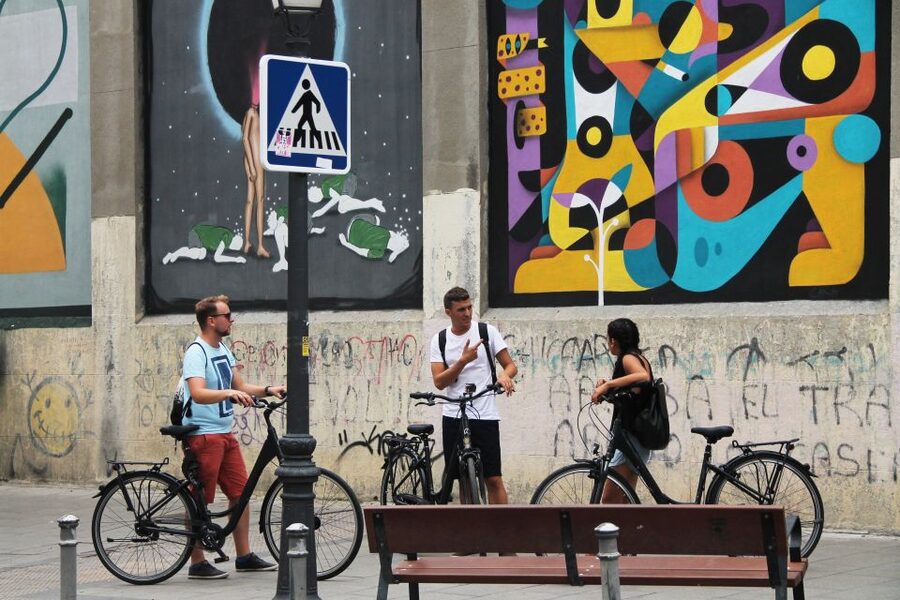
$46 per person for a guided, local graffiti-artist experience is fairly solid when you break down what’s included. You’re paying for more than bike rental. The tour includes:
- Bike rental
- Helmet & lock
- Live guide in English or Spanish
- Restroom break
- A city map
Not included: beverages. That’s normal for a two-and-a-half-hour tour, but plan to buy water or bring a bottle if you like.
Here’s how I’d judge value: you’re getting guided storytelling across multiple neighborhoods, plus stops tied to specific festival pieces and community spaces. You’re also getting historical context around preserved graffiti (that 1989 Muelle tag) and named creative crews (Boa Mistura). If your goal is to understand what you’re seeing and not just get a quick overview, that’s where the price starts to make sense.
If you only want to take photos without learning anything, you could spend less on self-guided exploring. But if you want the “why,” the guide is doing the heavy lifting.
Who should book this street art bike tour
This tour fits well if you want street art with context and you like moving between neighborhoods. It’s especially good for:
- People who enjoy walking tours but want more coverage by bike
- Couples, small groups, or families with kids old enough to ride (the reviews include a family with a 7-year-old riding on their own bike)
- Visitors who like local voices, since the guide is a local graffiti artist
You might choose something else if:
- You dislike biking in city traffic
- You want a purely indoor museum-style experience
- You’re sensitive to even one uphill and frequent stops
What to bring so the ride feels easy
You don’t need fancy gear, but a few basics matter:
- ID card or passport
- Comfortable shoes
- If you get thirsty easily: plan on water since beverages aren’t included
Also, if you’re the type who loves street art details, bring your phone and make sure your camera storage is ready. The tour includes at least one named photo stop at Alonso Martínez, and you’ll have plenty of looks along the way.
Should you book it?
I think this tour is worth booking if you want a guided street art experience that connects festivals, famous names, and community projects into one ride. The strongest reasons to choose it are the local graffiti-artist guidance, the neighborhood mix (Malasaña and Lavapiés), and the chance to see something time-stamped like the 1989 Muelle tag.
If you’re deciding last-minute, pick it if:
- You can handle a short ride with one uphill
- You’re okay biking in active streets
- You want to come away understanding what you saw, not only what it looked like
Skip it if you want total traffic-free cycling or a purely slow, wandering style tour. In that case, you’ll likely feel more comfortable with an art-focused walking format.
FAQ
Where does the tour start?
It starts at the entrance of Carrefour Express at C/Montera 32, near Gran Vía and Sol.
How long is the Madrid street art bike tour?
It runs for about 2.5 hours, with notes indicating around 3 hours for the medium cycling level.
Is a bike rental included?
Yes. Bike rental is included, along with a helmet and lock.
What languages are offered for the live guide?
The guide is available in English or Spanish.
Are restroom stops included?
Yes, the tour includes a restroom break.
What should I bring?
Bring a passport or ID card and wear comfortable shoes.
Are beverages included?
No. Beverages are not included.
How hilly is the route?
It’s listed as medium level with just one uphill.
How far ahead can I cancel for a refund?
You can cancel up to 24 hours in advance for a full refund.